Blog Archives

Powerful Owl dozing in the treetops
It’s a while since I’ve spotted a Powerful Owl. A few days ago, I saw the tell tale dark blob high in the branches of the forest. Using my camera’s zoom, I could identify the bird. The only view I had is from behind, with the bird’s head turned slightly towards me and one eye partly open:
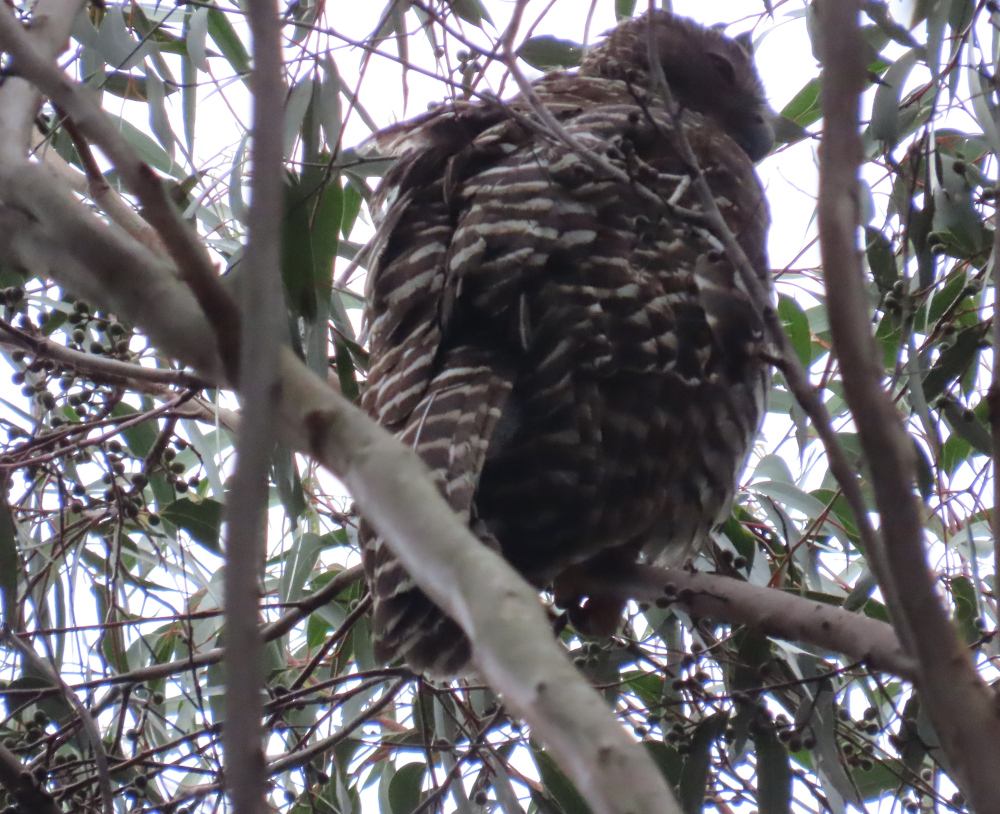
It’s always a privilege to see these impressive birds. Powerful Owls can weigh well over 2 kilograms, and reach up to 65 centimetres in height. They hunt at night and roost quietly during the day. Their prey consists of small creatures such as possums.
Common name: Powerful Owl
Scientific name: Ninox strenua
Approximate length: 65 cm
Date spotted: 7 November 2024 (spring)
Location: Manly Dam Park, New South Wales, Australia. Approximate map reference: 33°46’55.8″S 151°15’12.1″E

Whistling Kite at Myall Lakes
This weekend I took a walk from Mungo Brush Campground to the Tamboi picnic area at Myall Lakes. A bird of prey was calling and swooping far away on the opposite side of the wide, serene Myall River. After a bit of research, considering the appearance of the bird and the sound of its call, my conclusion is that it’s a Whistling Kite.
The pictures aren’t great, because the bird was far away. This one shows its head and body:

The next picture gives a better idea of its tail:

I did take some shots of the bird in flight, but they’re too fuzzy to be of much use. Still, you can see them on my Reddit post if you’re interested.
Whistling Kites are large birds of prey, found throughout most of Australia. They’re also called whistling eagles or whistling hawks. I’ve seen one before, on the Bogan River in western New South Wales, and another on Magnetic Island in Queensland.
Common name: Whistling Kite
Scientific name: Haliastur sphenurus
Approximate length: 50-60 cm; wing span 1.2-1.5 m
Date spotted: 20 October 2024 (spring)
Location: Myall Lakes National Park, New South Wales, Australia: 32°33’03.8″S 152°17’10.5″E

Very light-coloured Grey Goshawk
This is a Grey Goshawk, but it’s a lot lighter in colour than others I’ve seen, and it doesn’t seem to have the barring on its front (though I didn’t get to see it fully front on). It was at Manly Dam in Sydney’s Northern Beaches area.
There are two colour variations in the Grey Goshawk: the white morph and the grey morph. The white morph is found in north-western Australia, Tasmania, and the Victorian coast. It isn’t known to be found near Sydney. Besides which, this bird has light grey plumage as well as white, whereas the white morph is entirely white.

Whatever the answer to the question about its colour, this is a gorgeous bird.
Common name: Grey Goshawk
Scientific name: Accipiter novaehollandiae
Approximate length: 40-55 cm. Wing span: 70-110 cm.
Date spotted: 1 October 2024 (spring)
Location: Manly Dam Reserve, New South Wales, Australia: 33°46’22.5″S 151°14’35.7″E

Call of the Sacred Kingfisher
Ever wondered what a kingfisher sounds like? Well, you’ll know after watching this video, for a Sacred Kingfisher anyway. The call is a series of chirps, all on more or less the same note. Not very exciting really, for such a pretty bird! You hear them mostly around breeding time, when the calls can be quite insistent.
At the start of the video, you see and hear the kingfisher calling. The camera then zooms out to show the surroundings, including a Great Egret, a Darter, and a Coot. The scene is set at Manly Dam in Sydney’s Northern Beaches.
Set the video settings to HD for best results:
Despite their name, these kingfishers don’t often eat fish! Instead, they prey on small reptiles and large insects, and occasional crustaceans from the water’s edge.
Common name: Sacred Kingfisher
Scientific name: Todiramphus sanctus
Length: 20-23 cm
Date spotted: 8 September 2024 (spring)
Location: Manly Dam Park, New South Wales, Australia: 3°46’31.2″S 151°14’46.6″E

Osprey chased off by raven and noisy miners
At Long Reef Headland today, an Eastern Osprey sat peacefully on a branch. Then an Australian Raven dived at the osprey, cawing and moaning. The resident Noisy Miners heard the fracas and joined in. After a few seconds, the Osprey decided enough was enough and took off to find a quieter spot.
Eastern Ospreys are magnificent birds. They measure up to 65 centimetres from head to tail, and have a wingspan of up to 1.7 metres. They eat fish, which they catch by diving into the water from a height and dragging the fish out of the water in their claws.
We first spotted this osprey perched on the edge of a cliff. Later, we saw it a few metres further on, in a tree high on a ledge above the beach.
Here’s the osprey enjoying the sun and the view, before the other birds arrive:
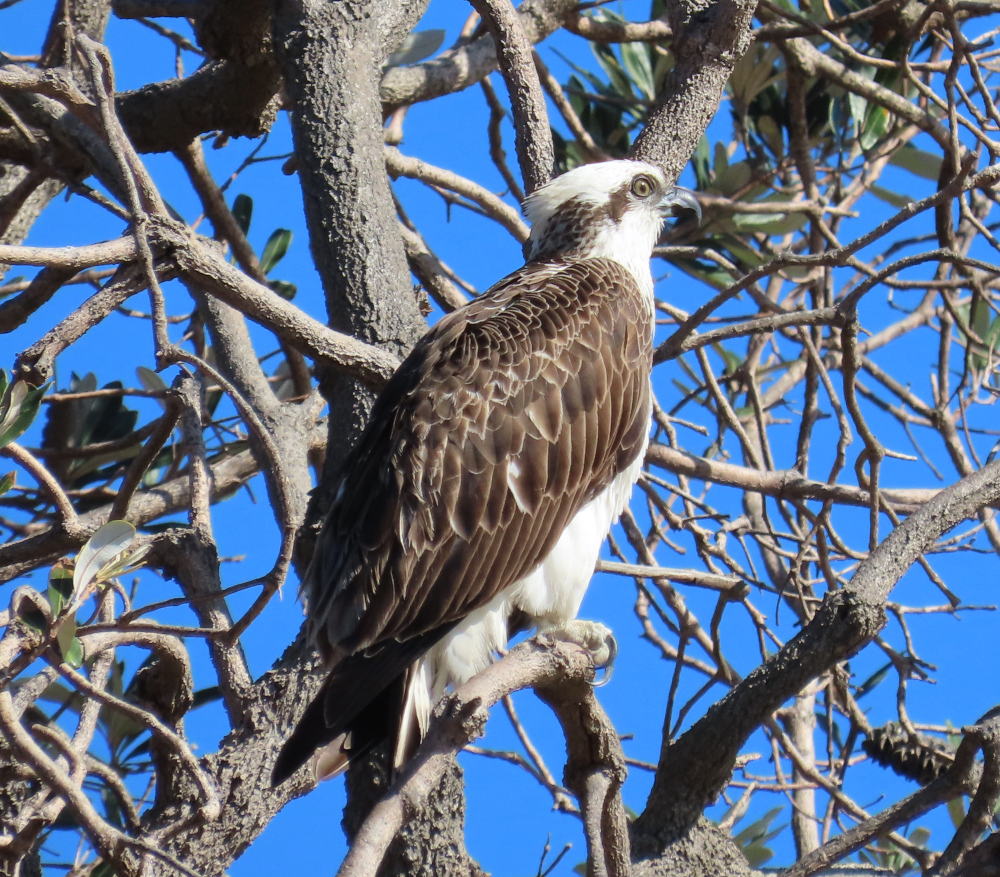
Then the Australian Raven arrived. Here the Osprey is warning the raven off:

That’s when I started the video recording, which you can watch at the top of this post.
Here’s the best picture I have of the osprey in flight:

Common name: Eastern Osprey
Scientific name: Pandion cristatus
Approximate length: 57 cm
Date spotted: 19 June 2024 (winter)
Location: Long Reef Aquatic Reserve, Collaroy, New South Wales, Australia: 33°44’19.7″S 151°18’42.0″E

Wedge-tailed Eagle soaring over the Cobb Highway
We were driving along the Cobb Highway in central New South Wales, between Wilcannia and Ivanhoe. I spotted this eagle during a stop for lunch. Unfortunately, my camera settings weren’t properly adjusted for the light. Still, it’s worth recording this sighting as I don’t often have the opportunity to see a Wedge-tailed Eagle. In fact, this is only my second sighting ever.
Common name: Wedge-tailed Eagle
Scientific name: Aquila audax
Approximate length: 0.9-1.1 m; wing span 1.8-2.5 m
Date spotted: 19 May 2024 (autumn)
Location: Cobb Highway near Ivanhoe, New South Wales, Australia: 32°23’55.4″S 143°54’02.0″E

Whistling Kite on the Bogan River
Early one morning, on the banks of the Bogan River at Nyngan, I watched this raptor calling and flying. I was in the area, at the start of a trip heading west from Sydney into the Australian Outback.
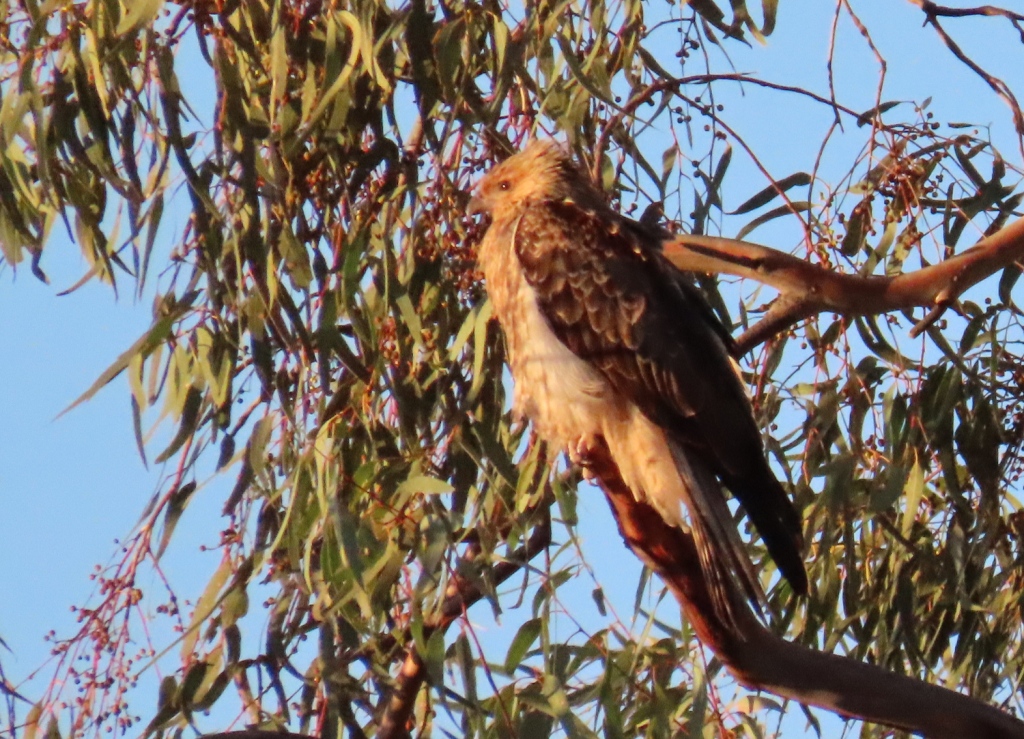
In this video, the piercing call of the bird echoes across the river. The background noise in the video is mostly from the wind. It was a cold and blustery morning:
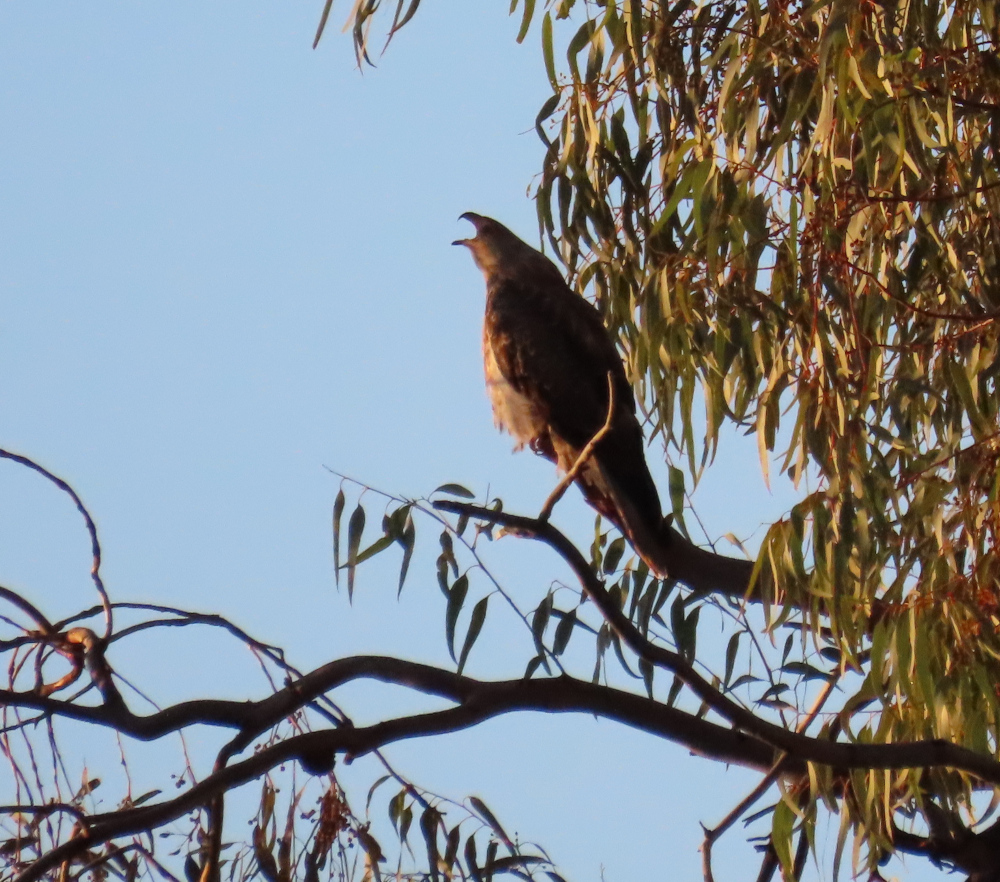
In the next shot, the bird’s head is up and its beak is opened wide, in the midst of making its call:
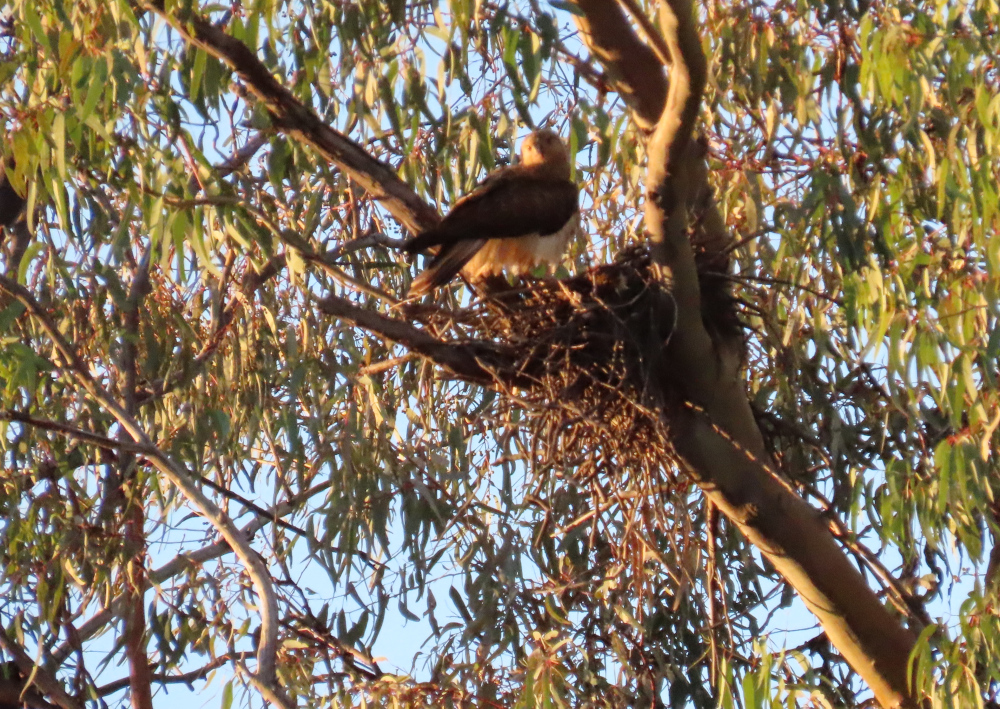
Nearby was the bird’s nest, a platform of loosely woven sticks:
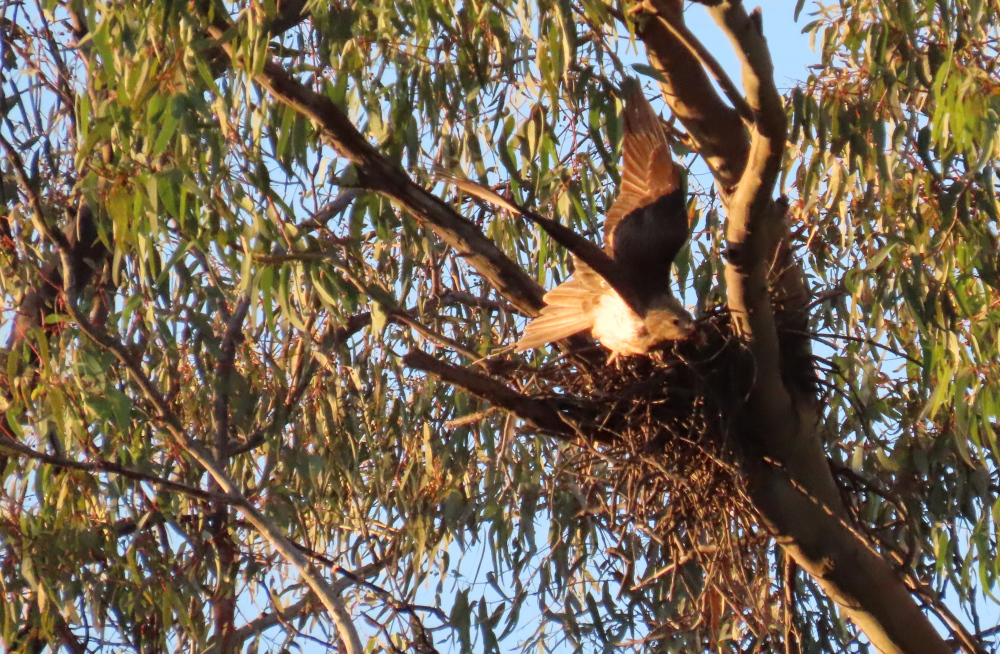
The bird departed from and returned to its nest a couple of times while I watched:
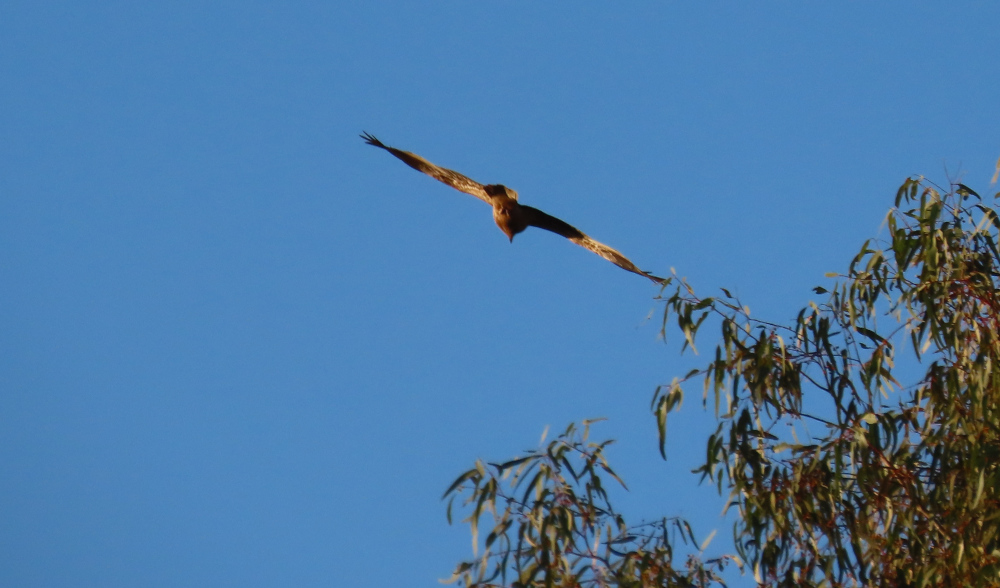
Each time it left the nest, the bird would circle high in the sky, or swoop down over the river. There were a few other birds circling too, so I can’t be sure that this is the same bird:
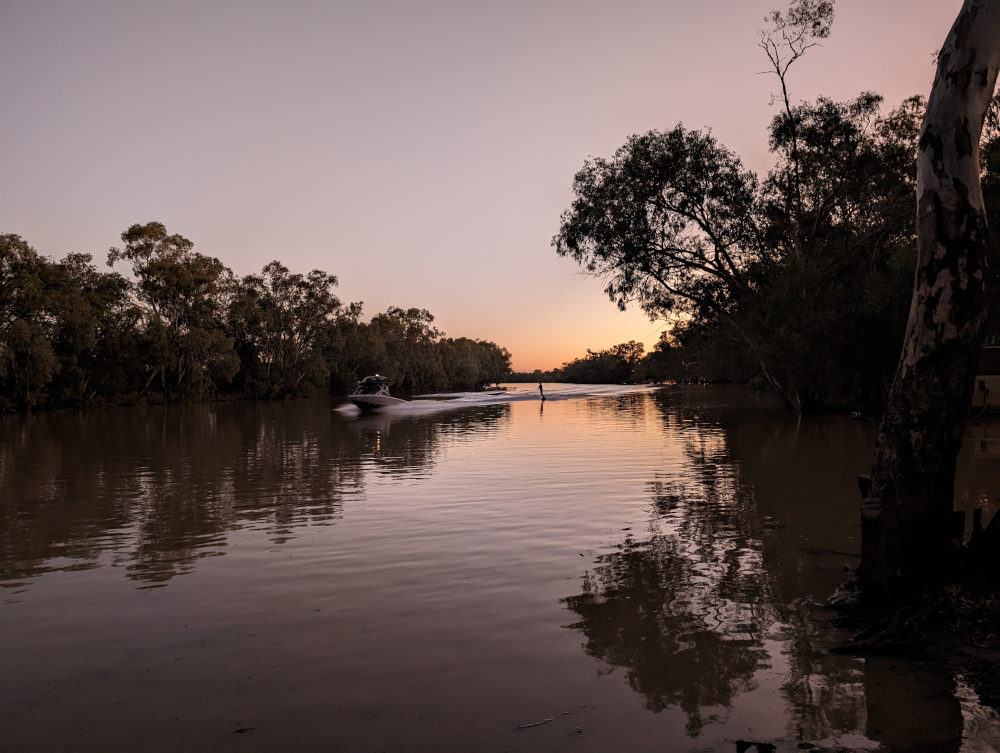
I saw the bird in the evening of 17 May, and then again the next morning. All my bird photos are morning shots. The next shot shows an evening shot of the Bogan River, near where the bird had built its nest. When taking all the photographs, I was on the opposite bank of the river from the bird and its nest:
Here’s another shot of the same bird (again, a morning shot):
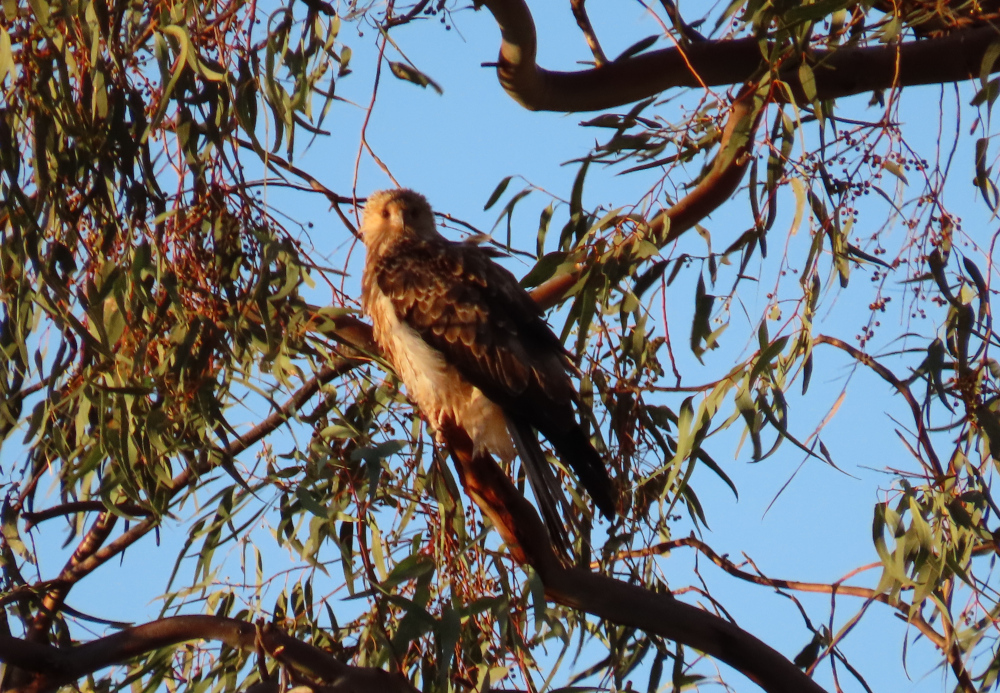
Common name: Whistling Kite
Scientific name: Haliastur sphenurus
Approximate length: 50-60 cm; wing span 1.2-1.5 m
Date spotted: 18 May 2024 (autumn)
Location: Nyngan Riverside Tourist Park, New South Wales, Australia: 31°33’39.1″S 147°10’45.2″E

Peregrine Falcon drops in to chat
This was such a wonderful experience! It was early one morning. I was strolling along the top of a cliff on North Head in Manly, and stopped to film some birds swooping around the cliff and the sea far below. To my surprise and delight, a Peregrine Falcon landed a few metres away and started calling.
You can see and hear the moment, at about 45 seconds into this video, when the falcon starts calling and the camera swings round to find it:
I don’t know if the birds swooping around the cliffs were Peregrine Falcons too. I suspect they were, as I heard their call, which came from a section of the cliff face that’s out of sight behind an outcrop. I’d been watching the birds for a while when one dropped in so suddenly.
The falcon stayed where it was, perched on a branch at the edge of the cliff, for a long time — at least 15 minutes. It was I who left in the end, not the bird.
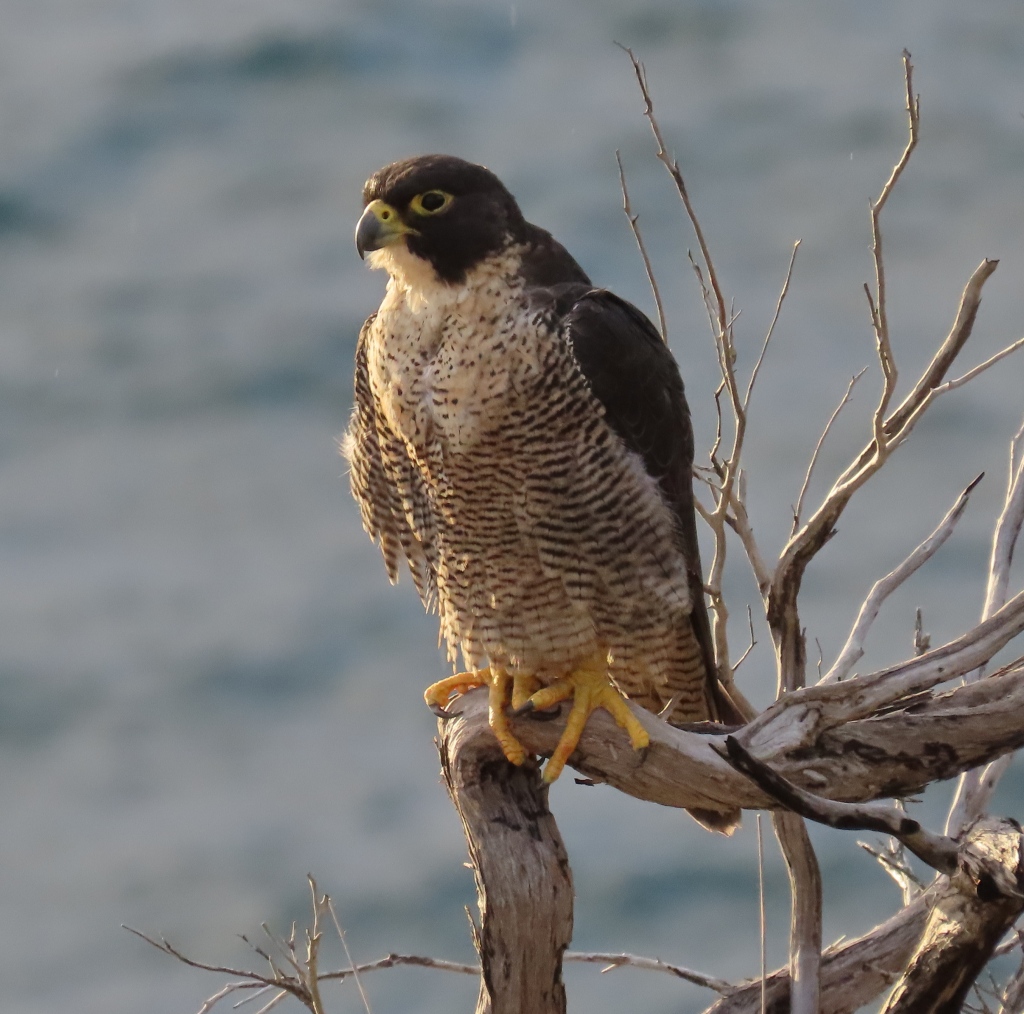
In the middle of a feather shuffle:
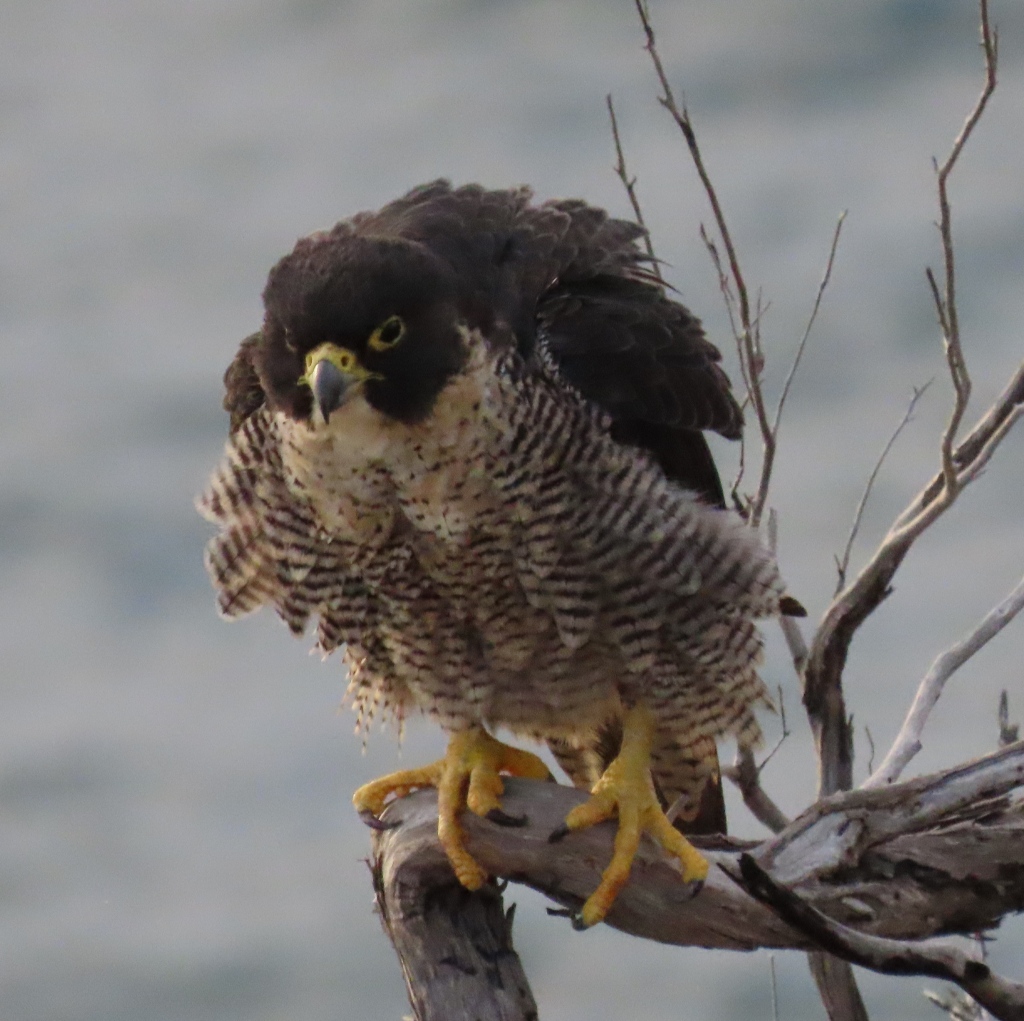
In the next video, the bird calls a few times (little chirps at the beginning; longer squeals at time stamp 1:02; squeals, hiccoughs, and chirps at 2:03; more at 2:35). It spends most of its time preening its feathers, which do seem to be in a bit of a state. Perhaps it’s a juvenile.
At about 50 seconds into the video, the view moves off the falcon to take in the ocean and the cliffs, but the bird calls attention back to itself quite soon.
At time stamp 2:16, both the falcon and I hear another bird calling overhead. The view wanders up into the sky to spot the other bird. Towards the end of the video, at 2:55, an aeroplane passes overhead and the bird quints up at it.
Although the falcon checked me out several times, it wasn’t in the least bit worried about me:

Common name: Peregrine Falcon
Scientific name: Falco peregrinus
Approximate length: 35-50 cm; wing span 85-100 cm
Date spotted: 7 May 2024 (autumn)
Location: Fairfax Track, North Head, Manly, New South Wales, Australia: 33°49’16.9″S 151°18’01.7″E

My first Wedge-tailed Eagle
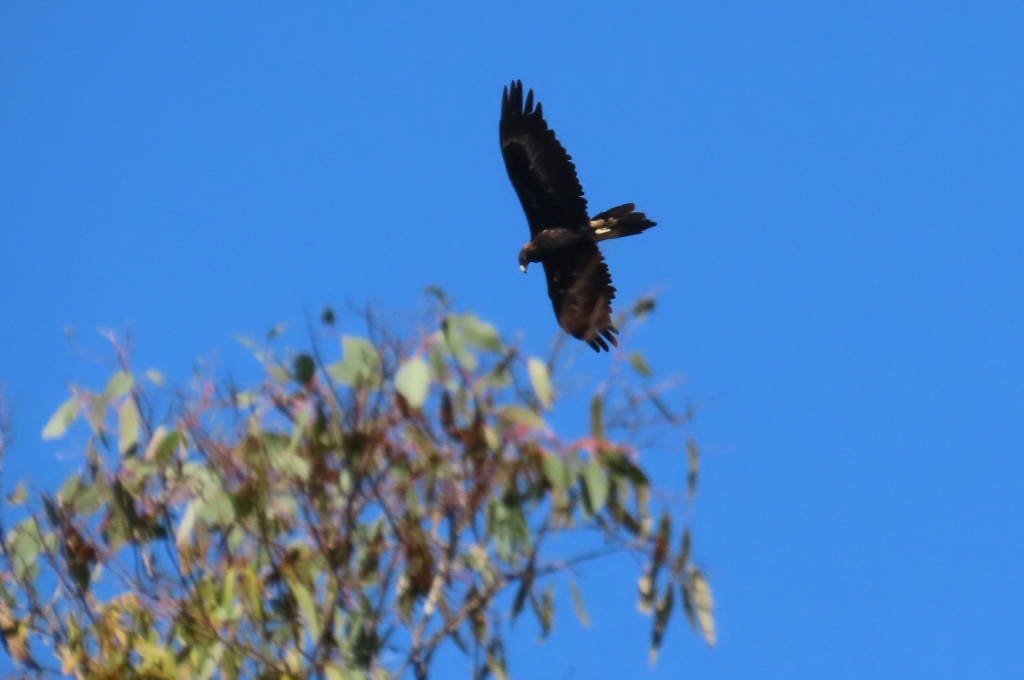
I was super excited to see my first Wedge-tailed Eagle a few days ago. This is Australia’s largest bird of prey, measuring about 1 metre from head to tail and with a wingspan of 1.8 to 2.5 metres. The females weigh up to 4.2 kilograms, while the male is smaller and weighs up to 3.2 kg.

We were camping at Mary Flynn Reserve on the Bridle Track in NSW, Australia. This bird was high up over the hills above a Turon River valley. Evidently these eagles can fly as high as 2 kilometres above the ground.
I was struck by the long, widely-separated wing feathers, and the ease with which the bird was gliding. At times it soared high, at others it dipped down to the tree tops, which from my perspective were still high on the hills above the valley.

These photos are all of the same bird at the same time of day. Later in the day, I saw another bird (or maybe the same one) taking off from a hillside. It was interesting to see the slow, heavy flaps of the wings that the bird needed to become airborne.
Here’s my final picture of the bird:
Common name: Wedge-tailed Eagle
Scientific name: Aquila audax
Approximate length: 0.9-1.1 m; wing span 1.8-2.5 m
Date spotted: 13 April 2024 (autumn)
Location: Mary Flynn Reserve, Bridle Track, New South Wales, Australia: 33°04’51.0″S 149°23’57.6″E

Birds galore at Long Reef Aquatic Reserve, Collaroy
Last week I spent a couple of hours at Long Reef Aquatic Reserve in Collaroy, NSW. I was there just for a walk with my partner, but I was delighted at the number and variety of birds we encountered.
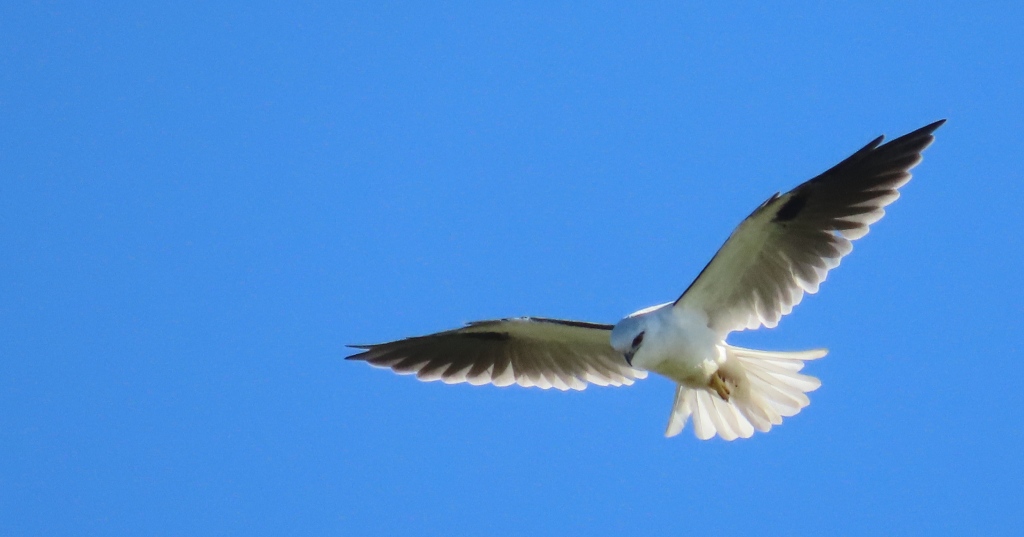
First up were two raptors, a real treat to see. A Black-shouldered Kite (Elanus axillarus) hovered in the air, effortlessly riding the currents and looking out for prey:
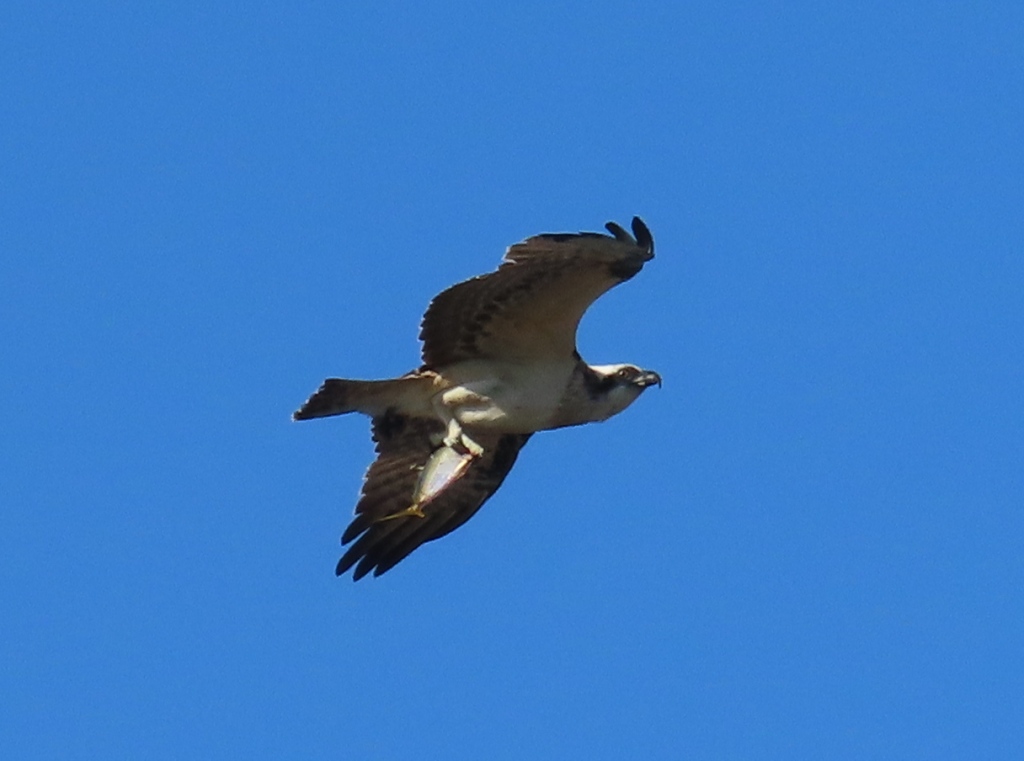
An Eastern Osprey (Pandion cristatus) soared in circles, grasping a half-eaten fish in its feet:
I’ve written a separate post about these two birds, a third raptor, and some paragliders who shared the air currents with the kite: Three raptors in one day.
Huge Pelicans (Pelecanus conspicillatus) perched on the lampposts and glided above my head. Here’s one of them, looking sad and wise:
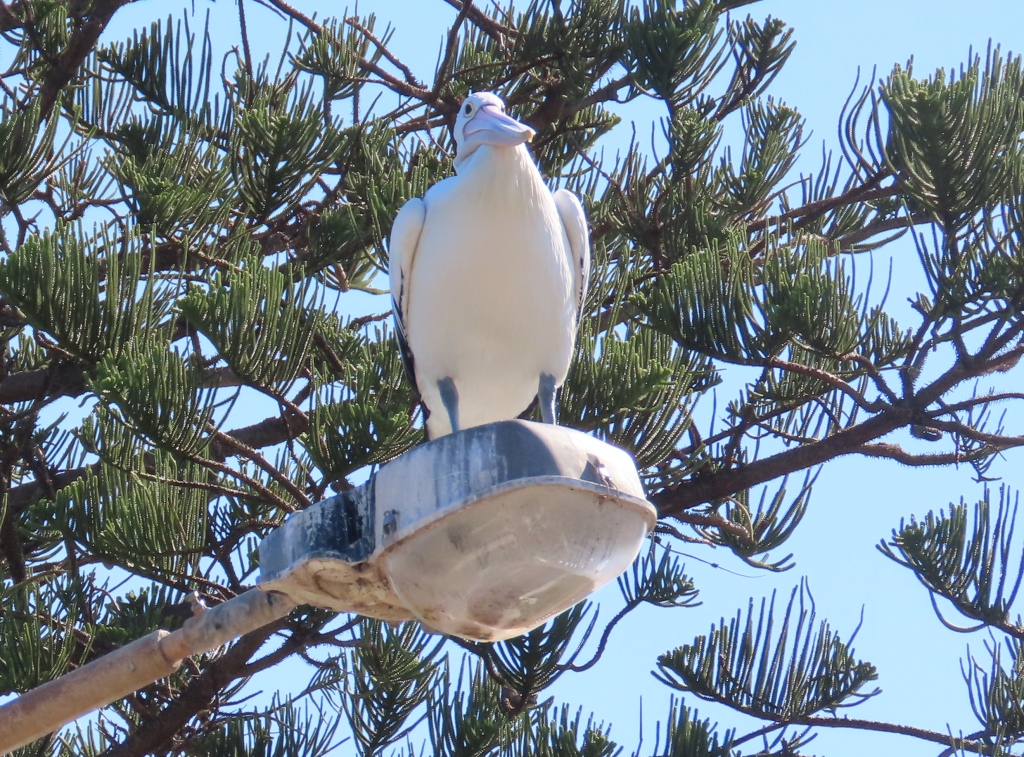
Another post has more pictures of these magnificent birds: Three pelicans on a lamppost.
A female Darter (Anhinga melanogaster) sat on a metal structure above the beach, surveying all the action with a cautious eye:

Silver Gulls (Larus novaehollandiae) wheeled around the fishermen at the edge of the rock plate:

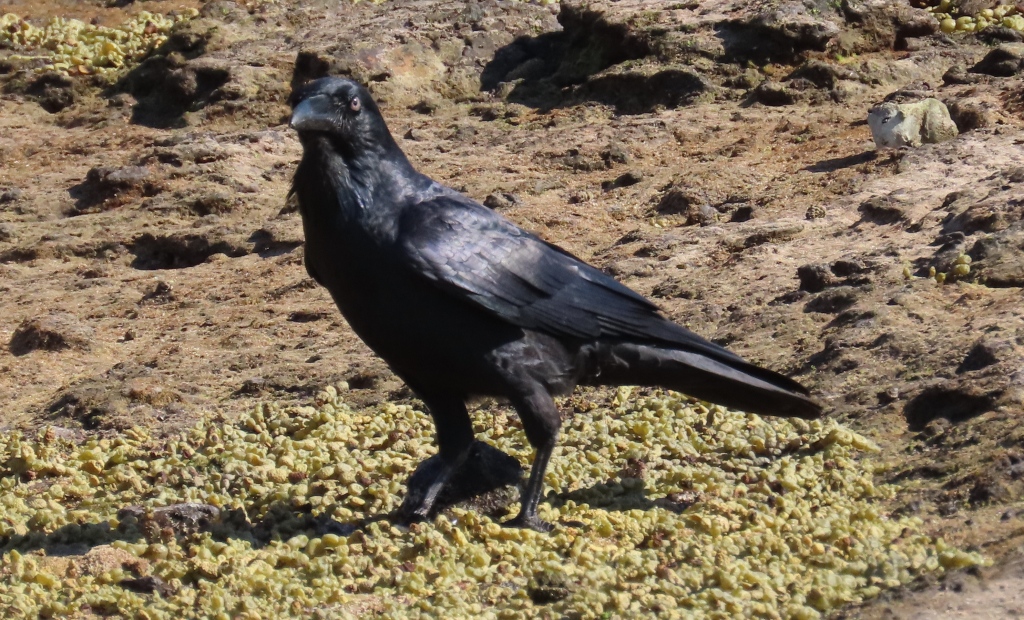
Australian Ravens (Corvus coronoides) picked through the stranded seaweed in search of a snack:

Here’s a close-up of one of the ravens:
Fish skulked in a nearby rock pool:

A crab came out from under a rock, ready to dash back in at the slightest sign of danger:

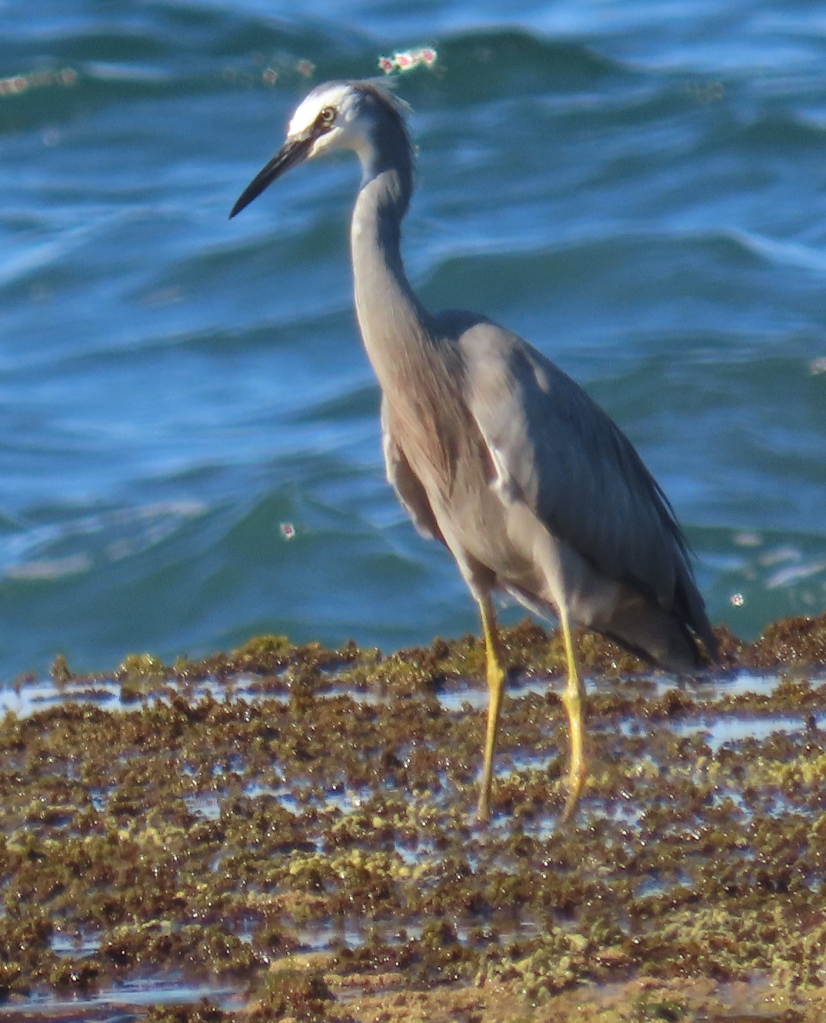
A White-faced Heron (Ardea novaehollandiae) patrolled the border between land and sea:
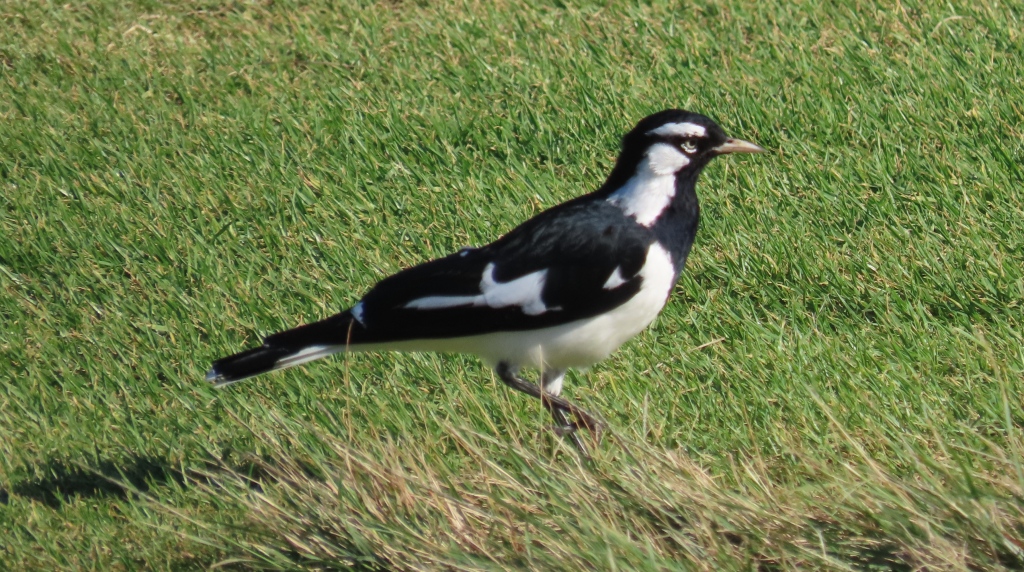
On the grassy headland above the beach, a Magpie-lark (Grallina cyanoleuca) owned the land. These birds are also called Peewees, because of the loud shrill call (peeee-wheee) that they make whenever a person or anything else comes too close:
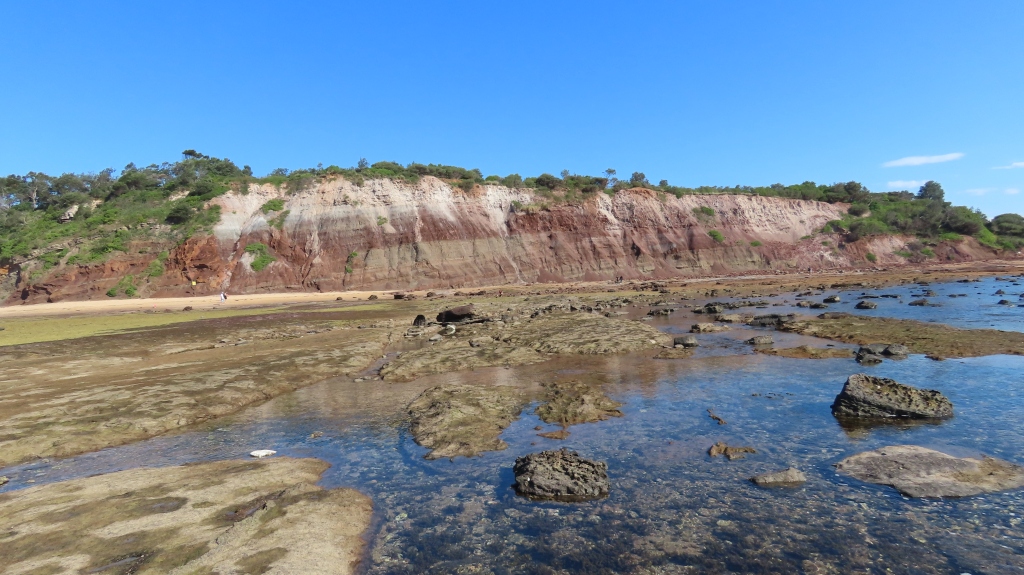
To close off with, here are a couple of shots showing the colours and serenity of the Long Reef Aquatic Reserve that afternoon. First, looking from the rock plate towards the land:
Then looking out to sea:


