Blog Archives
Eastern Spinebills and peaceful patterns
Eastern Spinebills are pretty little birds, with dramatic white and dark grey markings at their throats, and soft orange chests. Their long thin beaks give them their name. They’re honeyeaters, feeding on nectar from flowers, with the occasional insect too.

This video shows what it’s like to be in the Australian bush surrounded by Eastern Spinebills. You can hear the spinebills and other birds all round. The video doesn’t zoom in on the birds, but every now and then you can spot them flitting through the foliage.
The birds were in one of my favourite spots in the Manly Dam national park. Here’s a pic showing the patterns and peace in the area of the bush where the spinebills hang out:

Common name: Eastern Spinebill
Scientific name: Acanthorhynchus tenuirostris
Approximate length: 16cm
Date spotted: 15 September 2018 (Spring)
Location: Manly Dam Reserve, New South Wales, Australia: 33°46’24.3″S 151°15’03.8″E
Bar-shouldered Dove, not a Pallid Cuckoo
At first I thought this bird was a Pallid Cuckoo, but I was wrong. It’s a Bar-shouldered Dove. Thank you to Carol Probets for pointing this out in the comments on this post! Funny: In the original version of this post, I wrote, “It looks a bit like a large pigeon, doesn’t it?” 🙂
I didn’t know we had such large doves in Sydney. According to my bird book, Bar-shouldered Doves are common in northern Australia, but “uncommon or vagrant” in the south.
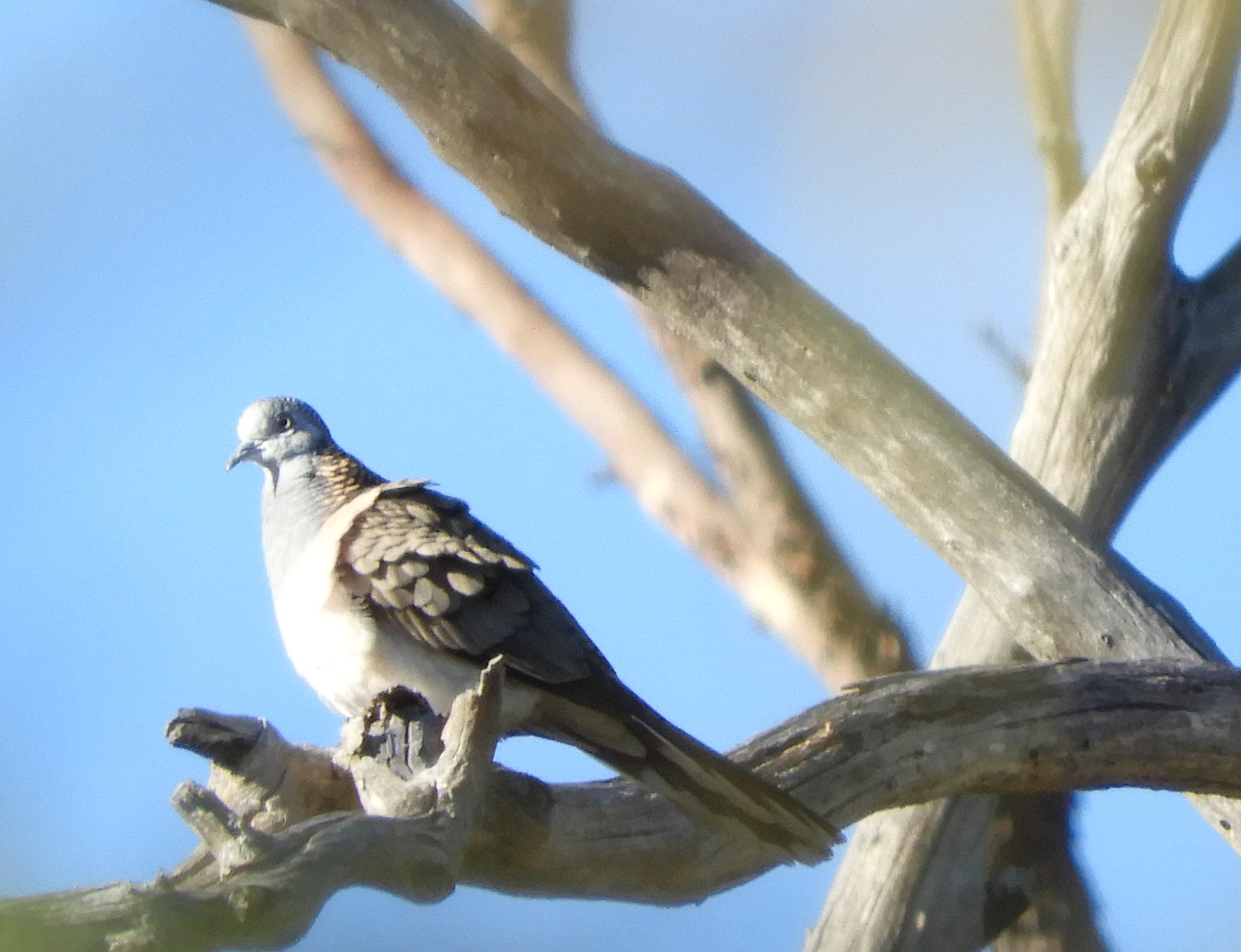
Common name:Bar-shouldered Dove
Scientific name: Geopelia humeralis
Approximate length: 30 cm
Date spotted: 1 September 2018 (early spring)
Location: Manly Dam National Park, New South Wales, Australia: 33°47’03.1″S 151°15’17.3″E
Black Swans are back
It’s been a while since I’ve seen Black Swans on Manly Dam. Now they’re back, and four of them at that. Black Swans are native to New South Wales, Australia.
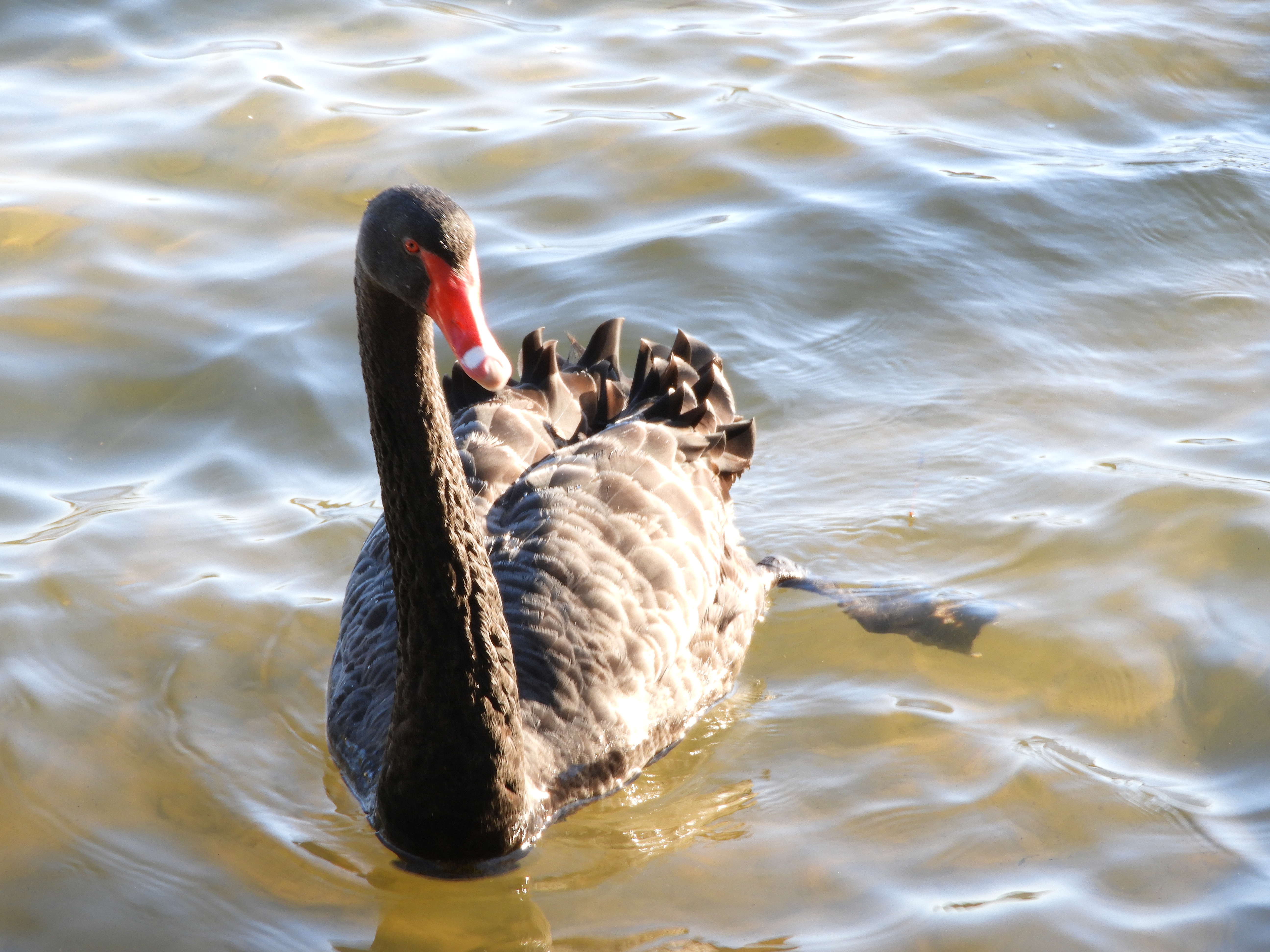
The call of a Black Swan is a soft hoot, a little like an apologetic cuckoo clock. You can hear it about 6 seconds into this video:
In the next video, the swans are caught in the converging melee of waterbirds when someone throws some scraps into the water. Again, the swans hoot about 6 seconds into the video:
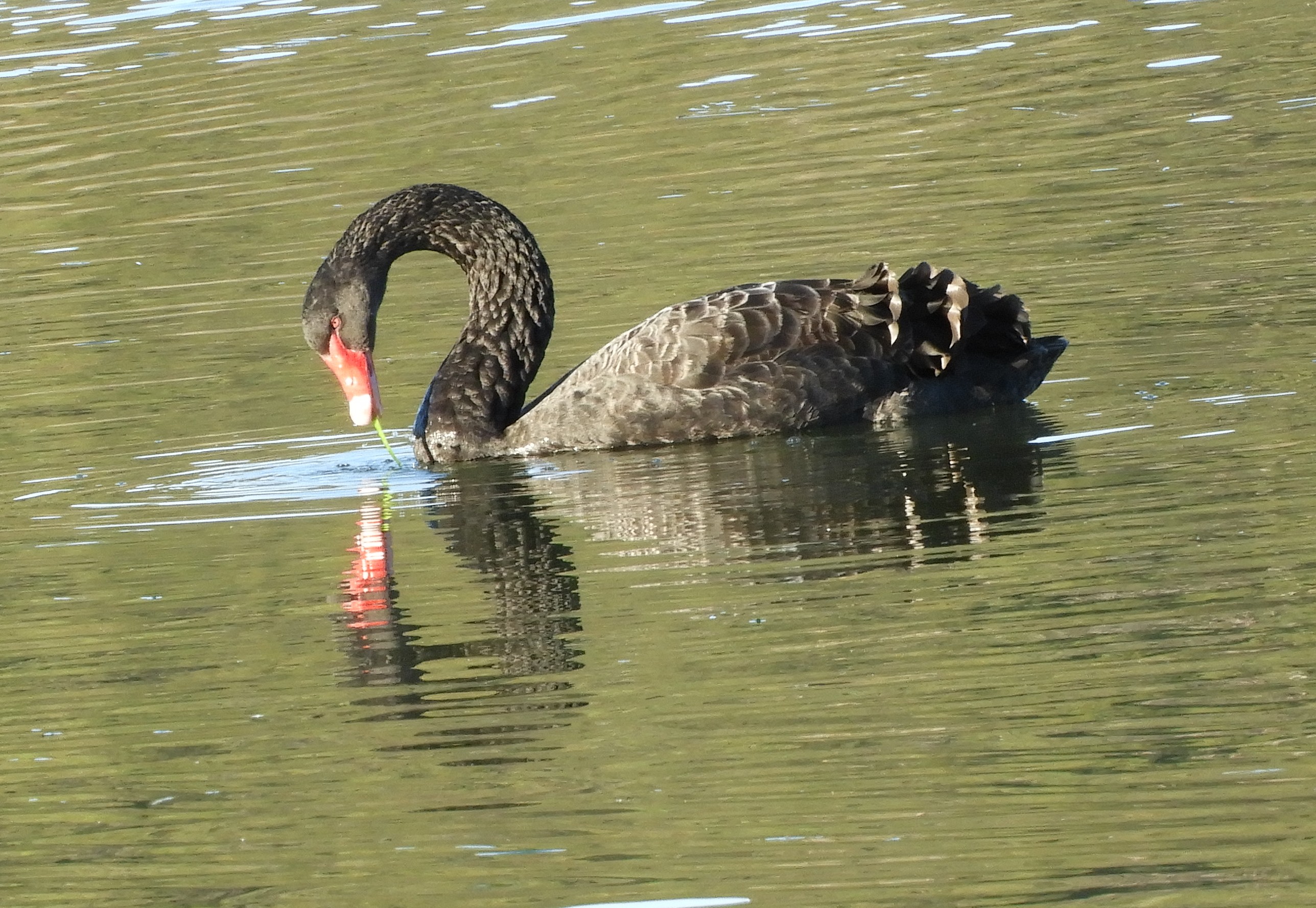
This swan slides a bit of green weed through its beak, presumably to scrape off slime and small creatures as food:
Reflecting on reeds:
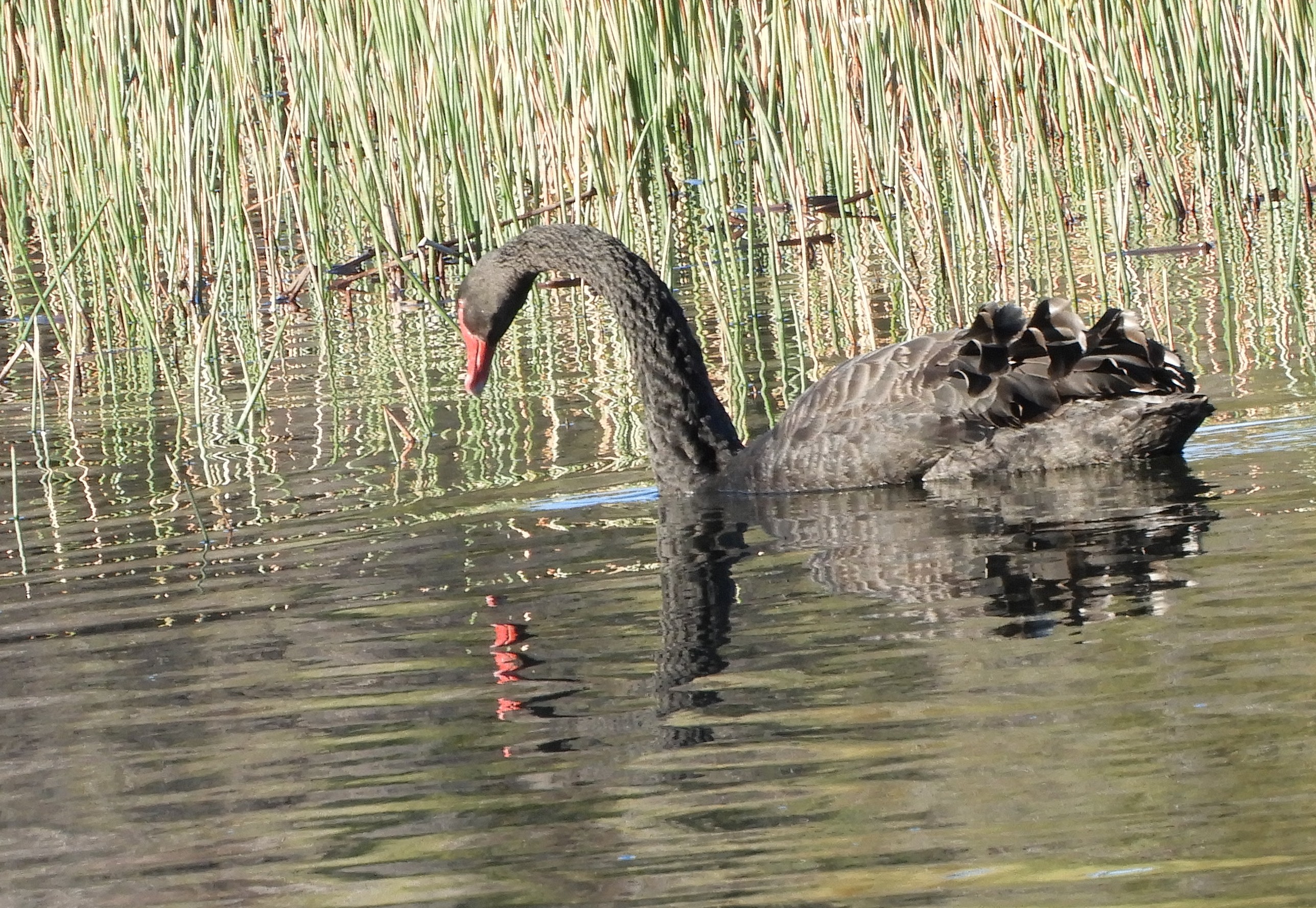
Common name: Black Swan
Scientific name: Cygnus atratus
Approximate length: 120 cm
Date spotted: 7 July 2018 (Winter)
Location: Manly Dam National Park, New South Wales, Australia: 33°46’58.3″S 151°15’18.7″E
King Parrot on neighbour’s tree
A high-pitched whistle drew me to the window early on Friday morning. A King Parrot perched on a nearby tree to take stock of the neighbourhood.
Here’s a zoomed-in view of the same photo:
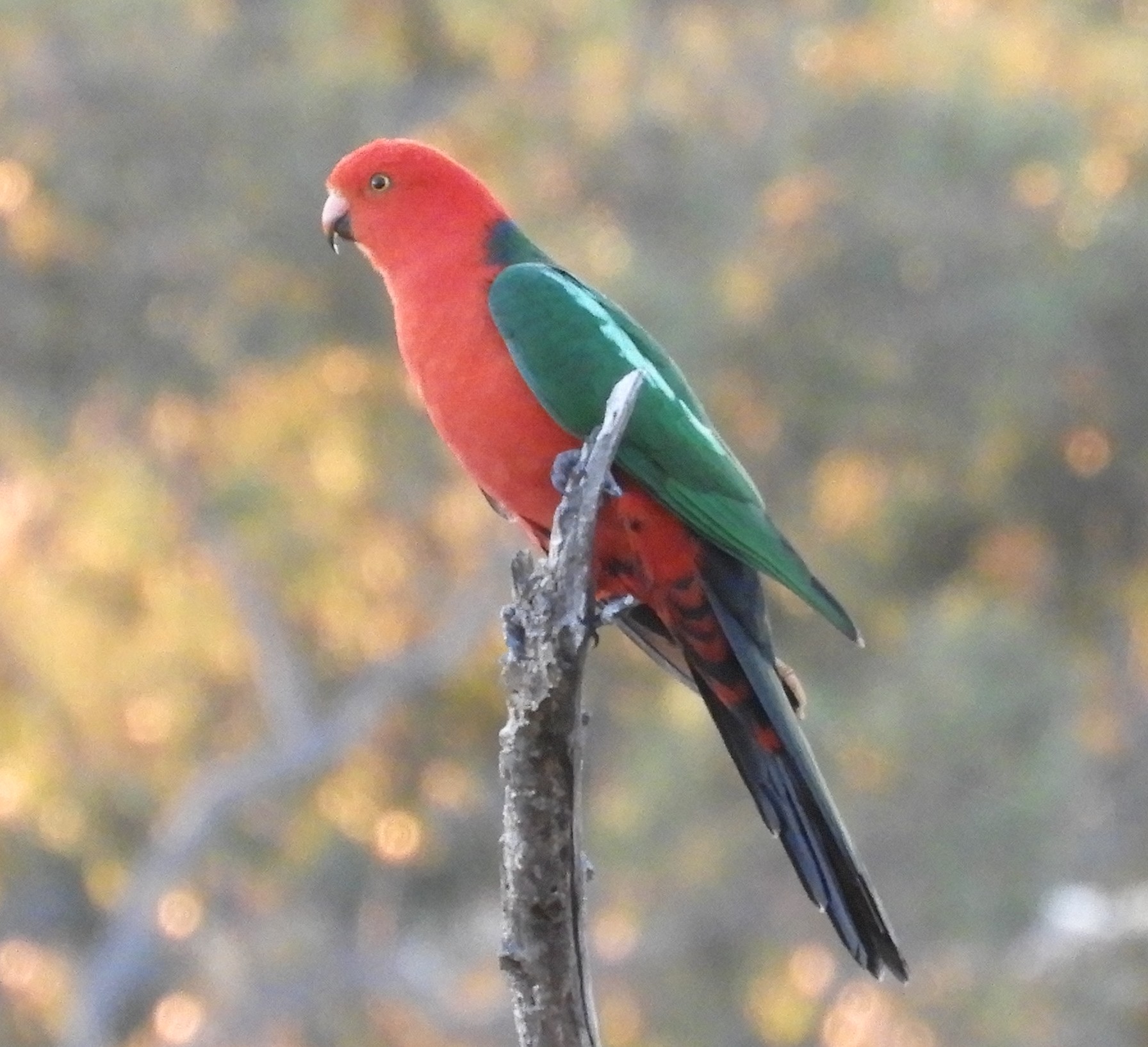
Common name: Australian King Parrot
Scientific name: Alisterus scapularis
Approximate length: 44 cm
Date spotted: 6 July 2018 (Winter)
Location: Allambie Heights, New South Wales, Australia
Little Wattlebird calling, mate unimpressed
A male Little Wattlebird does its best to impress (or intimidate) the bird sharing its branch. The other bird is unimpressed. In fact, its reaction seems to be, “Oh, please, are you really going to keep doing that?”
The call of a Little Wattlebird is strange. It often starts with a click-clack, as if the calling mechanism is turning over before getting into full gear. Then out comes the harsh bray that’s characteristic of the male bird. It seems to take a fair bit of effort to make this noise, as you can see in the video:
I went back to the same spot a day later, and snapped a picture of this male Little Wattlebird. It’s probably the same bird, given their fierce territoriality:
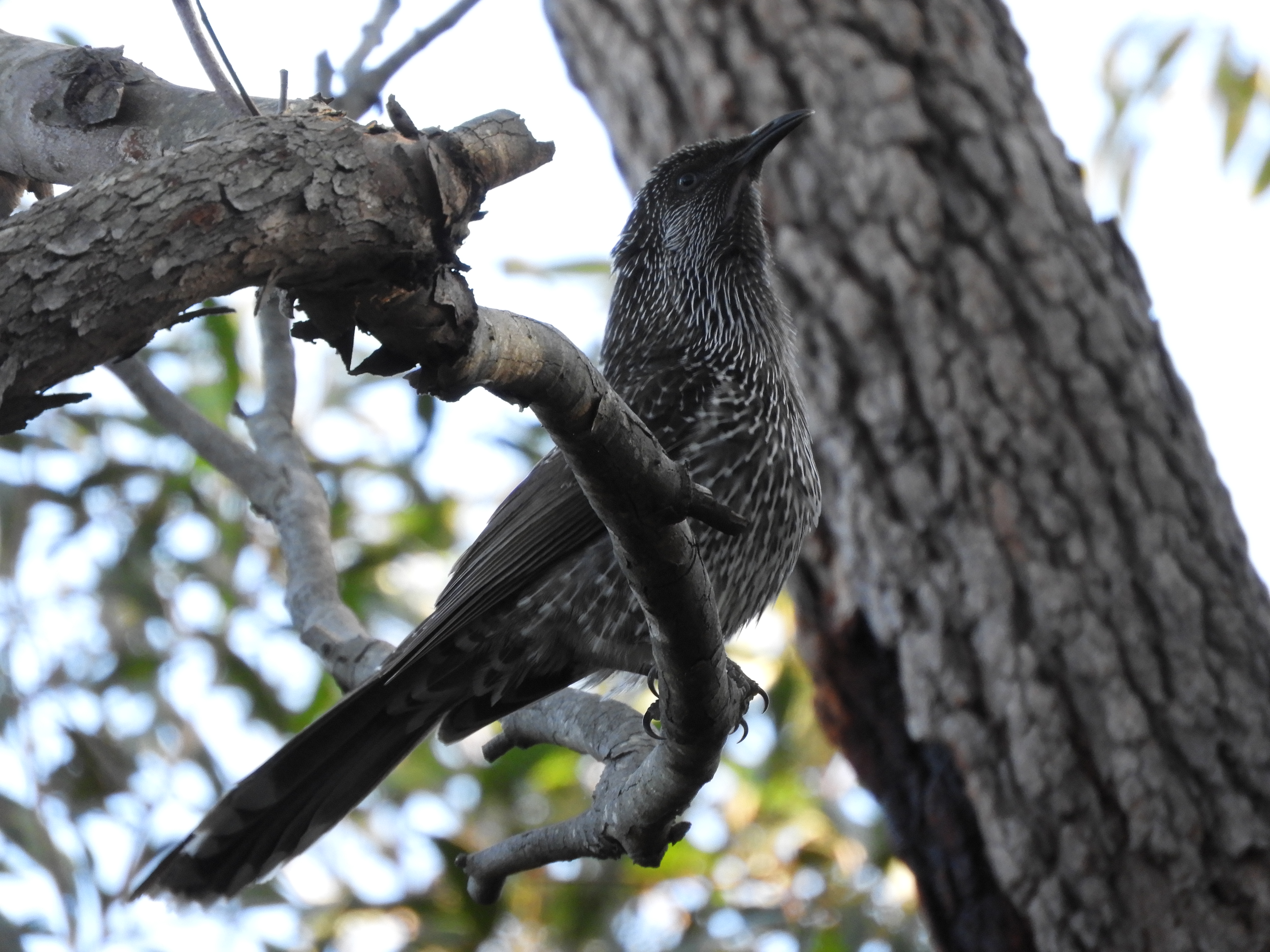
Common name: Little Wattlebird
Scientific name: Anthochaera chrysoptera
Approximate length: 30 cm
Date spotted: 7 July 2018 (Winter)
Location: Manly Dam National Park, New South Wales, Australia: 33°46’36.9″S 151°15’10.4″E
Pardalotes nesting and dancing
Pardalotes are tiny, neat little birds that usually spend very little time in one spot. So when I was walking along a bush path this morning, I was surprised when a female pardalote kept flitting up to a branch near me and stopping to peer at me. She’d also twitch from side to side, as if dancing.
Then a male bird arrived and fluttered from branch to branch around me. Then another female.

They didn’t seem worried, just attentive.

It dawned on me that I might be near their nest. Pardalotes are unusual in that they nest in holes just above ground level, usually dug into in a bank of earth. So I looked down towards my feet. Sure enough, there was a series of entrances dug into the bank near my ankles.

The nesting tunnels are nicely shored up by a strong wooden pole provided by some obliging person. Just the ticket for a pardalote home!
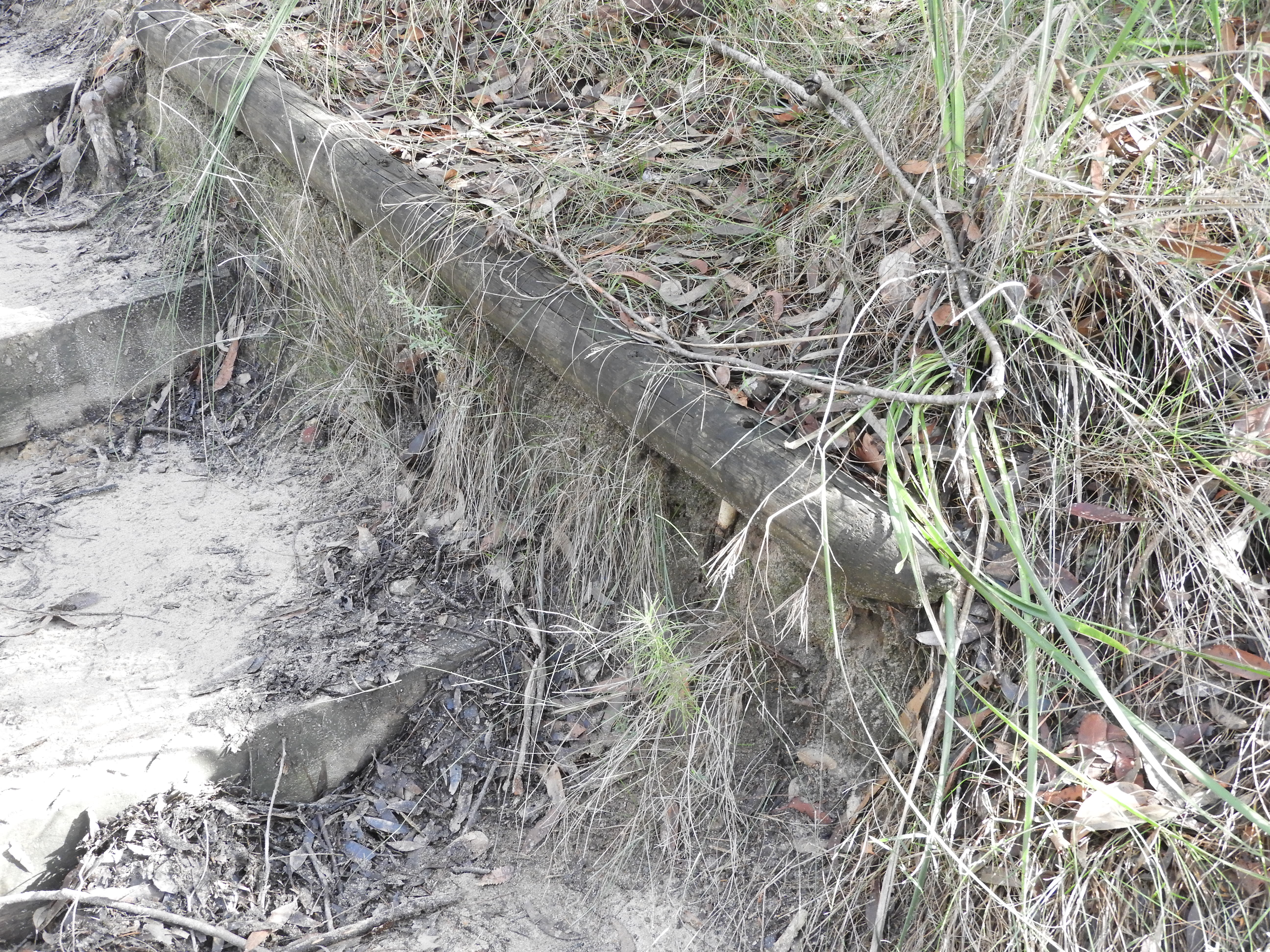
I moved a few steps further down the path, then stopped to watch. Now that I was out of the way, the birds were happy to visit their homes again. I saw birds popping in and out of two of the tunnels. The short clip below shows one of the female birds balancing on the slope outside a nesting hole, then flying away:
The video below shows the female flying away from the tunnel entrance, then returning and going inside, then there’s some footage of the male bird on a nearby branch. This is the only shot I managed to get of the male:
Another shot of one of the females:

And another, from a different angle:

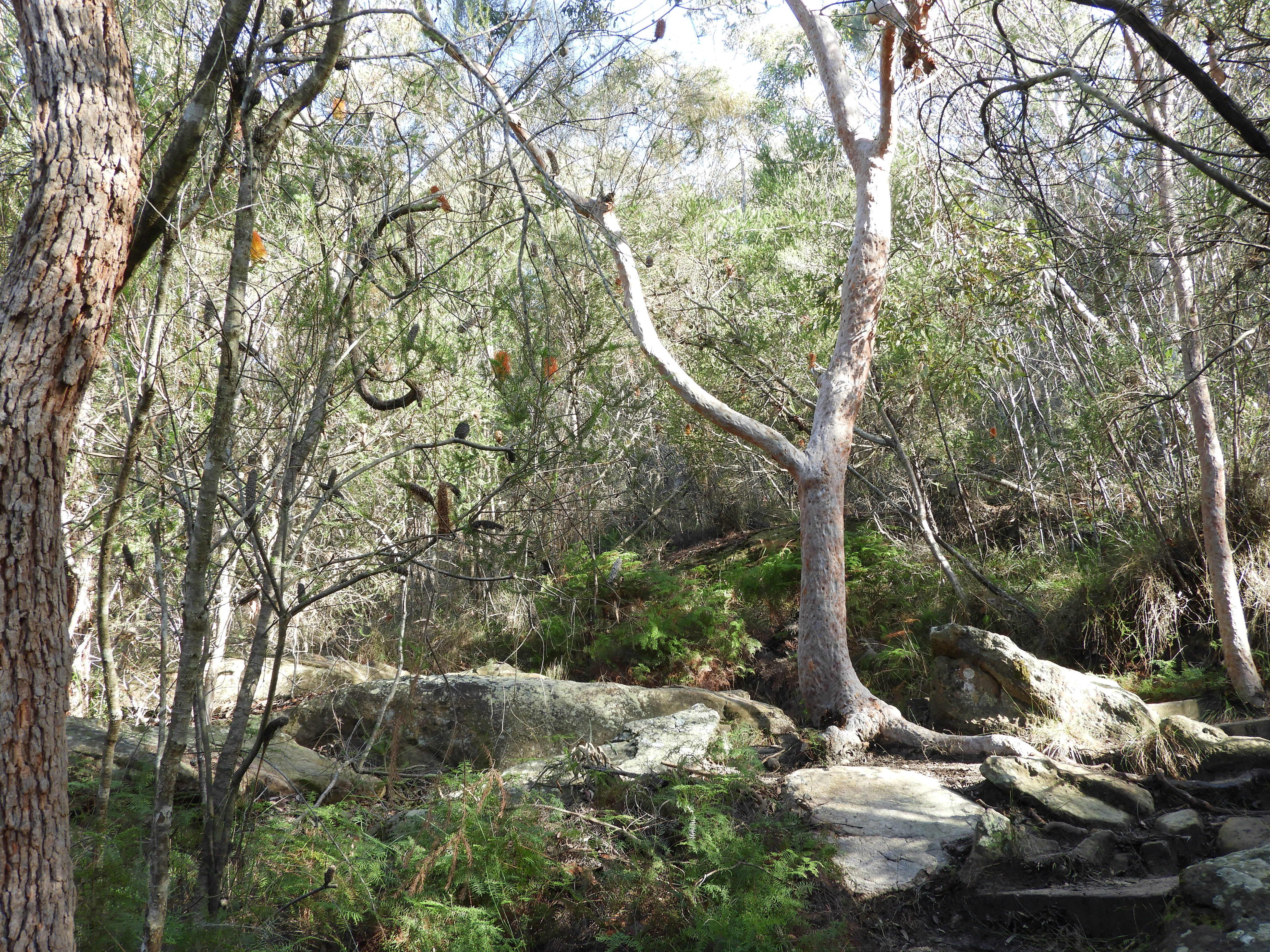
Here’s a general shot of the bushland around the birds. An open forest of eucalypts and banksia. What a lovely place to live, even in the midst of a Sydney winter:
Common name: Spotted Pardalote
Scientific name: Pardalotus punctatus
Approximate length: 10 cm
Date spotted: 1 July 2018 (Winter)
Location: Manly Dam National Park, New South Wales, Australia: 33°46’26.9″S 151°15’00.3″E
Shy Grey Shrike-thrush
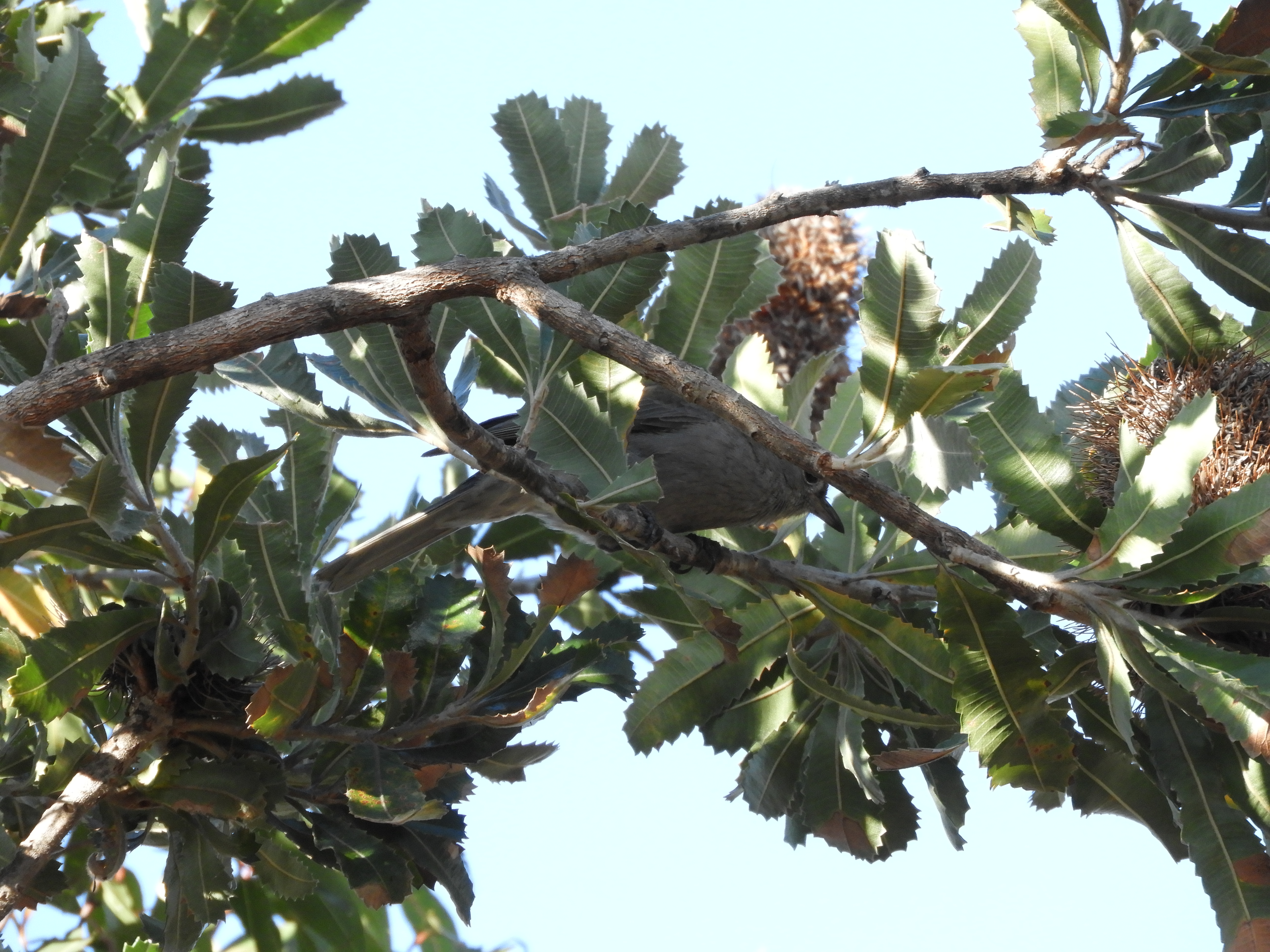
This is the first time I’ve spotted one of these birds. I think it’s a Grey Shrike-thrush. Neat and tidy, with understated grey plumage. The bird took great care to remain hidden behind the leaves and branches of a Banksia. I snapped a shot when it peeped out to see if I was still around:
Peeking out again:
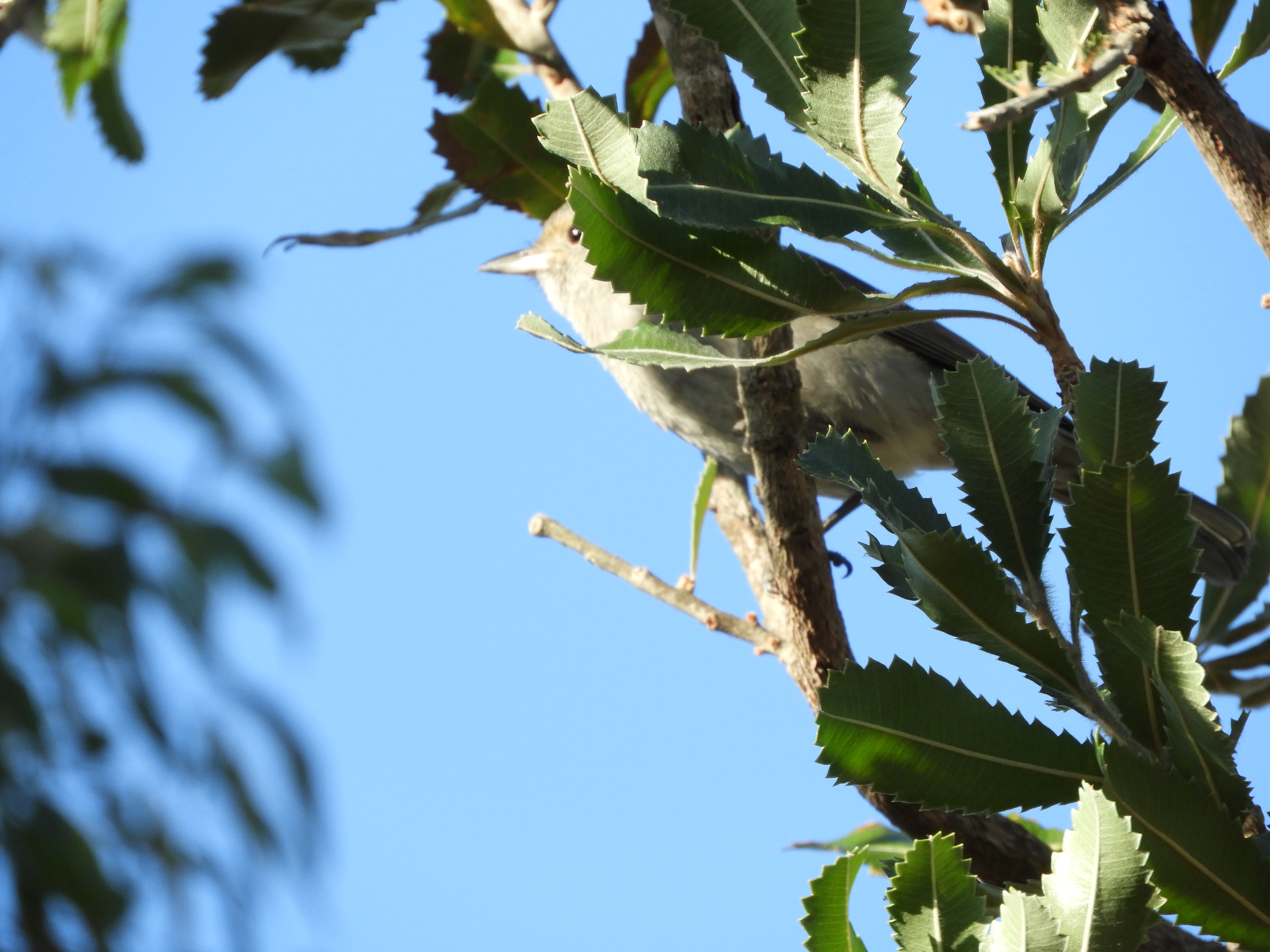
Now that I know Grey Shrike-thrushes are a thing, I’ll keep a look out and try to get a better picture.
Common name: Grey Shrike-thrush
Scientific name: Colluricincla harmonica
Approximate length: 23 cm
Date spotted: 19 May 2018 (Autumn)
Location: Manly Dam National Park, New South Wales, Australia: 33°46’36.7″S 151°15’16.9″E
Fluffy little Silvereye
Silvereyes are tiny puffballs that flit through the shadows of a gum tree. This one stopped a moment to glance up at the sky:
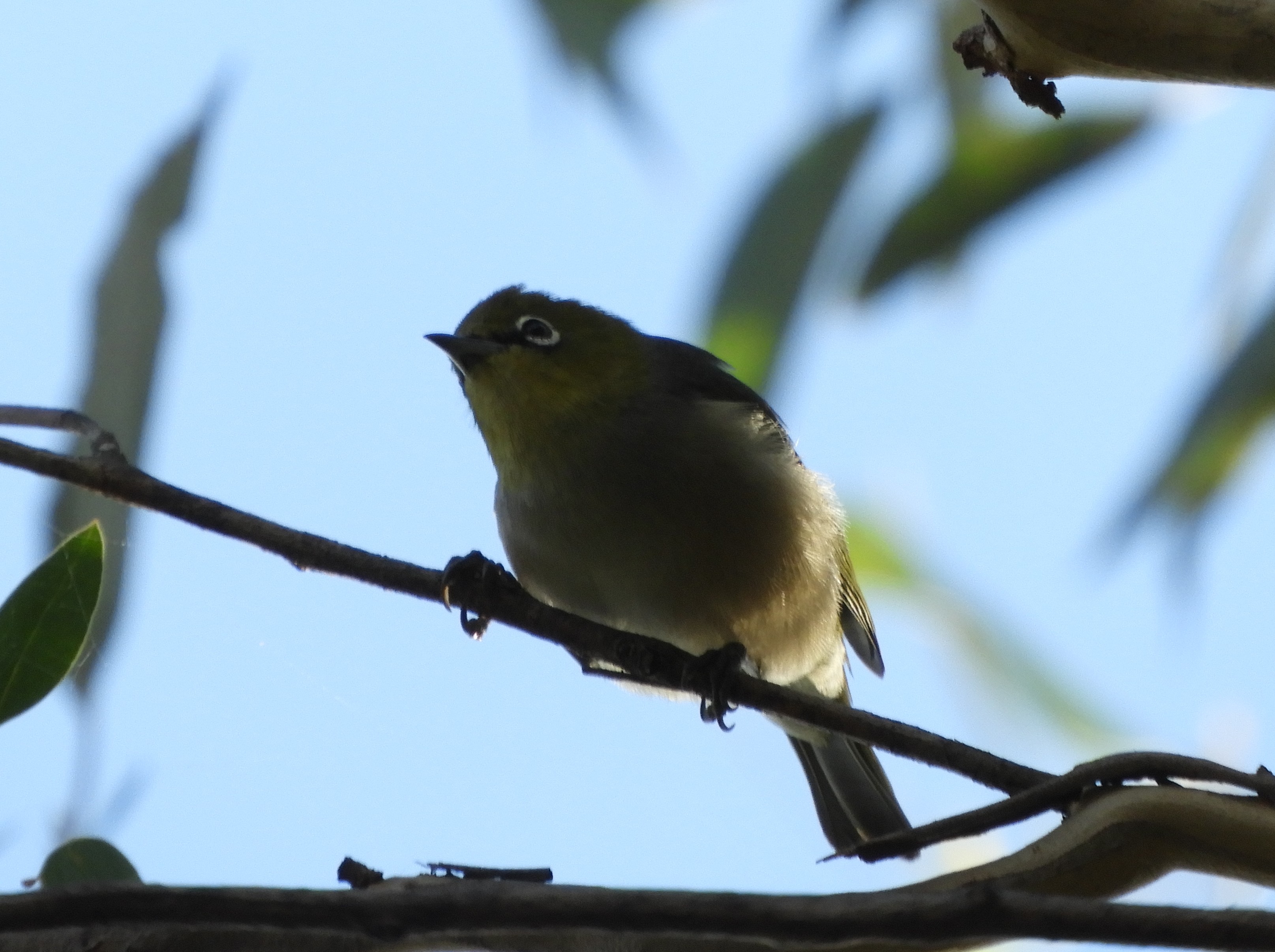
There are a few variations of Silvereyes in New South Wales. According to my bird book, this one is a Zosterops cornwalli. It has a yellow throat, which differentiates it from the white-throated lateralis also found around here.
Weirdly, the birds migrate up the eastern coast of Australia as winter approaches, but we’re still likely to see them around even in winter – it’s just that the ones we see have come from even further south, while the ones that live around here in summer have moved northwards for the winter.
I took a shot of the tree too, so that you can see the bird’s habitat:
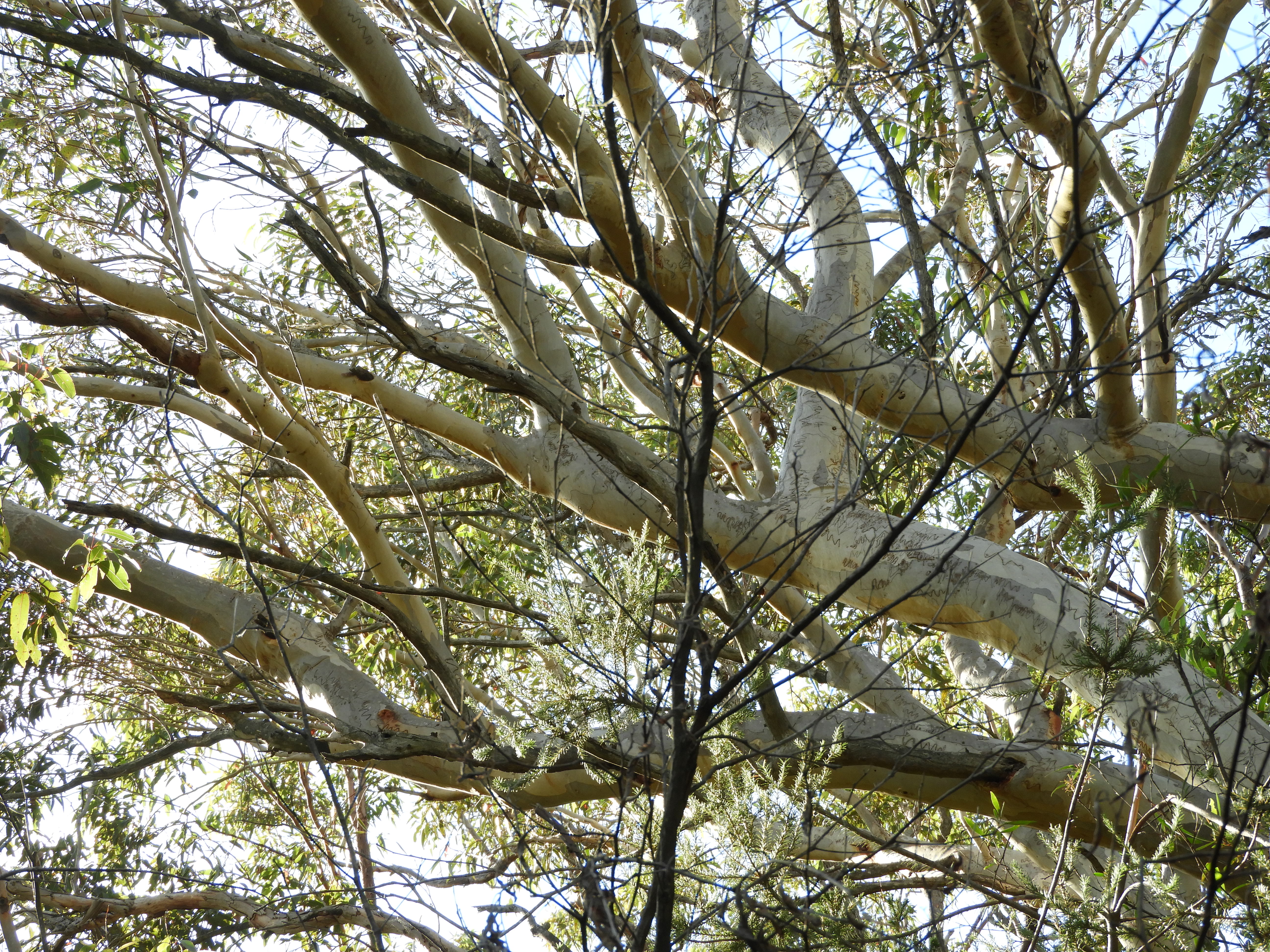
Last time I managed to snap a shot of one of these birds was at a mossy puddle, way back in 2016.
Common name: Silvereye
Scientific name: Zosterops cornwalli
Approximate length: 11 cm
Date spotted: 19 May 2018 (Autumn)
Location: Manly Dam National Park, New South Wales, Australia: 33°46’35.3″S 151°15’11.0″E
Black-faced Cuckoo-shrike in frame at last
I have just a very short, shaky video and two stills, but I’m so pleased I managed to get a Black-faced Cuckoo-shrike in the frame at last. I’ve seen and heard these birds a few times. They have a soft, chirring call and they swoop and glide high in the tree tops. When they come to rest, they’re either well shielded by foliage, or they fly off after just a short stop.
They have quite large eyes, and soft white and grey plumage:

This shot shows off the black face that gives the bird its name:
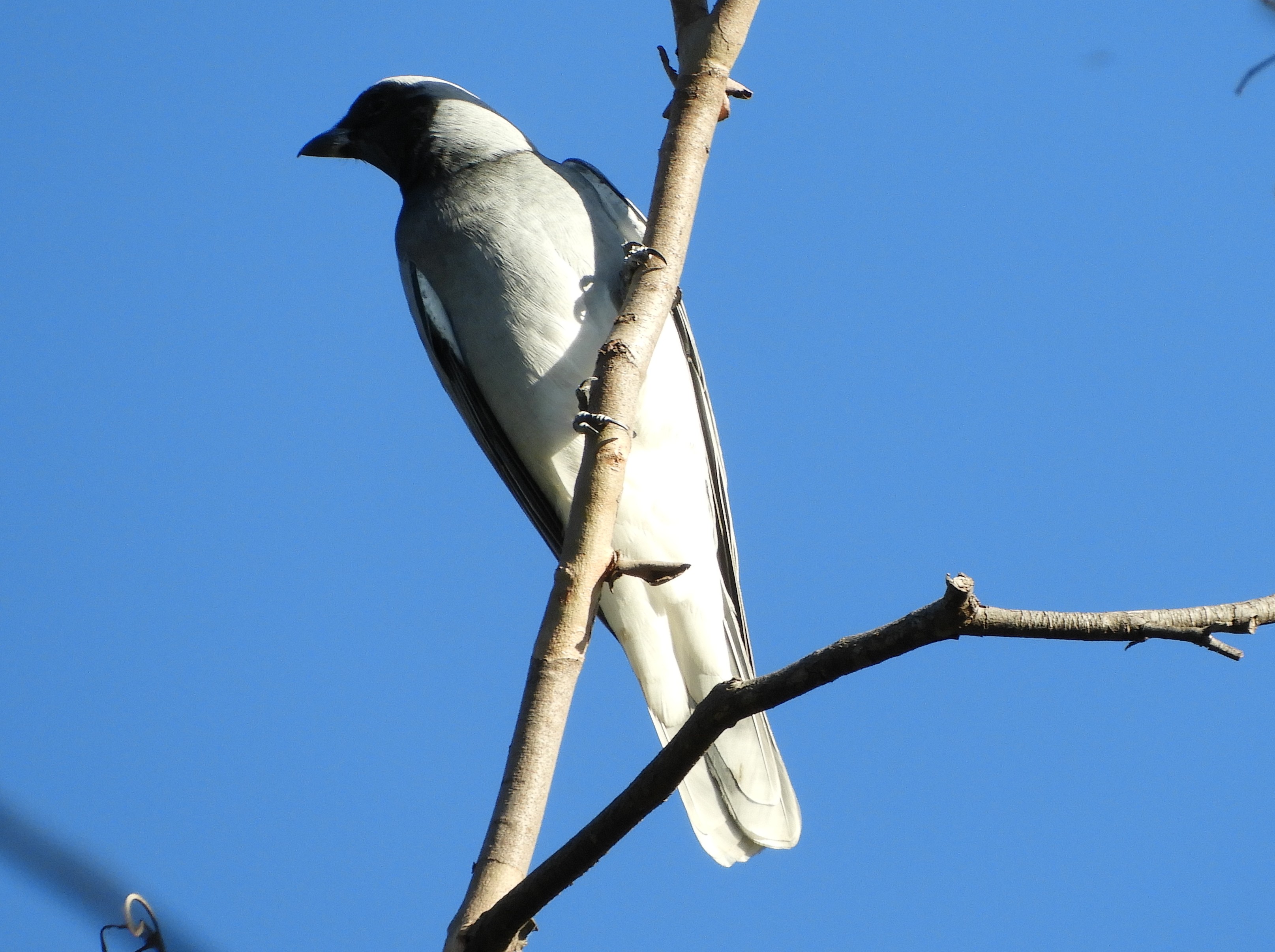
Common name: Black-faced Cuckoo-shrike, also called a shufflewing
Scientific name: Coracina novaehollandiae
Approximate length: 35 cm
Date spotted: 5 May 2018 (Autumn)
Location: Manly Dam National Park, New South Wales, Australia: 33°46’50.1″S 151°15’04.5″E
A Scrubwren I think
I’ve pored through my bird book and decided this little bird looks most like a Scrubwren of some sort. It’s a very small bird, around 11 centimetres long. It has a relatively long beak, a dark grey mask around its eyes, and white tips on its shoulder feathers. What’s confusing is that this bird seems largely grey, while the pictures of Scrubwrens are largely brown.
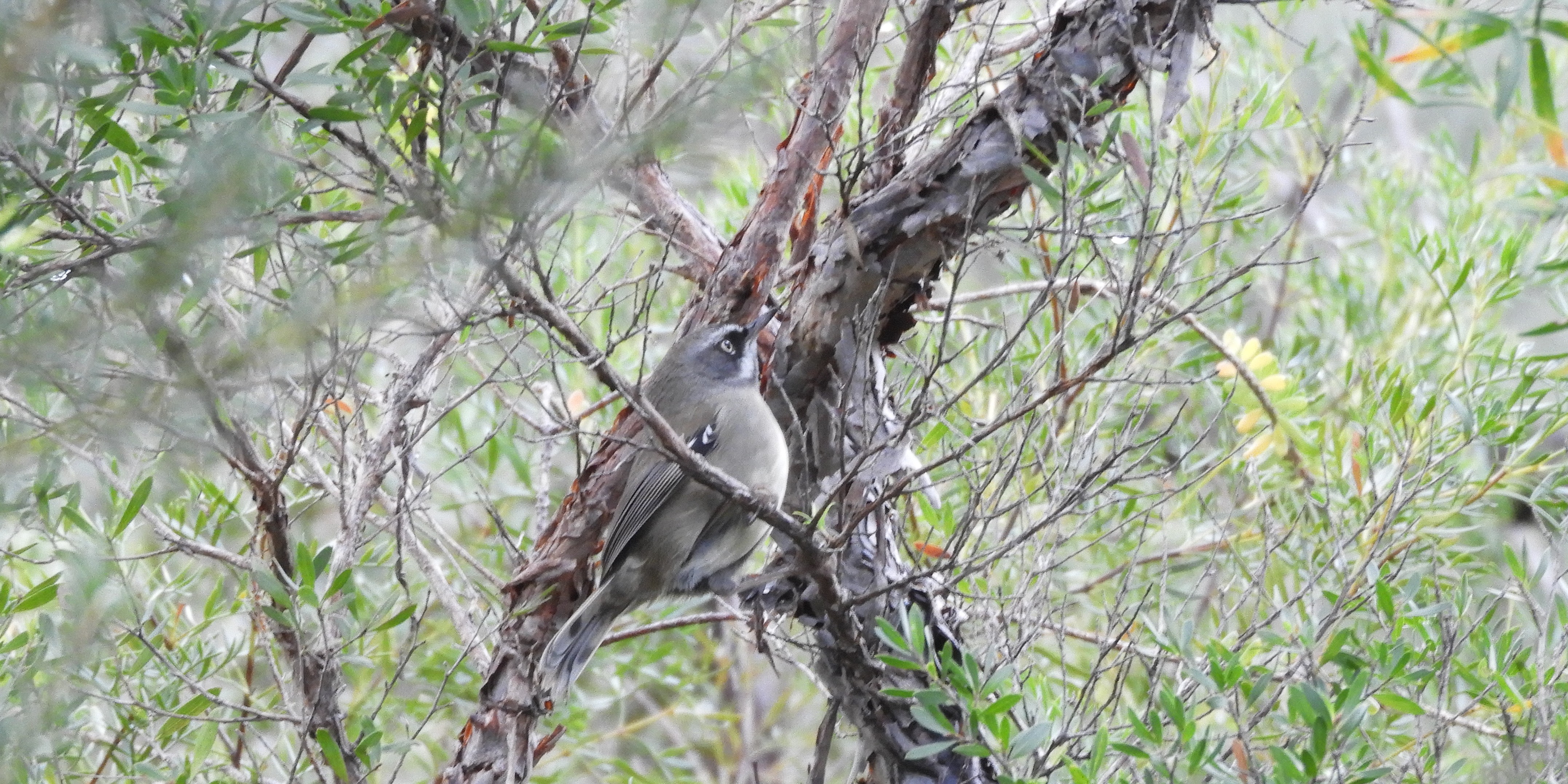
The bird was flitting around an area of the bush where I often see and hear movement, but am never fast enough to snap a picture. Today I managed – just!
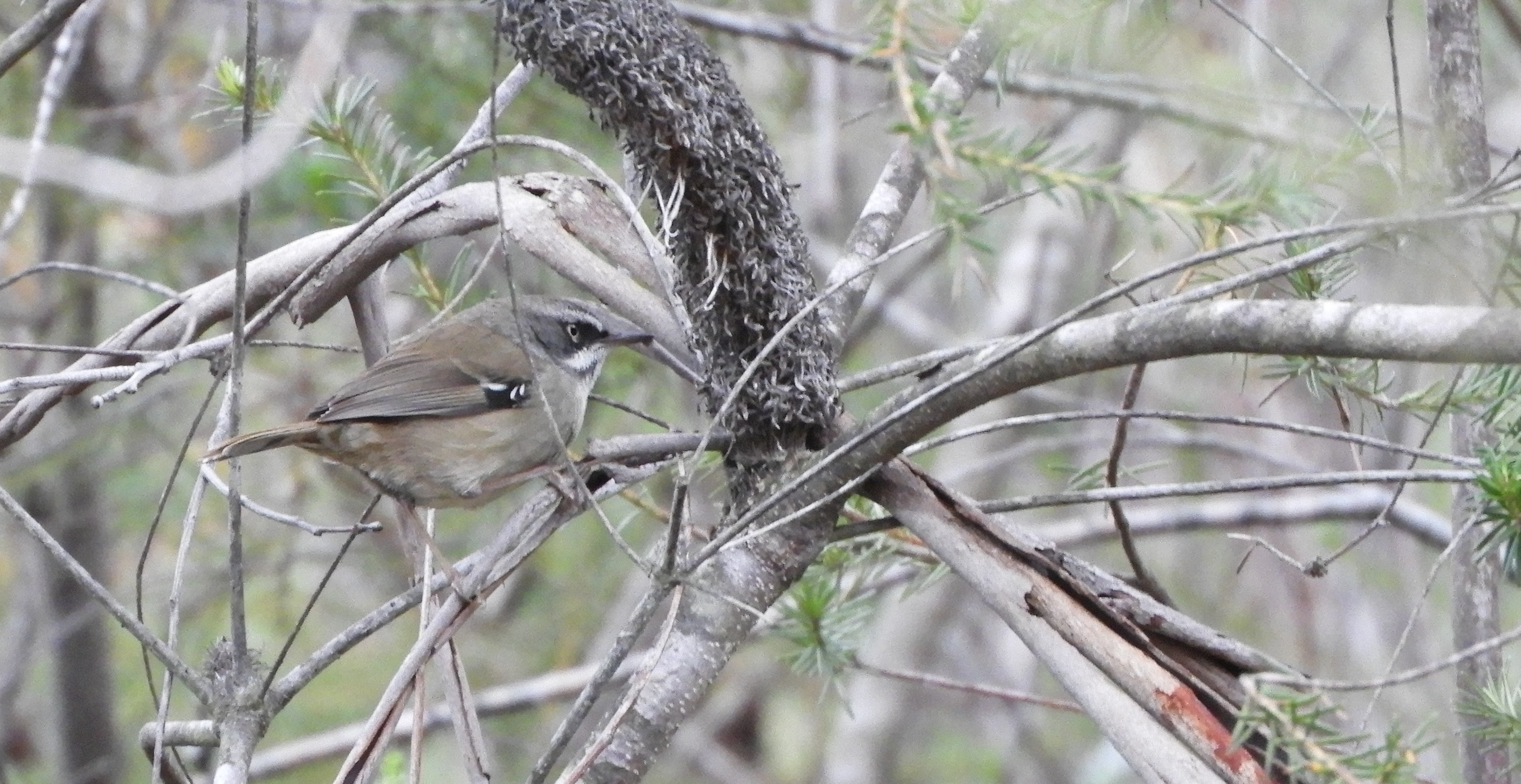
Here’s a picture of the bird’s surroundings – lovely, quiet, dense bushland:

Common name: Some kind of Scrubwren?
Approximate length: 11-13 cm
Date spotted: 29 April 2018 (Autumn)
Approximate location: Manly Dam National Park, New South Wales, Australia: 33°46’22.0″S 151°14’56.8″E


