Blog Archives
Black-faced Cuckoo-shrike in frame at last
I have just a very short, shaky video and two stills, but I’m so pleased I managed to get a Black-faced Cuckoo-shrike in the frame at last. I’ve seen and heard these birds a few times. They have a soft, chirring call and they swoop and glide high in the tree tops. When they come to rest, they’re either well shielded by foliage, or they fly off after just a short stop.
They have quite large eyes, and soft white and grey plumage:

This shot shows off the black face that gives the bird its name:
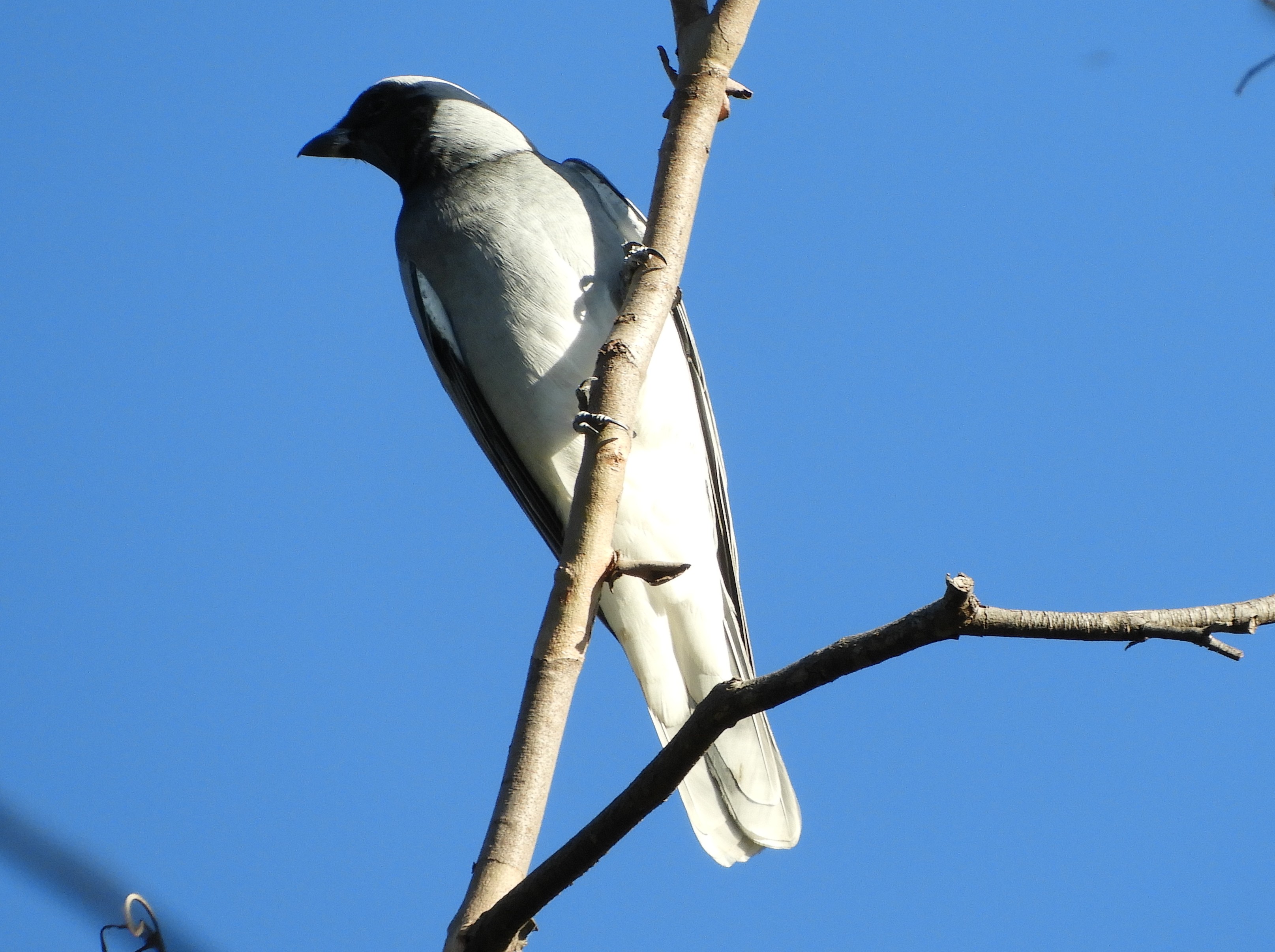
Common name: Black-faced Cuckoo-shrike, also called a shufflewing
Scientific name: Coracina novaehollandiae
Approximate length: 35 cm
Date spotted: 5 May 2018 (Autumn)
Location: Manly Dam National Park, New South Wales, Australia: 33°46’50.1″S 151°15’04.5″E
A Scrubwren I think
I’ve pored through my bird book and decided this little bird looks most like a Scrubwren of some sort. It’s a very small bird, around 11 centimetres long. It has a relatively long beak, a dark grey mask around its eyes, and white tips on its shoulder feathers. What’s confusing is that this bird seems largely grey, while the pictures of Scrubwrens are largely brown.
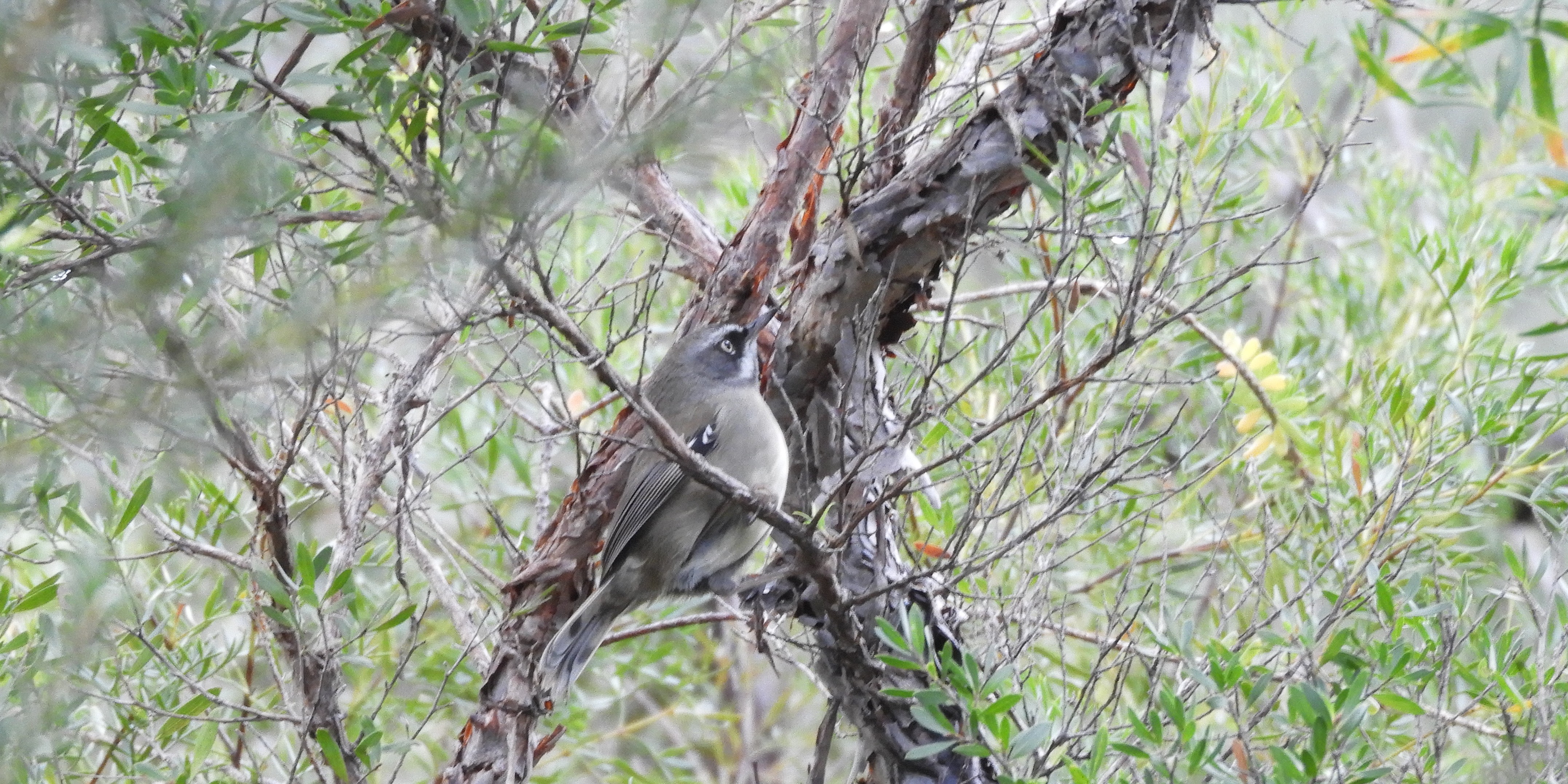
The bird was flitting around an area of the bush where I often see and hear movement, but am never fast enough to snap a picture. Today I managed – just!
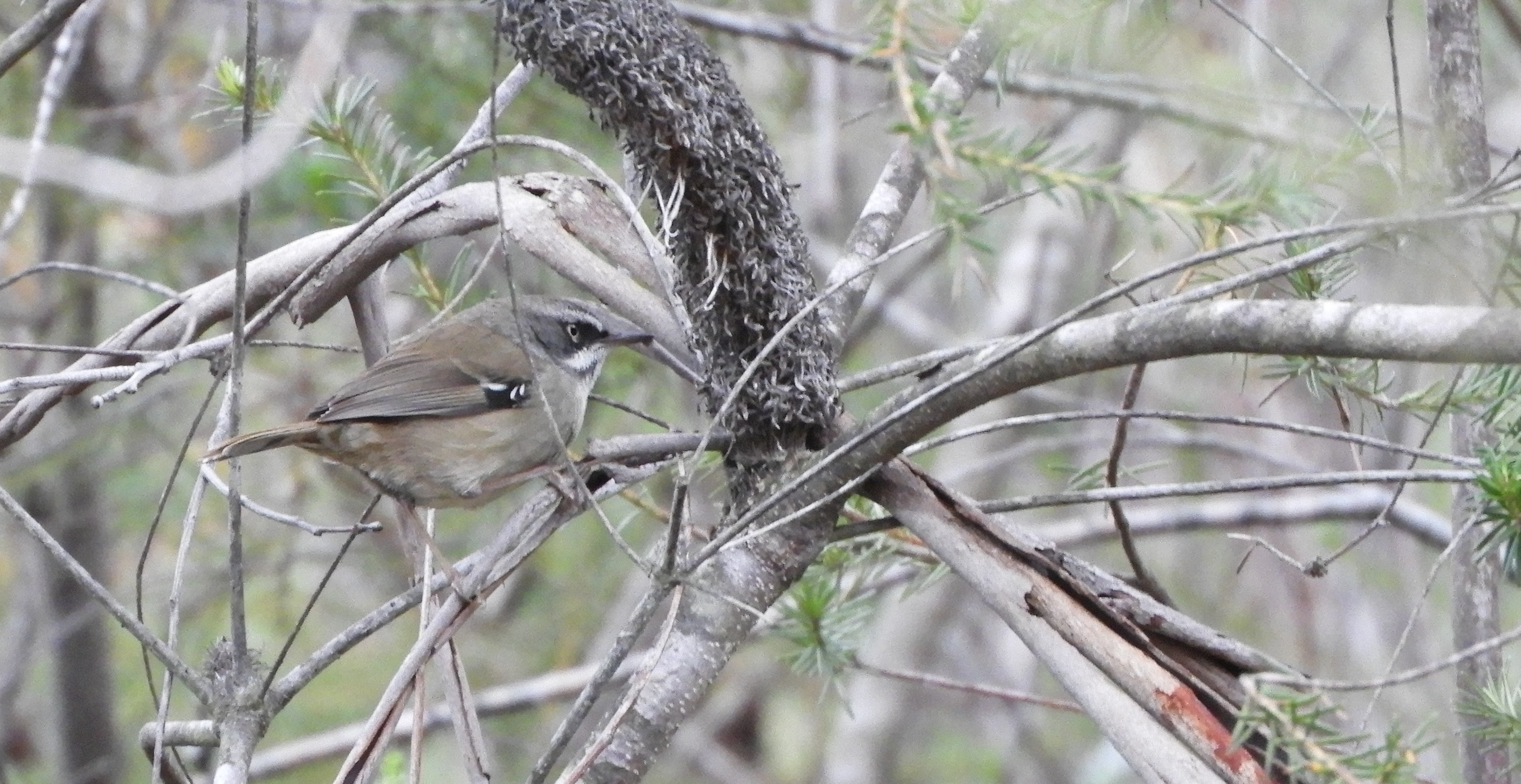
Here’s a picture of the bird’s surroundings – lovely, quiet, dense bushland:

Common name: Some kind of Scrubwren?
Approximate length: 11-13 cm
Date spotted: 29 April 2018 (Autumn)
Approximate location: Manly Dam National Park, New South Wales, Australia: 33°46’22.0″S 151°14’56.8″E
Magpie-lark, Mudlark, or Peewee
This Magpie-lark was one of three that came up close to investigate a friend and me while we were standing on the shore of Manly Dam. Magpie-larks are also known as Mudlarks, because they build their nests of mud, and as Peewees in imitation of the noise they make.
This one is a male. You can tell by the colour of the throat: in males it’s black, in females white.
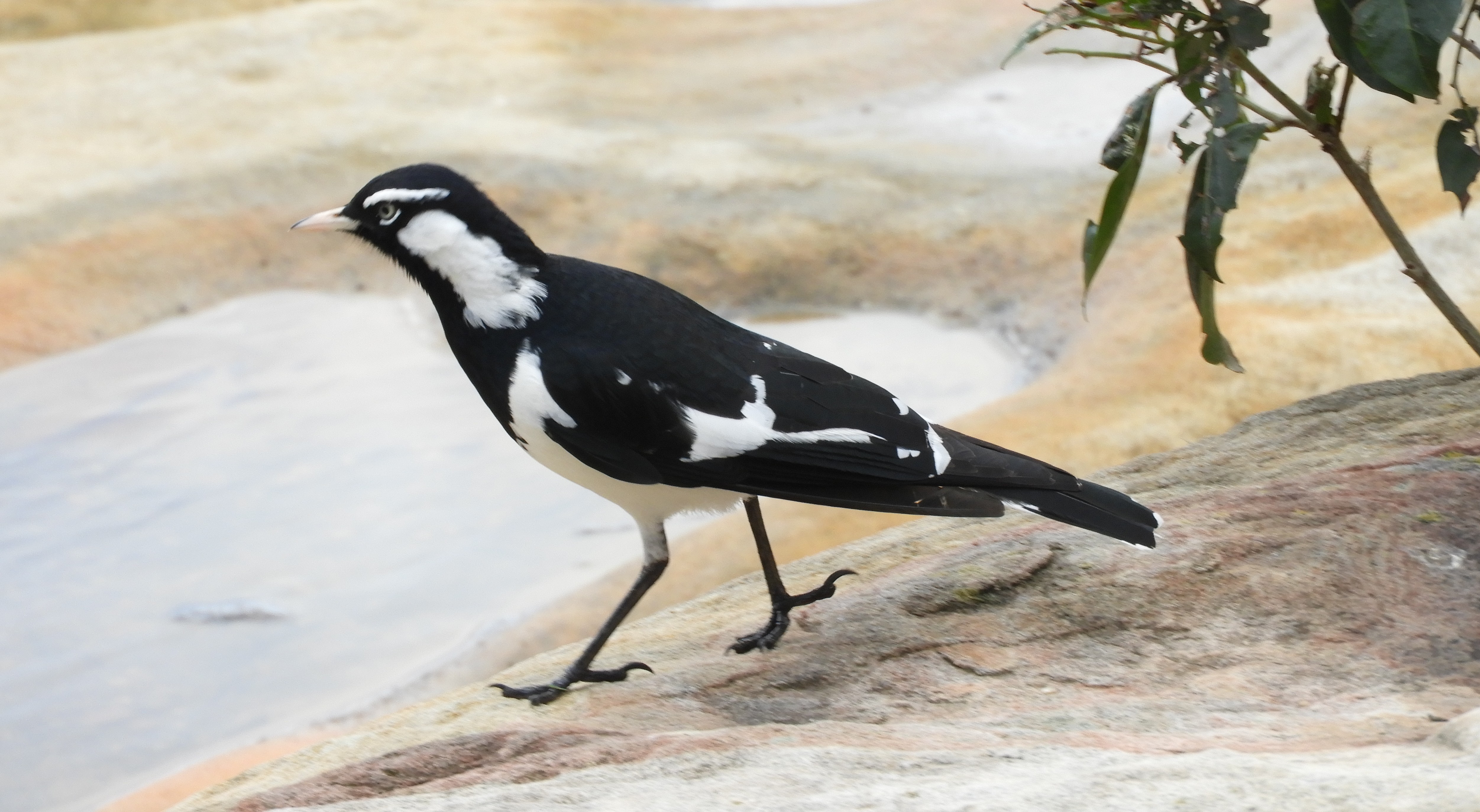
Common name: Magpie-lark, also called a Peewee or a Mudlark
Scientific name: Grallina cyanoleuca
Approximate length: 30 cm
Date spotted: 28 April 2018 (Autumn)
Location: Manly Dam National Park, New South Wales, Australia: 33°46’35.5″S 151°14’50.3″E
Yellows and greys of the Eastern Yellow Robin
The bright yellow and soft greys of this bird’s plumage are quite distinctive.

The bird sat quietly on the branch for quite some time, occasionally turning to watch me with an inquisitive eye:

Common name: Eastern Yellow Robin
Scientific name: Eopsaltria australis
Approximate length: 15 cm
Date spotted: 8 April 2018 (Autumn)
Location: Manly Dam National Park, New South Wales, Australia: 33°46’24.1″S 151°15’07.1″E
Olive-backed Oriole chirruping and looking for bugs
It was the unusual chirruping that made me look up into the trees and see this Olive-backed Oriole. At first I thought it was a Wattle Bird, but the sound it made was unusual. So I snapped a few shots and took them home to examine them on the big screen.
In the video, you can hear the sound the bird makes:
This is the first view I had of the bird. Very well camouflaged!

Here the bird looks with gimlet eye at a termite nest (out of shot above its head) no doubt hoping for some food to wander by.

This is a general picture of the trees in the area – the bird’s habitat:

Common name: Olive-backed Oriole
Scientific name: Oriolus sagittatus
Approximate length: 25-28 cm
Date spotted: 8 April 2018 (Autumn)
Location: Manly Dam National Park, New South Wales, Australia: 33°46’25.6″S 151°14’56.8″E
Sharing a treetop shower with King Parrots
This was one of those magical moments that happen when you walk in the Aussie bush. I was strolling along under the canopy of tall gum trees…
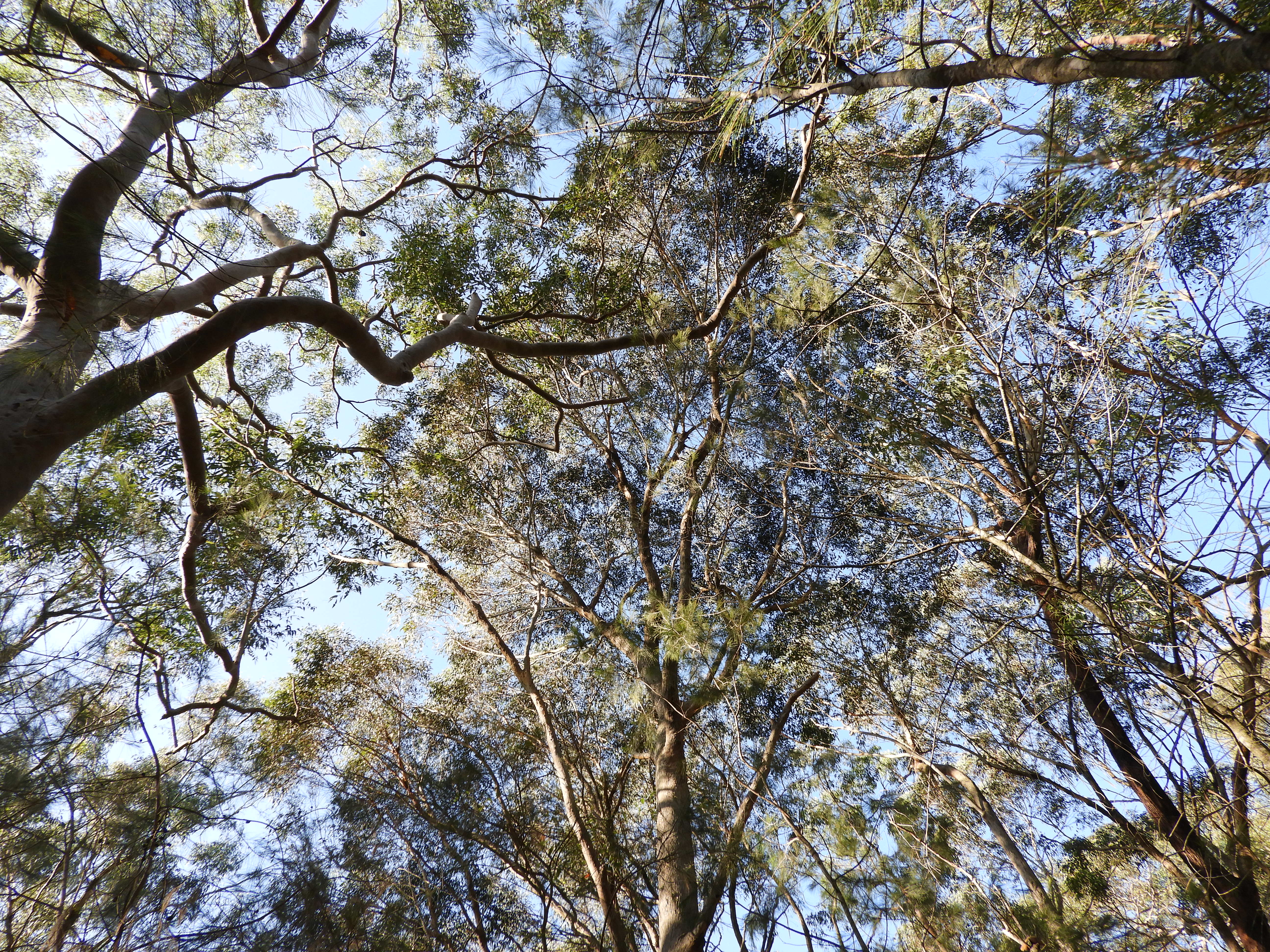
… when I heard a swooshing and clattering of wings. I looked up, just in time to receive a spattering of large droplets on my face.
Oops, I thought, some bird had a little accident.
But then it happened again. And I saw this face looking down from high in a leafy cluster:

Looking around, I saw four or five other birds – all Australian King Parrots.
(The birds were very high up indeed. My camera’s zoom has done a good job, though some of the images are a little fuzzy.)

They were swooping through the wet clusters of leaves at the top of the trees, then coming to rest for a good grooming session.

And I was lucky enough to share the resulting shower of droplets!
Here’s a female King Parrot. It’s interesting how short her tail is in comparison with the male birds. It’s perhaps a trick of perspective:
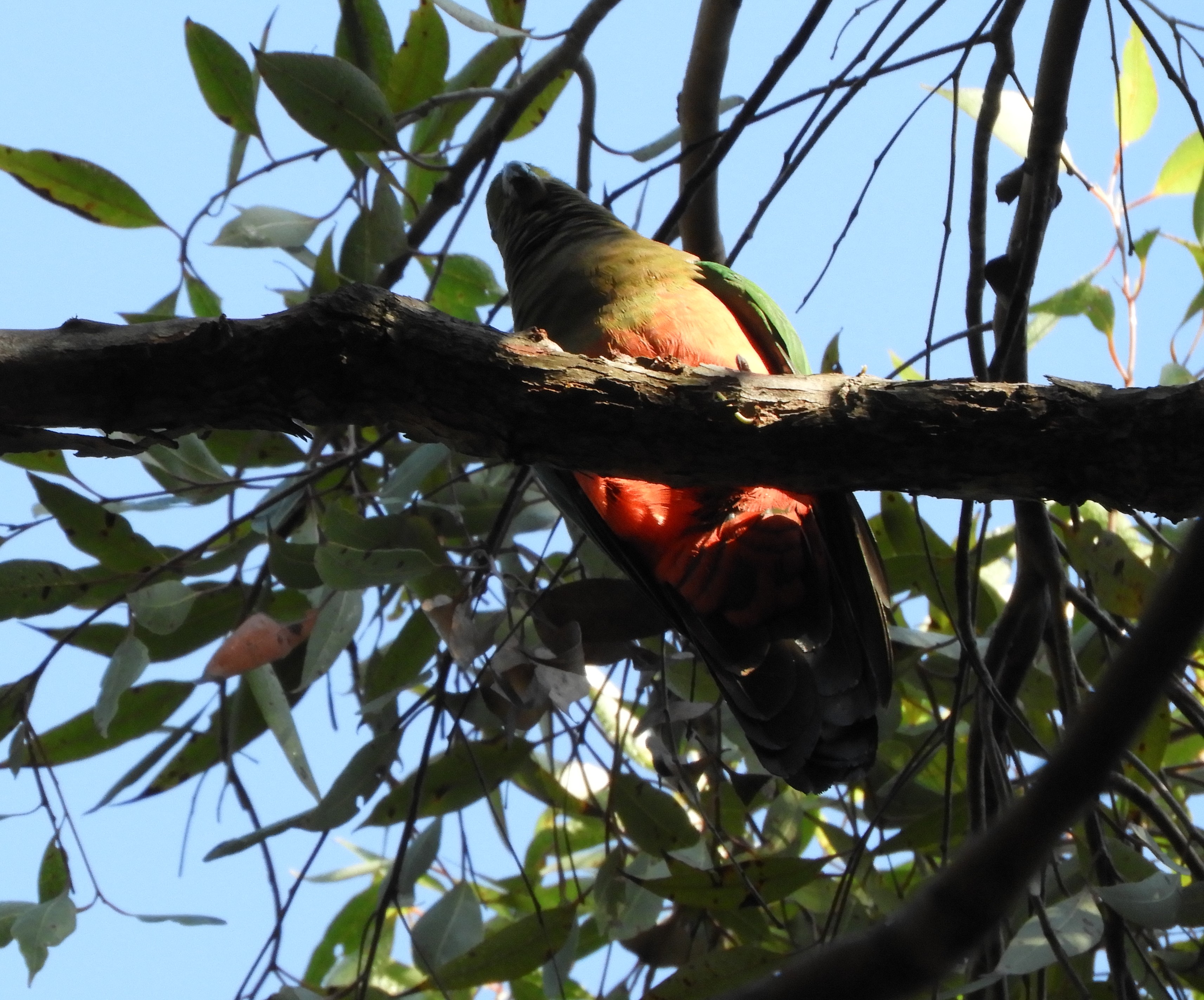
Common name: Australian King Parrot
Scientific name: Alisterus scapularis
Approximate length: 44 cm
Date spotted: 1 April 2018 (Autumn)
Location: Manly Dam National Park, New South Wales, Australia: 33°46’51.3″S 151°14’52.3″E
Call of the whipbird
The birds in Australia make strange noises, and the call of the Eastern Whipbird is one of the strangest.
A sound bite:
Common name: Eastern Whipbird
Scientific name: Psophodes olivaceus
Approximate length: 30 cm
Date spotted: 10 March 2018 (Early autumn)
Location: Manly Dam National Reserve, New South Wales, Australia: 33°46’36.5″S 151°15’16.0″E
Australian Miner auditions for The Birds and Psycho
This little Australian Miner landed on a branch near me and started that incessant eep-eep noise that they’re renowned for. It’s as if the bird is auditioning to do the soundtracks for two Hitchcock movies at once: The Birds and Psycho.
Well? Do I get the job?

How about if I spin my head around. You know, like in The Exorcist?

No? OK then, on to the next audition…

Common name: Noisy Miner, also called Australian Miner
Scientific name: Manorina melanocephala
Approximate length: 26 cm
Date spotted: 3 March 2018 (Summer)
Approximate location: Allambie Heights, NSW, Australia: 33°46’23.3″S 151°15’43.1″E
Call of the Glossy Black-Cockatoo
Today I spotted a group of Glossy Black-Cockatoos, and I recorded a video so you can hear them chatting to each other. For two consecutive weeks I’ve seen a group of these birds at Manly Dam Reserve. I guess they’re the same birds each time, though on opposite sides of the dam. According to my bird book, this bird is reasonably uncommon, perhaps declining in number.
It’s a short video. As I was recording it, a bush ranger drove up and startled the birds. They flew off and came towards me, which gives you a good view of the orange-red flashes in their tails.
Last week’s post has still pictures of a Glossy Black-Cockatoo, probably from the same group.
Common name: Glossy Black-Cockatoo
Scientific name: Calyptorhynchus lathami
Approximate length: 50cm
Date spotted: 3 March 2018 (Summer)
Location: Manly Dam National Reserve, near Sydney: 33°46’49.2″S 151°15’04.1″E
Glossy Black-Cockatoo spotted near Sydney
Quite exciting! According to my bird book, this bird is reasonably uncommon, perhaps declining. It’s a Glossy Black-Cockatoo, and I saw three of them for the first time ever this morning.
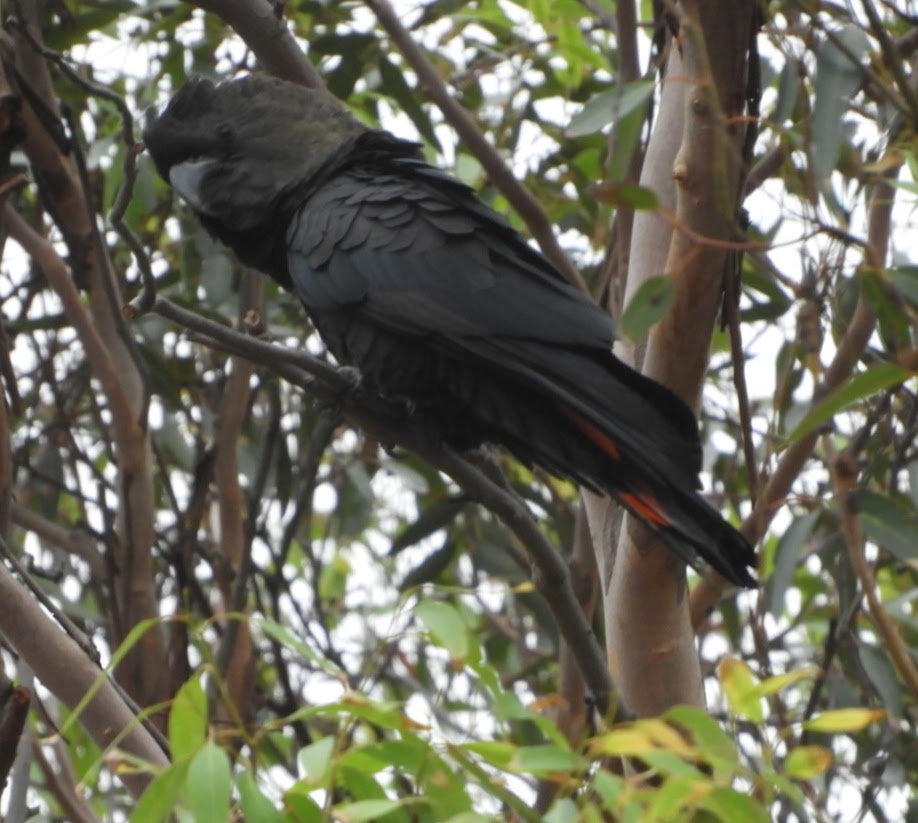
The raised crest gives the bird a typical look of parrot curiosity:
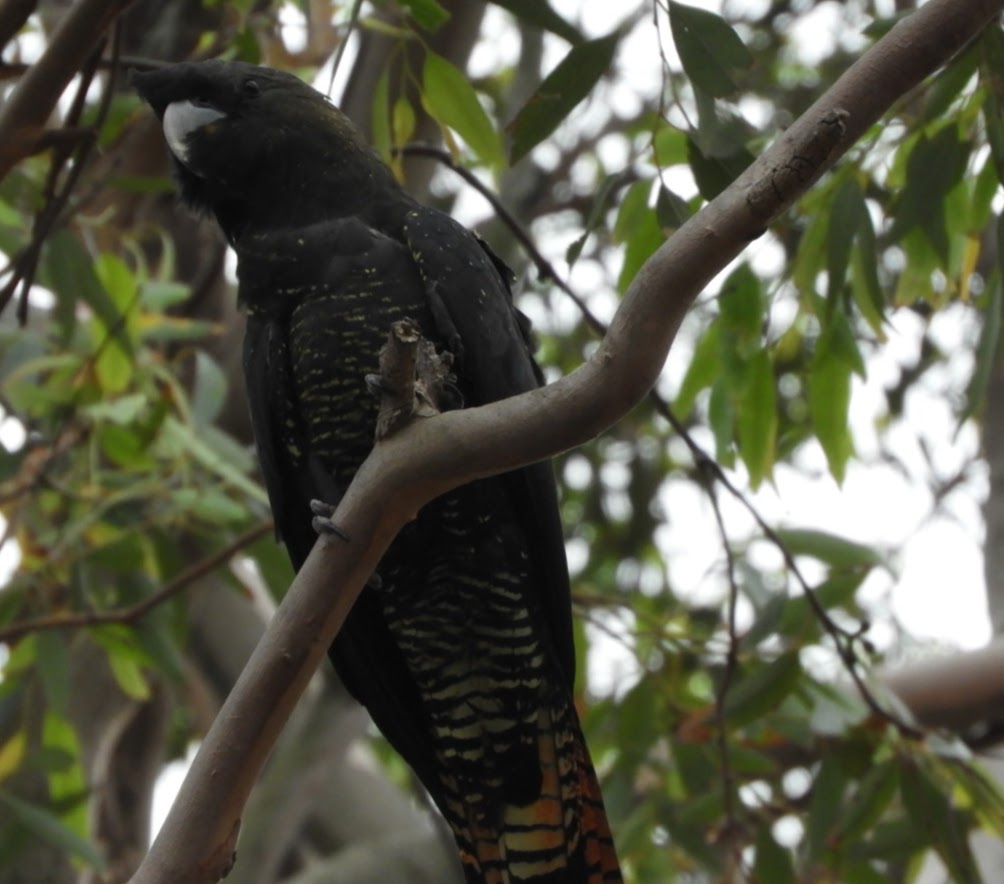
In this photo, the bird did a bit of grooming and showed the orange-red flares in its tail feathers:
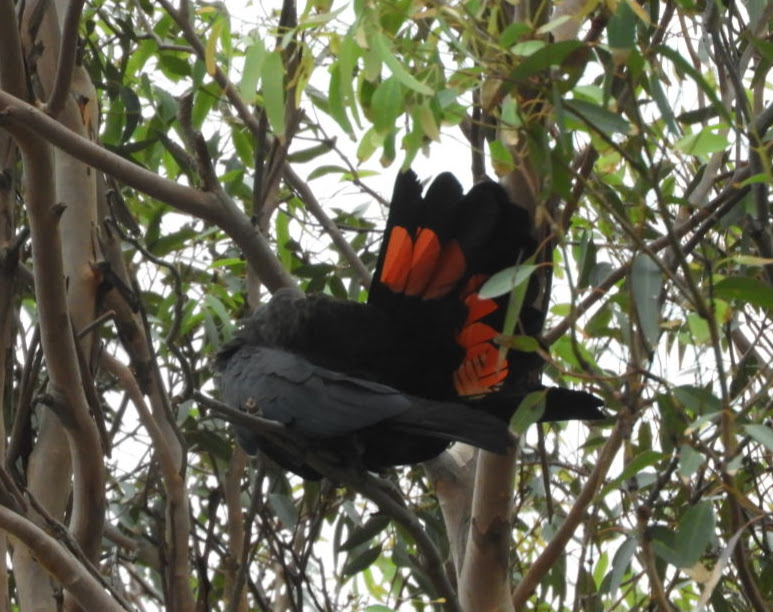
In our area we see a lot of the white sulphur-crested cockatoos. Occasionally the yellow-tailed black cockatoos pay us a visit, when their favourite trees are in flower. I’ve never before seen any of these glossy black cockatoos.
From underneath, the tail feathers look entirely yellow, white, and black:
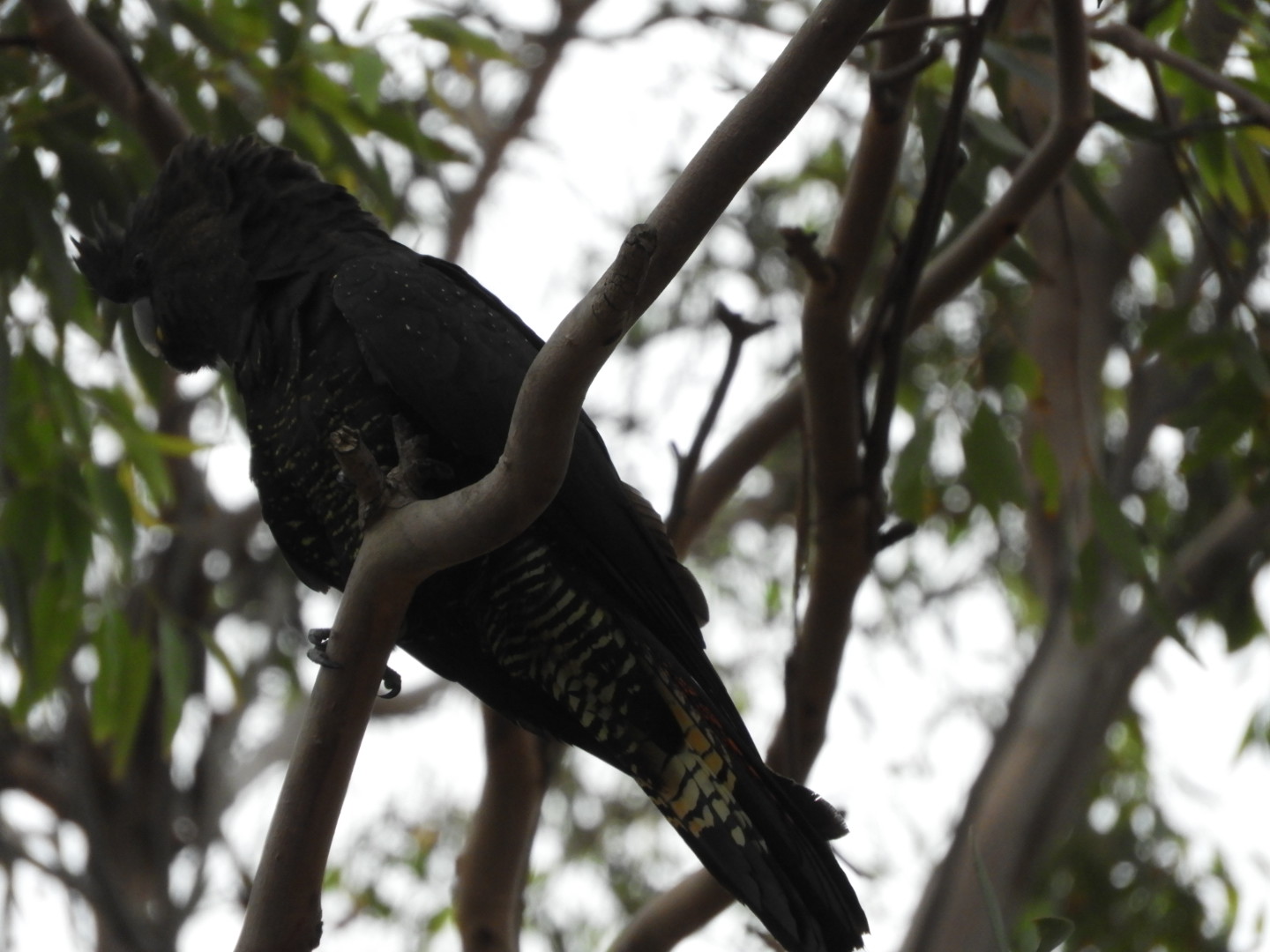
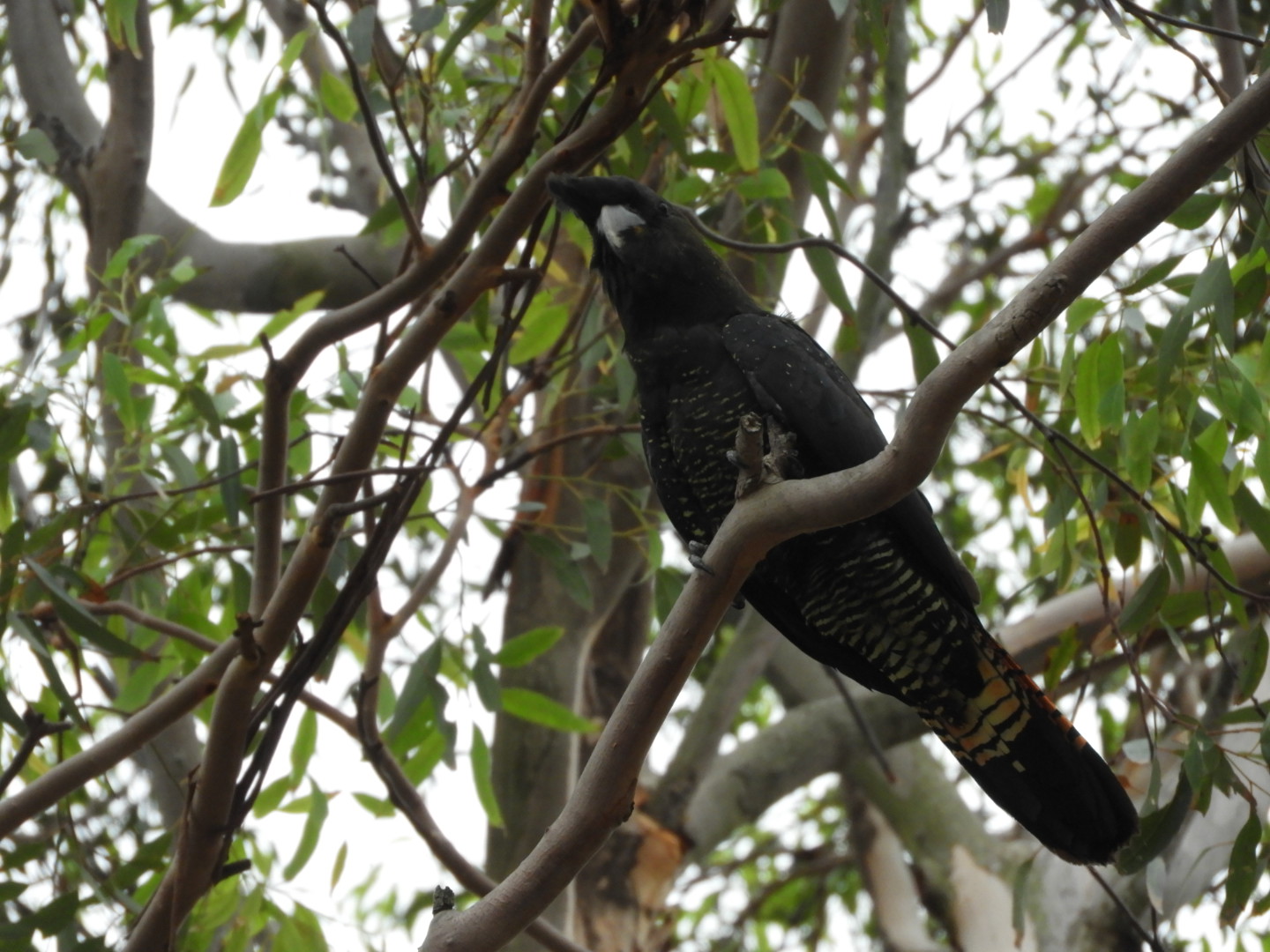
In the photo below, you can see more of the orange in the tail, and the small crest on the bird’s head:
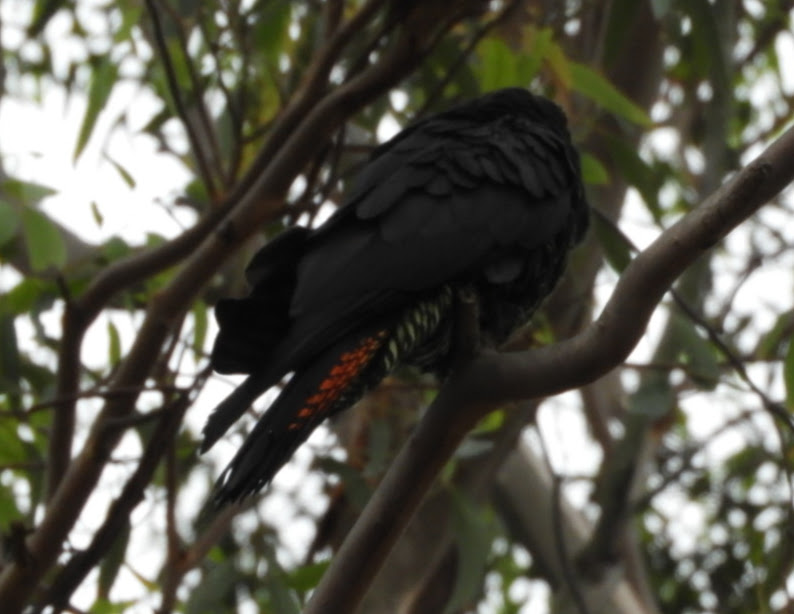
From the rear, the orange is more visible:
Another frontal view:
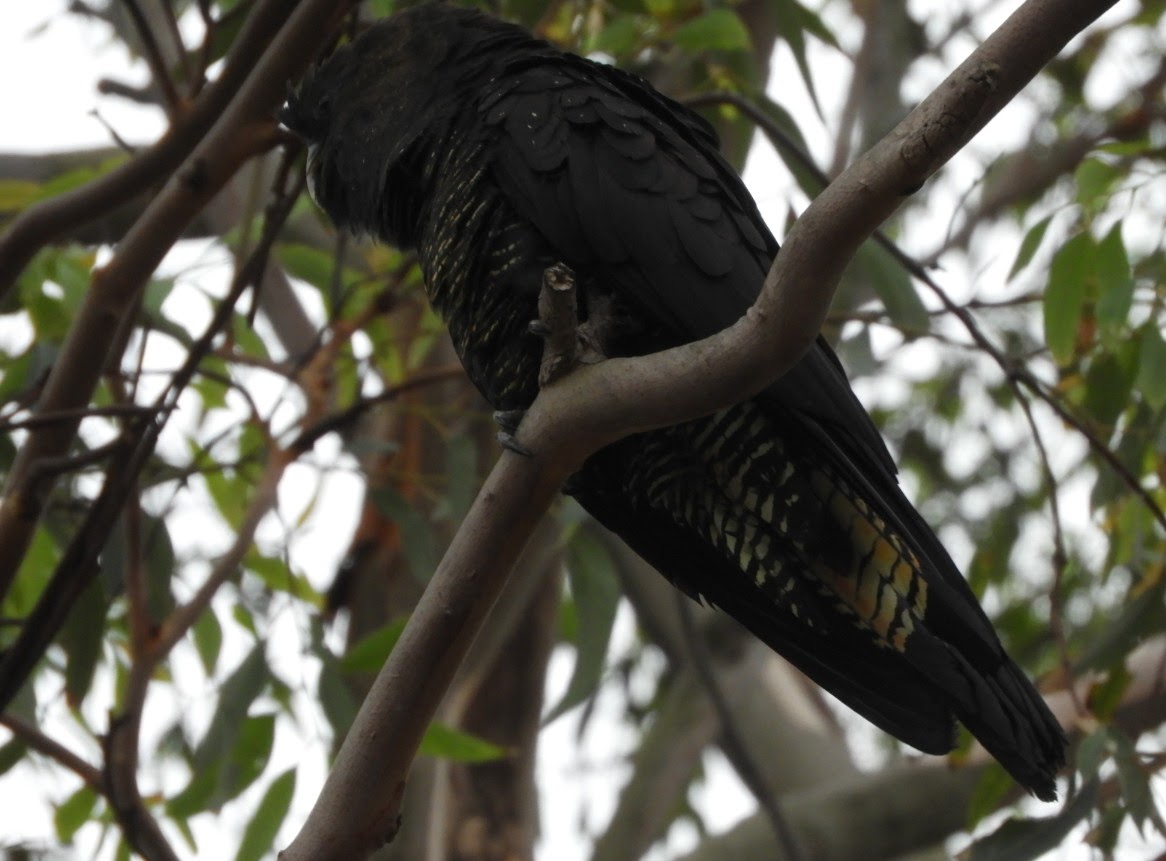
Common name: Glossy Black-Cockatoo
Scientific name: Calyptorhynchus lathami
Approximate length: 50cm
Date spotted: 25 February 2018 (Summer)
Location: Manly Dam National Reserve, near Sydney: 33°46’36.5″S 151°15’18.2″E


 Sydney Birder