Blog Archives
Eastern Rosella calling and dancing
This has turned out to be parrot weekend in our garden. Yesterday four black cockatoos dropped by. Today it was two Eastern Rosellas. This is the first time I’ve managed to get a photo of one of these lovely birds. Its characteristic call drew me to the window. There it was on our Scribbly Gum tree right outside the window, dancing and chattering to its mate:
Knowing that these birds usually go about in pairs, I looked for the other one but didn’t see it until they both flew away, several minutes later. (The mate was higher up in the tree, hidden by the foliage.)
At 30 cm in length, Eastern Rosellas are slightly smaller than the Crimson Rosellas that we see more often in our area. This still shot shows the bird in all its beauty:

Common name: Eastern Rosella
Scientific name: Platycercus eximius
Approximate length: 30 cm
Date spotted: 21 October 2018 (Spring)
Location: Allambie Heights, NSW, Australia
Little Wattlebird calling, mate unimpressed
A male Little Wattlebird does its best to impress (or intimidate) the bird sharing its branch. The other bird is unimpressed. In fact, its reaction seems to be, “Oh, please, are you really going to keep doing that?”
The call of a Little Wattlebird is strange. It often starts with a click-clack, as if the calling mechanism is turning over before getting into full gear. Then out comes the harsh bray that’s characteristic of the male bird. It seems to take a fair bit of effort to make this noise, as you can see in the video:
I went back to the same spot a day later, and snapped a picture of this male Little Wattlebird. It’s probably the same bird, given their fierce territoriality:
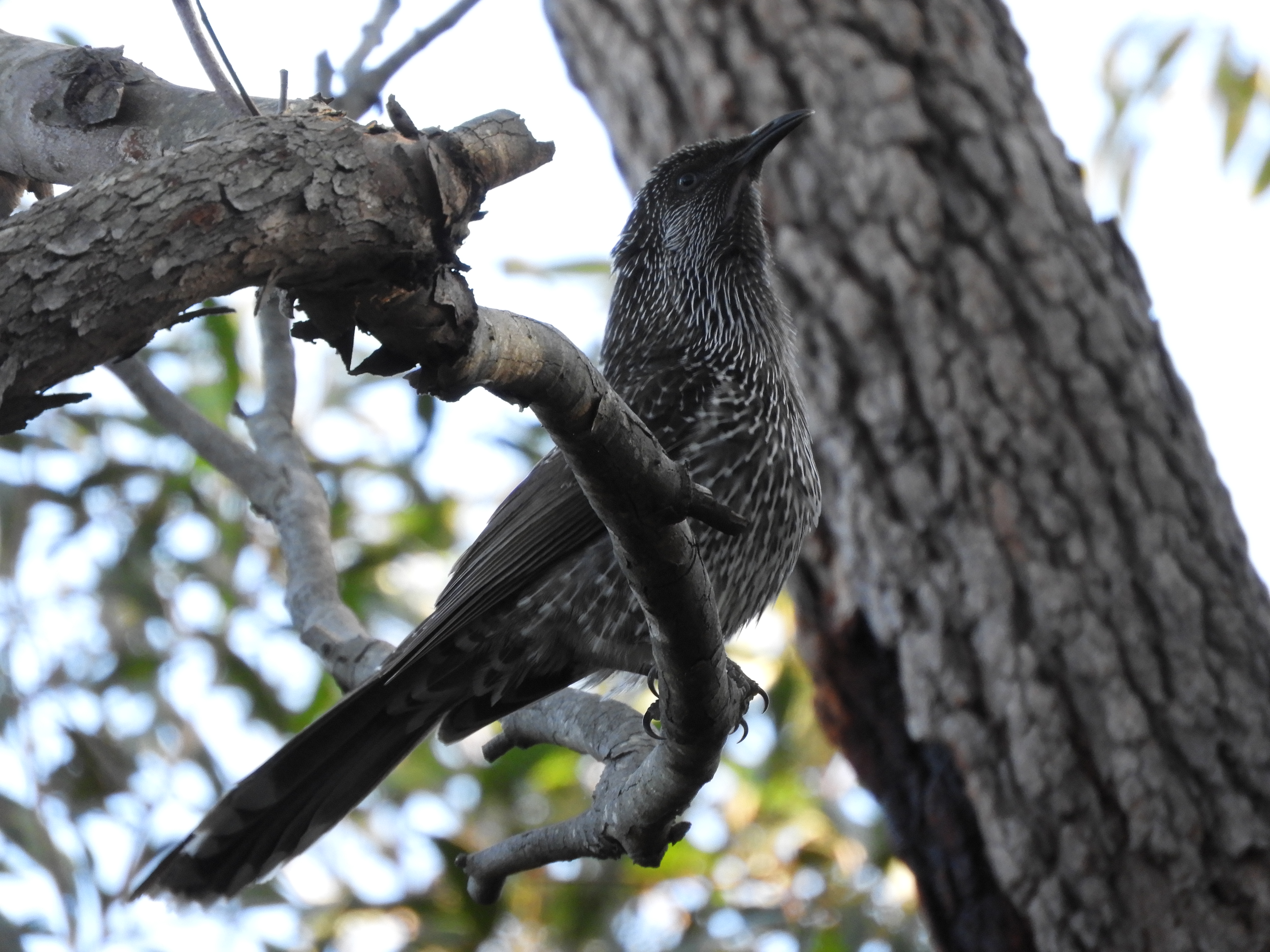
Common name: Little Wattlebird
Scientific name: Anthochaera chrysoptera
Approximate length: 30 cm
Date spotted: 7 July 2018 (Winter)
Location: Manly Dam National Park, New South Wales, Australia: 33°46’36.9″S 151°15’10.4″E


