Blog Archives
Reflection symmetry and a coot
Manly Dam was quiet and calm when I strolled along its shores early this morning. I was struck by the patterns made by these reeds and their reflections in the water.

It’s a little mind boggling, isn’t it? Where does the real reed start and end? The finest of abstract art. Here’s the same set of reeds but with more around them:
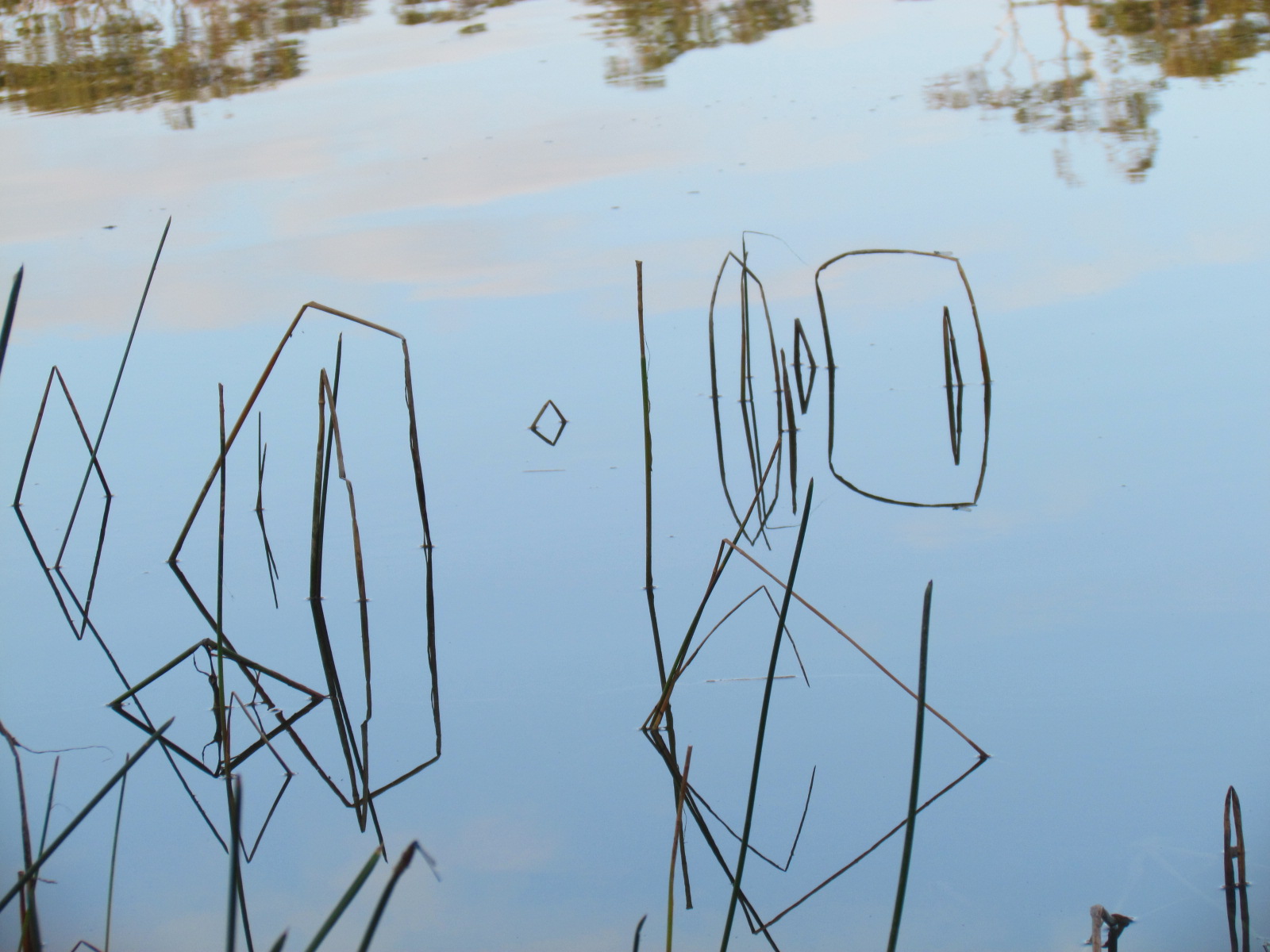
A different configuration:
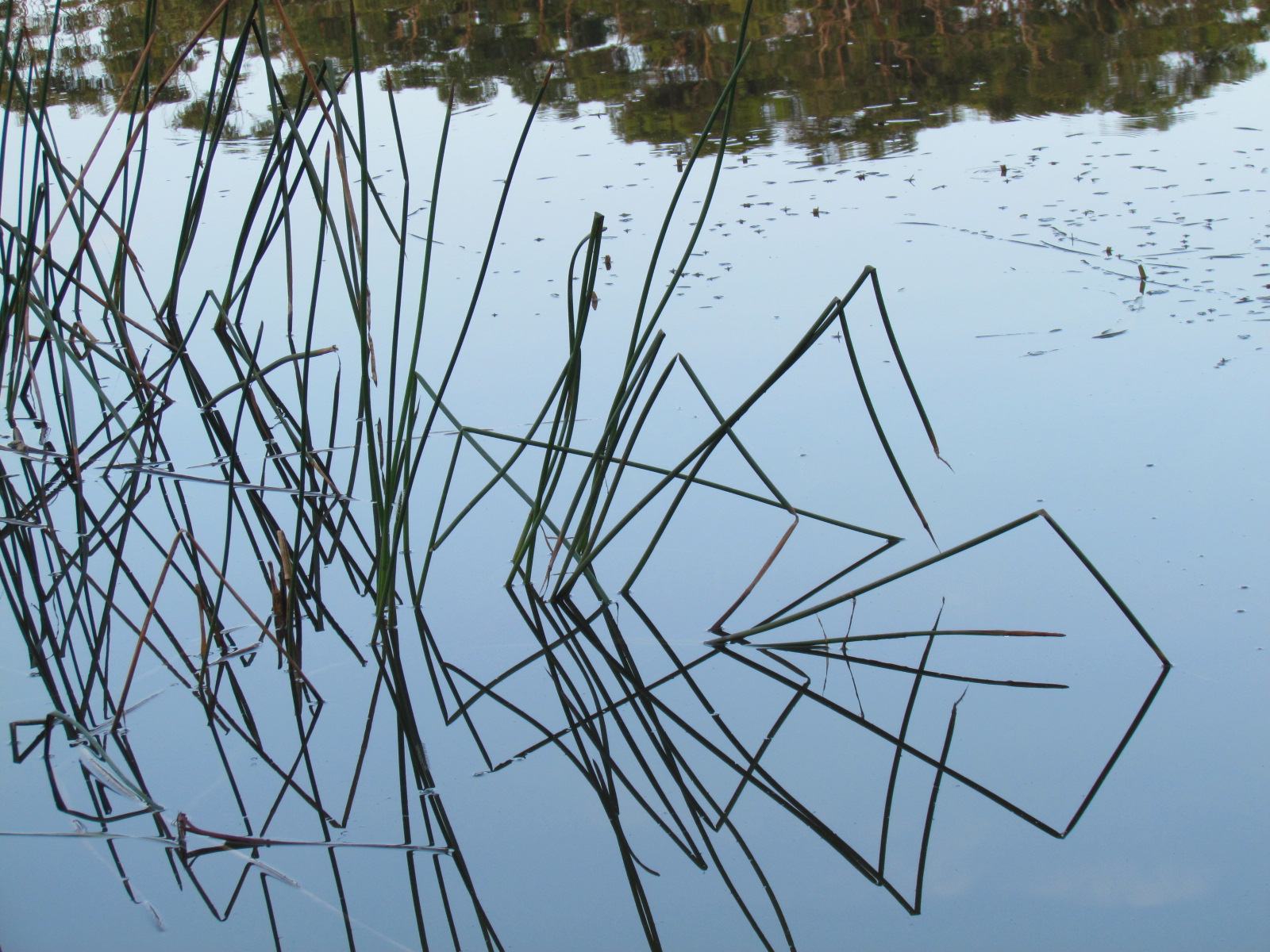
Another shape to bend your mind:

Bubbles had reflections too:

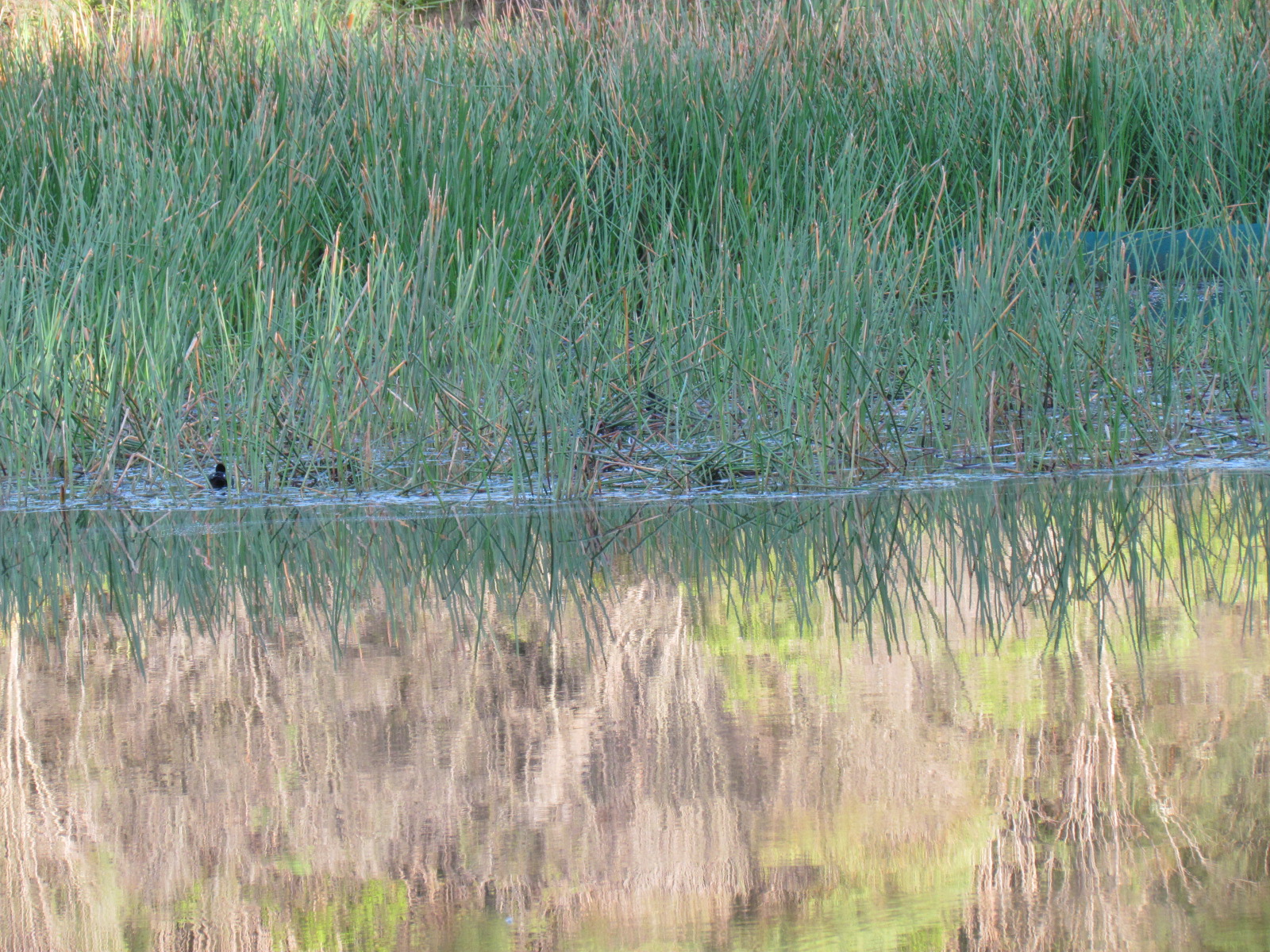
Since this is a blog about birds, I should probably include one. 😉 This Eurasian Coot was enjoying the morning quiet:

Here’s the bird again, tucked away in the centre left of this mass of reflections:
Common name: Eurasian Coot
Scientific name: Fulica atra
Approximate length: 35 cm
Date spotted: 22 January 2017
Season: Summer
Location: Manly Dam Nature Reserve, New South Wales, Australia: 33°46’27.9″S 151°15’05.5″E
Masked Lapwing’s face looks like a Lego model
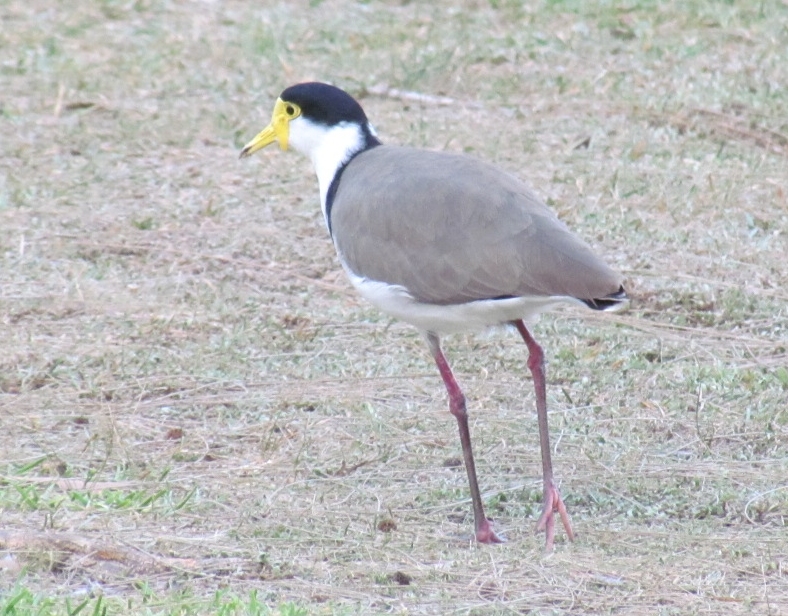
I spotted two Masked Lapwings at Manly Dam, near Sydney, Australia, this morning. They’re also known as Spur-winged Plovers. They can be quite aggressive, especially in nesting season. The name “spur-winged” is apt, because they have hooks on their wings, one on each, which they use as weapons, stretching the wings then dragging back to wound their enemy. But these two were quietly going about their business, pottering around the edges of Manly Dam.
Their faces make me think of a model put together with Lego. They’re so perfect, and yet they seem not quite real.

They have lovely knobbly knees and big pink feet:
In this video, one of the birds advances tentatively, testing each step:
Here’s a zoomed out shot showing the two birds in their environment:

Common name: Masked Lapwing, or Spur-winged Plover
Scientific name: Vanellus miles
Approximate length: 37 cm
Date spotted: 15 January 2017
Season: Summer
Location: Manly Dam Nature Reserve, New South Wales, Australia: 33°46’58.8″S 151°15’18.4″E
Kookaburras cranking up for a cackle
You’ve probably heard kookaburras in full voice, cackling and hooting raucously. I think the sound they make when they’re preparing for a full-voice yodel is funny and cute. It happens in particular when there’s a group of birds. They chunter at each other, perhaps in warning or perhaps companionably. They sound a bit like rusty saws in a dusty attic.
These two were in a tree high above my lounge window:
I encountered this disreputable, slightly dangerous looking character deep in the bush:
Common name: Laughing Kookaburra
Scientific name: Dacelo novaeguineae
Approximate length: 47 cm
Date spotted (second video): 26 December 2016
Season: Summer
Location (second video): Manly Dam Nature Reserve, New South Wales, Australia: 33°46’50.4″S 151°14’59.6″E
Australian water dragon in tree
While I wander with my head in the clouds, looking for birds, I sometimes spot other interesting creatures. This is an Australian Water Dragon.
They’re quite large lizards, at 80-90 cm when adult, and attractive with their fierce eyes and that spiky crest running down their spine. They can be quite colourful. This one is shades of grey with yellow tinges. I’ve seen others with a rosy red glow on their chests. They like to be near water, and have long-fingered strong hands for climbing trees.

Common name: Eastern water dragon, or Australian water dragon
Scientific name: Itellagama lesueurii lesueurii
Approximate length: 90 cm
Date spotted: 3 December 2016
Season: Summer
Location: Manly Dam Reserve, New South Wales, Australia
Latitude/longitude: 33°46’50.1″S 151°15’04.5″E
Koel Cuckoo regurgitates food
Today I spotted a young female Koel Cuckoo. The males are so dark in colour that it’s hard to see them in fine detail. Photographs end up being just a black blob. But this female is quite pretty.
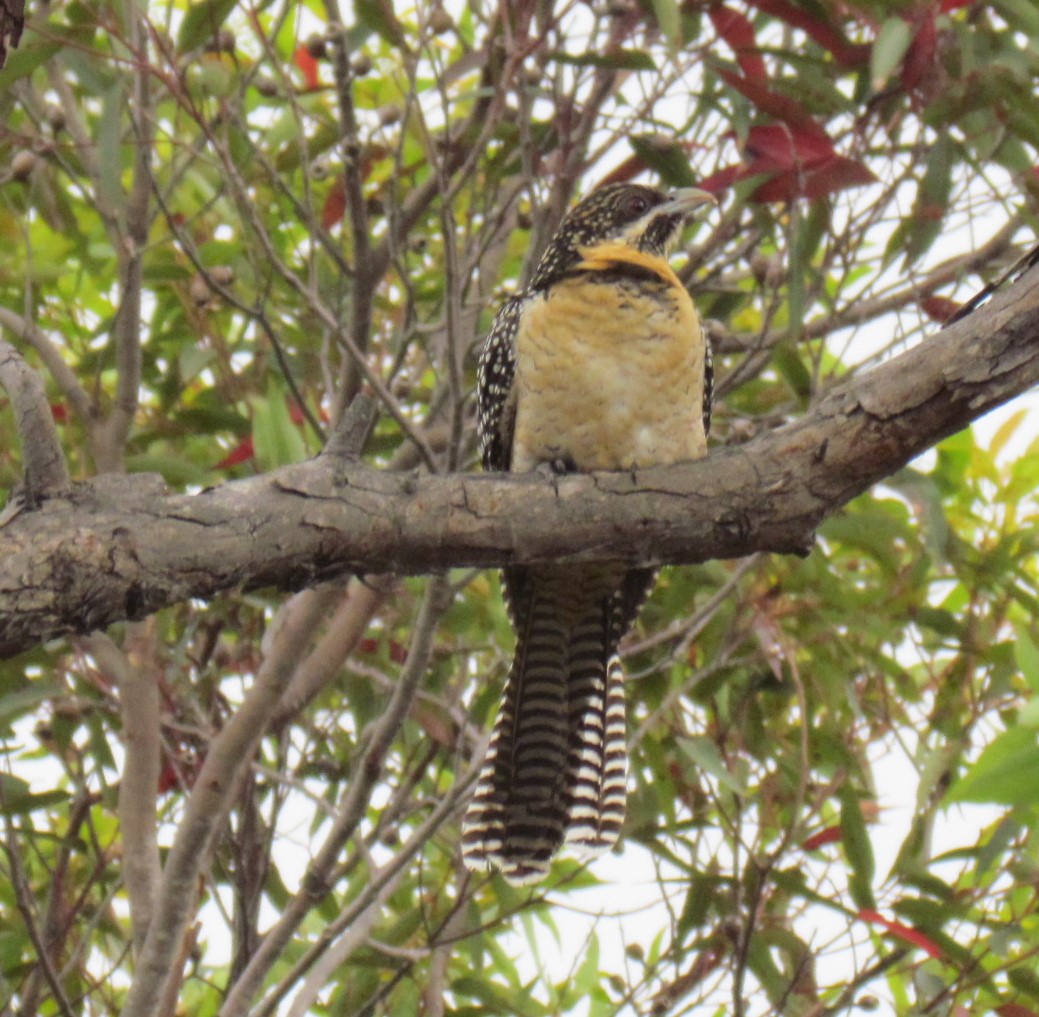
This video shows the bird sitting quietly on the branch, not doing much. At around 20 seconds into the video, she regurgitates some fruit and then swallows it again.
Adult Koel Cuckoos have red eyes, but youngsters can keep the brown colour into their second summer. I thought I glimpsed a glint of red every now and then, but her eyes are still mostly dark brown.
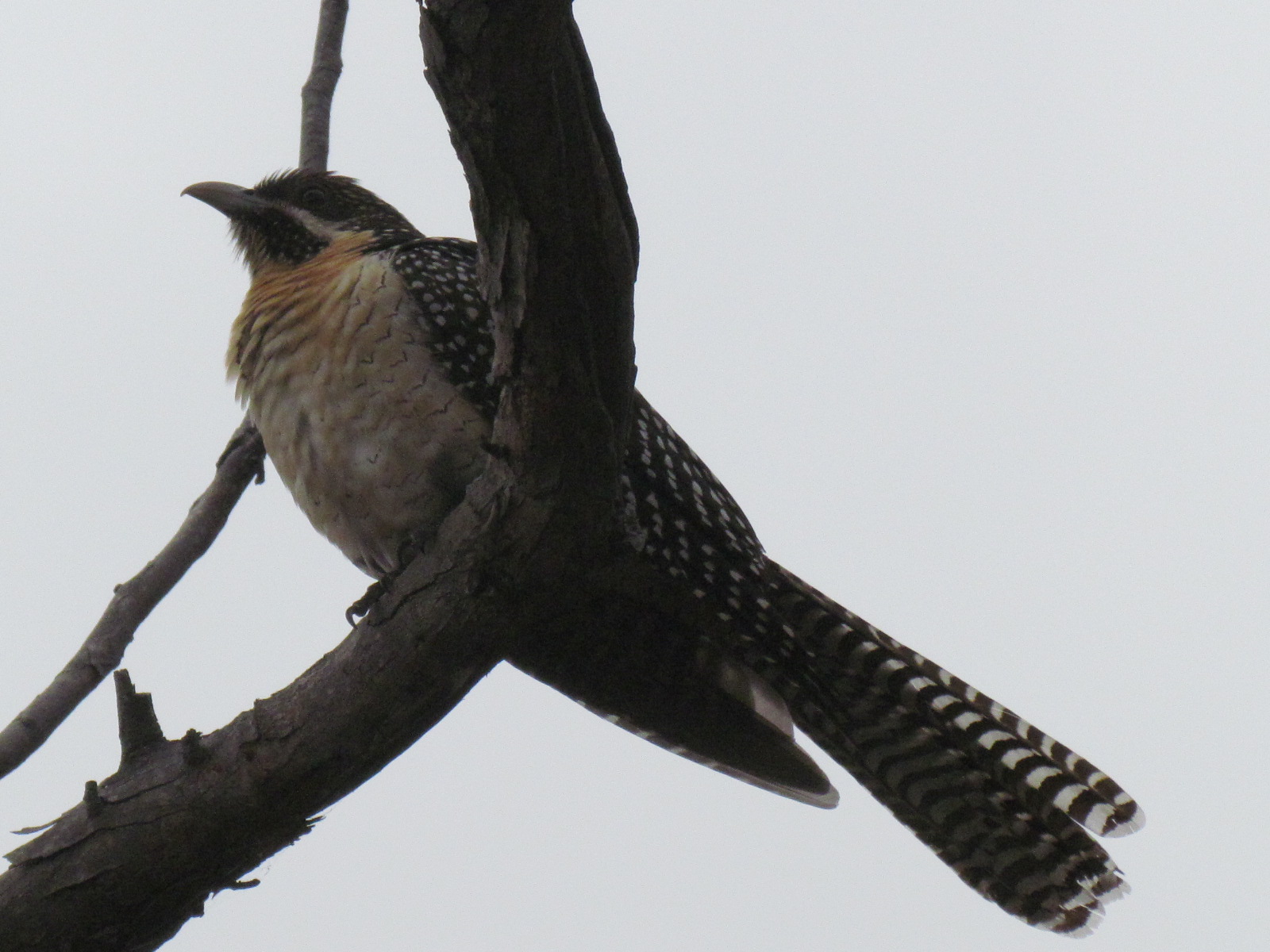
Here’s another side view of her, sheltering behind the foliage:
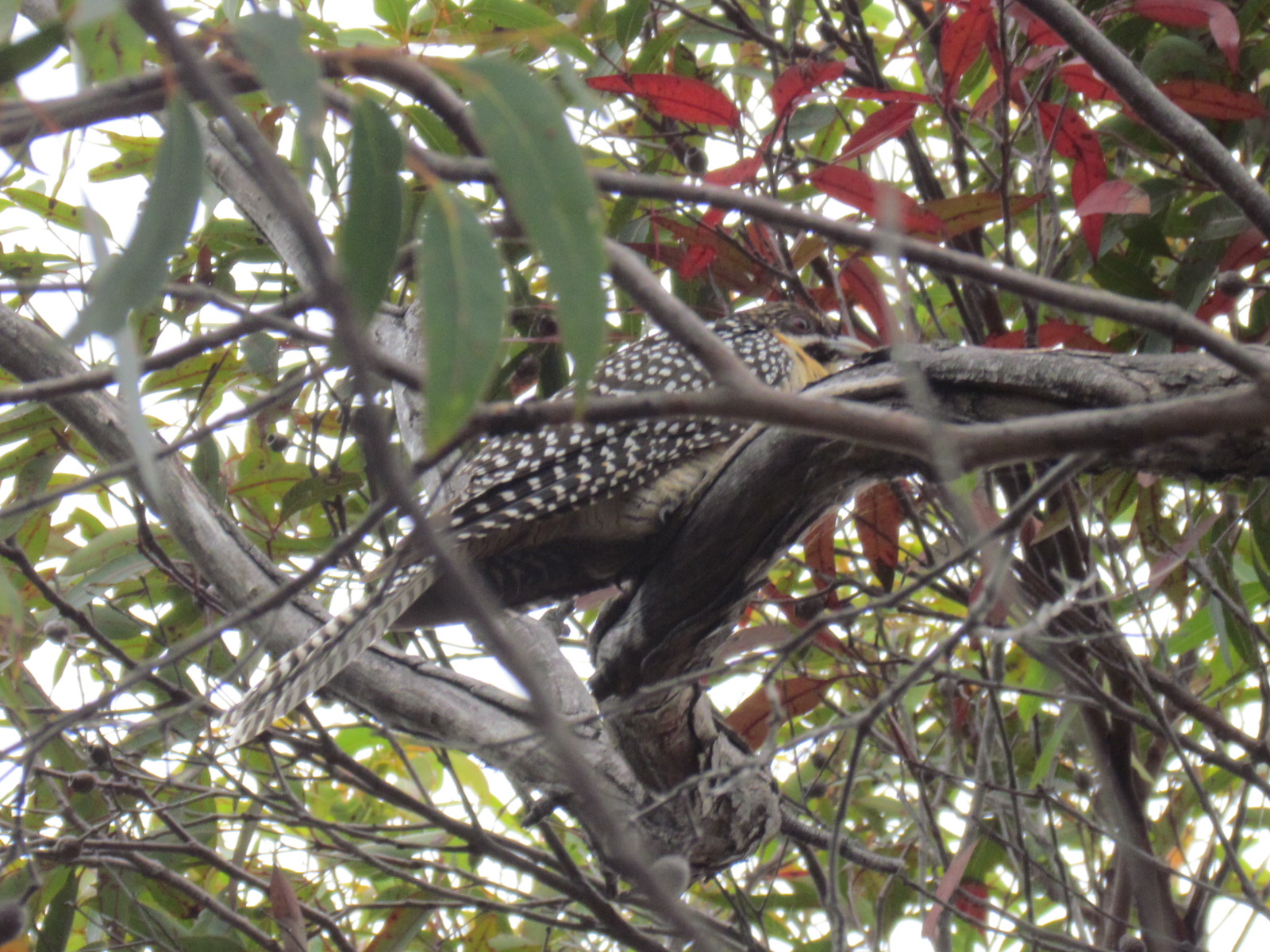
She decided to stretch her wings. I was behind her at the time, so there’s a lovely view of soft down and the underside of her wings:
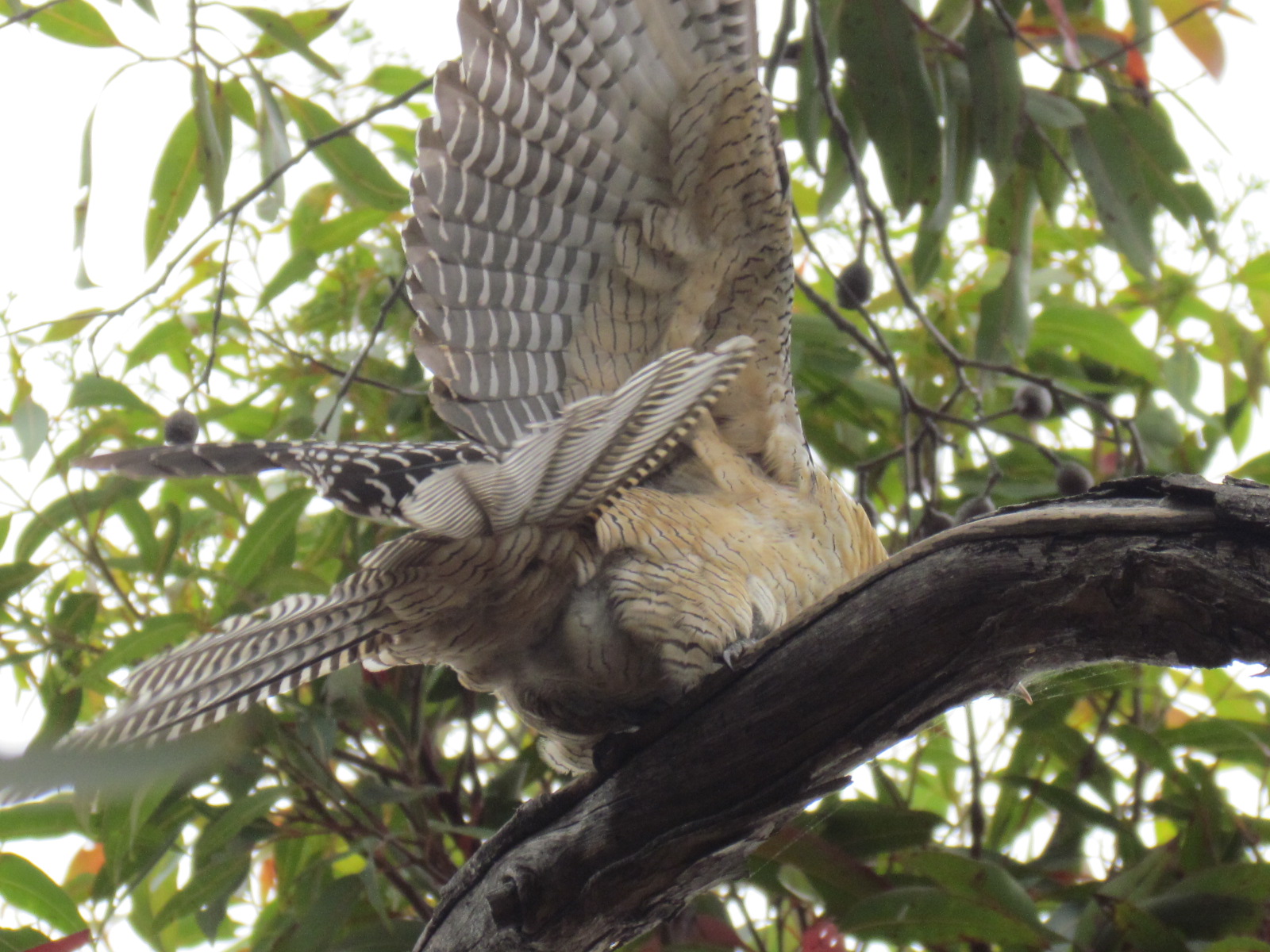
Common name: Common Koel or Eastern Koel
Scientific name: Eudynamys scolopacea
Approximate length: 45 cm
Date spotted: 27 November 2016
Season: Spring
Location: Manly Dam Reserve, New South Wales, Australia
Latitude/longitude: 33°46’35.6″S 151°15’16.8″E
Paradise Shelduck at Manly Dam, Australia
If this is a Paradise Shelduck, it’s rather far from its usual home in New Zealand. I spotted it at Manly Dam, near Sydney in Australia.
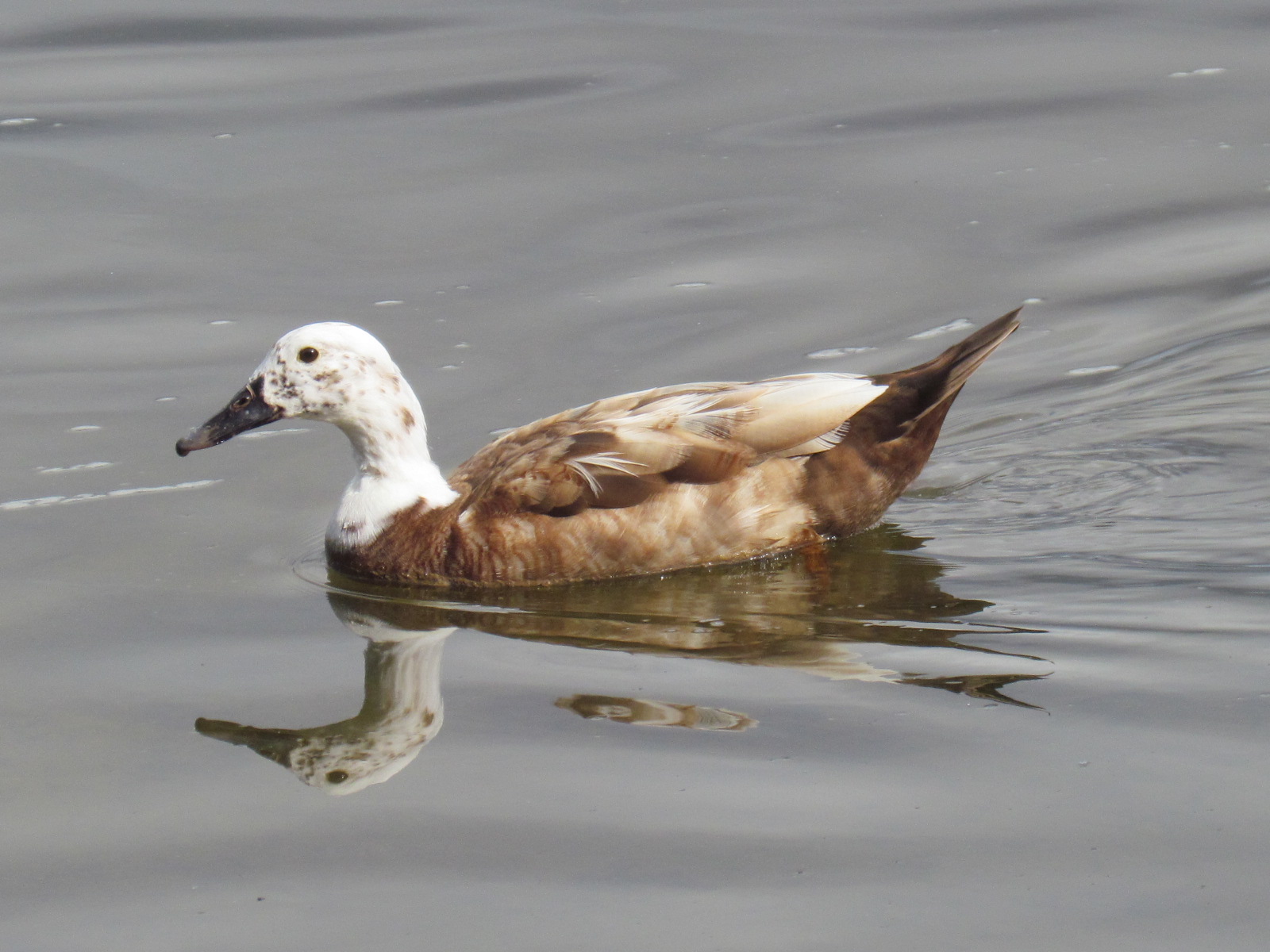
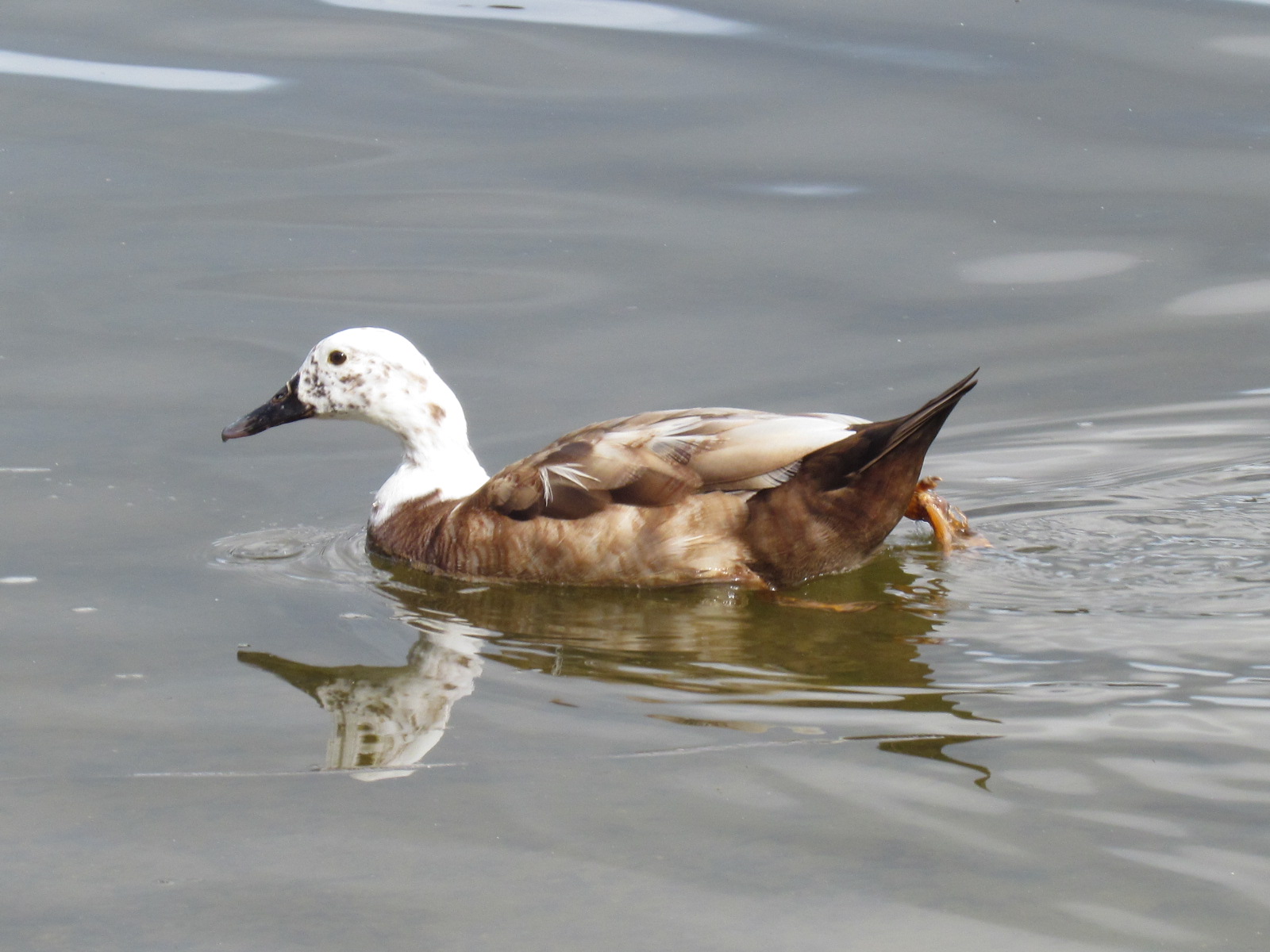
It’s a big duck. At first I wasn’t sure whether it was a duck or a goose. This one is a female, as you can tell from its white head and neck. The male has a dark head.
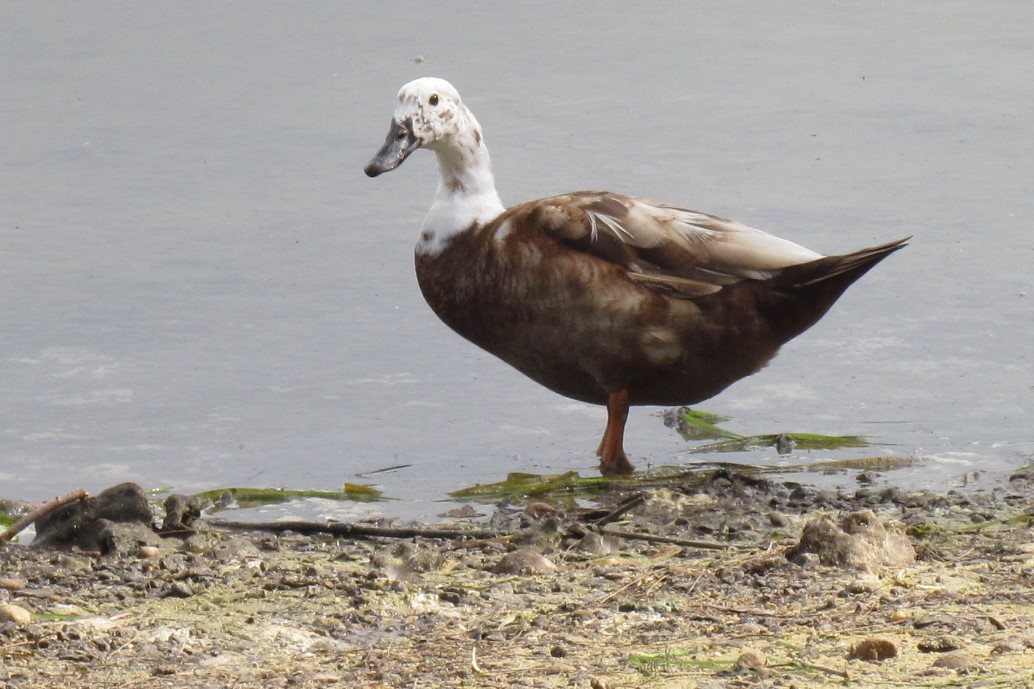
She took to the water:
And showed a bit of ankle:
Common name: Paradise Shelduck
Scientific name: Tadorna variegata
Approximate length: 63-70 cm
Date spotted: 26 November 2016
Season: Spring
Location: Manly Dam Reserve, New South Wales, Australia
Latitude/longitude: 33°46’58.0″S 151°15’18.9″E
Noisy Miner chicks just out of their nest
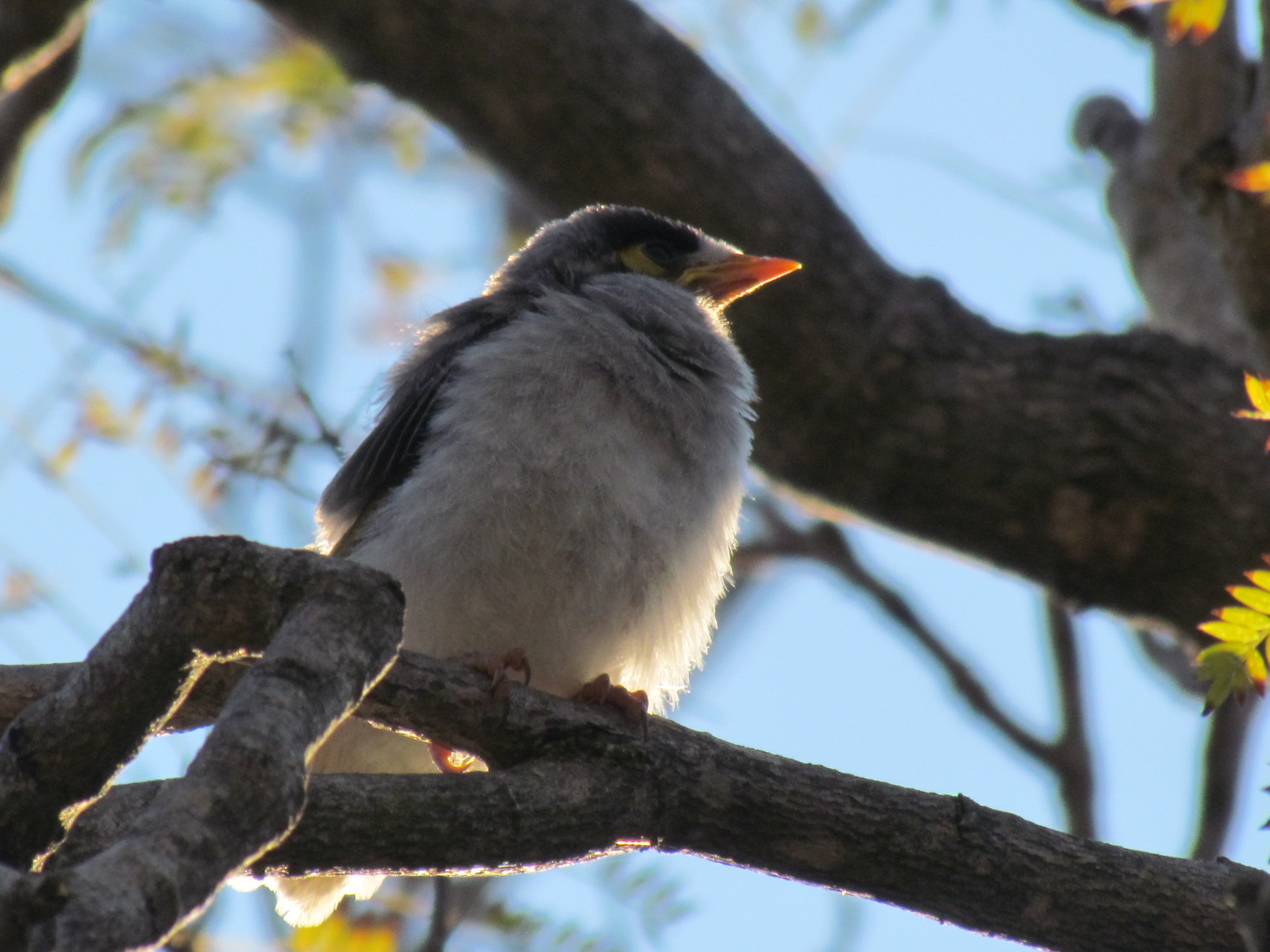
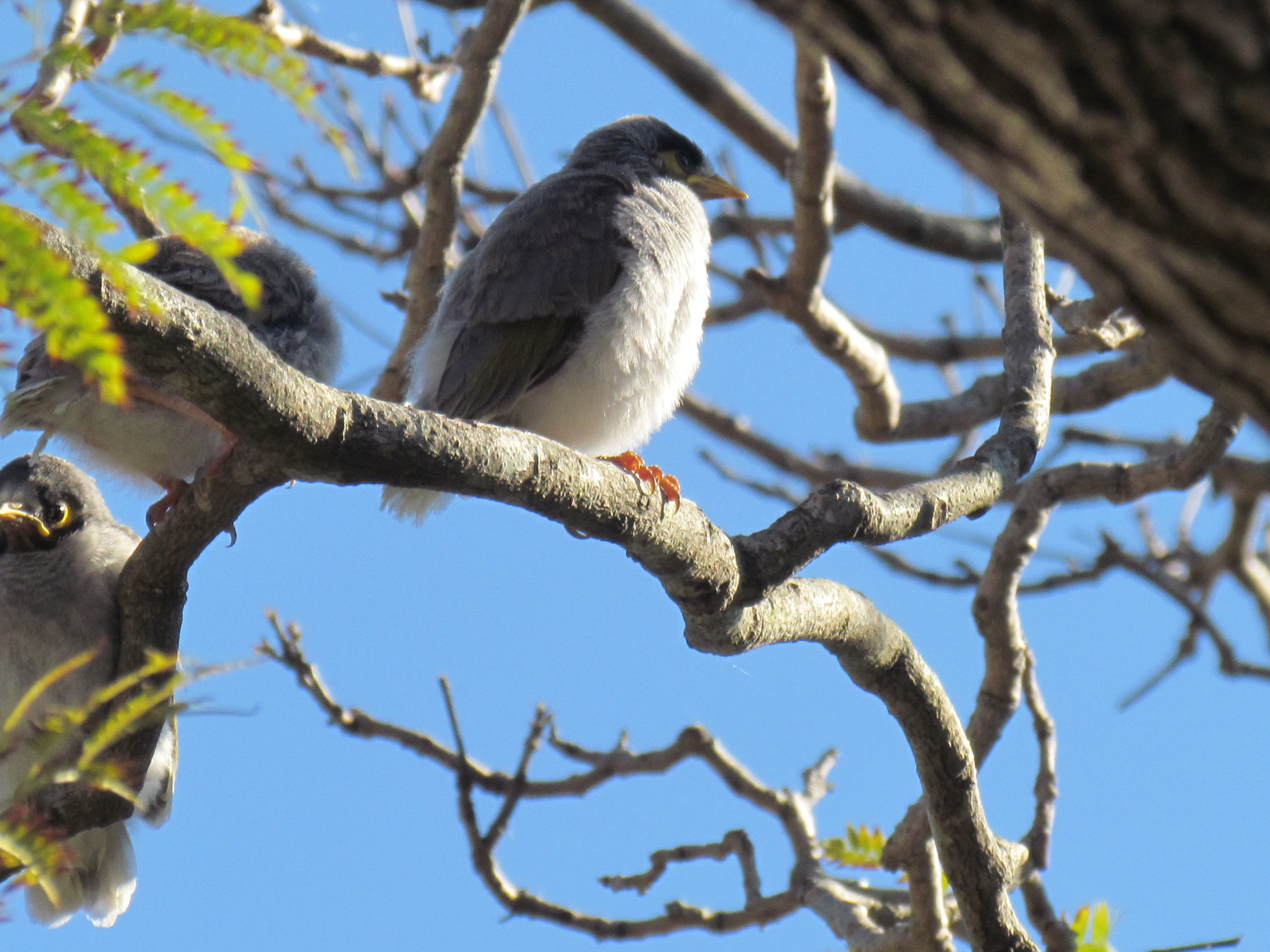
All fluffy and chirpy, three little Noisy Miners have taken their first steps out of their nest.
My previous post showed the chicks being fed in the nest. Now, just four days later, they’re on a branch, bunched together, preening and demanding food. The adults are still very much in attendance.
This still shot shows a chick outlined in the early morning sun:
Here are the three chicks, looking fluffy and cute but with the characteristic gimlet glare of the Noisy Miner:
Common name: Noisy Miner, also called Australian Miner
Scientific name: Manorina melanocephala
Approximate length of adult bird: 26 cm
Date spotted: 17 September 2016
Season: Spring
Location: Allambie Heights, New South Wales, Australia
Latitude/longitude: 33°46’13.7″S 151°15’39.8″E
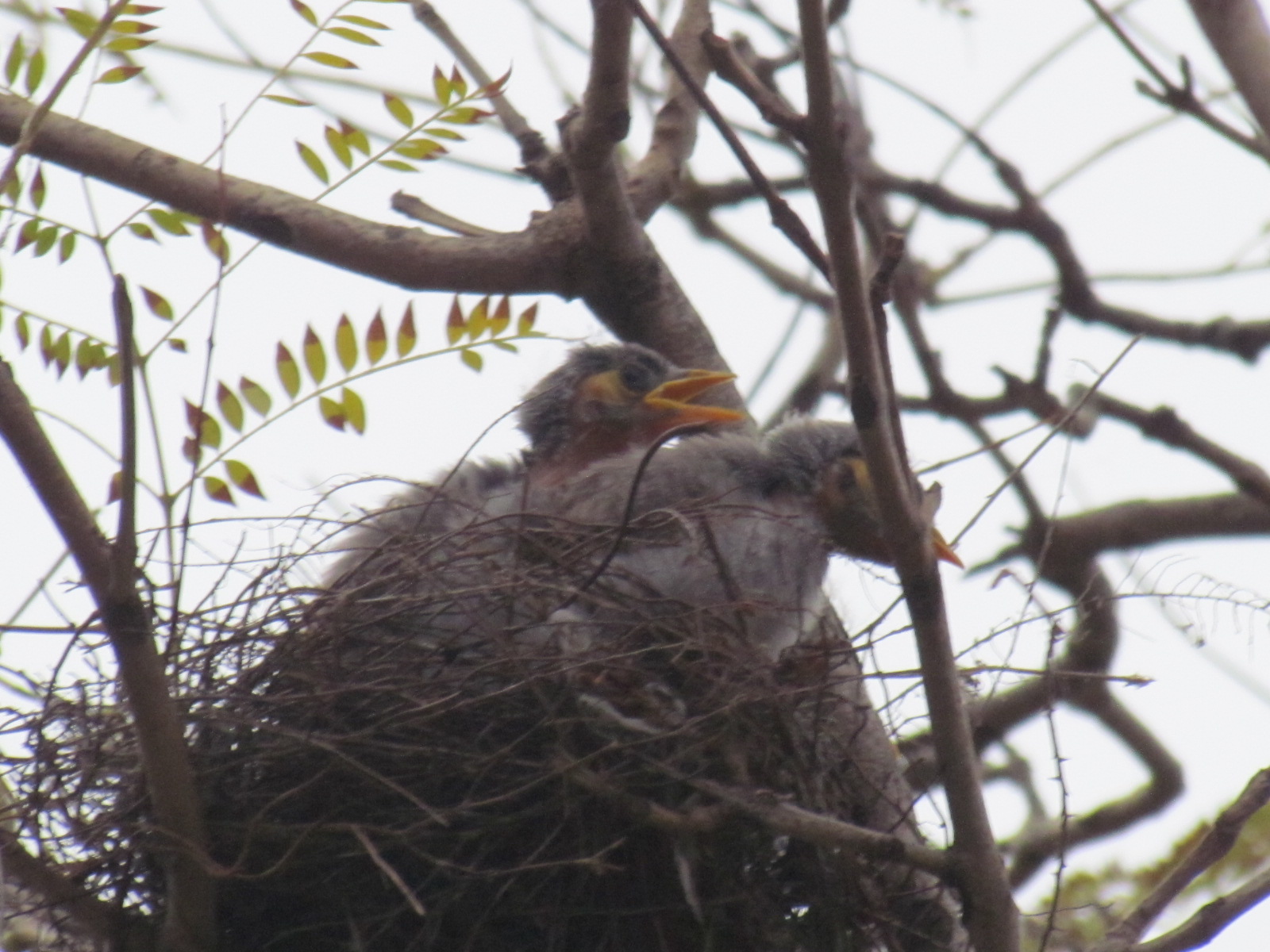
Noisy Miners feeding chicks in nest
Noisy Miners live up to their name. If they lived in California, Hitchcock would surely have used them as inspiration for The Birds. They cheep and squeak at everything in sight, and frequently attack everything in sight too. They’re also known as Australian Miners.
This nest has three chicks, cheeping continuously. The adult birds drop in to feed them every now and then. At one stage in the video, one of the chicks stretches up and flaps its wings. Getting ready for that first flight.
Interestingly, the adult birds feeding the chicks aren’t necessarily the parents. Other birds in a Miner colony often help to feed the babies. Noisy Miners are honeyeaters. They eat nectar, fruit and insects.
Common name: Noisy Miner, also called Australian Miner
Scientific name: Manorina melanocephala
Approximate length of adult bird: 26 cm
Date spotted: 13 September 2016
Season: Spring
Location: Allambie Heights, New South Wales, Australia
Latitude/longitude: 33°46’13.7″S 151°15’39.8″E
Kookaburra pair swaying in the wind
Kookaburras have an endearing habit of swaying back and forth when sitting on a branch. Today a pair sat cosily together on a branch, chewing the breeze. It’s soothing to watch their synchronised swaying.
For a giggle, here’s a short extract from the above video showing my favourite bit:
Common name: Laughing Kookaburra
Scientific name: Dacelo novaeguineae
Approximate length: 47 cm
Date spotted: 23 August 2016
Season: Winter
Location: Allambie Heights, New South Wales, Australia
Latitude/longitude: 33°46’13.9″S 151°15’39.2″E
Wood duck quacking high in a gum tree
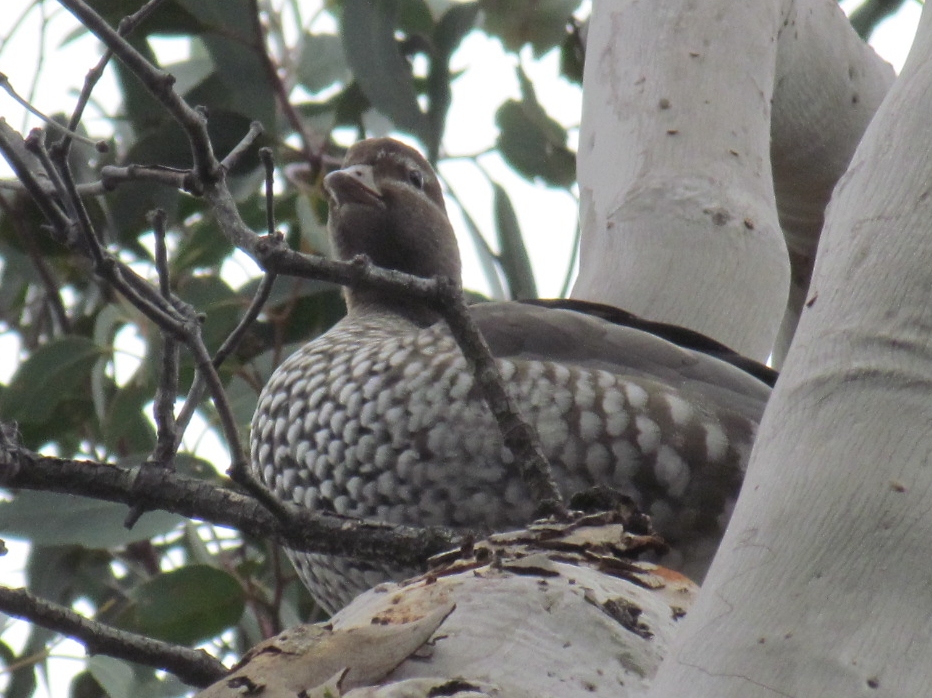
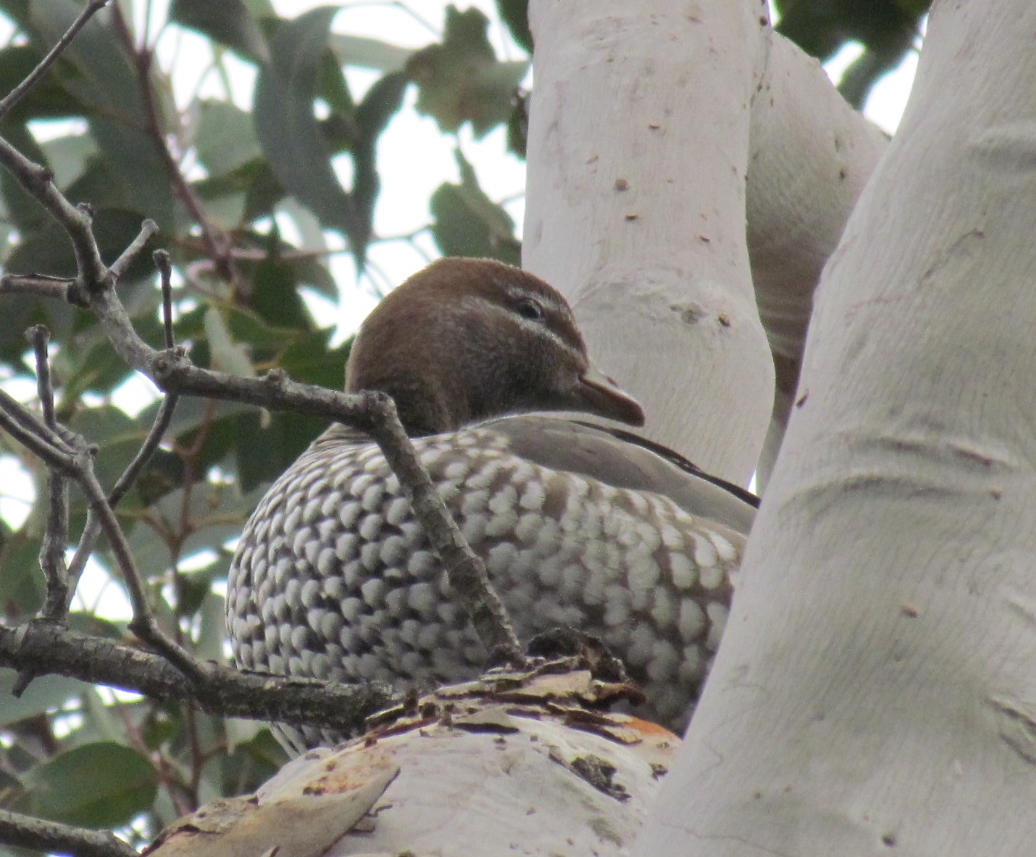
For some reason I’ve never expected to see a duck high up a gum tree. I know they fly, but somehow I think of them as spending their lives on the ground or on the water. Walking through the bush, I’ve occasionally heard a muttering, rolling sound coming from the tree tops. Imagine my surprise when I tracked it down to this Australian Wood Duck.
Here’s a still photo of the duck:
And in profile:
Common name: Australian Wood Duck
Scientific name: Chenonetta jubata
Approximate length: 50 cm
Date spotted: 31 July 2016
Season: Winter
Location: Manly Dam Reserve, New South Wales, Australia
Latitude/longitude: 33°46’41.1″S 151°14’54.9″E


 Sydney Birder