Reflection symmetry and a coot
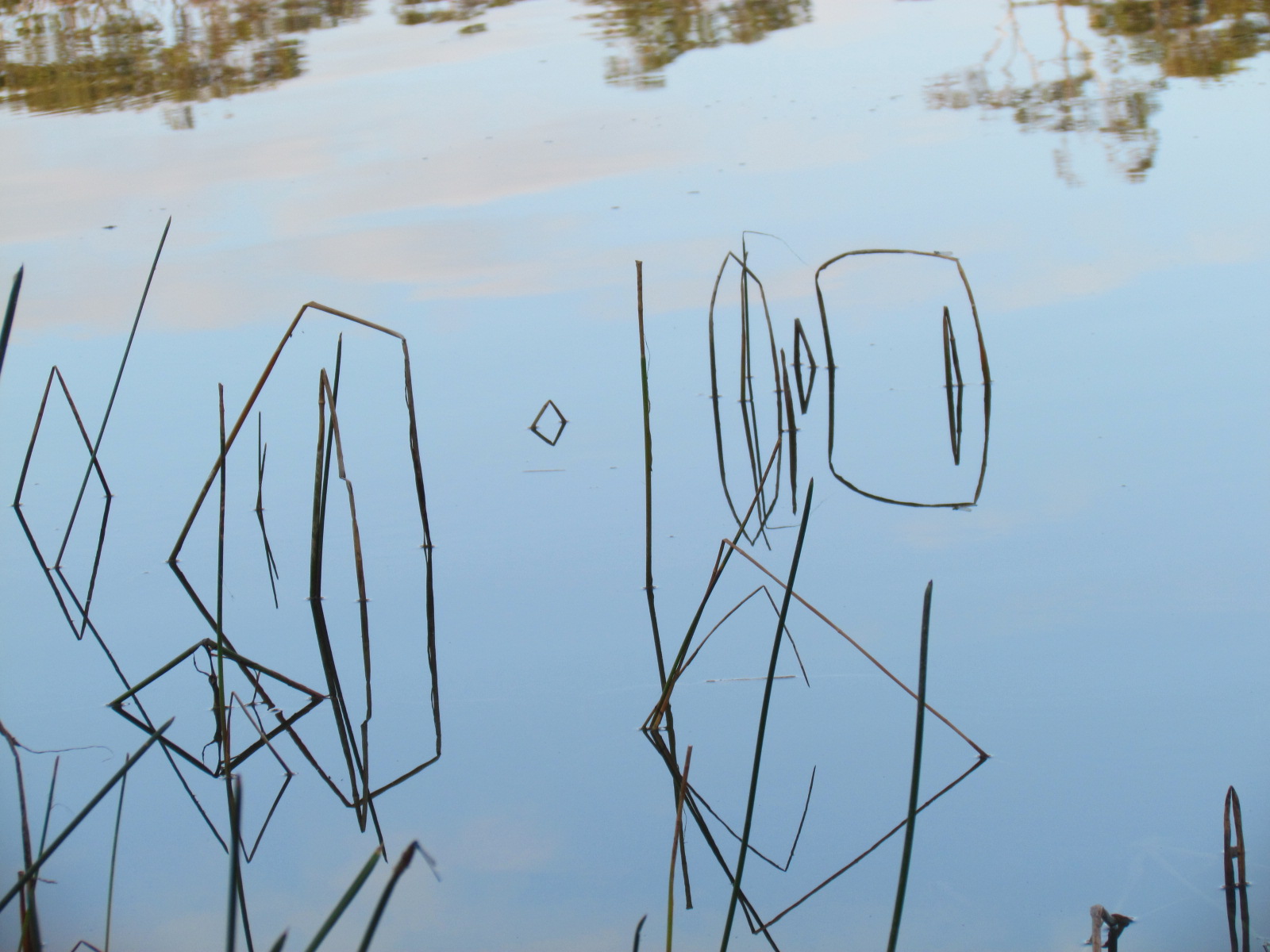
Manly Dam was quiet and calm when I strolled along its shores early this morning. I was struck by the patterns made by these reeds and their reflections in the water.

It’s a little mind boggling, isn’t it? Where does the real reed start and end? The finest of abstract art. Here’s the same set of reeds but with more around them:
A different configuration:
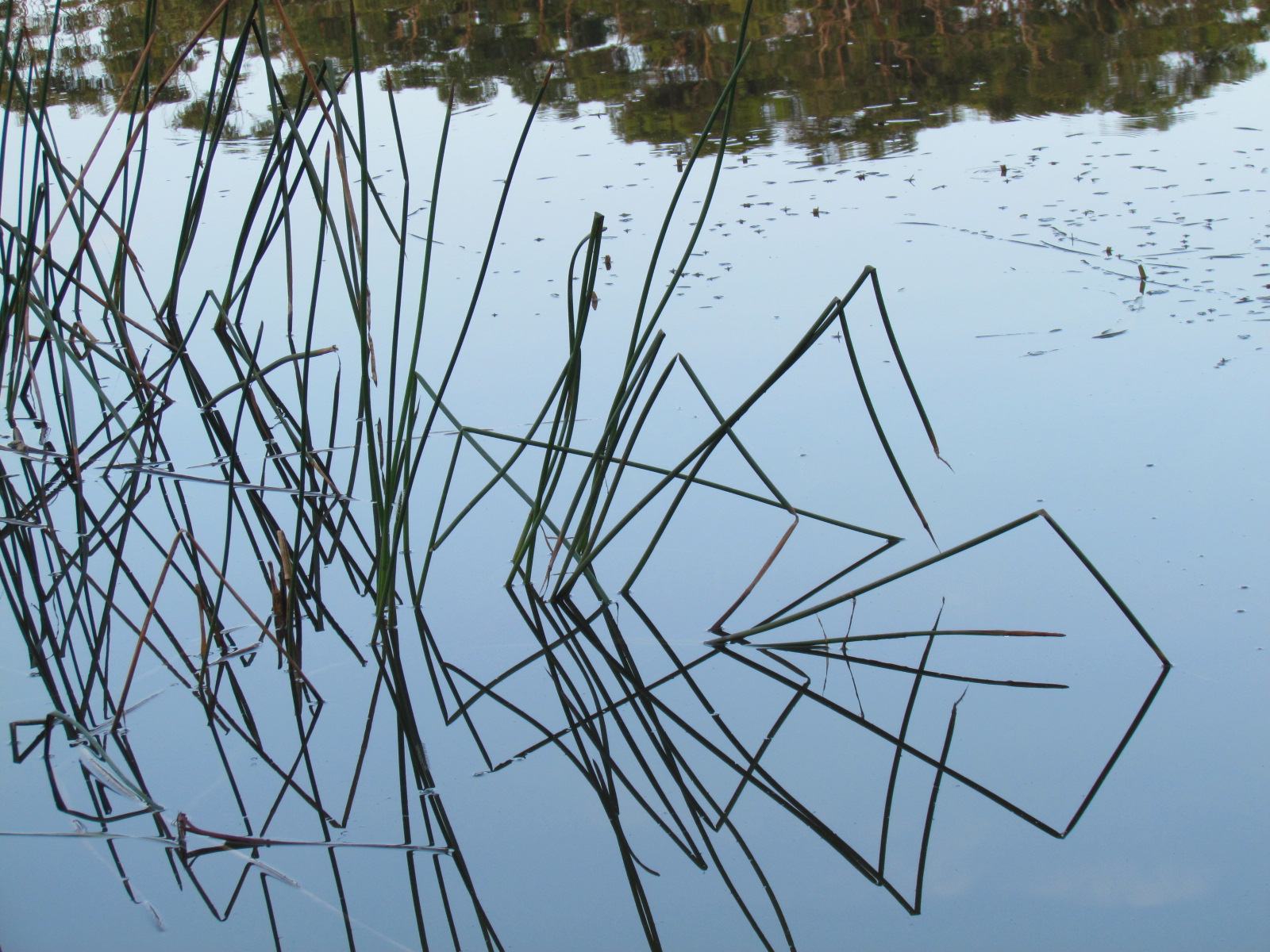
Another shape to bend your mind:

Bubbles had reflections too:

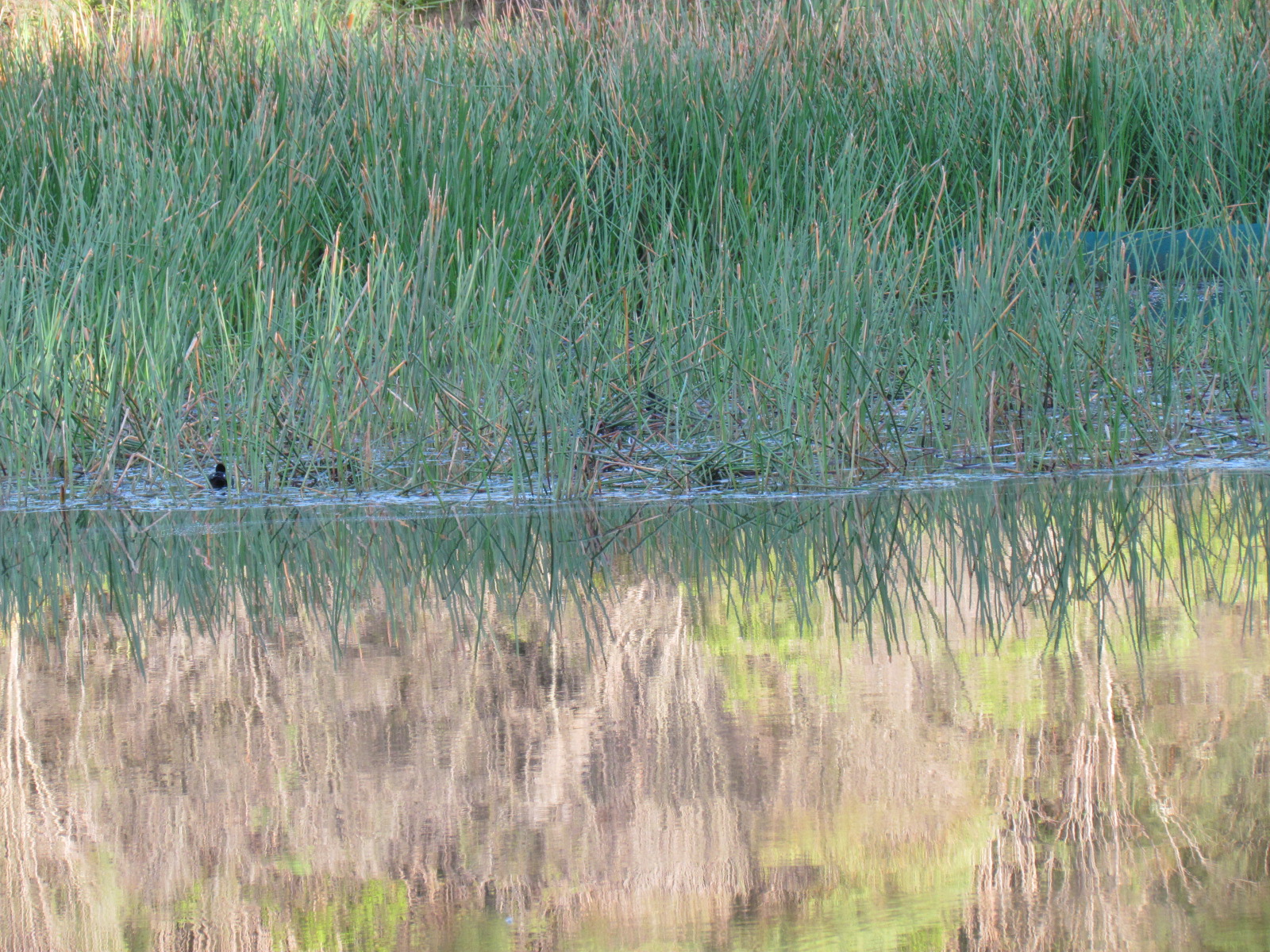
Since this is a blog about birds, I should probably include one. 😉 This Eurasian Coot was enjoying the morning quiet:

Here’s the bird again, tucked away in the centre left of this mass of reflections:
Common name: Eurasian Coot
Scientific name: Fulica atra
Approximate length: 35 cm
Date spotted: 22 January 2017
Season: Summer
Location: Manly Dam Nature Reserve, New South Wales, Australia: 33°46’27.9″S 151°15’05.5″E
Masked Lapwing’s face looks like a Lego model
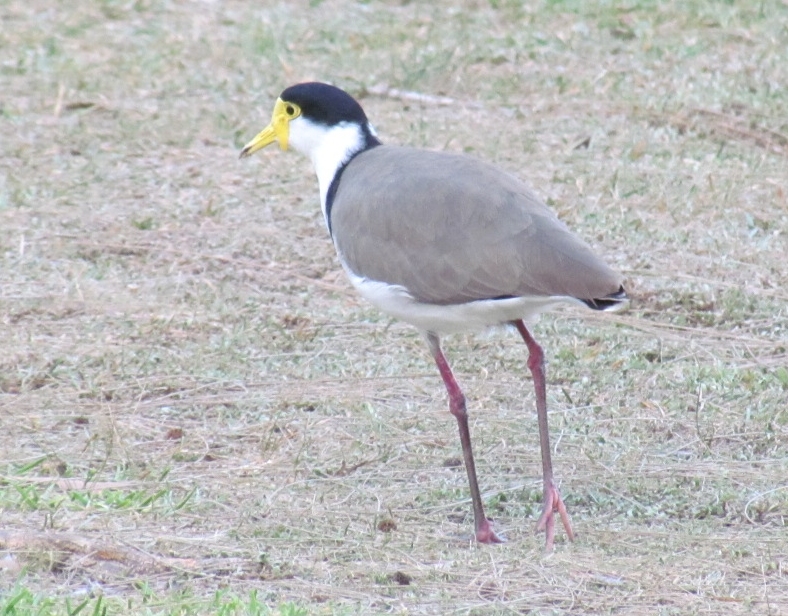
I spotted two Masked Lapwings at Manly Dam, near Sydney, Australia, this morning. They’re also known as Spur-winged Plovers. They can be quite aggressive, especially in nesting season. The name “spur-winged” is apt, because they have hooks on their wings, one on each, which they use as weapons, stretching the wings then dragging back to wound their enemy. But these two were quietly going about their business, pottering around the edges of Manly Dam.
Their faces make me think of a model put together with Lego. They’re so perfect, and yet they seem not quite real.

They have lovely knobbly knees and big pink feet:
In this video, one of the birds advances tentatively, testing each step:
Here’s a zoomed out shot showing the two birds in their environment:

Common name: Masked Lapwing, or Spur-winged Plover
Scientific name: Vanellus miles
Approximate length: 37 cm
Date spotted: 15 January 2017
Season: Summer
Location: Manly Dam Nature Reserve, New South Wales, Australia: 33°46’58.8″S 151°15’18.4″E
Cicadas singing
Not a bird this time, but a beetle that makes bush walking painful to the ears in the summer months around Sydney. The piercing noise of cicadas is familiar to most Sydney-siders. In this video, you can hear them all round you, and see one close-up pulsating its abdomen to make the noise.
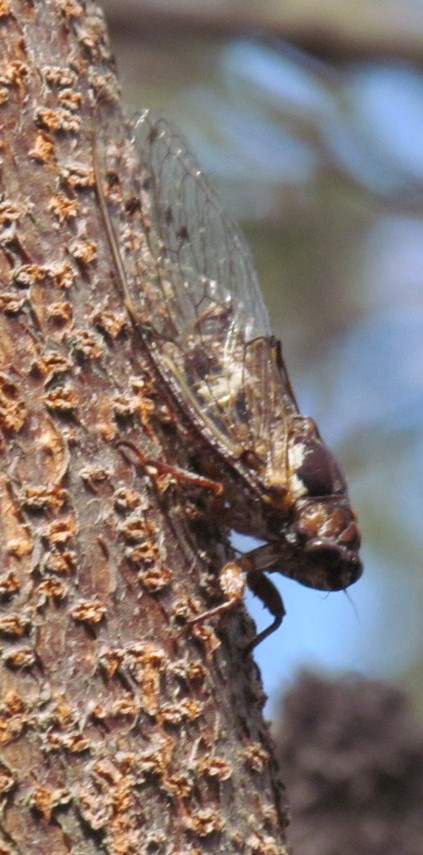
The insect is quite large – about the length of your thumb – and has transparent, lacy wings:
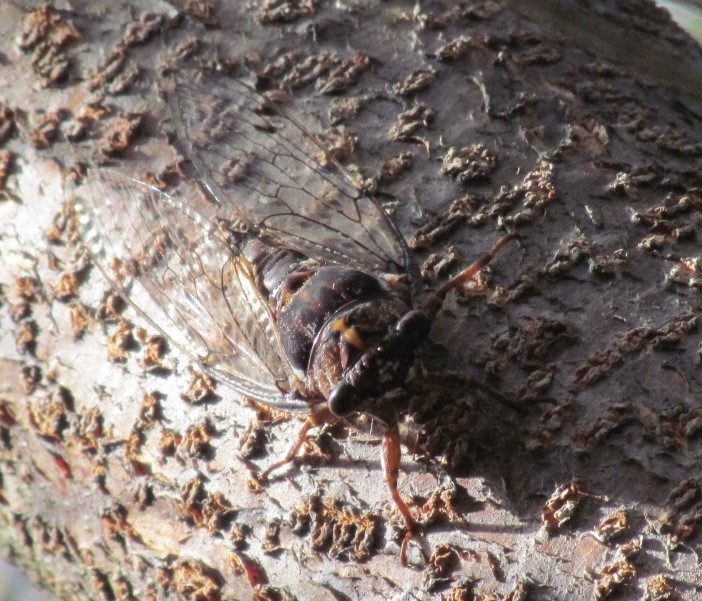
Their huge eyes make them look super cool, as if they’re wearing sun glasses:
An interesting fact: The adult cicada is the winged insect we see, and it lives for only a few weeks. But the nymphs, which are the form of the creature that hatch from the eggs, live for around seven years, underground.
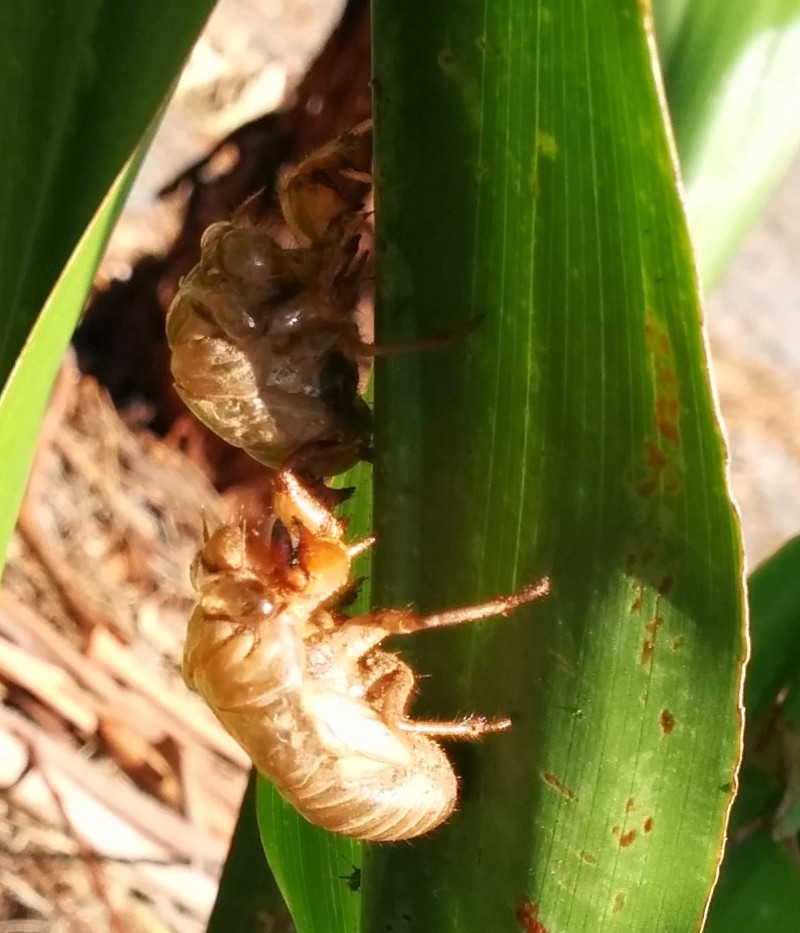
A while back, I came across these cicada husks. When the nymph is ready to transform into the winged insect, it climbs up from the underground onto a bush or tree trunk and sheds its skin. These are the resulting empty husks:
Kookaburra baby cackling and feeding
The kookaburras around our neighbourhood are very noisy at the moment. A couple of juveniles drop by regularly to practise their cackling skills. They’re cute and funny.
In this video, you can see one youngster crooning to himself, and another behind the branches. In the background, other birds chime in to show him how it’s done. A parent comes by a couple of times too, to feed the ever-demanding little one.
Common name: Laughing Kookaburra
Scientific name: Dacelo novaeguineae
Approximate length: 47 cm
Date spotted: 31 December 2016
Season: Summer
Location: Allambie Heights, New South Wales, Australia
Kookaburras cranking up for a cackle
You’ve probably heard kookaburras in full voice, cackling and hooting raucously. I think the sound they make when they’re preparing for a full-voice yodel is funny and cute. It happens in particular when there’s a group of birds. They chunter at each other, perhaps in warning or perhaps companionably. They sound a bit like rusty saws in a dusty attic.
These two were in a tree high above my lounge window:
I encountered this disreputable, slightly dangerous looking character deep in the bush:
Common name: Laughing Kookaburra
Scientific name: Dacelo novaeguineae
Approximate length: 47 cm
Date spotted (second video): 26 December 2016
Season: Summer
Location (second video): Manly Dam Nature Reserve, New South Wales, Australia: 33°46’50.4″S 151°14’59.6″E
New Zealand Dotterel
I’m travelling in New Zealand, so this post is a departure from my usual subject of birds in Sydney. While walking on Hahei Beach on the North Island, I came across a roped off area protecting a brood of New Zealand Dotterels.
Dotterels are native New Zealand birds, with a conservation status of nationally vulnerable. They’re also called New Zealand plovers, or tuturiwhatu.
This video shows one of the chicks exploring its environs. The shot then zooms out to show the gorgeous surrounds, and zooms back in to the mother or father bird and another little chick.
Here’s a still shot of the chick exploring:

The adult bird perches watchfully on a log:
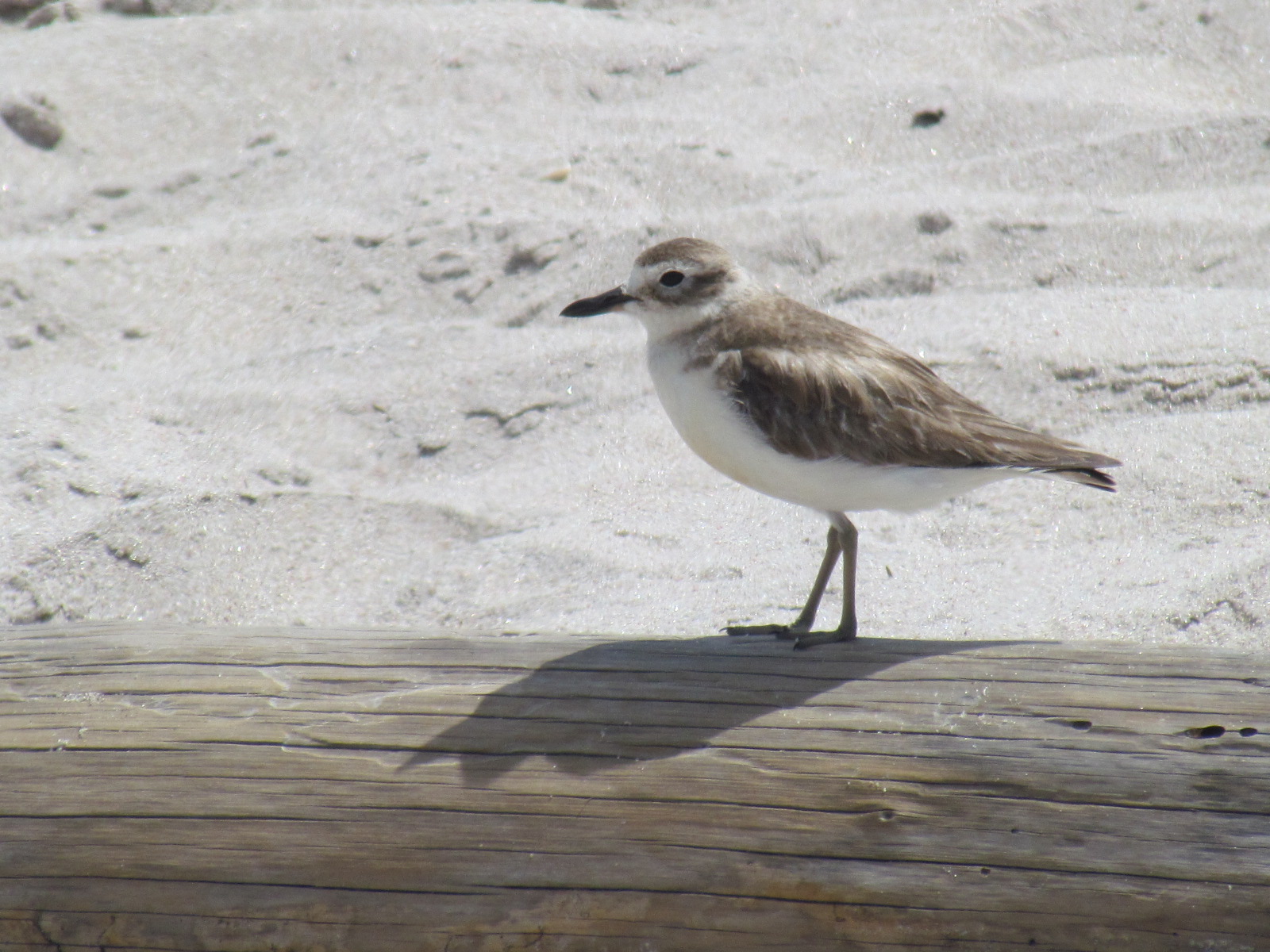
Common name: Northern New Zealand dotterel
Scientific name: Charadriiformes charadriidae
Approximate length: 25 cm
Date spotted: 7 December 2016
Season: Summer
Location: Hahei Beach, North Island, New Zealand
Latitude/longitude: 36°50’10.2″S 175°48’10.3″E
Yellowhammer near Cathedral Cove, New Zealand
As mentioned in my previous post, I’m not in Sydney today. I’m travelling in New Zealand, and spotted a couple of pretty little Yellowhammers at the Cathedral Cove carpark. The Yellowhammer is not a native New Zealand bird. It was introduced into New Zealand from Britain in the late 1800s.
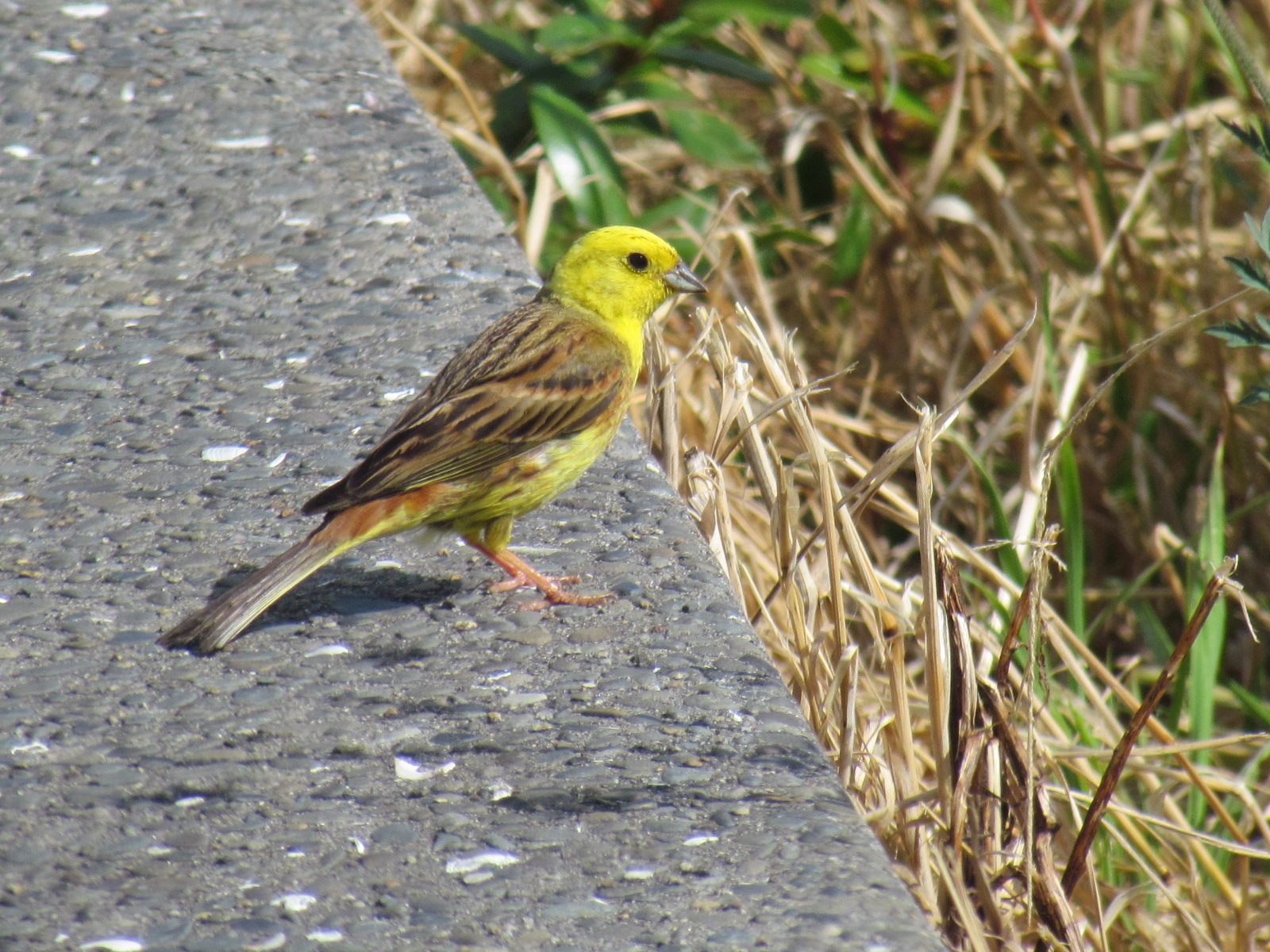
Common name: Yellowhammer
Scientific name: Emberiza citrinella
Approximate length: 16 cm
Date spotted: 7 December 2016
Season: Summer
Location: Cathedral Cove car park, Te Whanganui-A-Hei Marine Reserve, North Island, New Zealand
Latitude/longitude: 36°49’59.0″S 175°48’00.7″E
Goldfinch near Cathedral Cove, New Zealand
Departing from the usual locations described in this blog, I’m not in Sydney today. I’m travelling in New Zealand, and saw a beautiful little Goldfinch on a thistle bush. Neither the finch nor the thistle is native to New Zealand, but they make a very pretty picture. The bird plucks the seeds from the flowerhead, and a shimmering cloud of silver threads drifts around its beak.
A still image of the same bird – click the image to expand it in your browser:
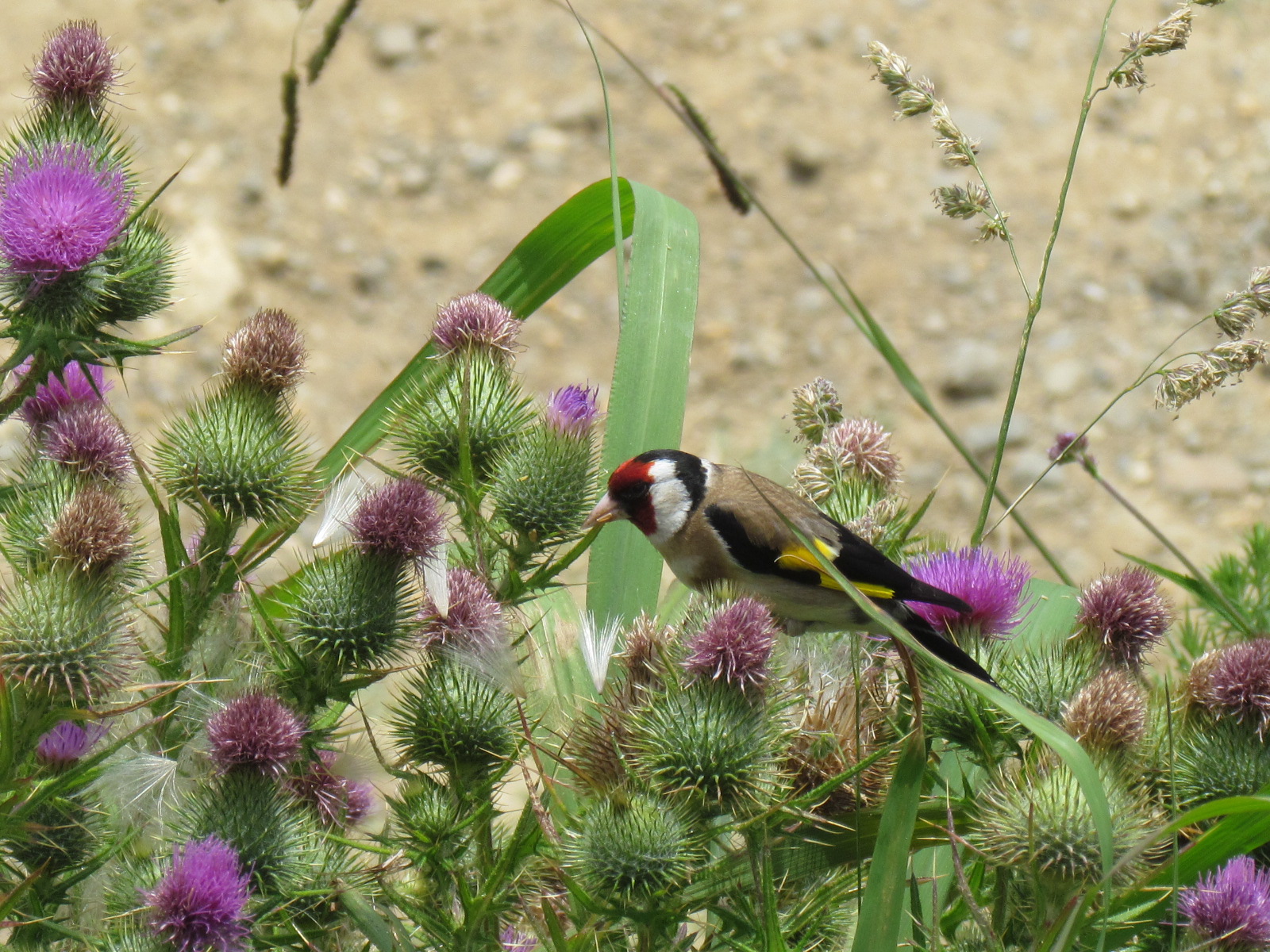
Common name: European Goldfinch
Scientific name: Passeriformes fringillidae
Approximate length: 12 cm
Date spotted: 7 December 2016
Season: Summer
Location: Cathedral Cove car park, Te Whanganui-A-Hei Marine Reserve, North Island, New Zealand
Latitude/longitude: 36°49’59.0″S 175°48’00.7″E
Bird nest with blue trimming
This tidy little bird nest was resting at about knee height on some spiky grass. I guess it must have fallen out of a tree, though it’s possible a bird built it there. I didn’t touch it, so I don’t know how well bound it was to the vegetation.
It’s interesting how the bird wove a piece of blue plastic ribbon into the nest.

I don’t know what type of bird made the nest. It was at Manly Dam, near Sydney, Australia.
Australian water dragon in tree
While I wander with my head in the clouds, looking for birds, I sometimes spot other interesting creatures. This is an Australian Water Dragon.
They’re quite large lizards, at 80-90 cm when adult, and attractive with their fierce eyes and that spiky crest running down their spine. They can be quite colourful. This one is shades of grey with yellow tinges. I’ve seen others with a rosy red glow on their chests. They like to be near water, and have long-fingered strong hands for climbing trees.

Common name: Eastern water dragon, or Australian water dragon
Scientific name: Itellagama lesueurii lesueurii
Approximate length: 90 cm
Date spotted: 3 December 2016
Season: Summer
Location: Manly Dam Reserve, New South Wales, Australia
Latitude/longitude: 33°46’50.1″S 151°15’04.5″E


 Sydney Birder