Category Archives: Not a bird
Lace monitor lizard in a tree
I was walking along, my gaze in the treetops as usual, looking and listening for birds. I heard a frantic scurrying on the path ahead of me, and was just in time to see a lace monitor lizard scramble onto a tree. The lizard hid for a while at the base of the tree, observing me:
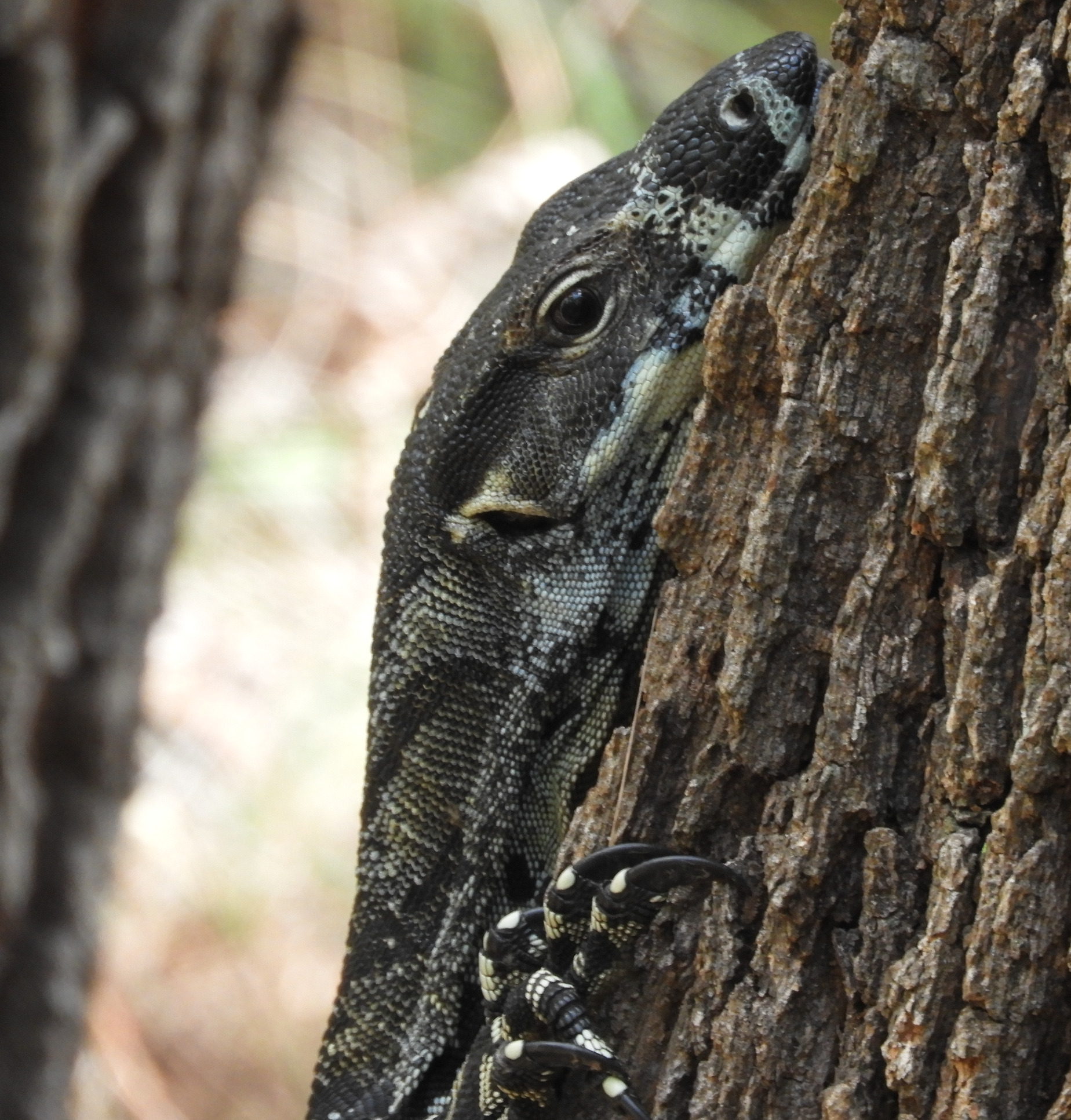
I was intrigued and a little nervous. This was a big lizard, about as long as I am tall. I’m close to 6 foot! Lace monitors are also known as tree goannas (Varanus varius). They can grow to two metres (seven feet) in length and weigh up to 14 kg (30 pounds). They’re predators, living off birds and eggs, other reptiles, and small animals.
I encountered this one a couple of days ago in Manly Dam National Park (map), on the east coast of Australia slightly to the north of Sydney.
The monitor made its way slowly up the tree, flicking its forked tongue in and out, as you can see in this video:
In the following picture, the lizard has reached a safe height and paused to observe me again:
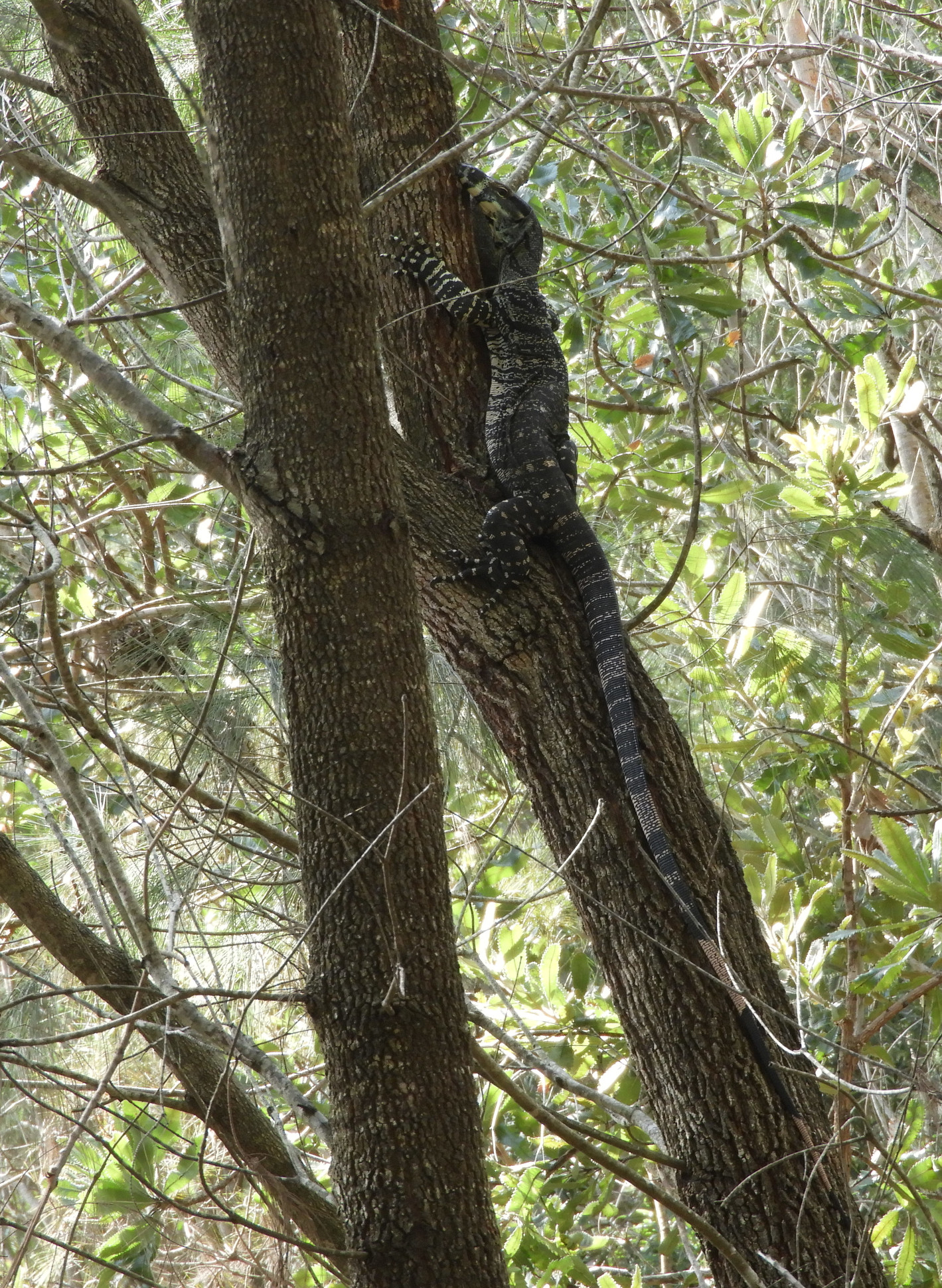
Look at those hands!
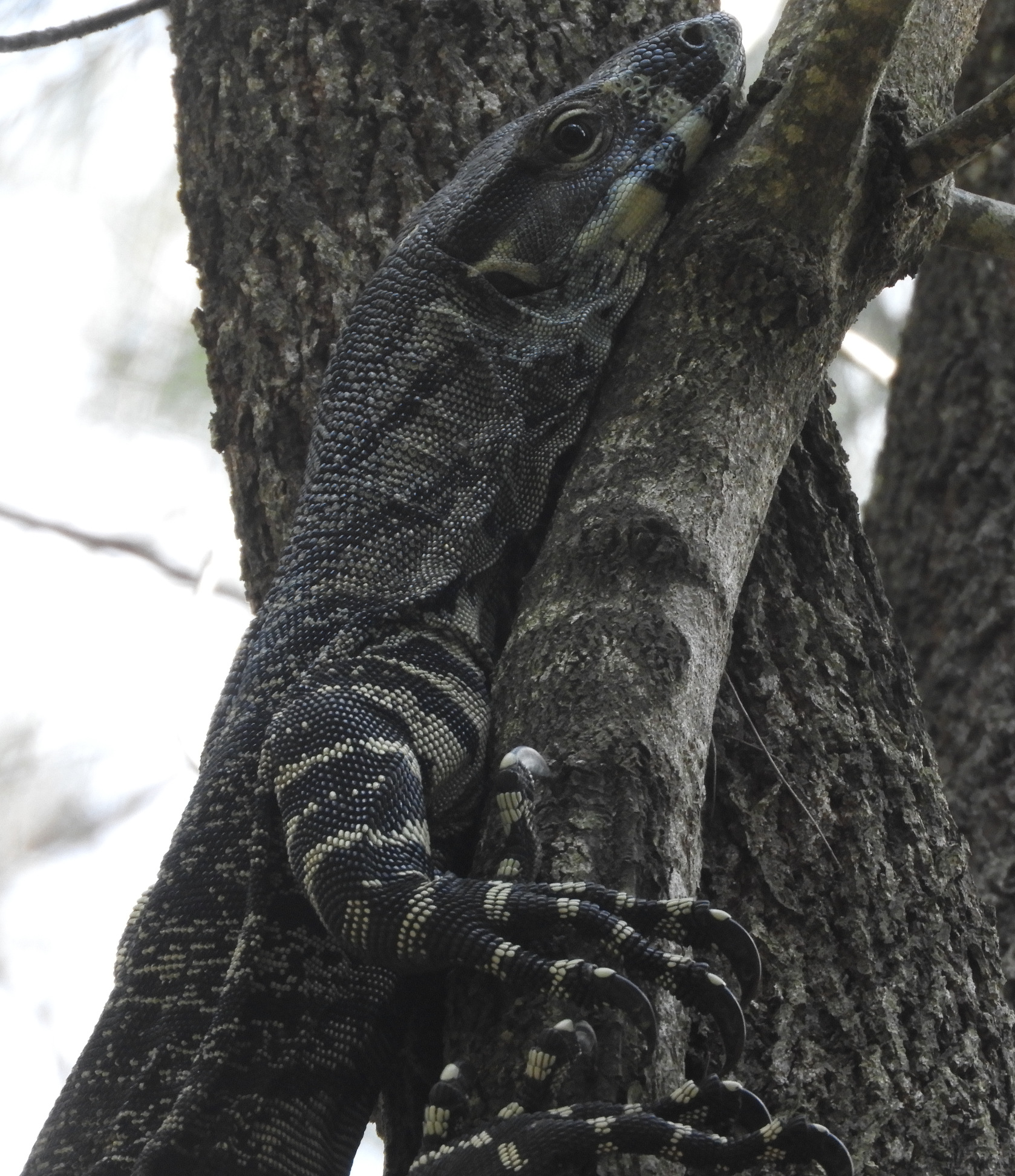
Here’s a far-away picture of the lizard on the tree, to show its size and its surrounds:
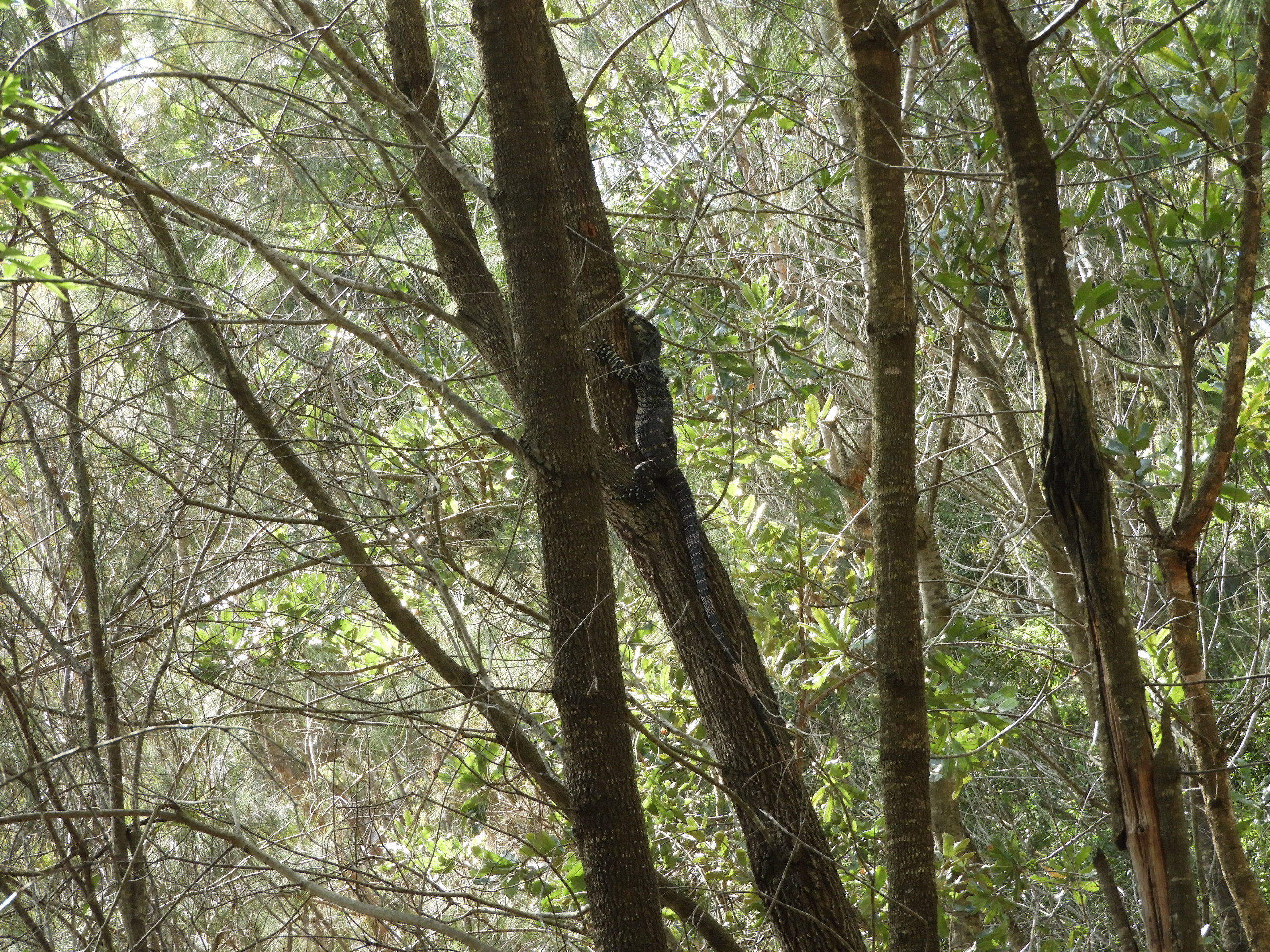
What a gorgeous, wild creature to encounter on a morning walk.
Cuckoo bee visits my study
Bees in Australia can look different from what you might expect. This little creature buzzed into my home study yesterday, explored the room, then tried to exit via a closed window:
It’s a cuckoo bee. More specifically, it’s a Domino Cuckoo Bee (Thyreus lugubris). Why the word “cuckoo” in the name? Like their avian counterparts, cuckoo bees lay their eggs in the nests of other bees, rather than building their own nest.
Here’s a still photo of the bee:
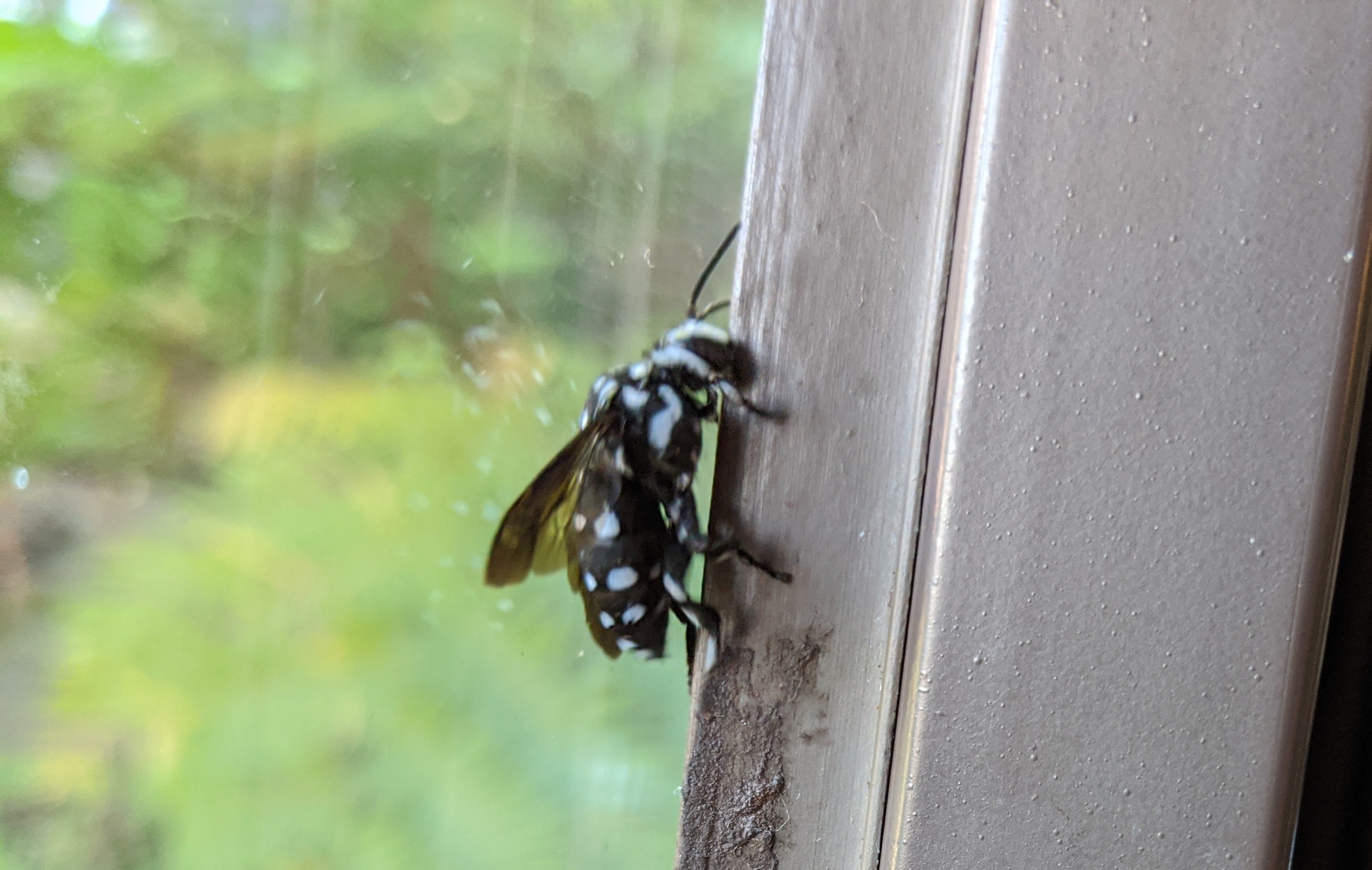
After taking the photographs, I used the glass-and-paper trick to capture the bee, and released it outside. It zoomed off quite happily.
Blue-tongued Lizard in my garden
Every now and then we spot a Blue-tongued Lizard in our garden. These lizards are large and slow-moving. This one was about the length of my forearm and about the width of my wrist.
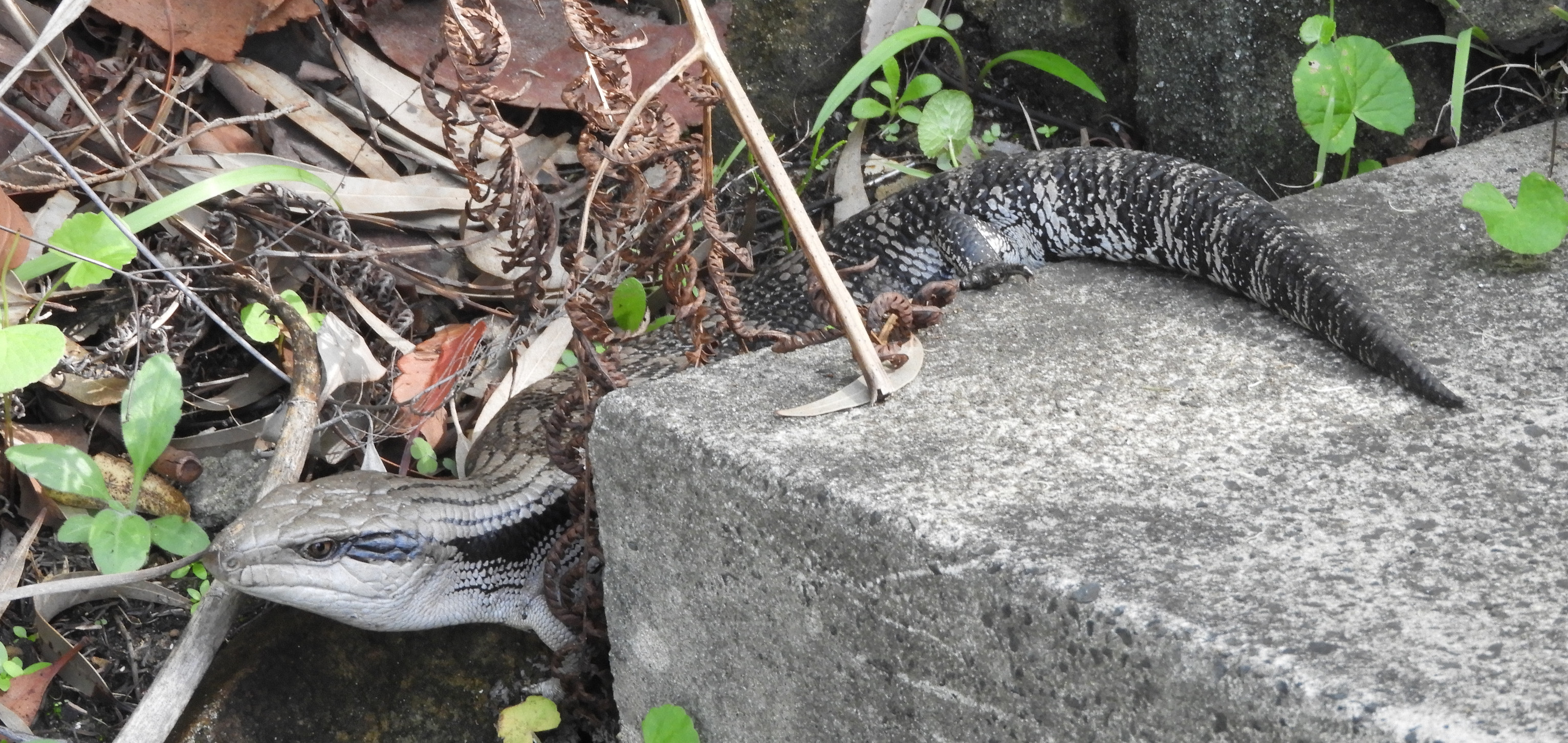
Blue-tongues are skinks, a type of lizard that has overlapping scales, with a small bony plate in each scale on its head. They have small legs, and the back legs in particular often don’t do much.
In this video you can see the lizard’s blue tongue flicking in and out:
Blue-tongues live a long time, sometimes up to 20 years. They eat small creatures, including small snakes and funnel-web spiders. A good friend to have in your garden!
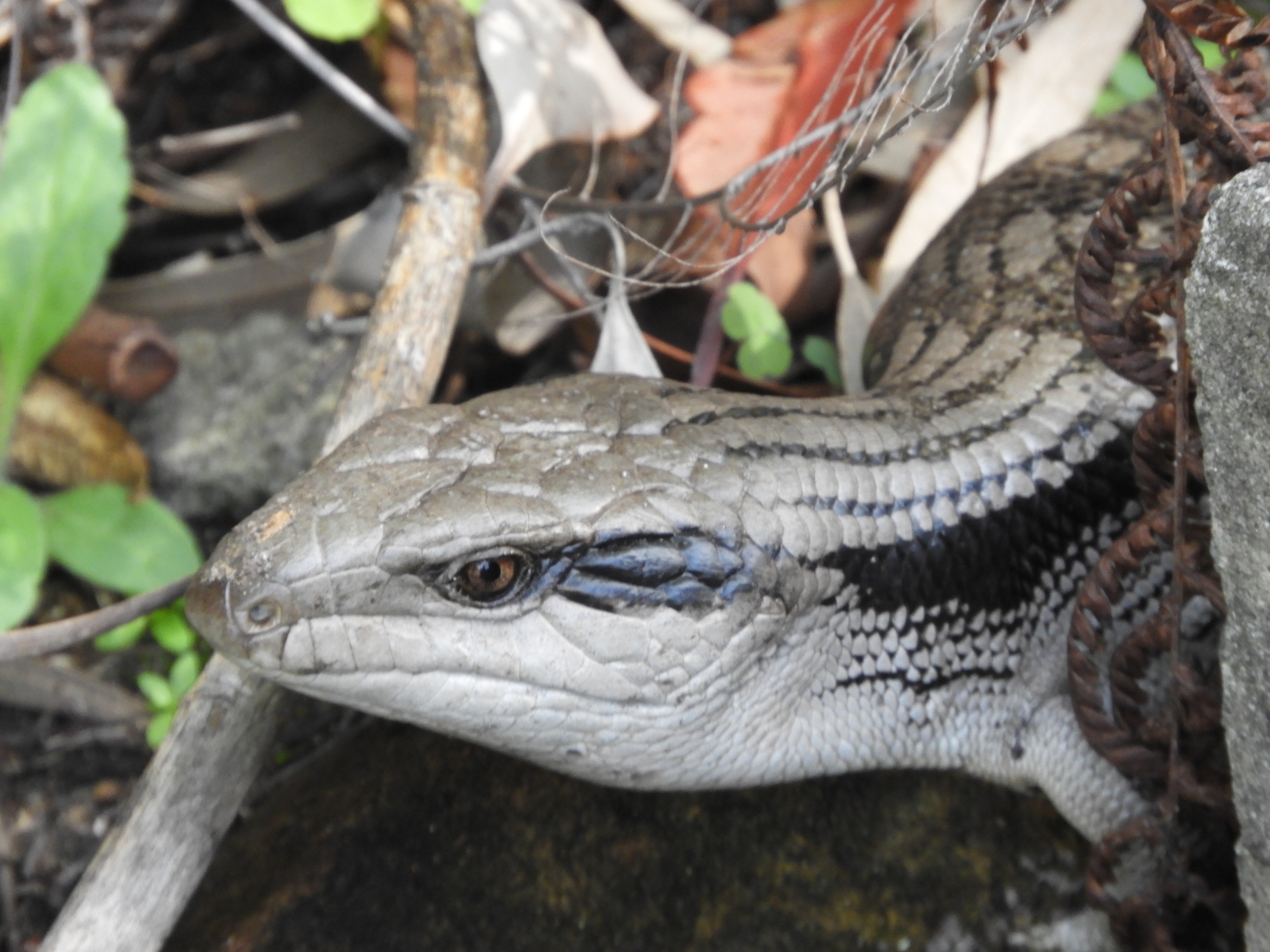
It’s always a pleasure to see such a lovely wild creature living amongst us.
Echidna at Manly North Head
Echidnas are not birds, but I decided to blog about this one anyway because it’s such a cute animal. An Echidna is a mammal, about the size of a fat cat. It has a long, very tough nose that it sticks into the ground in search of ants and termites.
This is a short-beaked echidna (Tachyglossus aculeatus), which is the only living type of echidna found in Australia. There are three other types, which have longer snouts and live in New Guinea.
Echidnas and platypuses are the only mammals that lay eggs. Echidnas look like a cross between an anteater, a porcupine, and a bear. I saw this one at North Head in Manly, near Sydney. As you can hear on the video, the animal attracted a few interested people. It was entirely unfazed by its audience.
The echidna pottered about on the border between the bush and the walking track. We humans kept our distance from each other, due to the social distancing rules currently in place, and we kept our distance from the echidna out of respect for its wildness. It was a pleasure to see this creature going about its everyday life while we’re entangled in a situation of unprecedented weirdness.
Birding at home
Like many people, I’m currently working from home to stave off the Coronavirus. There’s a great hashtag on Twitter at the moment: #BirdingAtHome. As a contribution to that hashtag, here are some of the birds I’ve seen at home over the last few days.
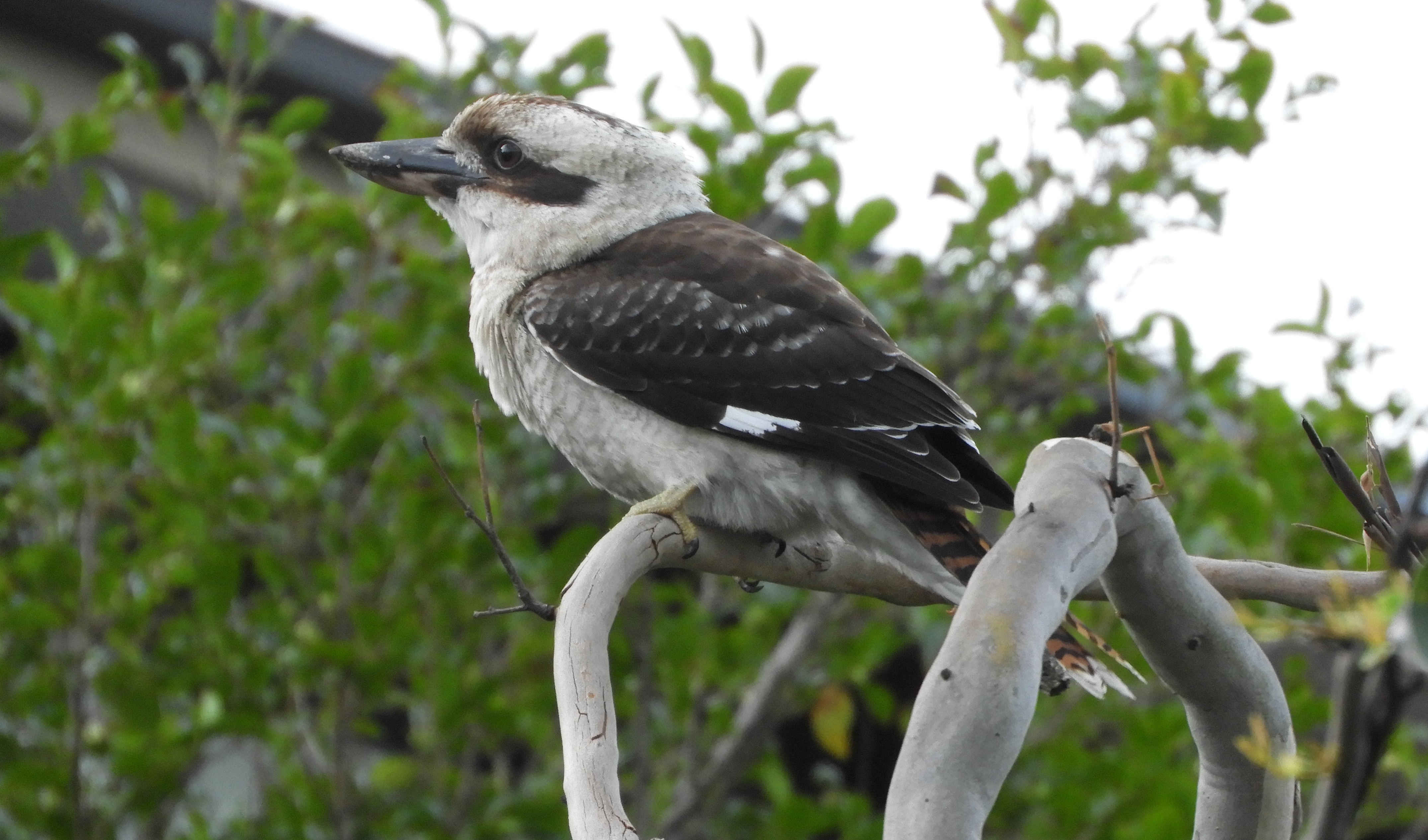
Laughing Kookaburra
Scientific name: Dacelo novaeguineae | Approximate length: 47 cm | Date: 17 March 2020
Grey Butcherbird
Scientific name: Cracticus torquatus | Approximate length: 30 cm | Date: 17 March 2020
I think this may be a juvenile, as the lines between the black and white sections of plumage are not well defined. The bird is on a Sydney Red Gum, one of my favourite trees, and currently the biggest tree in our garden:

Australian Magpie
Scientific name: Gymnorhina tibicen | Approximate length: 40 cm | Date: 17 March 2020
This inquisitive Australian Magpie landed on the roof of our porch and peered down at us. It was in a perfect spot to achieve a weird doubling effect with its reflection in the window. The real bird is on the left:
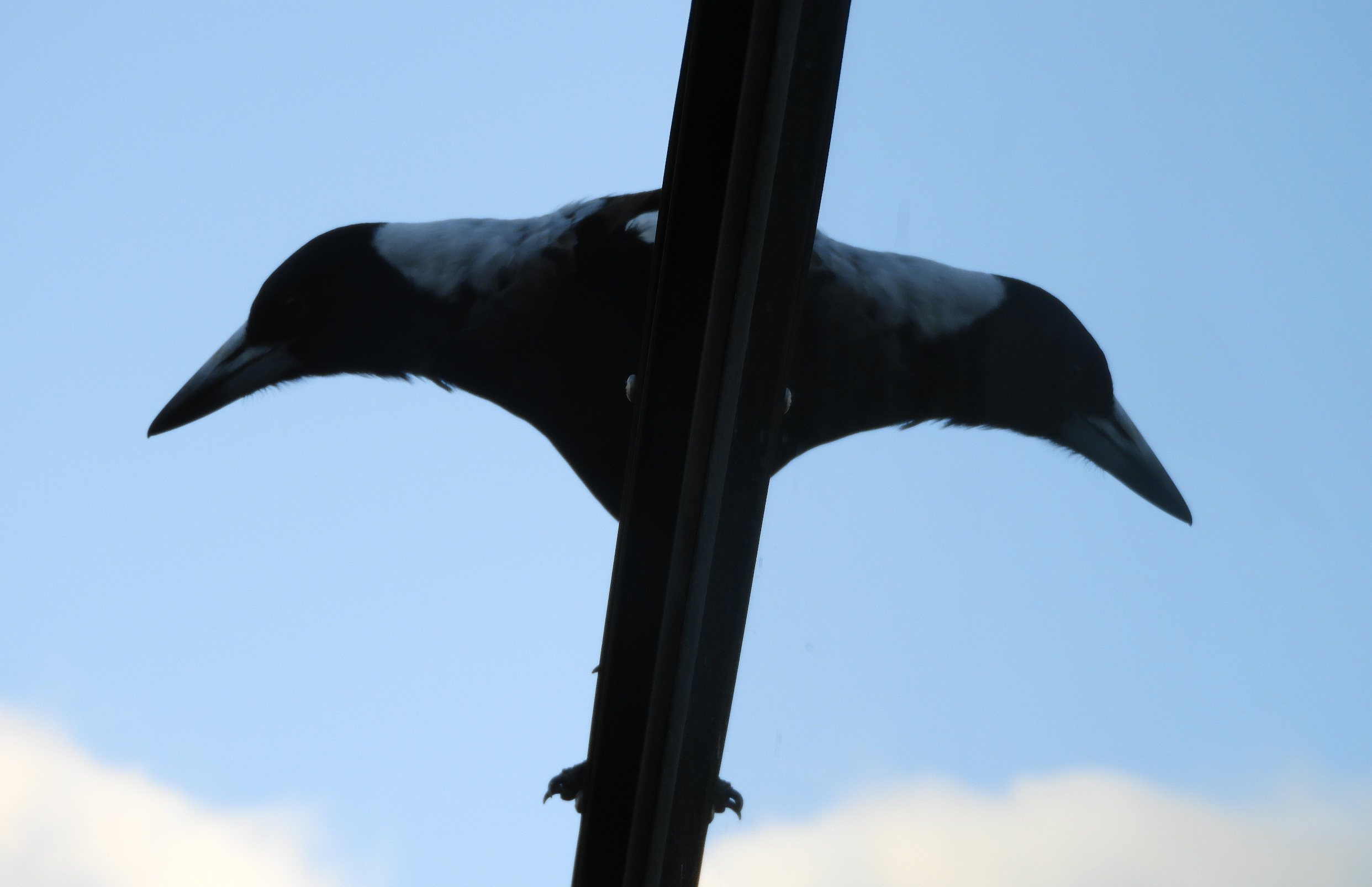
You can see the bird’s head and shoulders at the top and its feet at the bottom. Here’s another pose by the same bird in the same spot on the roof:
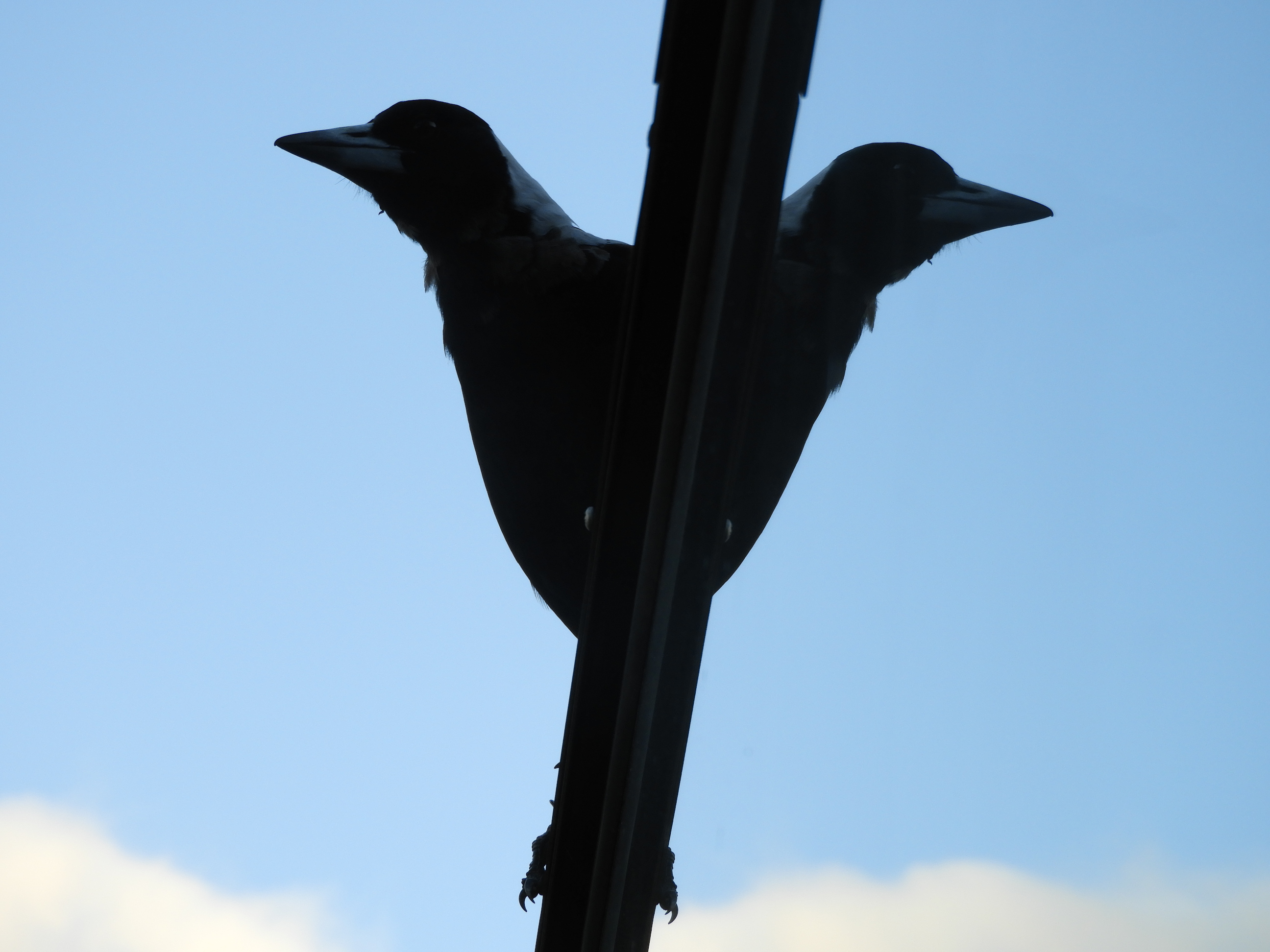
The magpie then hopped in through the window and examined the place:

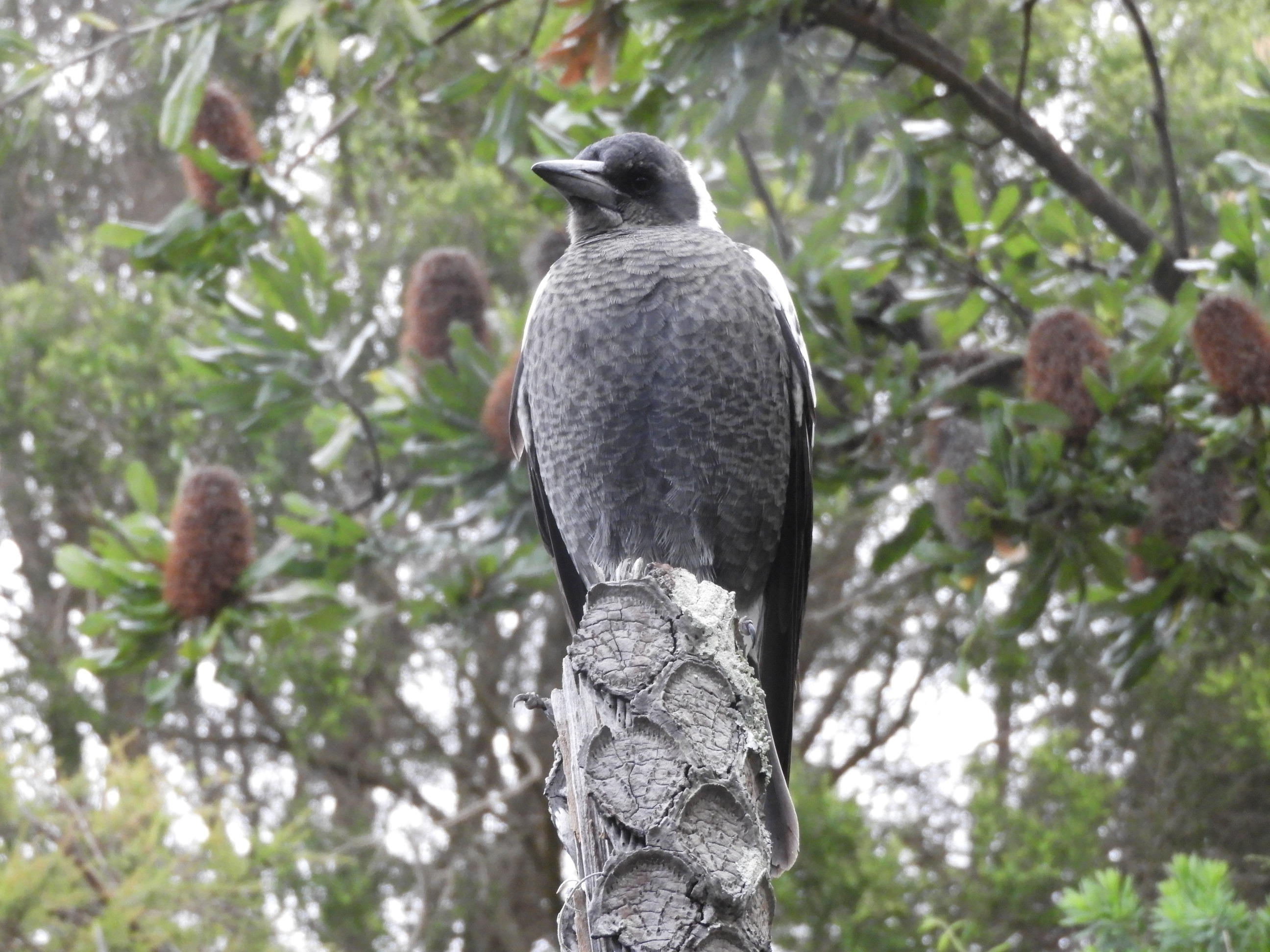
A couple of days earlier, a juvenile magpie (note the soft grey colouring) posed like a statue on a pedestal. The pedestal is the trunk of a tree fern that died off a while ago:
A side view of the same bird on the same perch:

Pied Currawong
Scientific name: Strepera graculina | Approximate length: 45 cm | Date: 11 March 2020
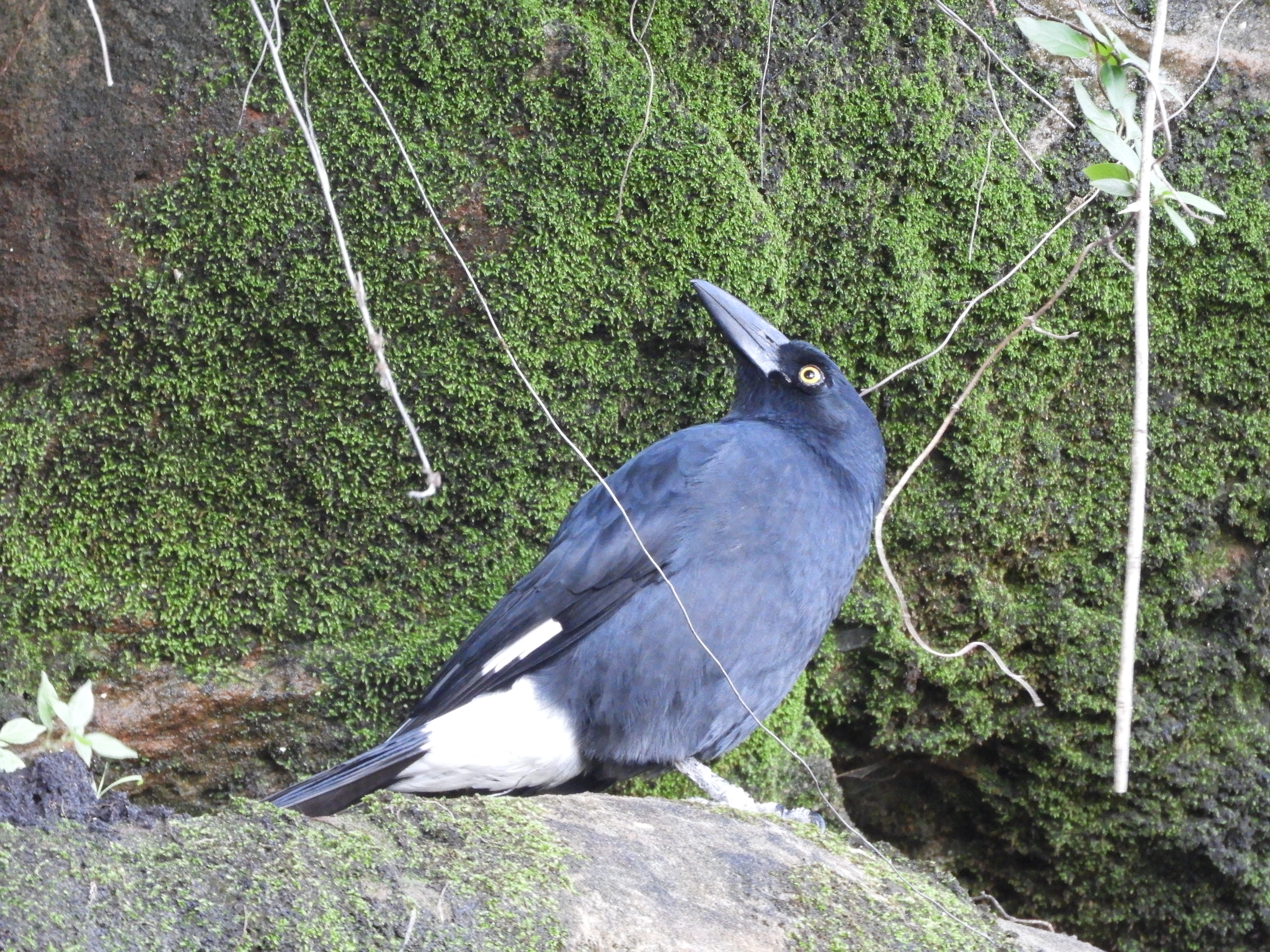
Currawongs are not quite as bold as magpies. They tend to view human activity from afar and swoop past when something interesting is going on. This one chose a mossy perch that showed off its dark plumage and yellow eyes:
Musk Lorikeet
Scientific name: Glossopsitta concinna | Approximate length: 23 cm | Date: 18 March 2020
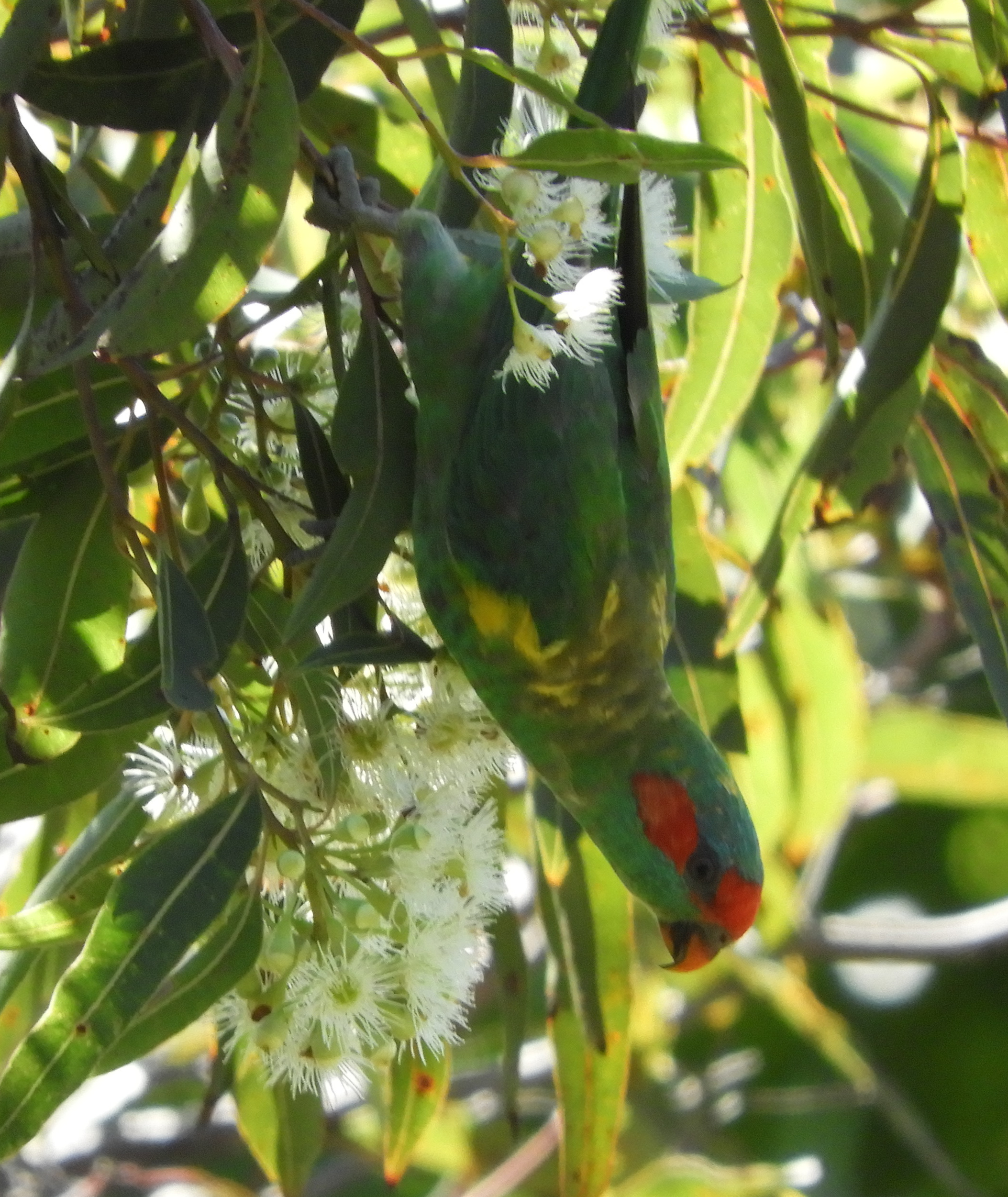
I don’t often see Musk Lorikeets. At the moment, a number of the gum trees are in flower and are attracting a variety of birds. It’s hard to get a good picture of a Musk Lorikeet. They seem to be more shy than other birds and take care to hide within the foliage as much as possible.
Rainbow Lorikeet
Scientific name: Trichoglossus haematodus | Approximate length: 30 cm | Date: 17 March 2020
We see many of these colourful, quarrelsome birds, and these last few days have been no exception. They were competing with the Musk Lorikeets for the same flowers:

Australian King Parrot
Scientific name: Alisterus scapularis | Approximate length: 44 cm | Date: 15 March 2020
A couple of days ago, I blogged about the two King Parrots that spent some time above our patio. Here’s the male again:

Grey-headed Flying Fox
Scientific name: Pteropus poliocephalus | Approximate length: 30 cm | Date: 18 March 2020
To finish off with, below is a very dark pic of a Flying Fox, which is a bat not a bird. In fact, it’s a megabat (yes, that’s a thing) and is one of the largest bats in the world. These bats eat fruit and flowers, and they visit the flowering trees at night. They make quite a noise, but it’s a privilege to have them around!
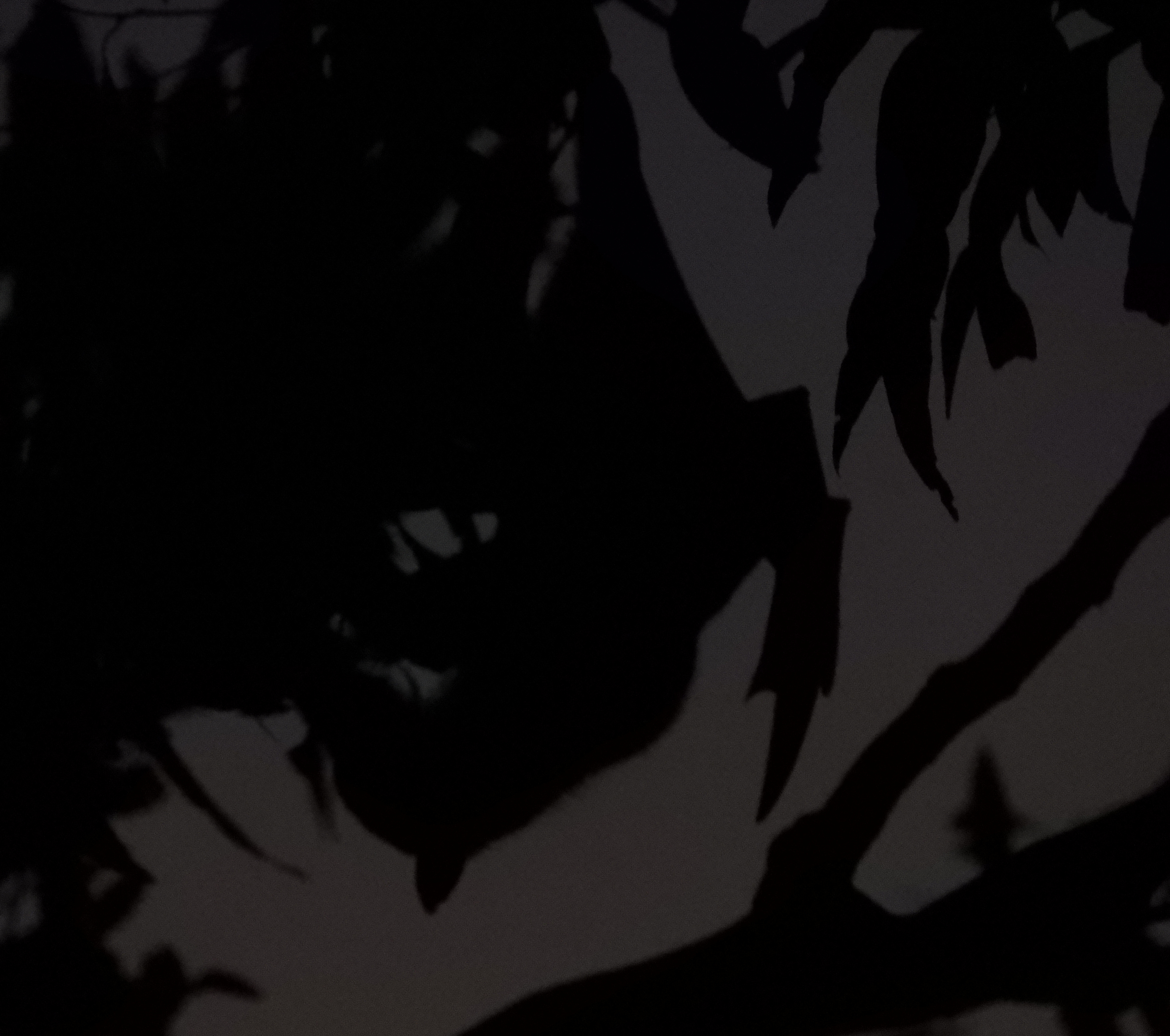
The bat is, as usual, upside down. You can see an ear near the bottom of the picture, slightly to left of centre. The nose is higher up on the left. The spiky bit to the right is a folded wing. The feet are attached to a branch at top centre. A Grey Headed Flying Fox is about 30 cm long and has a wing span of one metre.
Happy #BirdingAtHome everyone!
Leopard Slug on a tree fern
This is not a bird, but it’s in a tree and is likely to encounter a bird! It’s a Leopard Slug on the frond of a tree fern. It’s about 10 centimetres long. The scientific name, Limax maximus, means biggest slug. True enough!

St Andrew’s Cross spider – X marks the spot
This gorgeous spider created its web in a bush in my garden. I nearly stuck my nose into it when reaching to pull out a weed! It’s a female St Andrew’s Cross spider:

We see these spiders quite often. They always spin thick twirls radiating out from the centre of the web, usually four as this one has done. The spider arranges itself carefully so that its body and legs complete the pattern. X marks the spot where the spider lurks!
It’s not a four-legged spider! It’s arranged its legs in pairs. As you can see in this photo. the female has silvery squiggles on its thorax, and stripes of yellow, silver and black on its abdomen, with some polka dots thrown in for good measure. The male spiders are smaller and less colorful, primarily light brown and beige.
St Andrew’s Cross spiders aren’t dangerous to humans. They’ll try their best not to bite you, and their venom doesn’t do too much harm. I’m glad, though, that I didn’t actually bump it with my nose!
Wasp nest under ground in Blue Mountains
While wandering around the Blue Mountains yesterday, I came across a patch of ground that had lots of little holes in it. Ants, I thought. To my surprise, a flying insect zoomed down to the ground near me, descended into one of the holes, then came out again backwards and ejected a stream of sand, before going back down the hole. This happened a number of times, so I took a video:
A number of other insects arrived too, and dived into the surrounding holes. I think they’re wasps. Evidently Australia has around 10,000 wasp species, so it’s a little hard to identify this particular one. If anyone knows, I’d love to hear more about this insect.
Date spotted: 1 December 2019 (summer)
Location: The track up to Anvil Rock Lookout, Blue Mountains: 33°35’43.8″S 150°20’17.8″E
Hummingbird hawk-moth in Cappadocia
Not a bird, and not in Sydney. I’m currently travelling in Cappadocia, Turkey. Standing next to a lavender-like bush, I was startled by an odd creature. Tiny it was, making a loud hum, wings moving so fast they were a blur, abdomen hanging still in the air. My first instinct was that it was an insect, some type of wasp perhaps. Run! On second thoughts, maybe it’s a tiny humming bird. Stay!
This ten-second video gives a reasonable side view of the creature:
A slightly longer video gives a view from behind as well as some side views:
A bit of investigation revealed that it’s a hummingbird hawk-moth, also called a bee moth.
The next picture shows the spectacular backdrop for the flowery bush on which the moth was feeding. The pointy hills are the fairy chimneys in Uçhisar, in the province of Cappadocia in Turkey:

It was hard to catch a photo of the hummingbird hawk-moth, as they dodge around and their wings are basically just a blur. The next two shots give you some idea, in case the videos don’t work for you:

This one nicely shows the moth’s long proboscis dipping into a flower to suck up nectar:

Not a bird, but it had me fooled until I could examine the photos in detail!
Flower spider bright green and yellow
Not all Australian spiders are big and scary. This little creature is a Flower Spider, also known as a Crab Spider. It’s perched on a tree fern:
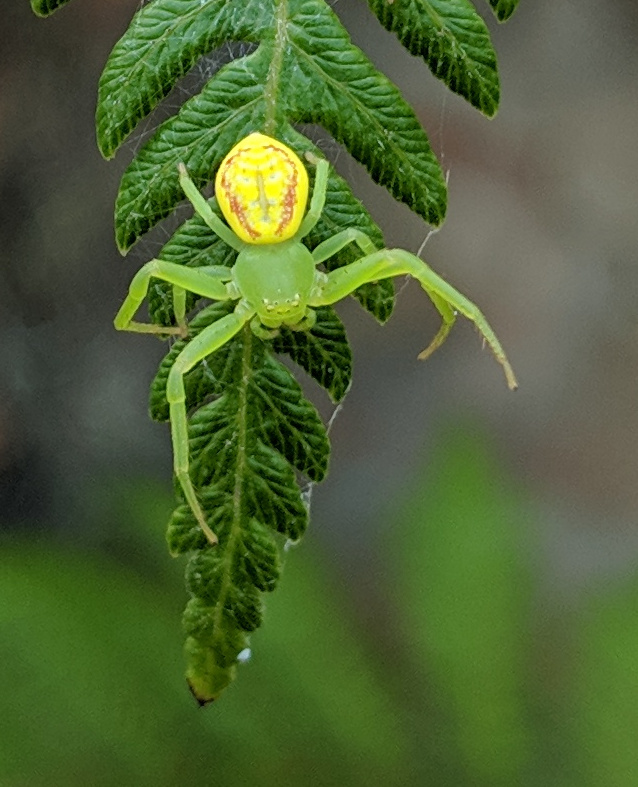
When my phone got too close (to take the picture) the spider bunched its legs together, all the better to hide from the incoming UFO:

The spider was tiny. About three to five millimetres long, I’d guess. Here’s an unzoomed-in version of the first picture, to give you a better idea of perspectives:


 Sydney Birder