Category Archives: Musk Lorikeet
Musk Lorikeet feeding off gum tree flowers
Musk Lorikeets are small, colourful parrots found in south-eastern Australia. A few of them have been visiting the gum tree outside our window over the past few weeks, to eat the nectar from the flowers.

These birds have rough, brush-tipped tongues to collect nectar and pollen from flowers. Musk Lorikeets are a little smaller than the more common Rainbow Lorikeets, which have been visiting the same flowers. Things can get quite noisy when the birds scold each other! Musk Lorikeets are nomadic, in that they move up and down the east coast of Australia in search of the flowering eucalypt trees that constitute their main source of food.

Common name: Musk Lorikeet
Scientific name: Glossopsitta concinna
Approximate length: 23 cm
Date spotted: 26 March 2020 (late summer)
Location: Allambie Heights, New South Wales, Australia
Birding at home
Like many people, I’m currently working from home to stave off the Coronavirus. There’s a great hashtag on Twitter at the moment: #BirdingAtHome. As a contribution to that hashtag, here are some of the birds I’ve seen at home over the last few days.
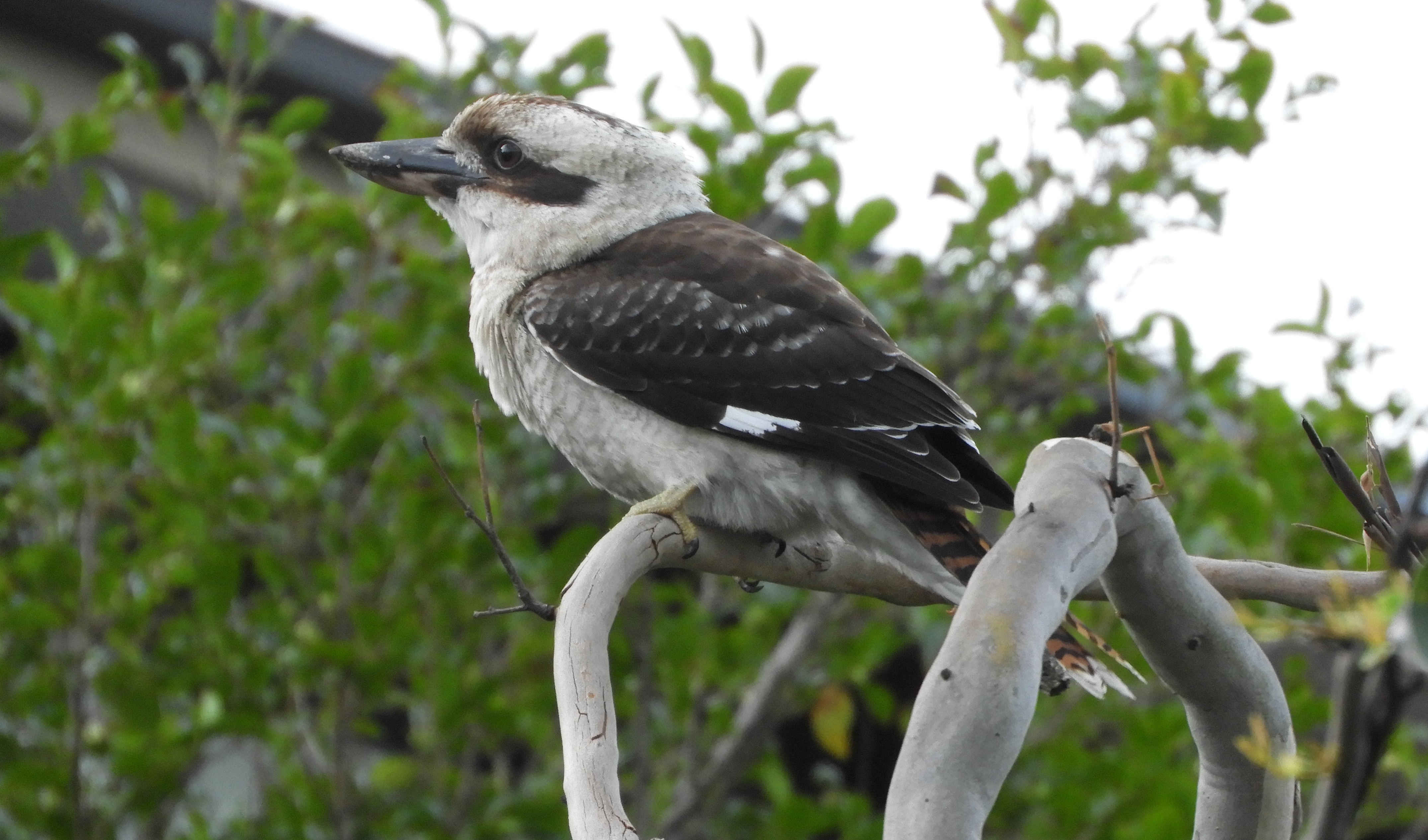
Laughing Kookaburra
Scientific name: Dacelo novaeguineae | Approximate length: 47 cm | Date: 17 March 2020
Grey Butcherbird
Scientific name: Cracticus torquatus | Approximate length: 30 cm | Date: 17 March 2020
I think this may be a juvenile, as the lines between the black and white sections of plumage are not well defined. The bird is on a Sydney Red Gum, one of my favourite trees, and currently the biggest tree in our garden:

Australian Magpie
Scientific name: Gymnorhina tibicen | Approximate length: 40 cm | Date: 17 March 2020
This inquisitive Australian Magpie landed on the roof of our porch and peered down at us. It was in a perfect spot to achieve a weird doubling effect with its reflection in the window. The real bird is on the left:
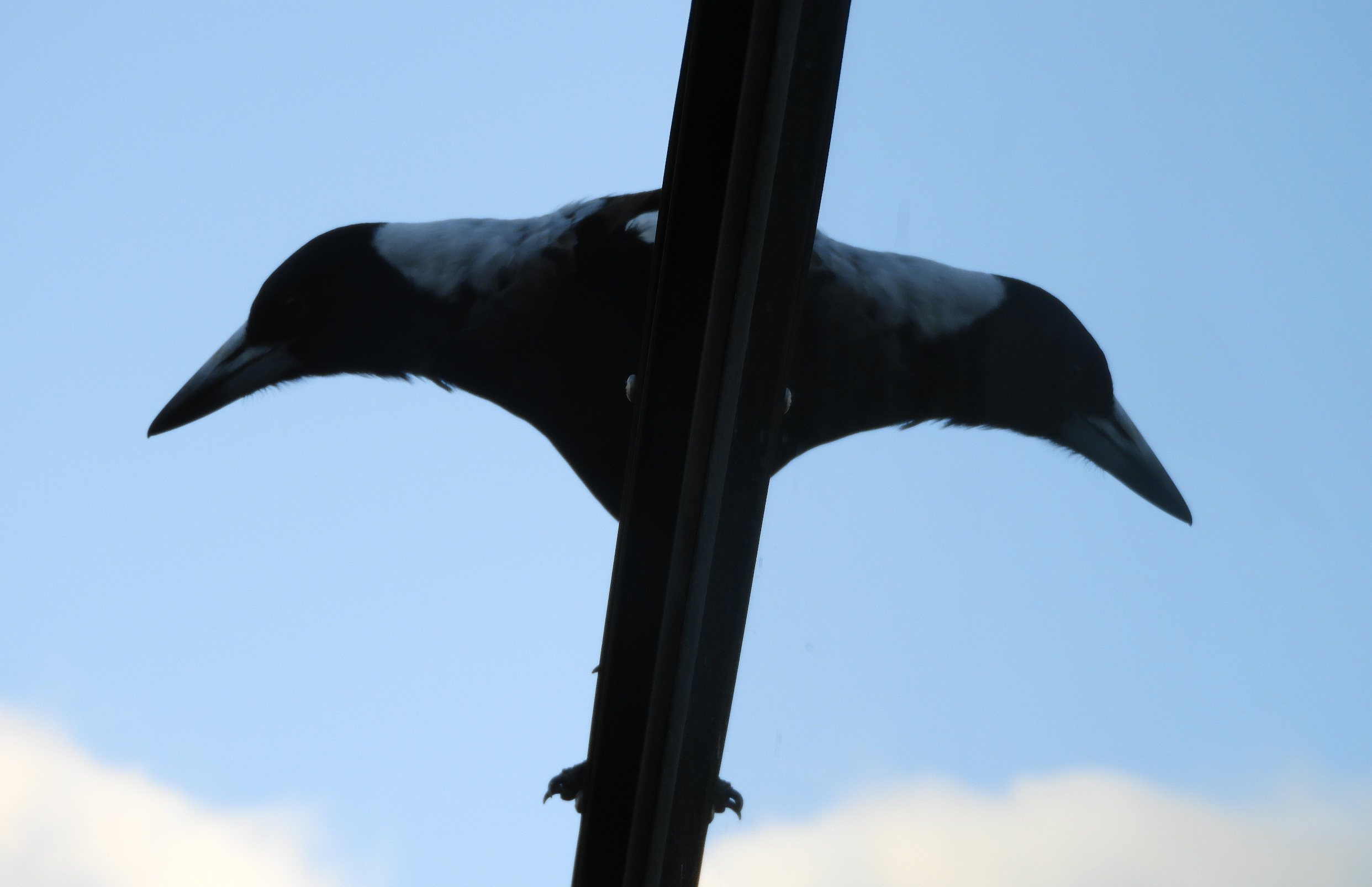
You can see the bird’s head and shoulders at the top and its feet at the bottom. Here’s another pose by the same bird in the same spot on the roof:
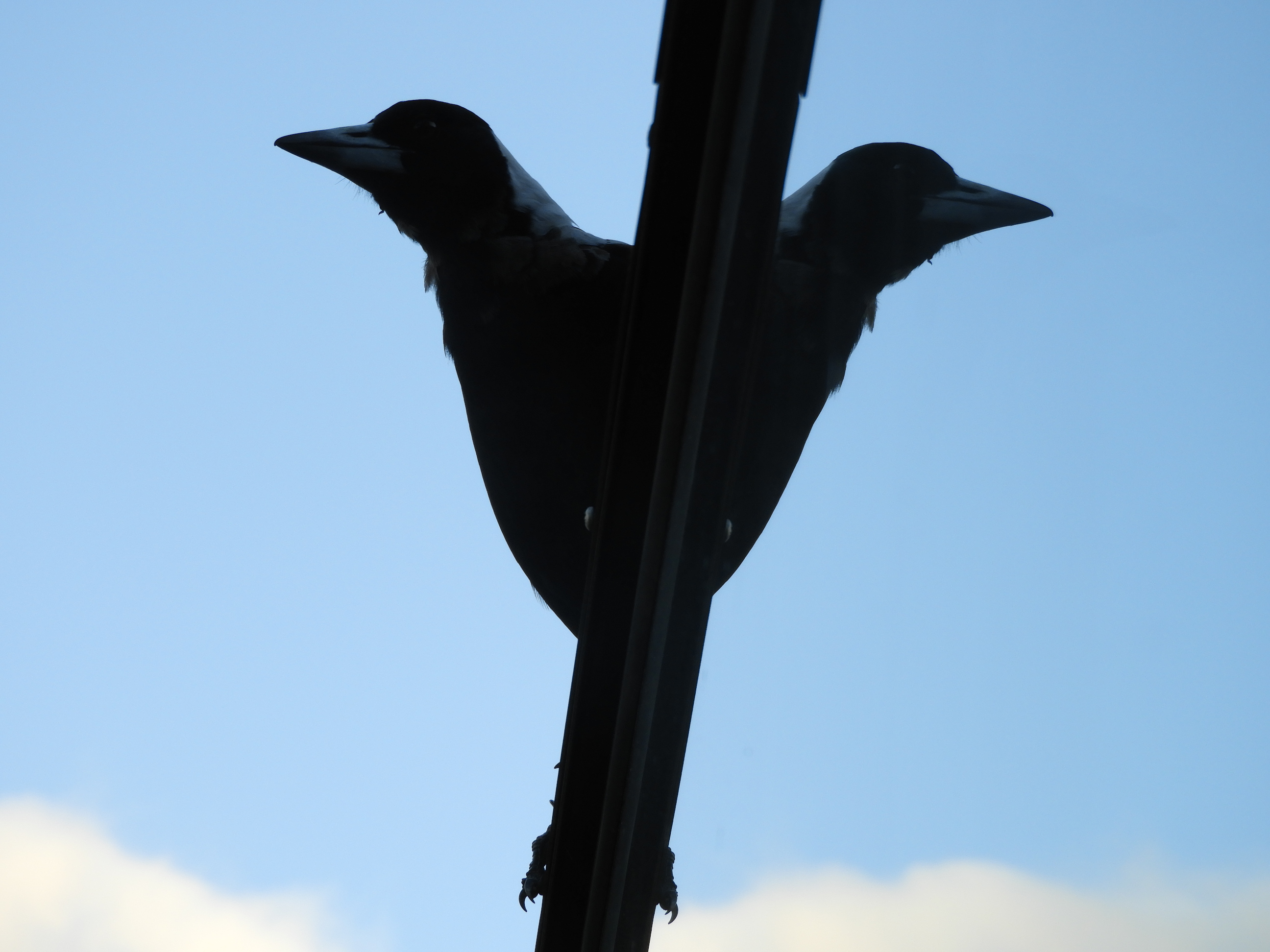
The magpie then hopped in through the window and examined the place:

A couple of days earlier, a juvenile magpie (note the soft grey colouring) posed like a statue on a pedestal. The pedestal is the trunk of a tree fern that died off a while ago:
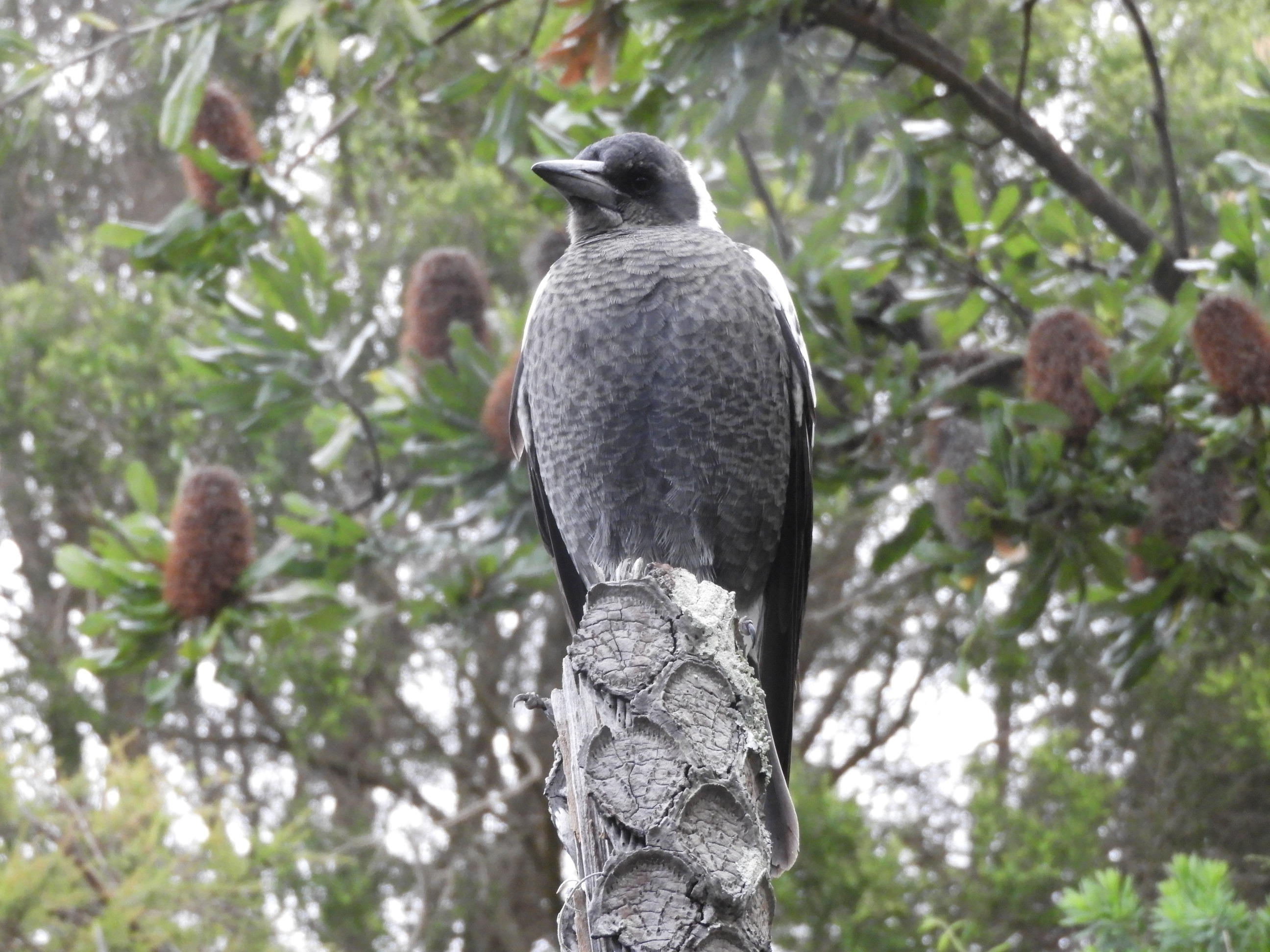
A side view of the same bird on the same perch:

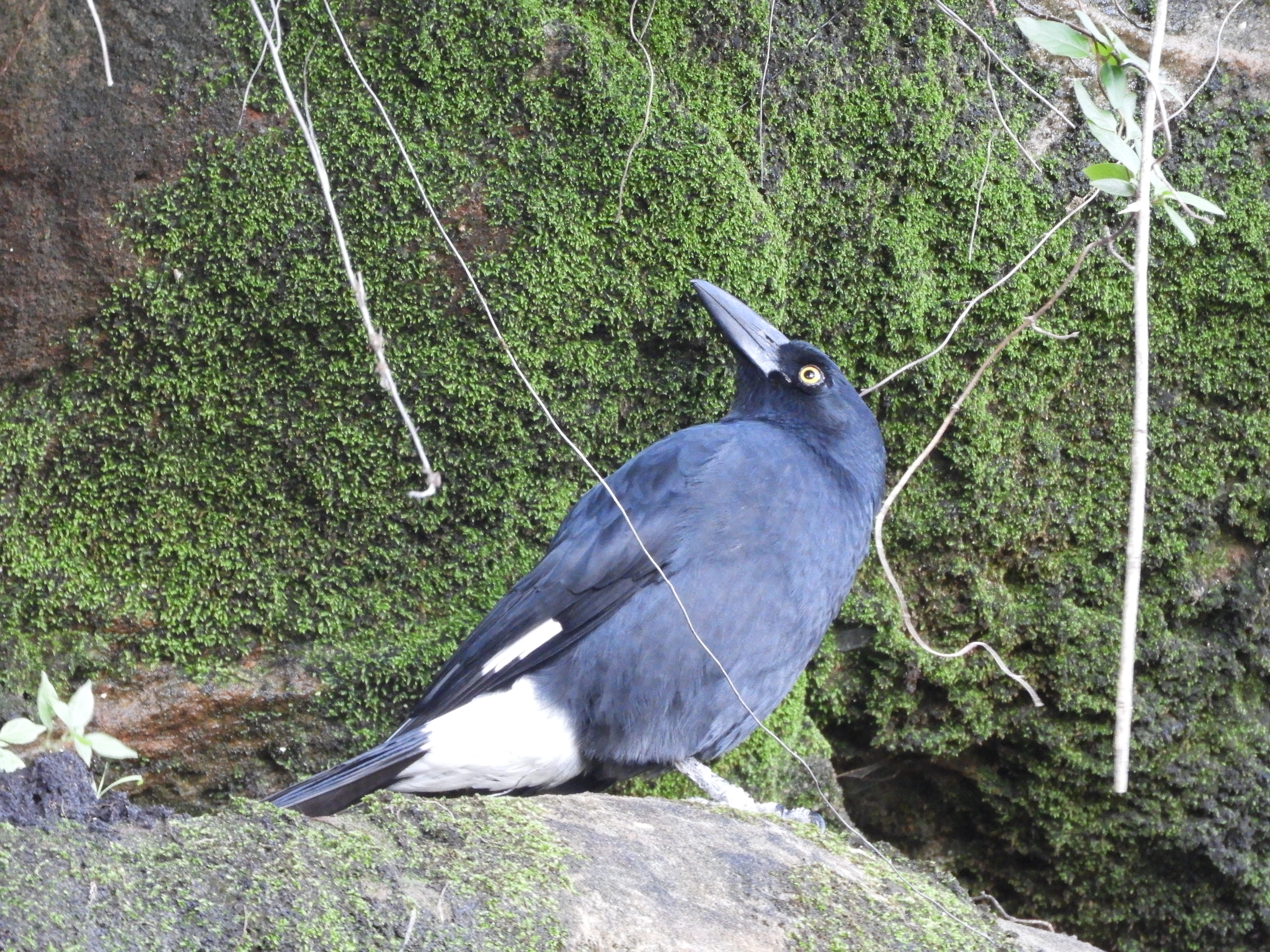
Pied Currawong
Scientific name: Strepera graculina | Approximate length: 45 cm | Date: 11 March 2020
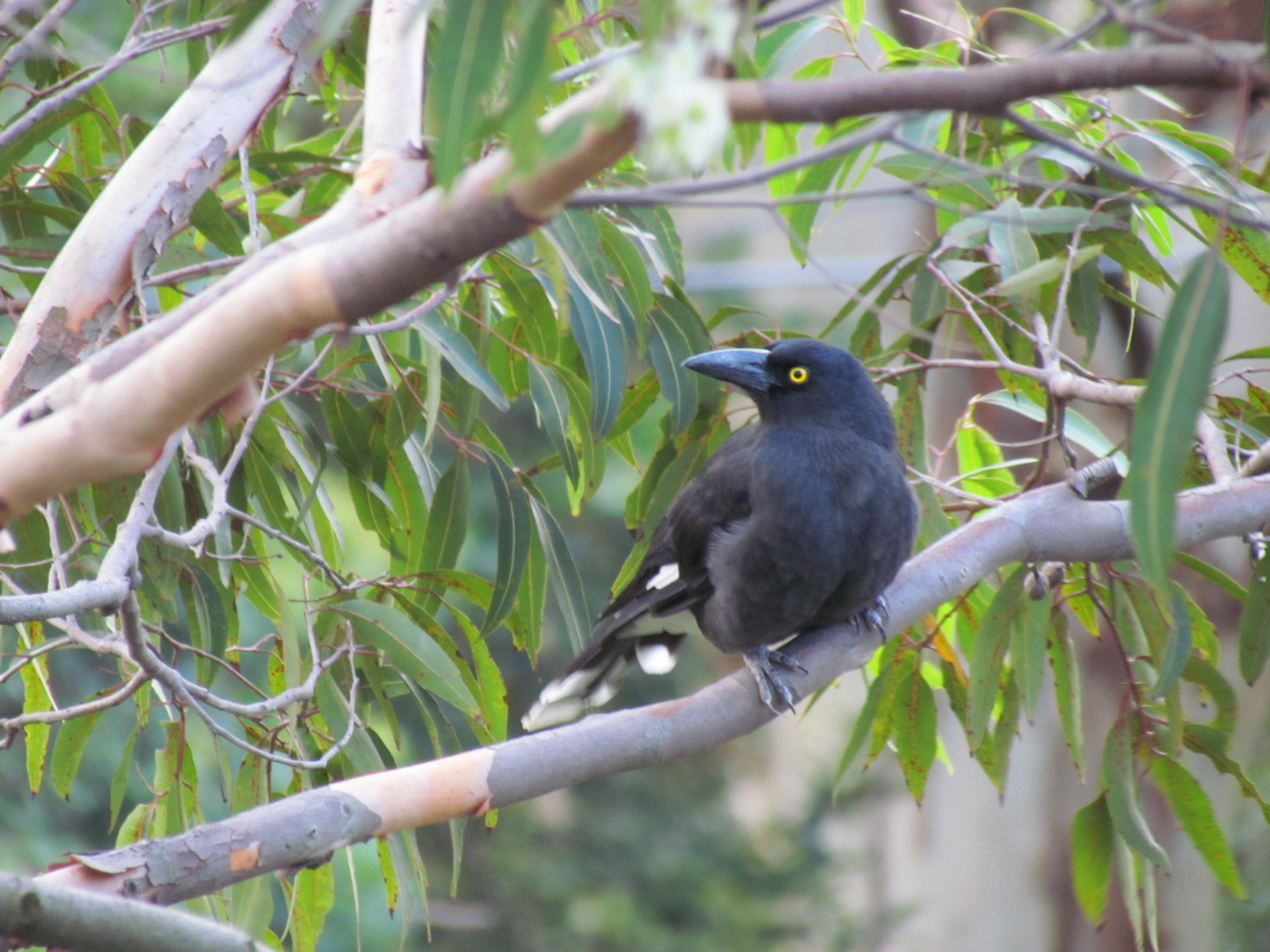
Currawongs are not quite as bold as magpies. They tend to view human activity from afar and swoop past when something interesting is going on. This one chose a mossy perch that showed off its dark plumage and yellow eyes:
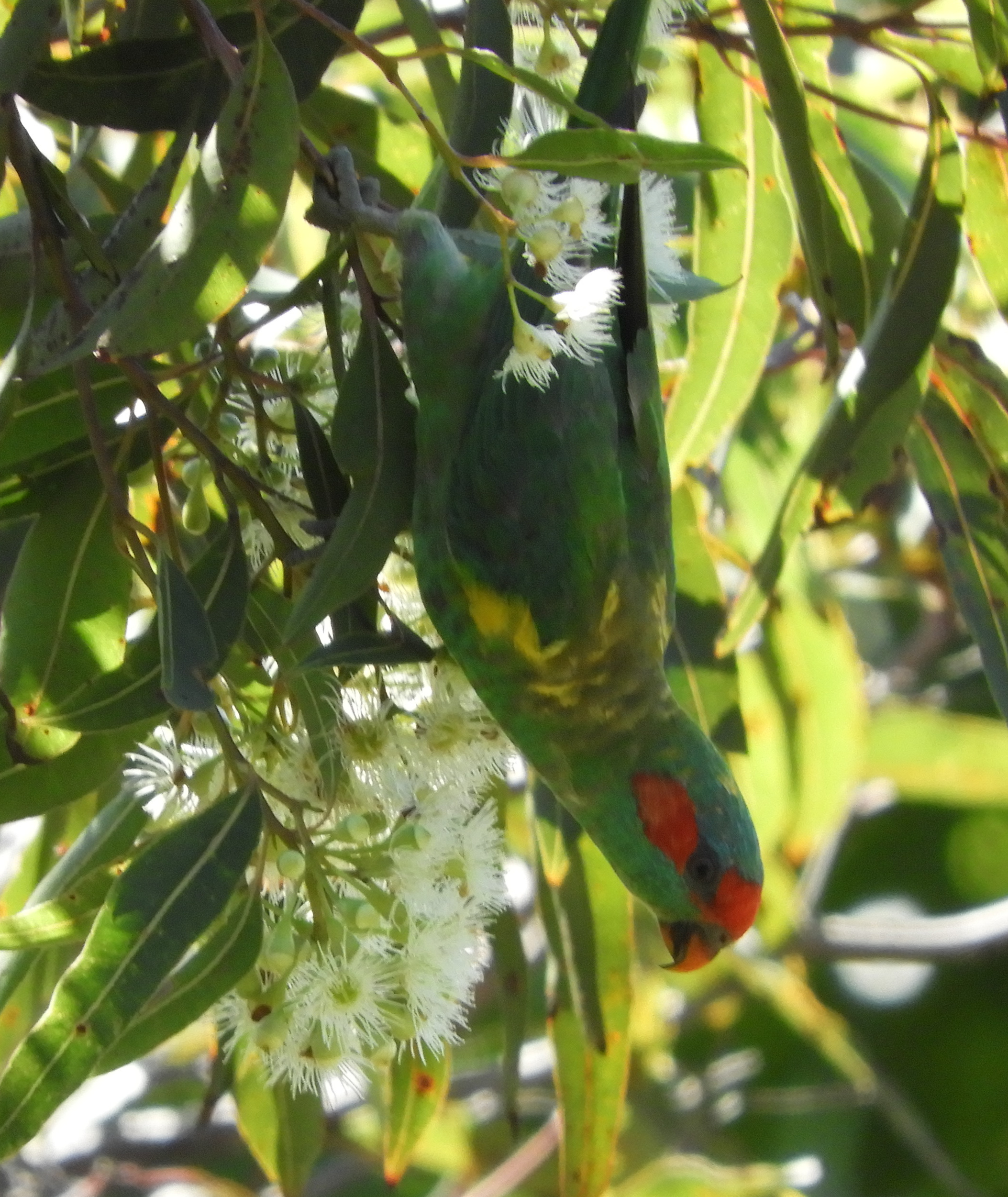
Musk Lorikeet
Scientific name: Glossopsitta concinna | Approximate length: 23 cm | Date: 18 March 2020
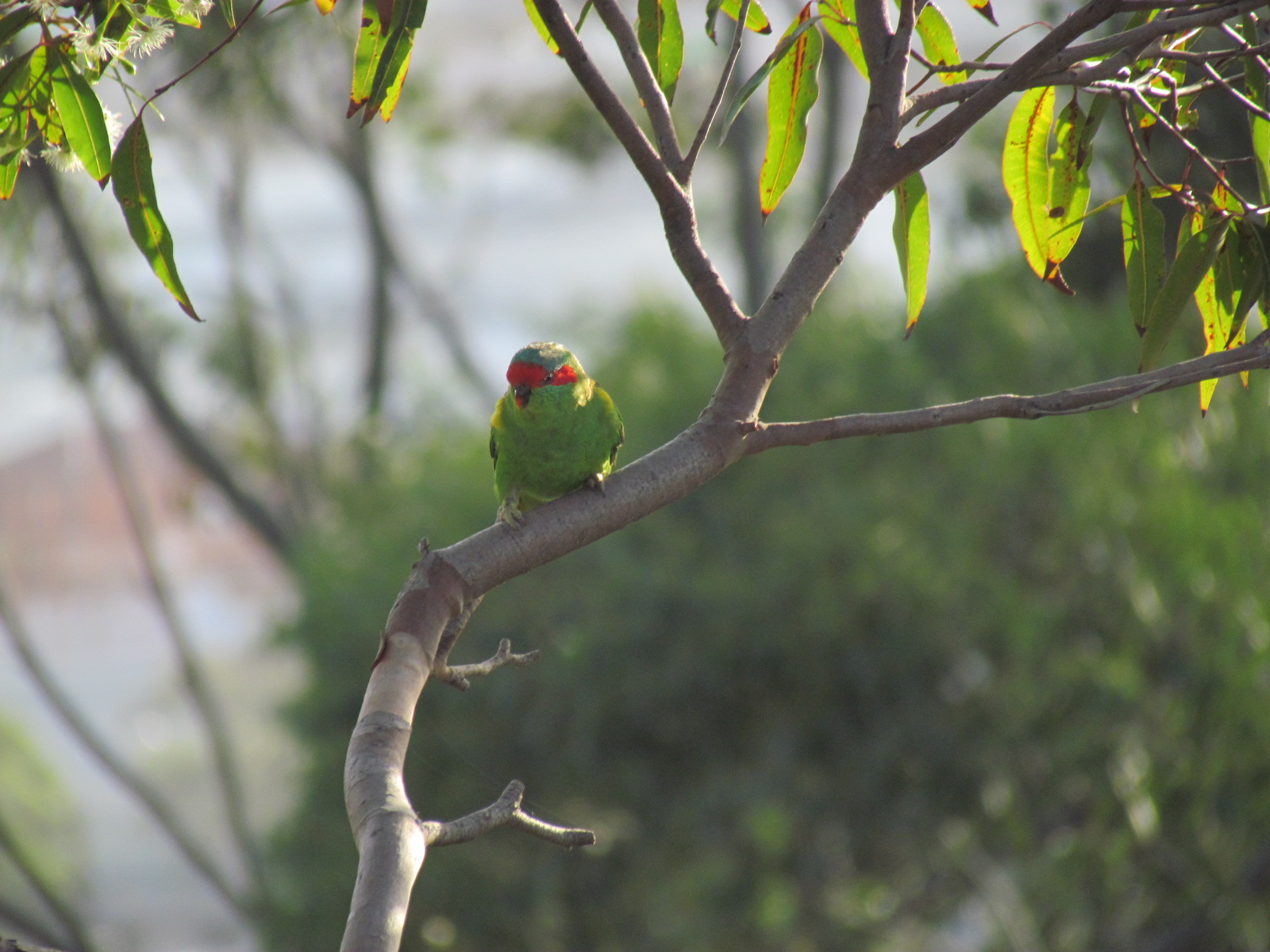
I don’t often see Musk Lorikeets. At the moment, a number of the gum trees are in flower and are attracting a variety of birds. It’s hard to get a good picture of a Musk Lorikeet. They seem to be more shy than other birds and take care to hide within the foliage as much as possible.
Rainbow Lorikeet
Scientific name: Trichoglossus haematodus | Approximate length: 30 cm | Date: 17 March 2020
We see many of these colourful, quarrelsome birds, and these last few days have been no exception. They were competing with the Musk Lorikeets for the same flowers:

Australian King Parrot
Scientific name: Alisterus scapularis | Approximate length: 44 cm | Date: 15 March 2020
A couple of days ago, I blogged about the two King Parrots that spent some time above our patio. Here’s the male again:

Grey-headed Flying Fox
Scientific name: Pteropus poliocephalus | Approximate length: 30 cm | Date: 18 March 2020
To finish off with, below is a very dark pic of a Flying Fox, which is a bat not a bird. In fact, it’s a megabat (yes, that’s a thing) and is one of the largest bats in the world. These bats eat fruit and flowers, and they visit the flowering trees at night. They make quite a noise, but it’s a privilege to have them around!
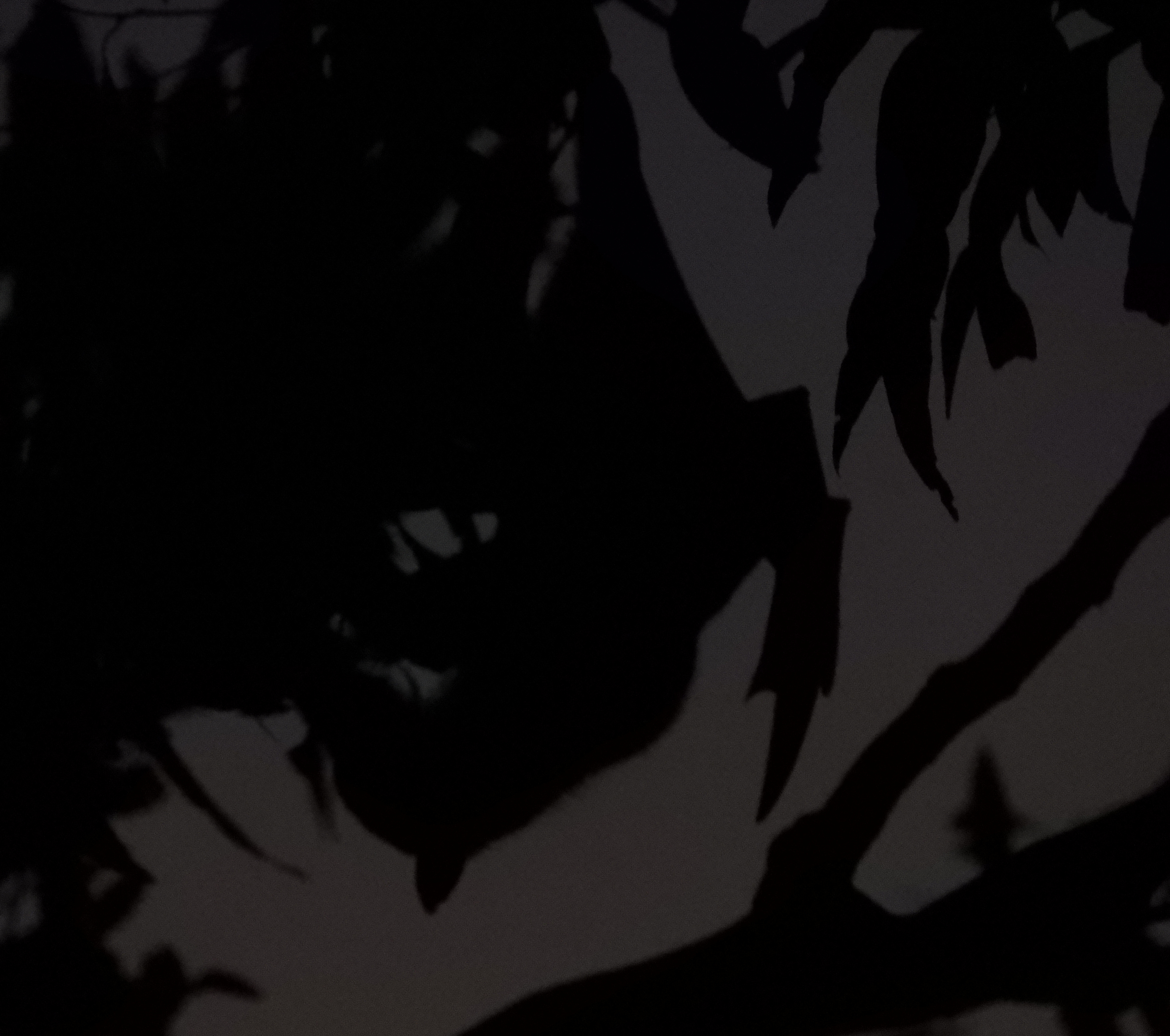
The bat is, as usual, upside down. You can see an ear near the bottom of the picture, slightly to left of centre. The nose is higher up on the left. The spiky bit to the right is a folded wing. The feet are attached to a branch at top centre. A Grey Headed Flying Fox is about 30 cm long and has a wing span of one metre.
Happy #BirdingAtHome everyone!
Musk Lorikeets feeding and chatting
A tree outside our house is in flower, and attracting many avian visitors. This is the first time I’ve seen a Musk Lorikeet. They’re pretty little birds, very fast moving and well camouflaged amongst the green leaves. They chatter to each other constantly, often making a pleasant trilling sound. For some reason, that sound makes me of a phone ringing in a sunlit roof-top apartment.
You can also hear water running down the hill, as it’s been raining a lot recently.
Common name: Musk Lorikeet
Scientific name: Glossopsitta concinna
Approximate length: 23 cm
Date spotted: 27-28 February 2017 (Summer)
Location: Allambie Heights, New South Wales, Australia
In this second video, an Australian Miner joins the lorikeet in the floral feast. The miners and lorikeets usually have a bit of a squawking match over feeding territory, but they managed to co-exist on the same branch for a short period.
The loud chirping you can hear is a Rainbow Lorikeet flying by. (There’s a picture of one further down in this post.)
Musk Lorikeets are mainly green, with a red mask around the eyes, a blue cap, and a yellow stripe along the wing:
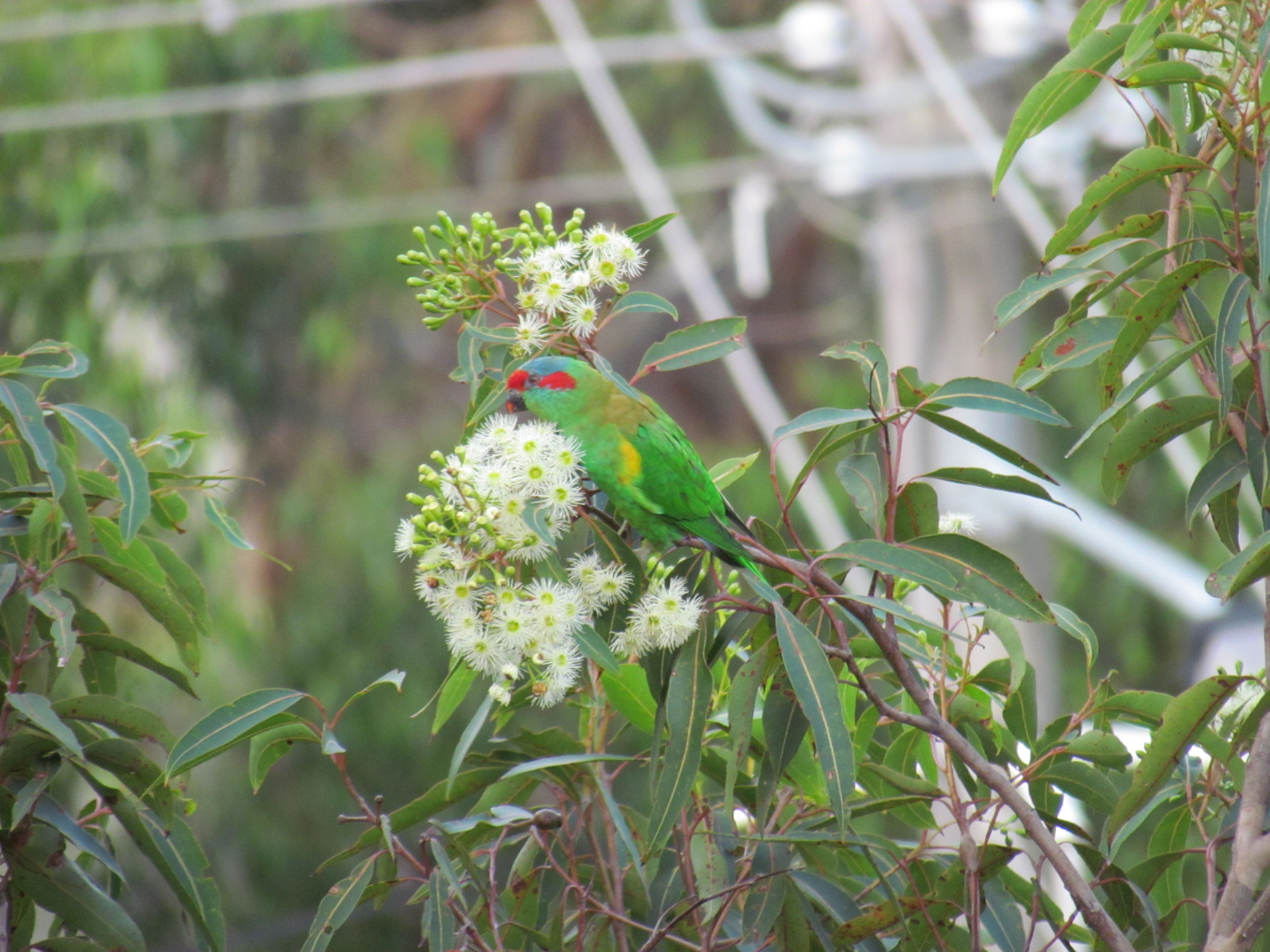
They never seem to stop moving! This one stood still for a short time, but you can see it’s thinking of launching itself into the air any time:
Other visitors to the tree include Rainbow Lorikeets like this one:
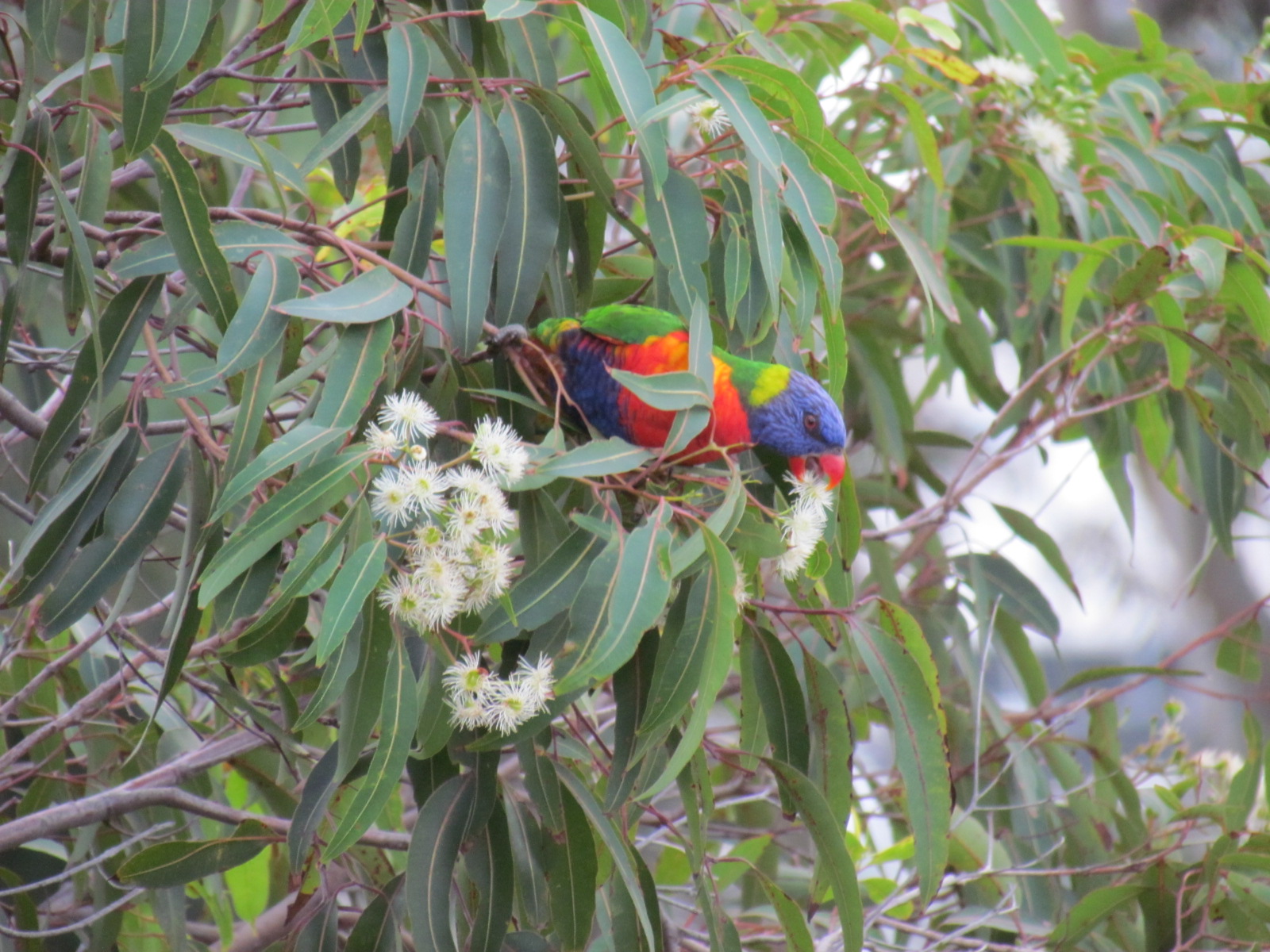
They’re much more common around here than the Musk Lorikeets. Also Currawongs:


 Sydney Birder