Category Archives: Kookaburra

Big Kookaburra in Kurri Kurri
Australia is a big place. Dotted around its landscape is an array of big animal statues. (Actually, the statues are of assorted things, not just animals, but most people think of them as big animals.) A couple of weeks ago, I was in Kurri Kurri and saw the town’s big Kookaburra:

The town of Kurri Kurri lies in the east of Australia, a couple of hours’ drive north of Sydney and close to the coastal city of Newcastle.
The Kurri Kurri Kookaburra is a sculpture by Chris Fussell, erected in 2009. Here’s another view of it:

If you’d like to know more about the town of Kurri Kurri, take a look at my travelling bookmark’s post: Kurri Kurri Kookaburra and murals.
Young Kookaburra learning call from adult
The bush is alive with the sound of young Kookaburras practising their call. They sound like rusty saws, or motor engines that can’t quite start. After crooning away to itself for a while, this little one approached an adult for a lesson!
Common name: Laughing Kookaburra
Scientific name: Dacelo novaeguineae
Approximate length: 47 cm
Date spotted: 3 March 2022 (summer)
Location: Manly Dam Park, New South Wales, Australia: 33°46’56.3″S 151°15’10.4″E

So cute! Baby kookaburra in nest
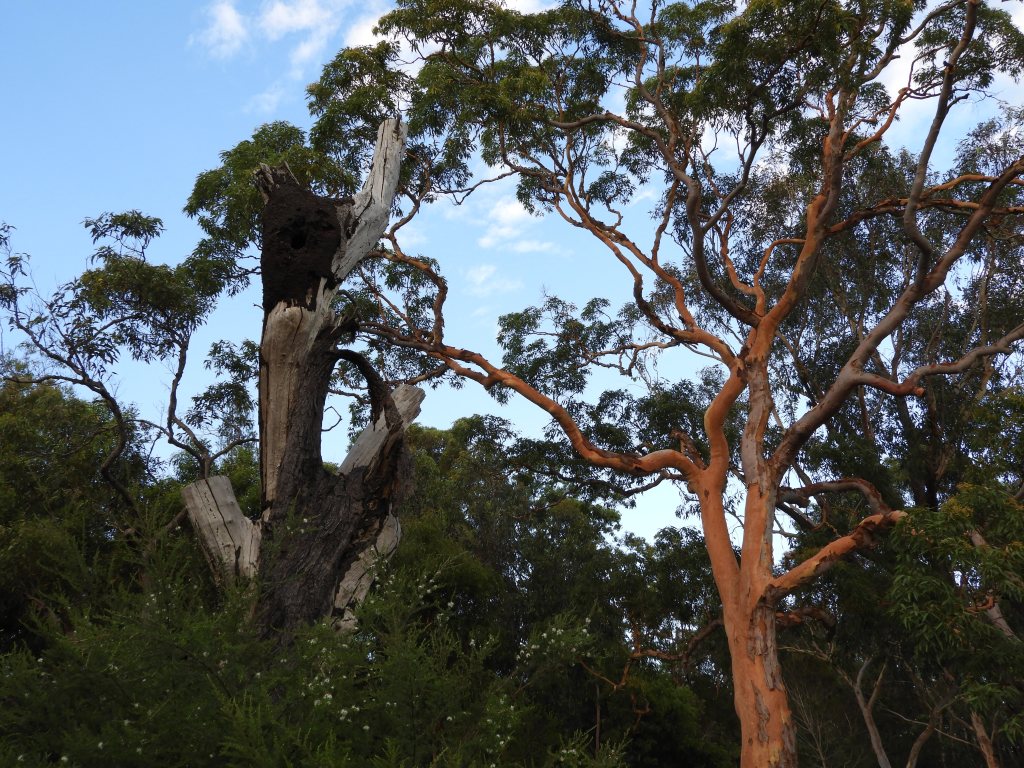
For the past few weeks, I’ve been following the progress of a baby kookaburra and its parents. The baby was housed in a termite nest on an old, dead tree. The first time that I noticed the nest was more than a month ago, on 17 November. At that time, the only sign of the baby was a faint crooning sound emerging from the termite nest. I’d heard baby kookaburras before, so I stuck around to see what would happen. Sure enough, an adult bird arrived with some food.
From that day on, I visited the nest regularly. And now, I’m delighted to report that the baby bird has safely left the nest and is being fed in the nearby trees.
The first video shows the baby kookaburra just a few days before it left the nest. The date was 14 December, almost a full month after I first noticed the nest. In the video, the baby peers curiously (and hungrily, no doubt) from the nest. You can hear an adult kookaburra off camera, calling to let the chick know that food is on its way. I moved the camera to take in the adult on a nearby branch. The bird checks the surroundings carefully, including me, to decide whether it’s safe to approach and feed the chick.
Meanwhile, the chick becomes more vociferous and sticks its head further out of the nest, impatient at the delay. The adult moved to a different branch to give itself a direct line of flight. I managed to catch a view of the adult there too, before moving back to the nest in time to see the adult arrive and feed the baby:
The parents were tireless and devoted in their care for the baby. On a couple of occasions, I spotted them foraging for food:

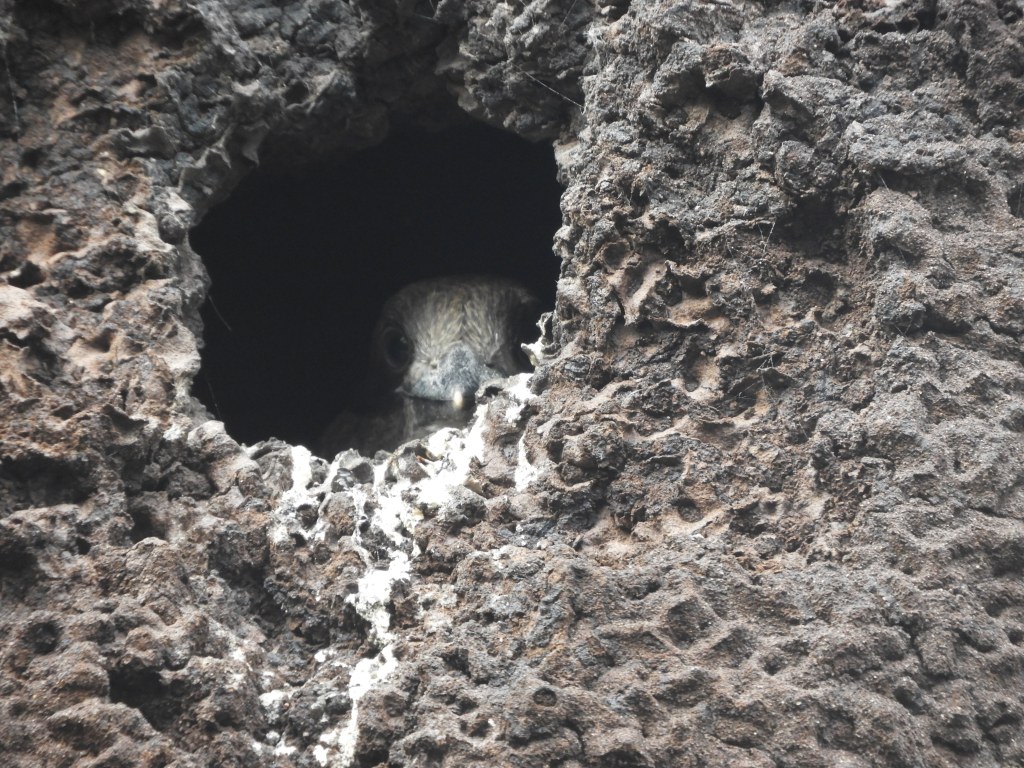
When the parents were not around, the chick eyed me from the safety of its home. The smallest scuffle was enough to bring an inquisitive eye to the hole in the nest:
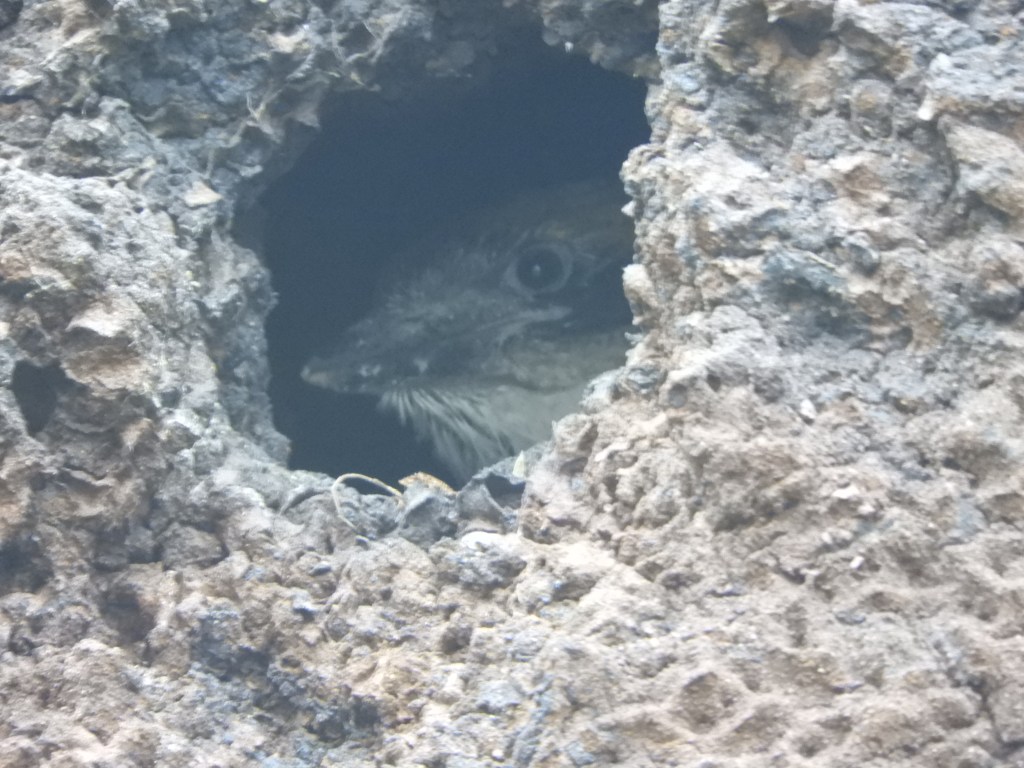
Partially hidden but oh so curious:
The nest was on the skeleton of a dead tree:
This is an earlier, short video (taken on 3 December) showing a parent arriving to feed the chick:
When I arrived on 17 December, the nest was quiet. Again the next day, there was no activity at the nest. I explored the area and soon heard the characteristic crooning of a kookaburra youngster. I found it in a quiet, tree-filled glen, being attended to two adults in turn. It was early in the morning, and the birds were high in the trees, so I didn’t manage to get a good photo. This is the glen:

This is the only photo I have of the youngster. Alas, I didn’t get the full head in the shot, but you can see the fluffiness of the feathers and the short tail:

Common name: Laughing Kookaburra
Scientific name: Dacelo novaeguineae
Approximate length: 47 cm
Date spotted: 18 December 2020 (summer)
Location: Manly Dam Park, New South Wales, Australia
This is the view the baby kookaburra had from its nest. It looks over Manly Dam towards the dam wall, with a bottlebrush bush glowing in the early morning light. A room with a view indeed:

Finally, here’s the view that the baby must have seen when it first emerged from its nest and could look in the other direction, up the length of Manly Dam:

Blue Laughing Kookaburra at The Bluff above Bantry Bay
Today I hiked from Seaforth Oval to Natural Bridge. Phew! Almost 12,000 steps, 7.7 km, and three climbs down into the valley and back up again! It’s a good walk with lovely views of Bantry Bay, which is one of the inlets of Sydney Harbour.
Close to a lookout point called The Bluff was this fine-looking Laughing Kookaburra. It has a lot more blue in its feathers than most kookaburras that I’ve seen. Perhaps it’s clothed in its spring finery.

This is the view of Bantry Bay from The Bluff Lookout:

Common name: Laughing Kookaburra
Scientific name: Dacelo novaeguineae
Approximate length: 47 cm
Date spotted: 31 August 2020 (Late winter)
Location: Bluff Trail, Killarney Heights, New South Wales, Australia: 33°46’00.3″S 151°13’42.3″E
Kookaburras at dawn
In my previous post about birdsong at dawn, I mentioned that dawn is a calm but not quiet time around here. One bird that was remarkable for its absence in yesterday’s video was the kookaburra. This morning the laughing cacklers made up for that!
Kookaburra standoff with Magpie
In this video, a Laughing Kookaburra stands guard against an Australian Magpie. The kookaburra has a stash of some kind of food on the rock behind it. Before I started filming, the magpie tried a few times to approach the food. Now, as seen in the video, the magpie seems more or less resigned to just giving the kookaburra a piece of its mind. At the end of the video, an Australian Miner drops in too. I wish I knew what the Magpie was saying!
This is the kookaburra after it finished its meal and flew to a nearby branch:
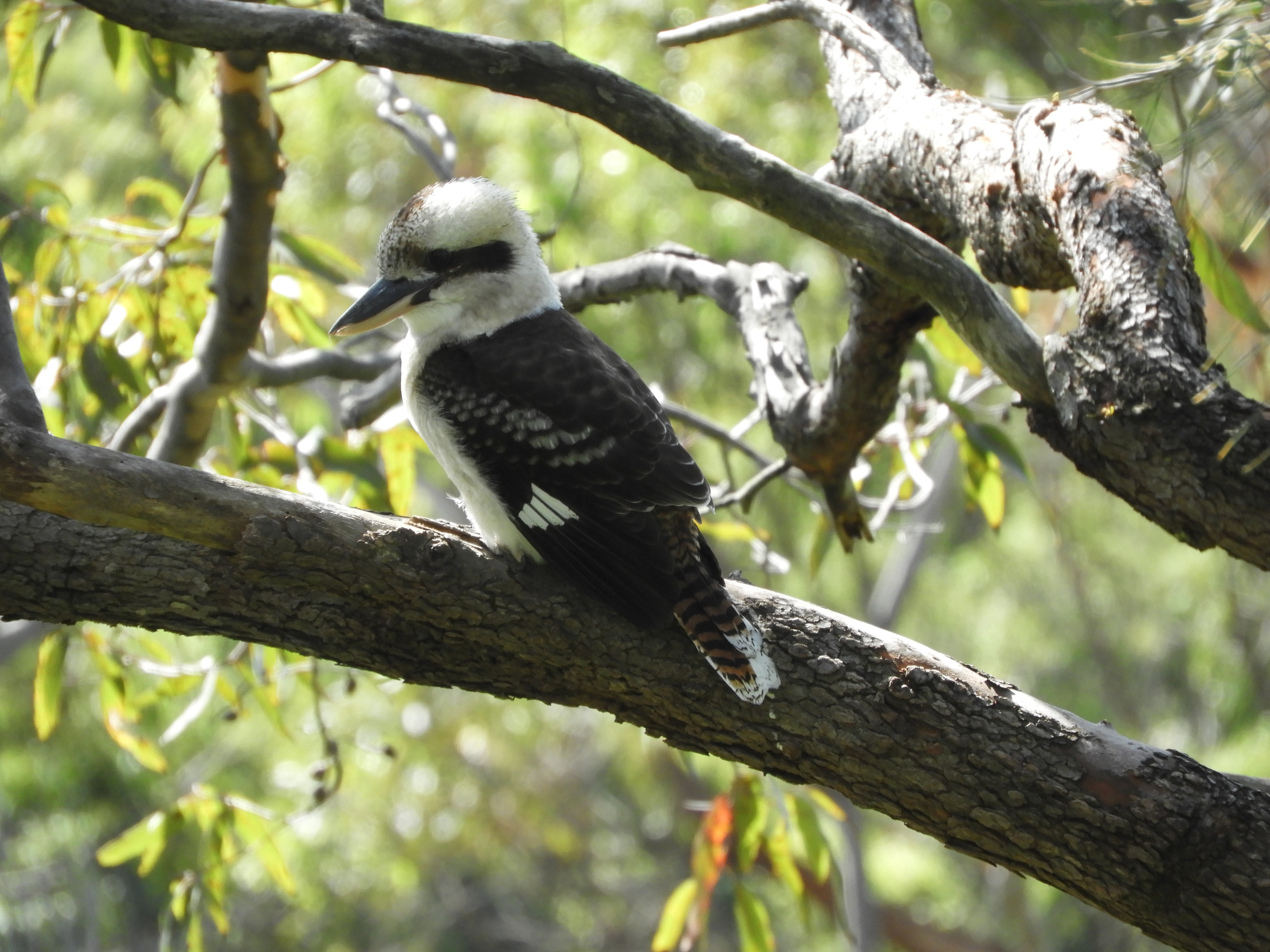
Common name: Laughing Kookaburra
Scientific name: Dacelo novaeguineae
Approximate length: 47 cm
Date spotted: 28 March 2020 (late summer)
Location: Near Sydney, Australia
The magpie took refuge on our roof:

Common name: Australian Magpie
Scientific name: Gymnorhina tibicen
Approximate length: 40 cm
Date spotted: 28 March 2020 (late summer)
Location: Near Sydney, Australia
I didn’t get a shot of the Australian Miner. It’s probably one of the birds guarding the nest of baby miners which I’ve blogged about recently.
Birding at home
Like many people, I’m currently working from home to stave off the Coronavirus. There’s a great hashtag on Twitter at the moment: #BirdingAtHome. As a contribution to that hashtag, here are some of the birds I’ve seen at home over the last few days.
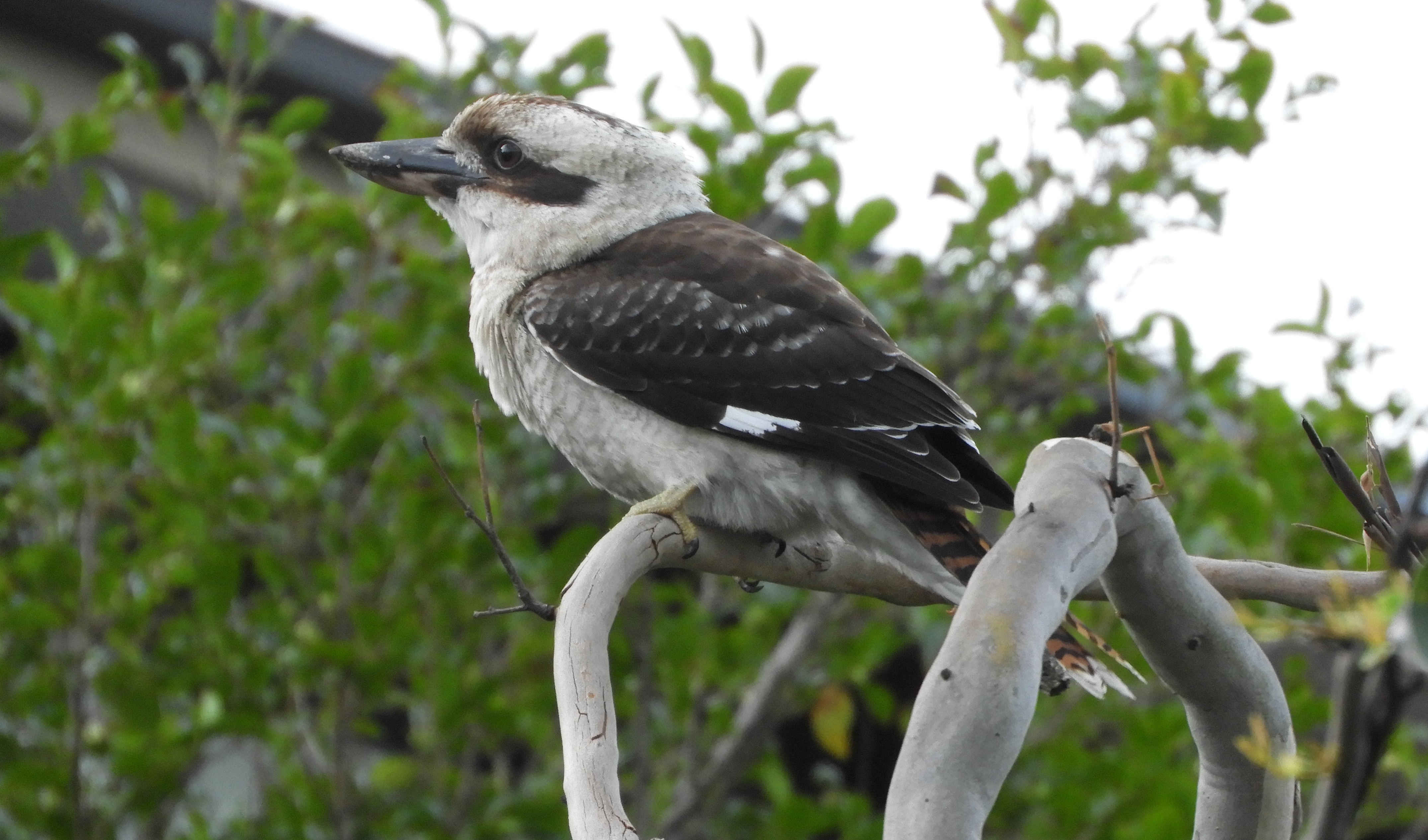
Laughing Kookaburra
Scientific name: Dacelo novaeguineae | Approximate length: 47 cm | Date: 17 March 2020
Grey Butcherbird
Scientific name: Cracticus torquatus | Approximate length: 30 cm | Date: 17 March 2020
I think this may be a juvenile, as the lines between the black and white sections of plumage are not well defined. The bird is on a Sydney Red Gum, one of my favourite trees, and currently the biggest tree in our garden:

Australian Magpie
Scientific name: Gymnorhina tibicen | Approximate length: 40 cm | Date: 17 March 2020
This inquisitive Australian Magpie landed on the roof of our porch and peered down at us. It was in a perfect spot to achieve a weird doubling effect with its reflection in the window. The real bird is on the left:
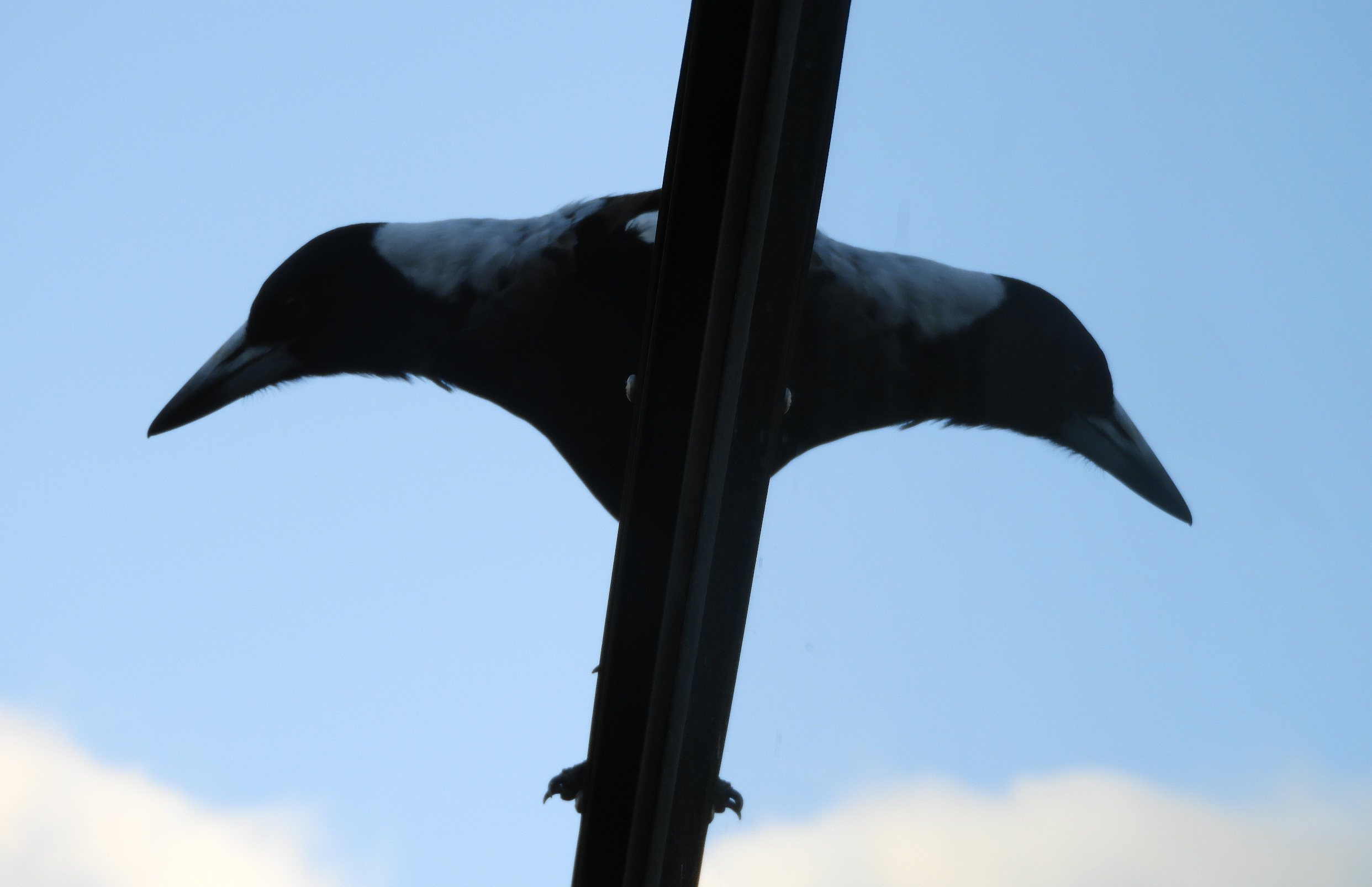
You can see the bird’s head and shoulders at the top and its feet at the bottom. Here’s another pose by the same bird in the same spot on the roof:
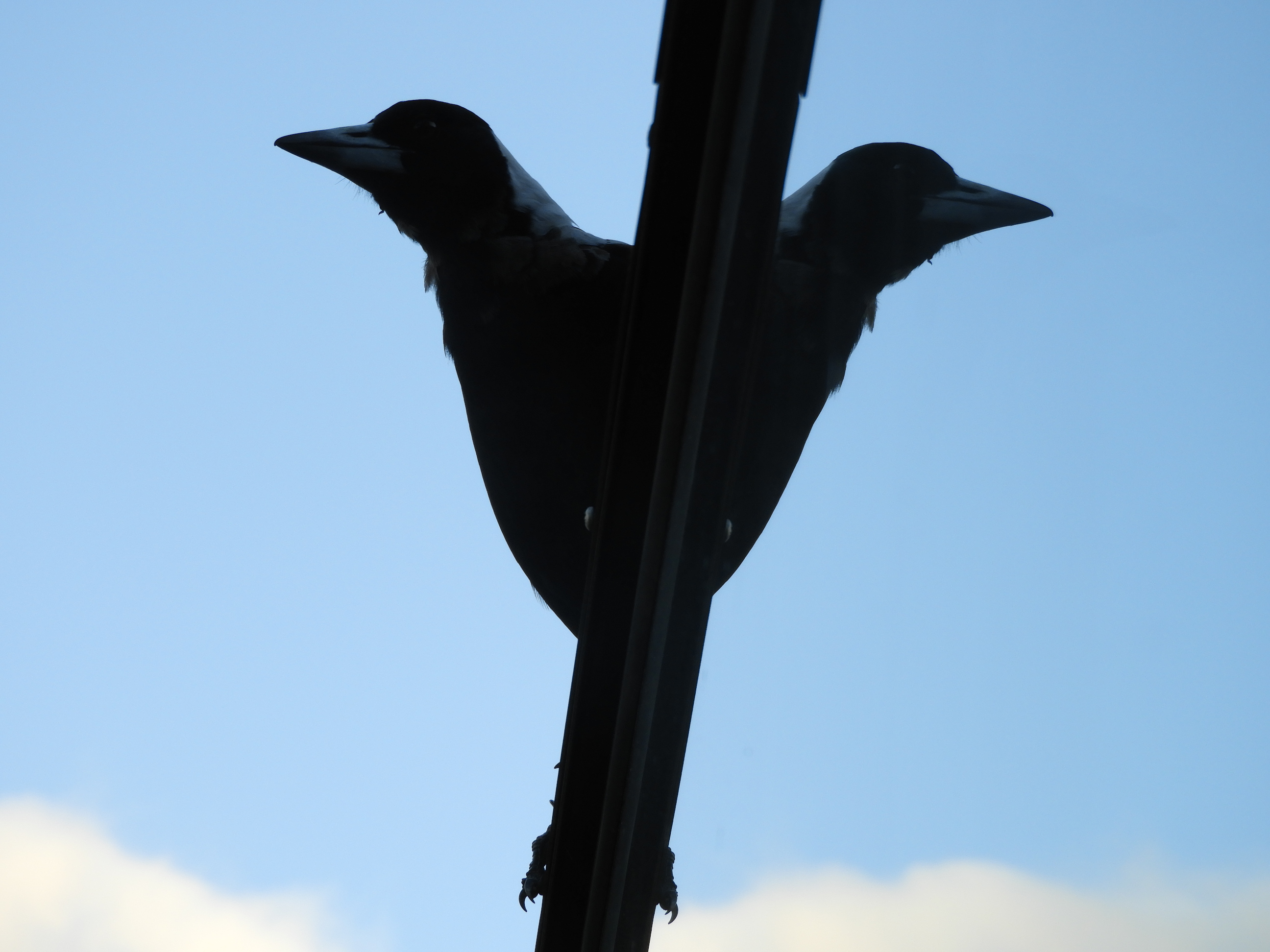
The magpie then hopped in through the window and examined the place:

A couple of days earlier, a juvenile magpie (note the soft grey colouring) posed like a statue on a pedestal. The pedestal is the trunk of a tree fern that died off a while ago:
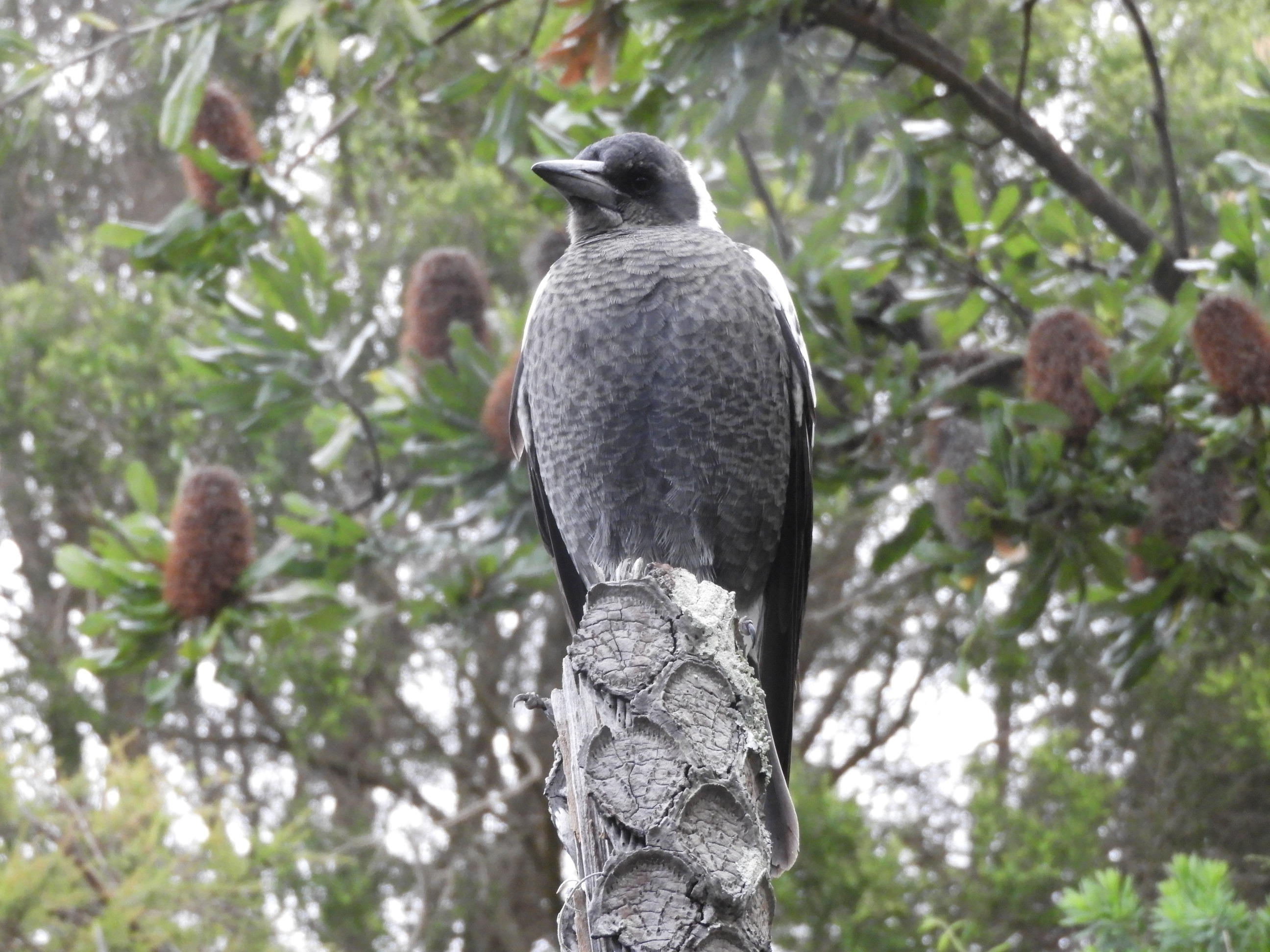
A side view of the same bird on the same perch:

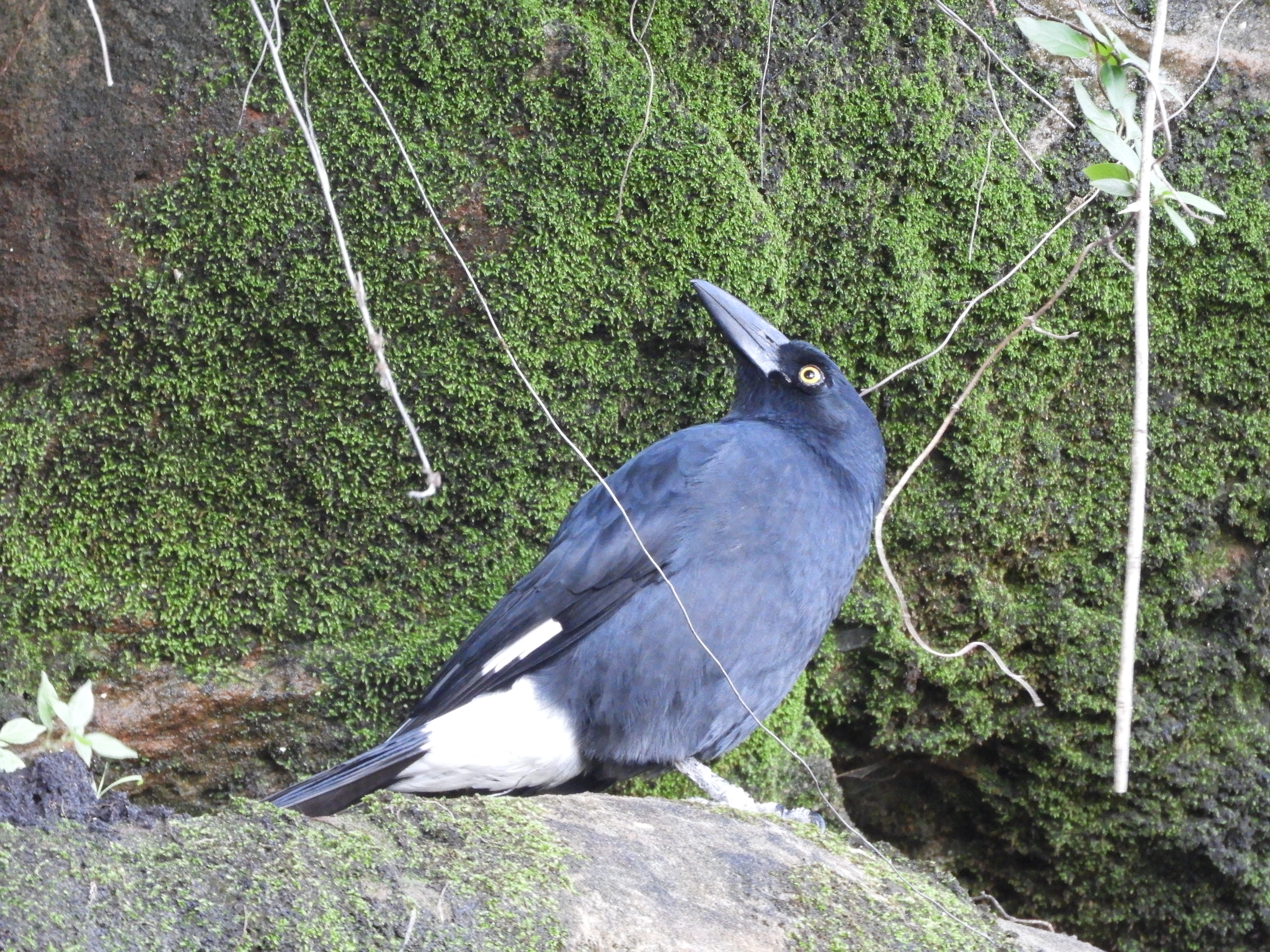
Pied Currawong
Scientific name: Strepera graculina | Approximate length: 45 cm | Date: 11 March 2020
Currawongs are not quite as bold as magpies. They tend to view human activity from afar and swoop past when something interesting is going on. This one chose a mossy perch that showed off its dark plumage and yellow eyes:
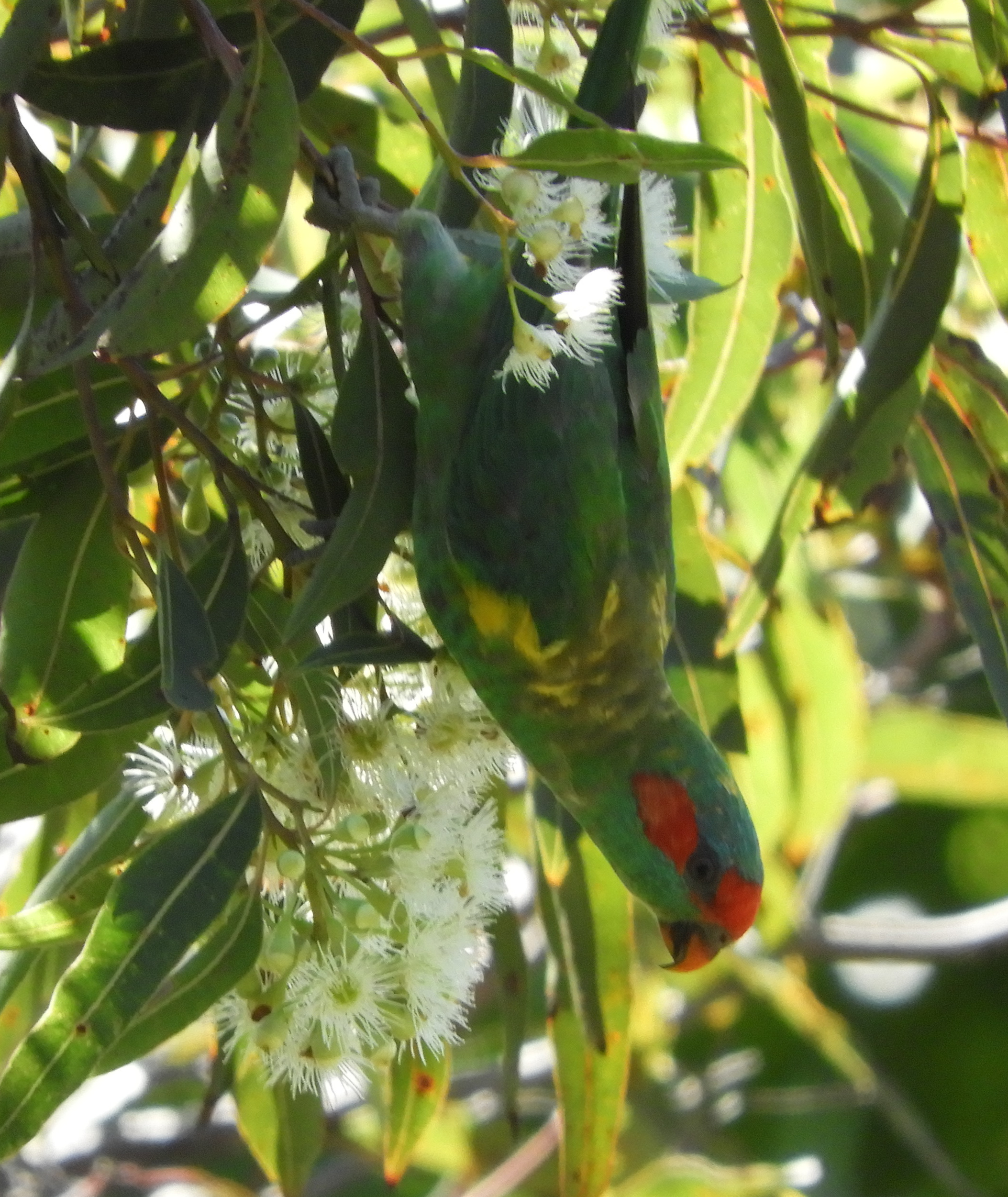
Musk Lorikeet
Scientific name: Glossopsitta concinna | Approximate length: 23 cm | Date: 18 March 2020
I don’t often see Musk Lorikeets. At the moment, a number of the gum trees are in flower and are attracting a variety of birds. It’s hard to get a good picture of a Musk Lorikeet. They seem to be more shy than other birds and take care to hide within the foliage as much as possible.
Rainbow Lorikeet
Scientific name: Trichoglossus haematodus | Approximate length: 30 cm | Date: 17 March 2020
We see many of these colourful, quarrelsome birds, and these last few days have been no exception. They were competing with the Musk Lorikeets for the same flowers:

Australian King Parrot
Scientific name: Alisterus scapularis | Approximate length: 44 cm | Date: 15 March 2020
A couple of days ago, I blogged about the two King Parrots that spent some time above our patio. Here’s the male again:

Grey-headed Flying Fox
Scientific name: Pteropus poliocephalus | Approximate length: 30 cm | Date: 18 March 2020
To finish off with, below is a very dark pic of a Flying Fox, which is a bat not a bird. In fact, it’s a megabat (yes, that’s a thing) and is one of the largest bats in the world. These bats eat fruit and flowers, and they visit the flowering trees at night. They make quite a noise, but it’s a privilege to have them around!
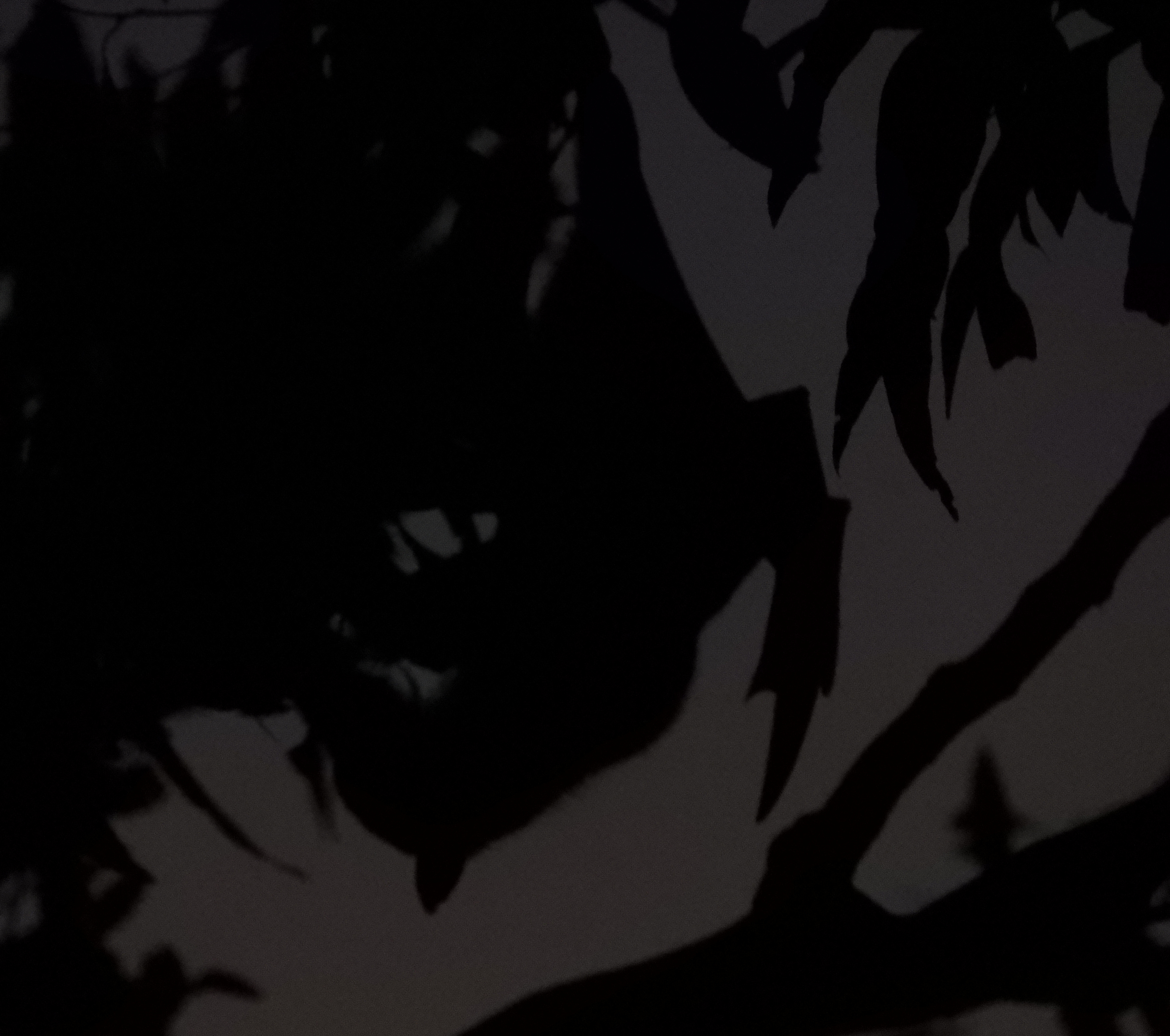
The bat is, as usual, upside down. You can see an ear near the bottom of the picture, slightly to left of centre. The nose is higher up on the left. The spiky bit to the right is a folded wing. The feet are attached to a branch at top centre. A Grey Headed Flying Fox is about 30 cm long and has a wing span of one metre.
Happy #BirdingAtHome everyone!
Wet Kookaburra
It’s been raining quite a bit recently, which is a good thing for the environment and our water supply. Sometimes, though, I do feel sorry for the wildlife caught out in the deluge.
Crikey, that was a downpour, mate!

A view of the bird’s head from behind isn’t any prettier:
Turn me upside down, and I’d do a good job of mopping your floor.
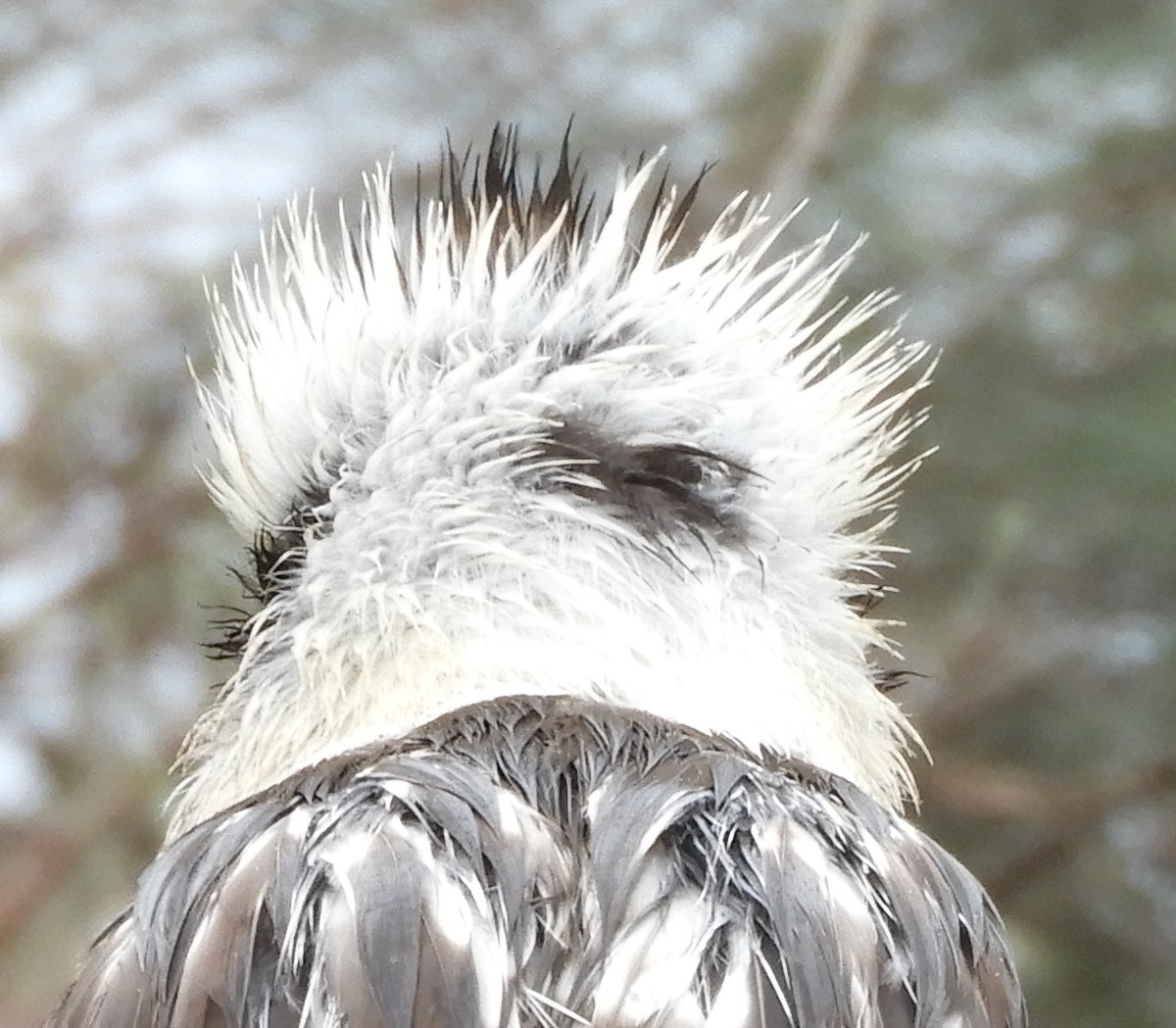
You know that feeling, when your feathers just feel like old, wet fur…
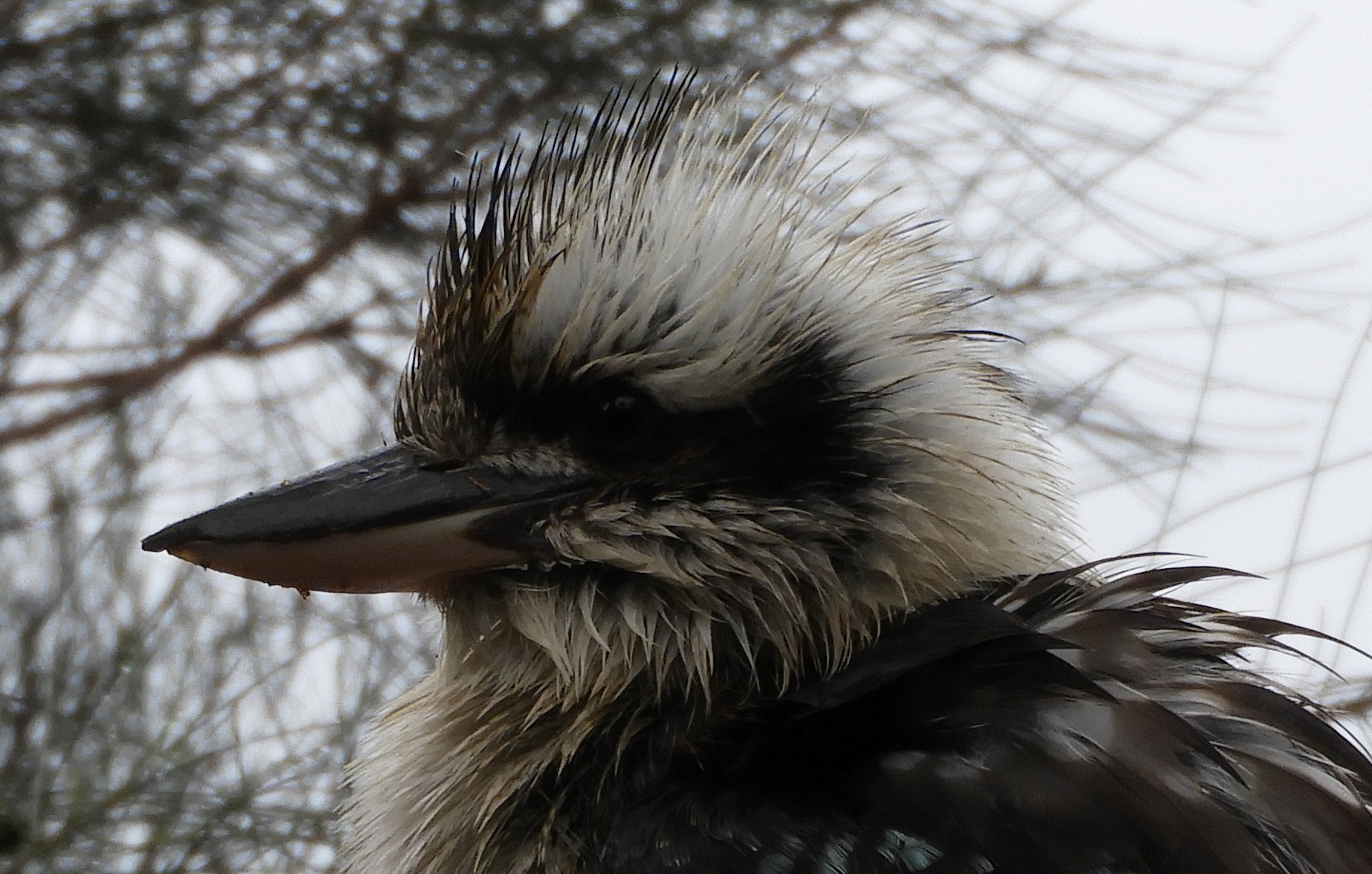
I feel like I’ve been hung out to dry:
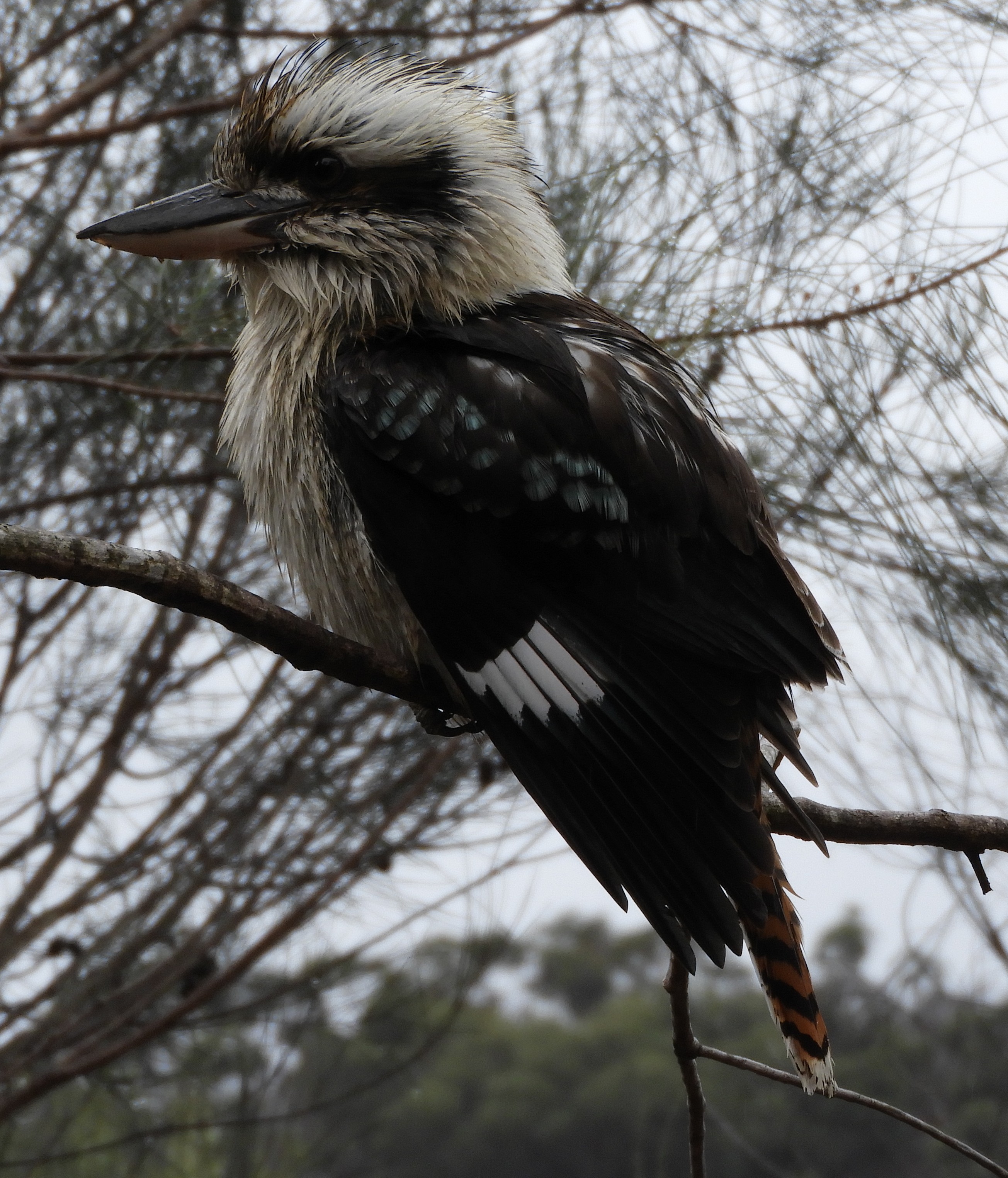
Common name: Laughing Kookaburra
Scientific name: Dacelo novaeguineae
Approximate length: 47 cm
Date spotted: 27 August 2019 (Late winter)
Location: Manly Dam National Park, New South Wales, Australia: 33°46’54.6″S 151°15’09.4″E
Kookaburra in a mess after hollowing out termite nest
“Don’t look at me! I’m a mess.
Been hard at work hollowing out a termite nest.”
That’s what this kookaburra seems to be saying:

“What, you don’t think termite gunge is the right look for me?”

“OK then. Here’s what I’ve been doing for the last half hour:”
“That’s a big termite nest, high up in a tall tree.
And soon it’ll be a home for my family and me:”

Common name: Laughing Kookaburra
Scientific name: Dacelo novaeguineae
Approximate length: 47 cm
Date spotted: 28 July 2019 (Winter)
Location: Manly Dam National Park, New South Wales, Australia: 33°46’48.1″S 151°14’52.5″E
Birds on Magnetic Island
Last week I spent three days on Magnetic Island in North Queensland. Magnetic Island is a small island just offshore from Townsville. That’s approximately 2,000 km north of Sydney. The ferry ride from the mainland takes twenty minutes on the foot-passengers ferry, or forty minutes on the vehicle ferry. The island is a relaxing, lovely place to be.
Although I was on Magnetic Island for only a short while (two full days plus one evening and one morning) I encountered quite a few birds. Here are 16 of them, in rough order of size from small to large.
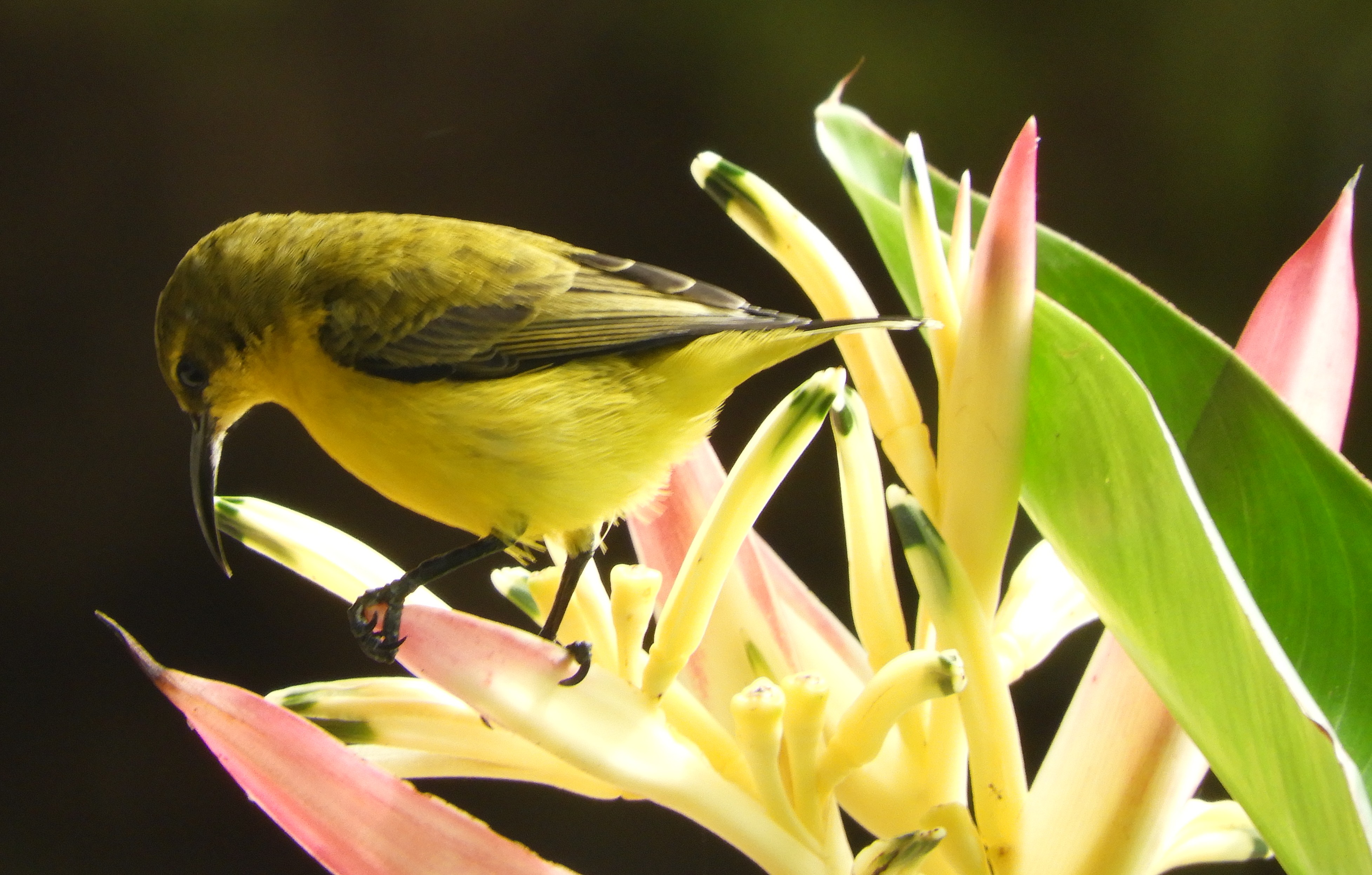
Yellow-bellied Sunbird
Scientific name: Nectarinia jugularis | Approximate length: 10-12 cm
This is a female Yellow-bellied Sunbird, spotted at Picnic Bay on Magnetic Island:

The beak of the Yellow-bellied Sunbird is long and curved, adapted for feeding from flowers:
White-breasted Woodswallow
Scientific name: Artamus leucorynchus | Approximate length: 16-18 cm
Three White-breasted Woodswallows clumping together. It was a chilly morning (well, chilly for the tropics, that is) so I guess they were sharing body heat:

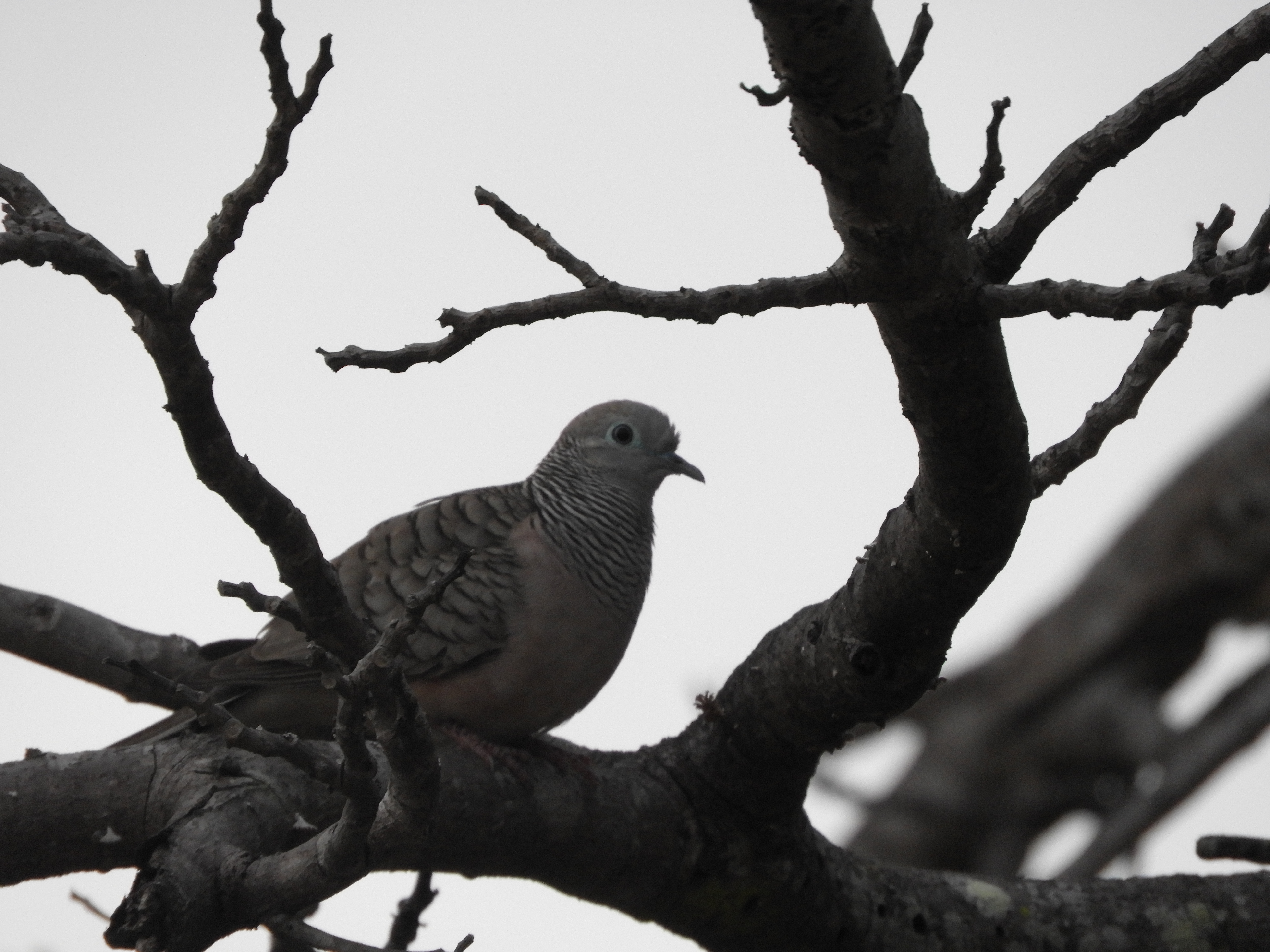
Peaceful Dove
Scientific name: Geopelia placida (striata) | Approximate length: 20-24 cm
The Peaceful Dove is a small dove with an apricot tinge to its feathers. It has a soft, pleasant call as you can hear towards the end of this video:
Here’s a still shot of the same bird:
Rainbow Bee-eater
Scientific name: Merops ornatus | Approximate length: 23-27 cm
Given the name of this bird, I was particularly excited to snap one actually eating a bee!
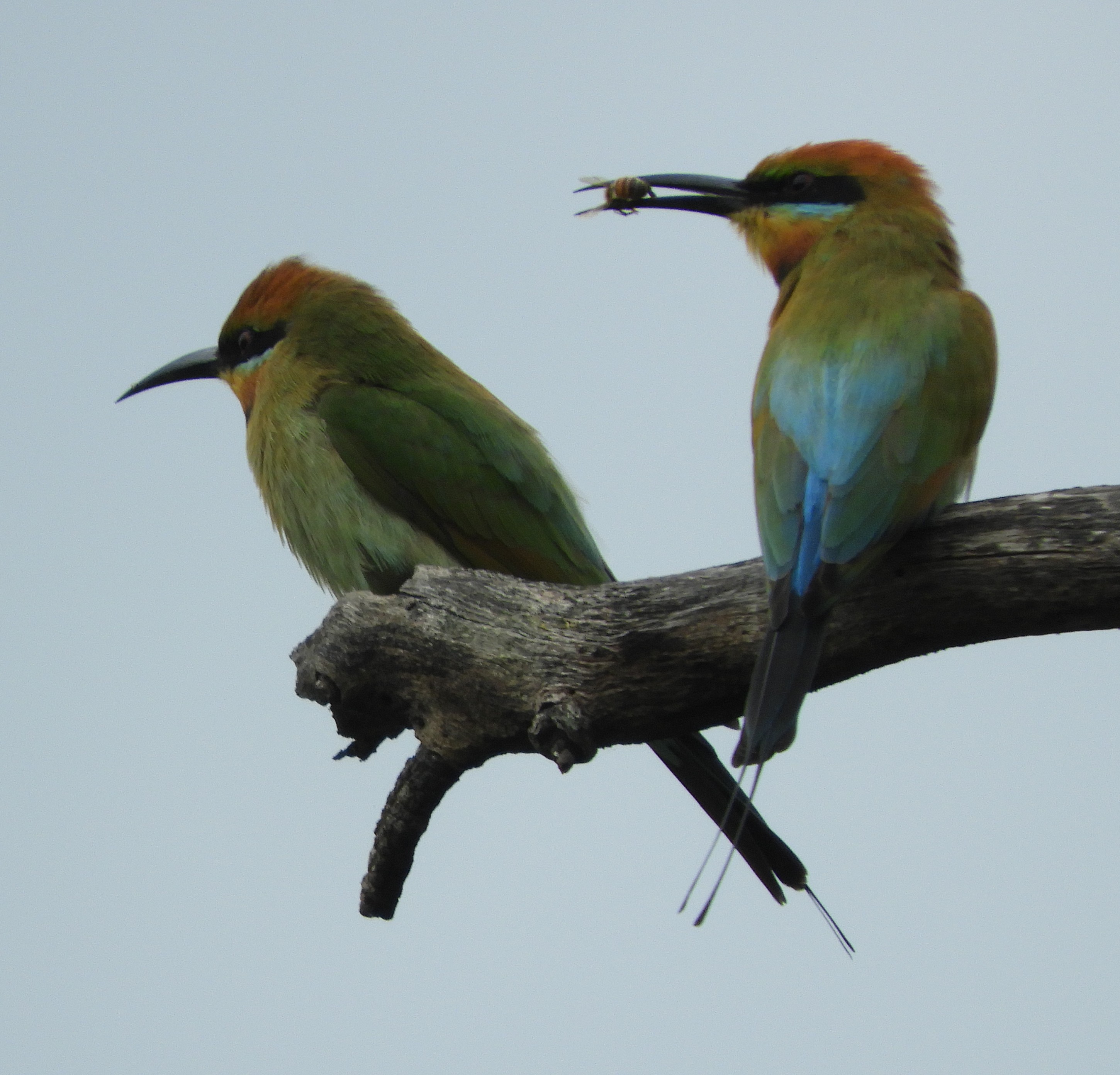
Here’s a bird in the act of catching a bug:
This trio of bee-eaters clumped cosily in the chilly air of the early morning. Even a tropical island can feel cold to inhabitants used to the warmer summer weather:

Rainbow Lorikeet
Scientific name: Trichoglossus haematodus | Approximate length: 26-31 cm
These colourful parrots are extremely noisy, especially when you have a tree full of them:
Spangled Drongo
Scientific name: Dicrurus bracteatus | Approximate length: 28-32 cm
Drongo – what a cute name! Yet in Australia if someone calls you a “Drongo” you want to look closely at them, as it’s a bit of an insult. It means they think you’re not all that bright.
This is a female Spangled Drongo, I think, as its eyes are brown whereas the male has red eyes:
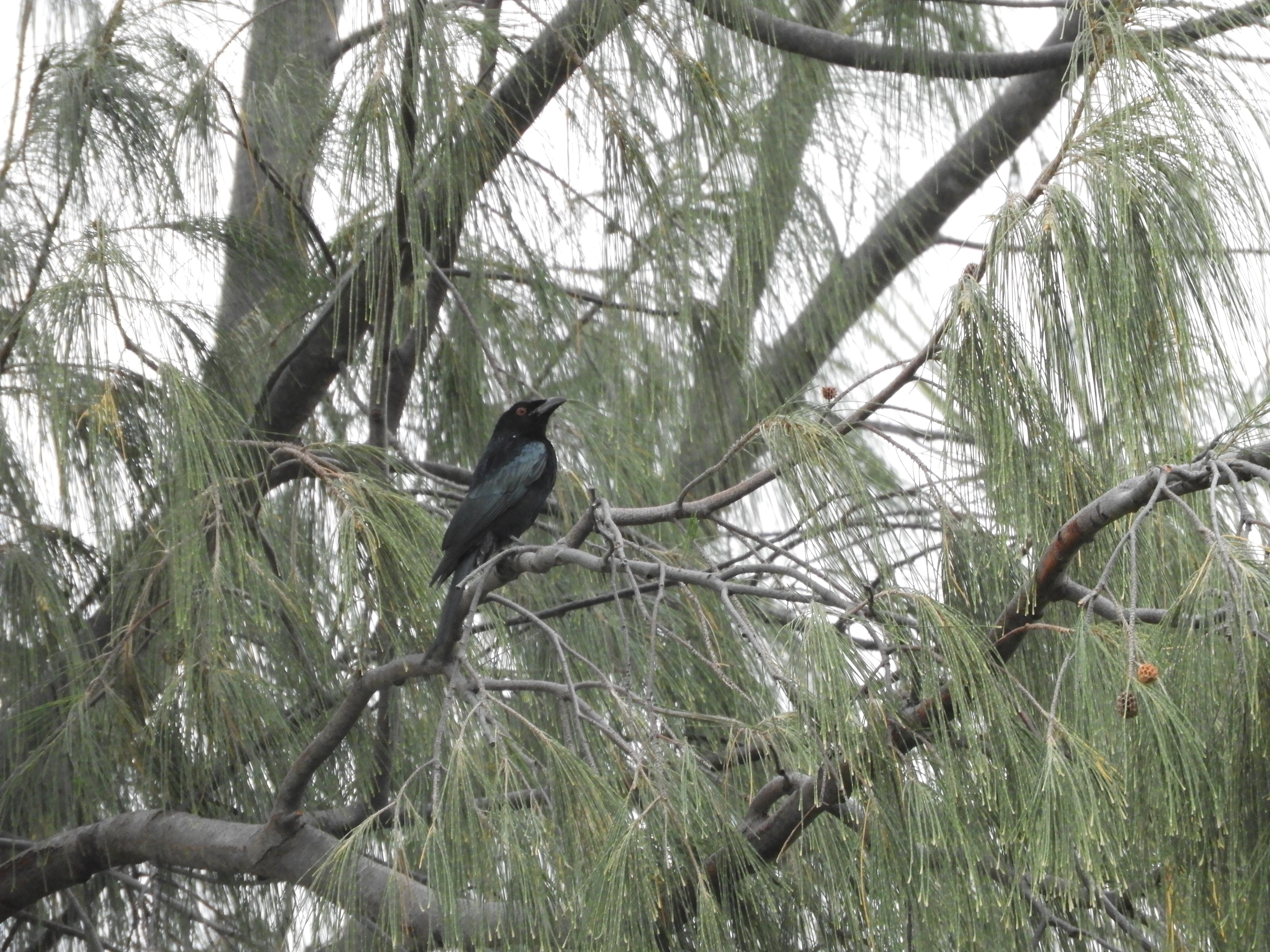
It’s easy to confuse these birds with crows and ravens. In fact, I heard Australian Ravens calling on the island, but didn’t get a photo of one.
The next photo is a pretty much a silhouette, but it shows off the Spangled Drongo’s forked tail:

Helmeted Friarbird
Scientific name: Philemon buceroides | Approximate length: 32-37 cm
This Helmeted Friarbird sat quietly on a branch listening to the birds all round. When it tilts its head you can see the odd-shaped knob on top of its beak:
Here’s another peering through the foliage:

Galah
Scientific name: Cacatua roseicapilla | Approximate length: 38 cm
Galahs are pretty pink and grey parrots. Australians sometimes call someone a “silly galah”, which I think is a slightly more affectionate term than “drongo”! I’ve seen Galahs in the Sydney area as well as up here on Magnetic Island. This one was picking up seeds on the ground. There’s another Galah nearby, which you can hear chirping to its mate towards the end of the video:
Here’s a still photo:

Masked Lapwing, also called a Spur-winged Plover
Scientific name: Vanellus miles | Approximate length: 35-39 cm
Masked Lapwings are strange-looking birds with yellow faces that seem to have been stuck on as an after-thought.
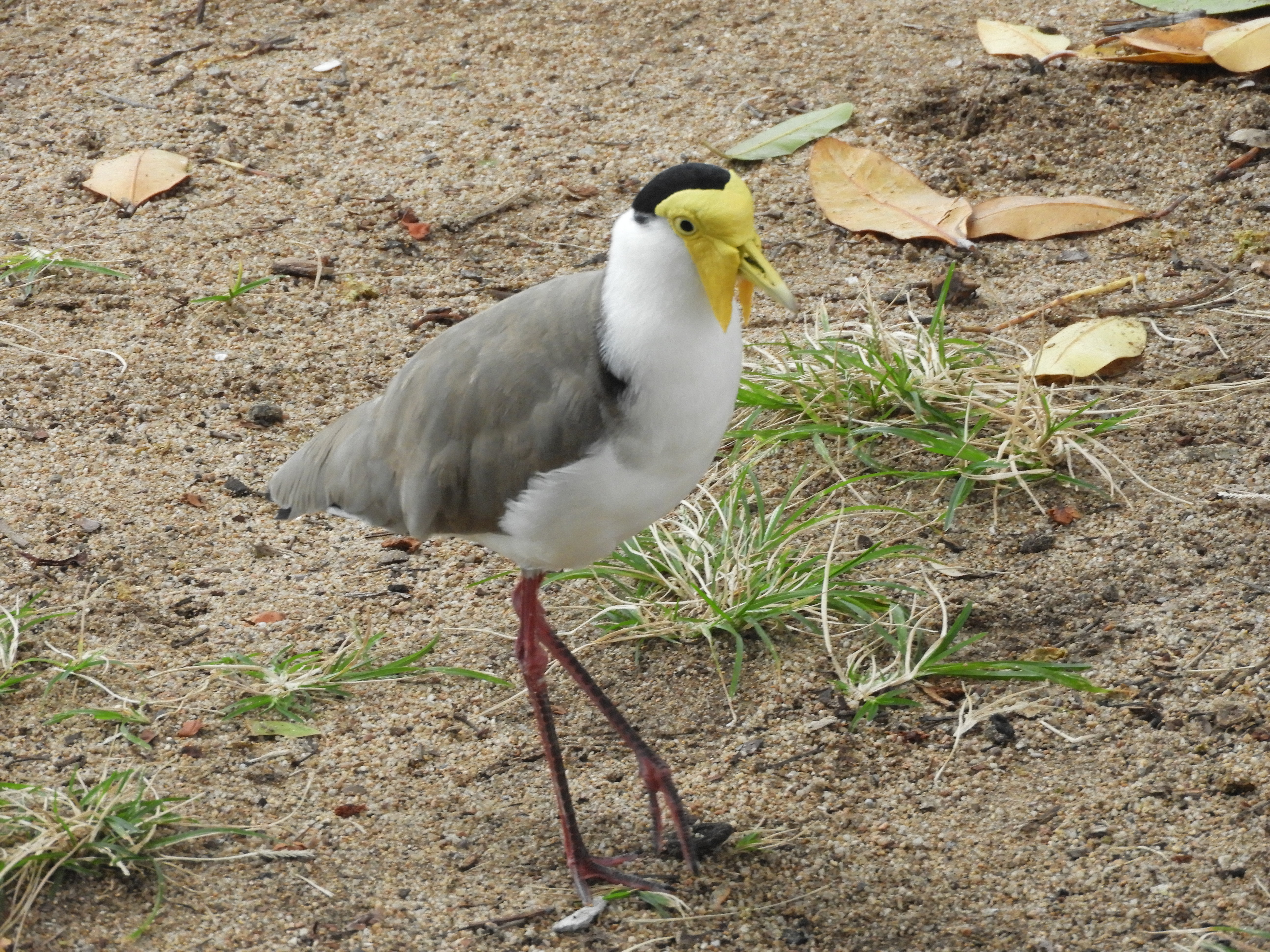
Their alternative name of “spur-winged” is apt, because they have hooks on their wings, one on each, which they use as weapons, stretching the wings then dragging back to wound their enemy.
In the next photo, the bird at the back is a juvenile. Its legs are brown instead of the red of the adult, and its mask has not yet fully developed:

Blue-winged Kookaburra
Scientific name: Dacelo leachii | Approximate length: 38-42 cm
The kookaburras up north are different from the Laughing Kookaburras that we see around Sydney. Blue-winged Kookaburras look leaner and meaner. They have bright blue markings on their wings, and they lack the wide dark strip that marks the eyes of Laughing Kookaburras. Here’s a Blue-winged Kookaburra on Magnetic Island:
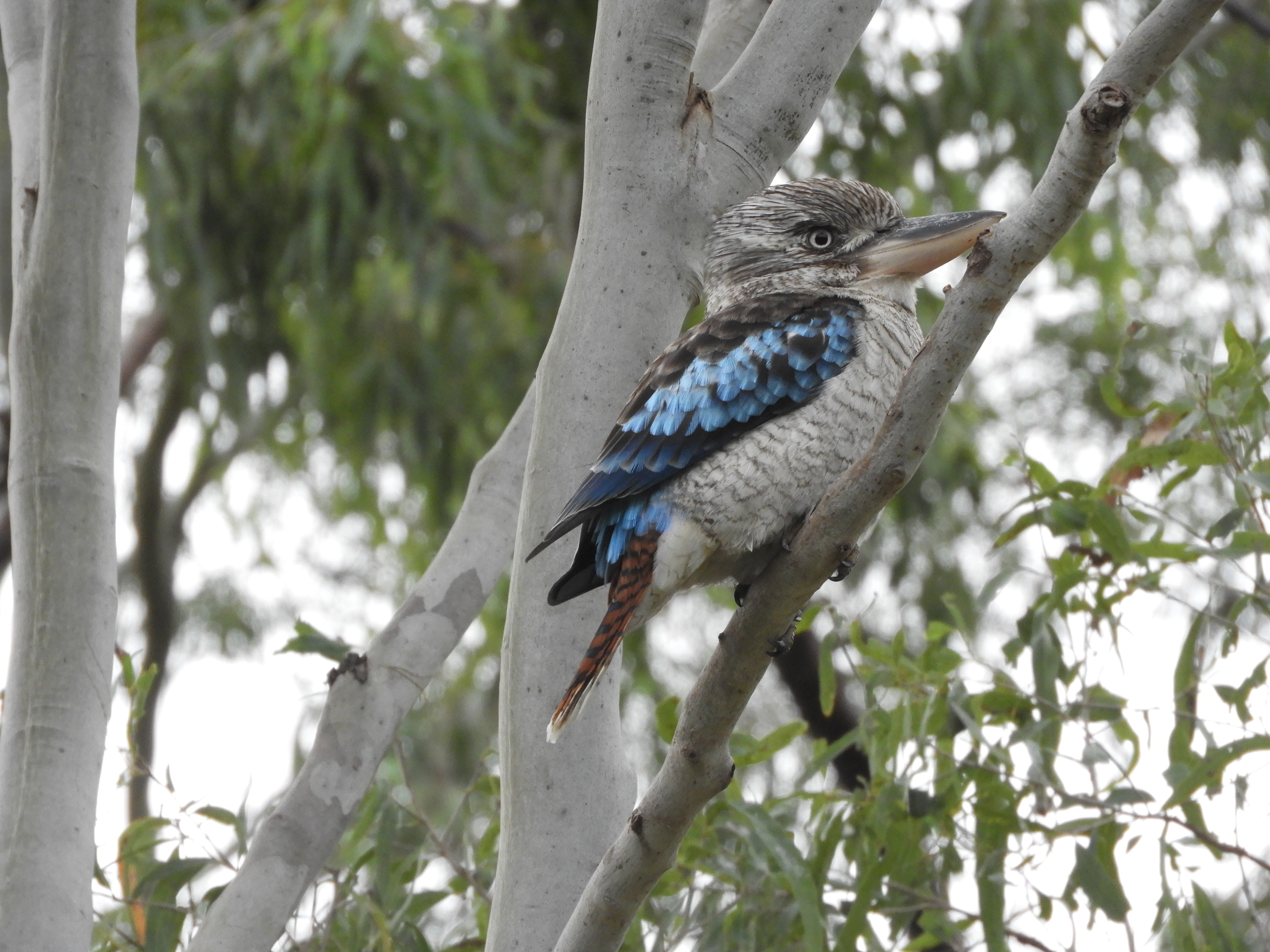
They do look just as silly as our local birds when they gaze at us straight on:

The cackling laughter of the Blue-winged Kookaburras seemed harsher and higher pitched to me. I didn’t manage to record any of the noise. This video shows a bird sitting on the top of a high post, swaying backwards and forwards as they do to retain their balance:
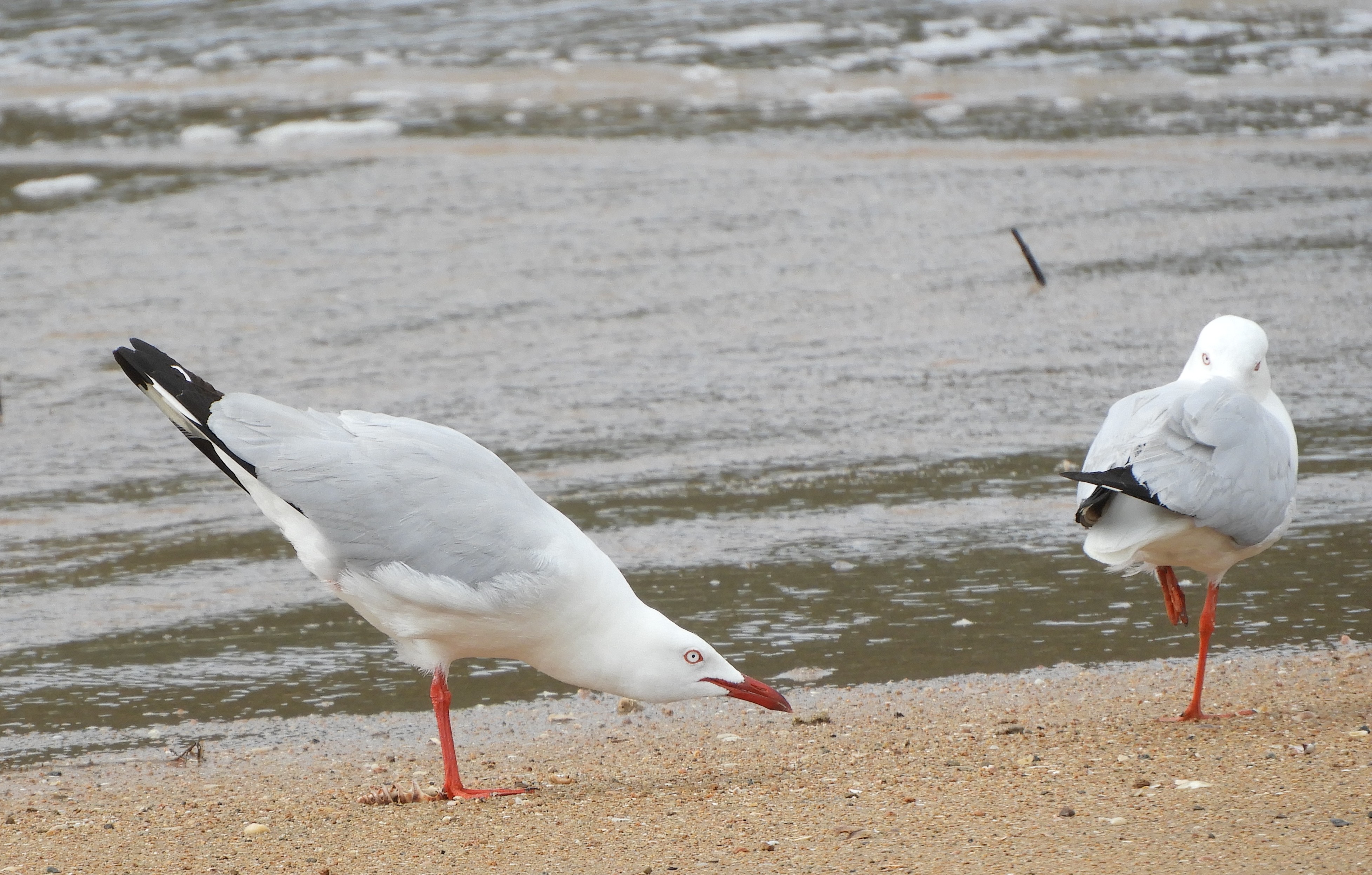
Silver Gull
Scientific name: Larus novaehollandiae (also called Chroicocephalus novaehollandiae) | Approximate length: 38-42 cm
A Silver Gull warning off another Silver Gull:
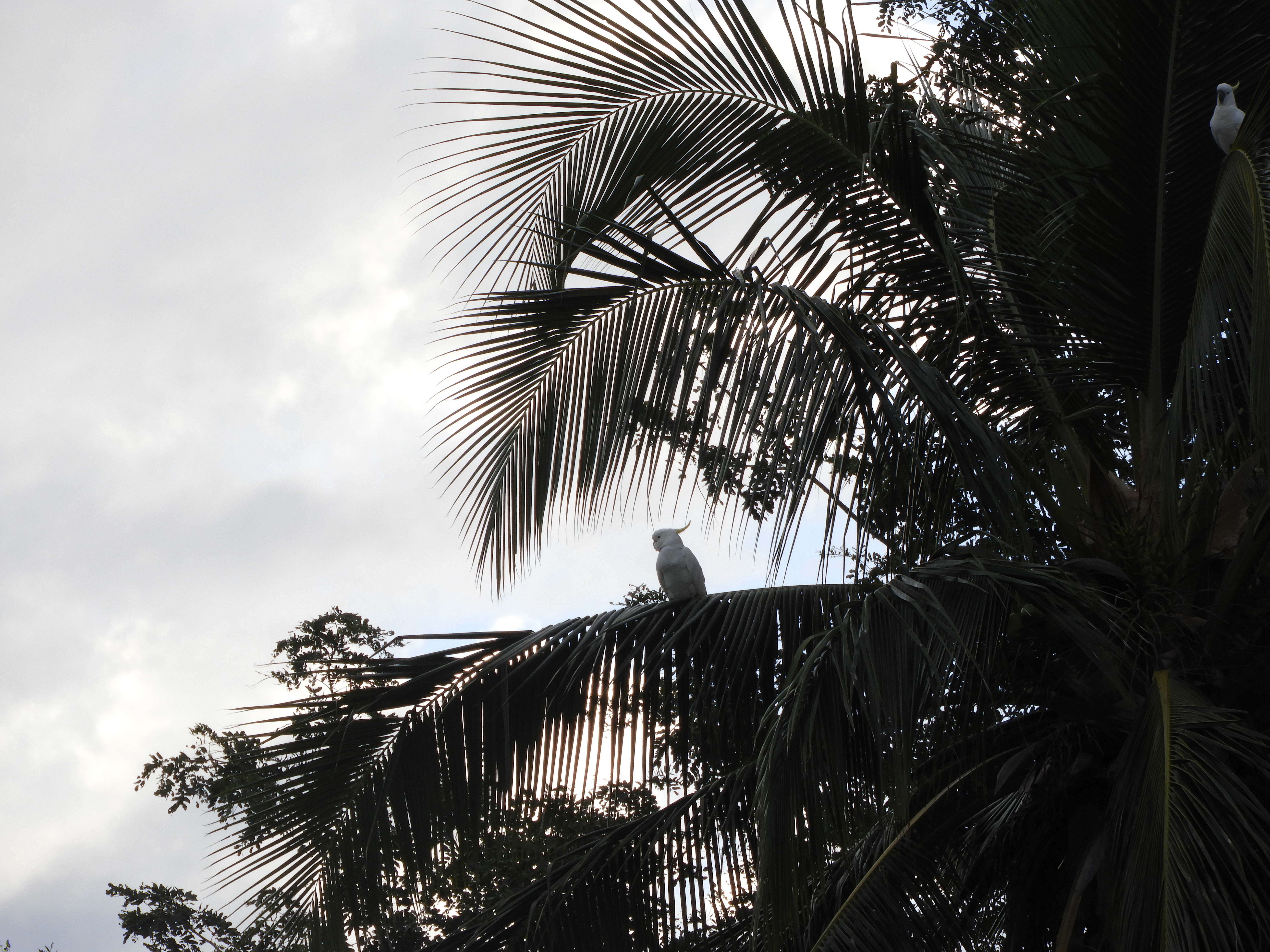
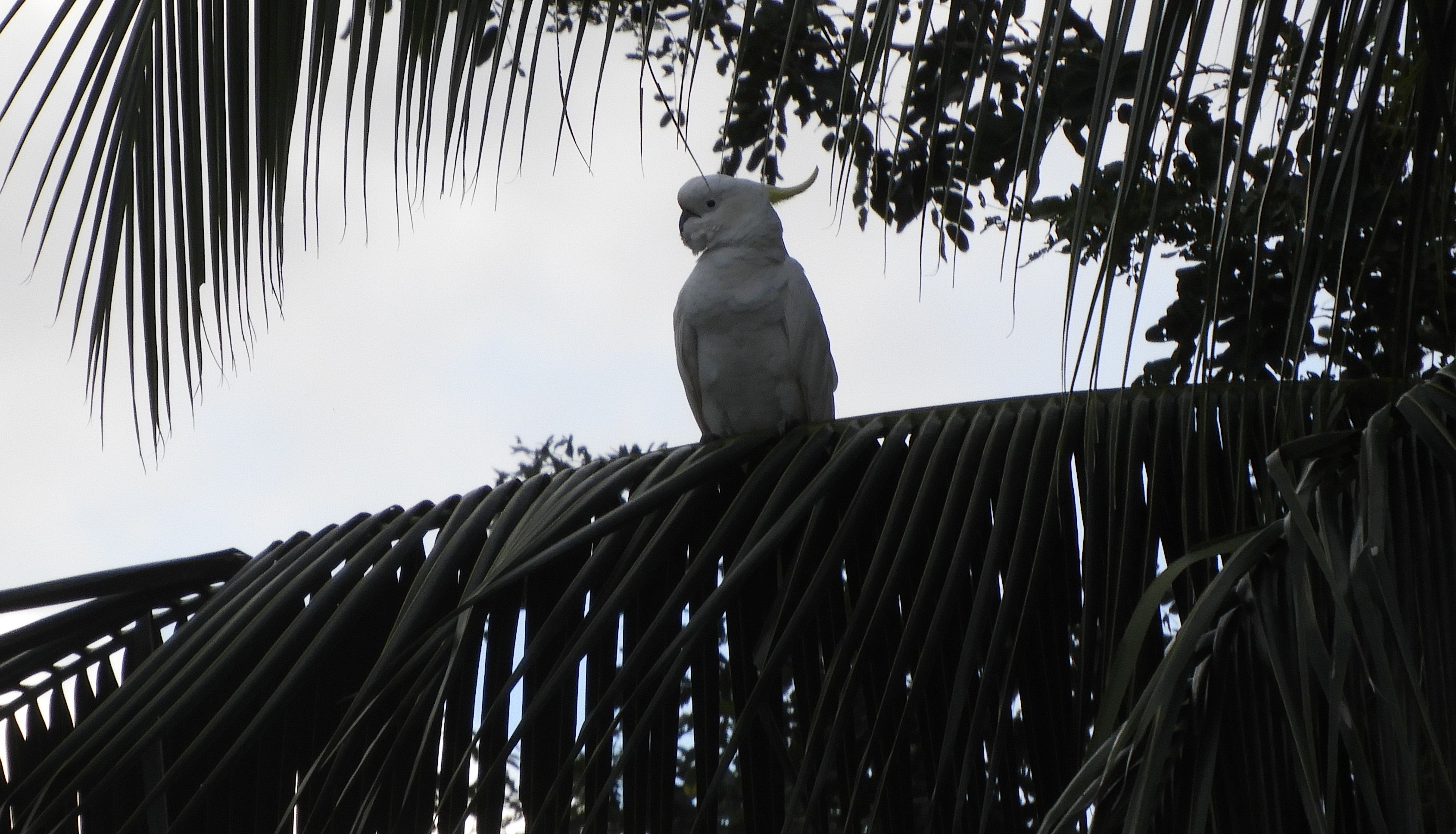
Sulphur-crested Cockatoo
Scientific name: Cacatua galerita | Approximate length: 45-50 cm
Sulphur-crested Cockatoos abounded on the island. Here are a couple peeking out from the branches of a huge palm tree:
A closer look at one of the birds:
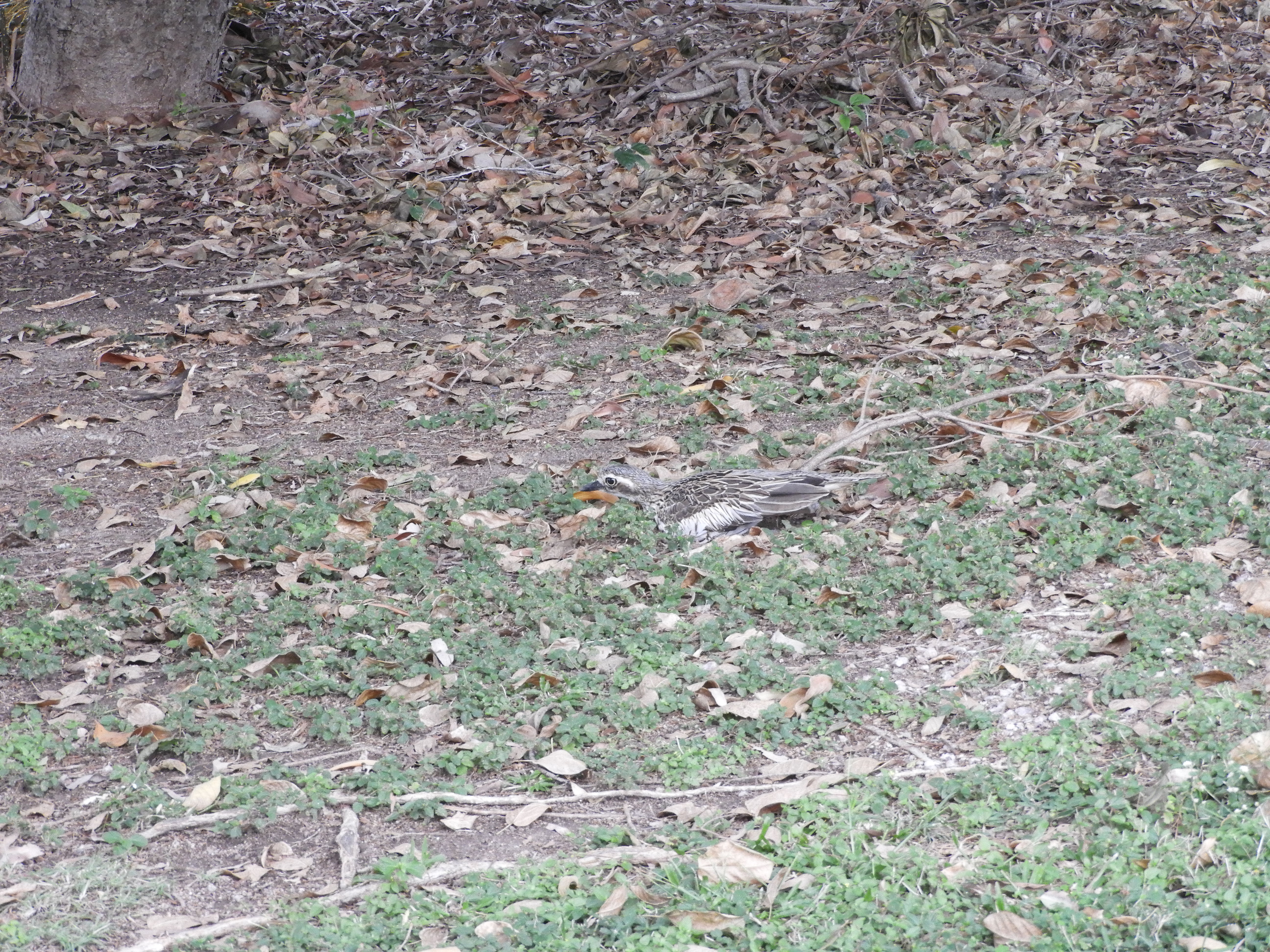
Bush Stone-curlew
Scientific name: Burhinus grallarius | Approximate length: 55-60 cm
If you’re lucky enough to be on Magnetic Island at night, you’ll hear an eerie wailing in the lonely hours. Report has it that the local police regularly receive calls from visitors to report screaming in the night. Don’t be alarmed. It’s just the Stone-curlews.
Bush Stone-curlews have amazing camouflage, even during the day. Spot the bird if you can (click on the image to zoom in):
Here’s a close-up picture of the same bird:

Bush Stone-curlews have lovely big eyes:

Bush Stone-curlews tend to move slowly and timidly, then make a quick dash. Here’s one moving slowly along a fence:
Brahminy Kite
Scientific name: Haliastur indus | Approximate length: 55-60 cm; wing span 1.2-1.3 m
I watched this Brahminy Kite for a while early one morning. The bird was perched on top of a very high post above a stone jetty. I had to use full zoom on my camera, and the resolution isn’t wonderful. Still, the photo gives a good idea of the bird’s appearance:
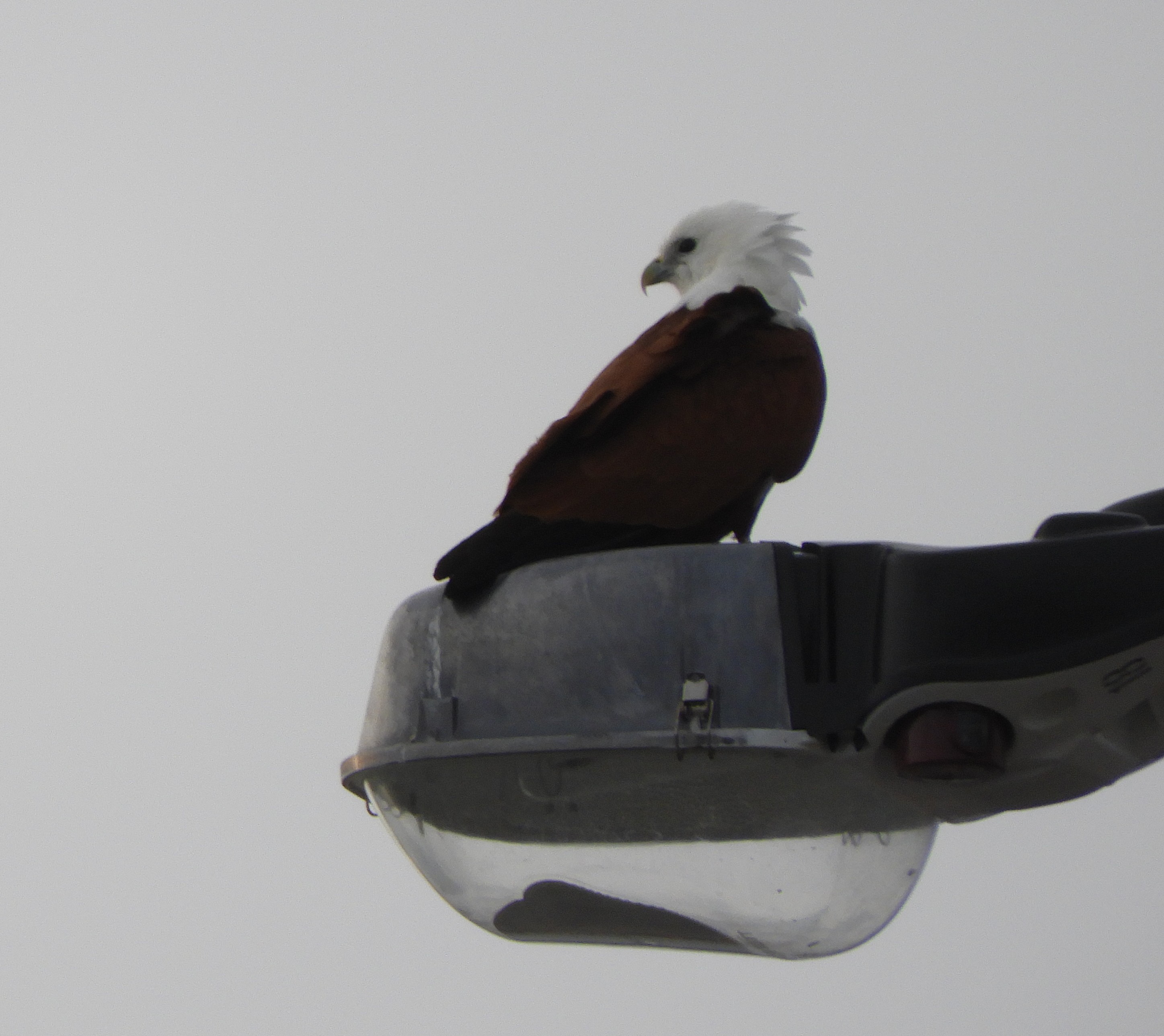
These kites are common around the northern shores of Australia. At first I confused the bird with an eagle, but then I noticed the striking white chest and head feathers, and the rich chestnut colour on the back and wings, which are characteristic of Brahminy Kites. Here’s a photo of the bird flying – again, fuzzy, but you get the idea of the shape and colour:

Whistling Kite
Scientific name: Haliastur sphenurus | Approximate length: 50-60 cm; wing span 1.2-1.5 m
This bird was high in the sky, circling above the ocean and the hills:
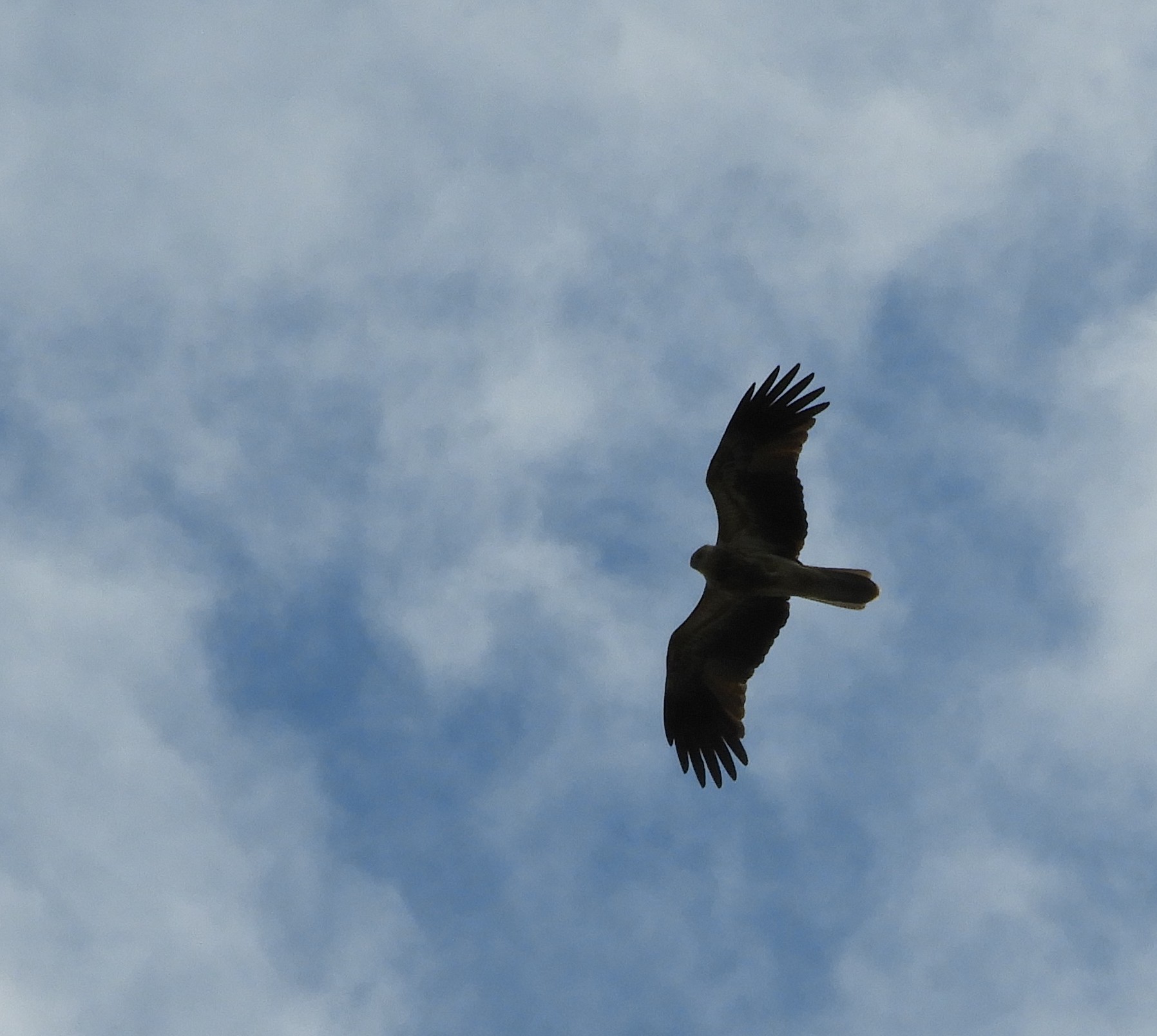
Here’s the same bird from another angle:

Australian White Ibis
Scientific name: Threskiornis molucca | Approximate length: 65-75 cm
These ibises are affectionately known as “bin chickens” because in cities they spend a lot of time raiding dustbins. This group was prowling around the beach area, no doubt in search of scraps from the nearby restaurants:

Koala
Not a bird! But I can’t leave a post about Magnetic Island without showing a picture of a Koala. The island has the largest population of wild koalas in Australia:
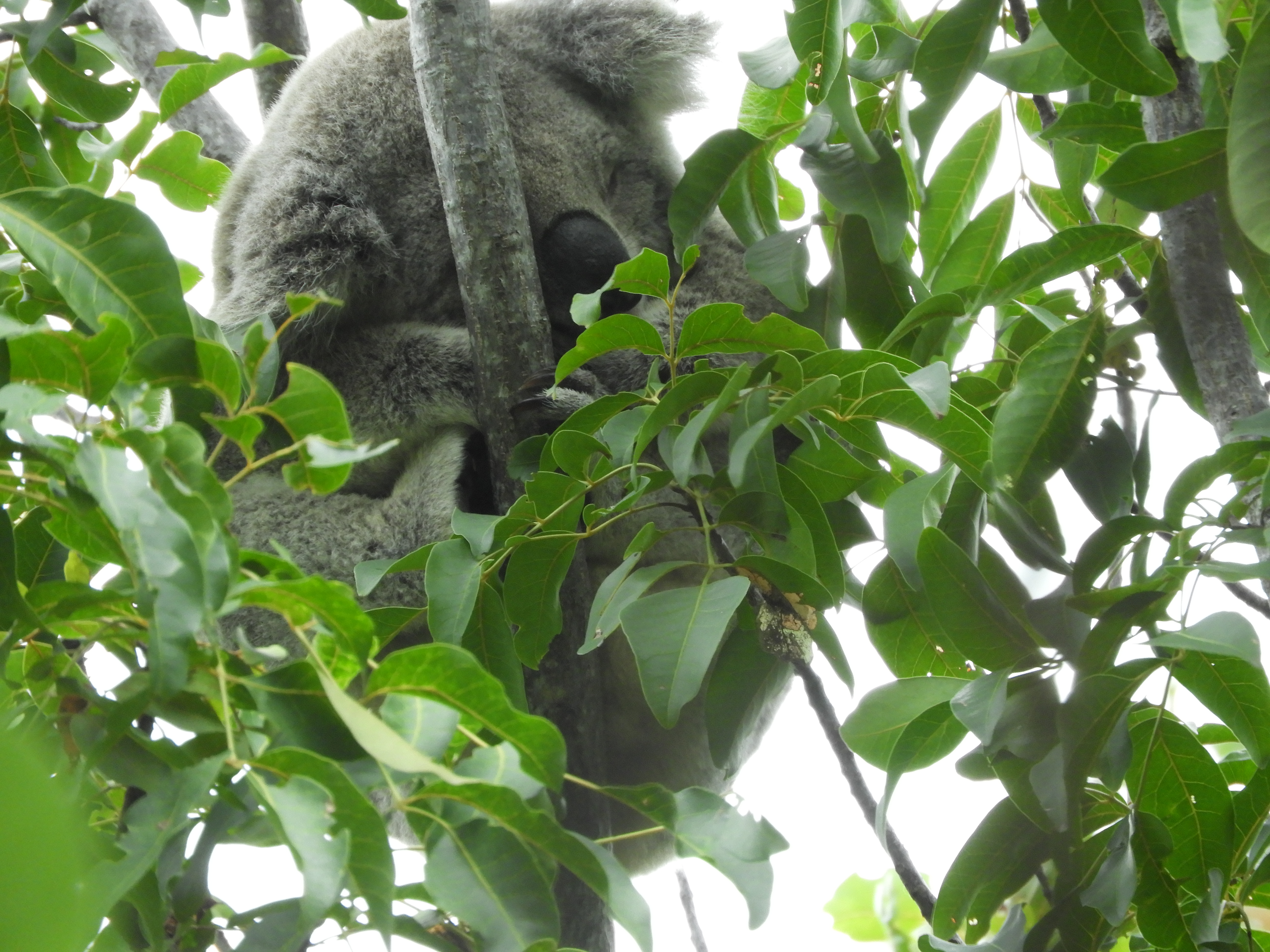
I hope you’ve enjoyed my post about the lovely Magnetic Island!


 Sydney Birder