Category Archives: Kite

Whistling Kite at Myall Lakes
This weekend I took a walk from Mungo Brush Campground to the Tamboi picnic area at Myall Lakes. A bird of prey was calling and swooping far away on the opposite side of the wide, serene Myall River. After a bit of research, considering the appearance of the bird and the sound of its call, my conclusion is that it’s a Whistling Kite.
The pictures aren’t great, because the bird was far away. This one shows its head and body:

The next picture gives a better idea of its tail:

I did take some shots of the bird in flight, but they’re too fuzzy to be of much use. Still, you can see them on my Reddit post if you’re interested.
Whistling Kites are large birds of prey, found throughout most of Australia. They’re also called whistling eagles or whistling hawks. I’ve seen one before, on the Bogan River in western New South Wales, and another on Magnetic Island in Queensland.
Common name: Whistling Kite
Scientific name: Haliastur sphenurus
Approximate length: 50-60 cm; wing span 1.2-1.5 m
Date spotted: 20 October 2024 (spring)
Location: Myall Lakes National Park, New South Wales, Australia: 32°33’03.8″S 152°17’10.5″E

Whistling Kite on the Bogan River
Early one morning, on the banks of the Bogan River at Nyngan, I watched this raptor calling and flying. I was in the area, at the start of a trip heading west from Sydney into the Australian Outback.
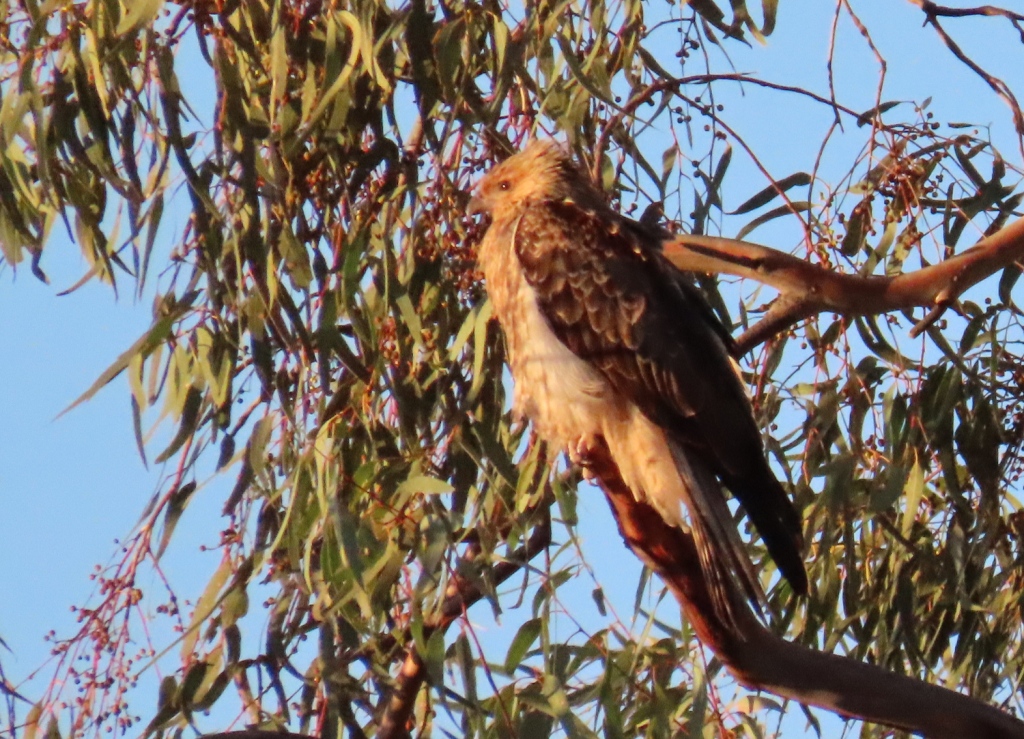
In this video, the piercing call of the bird echoes across the river. The background noise in the video is mostly from the wind. It was a cold and blustery morning:
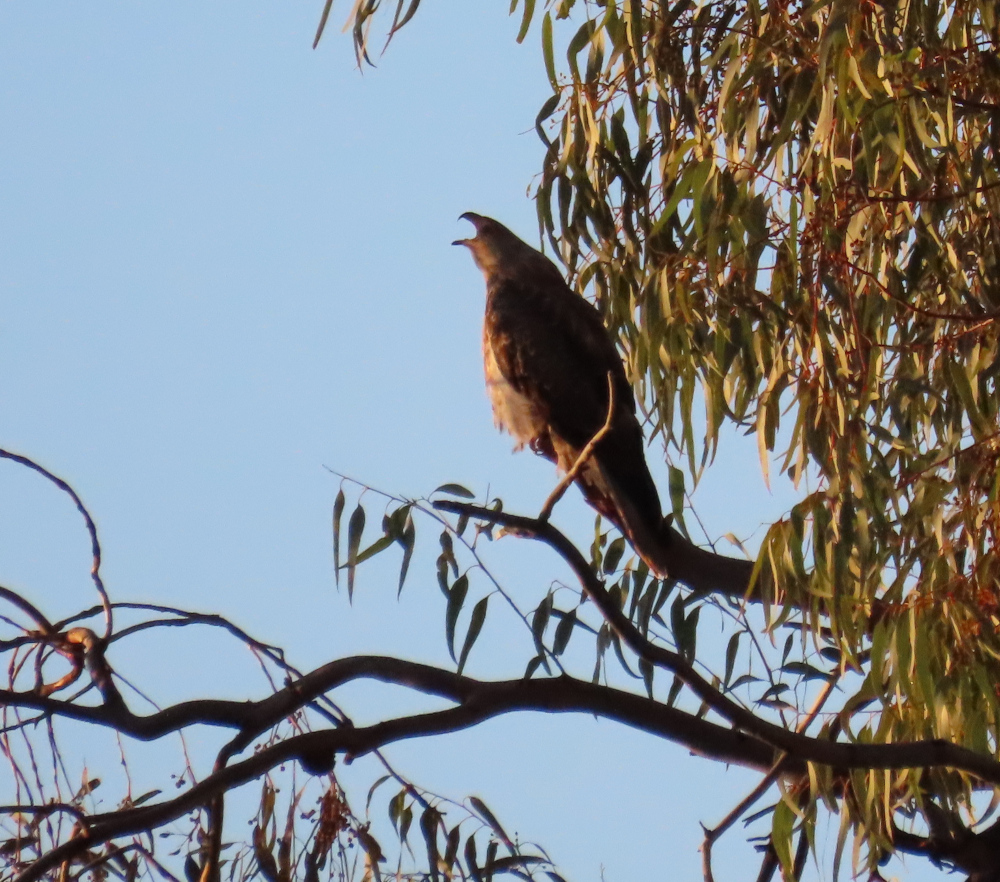
In the next shot, the bird’s head is up and its beak is opened wide, in the midst of making its call:
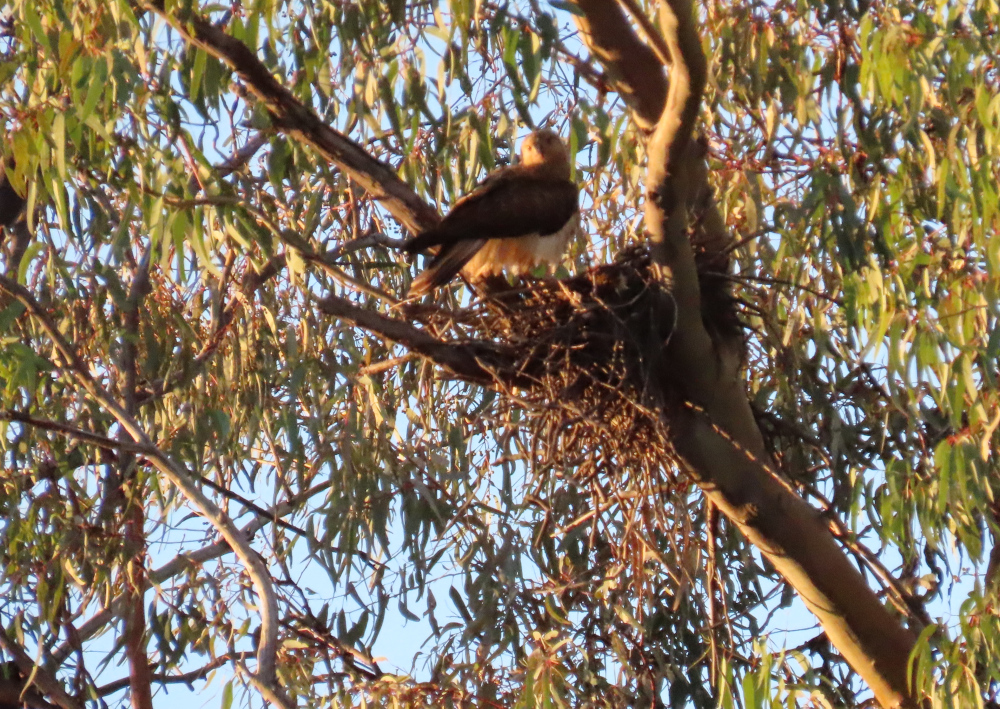
Nearby was the bird’s nest, a platform of loosely woven sticks:
The bird departed from and returned to its nest a couple of times while I watched:
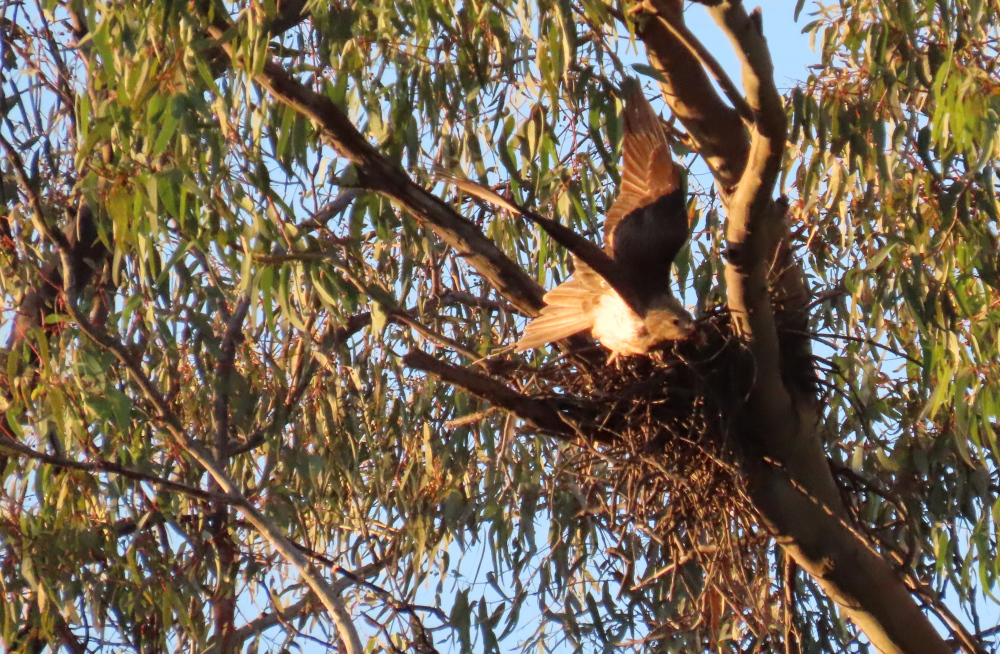
Each time it left the nest, the bird would circle high in the sky, or swoop down over the river. There were a few other birds circling too, so I can’t be sure that this is the same bird:
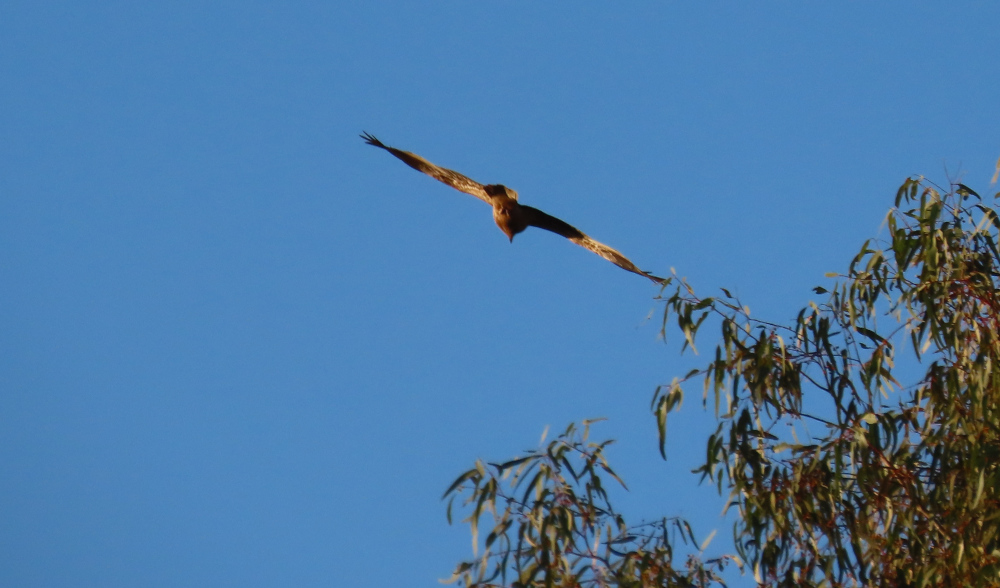
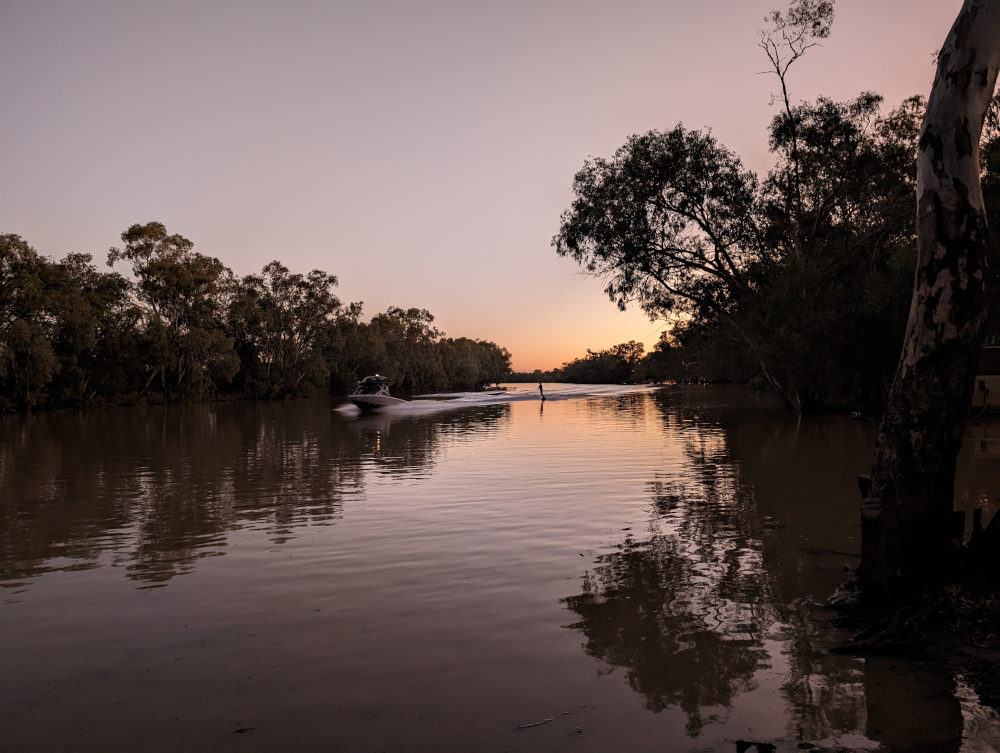
I saw the bird in the evening of 17 May, and then again the next morning. All my bird photos are morning shots. The next shot shows an evening shot of the Bogan River, near where the bird had built its nest. When taking all the photographs, I was on the opposite bank of the river from the bird and its nest:
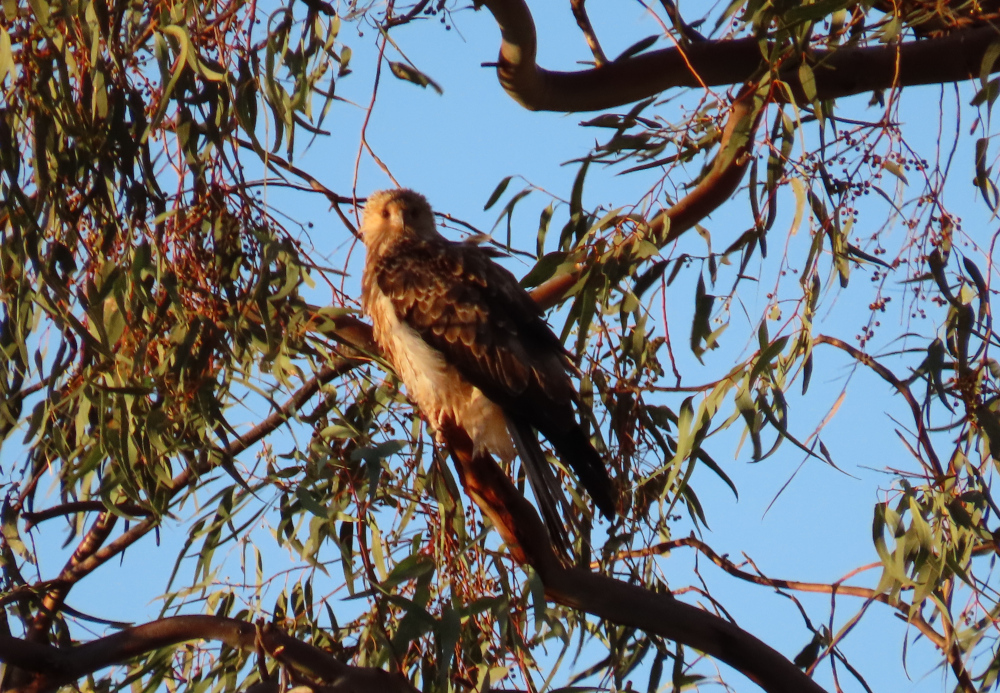
Here’s another shot of the same bird (again, a morning shot):
Common name: Whistling Kite
Scientific name: Haliastur sphenurus
Approximate length: 50-60 cm; wing span 1.2-1.5 m
Date spotted: 18 May 2024 (autumn)
Location: Nyngan Riverside Tourist Park, New South Wales, Australia: 31°33’39.1″S 147°10’45.2″E

Birds galore at Long Reef Aquatic Reserve, Collaroy
Last week I spent a couple of hours at Long Reef Aquatic Reserve in Collaroy, NSW. I was there just for a walk with my partner, but I was delighted at the number and variety of birds we encountered.
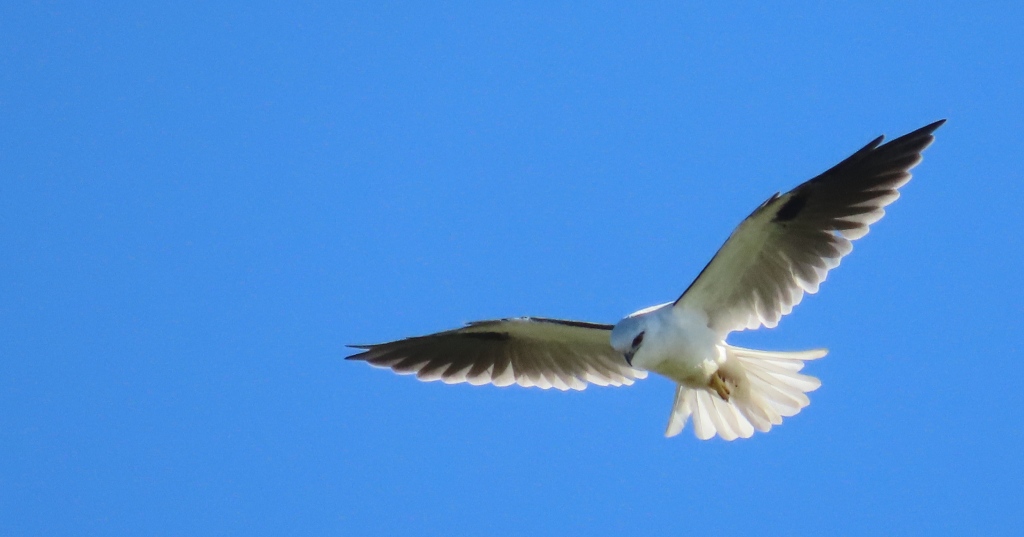
First up were two raptors, a real treat to see. A Black-shouldered Kite (Elanus axillarus) hovered in the air, effortlessly riding the currents and looking out for prey:
An Eastern Osprey (Pandion cristatus) soared in circles, grasping a half-eaten fish in its feet:
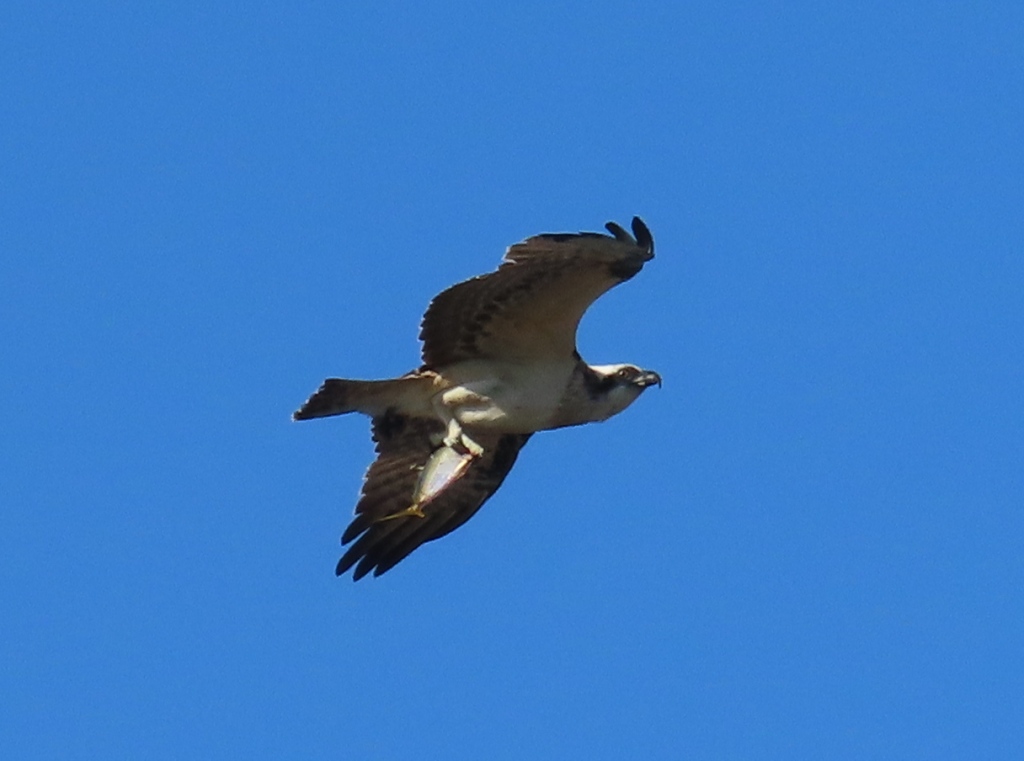
I’ve written a separate post about these two birds, a third raptor, and some paragliders who shared the air currents with the kite: Three raptors in one day.
Huge Pelicans (Pelecanus conspicillatus) perched on the lampposts and glided above my head. Here’s one of them, looking sad and wise:
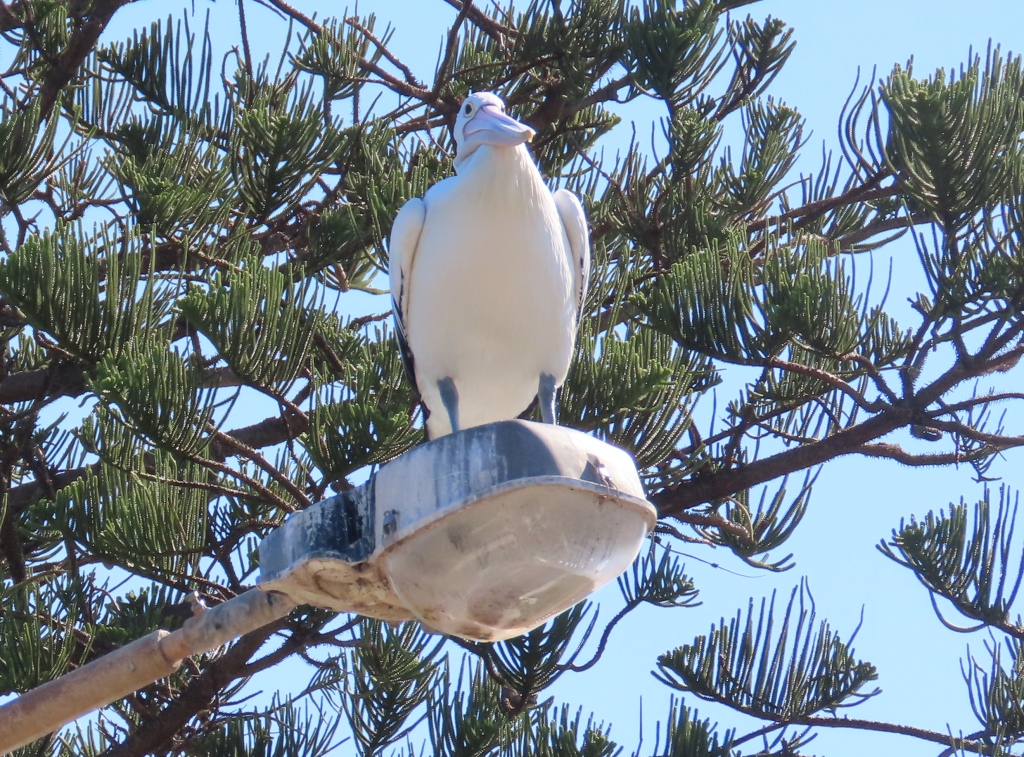
Another post has more pictures of these magnificent birds: Three pelicans on a lamppost.
A female Darter (Anhinga melanogaster) sat on a metal structure above the beach, surveying all the action with a cautious eye:

Silver Gulls (Larus novaehollandiae) wheeled around the fishermen at the edge of the rock plate:

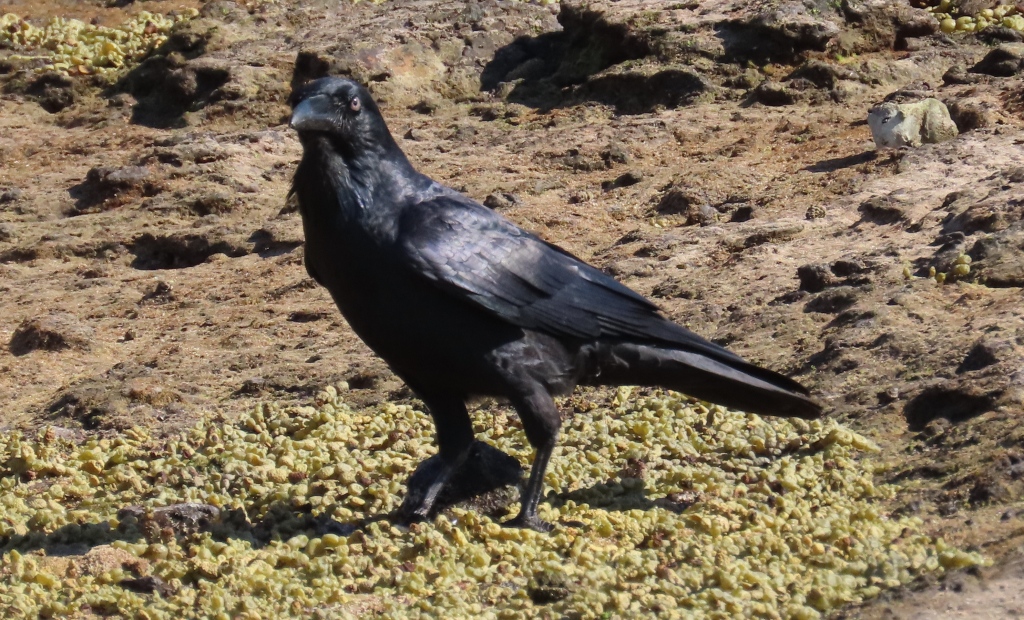
Australian Ravens (Corvus coronoides) picked through the stranded seaweed in search of a snack:

Here’s a close-up of one of the ravens:
Fish skulked in a nearby rock pool:

A crab came out from under a rock, ready to dash back in at the slightest sign of danger:

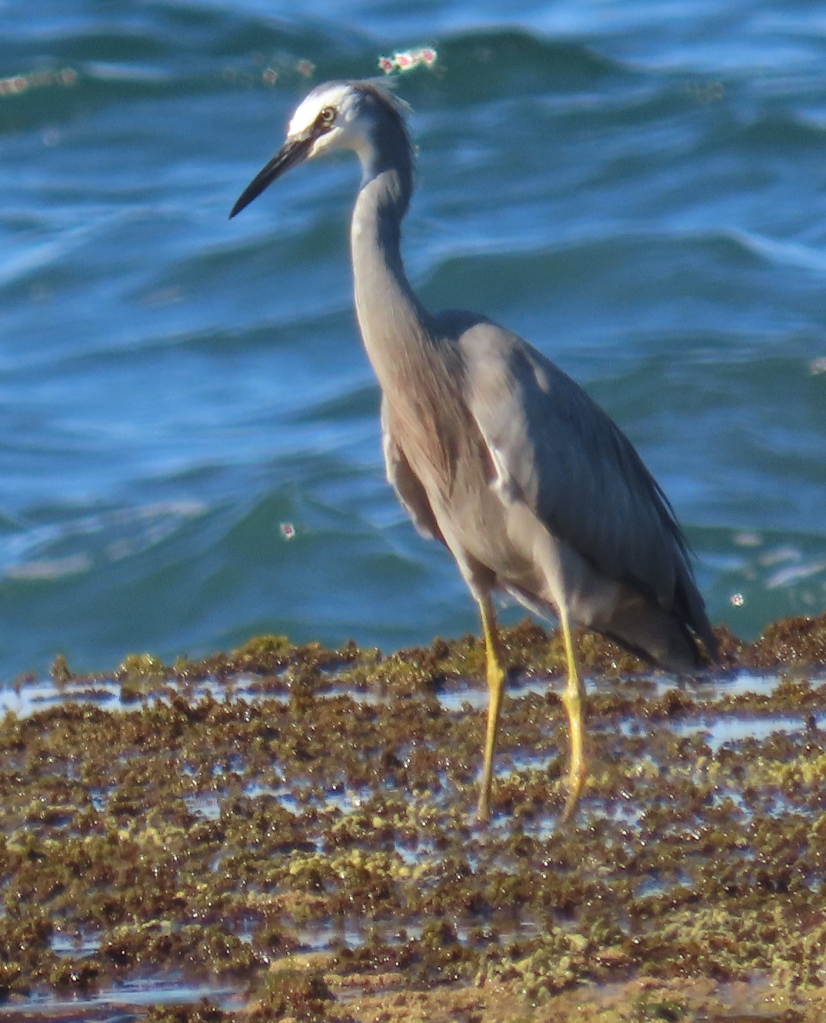
A White-faced Heron (Ardea novaehollandiae) patrolled the border between land and sea:
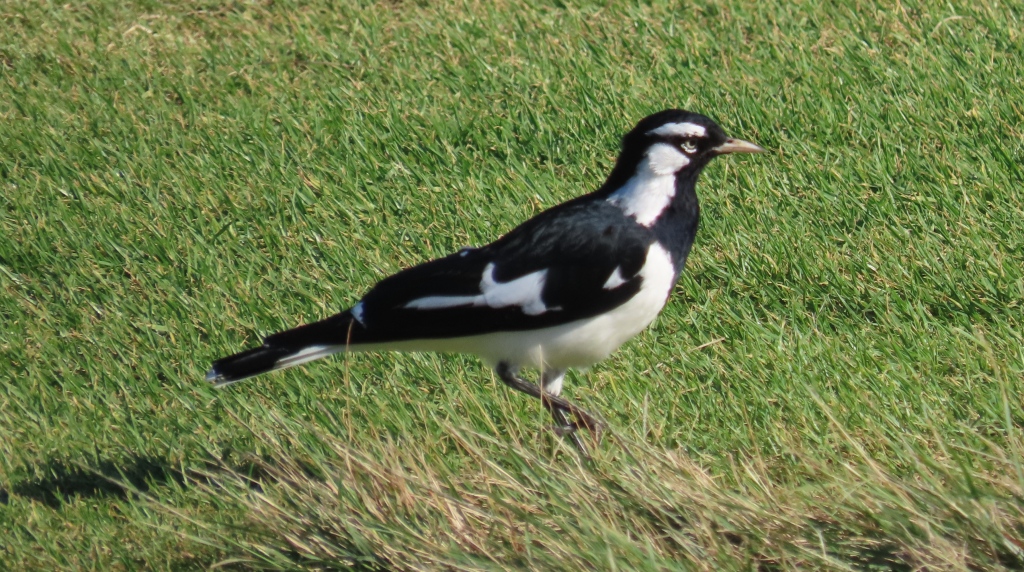
On the grassy headland above the beach, a Magpie-lark (Grallina cyanoleuca) owned the land. These birds are also called Peewees, because of the loud shrill call (peeee-wheee) that they make whenever a person or anything else comes too close:
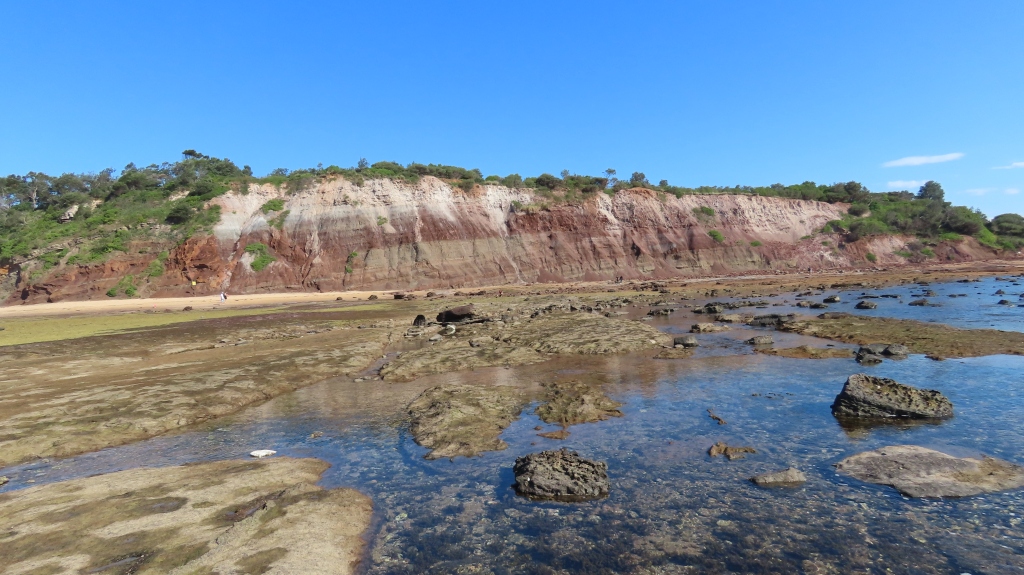
To close off with, here are a couple of shots showing the colours and serenity of the Long Reef Aquatic Reserve that afternoon. First, looking from the rock plate towards the land:
Then looking out to sea:

Birds on Magnetic Island
Last week I spent three days on Magnetic Island in North Queensland. Magnetic Island is a small island just offshore from Townsville. That’s approximately 2,000 km north of Sydney. The ferry ride from the mainland takes twenty minutes on the foot-passengers ferry, or forty minutes on the vehicle ferry. The island is a relaxing, lovely place to be.
Although I was on Magnetic Island for only a short while (two full days plus one evening and one morning) I encountered quite a few birds. Here are 16 of them, in rough order of size from small to large.
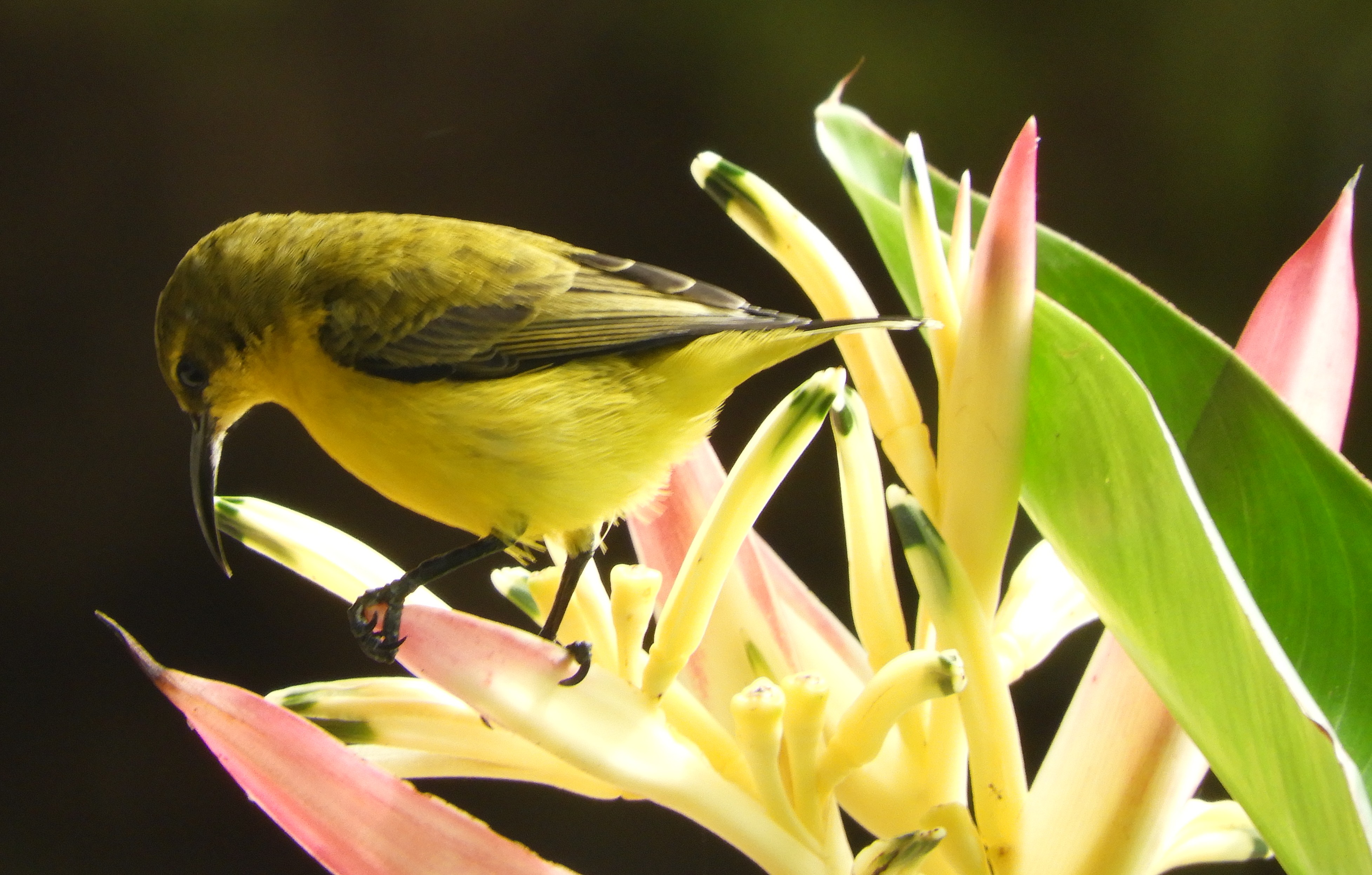
Yellow-bellied Sunbird
Scientific name: Nectarinia jugularis | Approximate length: 10-12 cm
This is a female Yellow-bellied Sunbird, spotted at Picnic Bay on Magnetic Island:

The beak of the Yellow-bellied Sunbird is long and curved, adapted for feeding from flowers:
White-breasted Woodswallow
Scientific name: Artamus leucorynchus | Approximate length: 16-18 cm
Three White-breasted Woodswallows clumping together. It was a chilly morning (well, chilly for the tropics, that is) so I guess they were sharing body heat:

Peaceful Dove
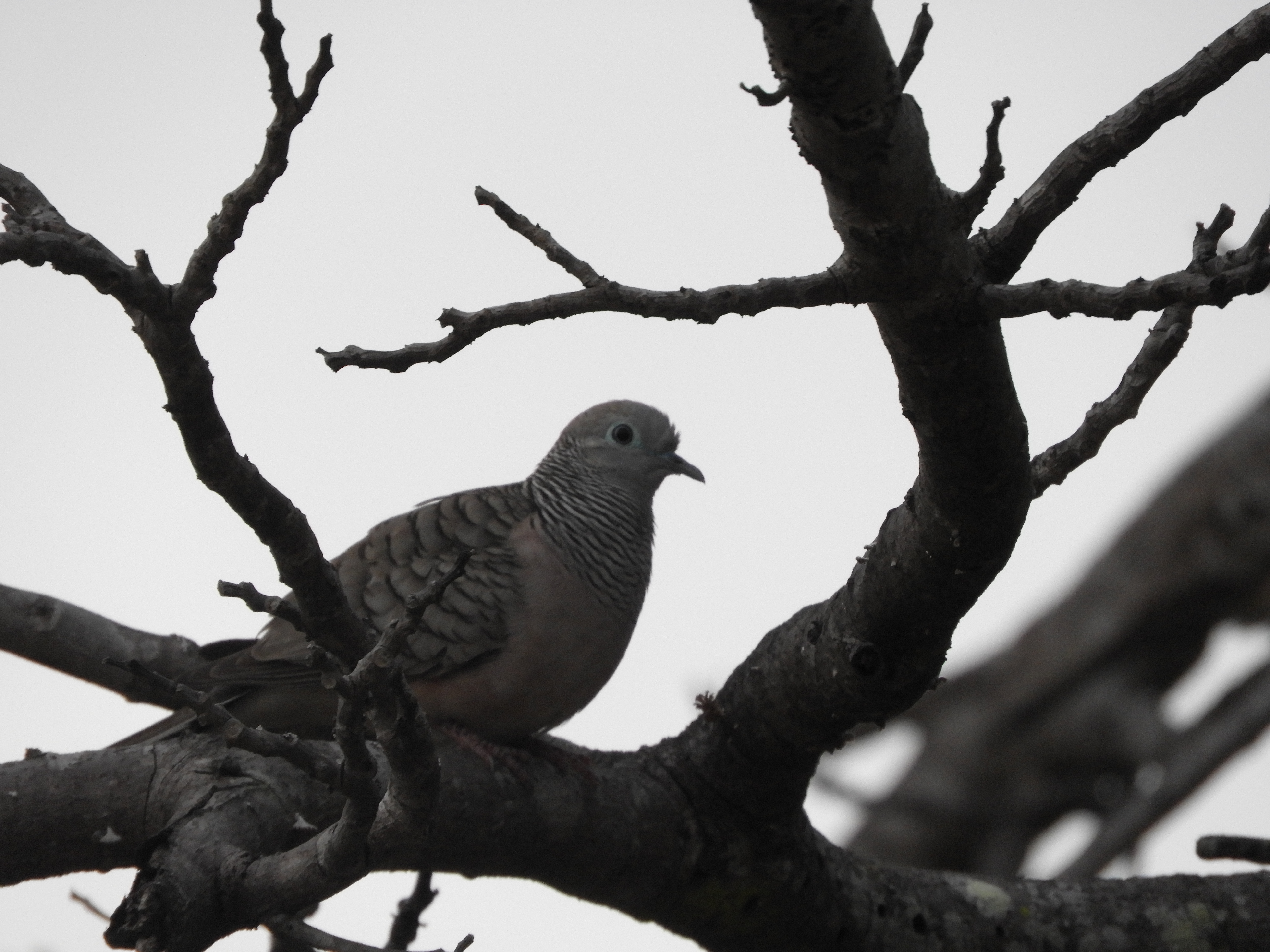
Scientific name: Geopelia placida (striata) | Approximate length: 20-24 cm
The Peaceful Dove is a small dove with an apricot tinge to its feathers. It has a soft, pleasant call as you can hear towards the end of this video:
Here’s a still shot of the same bird:
Rainbow Bee-eater
Scientific name: Merops ornatus | Approximate length: 23-27 cm
Given the name of this bird, I was particularly excited to snap one actually eating a bee!
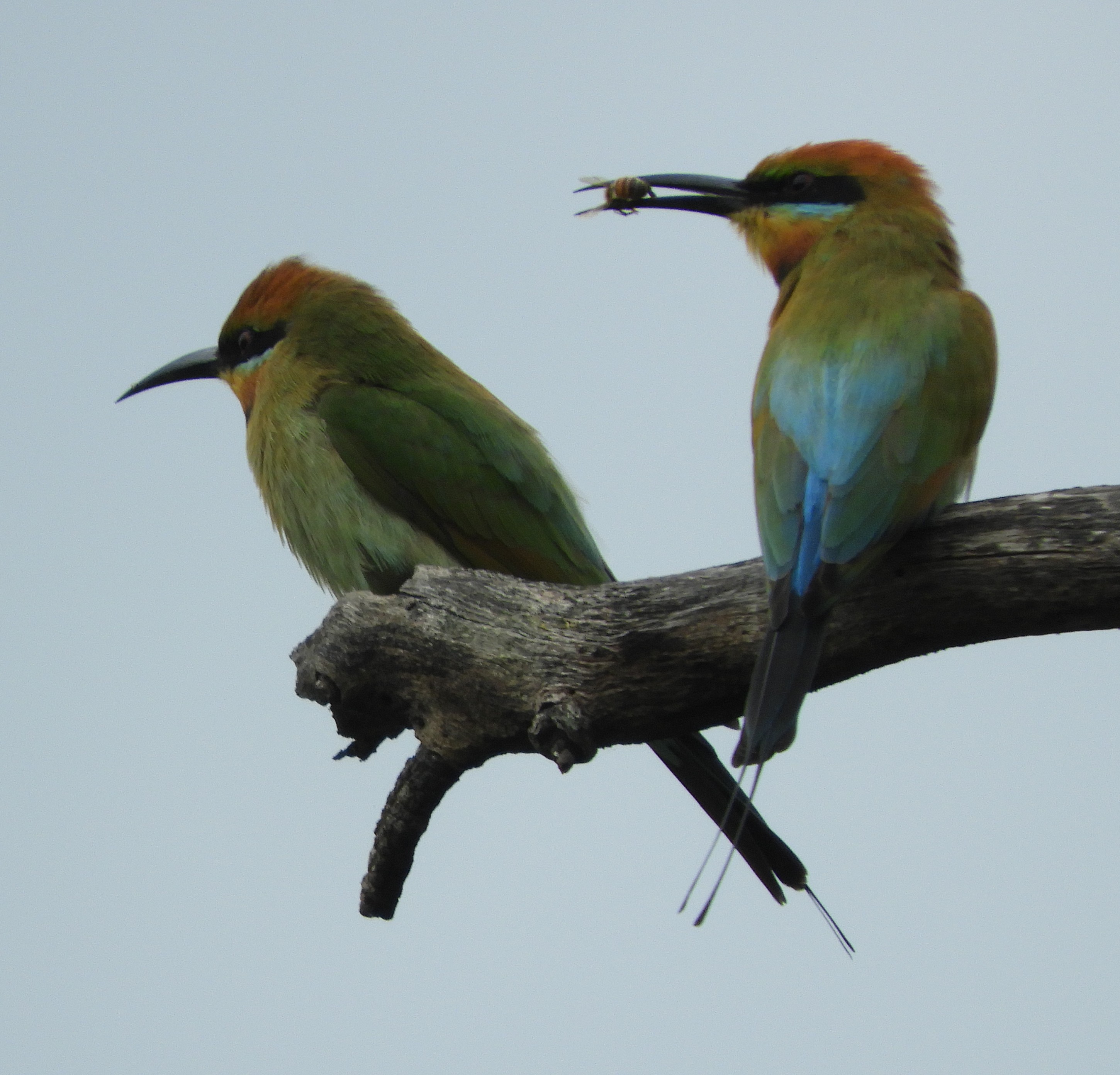
Here’s a bird in the act of catching a bug:
This trio of bee-eaters clumped cosily in the chilly air of the early morning. Even a tropical island can feel cold to inhabitants used to the warmer summer weather:

Rainbow Lorikeet
Scientific name: Trichoglossus haematodus | Approximate length: 26-31 cm
These colourful parrots are extremely noisy, especially when you have a tree full of them:
Spangled Drongo
Scientific name: Dicrurus bracteatus | Approximate length: 28-32 cm
Drongo – what a cute name! Yet in Australia if someone calls you a “Drongo” you want to look closely at them, as it’s a bit of an insult. It means they think you’re not all that bright.
This is a female Spangled Drongo, I think, as its eyes are brown whereas the male has red eyes:
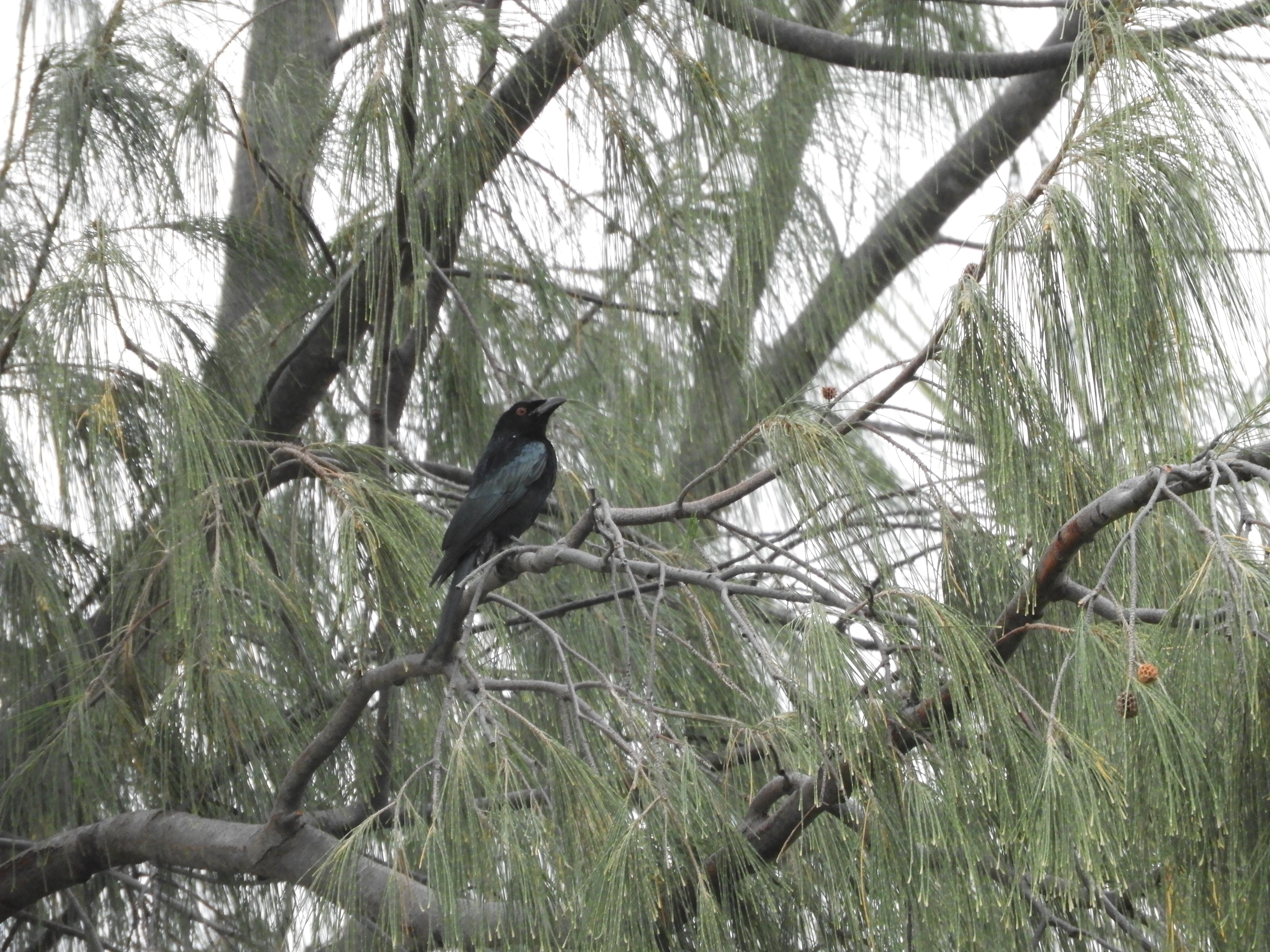
It’s easy to confuse these birds with crows and ravens. In fact, I heard Australian Ravens calling on the island, but didn’t get a photo of one.
The next photo is a pretty much a silhouette, but it shows off the Spangled Drongo’s forked tail:

Helmeted Friarbird
Scientific name: Philemon buceroides | Approximate length: 32-37 cm
This Helmeted Friarbird sat quietly on a branch listening to the birds all round. When it tilts its head you can see the odd-shaped knob on top of its beak:
Here’s another peering through the foliage:

Galah
Scientific name: Cacatua roseicapilla | Approximate length: 38 cm
Galahs are pretty pink and grey parrots. Australians sometimes call someone a “silly galah”, which I think is a slightly more affectionate term than “drongo”! I’ve seen Galahs in the Sydney area as well as up here on Magnetic Island. This one was picking up seeds on the ground. There’s another Galah nearby, which you can hear chirping to its mate towards the end of the video:
Here’s a still photo:

Masked Lapwing, also called a Spur-winged Plover
Scientific name: Vanellus miles | Approximate length: 35-39 cm
Masked Lapwings are strange-looking birds with yellow faces that seem to have been stuck on as an after-thought.
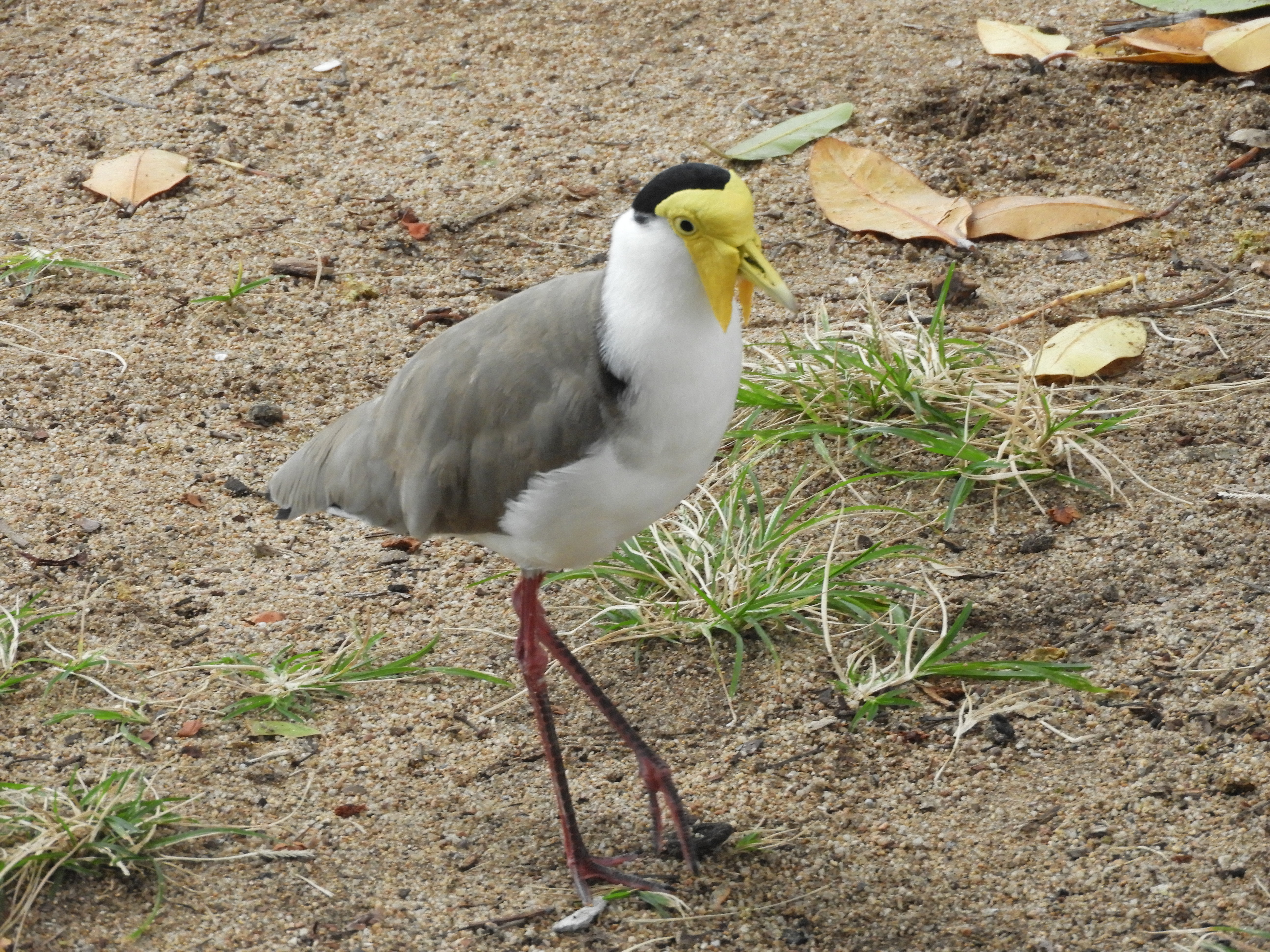
Their alternative name of “spur-winged” is apt, because they have hooks on their wings, one on each, which they use as weapons, stretching the wings then dragging back to wound their enemy.
In the next photo, the bird at the back is a juvenile. Its legs are brown instead of the red of the adult, and its mask has not yet fully developed:

Blue-winged Kookaburra
Scientific name: Dacelo leachii | Approximate length: 38-42 cm
The kookaburras up north are different from the Laughing Kookaburras that we see around Sydney. Blue-winged Kookaburras look leaner and meaner. They have bright blue markings on their wings, and they lack the wide dark strip that marks the eyes of Laughing Kookaburras. Here’s a Blue-winged Kookaburra on Magnetic Island:
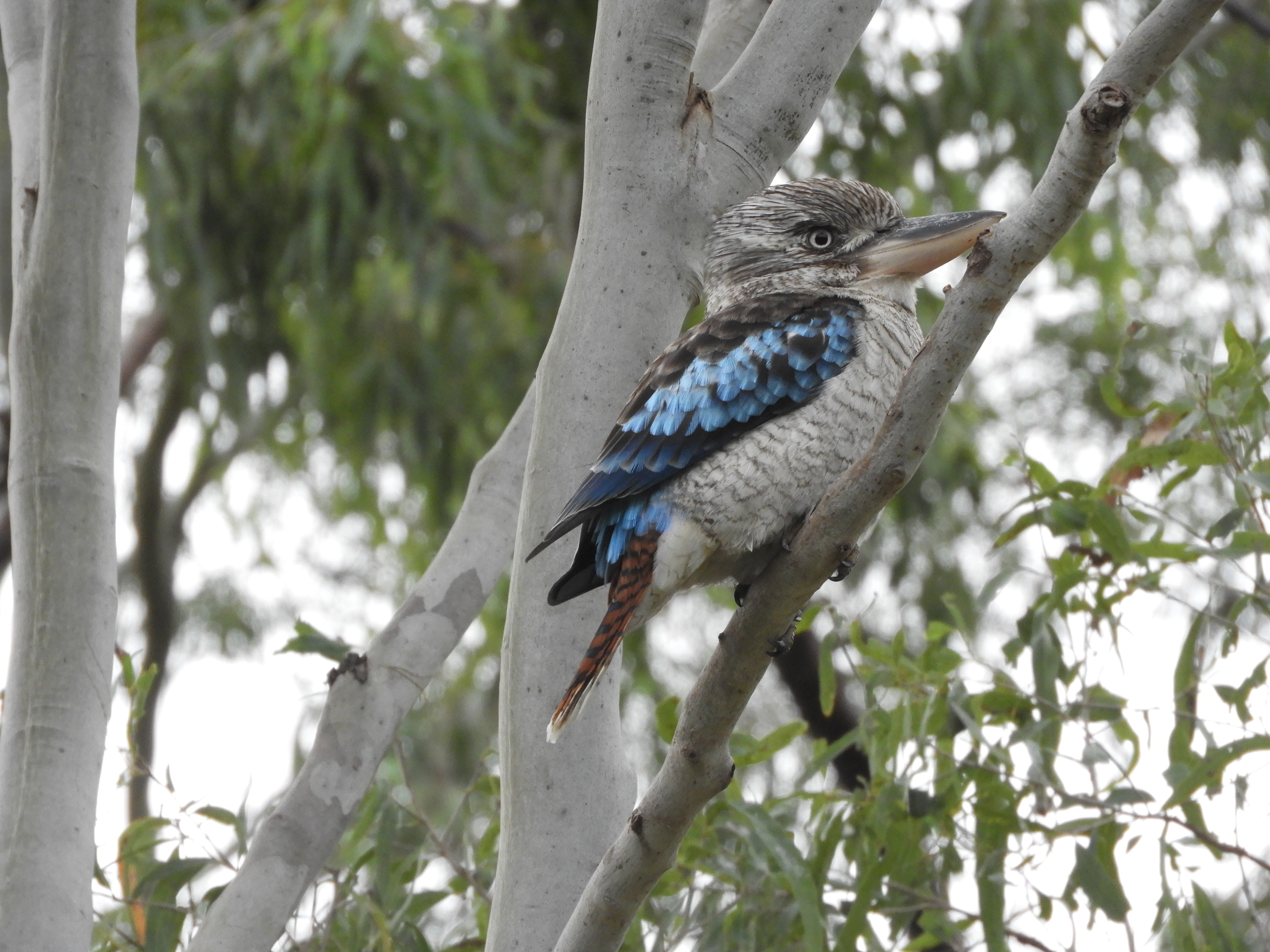
They do look just as silly as our local birds when they gaze at us straight on:

The cackling laughter of the Blue-winged Kookaburras seemed harsher and higher pitched to me. I didn’t manage to record any of the noise. This video shows a bird sitting on the top of a high post, swaying backwards and forwards as they do to retain their balance:
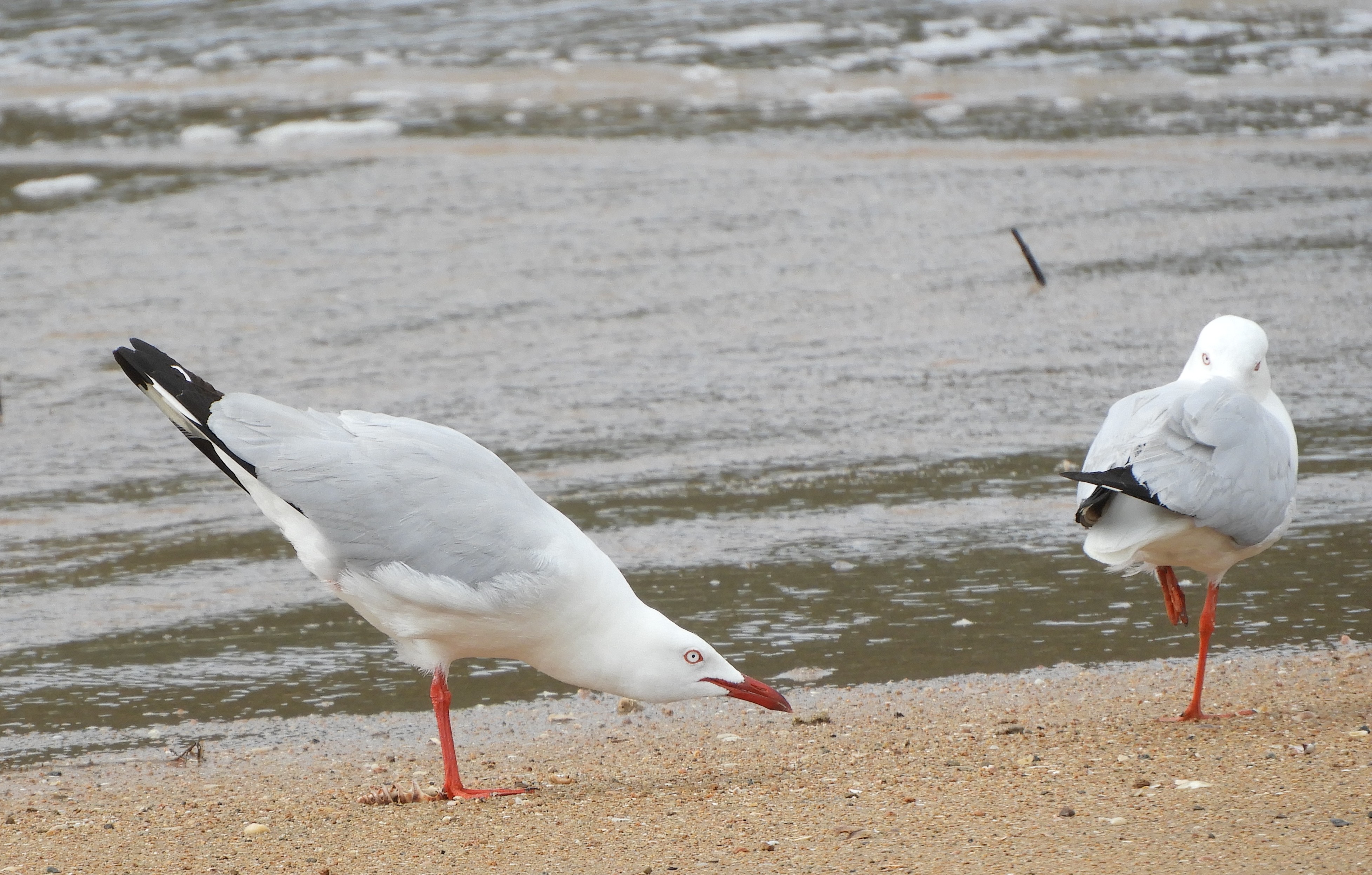
Silver Gull
Scientific name: Larus novaehollandiae (also called Chroicocephalus novaehollandiae) | Approximate length: 38-42 cm
A Silver Gull warning off another Silver Gull:
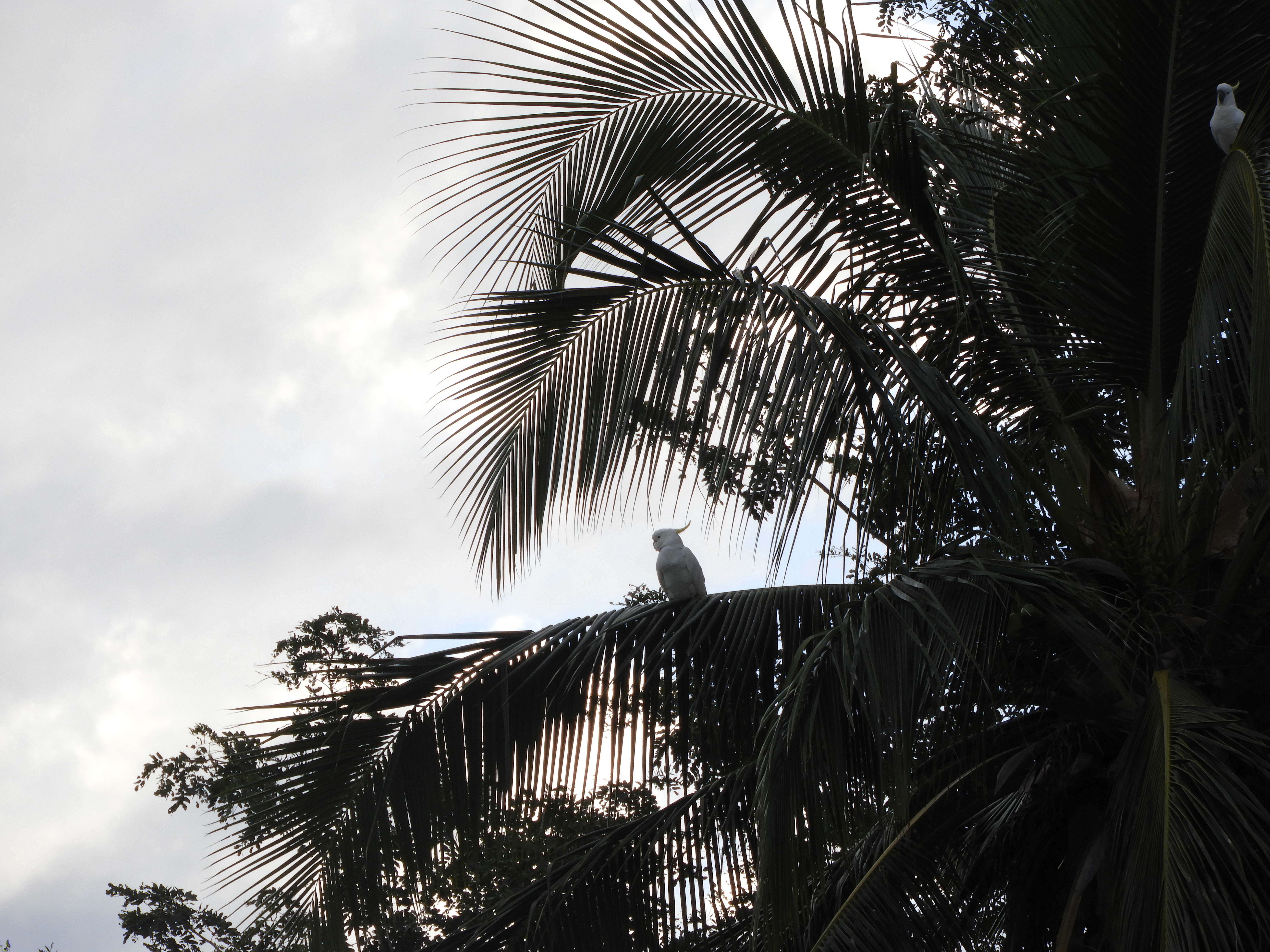
Sulphur-crested Cockatoo
Scientific name: Cacatua galerita | Approximate length: 45-50 cm
Sulphur-crested Cockatoos abounded on the island. Here are a couple peeking out from the branches of a huge palm tree:
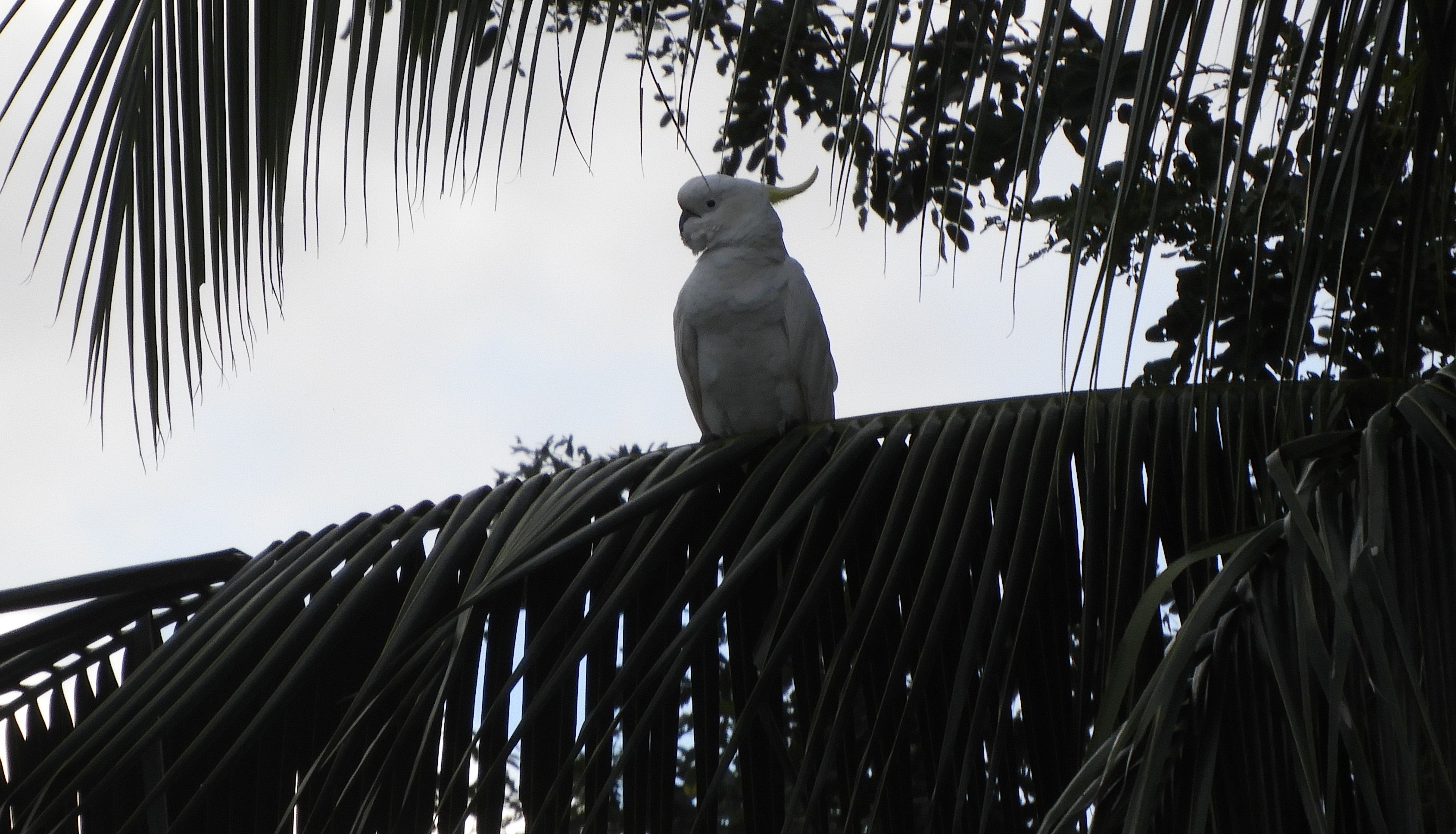
A closer look at one of the birds:
Bush Stone-curlew
Scientific name: Burhinus grallarius | Approximate length: 55-60 cm
If you’re lucky enough to be on Magnetic Island at night, you’ll hear an eerie wailing in the lonely hours. Report has it that the local police regularly receive calls from visitors to report screaming in the night. Don’t be alarmed. It’s just the Stone-curlews.
Bush Stone-curlews have amazing camouflage, even during the day. Spot the bird if you can (click on the image to zoom in):
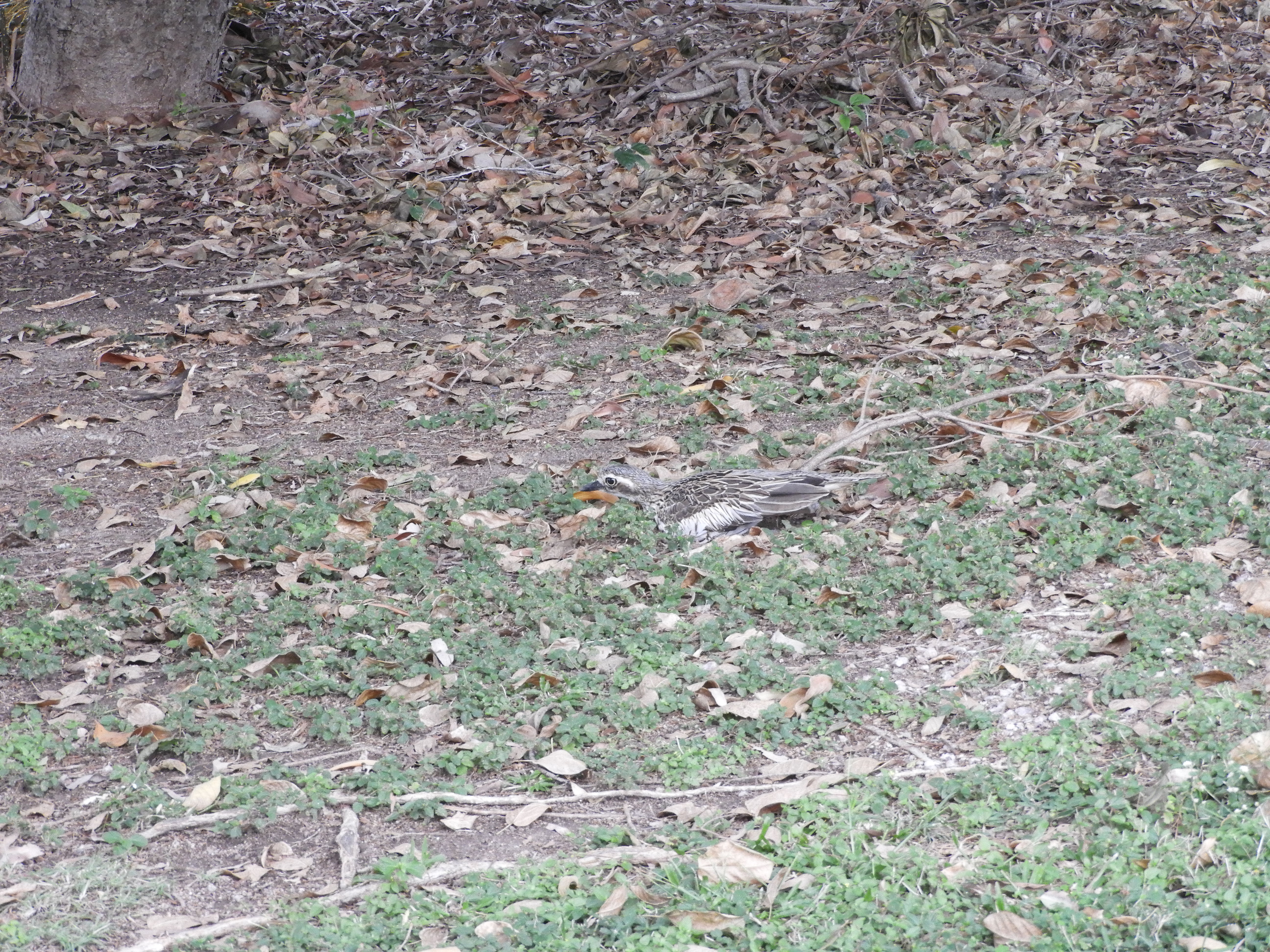
Here’s a close-up picture of the same bird:

Bush Stone-curlews have lovely big eyes:

Bush Stone-curlews tend to move slowly and timidly, then make a quick dash. Here’s one moving slowly along a fence:
Brahminy Kite
Scientific name: Haliastur indus | Approximate length: 55-60 cm; wing span 1.2-1.3 m
I watched this Brahminy Kite for a while early one morning. The bird was perched on top of a very high post above a stone jetty. I had to use full zoom on my camera, and the resolution isn’t wonderful. Still, the photo gives a good idea of the bird’s appearance:
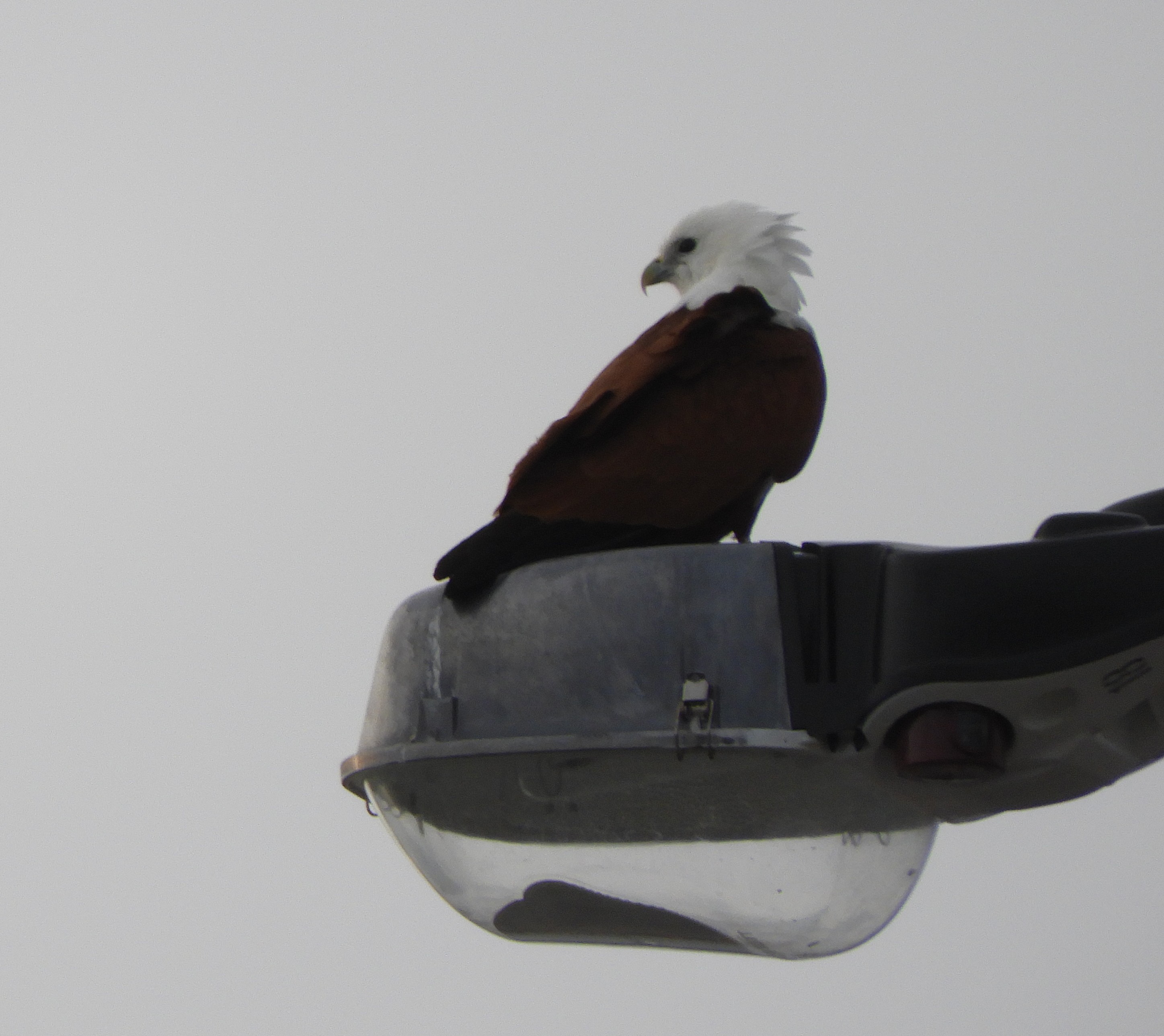
These kites are common around the northern shores of Australia. At first I confused the bird with an eagle, but then I noticed the striking white chest and head feathers, and the rich chestnut colour on the back and wings, which are characteristic of Brahminy Kites. Here’s a photo of the bird flying – again, fuzzy, but you get the idea of the shape and colour:

Whistling Kite
Scientific name: Haliastur sphenurus | Approximate length: 50-60 cm; wing span 1.2-1.5 m
This bird was high in the sky, circling above the ocean and the hills:
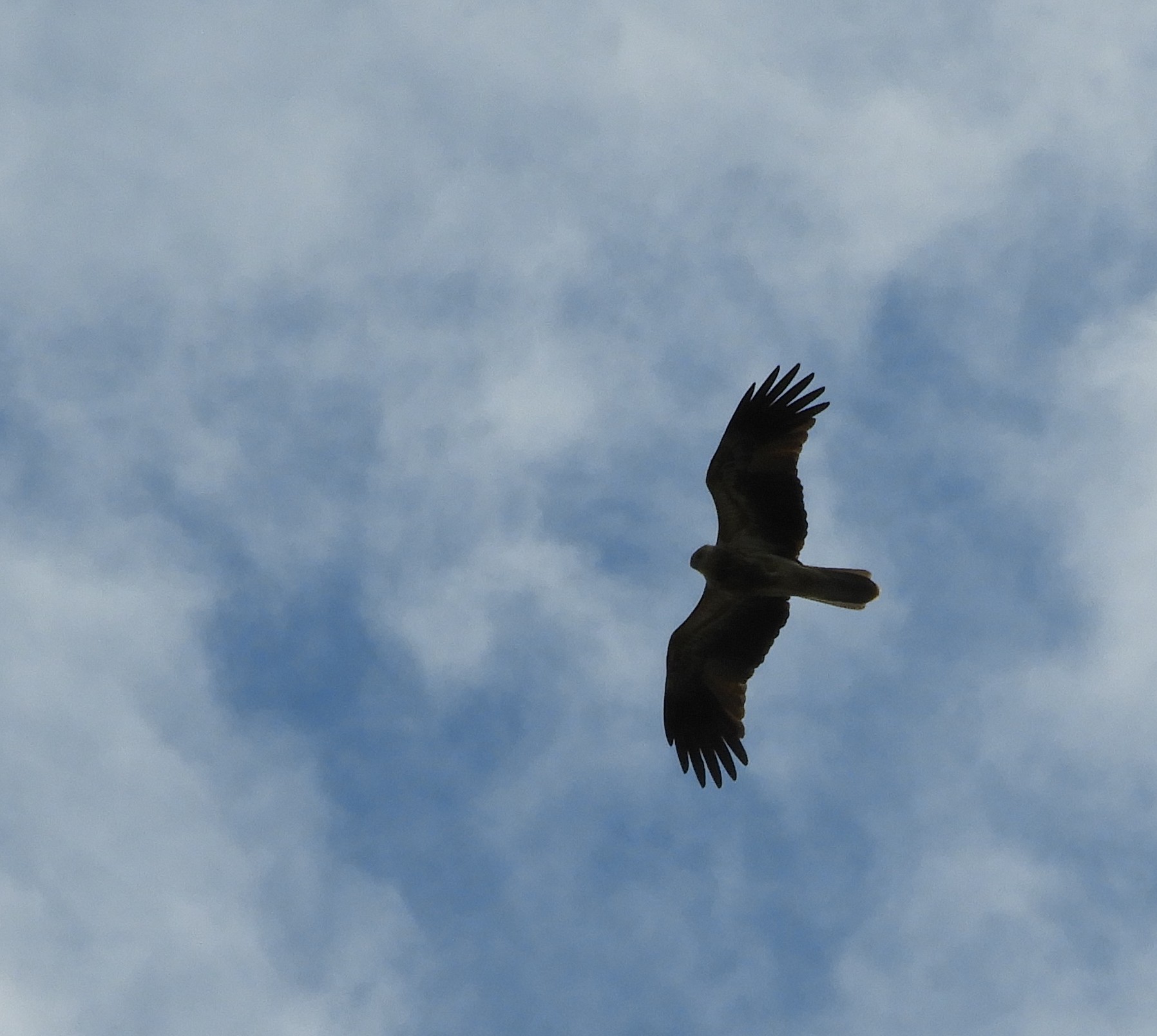
Here’s the same bird from another angle:

Australian White Ibis
Scientific name: Threskiornis molucca | Approximate length: 65-75 cm
These ibises are affectionately known as “bin chickens” because in cities they spend a lot of time raiding dustbins. This group was prowling around the beach area, no doubt in search of scraps from the nearby restaurants:

Koala
Not a bird! But I can’t leave a post about Magnetic Island without showing a picture of a Koala. The island has the largest population of wild koalas in Australia:
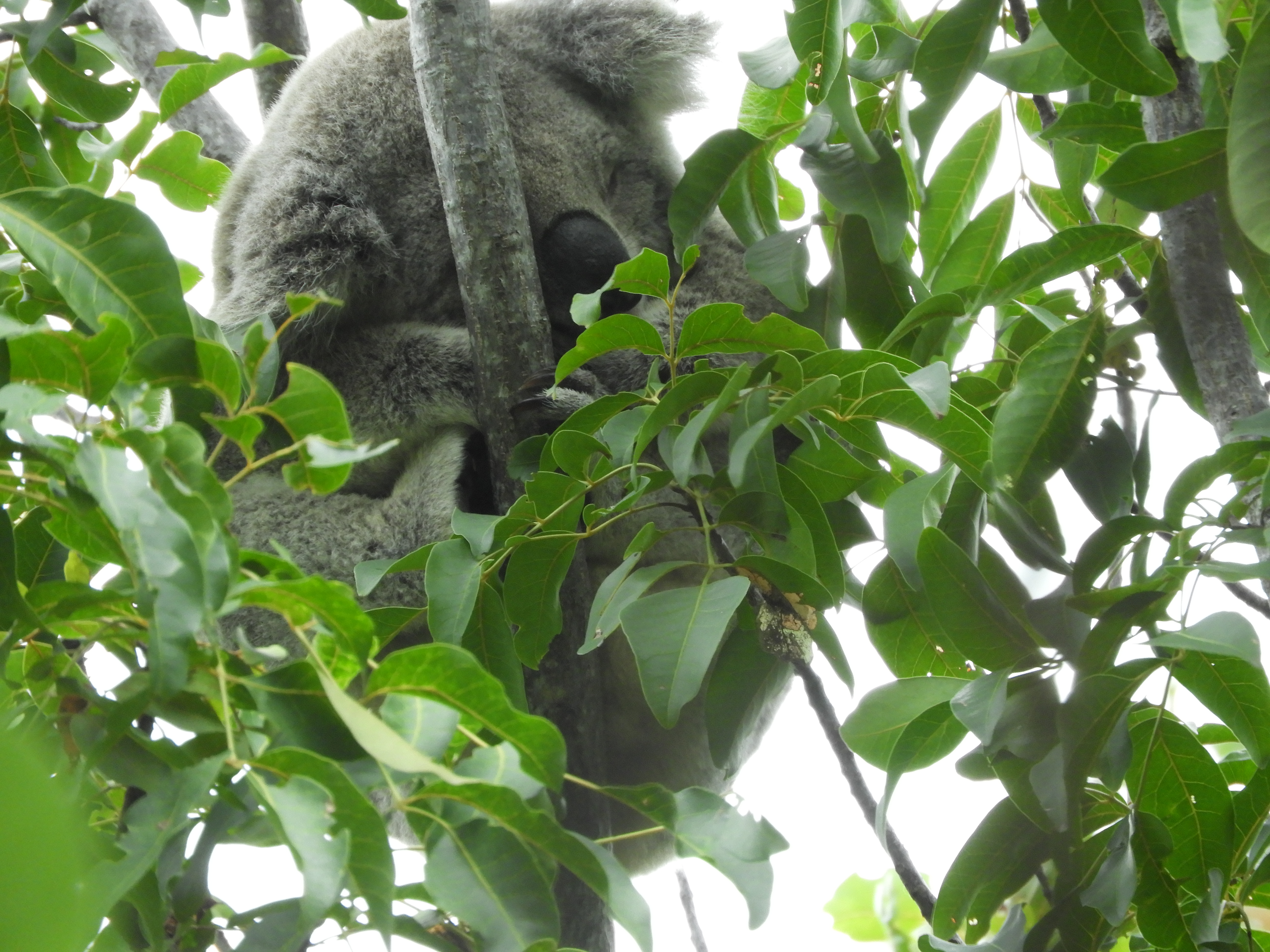
I hope you’ve enjoyed my post about the lovely Magnetic Island!
Square-tailed Kite at Manly Dam near Sydney
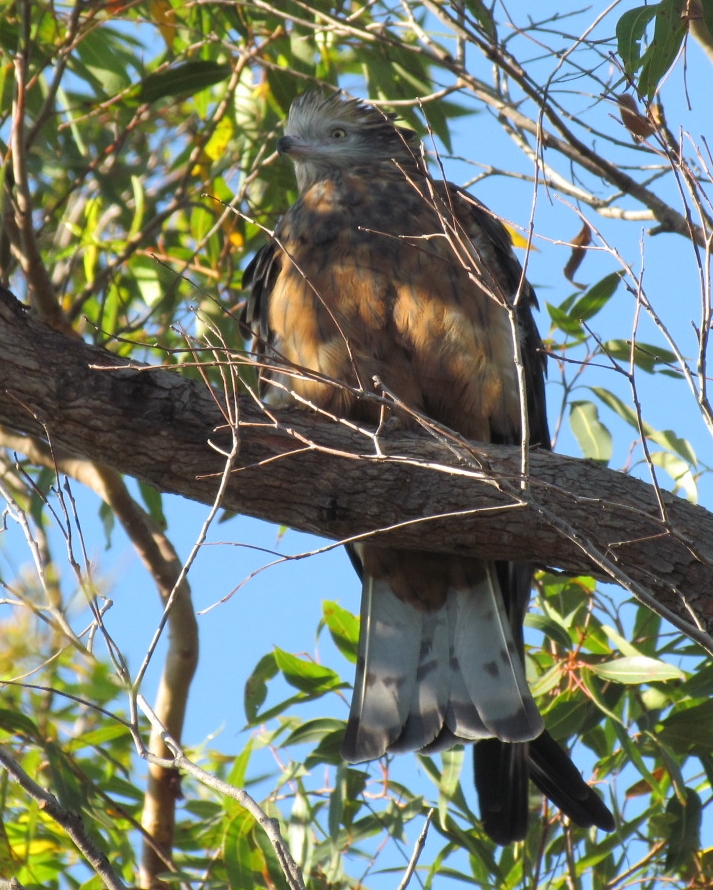
This magnificent bird was sitting quietly in a tree, occasionally squinting down at the path, when I passed by. It’s a Square-tailed Kite – a large bird, at approximately 55 centimetres from head to tail (half a metre) with a wing span of 1.4 metres.

Square-tailed Kites are classified as rare in my bird book. Also, they’re not often seen around Sydney. I identified this one by the white markings around the face, and the characteristically long wing tips. When folded, they’re significantly longer than the tail, as you can see in the photo below:
This video shows the bird having a good grooming session, feathers flying:
In the next video, the bird moves its head back and forward in a slightly eery way, perhaps scanning for prey:
Common name: Square-Tailed Kite
Scientific name: Lophoictinia isura
Approximate length: 55 cm. Wing span: 1.4 m
Date spotted: 15 April 2017 (Autumn)
Location: Manly Dam Reserve, New South Wales, Australia: 33°46’35.3″S 151°15’13.3″E


 Sydney Birder