Category Archives: Cockatoo
Local cockatoos excited about new tree stumps
Over the last few weeks, our neighbours have been cutting down some tall trees on their property. The local cockatoos are excited about the new tree stumps that have appeared in their neighbourhood. (I call them “stumps”, but they’re several stories high.) The birds arrive on most evenings to sit on the stumps, and have started hollowing out the centre of one of them. I guess the cockies may be thinking the tree would make a good nest.
You can see the tree felling in my earlier post, Magpie scolds tree feller.

Cockatoo on a beach at sunrise
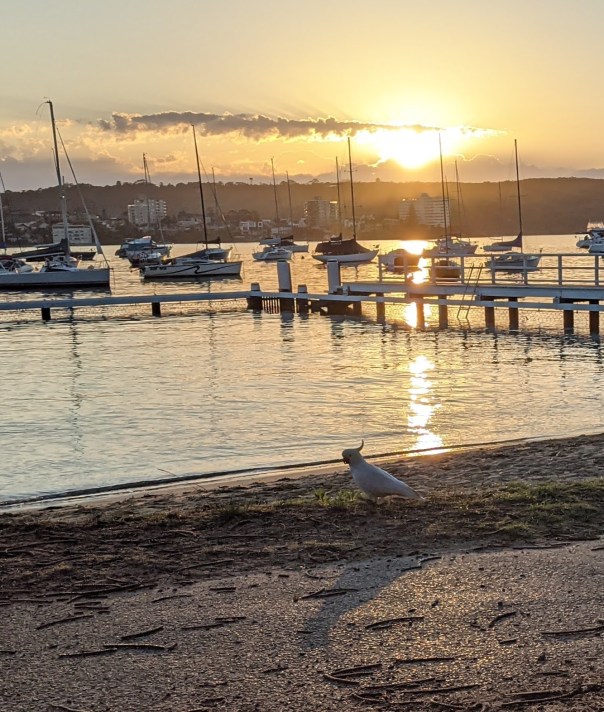
Common name: Sulphur-crested Cockatoo
Scientific name: Cacatua galerita
Approximate length: 50 cm
Date spotted: 27 December 2020 (summer)
Location: Forty Baskets Beach, New South Wales, Australia: 33°48’11.5″S 151°16’12.1″E
3 Glossy Black-Cockatoos and a tale of a Brush-turkey and a Raven
Two days ago, I encountered a group of three Glossy Black-Cockatoos on a Casuarina tree. These large cockatoos are not a very common sight. When I noticed them, I stopped walking and said “ooh” out loud. Luckily there was no-one around to hear, and the birds ignored me!
While I was watching the cockatoos, a couple of other characters appeared and contributed to the encounter. Read the story below!
First, the glossies
This picture shows two of the Glossy Black-Cockatoos. They’re quite different in appearance from the more common Yellow-tailed Black-Cockatoos. The feather arrangement around the glossies’ necks and the general setting of their heads make me think of a lion:

I think the bird on the left is a female, as she has a lot of yellow around her head. The one on the right is, I think, a male.
In the video below, the birds are munching happily on Casuarina seed pods. About half way through the video (at around 50-53 seconds on the timeline) the birds mutter to each other in low-pitched raspy calls. This munching and muttering is typical of the birds’ behaviour.
Below is a solo shot of the first of the three birds. This one has a lot of yellow around its head, which means it’s probably a female:
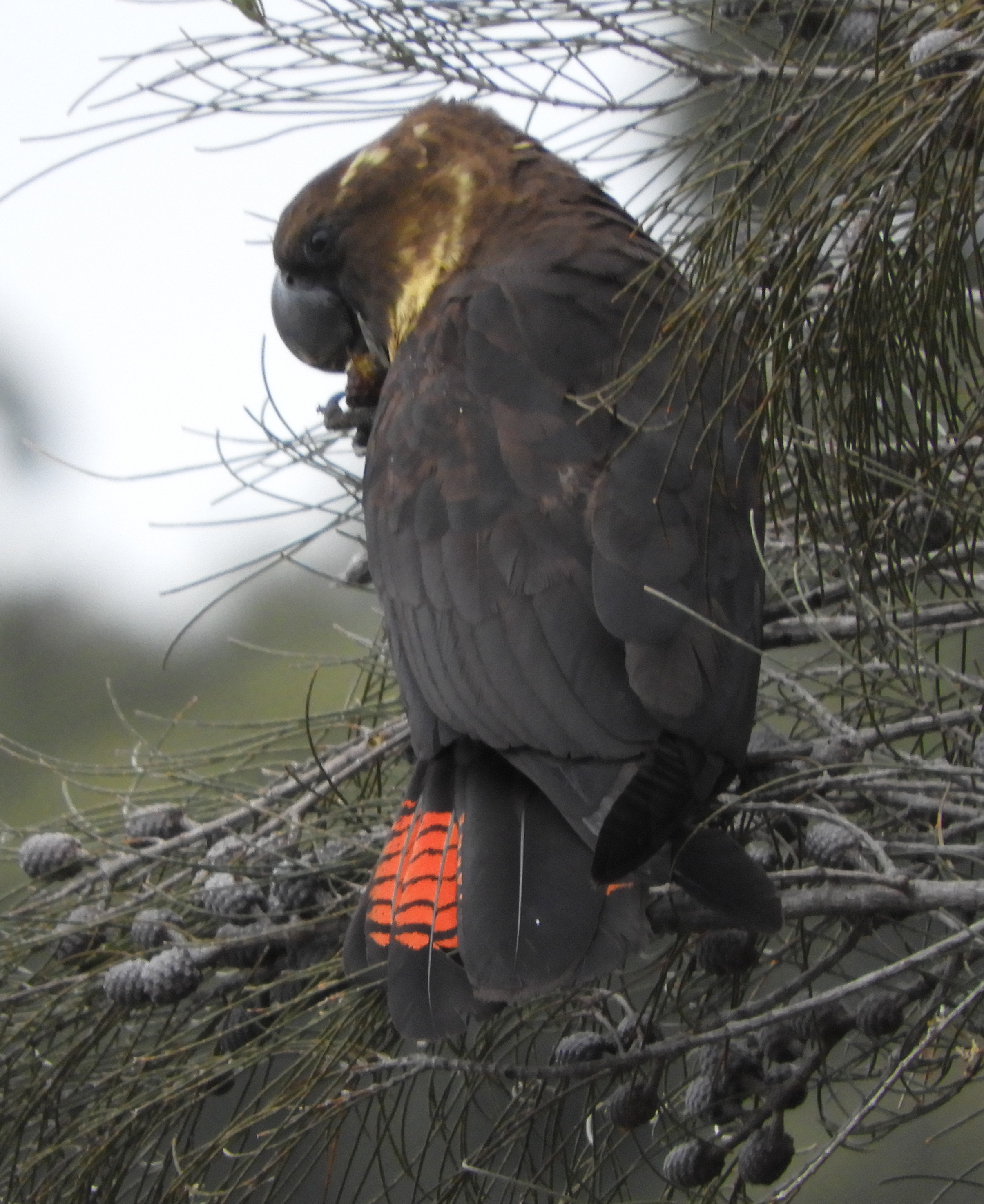
Glossy Black-Cockatoos depend on Casuarina seeds for their food. This choosiness puts the birds at risk when the tree coverage is depleted by land clearance or bush fires. Casuarinas, also called sheoaks or she-oaks, are a group of trees and shrubs native to Australia and other Asian countries. Evidently the name Casuarina is derived from cassowary (a big bird) because the branches look like cassowary feathers.
Next comes a solo shot of the second of the three birds. I think this one is a male. The feathers around its head and neck are quite brown in comparison to the darker black feathers on the rest of its body. The bird is holding a Casuarina seed pod. You can also see a few of the tree’s tiny red flowers:
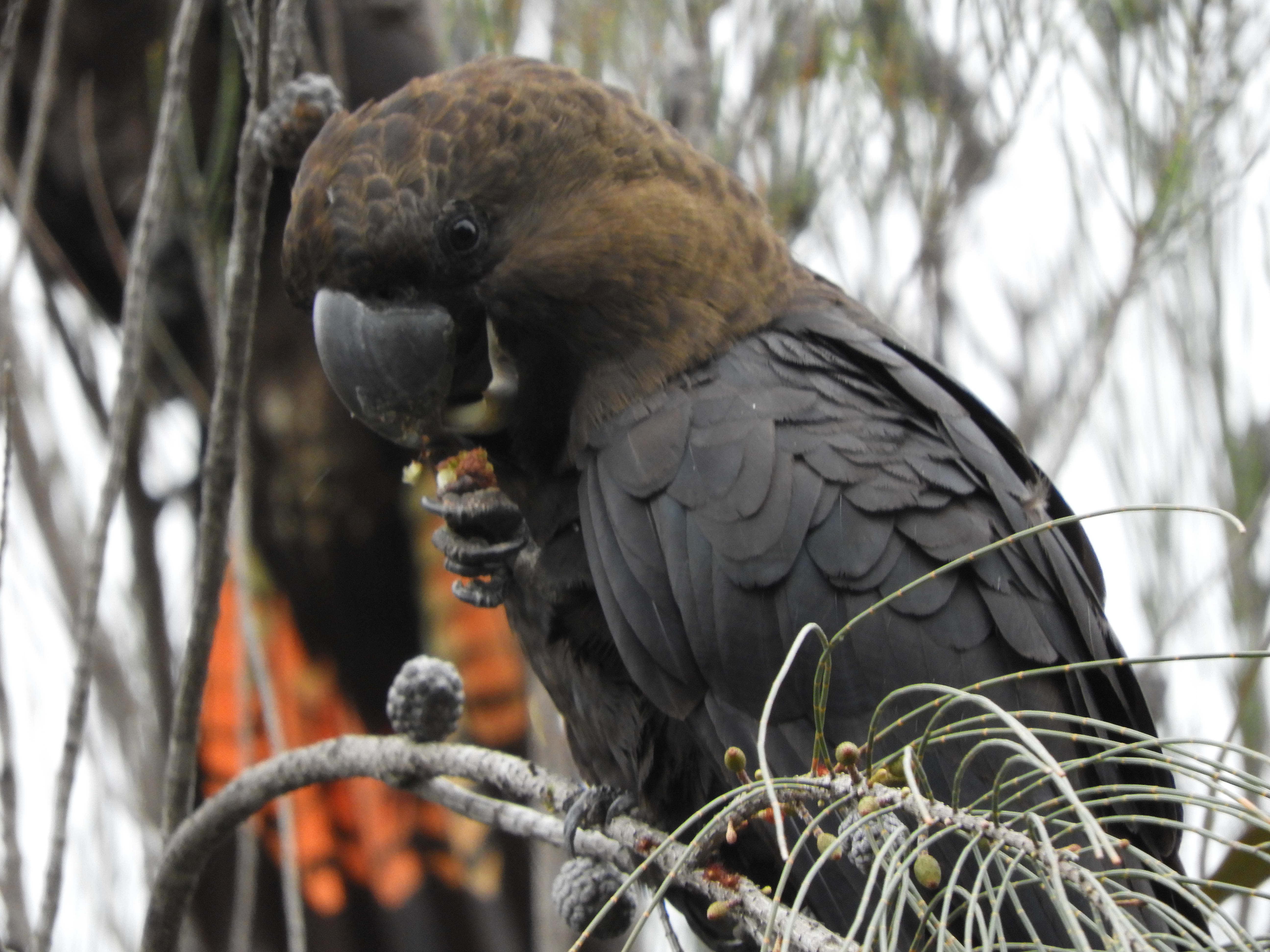
It’s a treat to see these unusual, gorgeous birds. Definitely a moment for oohing and aahing.
Unwell Glossy Black-Cockatoo – beak and feather disease?
One of the three cockatoos has an illness which has affected its beak. It may be Psittacine beak and feather disease, or some sort of cancer, or maybe the result of a fight or accident?

I didn’t notice the hole above the bird’s beak until I got the pictures home and put them on a big screen. The birds were quite a distance away, and I was using my camera’s super zoom to photograph them. But even from the long distance, I did think that the bird looked duller and more skeletal than the other two.
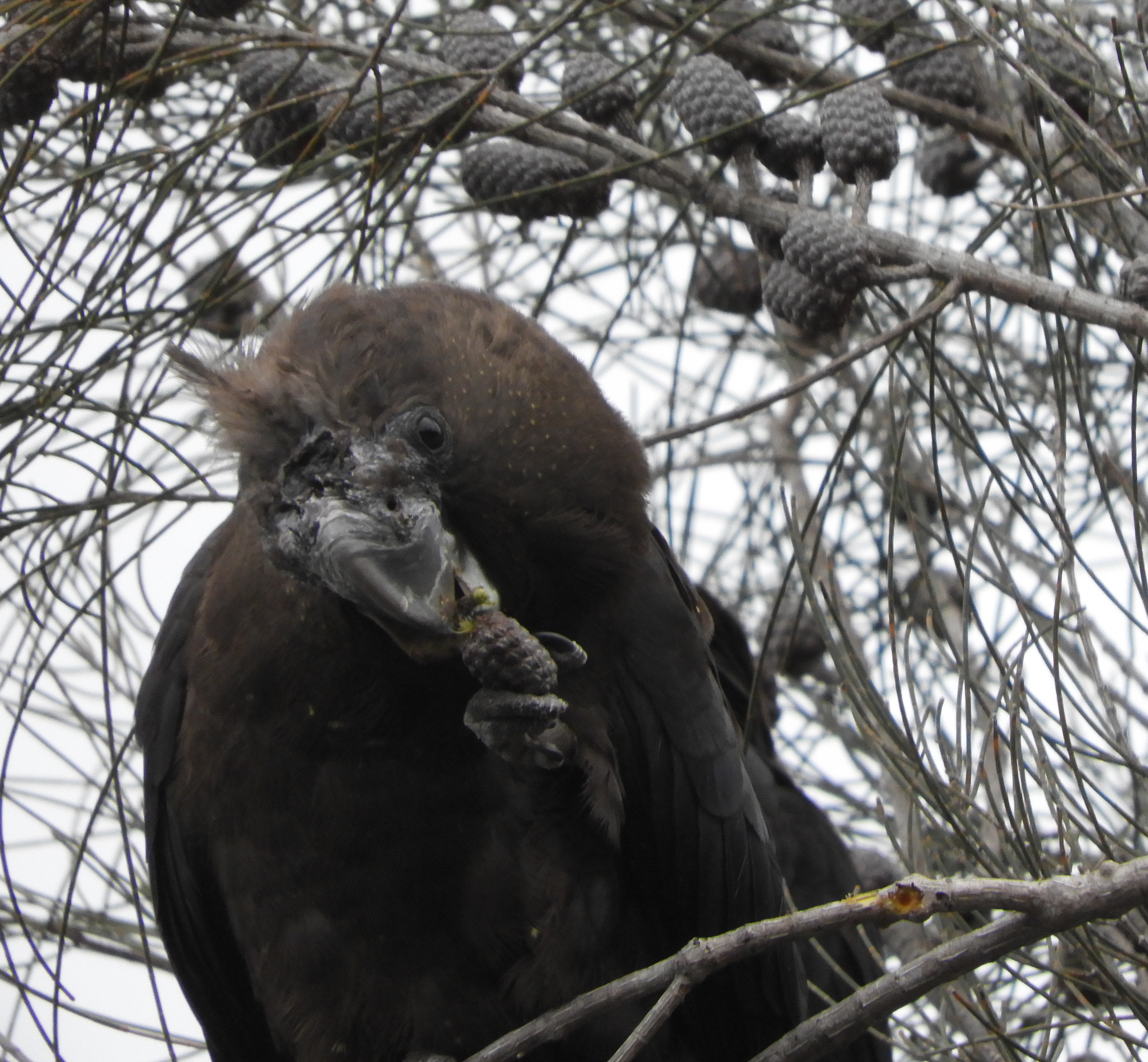
Poor bird, I hope the condition isn’t causing it too much discomfort.
Video featuring the female Glossy Black-Cockatoo
Here’s another video of two of the birds, this time featuring the female. Hint: At the start of the video you can hear a bit of thrashing around in the undergrowth. That background noise leads into the story below!
Common name: Glossy Black-Cockatoo
Scientific name: Calyptorhynchus lathami
Approximate length: 50cm
Date spotted: 18 September 2020 (spring)
Location: Manly Dam Park, near Sydney: 33°46’55.0″S 151°15’10.1″E
A tale of a Brush-turkey and an Australian Raven
If you listen carefully in the first half of the above video, you’ll hear a bit of a kerfuffle in the background. I heard it too, and turned to look when I stopped filming. I saw an Australian Brush-turkey flapping around among the trees a few metres away from me. “Ah, just a brush-turkey,” I thought, and turned back to the cockatoos. Brush-turkeys seem to specialize in making a fuss about nothing.
The kerfuffle turned into a whoosh of large wings, followed by a downdraft of air and the sound of claws on metal. I turned around again, to discover that the brush-turkey had landed on a gate less than two metres away from me. (The gate was one of those that the authorities use to close the park when the danger of bush fires is critical.)
“Hallo, mate,” said I. “What are you up to?” I do talk to birds when they approach me, partly to make us both feel comfortable.
The brush-turkey look at me, then teetered slightly and looked down at the ground with some apprehension. They do that, when they’re off the ground. They’re no doubt thinking, “I got myself up here, but now that ground is a long way down. How do I get down there?”
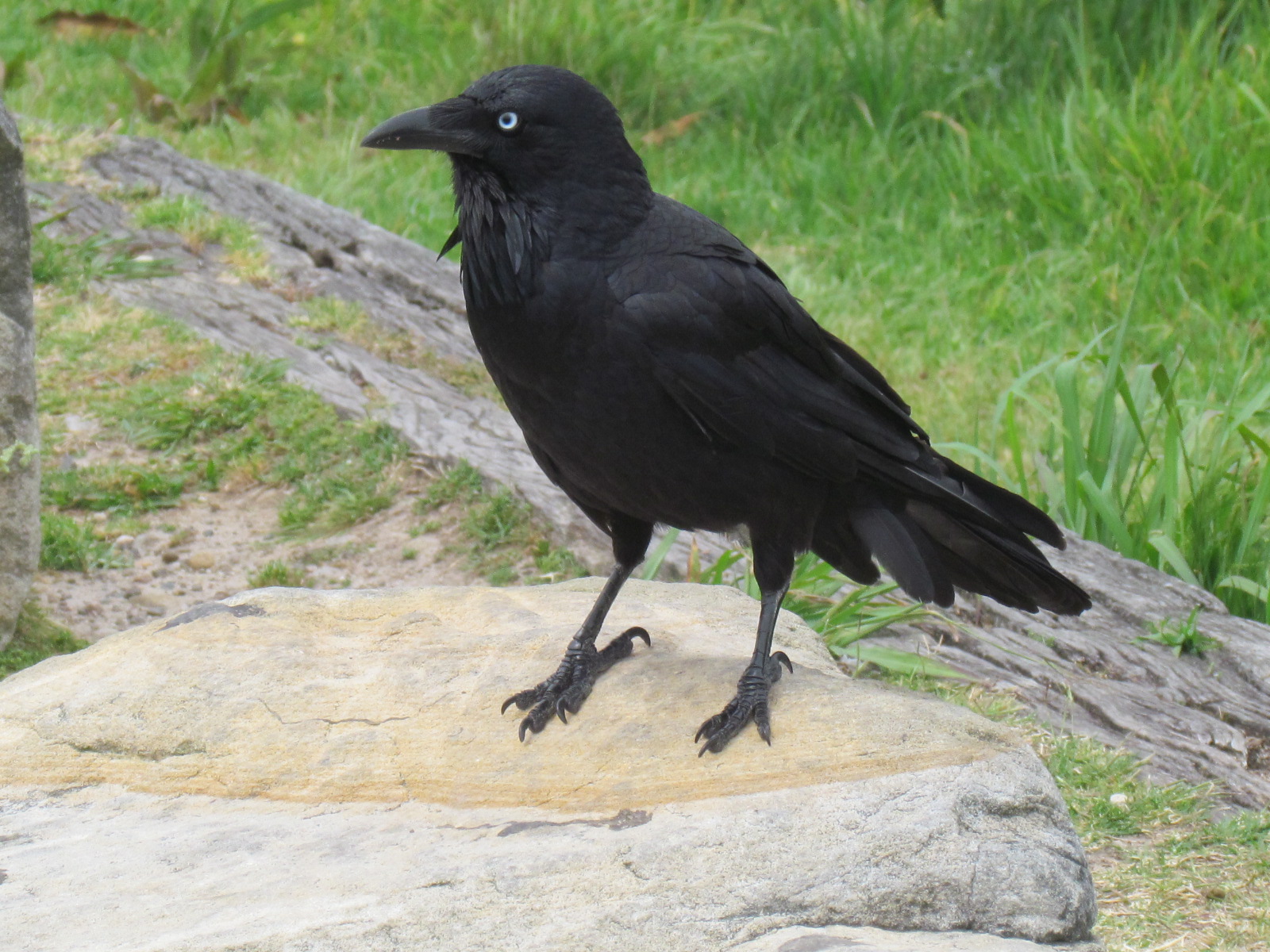
Two seconds later, a large, fierce Australian Raven arrived. Eyes ice blue. Beak long, strong, and pointy. Being the focus of that glare is rather daunting, even if you’re a large human.
The raven glared at me. I stood my ground. One point five metres of empty space between me and that beak.
The raven decided I wasn’t a threat, and turned its attention back to the brush-turkey. Obviously, the raven wanted to continue the altercation that had been the cause of all that kerfuffle in the trees.
The brush-turkey looked at the raven, looked at me, and hopped off the gate. A few hurried steps, and it was at my feet. It got as close to my knees as it could, then started walking round my legs. When it comes to a choice between a raven and me, it seems I’m a safe haven.
The raven looked thoroughly peeved. It leapt into the air and spotted the Glossy Black-Cockatoos, who were still peacefully munching and muttering in the Casuarinas. With a caw and a swoop, the raven dislodged the glossies. They floated into the air with easy grace, and came to land again a few trees away. “Ah, ravens,” the glossies were no doubt thinking. “They seem to specialize in making a fuss about nothing.”
The brush-turkey was still jittering around my legs. I wanted to continue filming the cockatoos, so I waited for a gap in the brush-turkey’s circle, and strode out along the path towards the cockatoos’ new roosting area.
Within a second, I heard the tick-tick-tick of brush-turkey claws on the path. The turkey had decided to stay with its safe haven for a while, in case that nasty bird with the ice-blue eyes and big strong beak came back.
So there we were, the cockatoos munching and muttering, I oohing and aahing, and the brush-turkey click-clacking companionably at my heels.
I wish I’d got all of that on camera! Anyway, I hope you enjoyed the story. 🙂
Here are a couple of pics of a brush-turkey and a raven, though these are not the same birds that appear in this story.

Little Corella and Sulphur-crested Cockatoo
Yesterday I came across a large group of Little Corellas on the sidewalk. In the midst of them was a Sulphur-crested Cockatoo. It was interesting to see the two birds up close, because from afar they look very similar. This video shows an interaction between the cockatoo and one of the corellas. You can also hear the corellas chatting to each other constantly.
These two corellas were cuddling up:
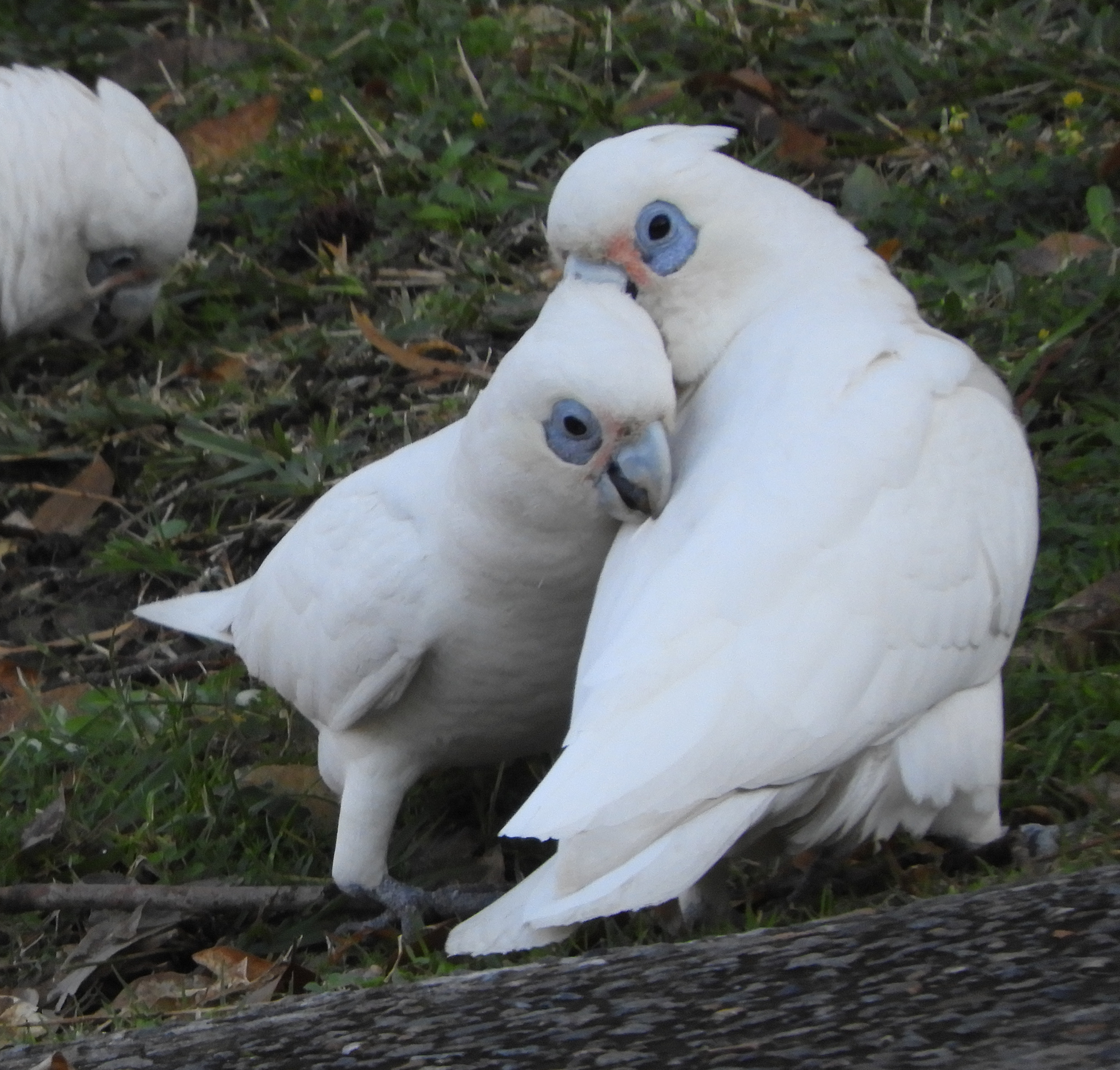
The crest of a Little Corella is white, and smaller than that of a Sulphur-crested Cockatoo:

Little Corellas have blue-grey feet, a blue patch of skin around the eye, and a pinkish patch of feathers between the eye and beak. The birds’ overall colouring makes them look rather cadaverous!
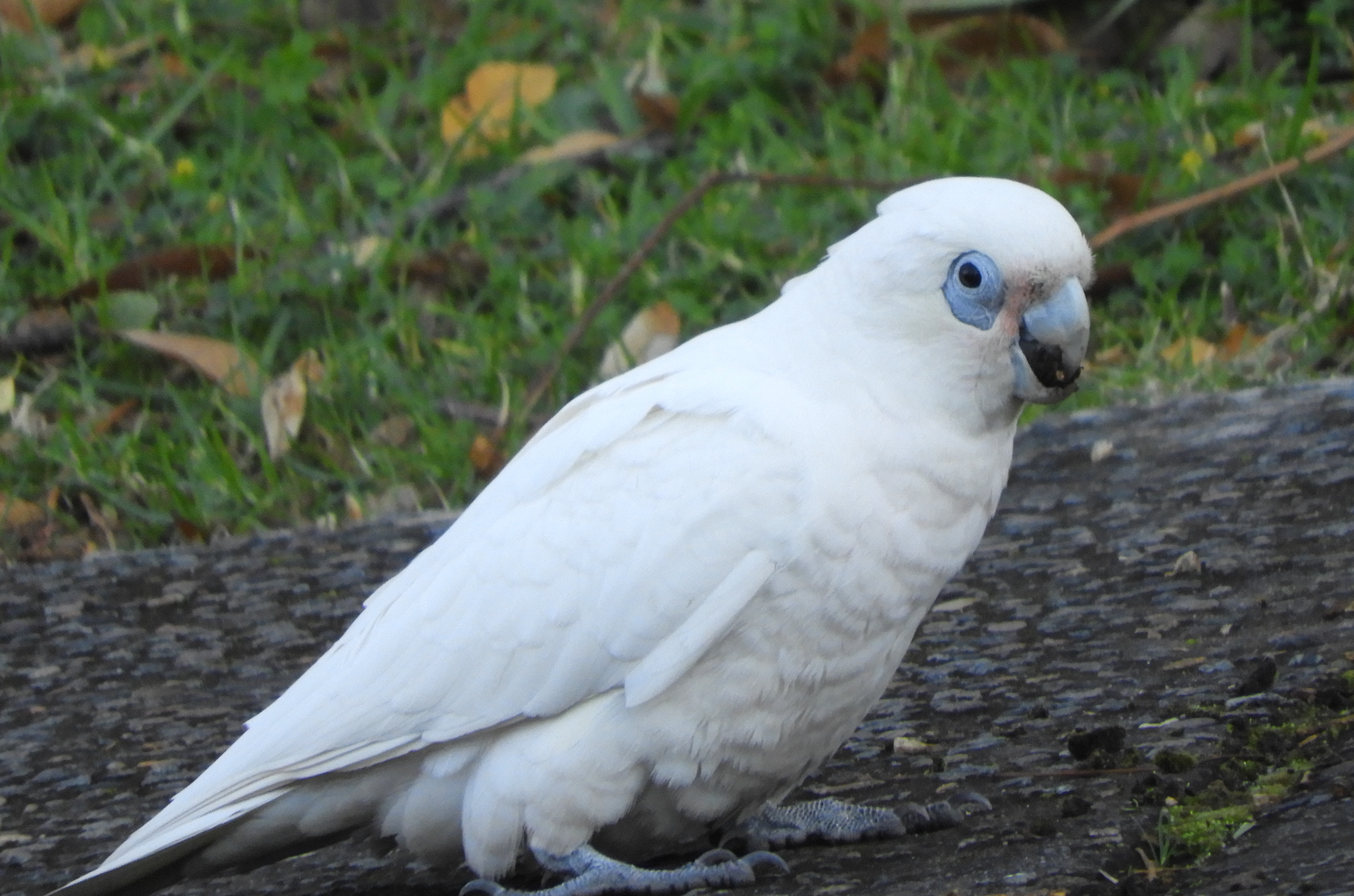
Common name: Little Corella
Scientific name: Cacatua sanguinea
Approximate length: 36-39 cm
Date spotted: 23 May 2020 (autumn)
Location: Allambie Heights near Sydney, Australia
Yellow-tailed Black Cockatoos in the garden
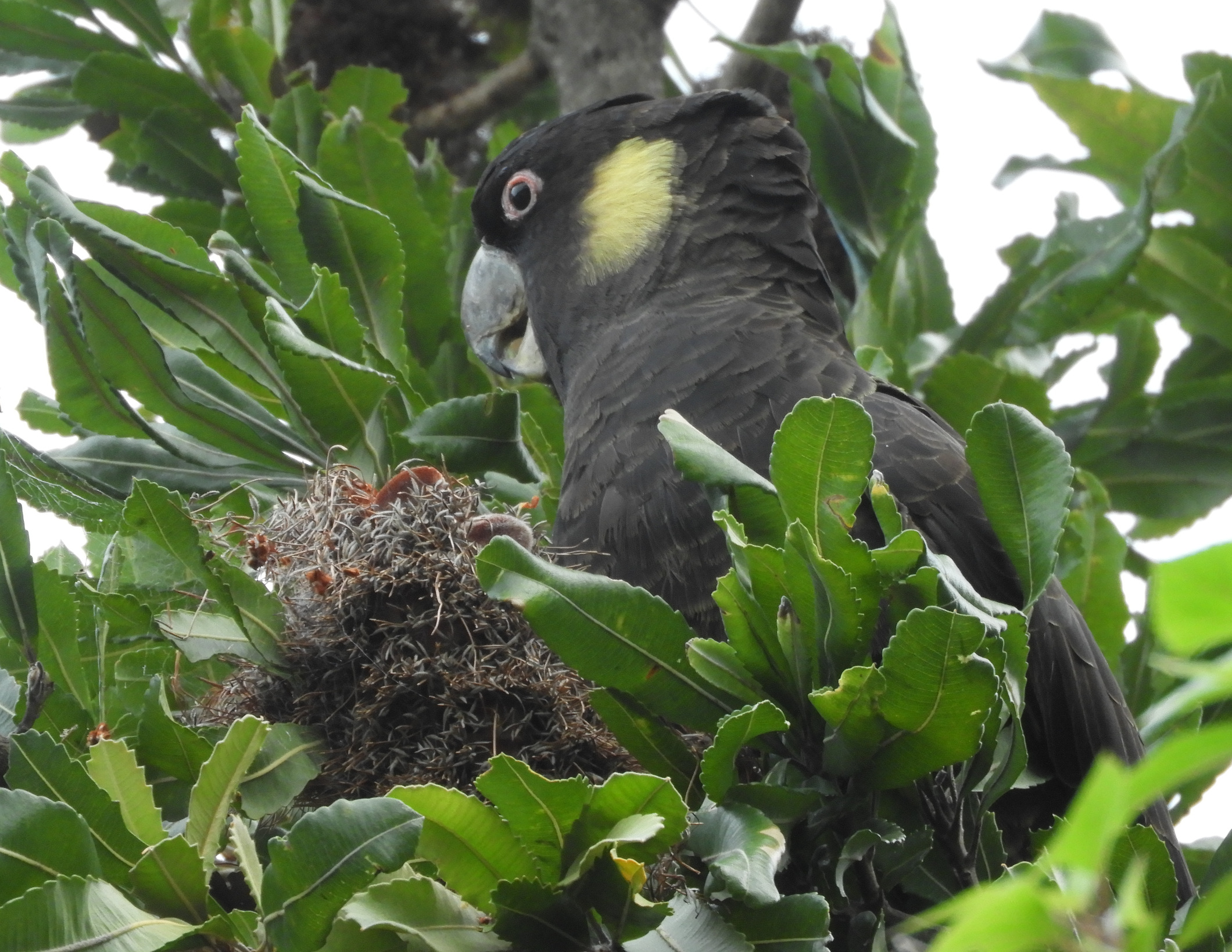
Three Yellow-tailed Black Cockatoos dropped in this afternoon. They chatted to each other with their weird squealing call, while demolishing parts of our Old Man Banksia bush.
Here’s one of the birds. The pink ring around the eye identifies it as a male:
In this short video, you can hear them chatting to each other:
It’s lovely to have these big, gracious birds paying us a call.
Common name: Yellow-tailed Black Cockatoo
Scientific name: Calyptorhynchus funereus
Approximate length: 65 cm
Date spotted: 20 May 2020 (autumn)
Location: Allambie Heights, NSW, Australia
Sulphur-crested Cockatoo with orange chest feathers
The Sulphur-crested Cockatoos were out in full force early this morning. I enjoy hearing their conversations, whilethey chatter, scold, and screech at each other. I zoomed in to take this video of one of the birds from close up. It’s interesting to see that the cockatoo has pinkish orange feathers on its chest. I wonder if this is a seasonal variation of the more usual pure white? It’s late spring, and perhaps the colour is an attempt to appear more attractive to the opposite sex.
The next video shows a group of birds wheeling around the trees. You can hear the sounds of other birds when the cockatoos are quiet enough to allow it!
Common name: Sulphur-crested Cockatoo
Scientific name: Cacatua galerita
Approximate length: 50 cm
Date spotted: 1 December 2019 (summer)
Location: Manly Dam Reserve, New South Wales, Australia: 33°46’49.7″S 151°14’56.0″E
Yellow-tailed Black Cockatoo calling while keeping a lookout
Yesterday I saw a group of four Yellow-tailed Black Cockatoos. I love coming across these large birds, as they impart a feeling of calm and grace. I took a video of the bird that seemed to be the designated lookout, sitting on a branch while the others foraged on the ground. You can hear the eerie call that the bird makes. It sounds rather like a door opening on rusty hinges!
Common name: Yellow-tailed Black Cockatoo
Scientific name: Calyptorhynchus funereus
Approximate length: 65 cm
Date spotted: 9 November 2019 (spring)
Location: Manly Dam Reserve, New South Wales, Australia: 33°46’40.0″S 151°14’50.2″E
Sulphur-crested Cockatoos at Bobbin Head
A group of Sulphur-crested Cockatoos gathered on the mud amidst the mangrove stalks at Bobbin Head:

It’s the first time I’ve been to Bobbin Head. I started with the Mangrove Boardwalk and also walked part of the Gibberagong Track, which follows on from the boardwalk. This is the sign at the start of the Mangrove Boardwalk:

The cockatoos had gathered next to this bridge at the start of the Mangrove Boardwalk:

From time to time the birds flew up into the surrounding trees to have a peaceful snack:


And a bit of mutual grooming:

Common name: Sulphur-crested Cockatoo
Scientific name: Cacatua galerita
Approximate length: 50 cm
Date spotted: 28 August 2019 (late winter)
Location: Bobbin Head, Ku-ring-gai Chase National Park, New South Wales, Australia: 33°39’48.5″S 151°09’21.3″E
Glossy Black-Cockatoos near Sydney
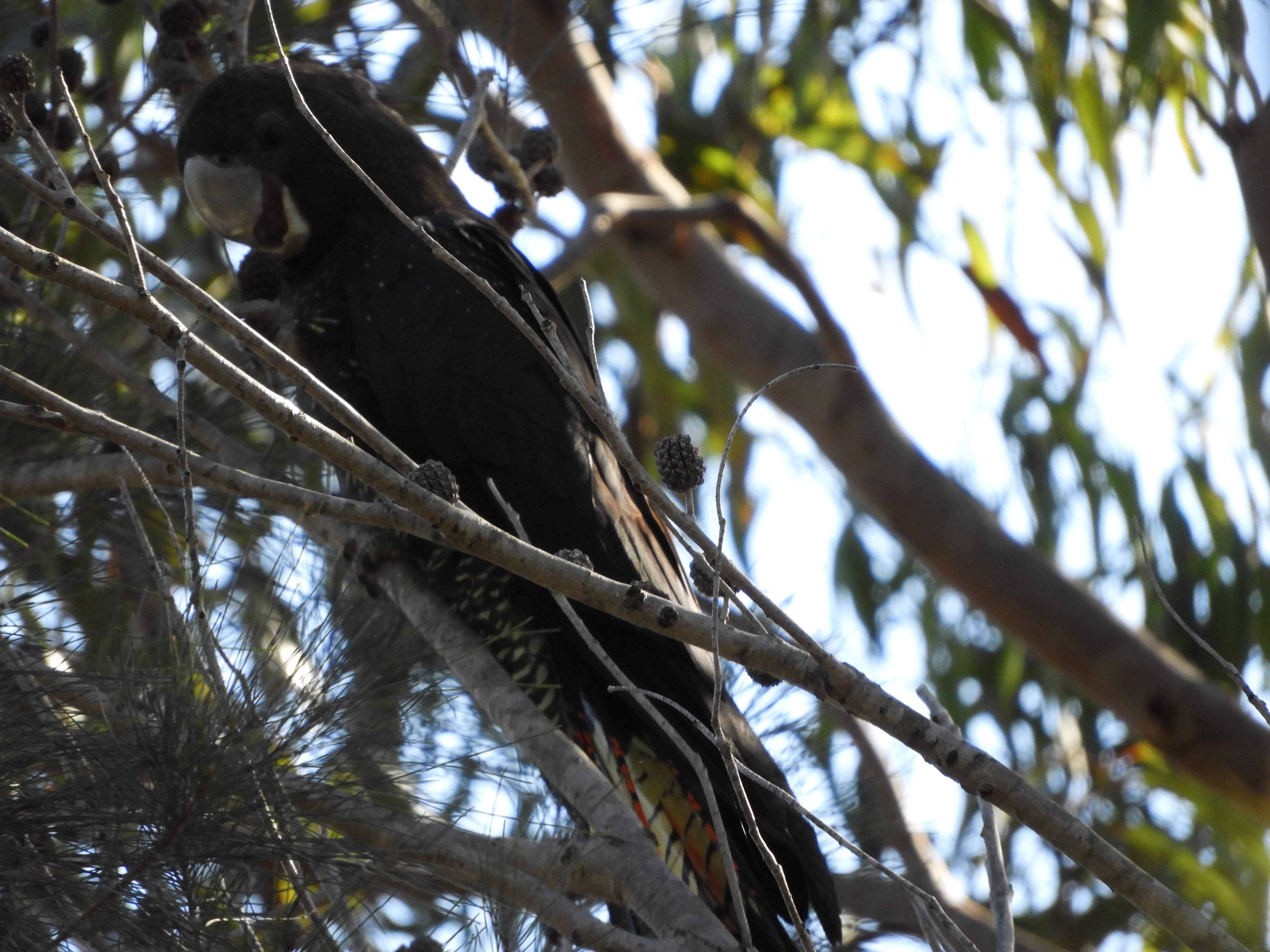
Update on 9 October 2019: The birds are Glossy Black-Cockatoos, not Red-tailed Black-Cockatoos. Thank you to Carol Probets for pointing this out in a comment on the post.
Today I heard an unusual bird call – a kind of heavy, high-pitched whirring noise. I followed it down the path and saw two large black cockatoos. They flew off when I arrived, and landed again a few trees further on, chattering to each other.
I’ve seen Glossy Black-Cockatoos in the same area once or twice (see my posts). Today’s birds were larger, I thought, and seemed to have larger crests than the others I’d seen. At first, this led me to think they were Red-tailed Black-Cockatoos, but it turns out they were Glossies.
Here’s the only picture I managed to get. (The birds were much more timid than the Yellow-tailed Black-Cockatoos that are more common in our area.) This is the female of the pair, so her tail has yellow/orange panels rather than red:
Common name: Glossy Black-Cockatoo
Scientific name: Calyptorhynchus lathami
Approximate length: 50cm
Date spotted: 18 August 2019 (late winter)
Location: Manly Dam National Reserve, near Sydney: 33°46’47.3″S 151°15’03.3″E
Birds on Magnetic Island
Last week I spent three days on Magnetic Island in North Queensland. Magnetic Island is a small island just offshore from Townsville. That’s approximately 2,000 km north of Sydney. The ferry ride from the mainland takes twenty minutes on the foot-passengers ferry, or forty minutes on the vehicle ferry. The island is a relaxing, lovely place to be.
Although I was on Magnetic Island for only a short while (two full days plus one evening and one morning) I encountered quite a few birds. Here are 16 of them, in rough order of size from small to large.
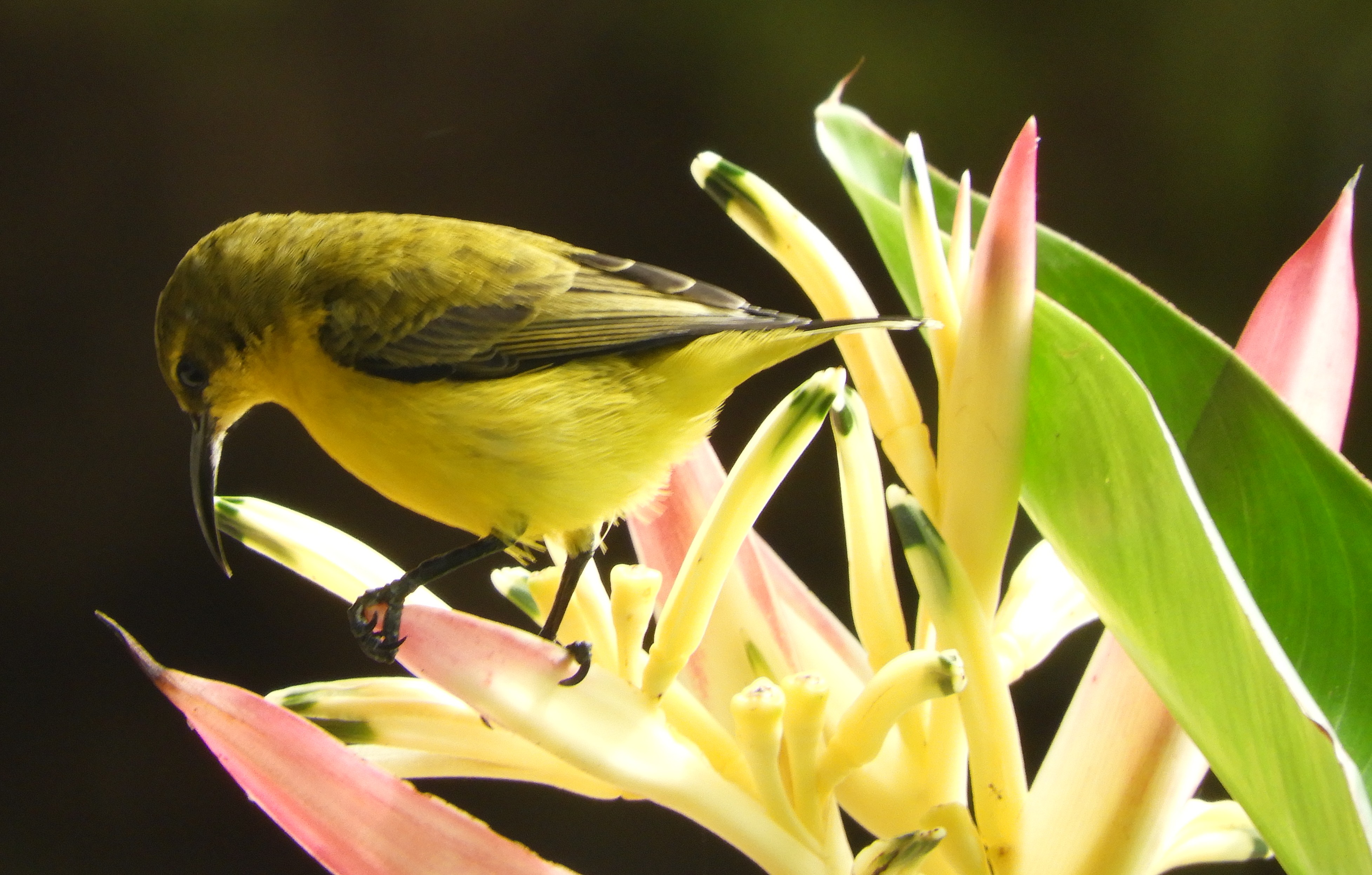
Yellow-bellied Sunbird
Scientific name: Nectarinia jugularis | Approximate length: 10-12 cm
This is a female Yellow-bellied Sunbird, spotted at Picnic Bay on Magnetic Island:

The beak of the Yellow-bellied Sunbird is long and curved, adapted for feeding from flowers:
White-breasted Woodswallow
Scientific name: Artamus leucorynchus | Approximate length: 16-18 cm
Three White-breasted Woodswallows clumping together. It was a chilly morning (well, chilly for the tropics, that is) so I guess they were sharing body heat:

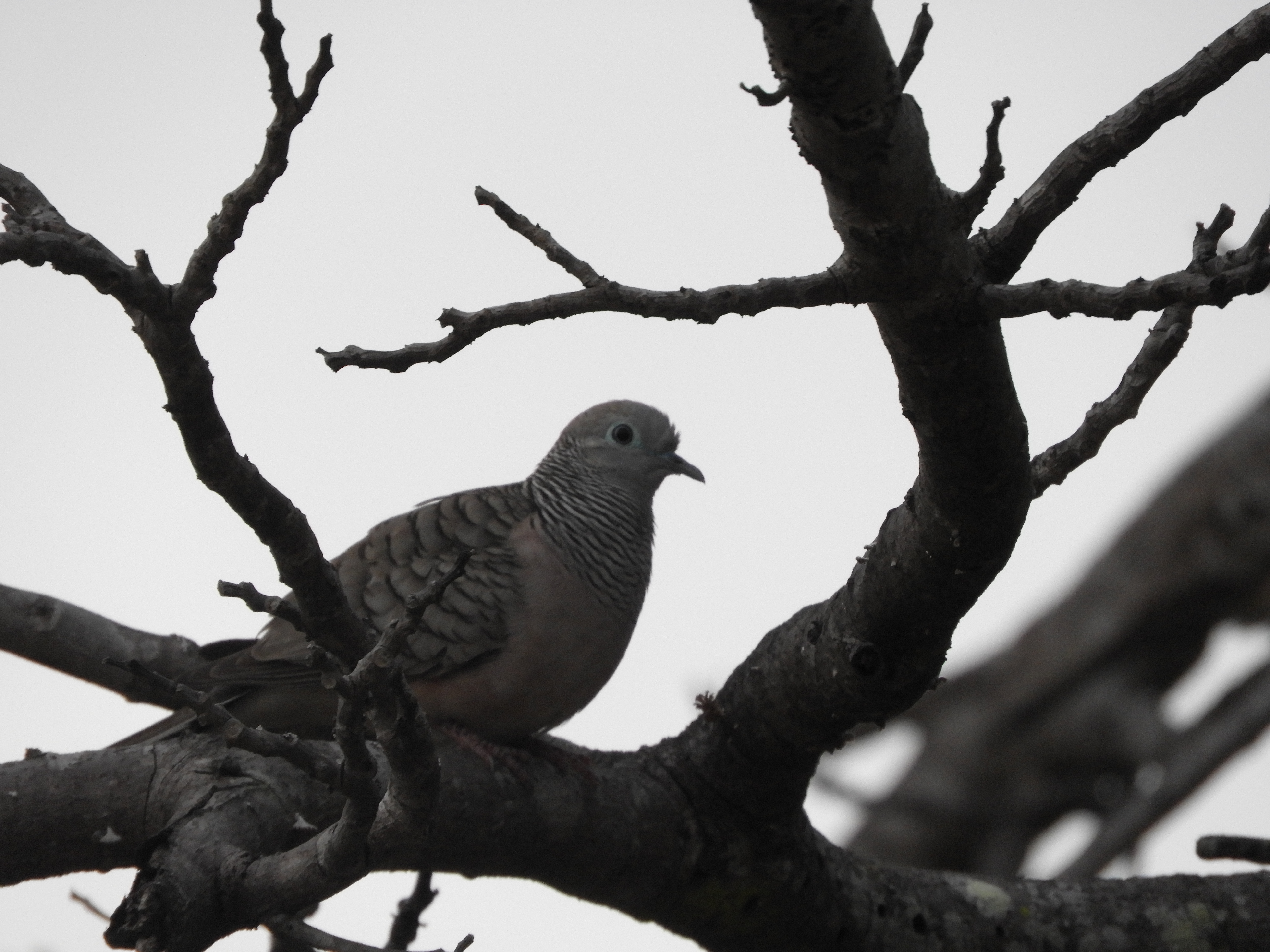
Peaceful Dove
Scientific name: Geopelia placida (striata) | Approximate length: 20-24 cm
The Peaceful Dove is a small dove with an apricot tinge to its feathers. It has a soft, pleasant call as you can hear towards the end of this video:
Here’s a still shot of the same bird:
Rainbow Bee-eater
Scientific name: Merops ornatus | Approximate length: 23-27 cm
Given the name of this bird, I was particularly excited to snap one actually eating a bee!
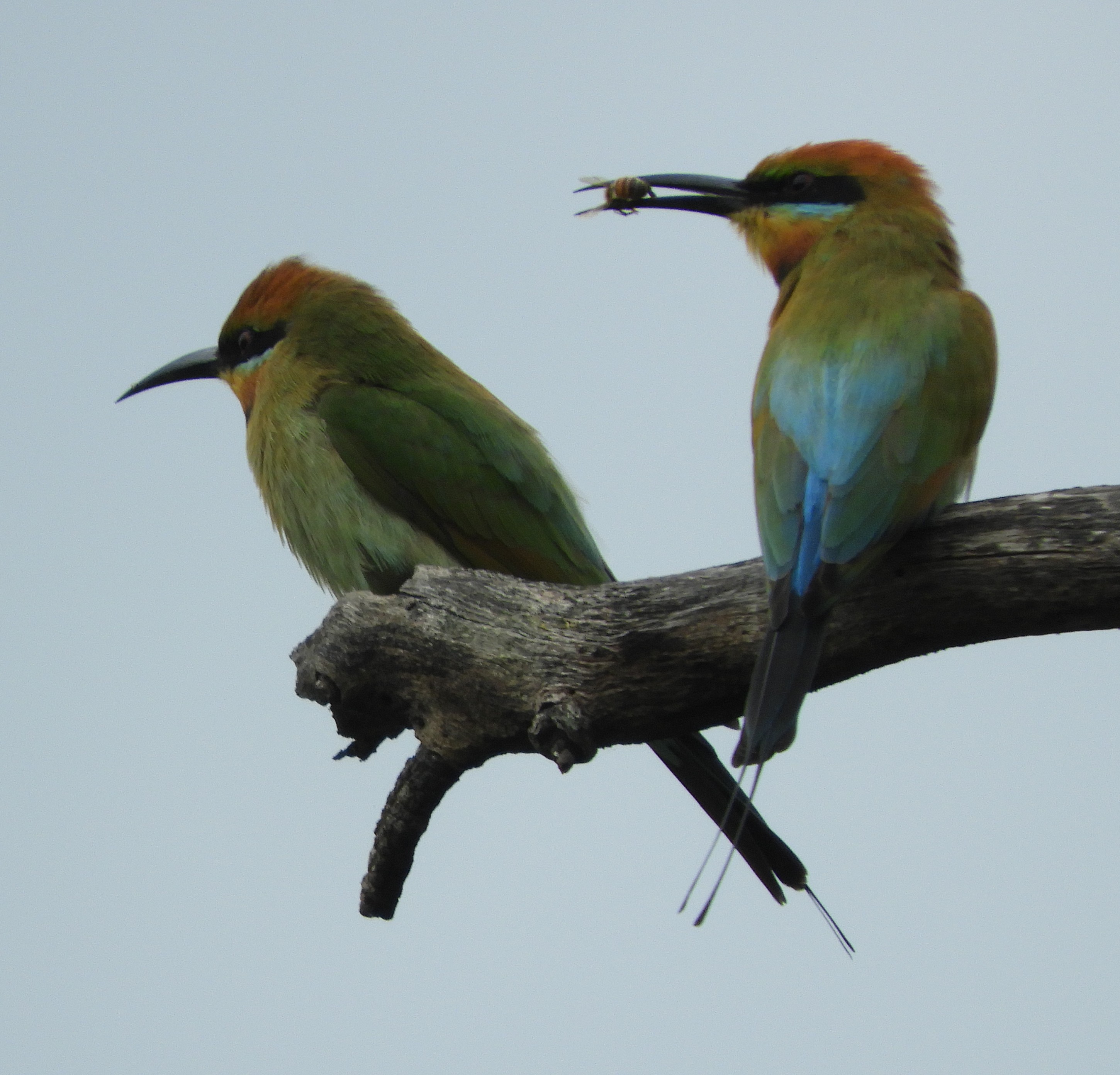
Here’s a bird in the act of catching a bug:
This trio of bee-eaters clumped cosily in the chilly air of the early morning. Even a tropical island can feel cold to inhabitants used to the warmer summer weather:

Rainbow Lorikeet
Scientific name: Trichoglossus haematodus | Approximate length: 26-31 cm
These colourful parrots are extremely noisy, especially when you have a tree full of them:
Spangled Drongo
Scientific name: Dicrurus bracteatus | Approximate length: 28-32 cm
Drongo – what a cute name! Yet in Australia if someone calls you a “Drongo” you want to look closely at them, as it’s a bit of an insult. It means they think you’re not all that bright.
This is a female Spangled Drongo, I think, as its eyes are brown whereas the male has red eyes:
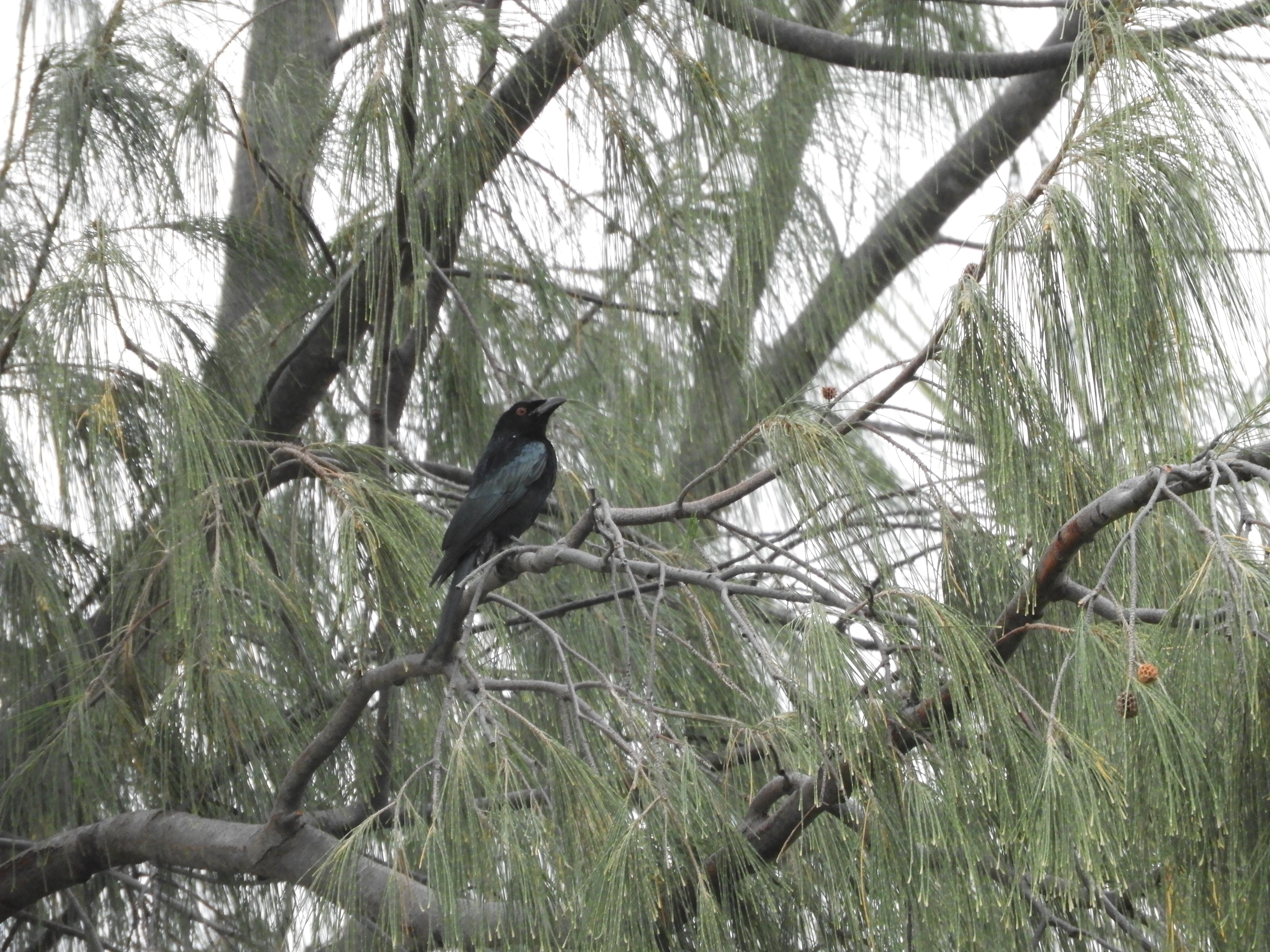
It’s easy to confuse these birds with crows and ravens. In fact, I heard Australian Ravens calling on the island, but didn’t get a photo of one.
The next photo is a pretty much a silhouette, but it shows off the Spangled Drongo’s forked tail:

Helmeted Friarbird
Scientific name: Philemon buceroides | Approximate length: 32-37 cm
This Helmeted Friarbird sat quietly on a branch listening to the birds all round. When it tilts its head you can see the odd-shaped knob on top of its beak:
Here’s another peering through the foliage:

Galah
Scientific name: Cacatua roseicapilla | Approximate length: 38 cm
Galahs are pretty pink and grey parrots. Australians sometimes call someone a “silly galah”, which I think is a slightly more affectionate term than “drongo”! I’ve seen Galahs in the Sydney area as well as up here on Magnetic Island. This one was picking up seeds on the ground. There’s another Galah nearby, which you can hear chirping to its mate towards the end of the video:
Here’s a still photo:

Masked Lapwing, also called a Spur-winged Plover
Scientific name: Vanellus miles | Approximate length: 35-39 cm
Masked Lapwings are strange-looking birds with yellow faces that seem to have been stuck on as an after-thought.
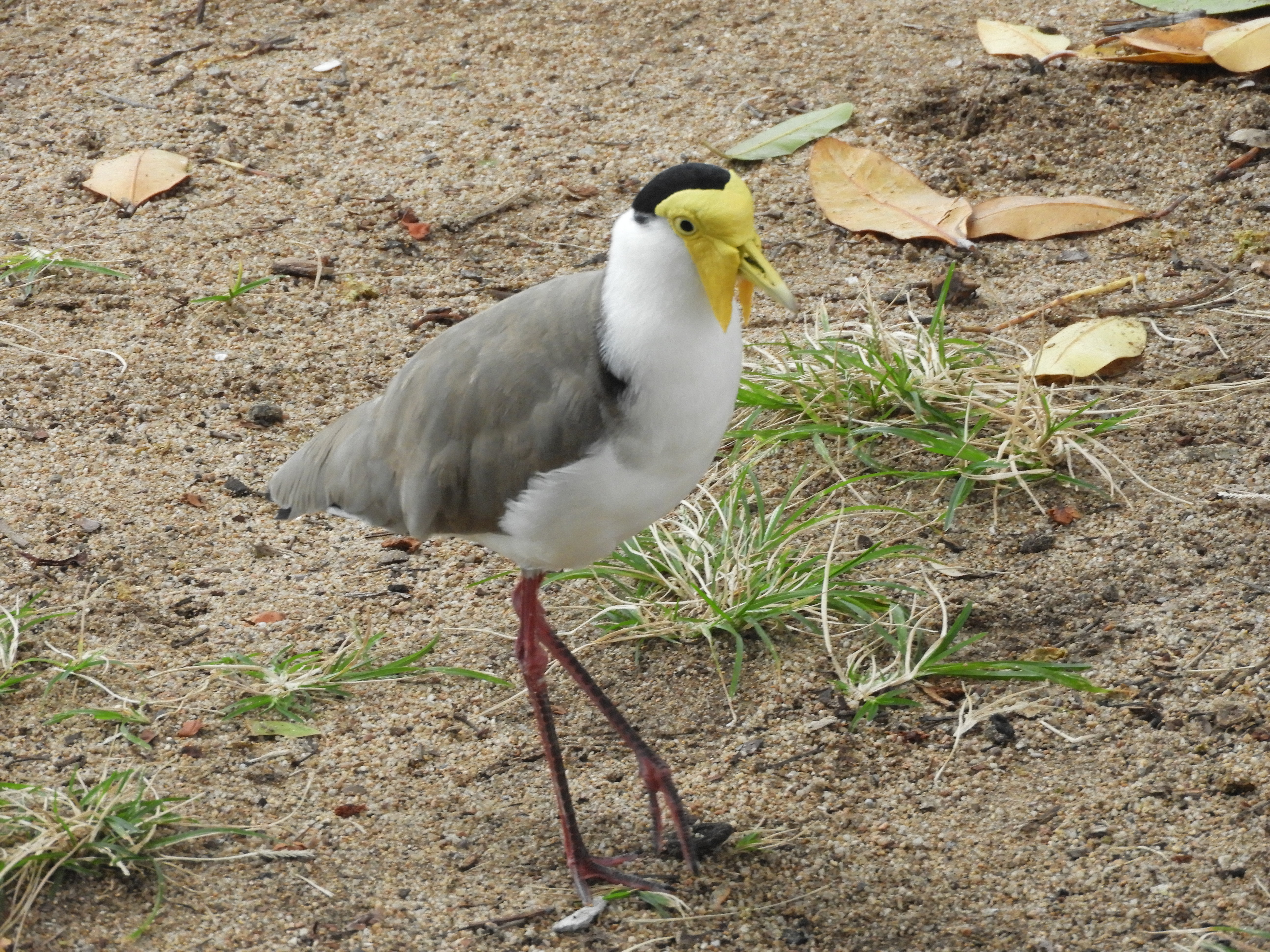
Their alternative name of “spur-winged” is apt, because they have hooks on their wings, one on each, which they use as weapons, stretching the wings then dragging back to wound their enemy.
In the next photo, the bird at the back is a juvenile. Its legs are brown instead of the red of the adult, and its mask has not yet fully developed:

Blue-winged Kookaburra
Scientific name: Dacelo leachii | Approximate length: 38-42 cm
The kookaburras up north are different from the Laughing Kookaburras that we see around Sydney. Blue-winged Kookaburras look leaner and meaner. They have bright blue markings on their wings, and they lack the wide dark strip that marks the eyes of Laughing Kookaburras. Here’s a Blue-winged Kookaburra on Magnetic Island:
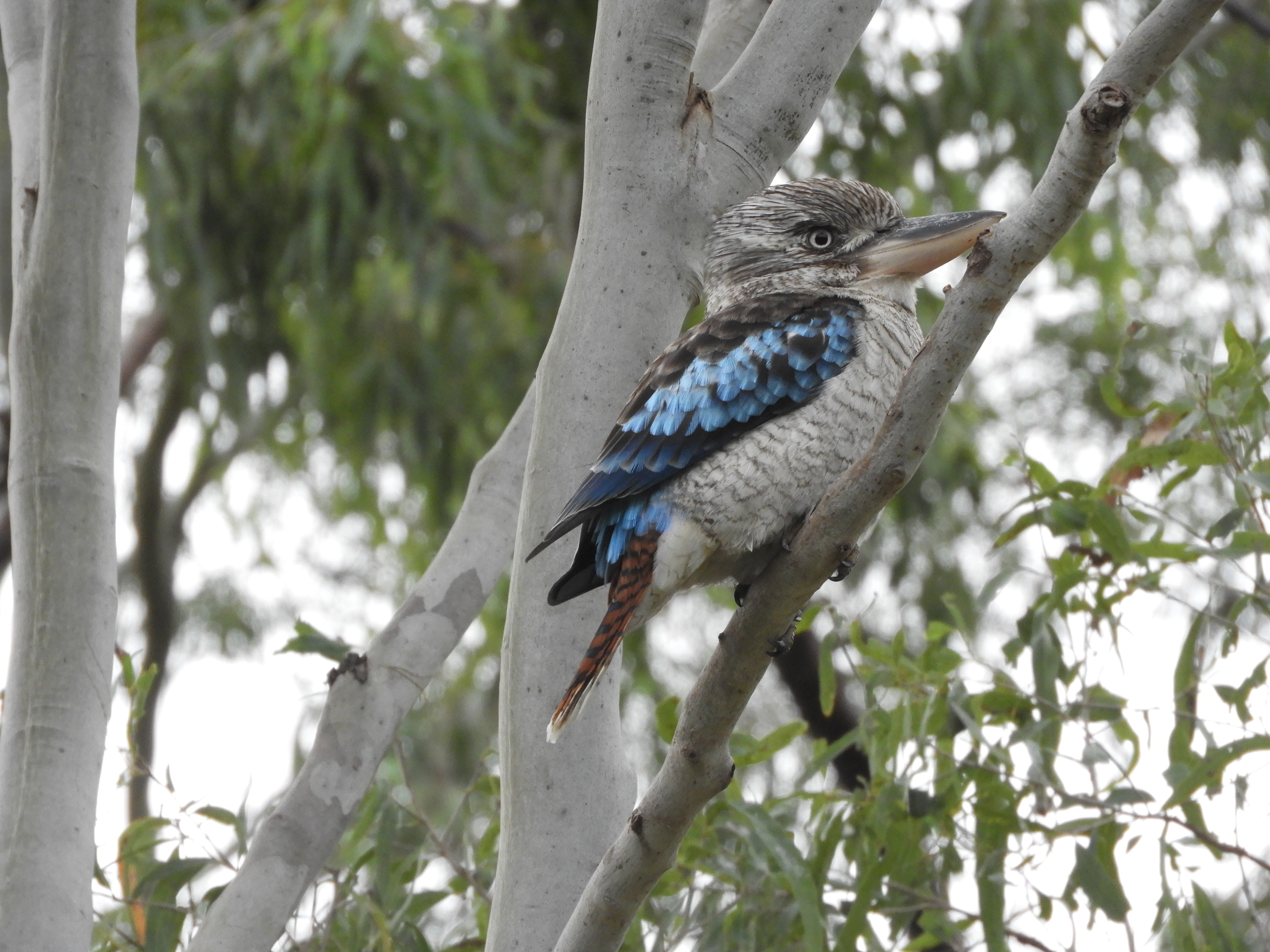
They do look just as silly as our local birds when they gaze at us straight on:

The cackling laughter of the Blue-winged Kookaburras seemed harsher and higher pitched to me. I didn’t manage to record any of the noise. This video shows a bird sitting on the top of a high post, swaying backwards and forwards as they do to retain their balance:
Silver Gull
Scientific name: Larus novaehollandiae (also called Chroicocephalus novaehollandiae) | Approximate length: 38-42 cm
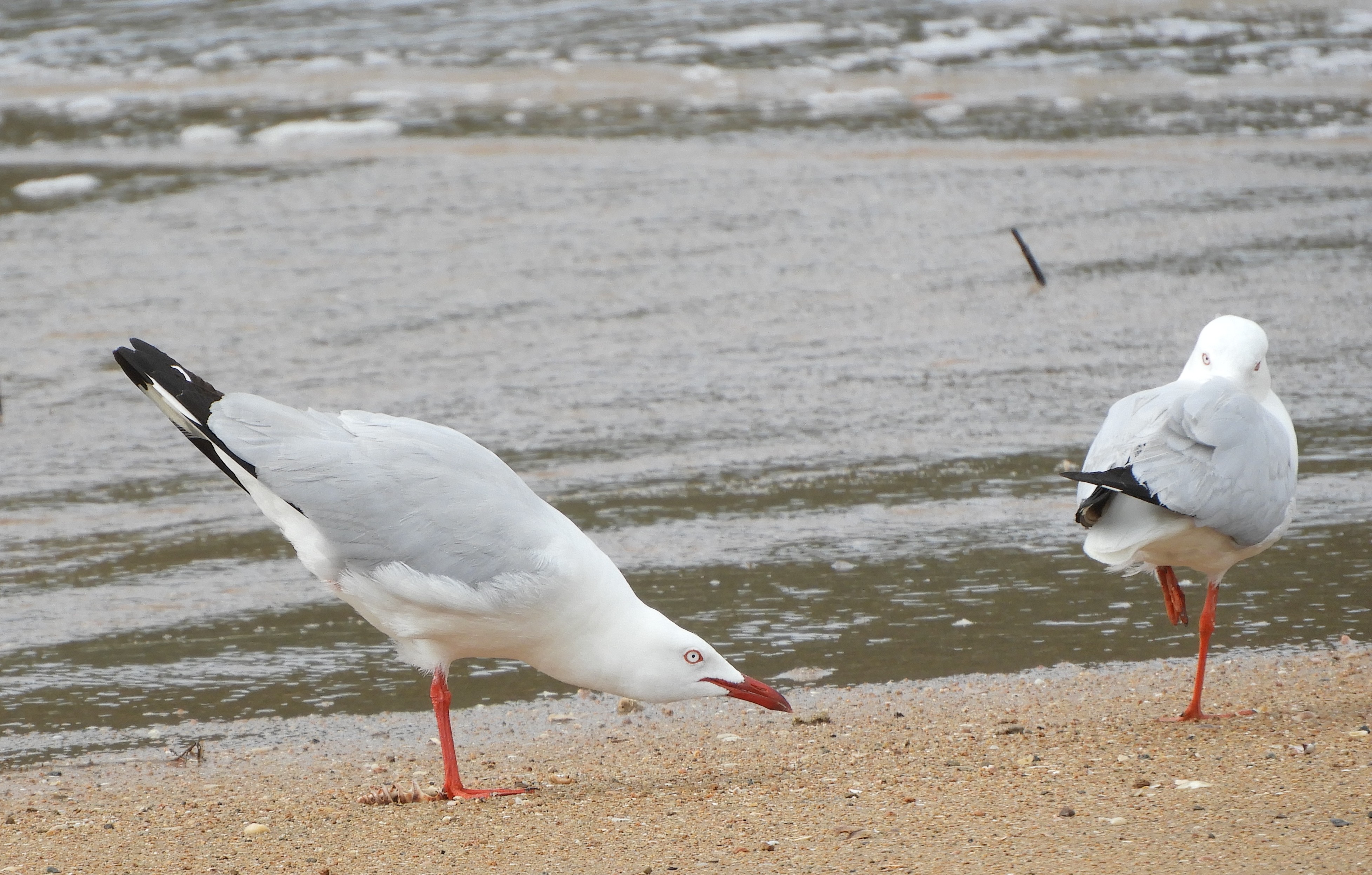
A Silver Gull warning off another Silver Gull:
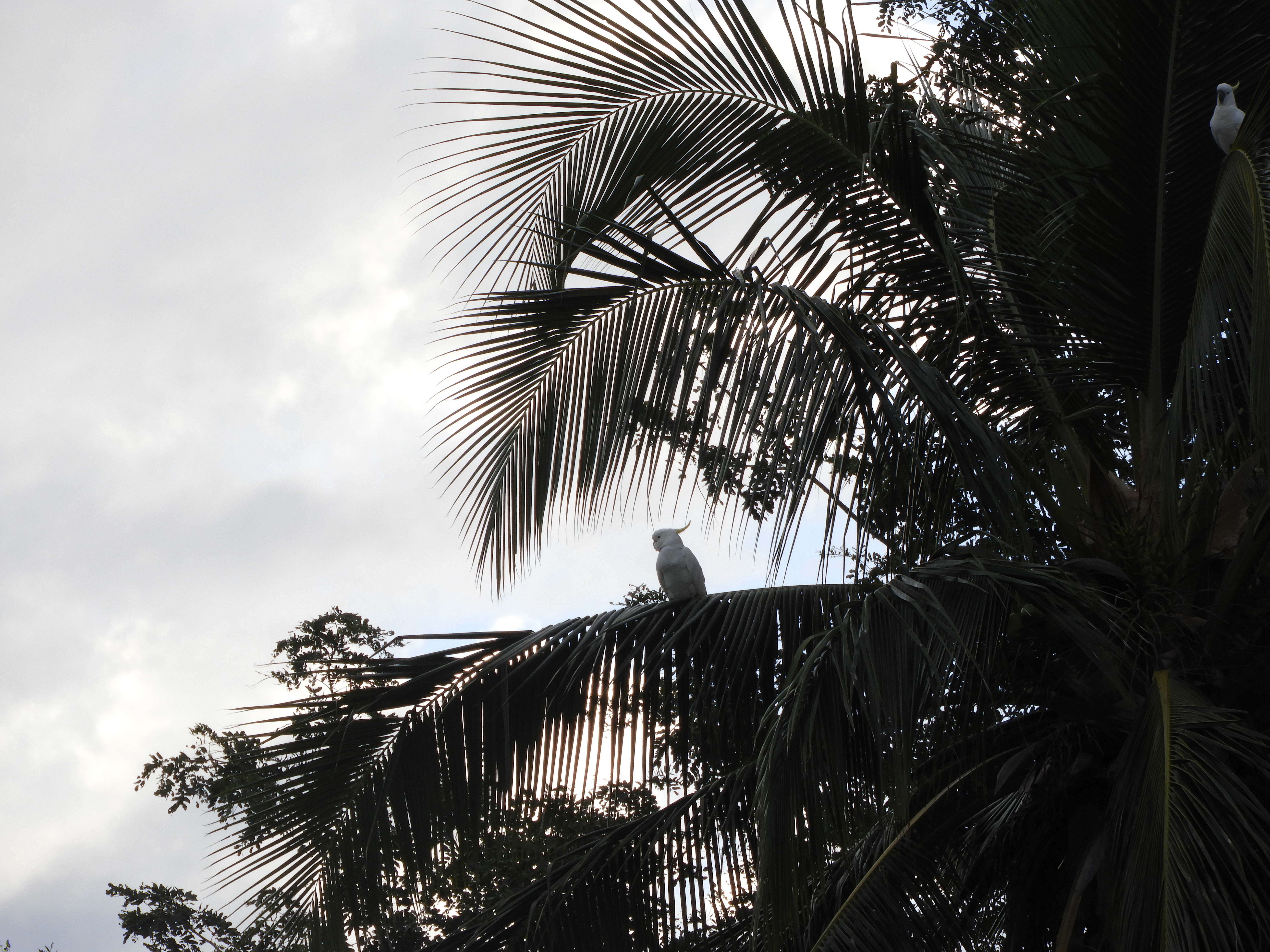
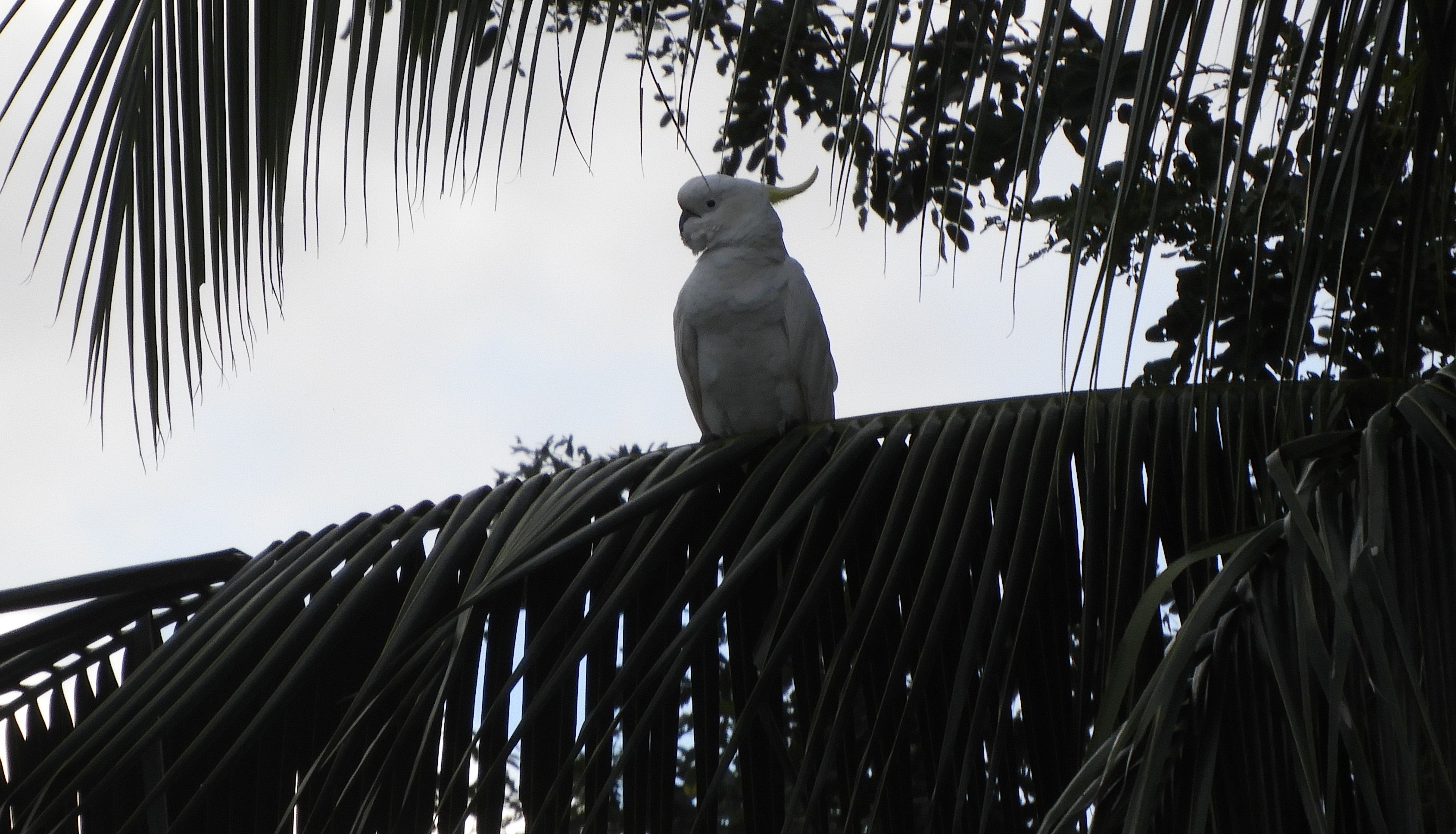
Sulphur-crested Cockatoo
Scientific name: Cacatua galerita | Approximate length: 45-50 cm
Sulphur-crested Cockatoos abounded on the island. Here are a couple peeking out from the branches of a huge palm tree:
A closer look at one of the birds:
Bush Stone-curlew
Scientific name: Burhinus grallarius | Approximate length: 55-60 cm
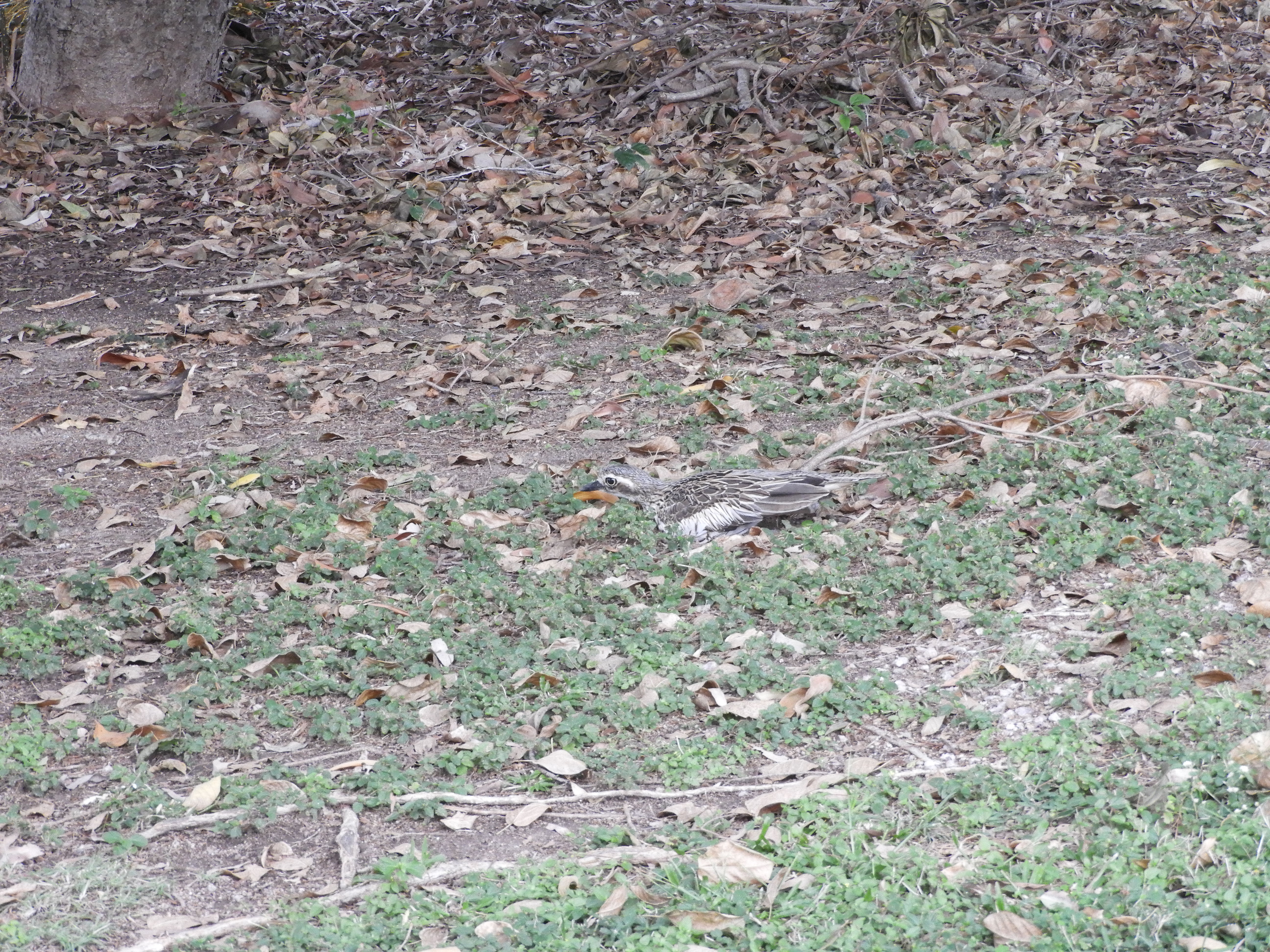
If you’re lucky enough to be on Magnetic Island at night, you’ll hear an eerie wailing in the lonely hours. Report has it that the local police regularly receive calls from visitors to report screaming in the night. Don’t be alarmed. It’s just the Stone-curlews.
Bush Stone-curlews have amazing camouflage, even during the day. Spot the bird if you can (click on the image to zoom in):
Here’s a close-up picture of the same bird:

Bush Stone-curlews have lovely big eyes:

Bush Stone-curlews tend to move slowly and timidly, then make a quick dash. Here’s one moving slowly along a fence:
Brahminy Kite
Scientific name: Haliastur indus | Approximate length: 55-60 cm; wing span 1.2-1.3 m
I watched this Brahminy Kite for a while early one morning. The bird was perched on top of a very high post above a stone jetty. I had to use full zoom on my camera, and the resolution isn’t wonderful. Still, the photo gives a good idea of the bird’s appearance:
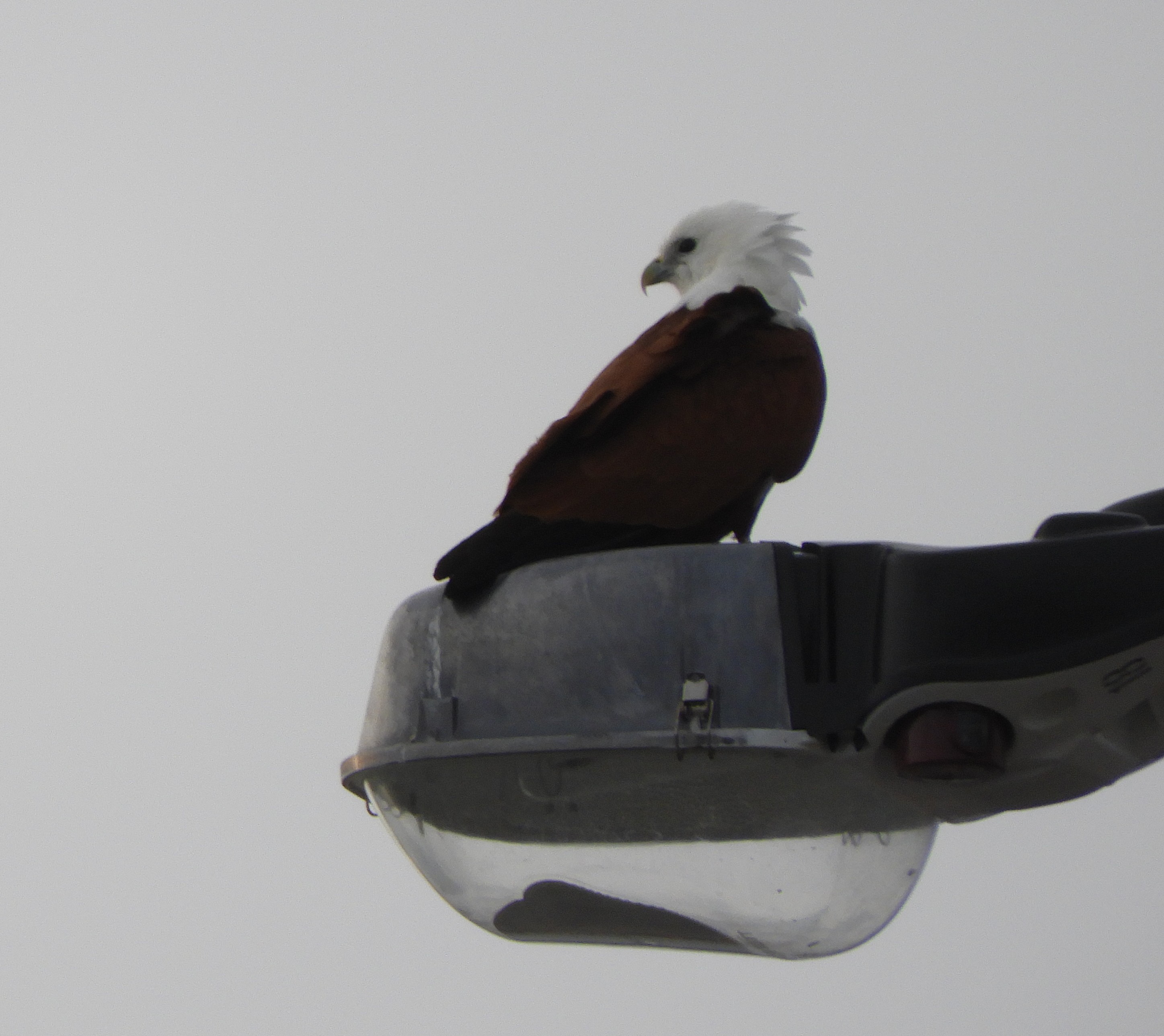
These kites are common around the northern shores of Australia. At first I confused the bird with an eagle, but then I noticed the striking white chest and head feathers, and the rich chestnut colour on the back and wings, which are characteristic of Brahminy Kites. Here’s a photo of the bird flying – again, fuzzy, but you get the idea of the shape and colour:

Whistling Kite
Scientific name: Haliastur sphenurus | Approximate length: 50-60 cm; wing span 1.2-1.5 m
This bird was high in the sky, circling above the ocean and the hills:
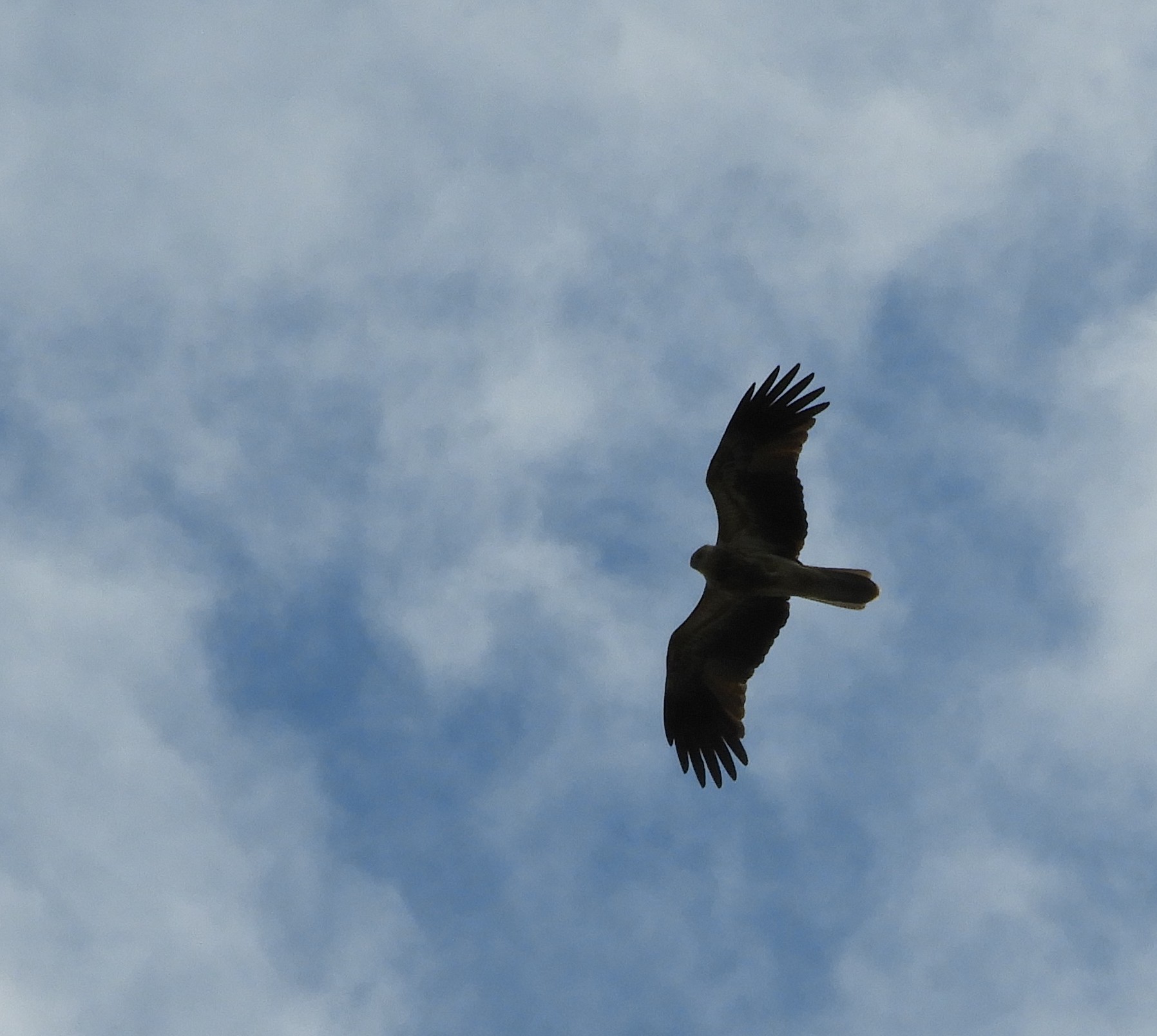
Here’s the same bird from another angle:

Australian White Ibis
Scientific name: Threskiornis molucca | Approximate length: 65-75 cm
These ibises are affectionately known as “bin chickens” because in cities they spend a lot of time raiding dustbins. This group was prowling around the beach area, no doubt in search of scraps from the nearby restaurants:

Koala
Not a bird! But I can’t leave a post about Magnetic Island without showing a picture of a Koala. The island has the largest population of wild koalas in Australia:
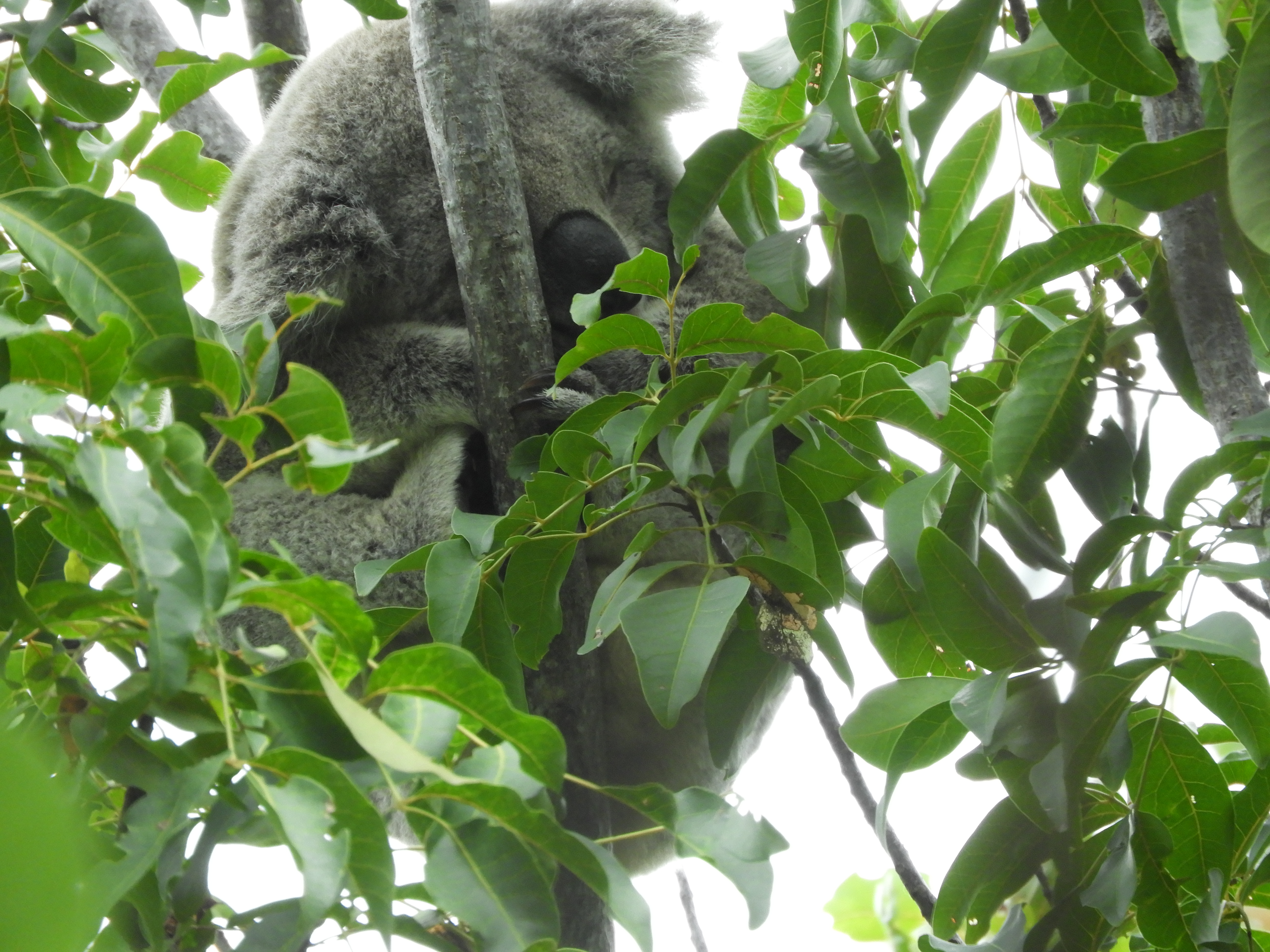
I hope you’ve enjoyed my post about the lovely Magnetic Island!


 Sydney Birder