Category Archives: Birds
Pelicans at Long Reef Headland, NSW
Pelicans are huge birds who look wise in a goofy way. A number of them hang out at Long Reef Headland, NSW, Australia.
Posing in front of a breaking wave:

It’s odd to see such huge birds perched on lamp posts. I wonder if the engineers who designed the lamp posts catered for such a weight?
How many pelicans can you fit on a lamp post?
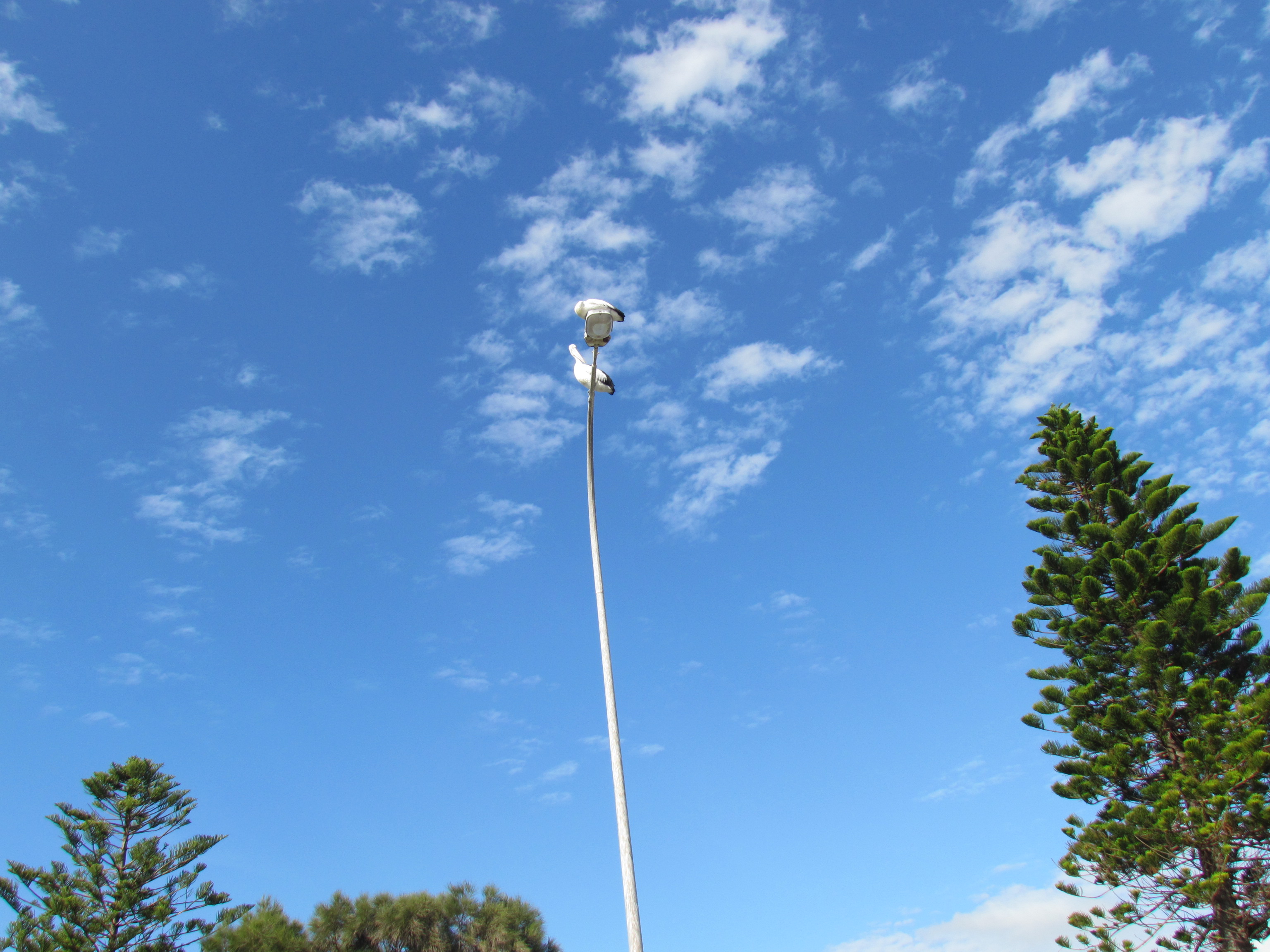
Zooming in:

Common name: Australian Pelican
Scientific name: Pelecanus conspicillatus
Approximate length: 170 cm
Approximate wingspan: 2.5m
Date spotted: 23 March 2014
Season: Late Summer
Location: Long Reef Headland, New South Wales, Australia
Latitude/longitude: 33°44’15.2″S, 151°18’44.1″E
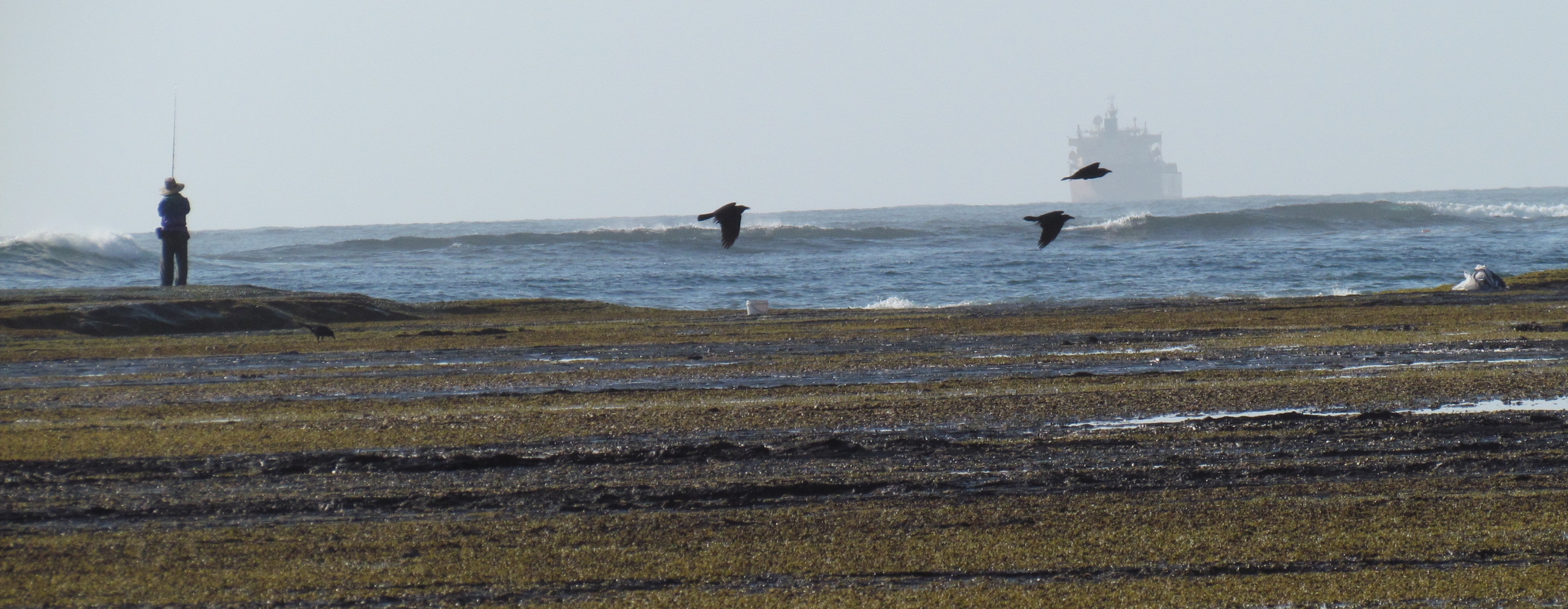
Finishing up with an atmospheric shot of Long Reef, showing a fisherman, a ship, and some birds:
White-Faced Heron at Long Reef Headland, NSW
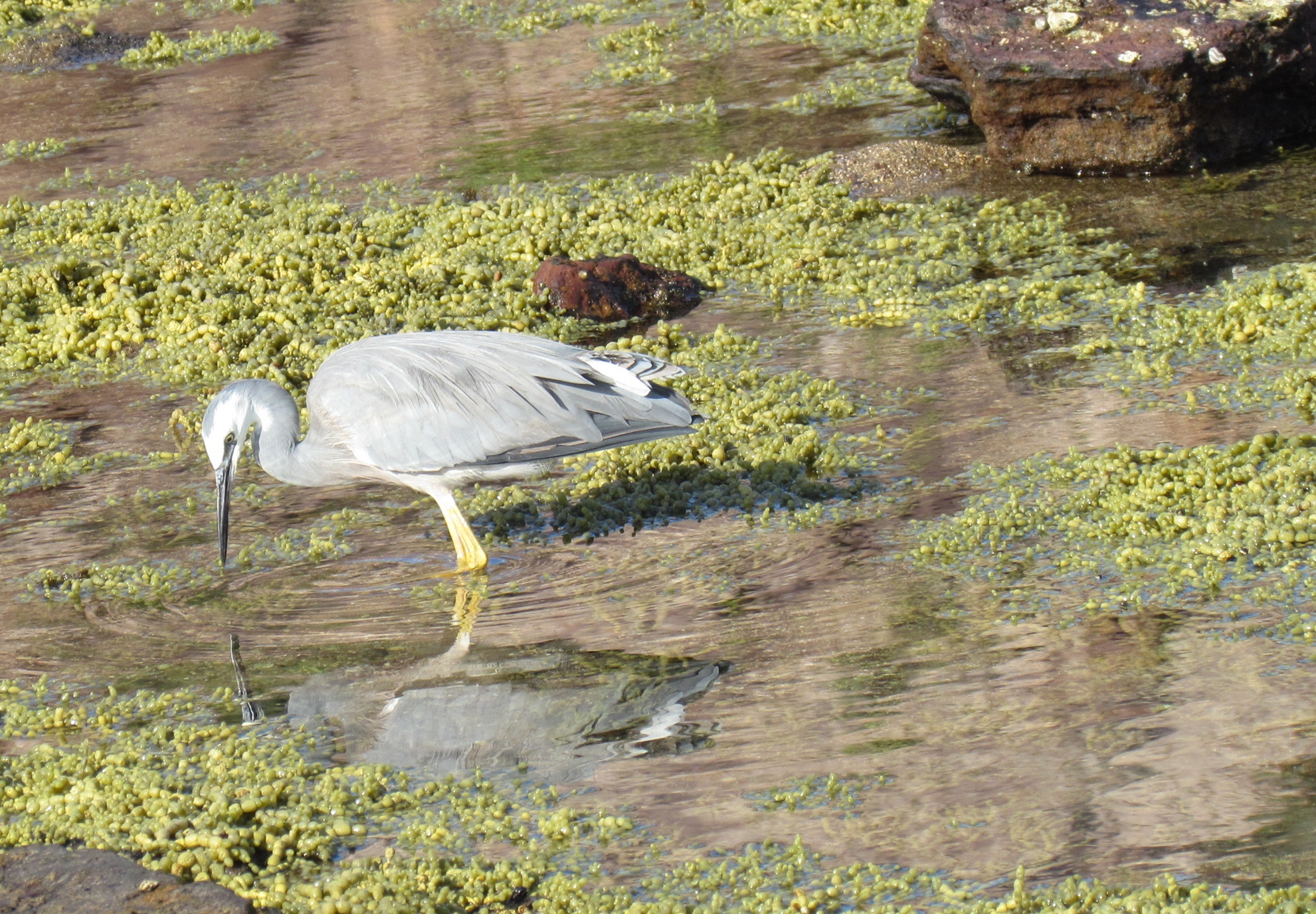
A White-Faced Heron tiptoes across the bizarre landscape of Long Reef Headland on the New South Wales coast of Australia. The bird shakes the seaweed with its toes, dislodging worms and small fish which it then eats.
Here’s a still photo:
Common name: White-Faced Heron
Scientific name: Ardea novaehollandiae
Approximate length: 70 cm
Date spotted: 23 March 2014
Season: Late Summer
Location: Long Reef Headland, New South Wales, Australia
Latitude/longitude: 33°44’15.2″S, 151°18’44.1″E
You silly galah
“You silly galah!” That’s what Australians say, usually affectionately, when someone makes a gaffe or does something daft. A galah is actually a beautiful bird, grey with a deep pink chest, and a funny little crest on its head. I spotted a tree full of them this morning, chirping away at each other in that funny voice of theirs.
Common name: Galah
Scientific name: Cacatua roseicapilla
Approximate length: 38 cm
Date spotted: 27 January 2014
Season: Summer
Location: Manly Vale, New South Wales, Australia
Latitude/longitude: -33° 46.791′, 151° 15.744′
Here’s a still photo of them:

Spotted a Sparrowhawk near Manly Dam
It took me a while to identify this bird. I’ve decided it’s a Collared Sparrowhawk. Other candidates were a Brown Goshawk and a Peregrine Falcon. I’ve spent a while poring over my bird book, and decided that this bird doesn’t have a light enough front collar to be a Peregrine Falcon. Deciding between the Goshawk and the Sparrowhawk was even more difficult. Close examination reveals that this bird has middle toes that are longer than the other toes, which qualifies it to be the Sparrowhawk.
Common name: Collared Sparrowhawk
Scientific name: Accipiter cirrhocephalus
Approximate length: 30-40 cm, wing span 55-80cm
Date spotted: 25 December 2013
Season: Summer
Location: Manly Dam Reserve, New South Wales, Australia
Latitude/longitude: -33° 46.608′, 151° 15.268′
Here’s a still of the same bird. What a fierce gaze!

This one shows the barred plumage on the bird’s chest, and the long middle toe:

Swamphens and Moorhens at Manly Dam
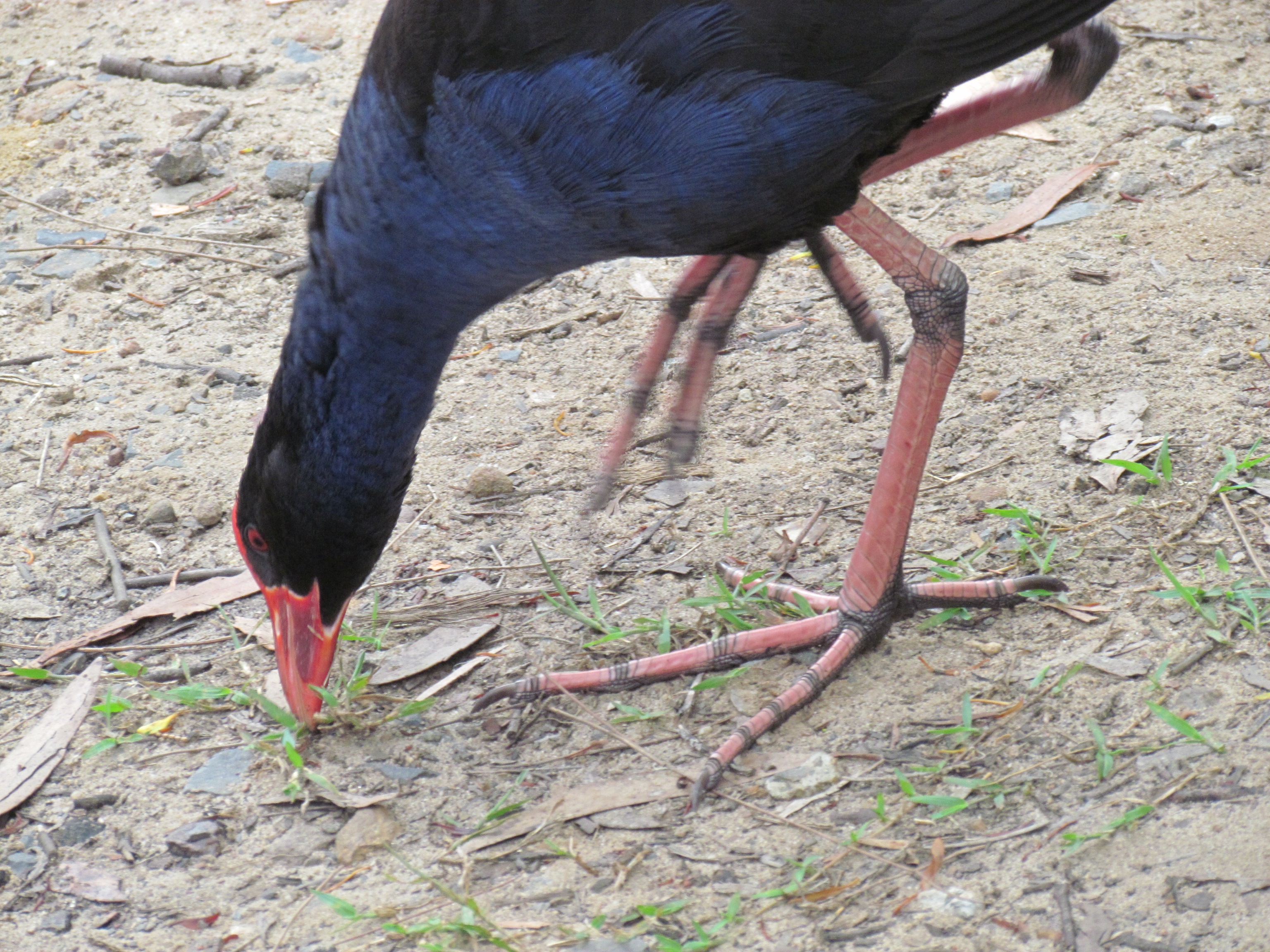
Purple Swamphens and Dusky Moorhens look similar, but are quite easy to tell apart once you’ve seen them together. Purple Swamphens are altogether showier: bigger, with brighter colours, and a more confident way of tackling the world. Dusky moorhens are smaller, and move in short dashes, accompanied by a lot of jerking of the head and tail. They almost seem to apologise for their presence. The Purple Swamphen’s beak is entirely red, whereas the Dusky Moorhen has a yellow tip to its beak.
I spotted both birds on the same patch of water at Manly Dam. First, a Purple Swamphen:
Here’s a close-up of those amazing feet, shot when the bird obligingly came up on shore close by me:
Common name: Purple Swamphen
Scientific name: Porphyrio porphyrio
Approximate length: 50 cm
Date spotted: 29 December 2013
Season: Summer
Location: Manly Dam Reserve, New South Wales, Australia
Latitude/longitude: -33.776626,151.246762
Next, a Dusky Moorhen:
Here’s a nice still of the moorhen sharing the shot with a water lily:
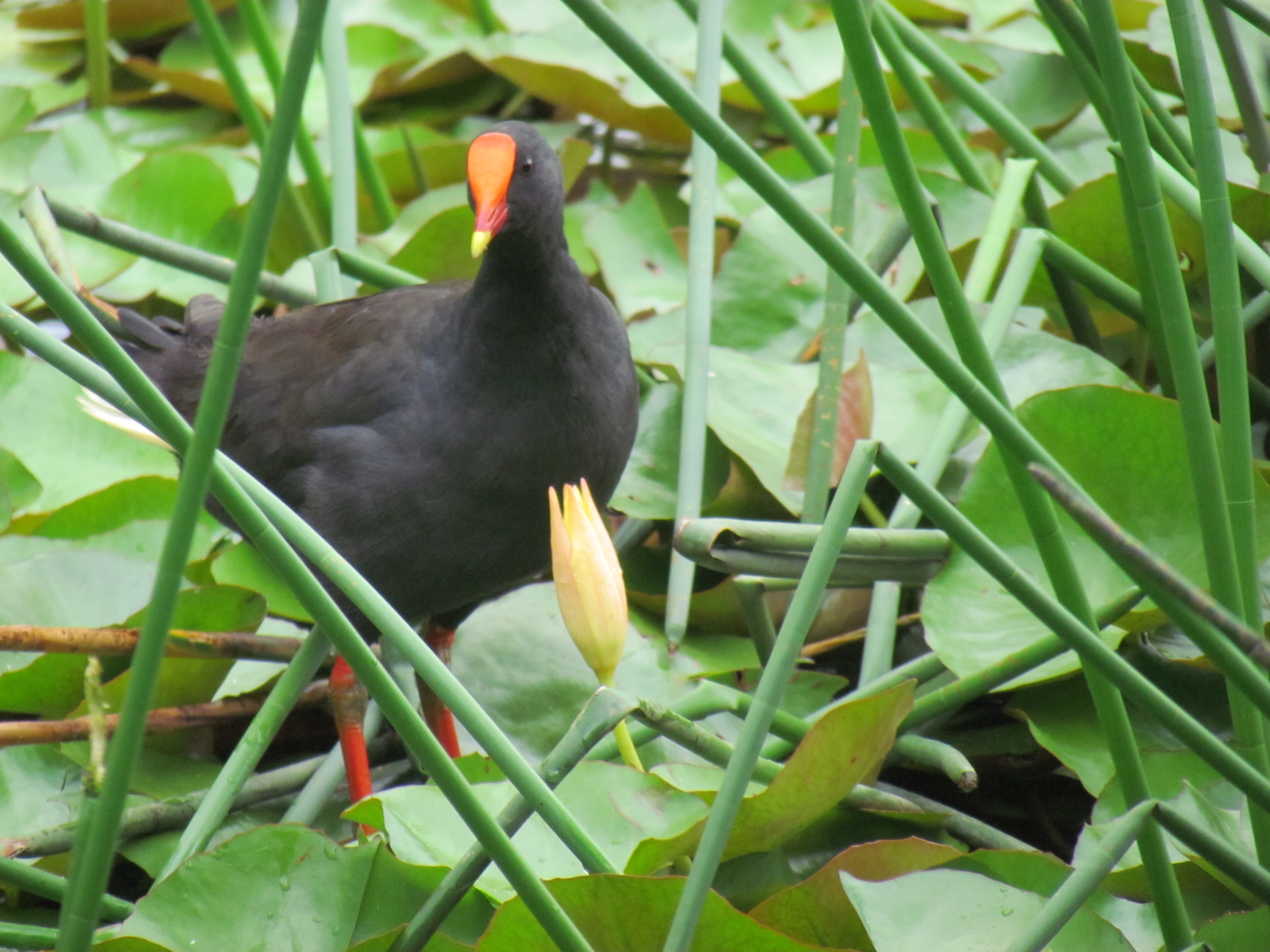
Common name: Dusky Moorhen
Scientific name: Gallinula tenebrosa
Approximate length: 40 cm
Date spotted: 29 December 2013
Season: Summer
Location: Manly Dam Reserve, New South Wales, Australia
Latitude/longitude: -33.776626,151.246762
Silver Gulls on Manly Beach
Silver Gulls are the most common type of seagulls you’ll find in Manly.

Common name: Silver Gull
Scientific name: Larus novaehollandiae (also called Chroicocephalus novaehollandiae)
Approximate length: 40 cm
Date spotted: 26 December 2013
Season: Summer
Location: Manly Beach, New South Wales, Australia
Latitude/longitude: -33.794021,151.287893
The next photo shows a youngster, as indicated by the dappled brown plumage on the wings. The birds often make themselves a shallow pit in the sand to sleep in, as this one has done.

Skimming the wave tops:

Tawny Frogmouths chilling out
I had a real treat today: I spotted three Tawny Frogmouths, and they were in a reasonable accessible place for photography.
Tawny Frogmouths are odd, appealing birds. They’re related to nightjars, and look a bit like owls. What makes them special is their very wide beaks. When a Tawny Frogmouth opens his mouth, it looks as if his head has split in half!
Being night birds, they sleep during the day. Their camouflage is amazing. With their grey dappled, striped feathers, they look just like bits of old wood. They take advantage of this fact by arranging themselves artistically on old tree trunks. Spot the three birds in this photo:
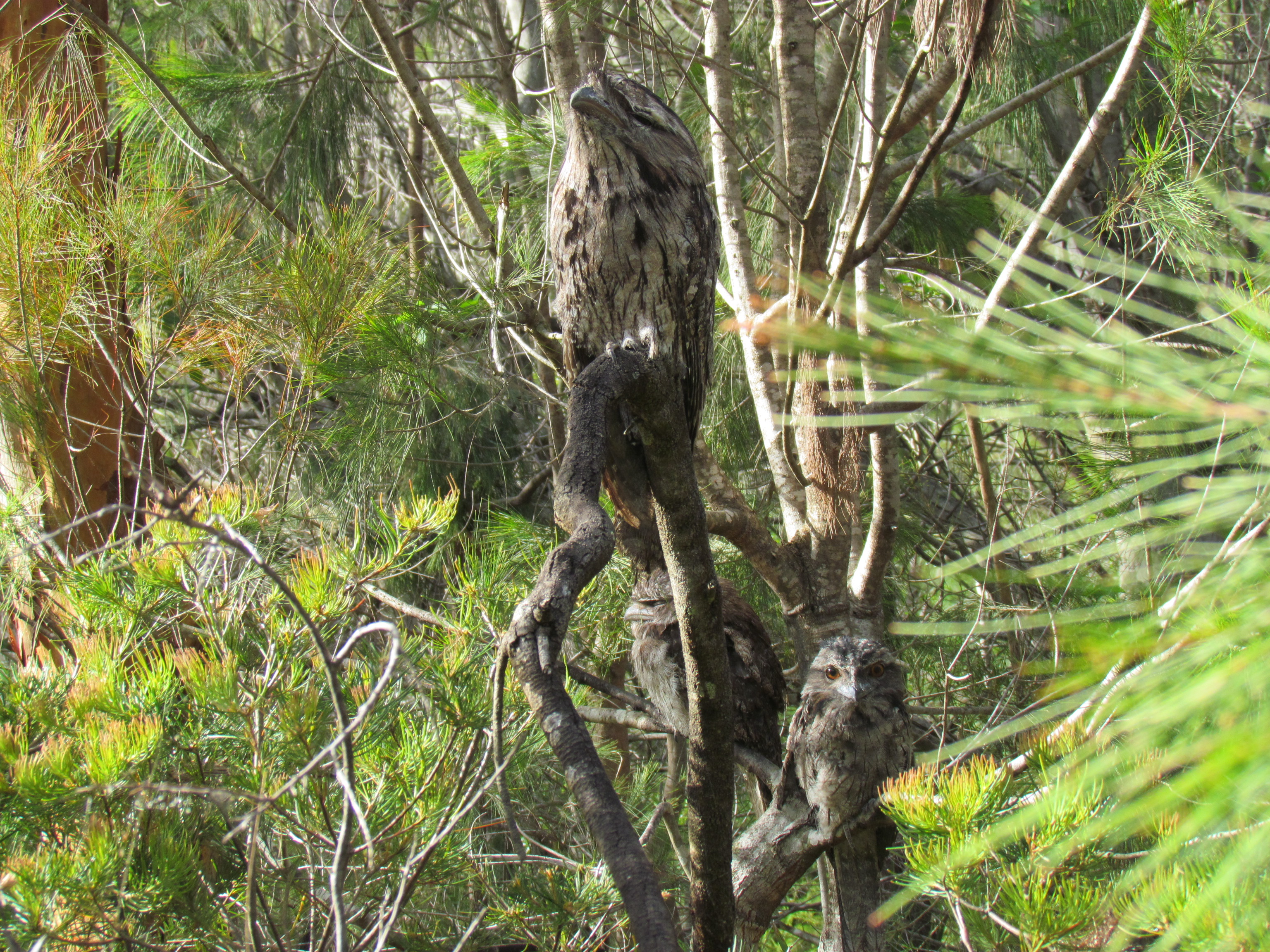
Common name: Tawny Frogmouth
Scientific name: Podargus strigoides
Approximate length: 34-52 cm
Date spotted: 15 December 2013
Season: Summer
Location: Manly Dam Reserve, New South Wales, Australia
Latitude/longitude: -33.778347,151.249715
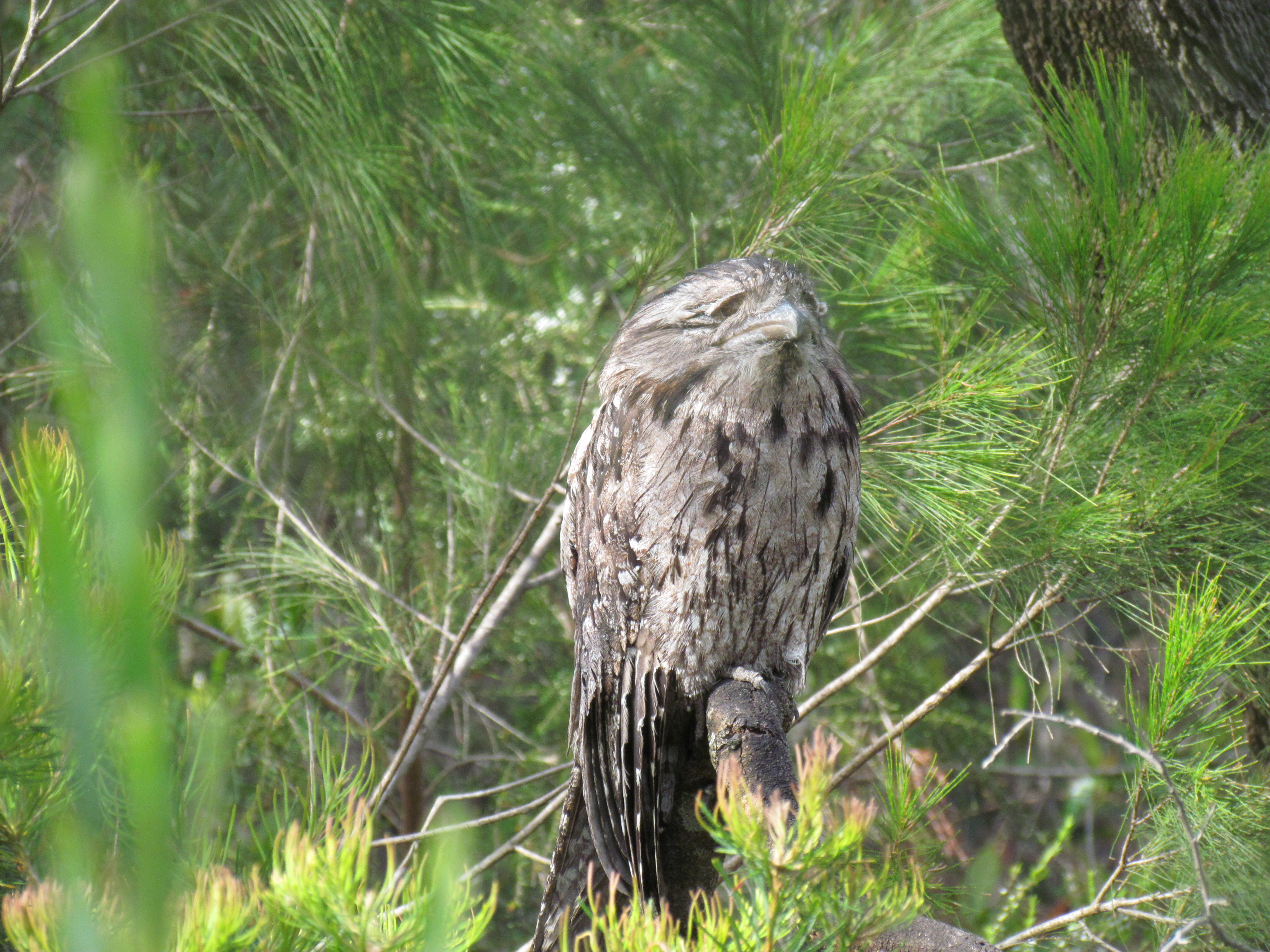
Bird number 1 is the star of the show, chilling out at the front of the trio. Here are some close-ups:

I love the stylish tufts above the beak!
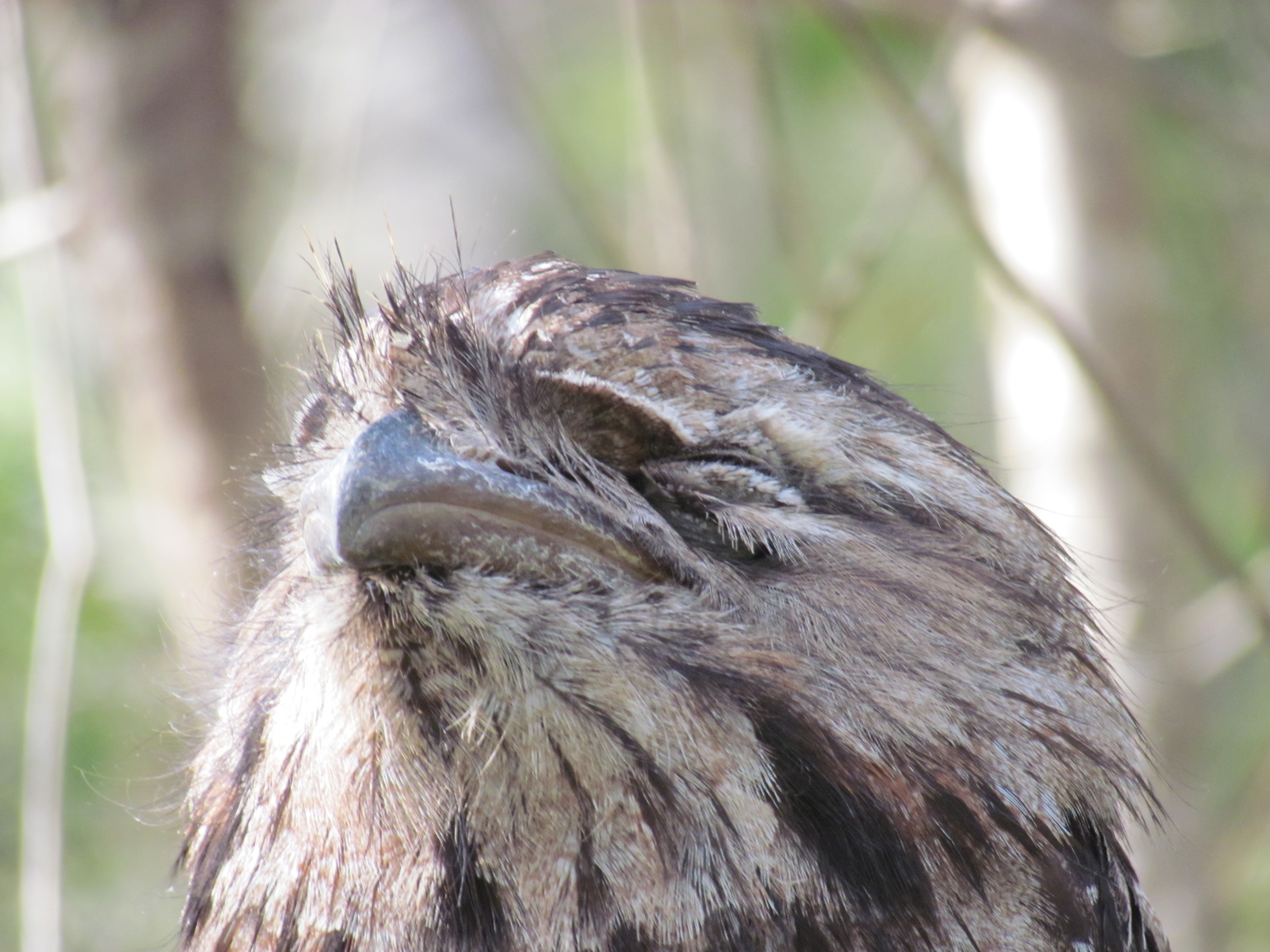
From another angle:
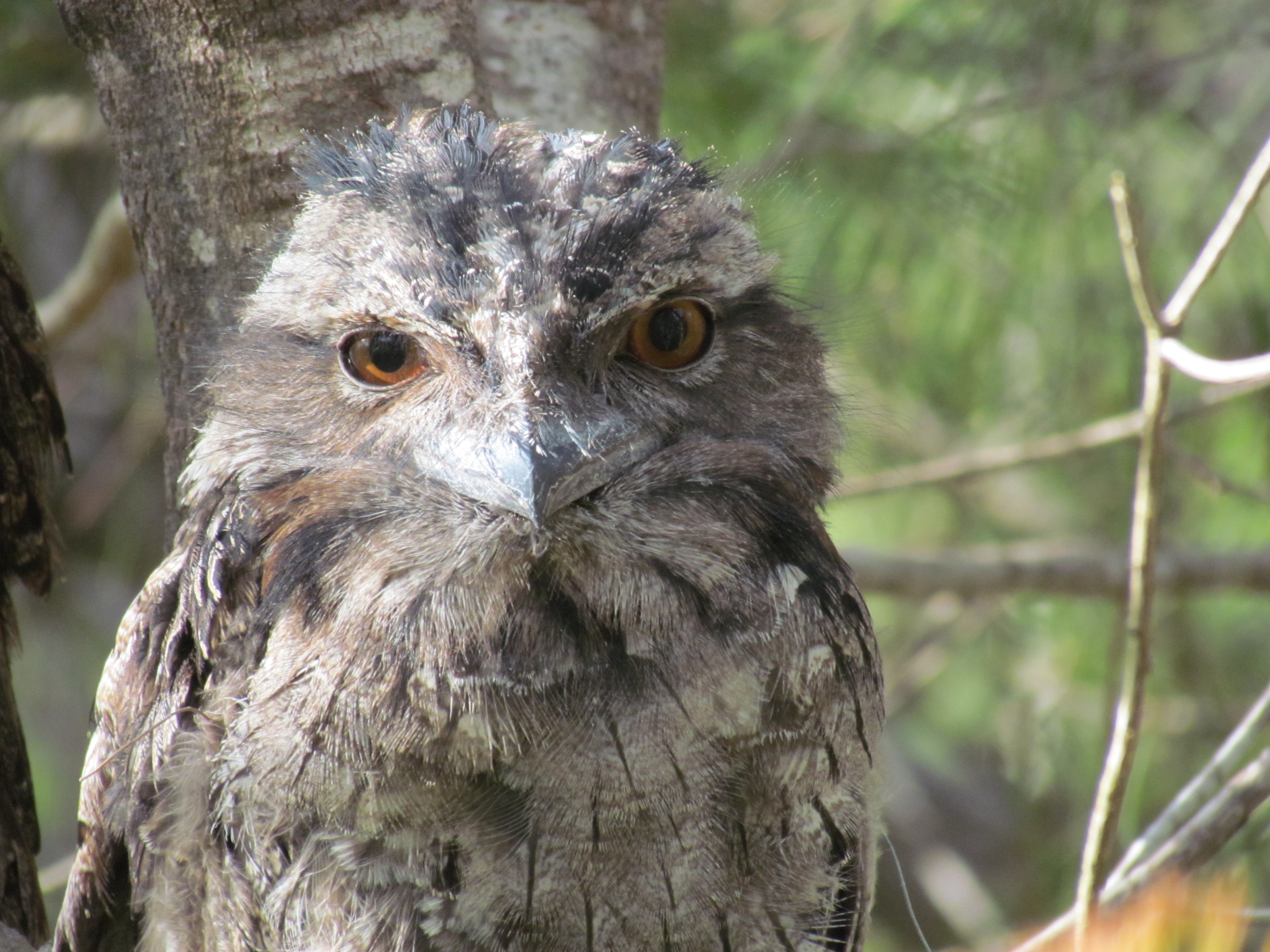
Bird number 2 is on the right in the back row of the trio. I think this one was the designated sentry. Half awake:
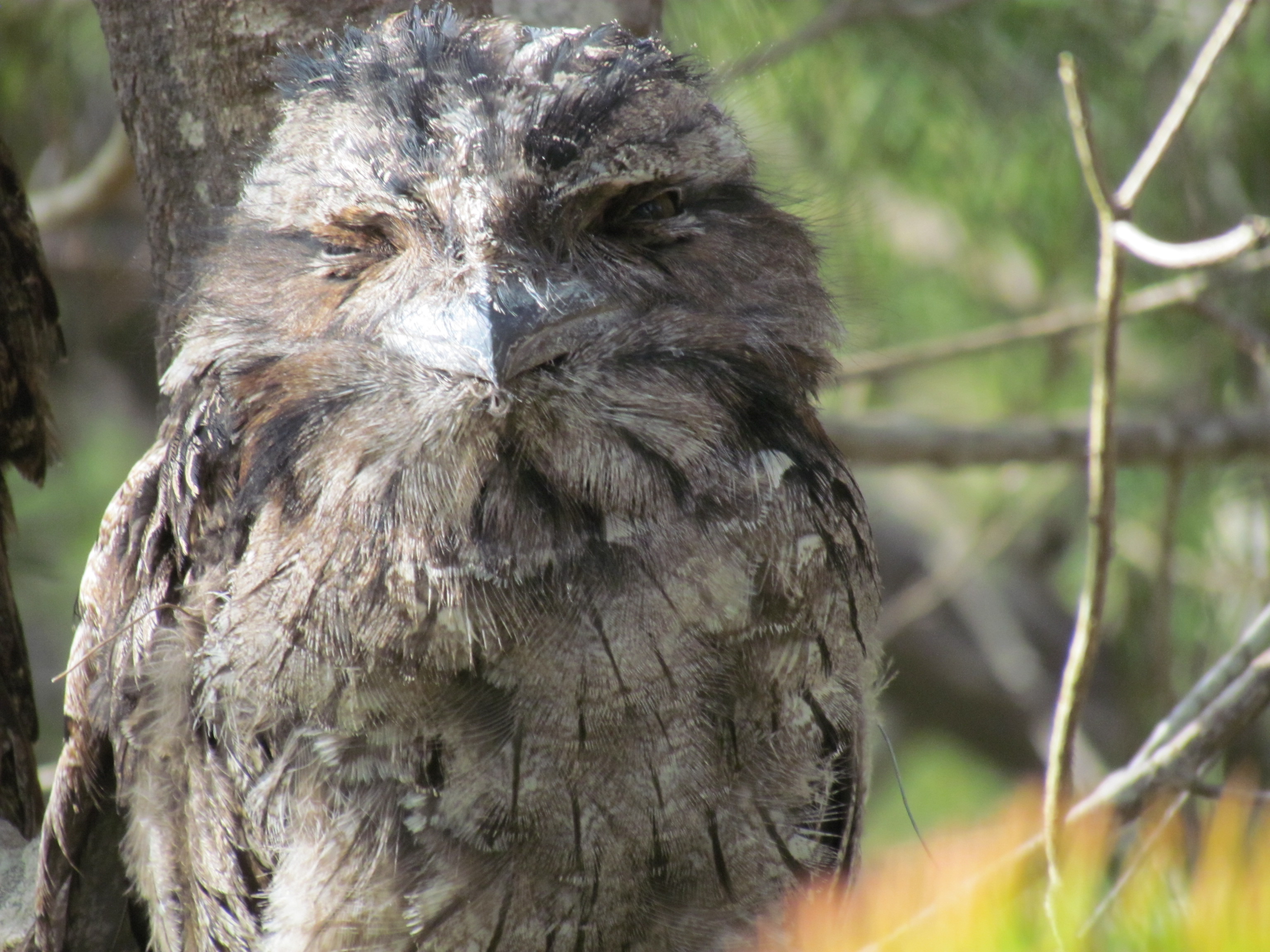
Photographer spotted, both eyes wide open:
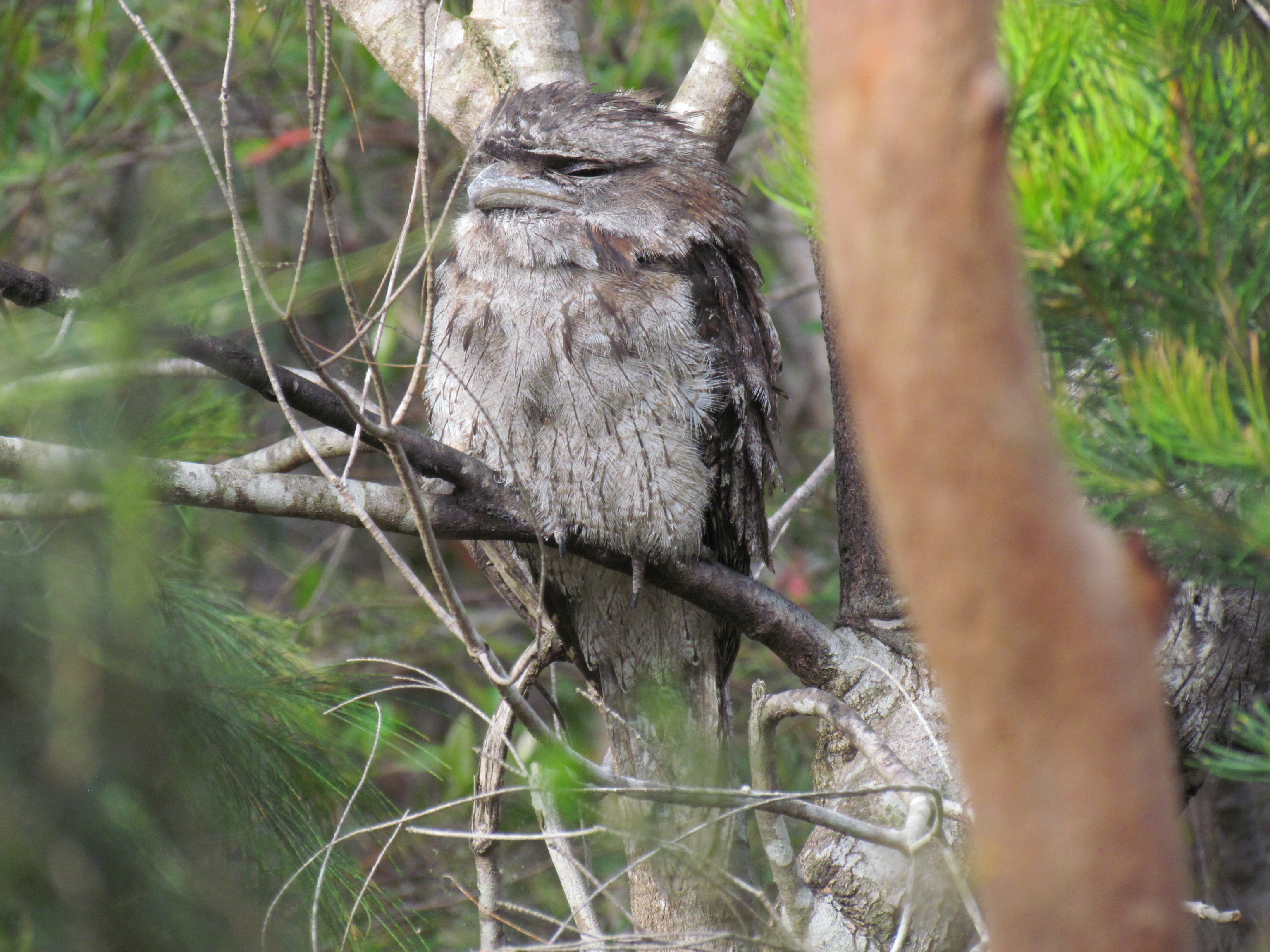
This is bird number 3, on the left in the back row of the trio, all fluffed up and cute. Perhaps a juvenile:
The call of a Koel Cuckoo
We often hear Koel Cuckoos at this time of year, but it’s unusual to spot one. This male Common Koel (sometimes called an Eastern Koel) sat in a tree at dawn, calling out to his mates. Some Australian Miner birds swooped in to pester him, as they do.
Koels are migratory, travelling from the east coast of Australia to Indonesia, south-east Asia and India. They arrive in Australia in September, and leave again around March. It’s a lovely sign of spring when we first hear their call each year.
Common name: Common Koel or Eastern Koel
Scientific name: Eudynamys scolopacea
Approximate length: 45 cm
Date spotted: 7 December 2013
Season: Summer
Location: Allambie Heights, New South Wales, Australia
Eastern Whipbird calling
Eastern Whipbirds are usually difficult to spot. They move fast, and somehow they always manage to put a bush between you and them, or to position the sun behind them to blind you. So I was delighted to catch this video of an Eastern Whipbird making his weird call. The sound is a long drawn-out whistle, followed by a mini explosion a bit like the crack of a whip. Hence the bird’s name!
Common name: Eastern Whipbird
Scientific name: Psophodes olivaceus
Approximate length: 30 cm
Date spotted: 23 November 2013
Season: Early summer
Location: Manly Dam Reserve, New South Wales, Australia
Latitude/longitude: -33.776508,151.254956
Australian Brushturkey kicking up leaves
The Australian Brushturkey, also called a Bush Turkey or a Scrub Turkey, is a truly weird bird. This male is a lovely specimen: large, with a bright red head and long yellow dewlaps, officially called a wattle, hanging from its neck. I followed it round a corner, where it started doing what these birds are known and loved (or hated) for: kicking up the leaves and dirt with its big strong feet. They can make a real mess of your garden.
Brushturkeys do fly, though they’re a little ungainly in the air.
Common name: Australian Brushturkey
Scientific name: Alectura lathami
Approximate length: 75 cm
Date spotted: 6 November 2011
Season: Summer
Location: Manly Dam Reserve, New South Wales, Australia
Latitude/longitude: -33.782572,151.255698


 Sydney Birder