Category Archives: Birds
Pale-yellow Robin eating a spider
This robin was cheeping loudly enough to attract my attention. I snapped a shot of it, to see what it was up to. When I zoomed in to the picture, I could see that the bird had caught a spider. Perhaps the loud noise was a boast or an expression of glee at the coming feast.
I think this is a Pale-yellow Robin, though it could be an Eastern Yellow Robin. Pale-yellows are smaller than Eastern Yellows (12 cm in length as opposed to 15) and have more white around the beak and throat.
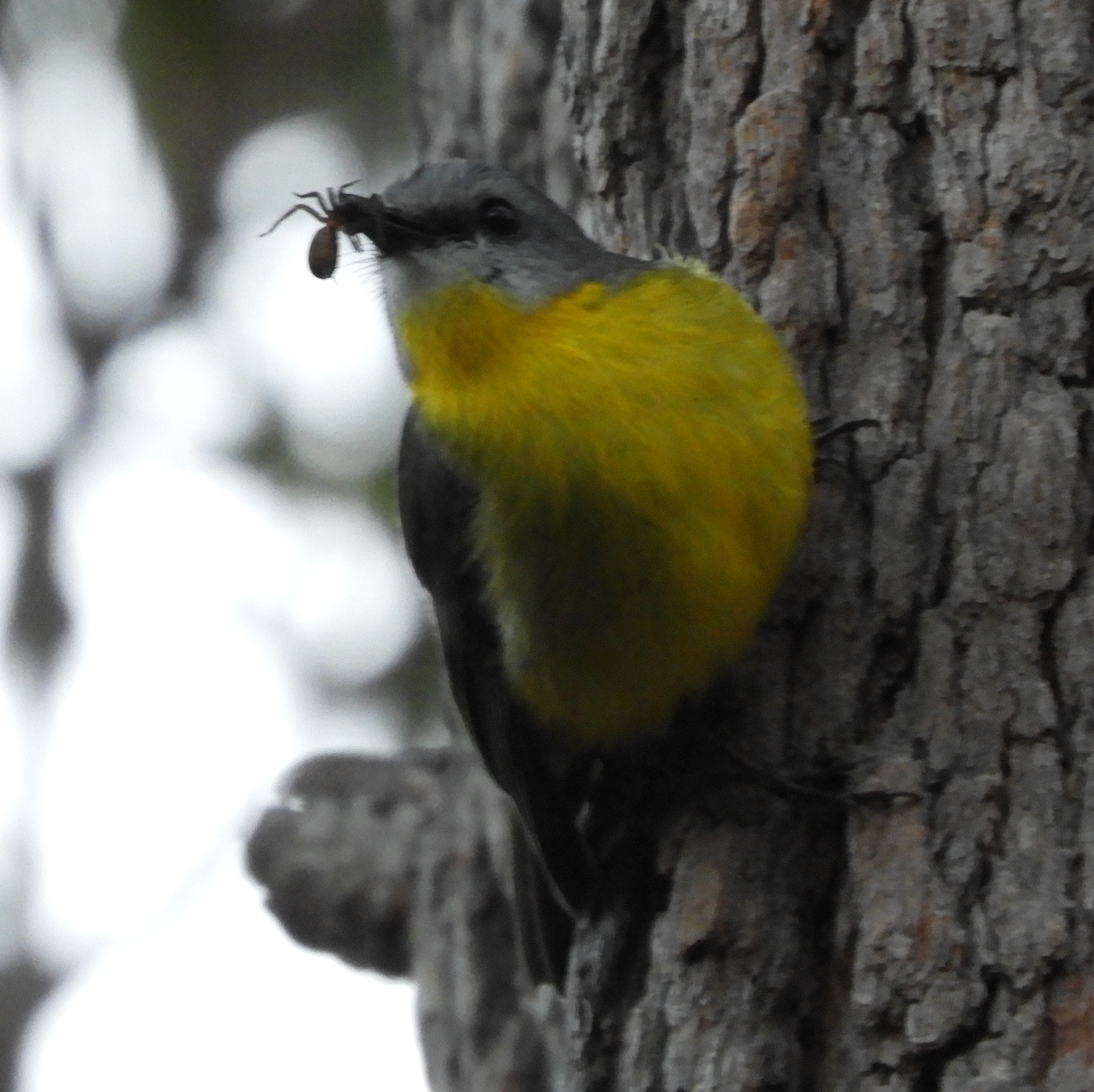
Common name: Pale-yellow Robin
Scientific name: Tregellasia capito
Approximate length: 12 cm
Date spotted: 12 September 2020 (spring)
Location: Manly Dam Reserve, New South Wales, Australia: 33°46’24.0″S 151°15’08.0″E
Grey Fantail
This is only the second time I’ve managed to get a picture of a Grey Fantail. Grey Fantails are smaller than Willie Wagtails, and softer in colouring. They make a similar squeaky call, but not quite as piercing as Willie Wagtail.
I’ll try to get a good photo of a Grey Fantail, if one of them will stay still long enough! In the meantime, here’s the earlier video that I took of one of these birds, about three years ago. The bird was showing off its tail-fanning skills.
Common name: Grey Fantail
Scientific name: Rhipidura fuliginosa
Approximate length: 14-17 cm
Date spotted: 4 September 2020 (spring)
Location: Manly Dam Reserve, New South Wales, Australia: 33°46’23.8″S 151°15’05.8″E
Two varieties of the Eastern Whipbird call
The call of the Eastern Whipbird is a fairly common sound, for those of us lucky enough to live near a patch of Australian bush. The birds make a weird whistling noise that ends in an abrupt burst of noise, a little like the crack of a whip. Hence the name whipbird.
In the first of these two videos, the bird ends its call with an upward tone, while in the second video it chooses a descending tone. First, the upward tone:
Next, the more squeaky downward ending:
The call seems to take a lot of effort, including a little hop and a flap of the wings. I was surprised at how short the bird’s wings are. They seem quite stubby, compared with the elegance of the rest of the body.
Whipbirds are shy, sticking to the undergrowth and making it difficult to get a good picture. Here’s a photo that shows the olive green colouring of the bird’s feathers:

Common name: Eastern Whipbird
Scientific name: Psophodes olivaceus
Approximate length: 30 cm
Date spotted: 3 September 2020 (early spring)
Location: Manly Dam National Reserve, New South Wales, Australia: 33°46’36.2″S 151°14’47.9″E
Blue Laughing Kookaburra at The Bluff above Bantry Bay
Today I hiked from Seaforth Oval to Natural Bridge. Phew! Almost 12,000 steps, 7.7 km, and three climbs down into the valley and back up again! It’s a good walk with lovely views of Bantry Bay, which is one of the inlets of Sydney Harbour.
Close to a lookout point called The Bluff was this fine-looking Laughing Kookaburra. It has a lot more blue in its feathers than most kookaburras that I’ve seen. Perhaps it’s clothed in its spring finery.

This is the view of Bantry Bay from The Bluff Lookout:

Common name: Laughing Kookaburra
Scientific name: Dacelo novaeguineae
Approximate length: 47 cm
Date spotted: 31 August 2020 (Late winter)
Location: Bluff Trail, Killarney Heights, New South Wales, Australia: 33°46’00.3″S 151°13’42.3″E
Soothing musings about birds and more
I’ve started a YouTube channel called Soothing musings with Sarah. The first musing features birds! It’s called If I were a coot:
I have more soothing musings in mind. The next few are about other things I’ve come across in nature. Not birds, but there may be more avian musings in future! If you’re interested, you can subscribe to the YouTube channel to get a notification when the next musing comes out.
Masked Lapwing (Spur-winged Plover) screeching
A pair of Masked Lapwings (also known as Spur-winged Plovers) strutted companionably on the shore of Manly Dam. Every so often, one of them took off and flew a circuit around the area. The bird left on the ground started calling, and watched the progress of its companion carefully from the ground. The bird in the air replied occasionally, as if to assure its mate that it was still around.
To me, the yellow attachments on the faces of these birds seem rather strange. I guess they do make the birds stand out from other species. Not much chance of making a mistake when a bird is looking for a mate!
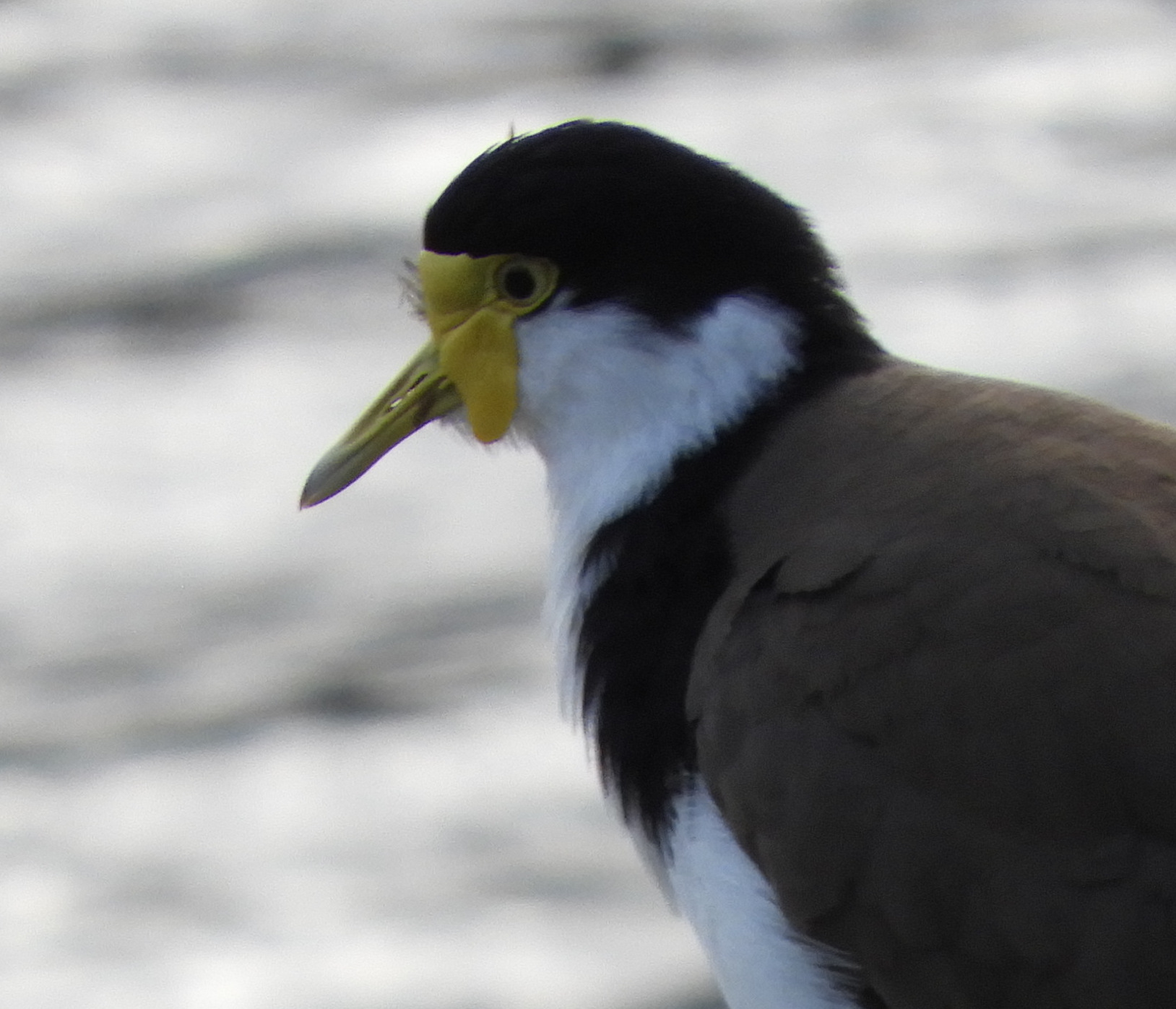
The birds have two names: Masked Lapwings, due to that strange yellow mask, and Spur-winged Plovers. The second name comes from the hooks (spurs) on the birds’ wings that they use to fend off any creature that threatens them or their young. If a Spur-winged Plover flies at you, it’s best to duck or hold your arms around your head!

Common name: Masked Lapwing, or Spur-winged Plover
Scientific name: Vanellus miles
Approximate length: 37 cm
Date spotted: 8 August 2020 (winter)
Location: Manly Dam Nature Reserve, New South Wales, Australia: 33°46’35.0″S 151°14’50.4″E
Red Wattlebird on Banksia
Red Wattlebirds are large, noisy honeyeaters. They get their name from the red flaps of skin below their eyes. This one was feeding on the nectar of a Heath Banksia flower:

The next picture shows both wattles on the bird’s neck:
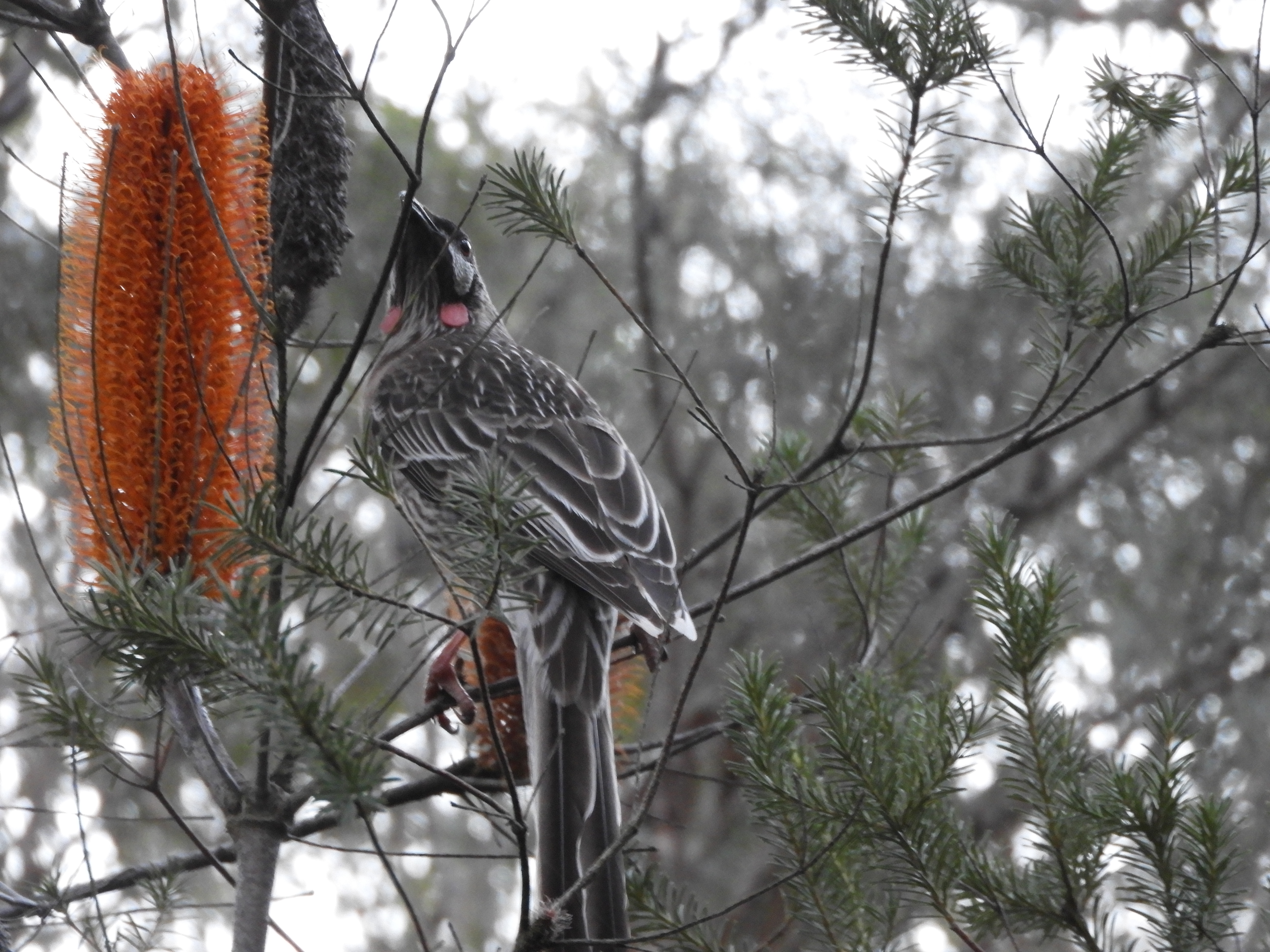
Common name: Red Wattlebird
Scientific name: Anthochaera carunculata
Approximate length: 35 cm
Date spotted: 18 July 2020 (winter)
Location: Manly Dam National Park, New South Wales, Australia. Approximate map reference: 33°46’27.0″S 151°14’57.6″E
Little Wattlebirds are common in the area too. The two birds can be hard to tell apart. Red Wattlebirds are larger (approx 35 cm from head to tail) whereas Little Wattlebirds measure approximately 30 cm. Little Wattlebirds don’t have the large red wattles. Here’s a Little Wattlebird that I photographed a while ago:

The sinuous neck of a Darter
Darters are sometimes called snakebirds, because of their long, sinuous necks. I came across this small darter sheltering on a branch close to the footpath at Manly Dam.

The bird didn’t seem to be worried by my presence. I stood and watched it for a while, enjoying the supply movements of its wings and neck:
At one stage a couple of ravens started cawing. The darter showed some concern, looking skywards to see if there was any threat:
Darters use that long neck to hunt underwater, straightening it suddenly to dash out and catch their prey.
Here’s a close-up shot of the bird’s head, neck, and shoulders, with the neck coiled up in the resting pose:
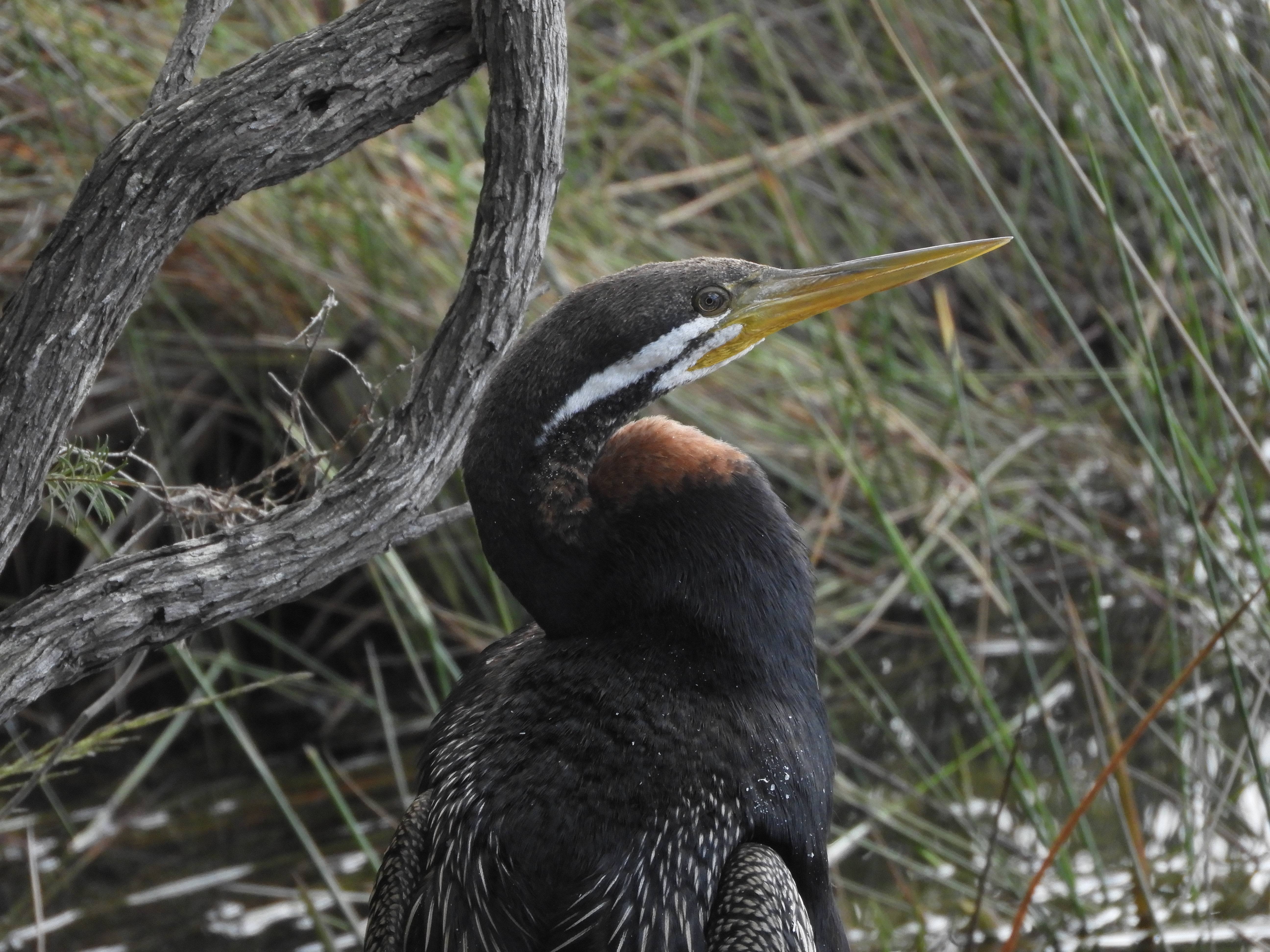
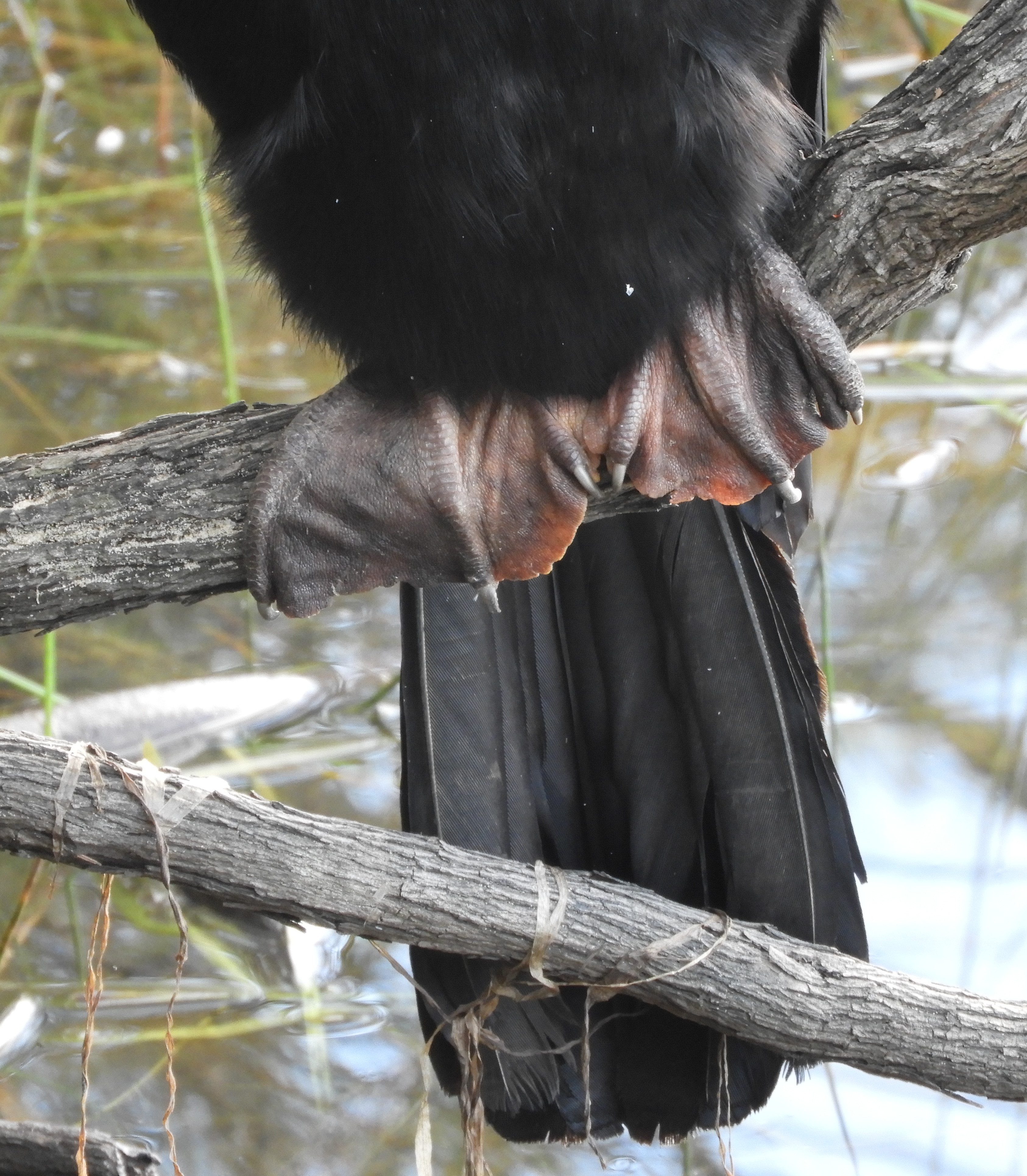
The bird’s feet are webbed, good for swimming and for clasping a branch:
Spreading its feathers prior to a stretch:

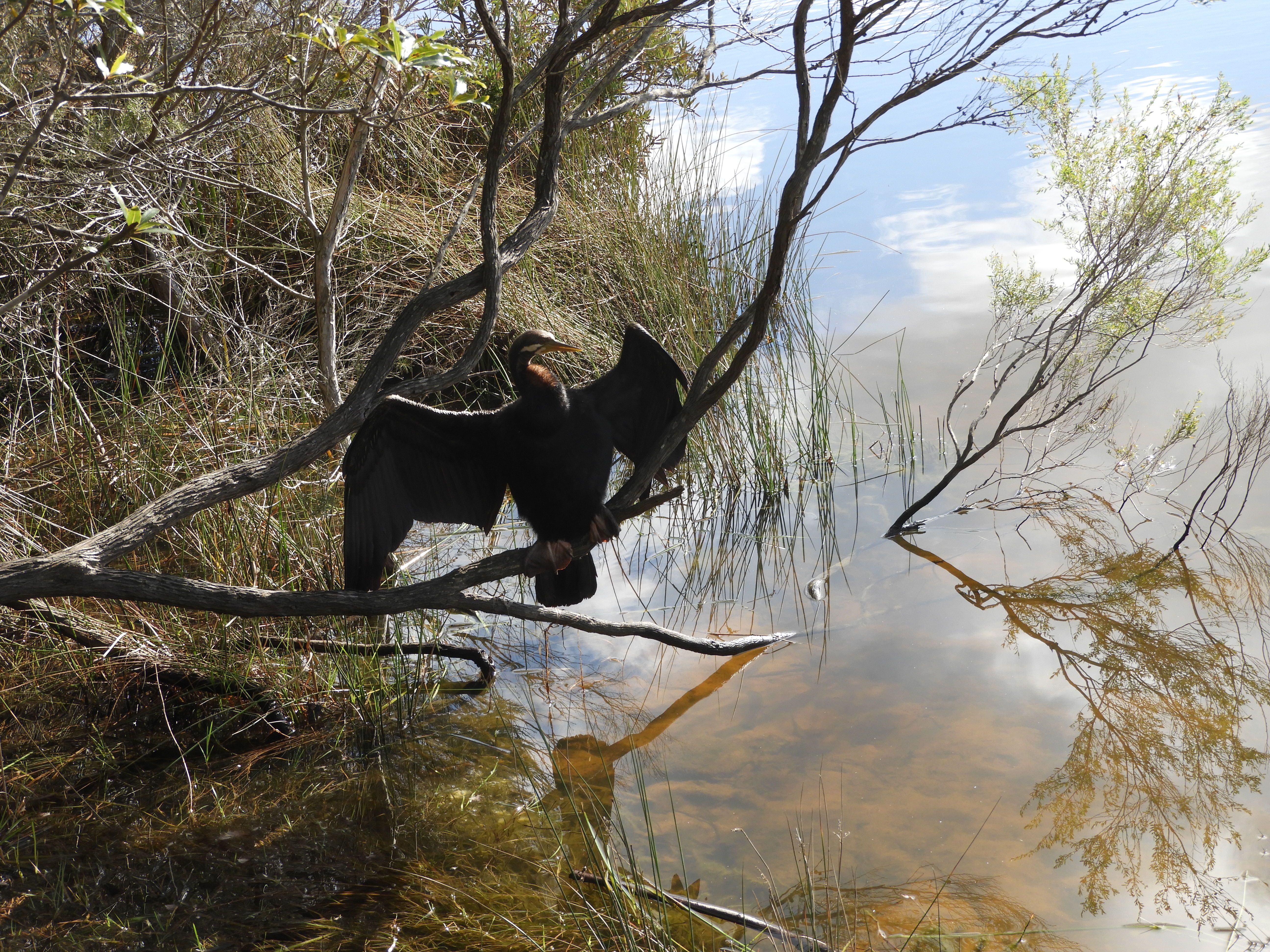
Like cormorants, darters need to hold out their wings to dry:
Common name: Darter
Scientific name: Anhinga melanogaster
Approximate length: 90 cm; wing span: 1.2 m
Date spotted: 30 June 2020 (winter)
Location: Manly Dam Reserve, New South Wales, Australia: 33°46’38.5″S 151°14’57.0″E
Superb Lyrebird – excited to see and hear one in the wild
This morning I went for a stroll along the Berkeley Trail in Berowra. I stopped at the Naa Badu lookout point, to admire the view. From just below me, hidden by the rocks and trees, I heard a busy scratching and rustling. After a few minutes, a male Superb Lyrebird hopped up onto a rock and started whistling:
The bird is rather hidden by the bushes, but you can hear the lovely, clear sounds it makes, and you can get an idea of its appearance, including that impressive tail:
Common name: Superb Lyrebird
Scientific name: Menura Novaehollandiae
Approximate length: 80-95 cm
Date spotted: 3 July 2020 (winter)
Location: Naa Badu Lookout, Berowra, New South Wales, Australia: 33°37’04.8″S 151°07’41.4″E
Superb Lyrebirds are known for their ability to mimic other birds and the sounds around them. I plan to return to the Berowra area and film more of these birds!
This is the view that the lyrebird and I shared from the Naa Badu lookout:

Song of the Fan-tailed Cuckoo
Walking through the Aussie bush, I’m sometimes intrigued by a musical trill coming from the hidden depths of the forest. The sound starts high and drops rapidly down the scale to a lower pitch. Today, for the first time, I managed to spot the bird that makes this lovely noise: a Fan-tailed Cuckoo:
At first I thought it couldn’t be a cuckoo, because don’t all cuckoos leave for warmer climes when winter arrives on the Australian east coast? Evidently not. For the most part, Fan-tailed Cuckoos brave the cold weather, although those in Tasmania do move north into the mainland.
Here’s the cuckoo caught in mid trill:
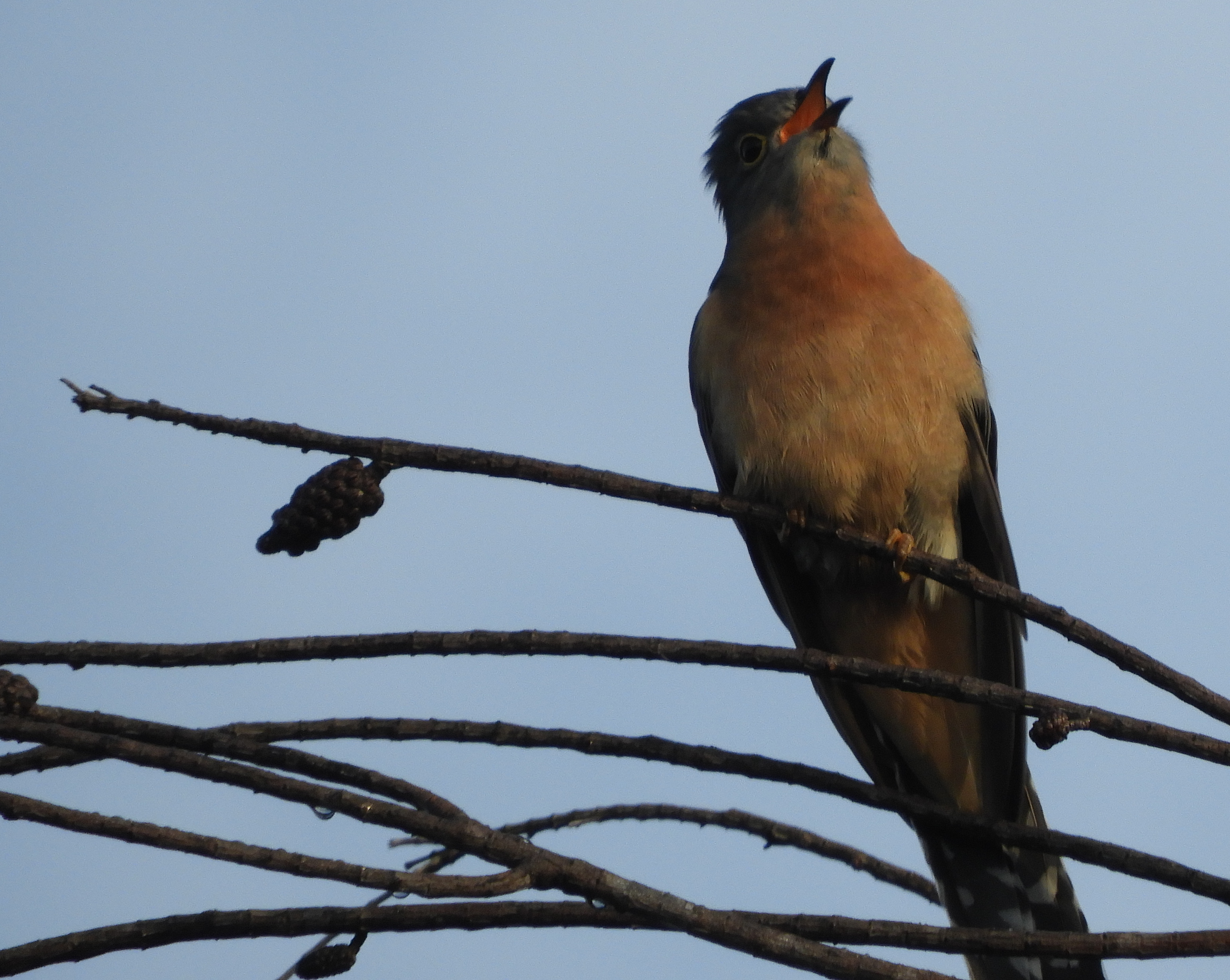
Like other cuckoos, these birds lay their eggs in the nests of other species. Fan-tailed Cuckoos choose fairy-wrens and thornbills as their hosts. Such small little parents to raise a cuckoo!
Here’s another shot of the bird, this time with its beak closed:

This particular bird has a lovely rich coloring. Other photos I’ve seen show less orange in the chest feathers, and a lighter grey on the head and back.
Singing again:
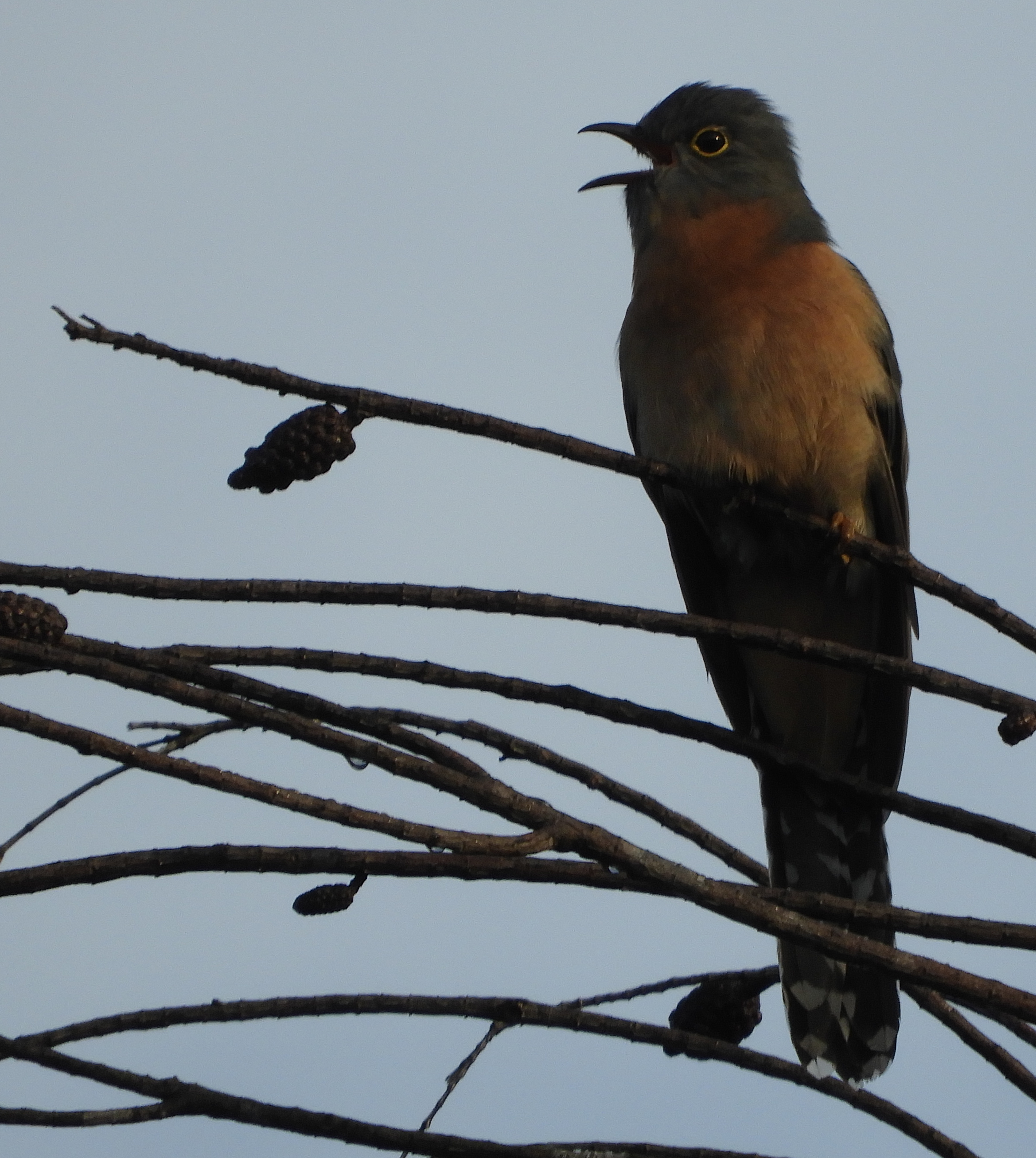
Fan-tailed Cuckoos feed on insects. Typical behaviour is to sit high up on a branch then swoop down when a meal crawls or flutters into view. Here’s a non-zoomed-in view of the bird:
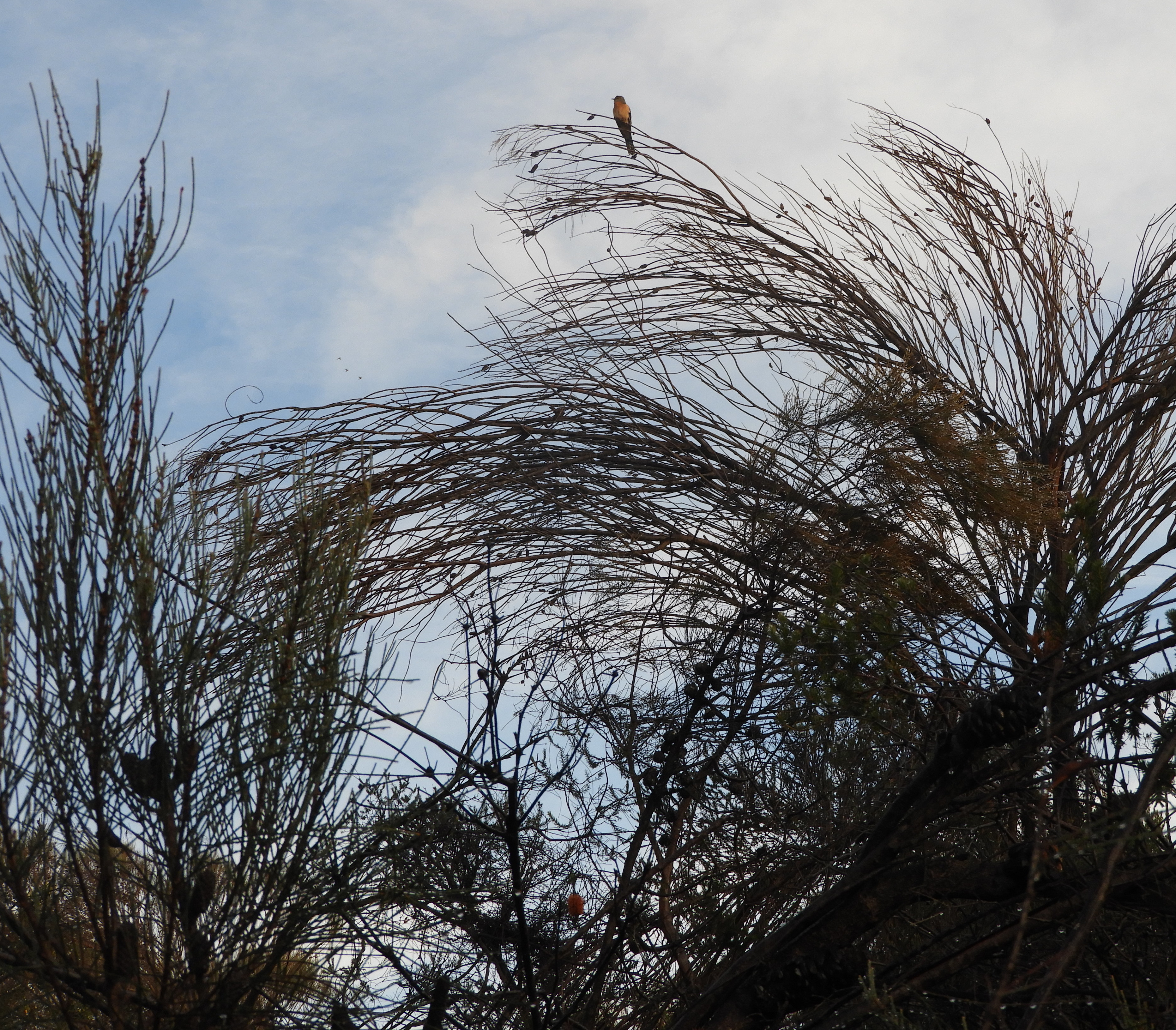
Common name: Fan-tailed Cuckoo
Scientific name: Cacomantis flabelliformis
Approximate length: 26 cm
Date spotted: 13 June 2020 (winter)
Location: Manly Dam National Park, New South Wales, Australia: 33°46’29.5″S 151°14’46.3″E


 Sydney Birder