Author Archives: Sarah Maddox
Butcherbird has whiskers!
A few butcherbirds are frequenting my area at the moment. This one is a Grey Butcherbird:
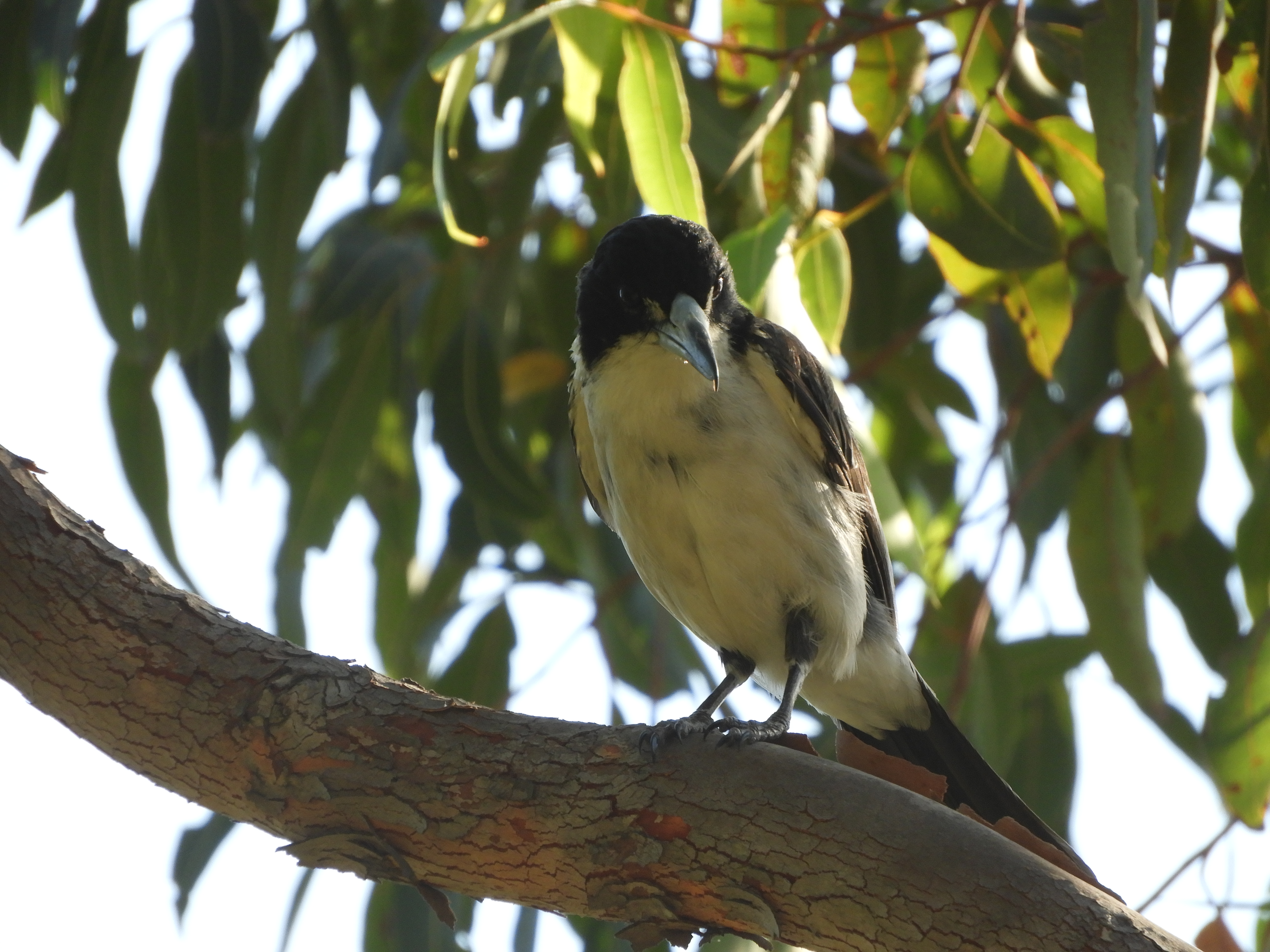
When it tilted its head, I noticed some dark whiskers below its eye:
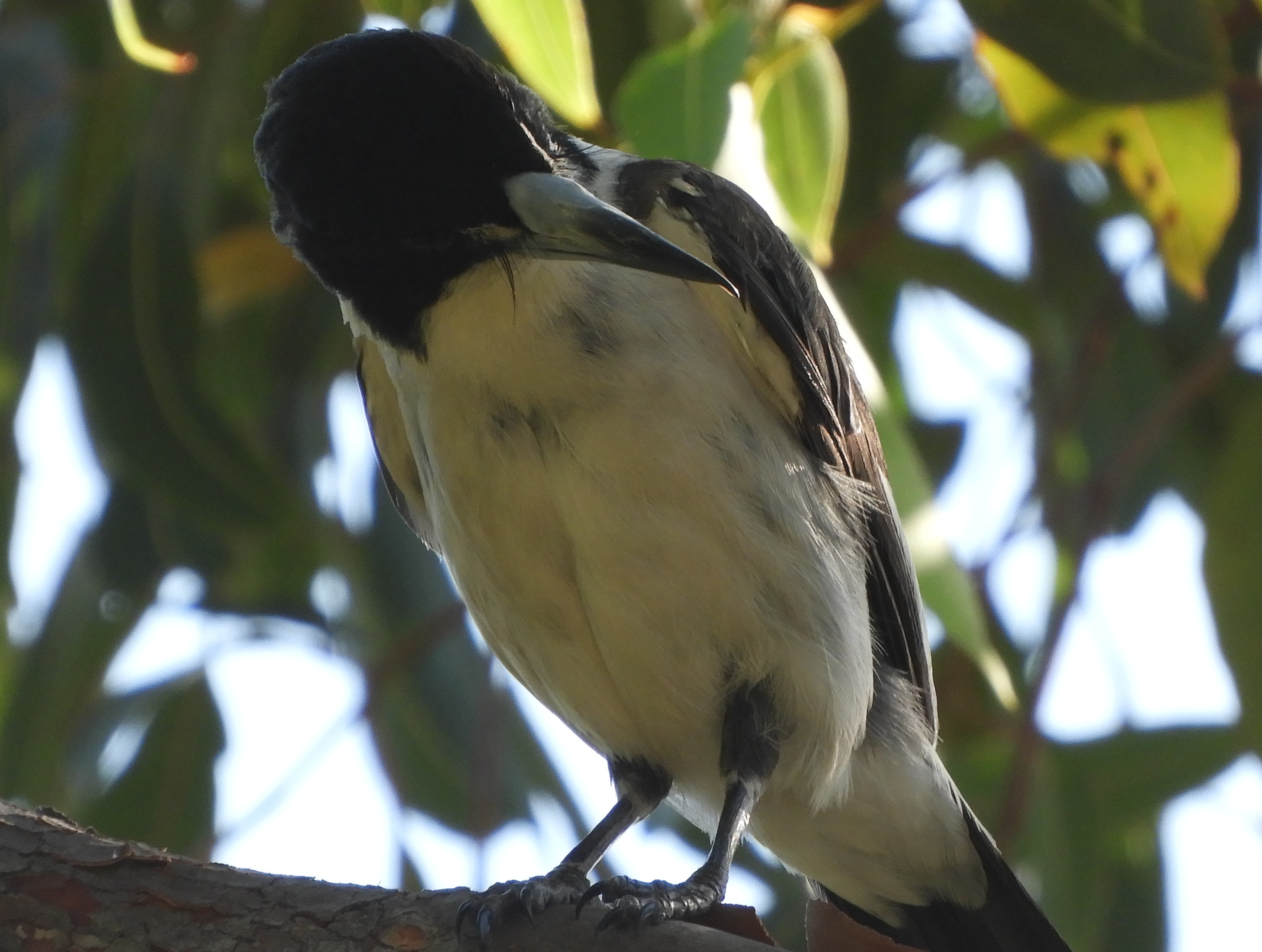
When it looked upwards, I could make out the whiskers on both sides of its beak:
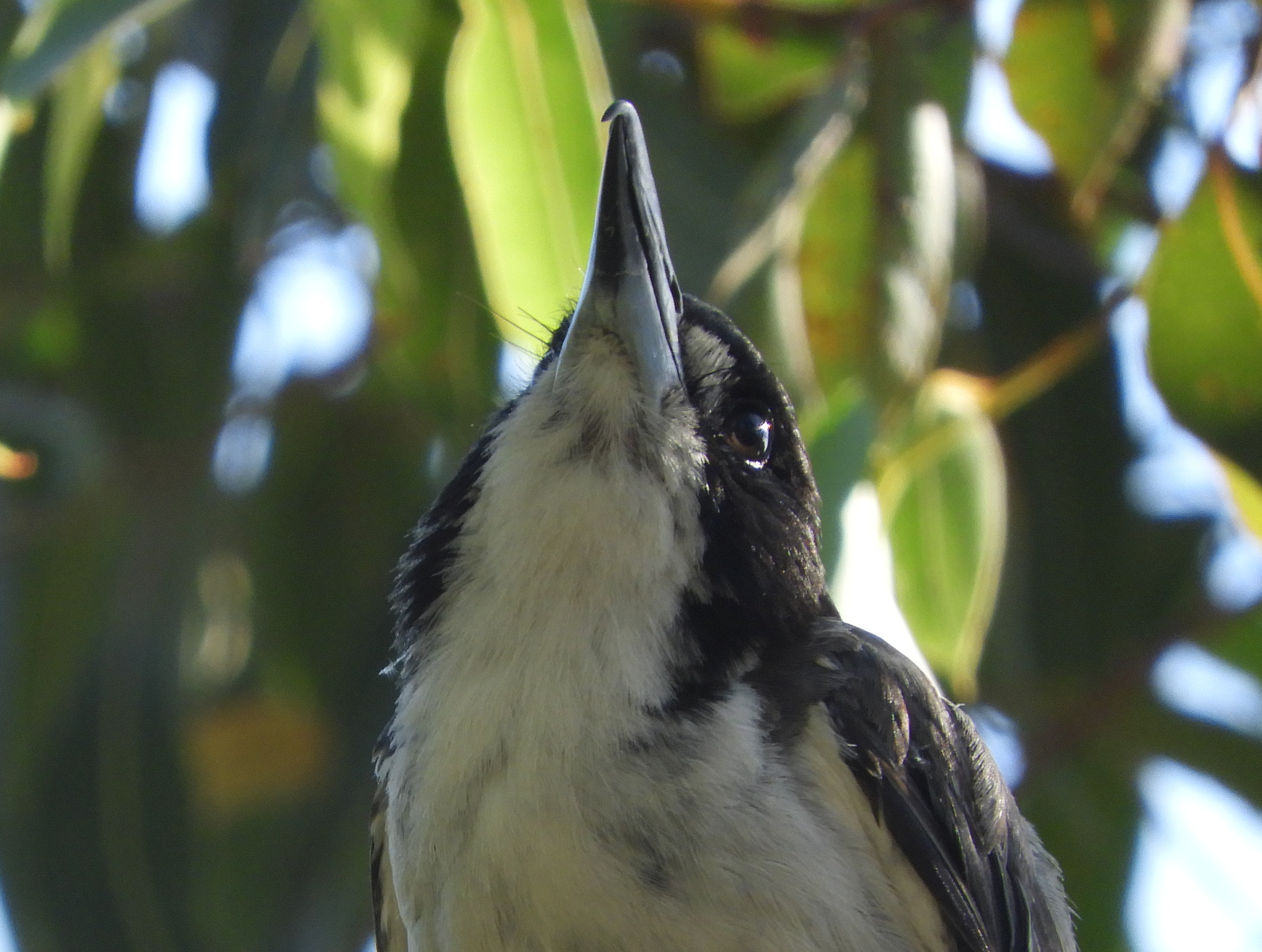
A full-frontal gaze shows off the white patches (lores) in front of its eyes:
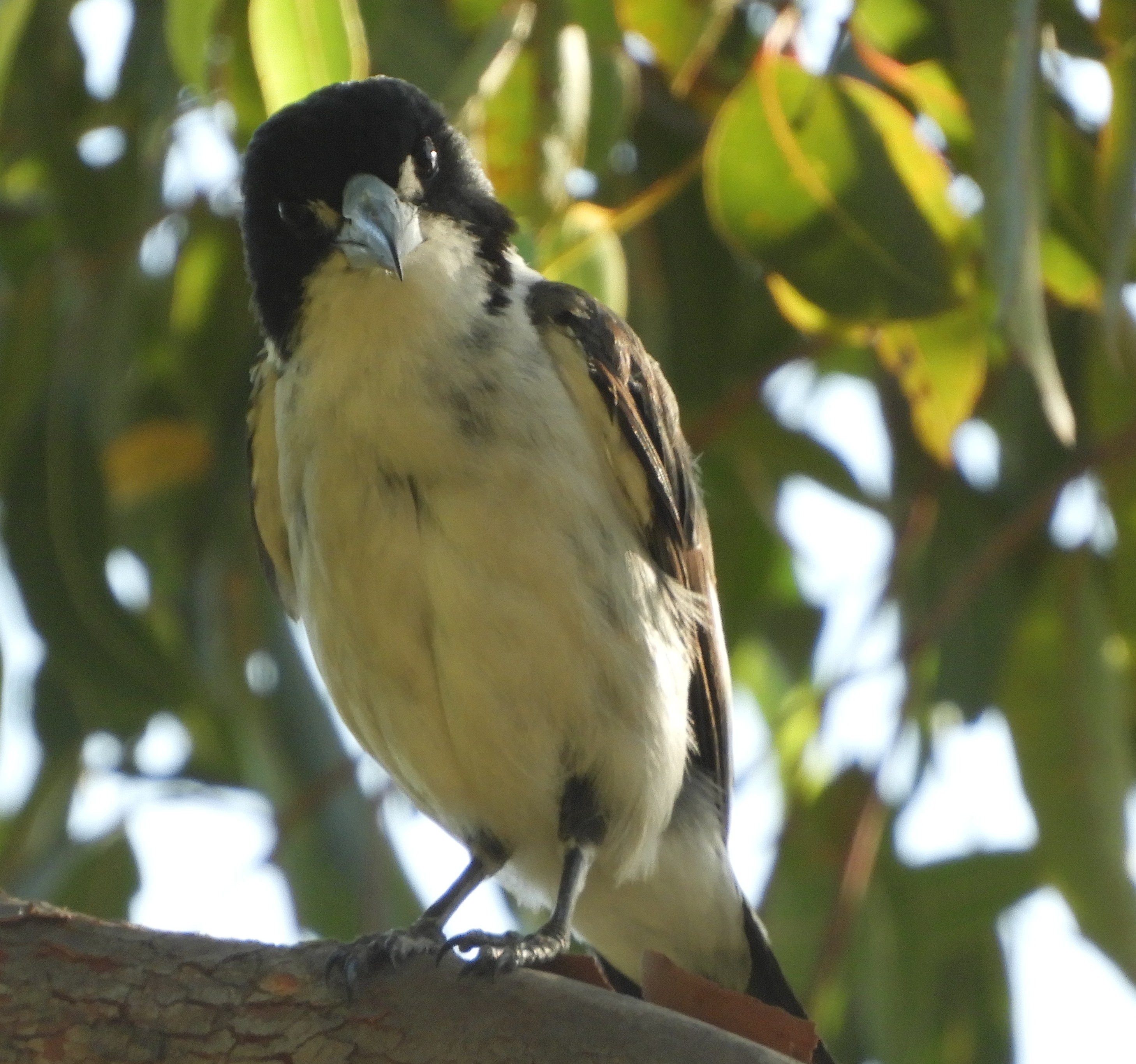
A yawn shows its tongue off nicely:

Here’s a profile to close the post. The hook on the end of the beak is for stabbing prey, which the butcherbird then hangs on a branch or a fence until it’s ready to eat:
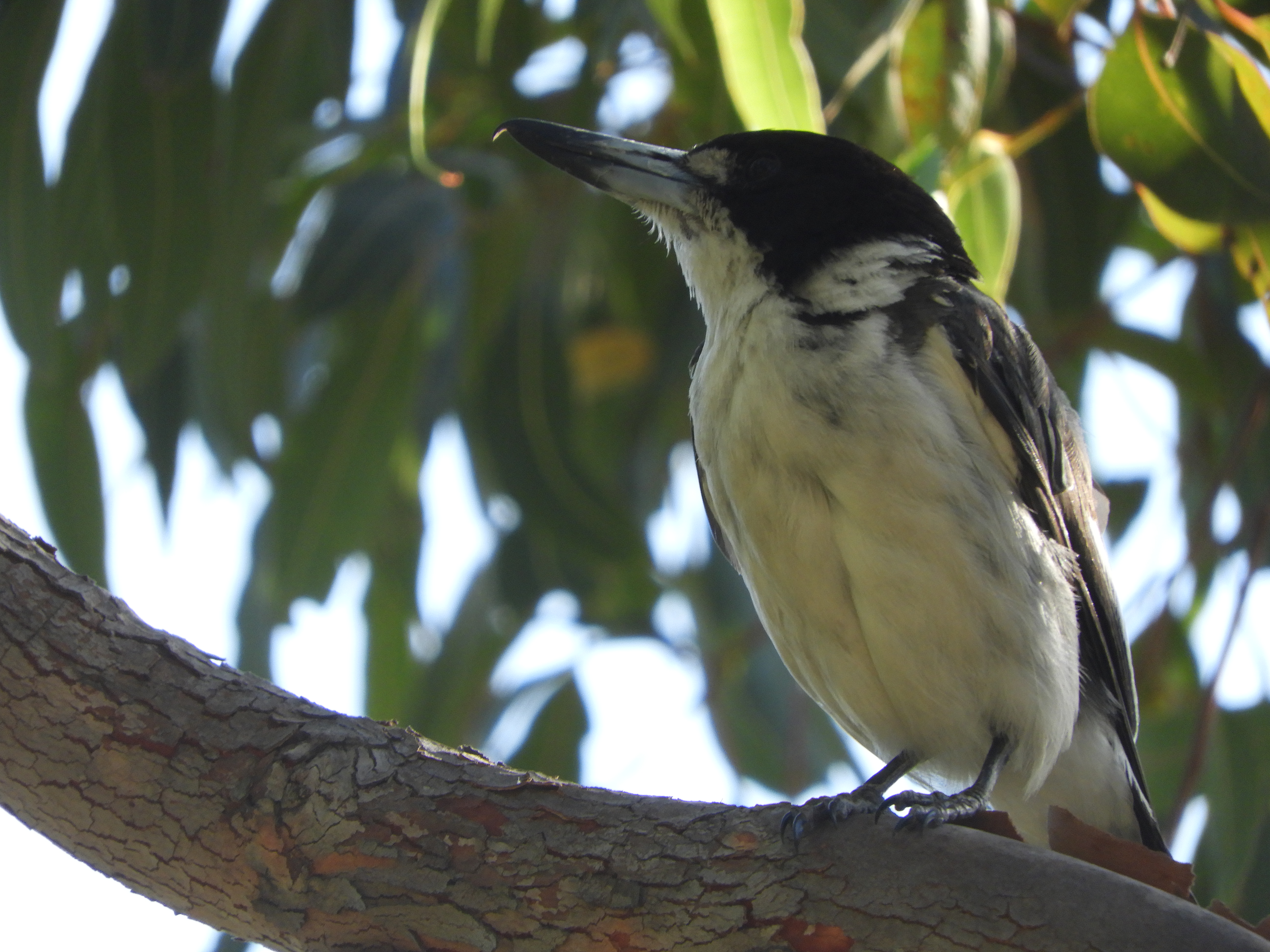
Common name: Grey Butcherbird
Scientific name: Cracticus torquatus
Approximate length: 30 cm
Date spotted: 5 January 2019 (Summer)
Location: Allambie Heights, New South Wales, Australia
Case moth caterpillar or bagworm in Sydney
Occasionally we see strange little caterpillars dragging what looks to be some kind of shell or case around with them. Here’s one moving precariously across a wall:
The clothes peg at start and end of the video is for scale. The caterpillar and its case are just a few millimetres long. The head and thorax of the caterpillar stick out at the top of the case, with the rest of the body inside the case. There’s nothing holding the case against the wall except the caterpillar’s six tiny legs at the top!
After seeing the above caterpillar yesterday, I searched the internet to find out what it was. It looks to be a caterpillar of a case moth (Psychidae), also called a bagworm.
Then I remembered another odd case that I’d seen on the wall of our house a year or so ago. That turns out to be a case moth’s case too. This one is more decorative than the one above:
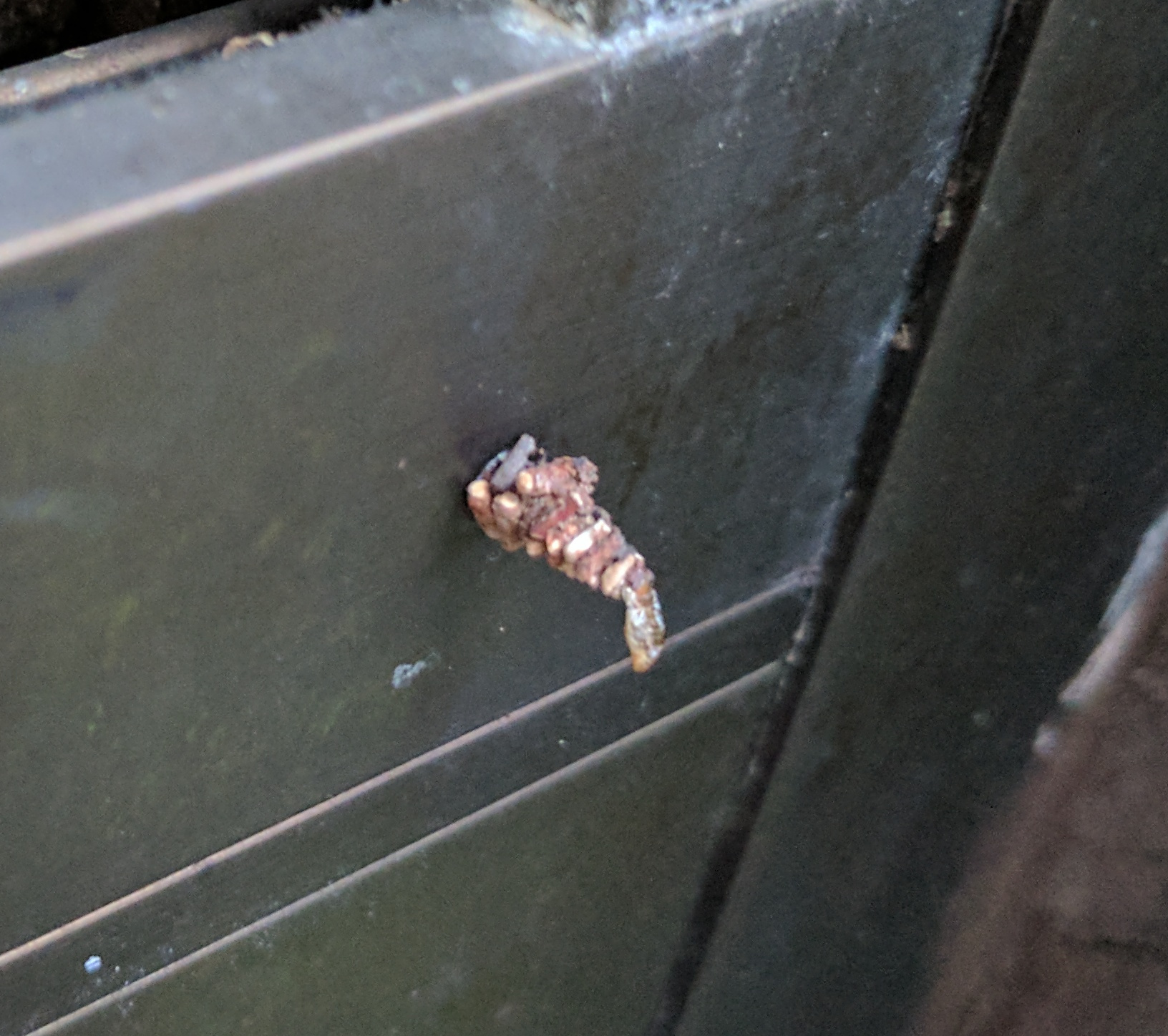
Evidently the caterpillar pupates within the case, and sometimes the female moth even lives her entire live within the case.
The Butterfly House has more pictures of the decorative cases of the case moth.
Common Myna picks a millionaire’s view
You’ll see Common Myna birds, also called Indian Mynas, throughout Sydney. They strut around restaurant tables, colonise balconies, peek into windows, and generally act like they own the place. They’re not original natives of Australia, but they’re so common a sight that most people assume they’re a native species nowadays.
Often these birds look a little tatty, as if they’ve lived an interesting life. But a couple of days ago I saw this glossy bird roosting on the edge of a cliff at Dee Why Headland:
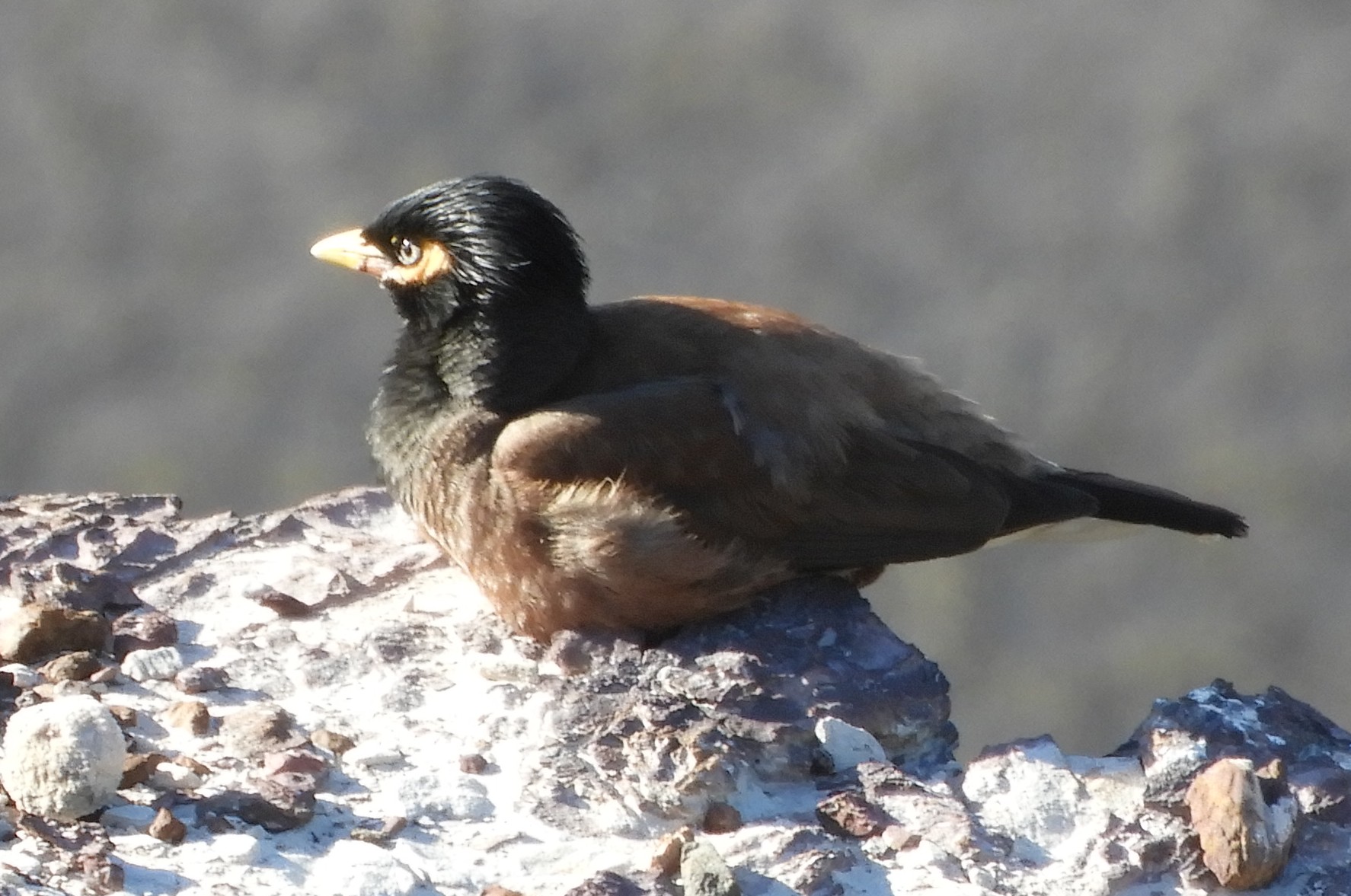
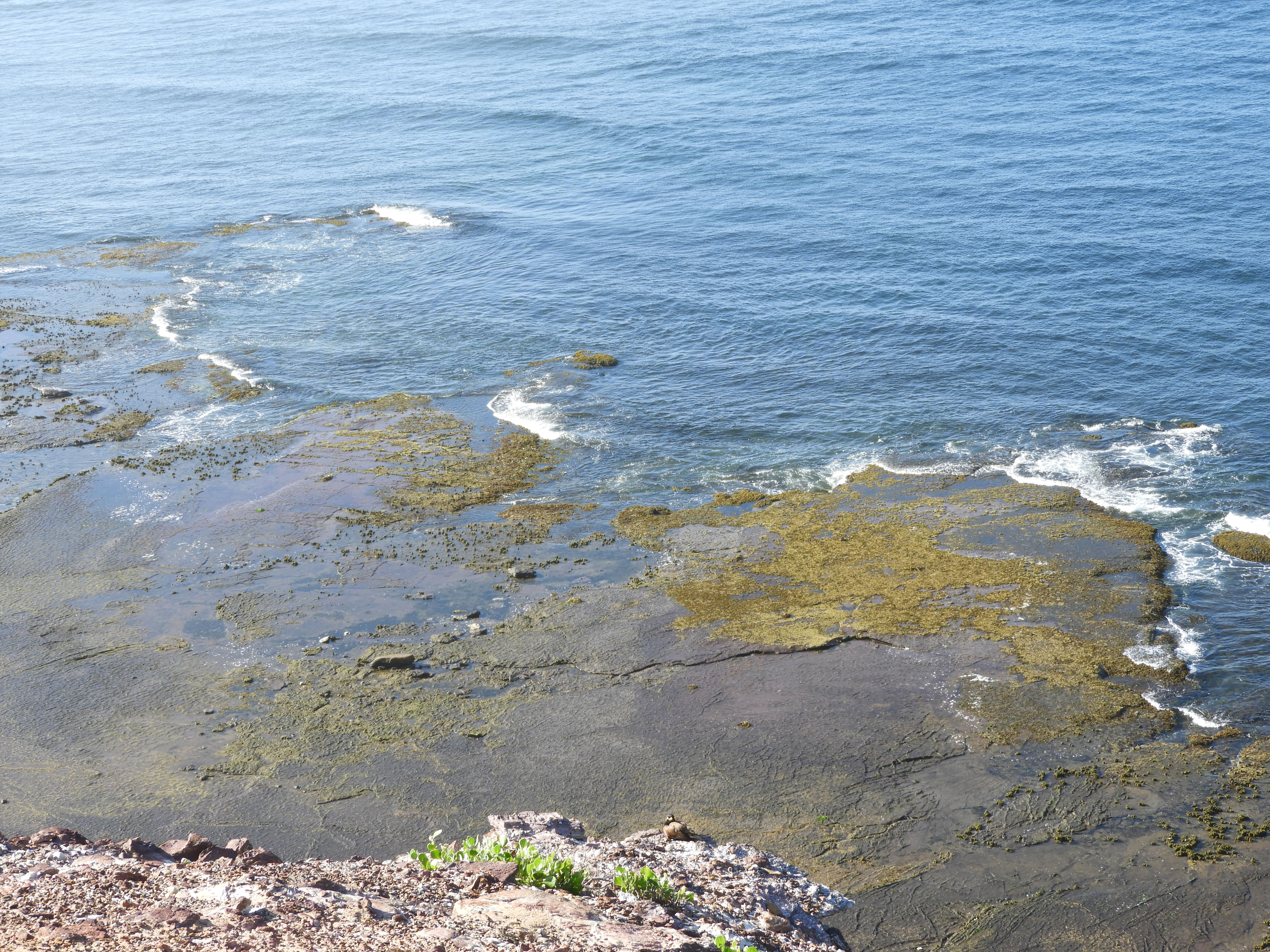
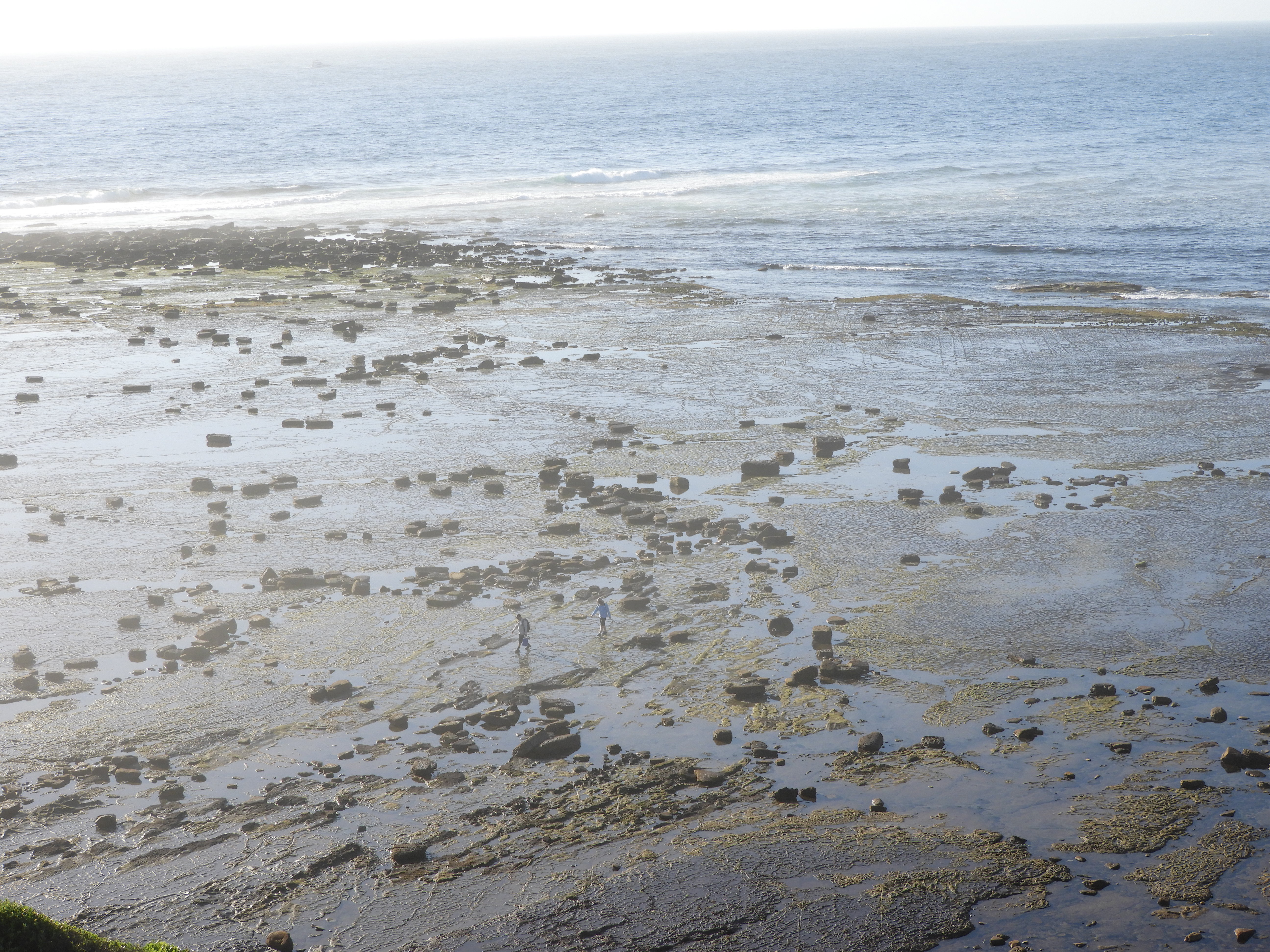
Zooming out, here’s the view that the bird is enjoying. If you look carefully, you’ll see the bird perched on the rocky outcrop at the bottom of the picture, to the middle right.
Not to be confused with the Australian Miner (“Noisy Miner”), the Common Mynas were introduced into Victoria in the late 1800s, to control the level of insects in market gardens. The birds have since made their way up the coast to New South Wales. Their original home is Asia (Kazakhstan, Turkmenistan, Iran, China, Indochina, Malay Peninsula, India).
Here’s another view of the same bird, still comfortably resting on the cliff edge:
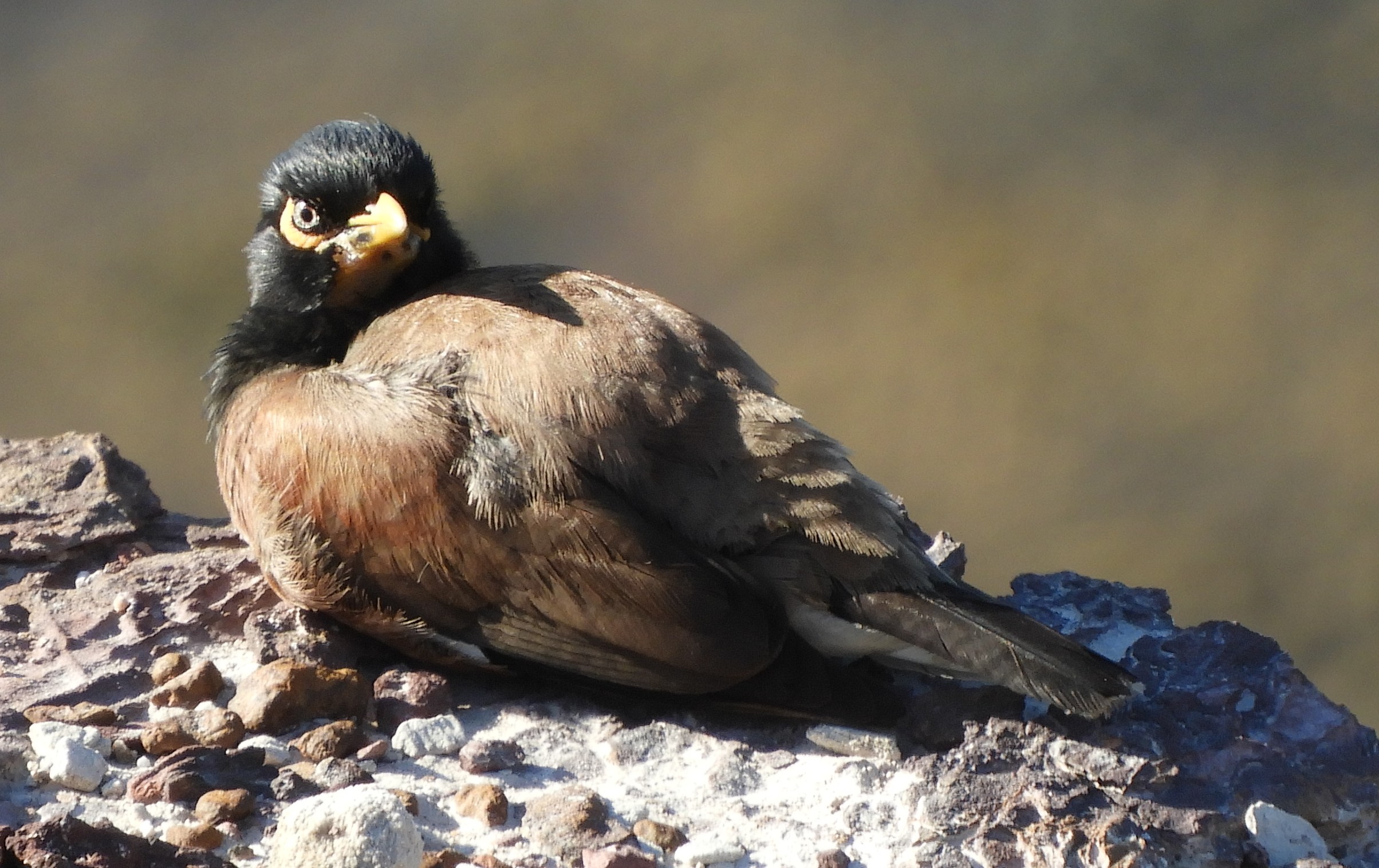
At first I wondered if the bird was sitting on a nest. But then it stood up when a friend arrived to share the view, and there’s no nest in sight:

What can they see from their perch? Here’s their view of Long Reef, with two people walking on the rocks far below:
These little mynas are quite chatty and can make a wide variety of sounds. In this video of a group of birds on the same Dee Why Headland on the same day, you hear just some of the noises they make:
Common name: Common Myna, or Indian Myna
Scientific name: Acridotheres tristris
Approximate length: 25 cm
Date spotted: 29 December 2018 (Summer)
Location: Long Reef Headland, Dee Why, New South Wales, Australia: 33°44’30.6″S 151°19’04.2″E
Ninja wattlebird – now you see it now you don’t
Spot the bird:

It’s a common sight to see a Little Wattlebird on a banksia flower, digging its beak between the florets to find the nectar. I hadn’t realised until now, though, how perfectly camouflaged the bird is on the grey branches of a mature banksia, particularly when surrounded by dead flowerheads.
Here’s a closeup pic of the bird, looking supremely confident though, dare I say it, not very well groomed:

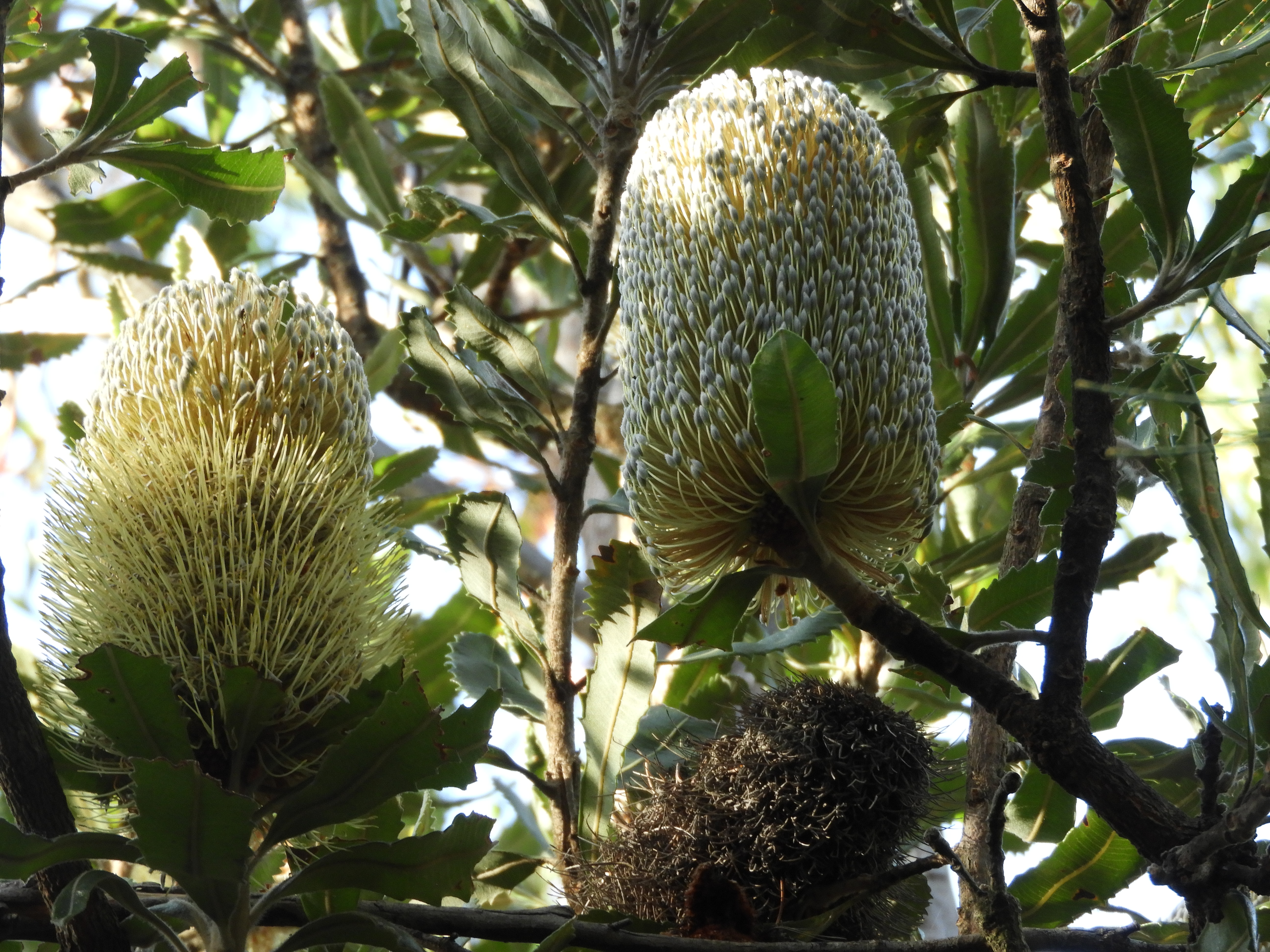
These are the flowers of the Banksia Serrata tree where I saw the bird:
The wattlebird later moved to a bare branch to do a bit of grooming. Caught in dishevelled silhouette against the morning sun:

Common name: Little Wattlebird
Scientific name: Anthochaera chrysoptera
Approximate length: 30 cm
Date spotted: 26 December 2018 (Summer)
Location: Manly Dam National Park, New South Wales, Australia: 33°46’15.4″S 151°14’45.0″E
Cormorants at Long Reef Headland, Dee Why
This morning I took a walk along Dee Why Headland and followed the path down onto Long Reef. Far in the distance, perched on the rocks at the sea’s edge, was an assortment of cormorants.
Pretty cool: when I dropped the pin on Google Maps to mark the spot, the label came up as “Near South Pacific Ocean”!
Great Cormorants
First there were these four birds, which I think are Great Cormorants. The air was full of spray and the early morning sun was low in the sky, so it’s hard to be sure. One is holding its wings up in typical cormorant style. The birds seem to be just about entirely black, with yellow or white around the beak. At the end of the video, I zoom back out so that you can see just how far away the birds were. On cue, a yacht hoves into view too.
Common name: Great Cormorant
Scientific name: Phalacrocorax carbo
Approximate length: 85 cm; wing span 1.5 m
Date spotted: 29 December 2018 (Summer)
Location: Long Reef Headland, Dee Why, New South Wales, Australia: 33°44’30.6″S 151°19’04.2″E
Little Pied Cormorant
Next I saw this Little Pied Cormorant, looking a bit ruffled:
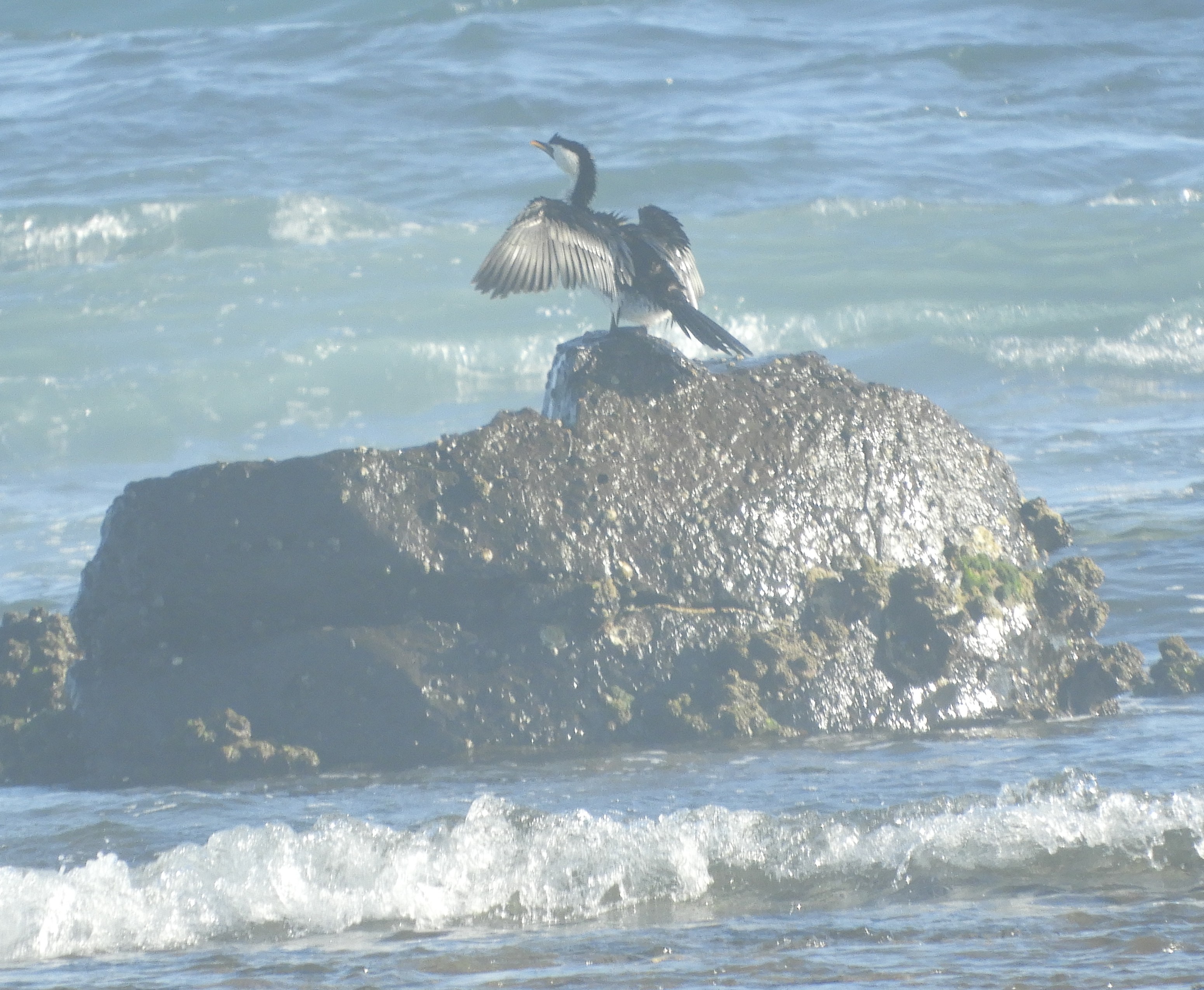
Here’s a video of the Little Pied Cormorant enjoying the waves and the sticky breeze:
Common name: Little Pied Cormorant
Scientific name: Phalacrocorax melanoleucos
Approximate length: 60 cm
Date spotted: 29 December 2018 (Summer)
Location: Long Reef Headland, Dee Why, New South Wales, Australia: 33°44’30.6″S 151°19’04.2″E
Thunderstorm rolling over the valley
A few evenings ago, a storm rolled over the valley below our house and across Curl Curl beach in the far distance. I managed to film some of the action. It’s strangely soothing to watch the clouds, hear the thunder, and see the lightning brighten the sky. The clicks you hear are the first drops of rain hitting the roof.
Kookaburras call to herald the start of the storm:
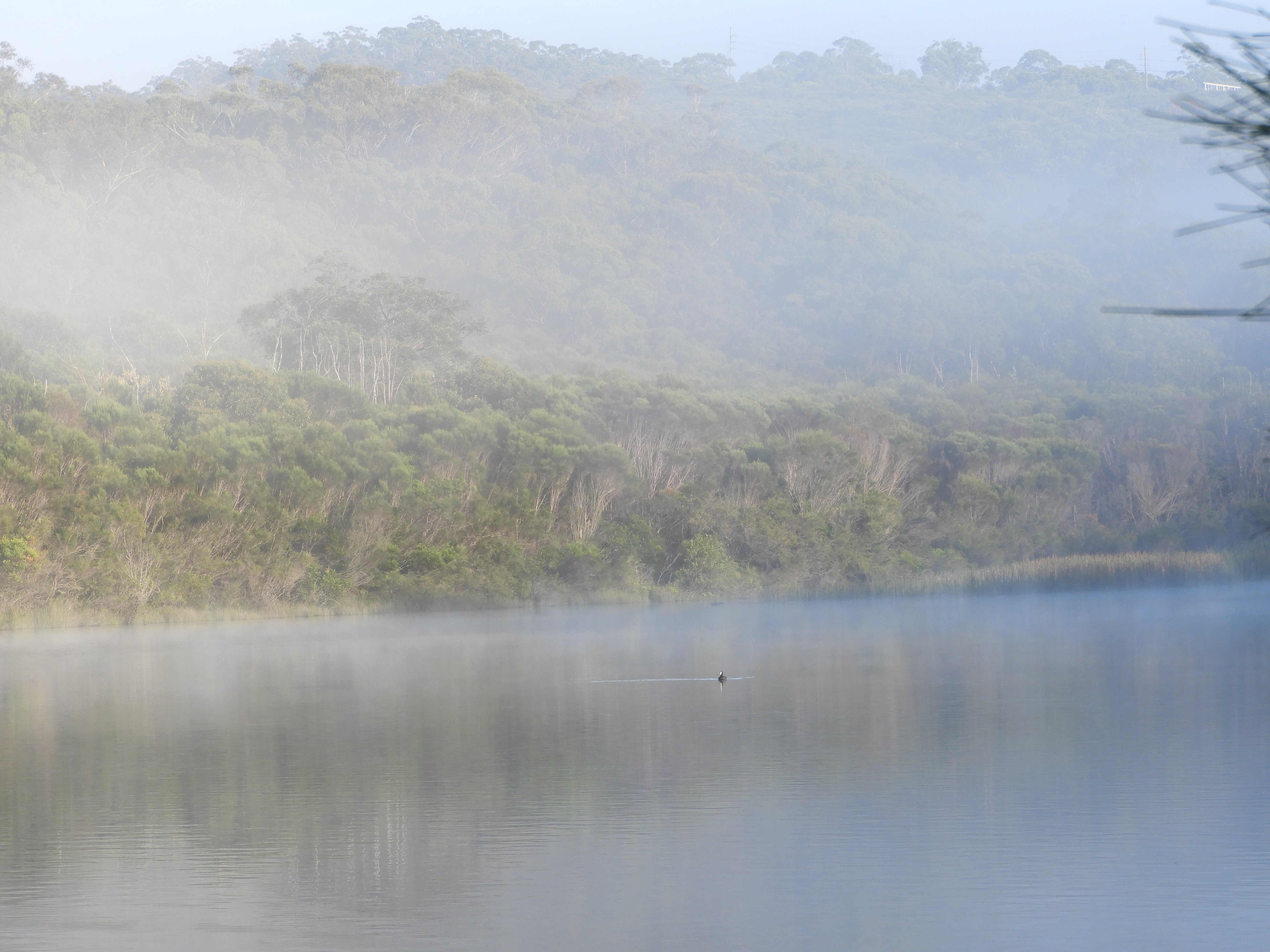
Misty coot
Mist over Manly Dam. You can’t really see the coot. But then, you don’t really need to see it. It’s just there, as coots are.
Common name: Eurasian Coot
Scientific name: Fulica atra
Approximate length: 35 cm
Date spotted: 26 December 2018 (Summer)
Location: Manly Dam Reserve, New South Wales, Australia: 33°46’27.7″S 151°15’05.9″E
Baby Kookaburra practising its call
This youngster looks too bashful to burst into the full-throated call of an adult Kookaburra. Perhaps it hasn’t developed the vocal power yet. Or perhaps it’s daunted by those pesky cicadas!
Male Koel Cuckoo in shot at last
Recently I’ve managed to snap a few shots of female Eastern Koels, also called Common Koels or Koel Cuckoos. Now a male has come into my sights:
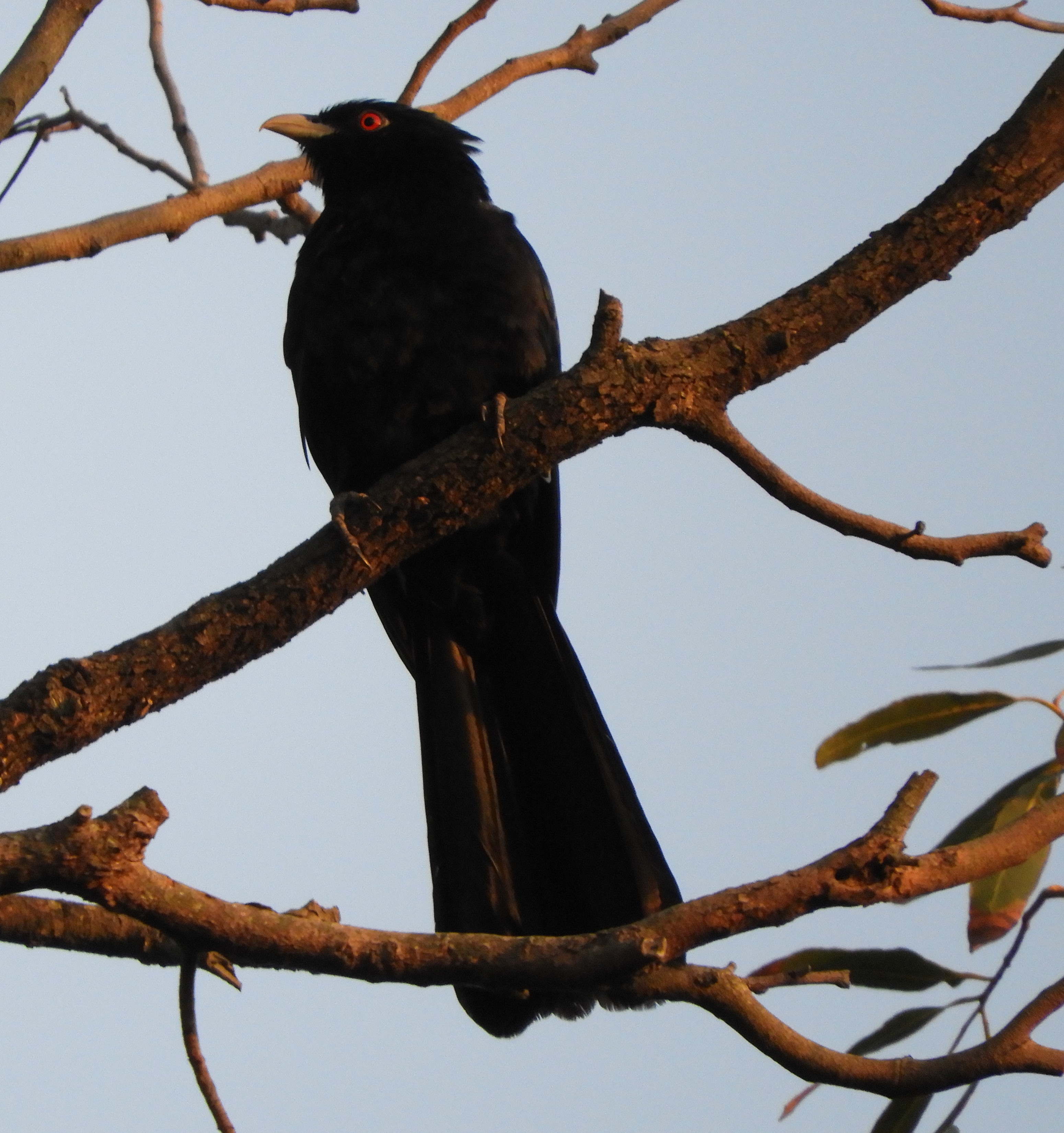
While the female is rather pretty, with shades of cream and brown overlaid with stylish spots, the male is primarily black. In fact, this photo shows more variation in colour than usual, because of the soft morning light.
If you’d like to see some shots of the females, or hear some of the cuckoos’ calls, take a look at this list of posts.
Common name: Common Koel or Eastern Koel
Scientific name: Eudynamys scolopacea
Approximate length: 45 cm
Date spotted: 28 December 2018 (Summer)
Location: Allambie Heights, New South Wales, Australia
Magpie song with a touch of Star Wars
A sociable magpie dropped by the other day to try out its song on me. I think the bird is still a youngster, as its eyes are not yet the bright red of an adult. The magpie let me get up to about two metres away, and still happily continued its song. I didn’t try to get any closer. After all, it’s a wild bird and entitled to its space. Plus, magpies are known to fly off the handle at times.
As well as the usual magpie warbles, this bird adds a few extra whistles and chirps. Sometimes it sounds as if it’s been listening to a Star Wars sound track!
Common name: Australian Magpie
Scientific name: Gymnorhina tibicen
Approximate length: 40 cm
Date spotted: 24 December 2018 (Summer)
Location: Allambie Heights, NSW, Australia (near Sydney


