Author Archives: Sarah Maddox

Soft colours of the Crested Pigeon
A Crested Pigeon explores ground that was very recently underwater due to flooding. I like the lighting in this shot, and the way the pink of the uncovered roots echoes the colour of the bird’s feet:

The orange blush on the bird’s shoulders is a pretty accompaniment to the grey-blue of the head and breast feathers:

Common name: Crested Pigeon
Scientific name: Ocyphaps lophotes
Approximate length: 31-35 cm
Date spotted: 6 May 2024 (autumn)
Location: Manly Lagoon, New South Wales, Australia: 33°47’05.4″S 151°17’00.0″E

Battlestar Grebe
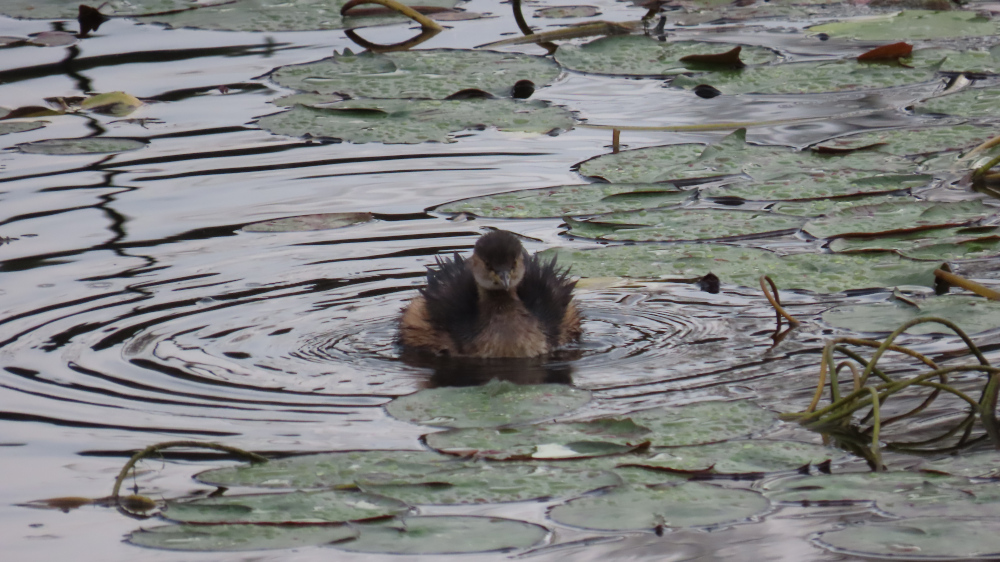
This little Australasian Grebe looks quite fierce, but cute at the same time:
Here’s another pic of the same bird:
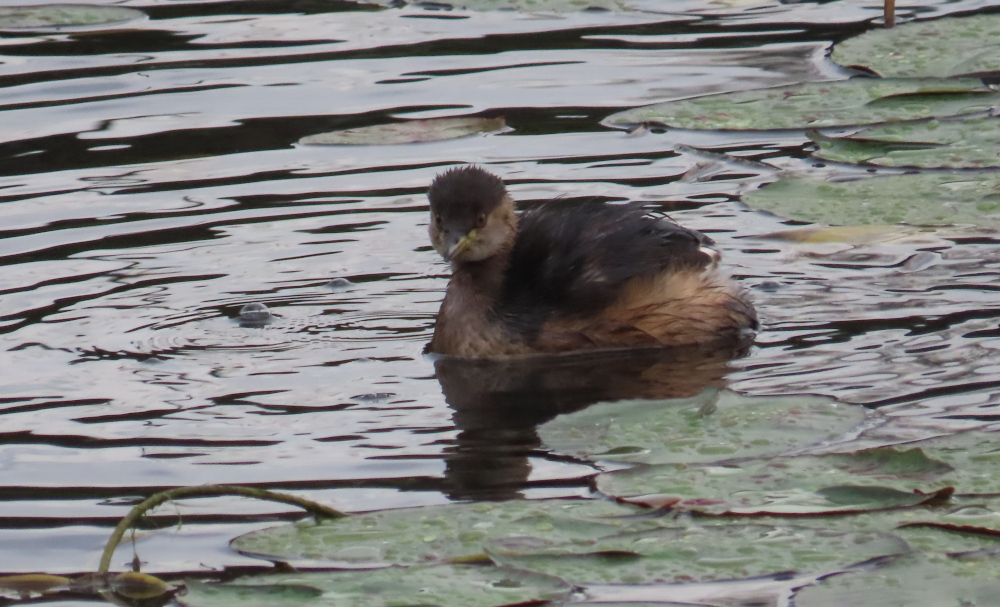
I’ve seen a Grebe once before, way back in April 2020. It was in the same location as this one. Despite my few sightings, these birds are evidently common. They have lobed feet, like the Coot, rather than webbed feet like a duck, and they’re adept divers despite their plump appearance.
Common name: Australasian Grebe
Scientific name: Tachybaptus novaehollandiae
Approximate length: 23-25 cm
Date spotted: 4 May 2024 (autumn)
Location: Manly Dam Park, near Sydney, Australia: 33°46’34.8″S 151°14’49.6″E

Australasian Gannet high above Manly Beach
It was a stormy morning at Manly Beach. Birds circled high above the sea, swooping on the air currents.
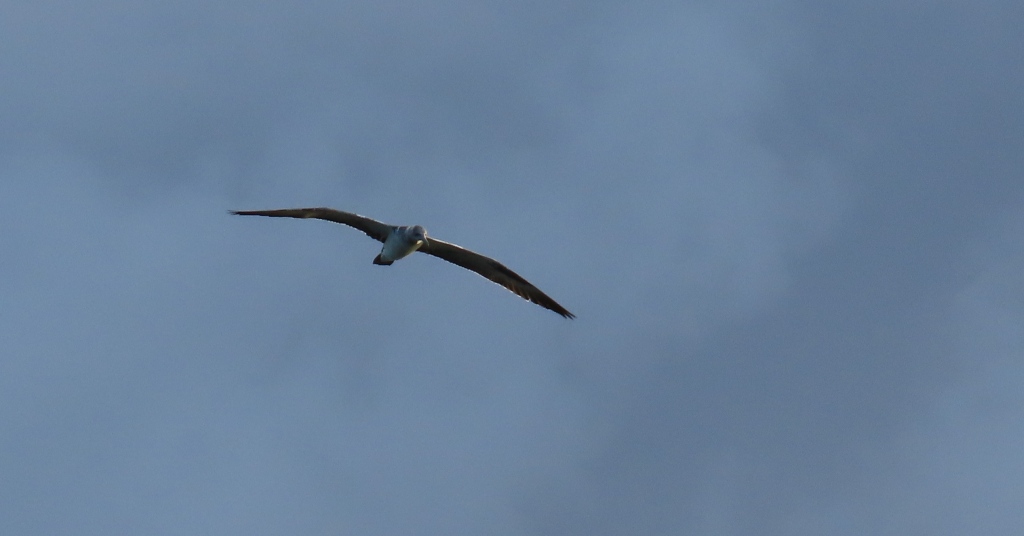
My camera was at maximum zoom, so the pictures are fuzzy. I could see that this bird wasn’t a seagull. Is it an albatross, I wondered? I posted the question on Reddit, and got the answer that the bird is most likely an immature Australasian Gannet.
Here’s another shot of the bird:
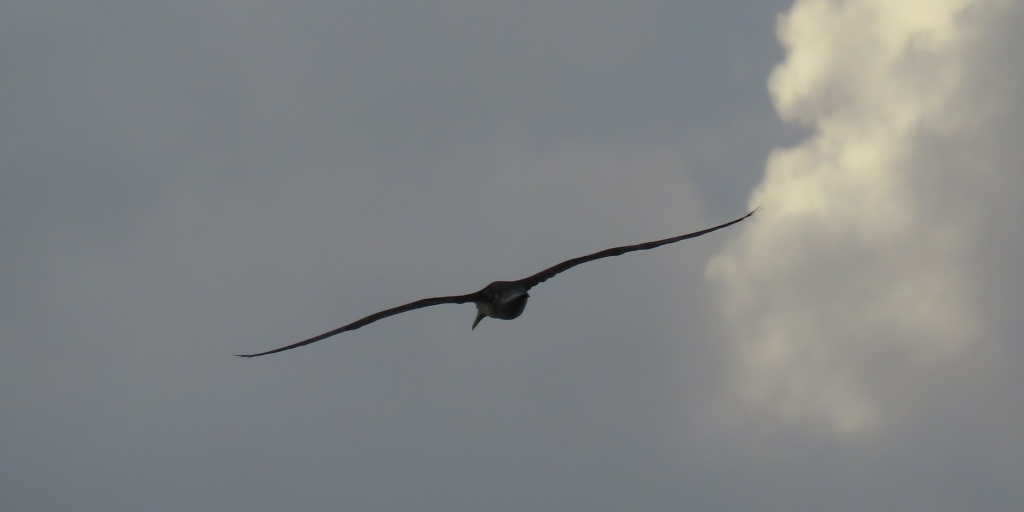
Common name: Australasian Gannet
Scientific name: Morus serrator
Approximate length: 85-90 cm; wingspan: 1.7-1.9 m
Date spotted: 6 May 2024 (autumn)
Location: Manly Beach, New South Wales, Australia: 33°47’43.5″S 151°17’25.2″E
This is a first sighting for me! The description for Australasian Gannet in my bird book says that the gannets enter estuaries, bays, and harbours to shelter from rough seas. That would certainly fit the weather this morning. On Reddit, I learned that it’s quite common for the birds to come close to shore in autumn and winter.
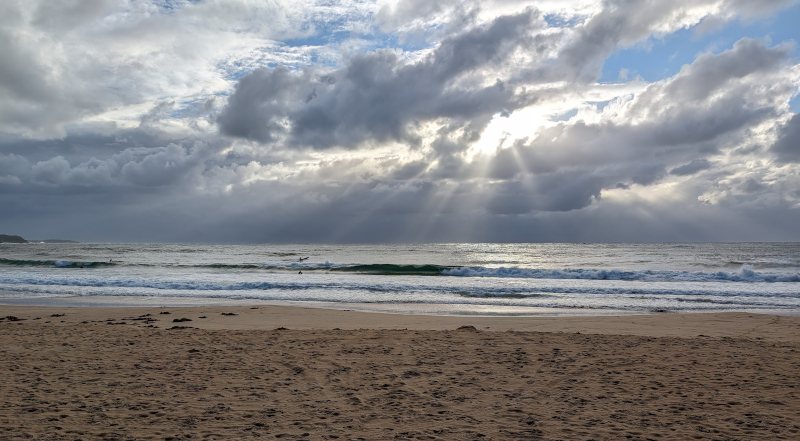
There are more pics of the bird on my Reddit post, for those who want more details. In the meantime, I’ll leave with you with a view of the stormy sky and sea:

Pied Cormorant: first sighting!
Cormorants and other water birds seem to be my thing at the moment! This is the first time I’ve spotted a Pied Cormorant:

Pied Cormorants look quite similar to Little Pied Cormorants, of which I’ve seen a few. Here’s a Little Pied from an earlier post of mine:

The Pied Cormorants are bigger, and they don’t have that endearing tuft of feathers on their heads. They also have a bright yellow patch on the inside of each eye, which the Little Pied Cormorants lack.
There are five types of cormorants to be found in south eastern Australia. I’ve now sighted four of the five! Just the Black-faced Cormorant still to go.
The Pied Cormorant was on a rock on the edge of the walkway that leads from Manly Beach to Shelly Beach. It’s quite a busy scene, with walkers, canoeists, and swimmers enjoying the water. The cormorant calmly watches the world go by:
Common name: Pied Cormorant
Scientific name: Phalacrocorax varius
Approximate length: 70-80 cm
Date spotted: 5 May 2024 (autumn)
Location: Marine Parade, Shelly Beach, Manly, New South Wales, Australia: 33°48’02.6″S 151°17’46.9″E
Now to spot a Black-faced Cormorant!

New website ready for more birds!
This bird blog has moved to a new address! You can now find the birds and me at sydneybirder.com. Don’t worry — if you go to the original birdsinsydney.wordpress.com, you’ll be redirected to this site. All the birds and readers comments have moved here too.
Did you notice some advertisements interrupting the bird pics in the past? Through the magic of commerce, the ads have disappeared now too.
Happy birding!

Little Black Cormorants in a row
A few days ago, at Forty Baskets Beach on Sydney’s Northern Beaches, seven Little Black Cormorants swam, fished, and sunned themselves.
Little Blacks are easy to distinguish from other types of cormorant in this area of Australia. Apart from being entirely black, they have green-blue eyes that can look quite eery at times.
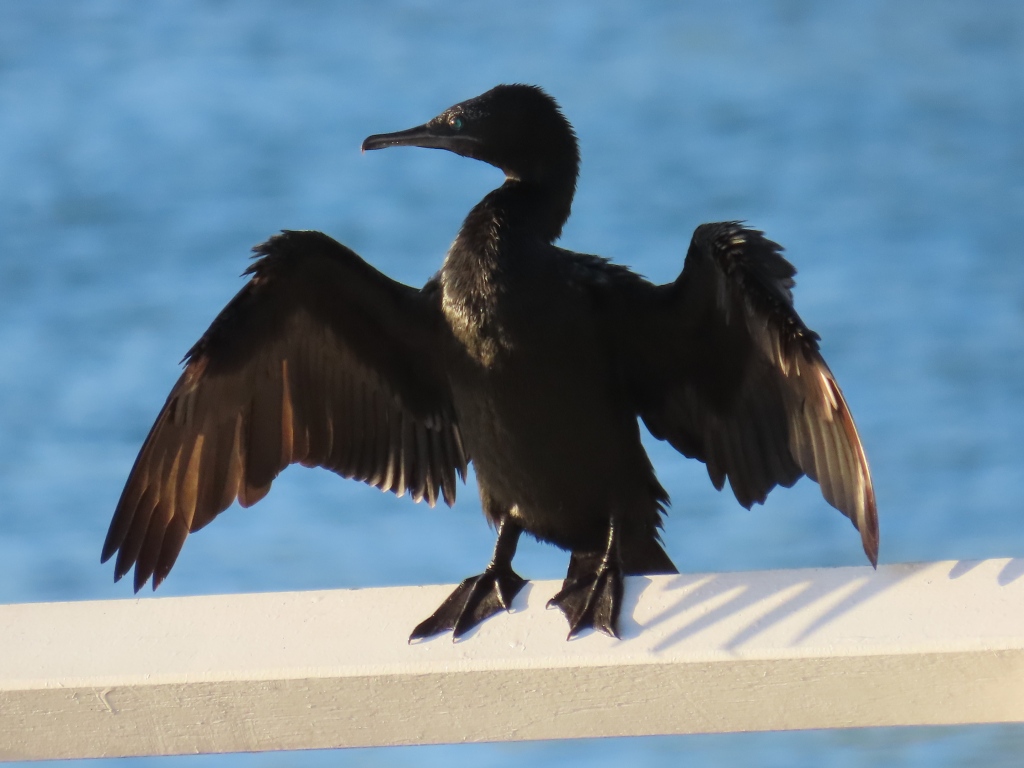
Here are six of the seven Little Black Cormorants, hanging their wings out to dry:

The group stayed together most of the time, both in and out of the water.

Here’s another of the birds showing that pretty blue eye.

Common name: Little Black Cormorant (see other cormorants)
Scientific name: Phalacrocorax sulcirostris
Approximate length: 65 cm
Date spotted: 25 April 2024 (autumn)
Location: Forty Baskets Beach, New South Wales, Australia: 33°48’12.6″S 151°16’12.2″E
Interestingly, a White-faced Heron and a few Silver Gulls followed the cormorants around.
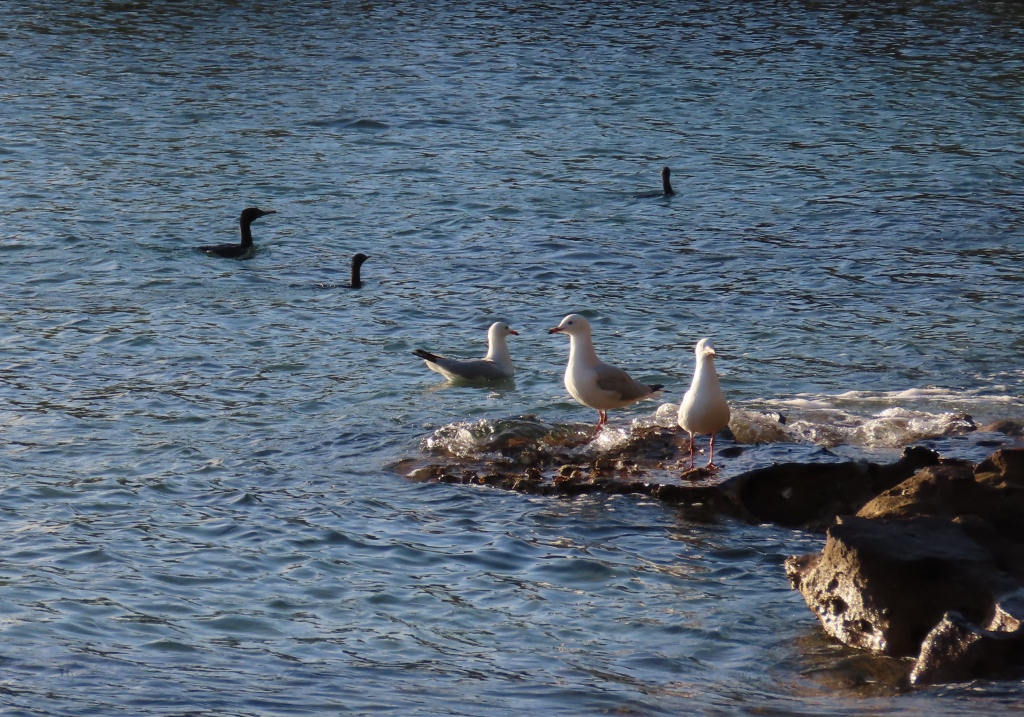
I guess they were interested in any fish that the cormorants might find!
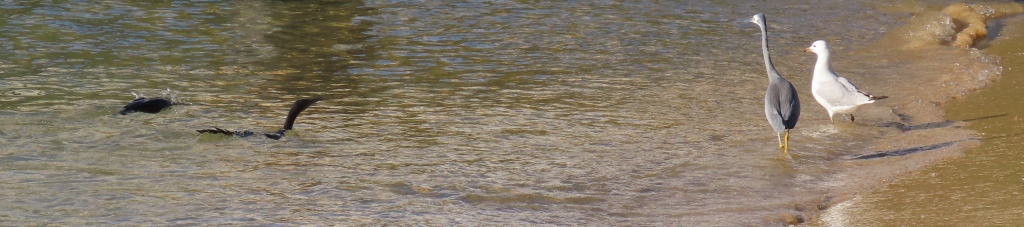
Here’s a better picture of the heron:


An intrepid Kookaburra and a fallen tree
A tree came down in our neighbourhood this week. A Kookaburra decided to keep an eye on the resulting activity, despite all the heavy machinery and noise.
If you look carefully, you can just make out the Kookaburra perched on the trunk of the fallen tree, right next to that big, thrumming truck:

After surveying the activity at ground level (and snacking on a passing worm or lizard), the bird flew up onto the street lamp on the newly-erected power post. The tree had taken down the old post and all the power lines. Getting a bird’s eye view:

The team of electricians down below needed to reset the switches at the top of the post. They used a long, bright green pole to do this. The bird stayed right where it was, checking the job with interest:

This video gives a good idea of the noise and machinery at work down below:
I’ve noticed before how fearless Kookaburras are, and how they seem to be interested in what we humans are doing. This particular Kookaburra takes the cake!
Common name: Laughing Kookaburra
Scientific name: Dacelo novaeguineae
Approximate length: 47 cm
Date spotted: 23 April 2024 (autumn)
Location: Near Sydney, New South Wales, Australia

Black swans asleep on one leg
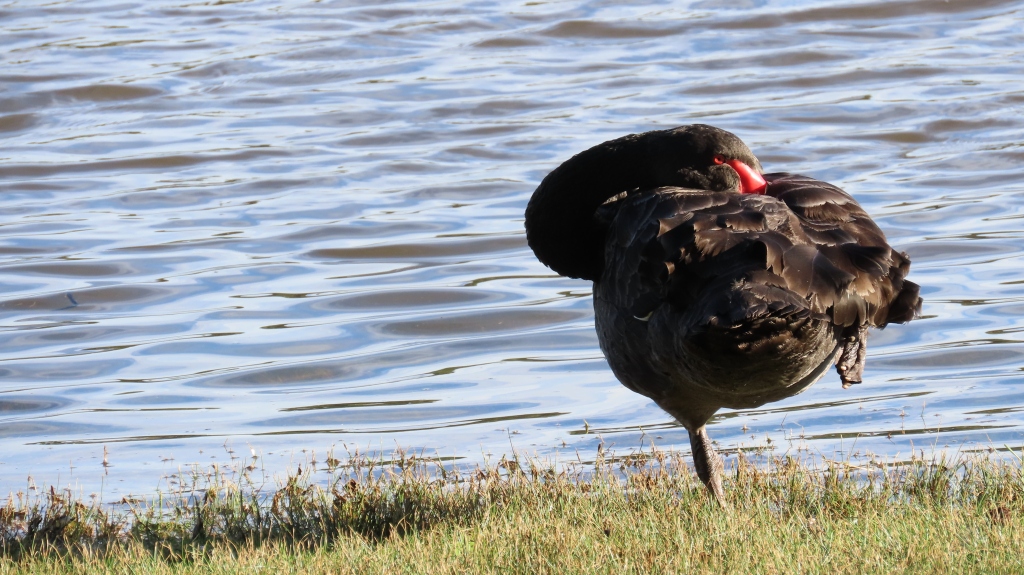
In the early morning sunshine, two black swans sleep. Both swans sleep with one leg raised, one leg holding the bird up, and head tucked under a wing. This swan has a watchful eye open:
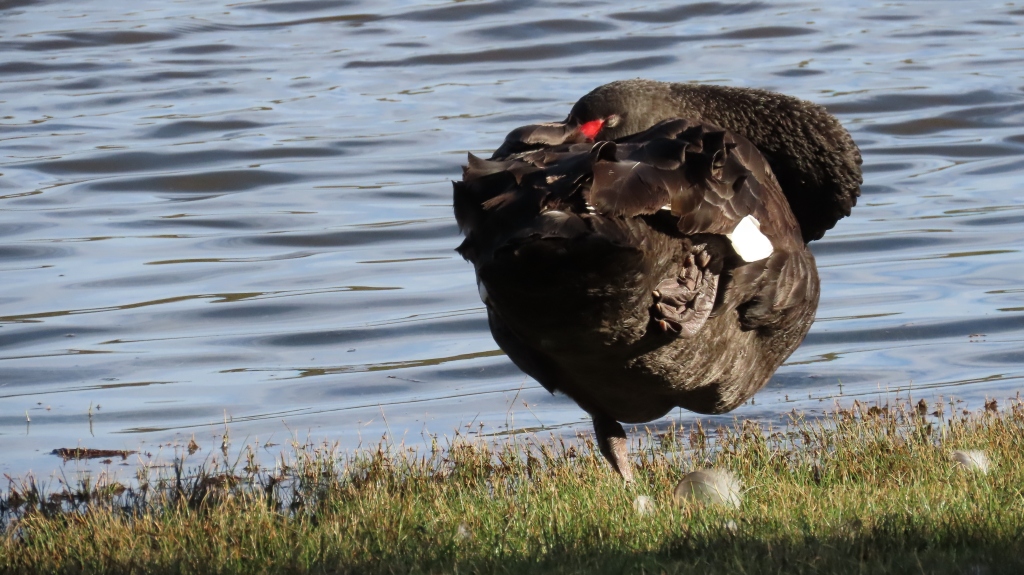
The other swan’s eyes are closed. Its foot is tucked close to its body:
When I pass the same spot a few days later, a swan drifts peacefully on the water:

Black Swans are native to Australia, and are common around Sydney.
Common name: Black Swan
Scientific name: Cygnus atratus
Approximate length: 120 cm
Date spotted: 8th and 17th April 2024 (autumn)
Location: Manly Dam Park, New South Wales, Australia: 33°46’35.4″S 151°14’49.8″E

Common Starlings (introduced into Australia)
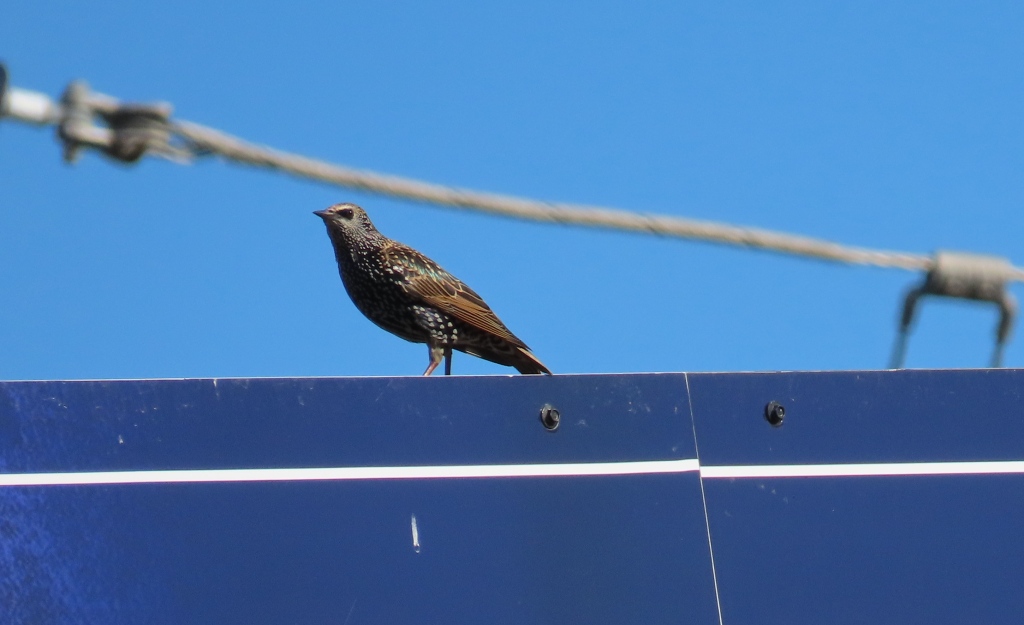
A couple of weeks ago I was passing through Bathurst, which is about three hours’ drive west of Sydney. On top of a very large advertising board were some colourful birds. The markings on their feathers reminded me of Little Wattlebirds, but the colours and demeanour of the birds were quite different:
Here’s another of the birds:
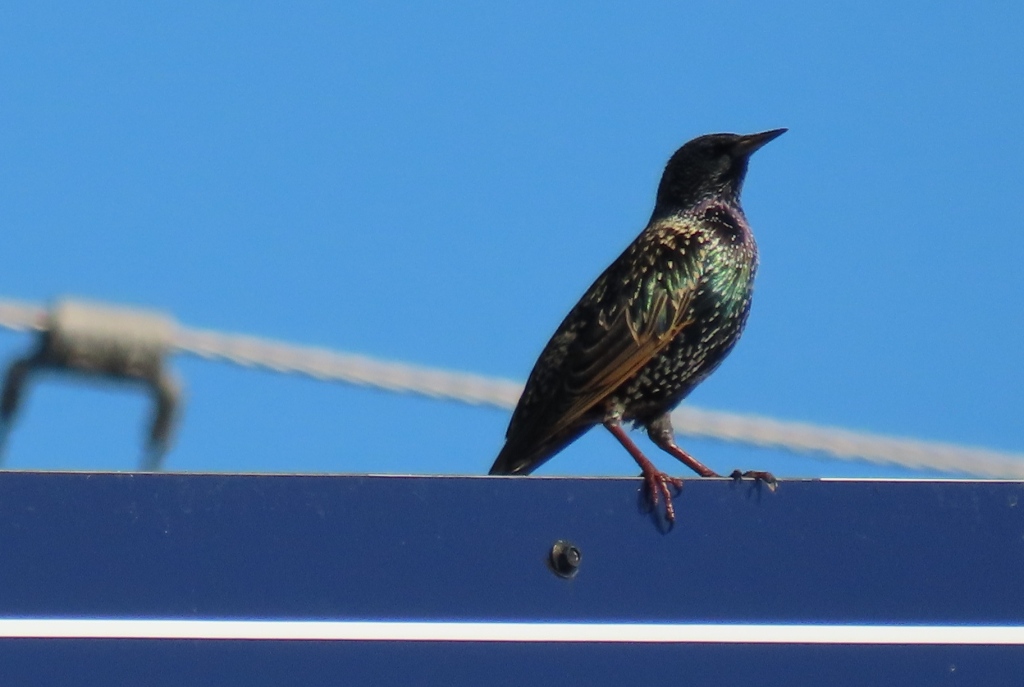
After some research, I’ve concluded that these are Common Starlings. These birds were introduced into Australia in the second half of the 19th century. They’re now widespread across the south eastern areas. They don’t go too far north of Brisbane, because the climate up there doesn’t suit them. And Western Australia has managed largely to keep these birds out.
Common name: Common Starling
Scientific name: Sturnus vulgaris
Length: 20-21 cm
Date spotted: 13 April 2024 (autumn)
Location: Maffu Parking Lot, Bathurst, New South Wales, Australia: 33°23’43.3″S 149°35’40.8″E

Plant Hopper on my window
(Not a bird, but probably of interest to birds as well as birders.)
A couple of days ago, this tiny little creature appeared on my window pane:

The creature is tiny (a few millimetres long), it’s on the inside of the window pane but on the other side of a gauze netting that we use to keep the insects out, and it’s in silhouette because of the light coming in from the outside. I was pleased that my mobile phone’s camera managed to get any shot at all.
After a bit of research, I think the creature is most likely a Plant Hopper — my best bet: the Passionvine Hopper, Scolypopa australis. Alternatively, it could be a Leaf Hopper.
The creature moves in a strange way. It’s wings remain entirely still, and the whole creature kind of glides across the surface:
It’s odd how the wings appear to be transparent ovals, with what looks like other wing patterns imprinted on them. At one point, the creature made a short, very quick jump from one spot to another — so quick that I didn’t see the movement. I just saw that it had gone from one place and appeared a few inches away. I didn’t catch that movement on video.
This shorter video shows the creature moving more slowly:
If you have a positive identification or know more about this little insect, I’d love to hear it.


 Sydney Birder