Monthly Archives: August 2023
Song of a Fan-tailed Cuckoo in the forest
Walking through a Eucalyptus forest in eastern Australia, you might be lucky enough to hear a Fan-tailed Cuckoo singing. If you’re even luckier, you might actually spot the bird!
Their song is a pretty, descending trill, often uttered in a series of three trills. This video has the sound of the cuckoo, but I hadn’t yet seen the bird:
After some patient waiting, I managed to find the bird, beak wide open in song:

Unlike most cuckoos in Australia, the Fan-tailed Cuckoos stick around during winter instead of heading north for warmer climes. So you can hear their call throughout the year.
Here’s a frontal shot, giving a better view of the bird’s wide, barred tail and buff-coloured throat:
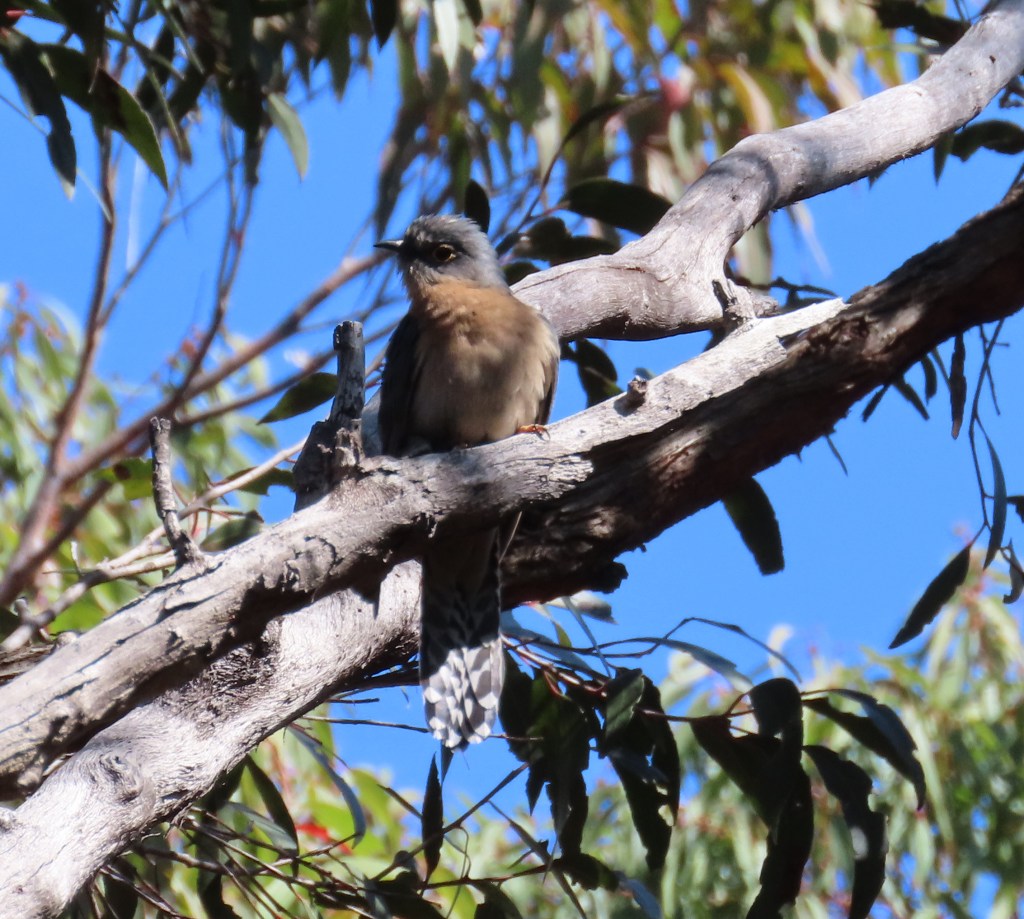
Adult Fan-tailed Cuckoos have a prominent yellow ring around the eye, as does this one. The bird is sitting huddled down on the end of a branch, perhaps enjoying a patch of sunlight in the cool winter morning:
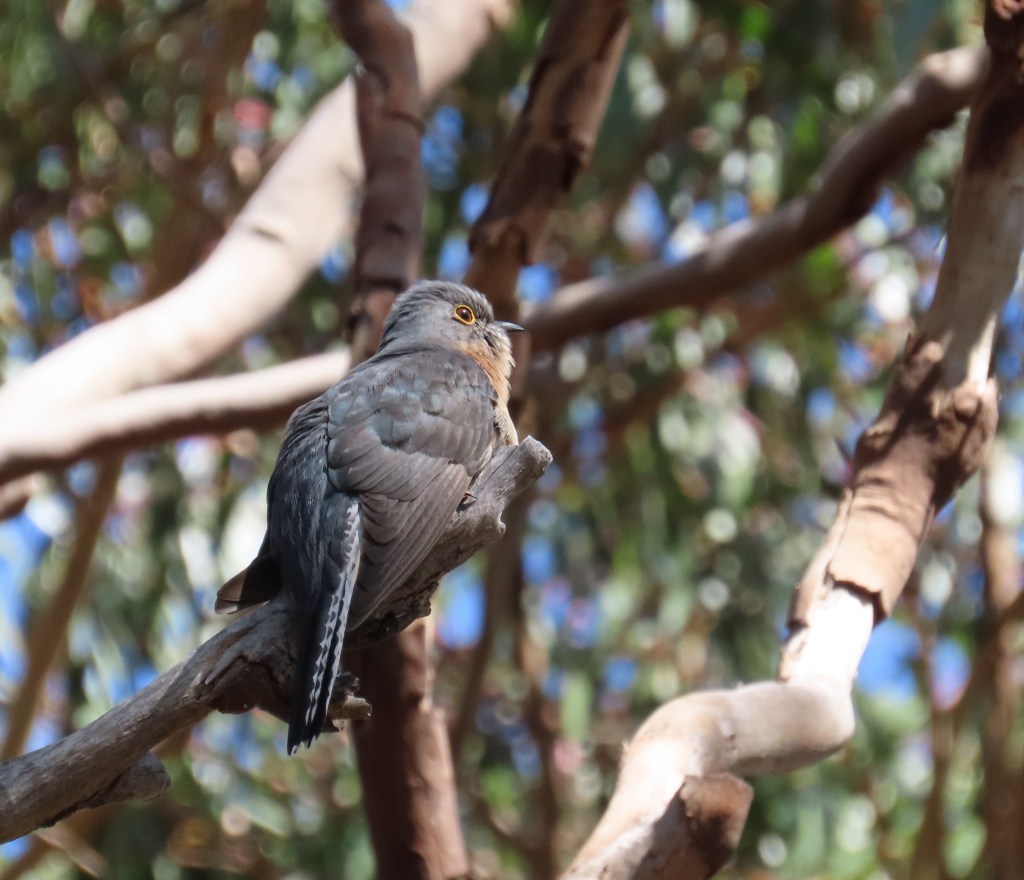
Common name: Fan-tailed Cuckoo
Scientific name: Cacomantis flabelliformis
Approximate length: 26 cm
Date spotted: 25 August 2023 (winter)
Location: Manly Dam National Park, New South Wales, Australia: 33°46’51.0″S 151°15’00.1″E

Amazing bats: Flying Foxes near Sydney
Flying Foxes, also called fruit bats, are large bats with grey and red fur. Their bodies are about the size of a kitten, and they look cute and cuddly. Then you add the claws that allow them to hang from trees and street lamps, and the large membranous black wings that allow them to fly at over 20 kilometres per hour, and you have a truly wondrous creature.
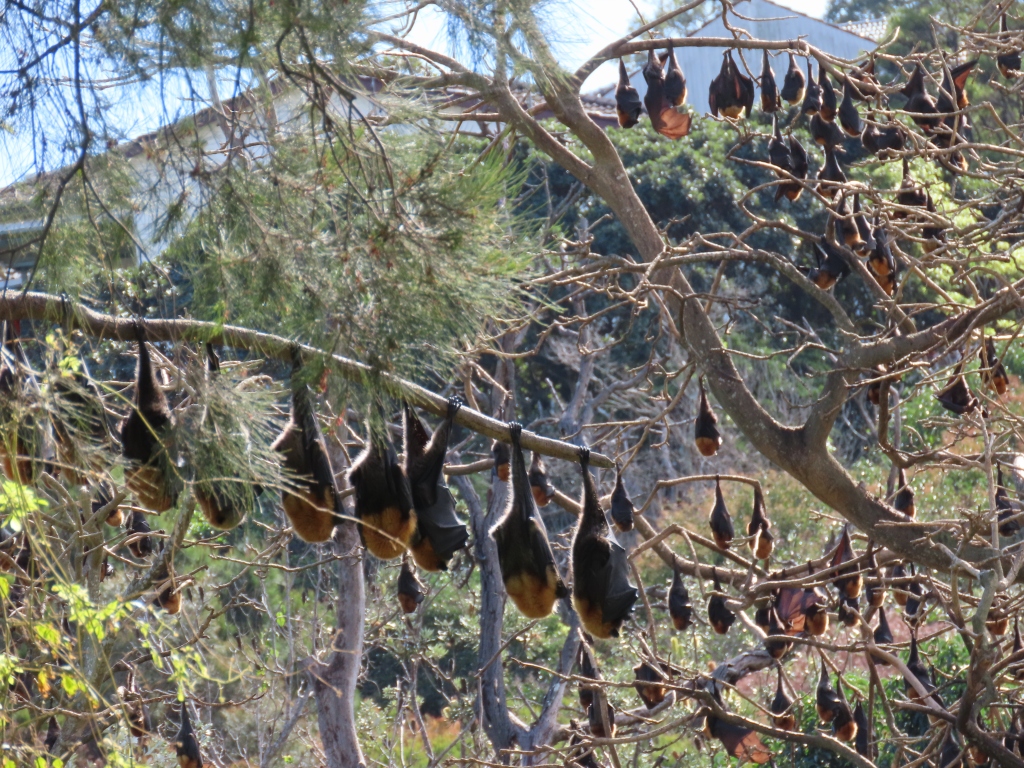
A colony of Flying Foxes roosts in a nature patch in Balgowlah, near Sydney. Patches of trees inhabited by these bats are called camps. I walked around the edges of the camp and took a few photos and videos.
While walking around the edges of the camp, I was careful not to get too close or to walk under any branches where bats were hanging. These bats aren’t aggressive but they do carry nasty diseases, so it pays to be wary. Evidently you won’t be infected by any diseases from the bats unless you come into close contact with one of them. Still, cuddly as they look, they’re wild creatures and deserve respect.
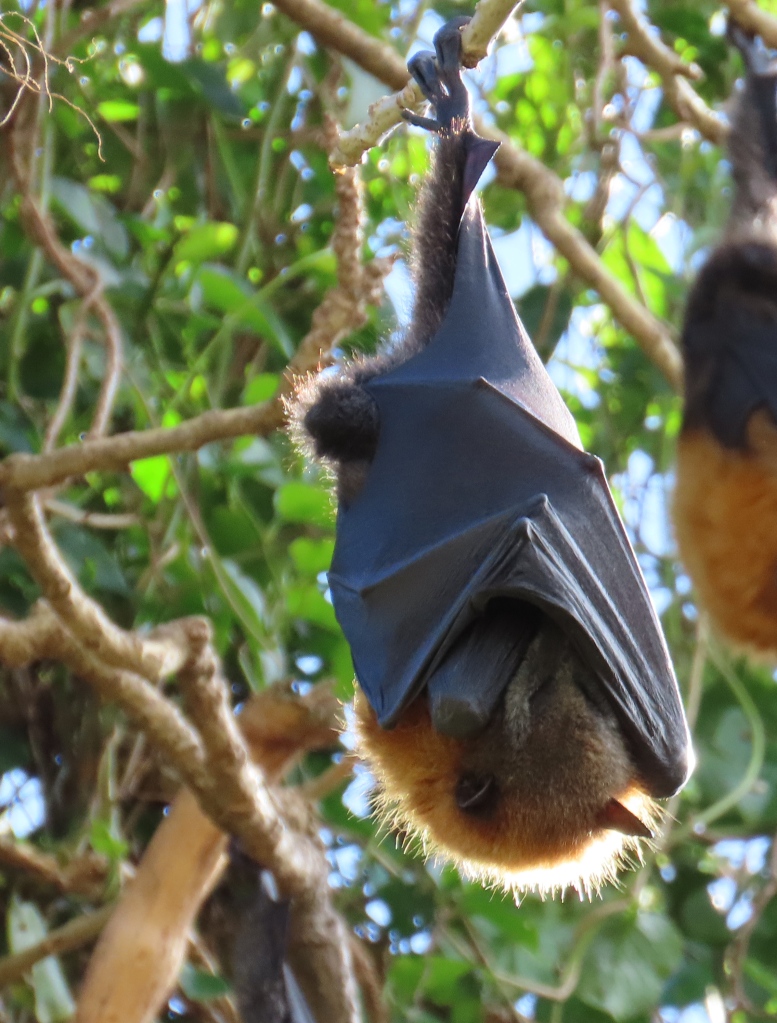
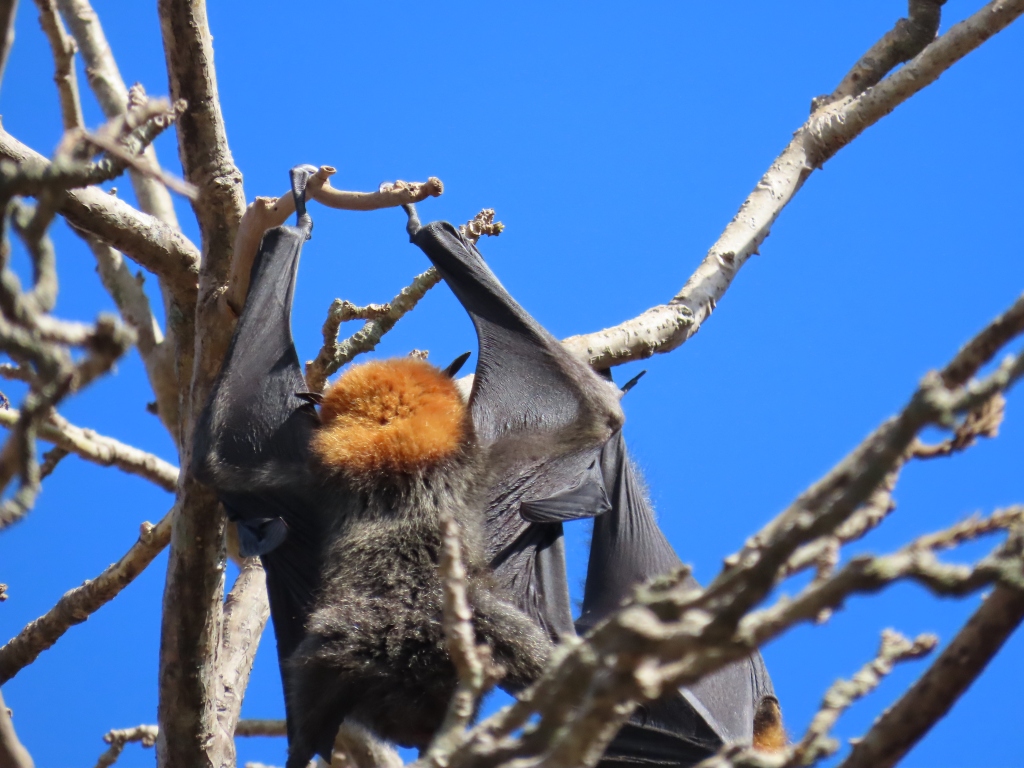
Here’s a closeup of one of the bats, neatly wrapped up in its own wings and hanging from a branch by its feet:
In the next photo, a bat decided to change position. Here it’s moving from the upside down roosting position to what we’d call the right way up:
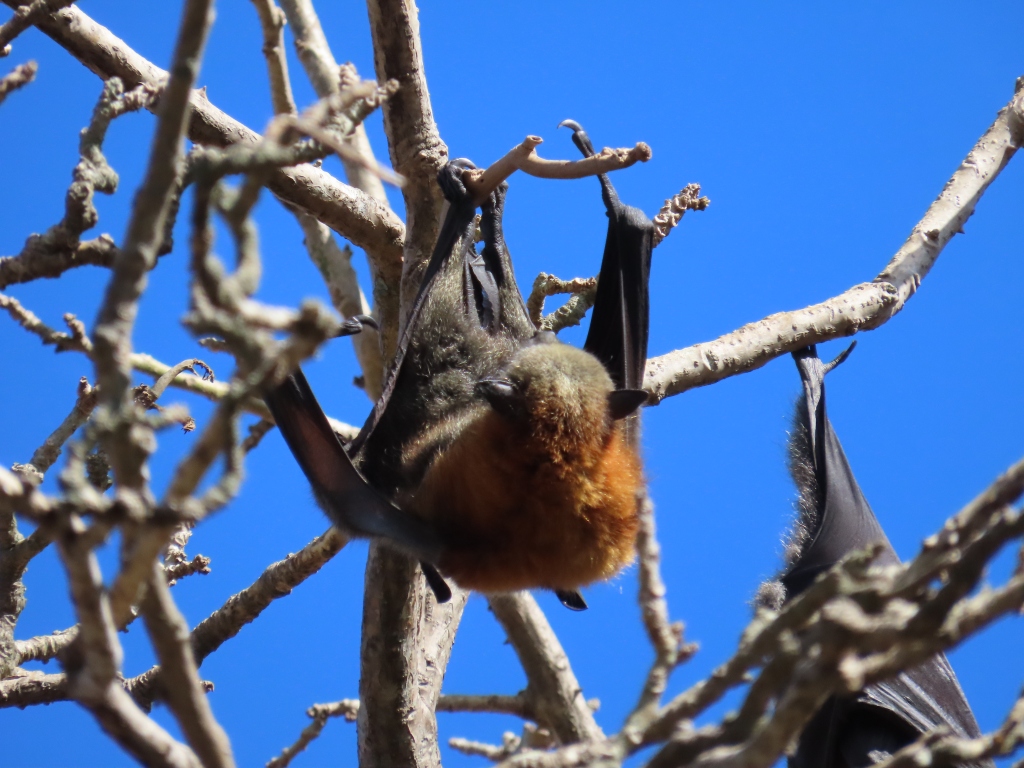
Now the bat is hanging by its front feet, facing away from us, with its ears sticking out sideways:
The next video shows another area of the bat camp. As I was recording the video, there was a short series of bangs, probably from the nearby road. The noise disturbed the bats. They started chittering more loudly than ever, and a few of them took flight:
These are Grey-headed Flying Foxes, one of three types of Flying Foxes in the Sydney area. At dusk, we occasionally see large numbers of bats rising into the air and heading off to feed. They’re nocturnal, and they feed on flowers and fruit. With their large, strong wings, they can travel long distances.
The next video shows one of the animals coming in to land in a tree inhabited by the colony:
The next few pics zoom out to show the size of the colony:
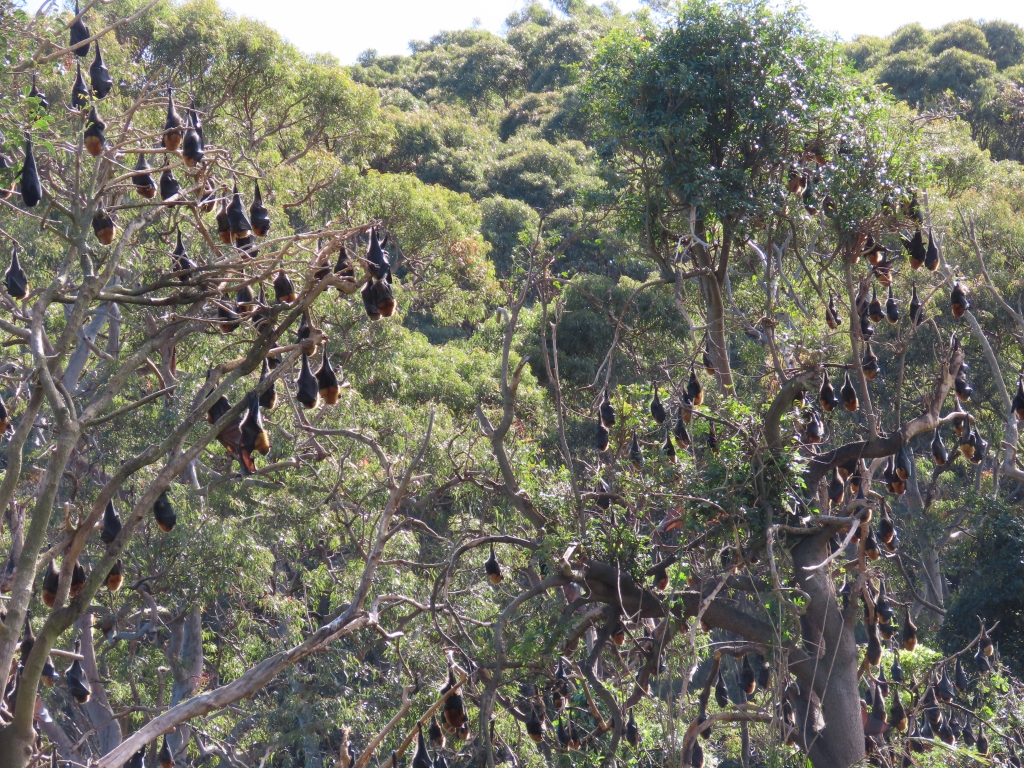
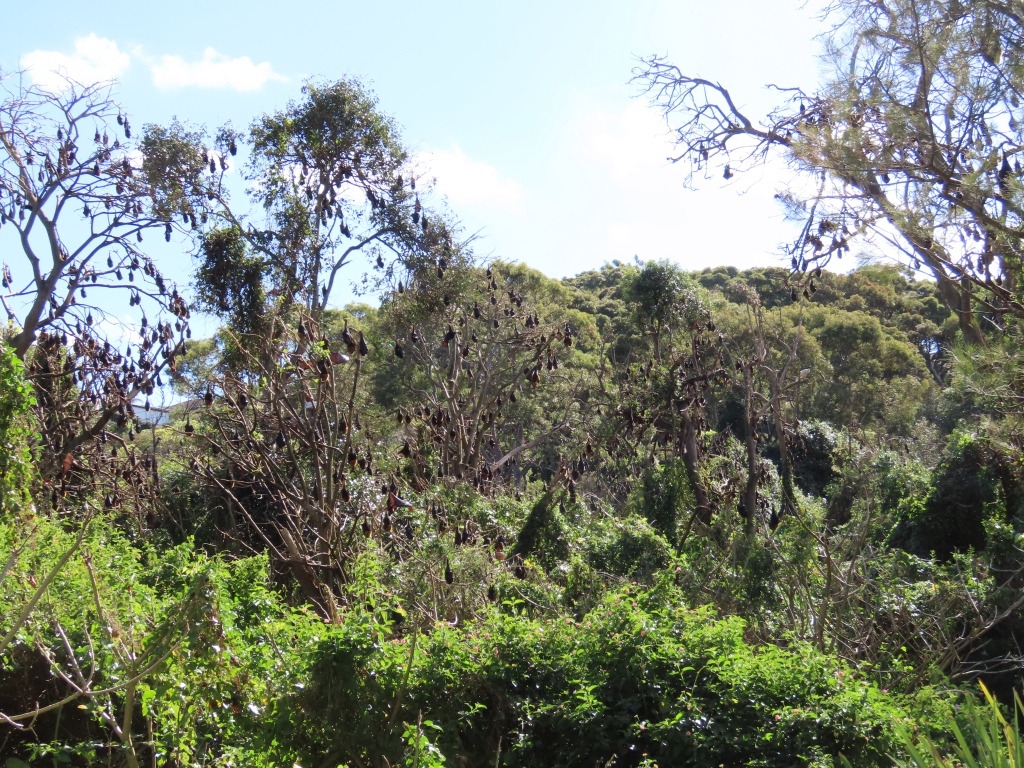
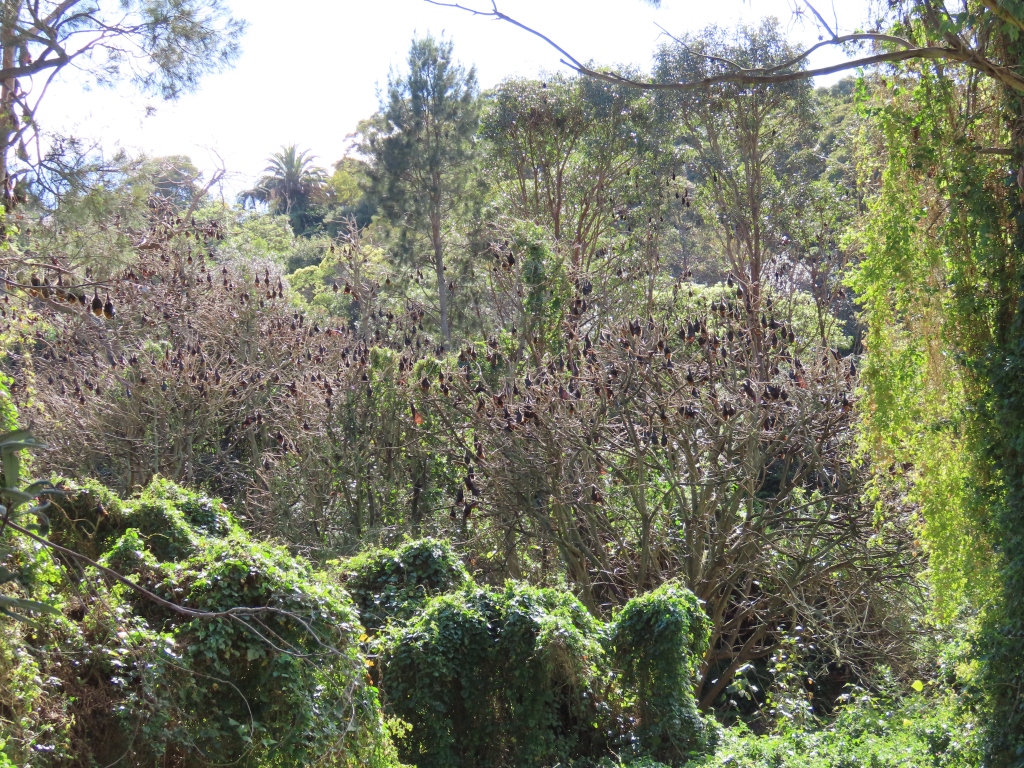
Let’s end with a row of bats neatly lined up:
Pair of White-faced Herons in Sydney Harbour
A pretty pair of White-faced Herons were strutting their stuff at Forty Baskets Beach this morning. They were quite interested in each other, and the feathery plumes on their backs were quite noticeable. It looks as if breeding season has started.
In this video, the pair of herons are on a small boat moored just off the beach. All is peaceful until the seagulls start bullying the herons. After ducking a few incoming gulls, the herons take off and fly past me, landing on some rocks near by. Along comes a small dog (off scene). The dog owner tells the dog to wait. The dog doesn’t threaten the birds in any way, but they decide it’s politic to move to a different spot. They fly past me again, and come to rest in a quiet little bay.
Aside from the noise made by the seagulls and the sea, you can hear some raucous Sulphur-crested Cockatoos in the background. And, if you listen very carefully, you can hear the softer grunting croaks of the herons as they fly past me and then land on the rocks.
Scientific name: Ardea novaehollandiae
Approximate length: 66-69 cm
Date spotted: 5 August 2023 (winter)
Location: Forty Baskets Beach, Sydney Harbour, New South Wales, Australia: 33°48’15.8″S 151°16’13.9″E

Grey Goshawk in quiet contemplation
On a walk through the Australian forests near Sydney, I stopped on a rocky ledge to take in the view. Then I noticed a Grey Goshawk on a branch close by, also gazing out across the valley.
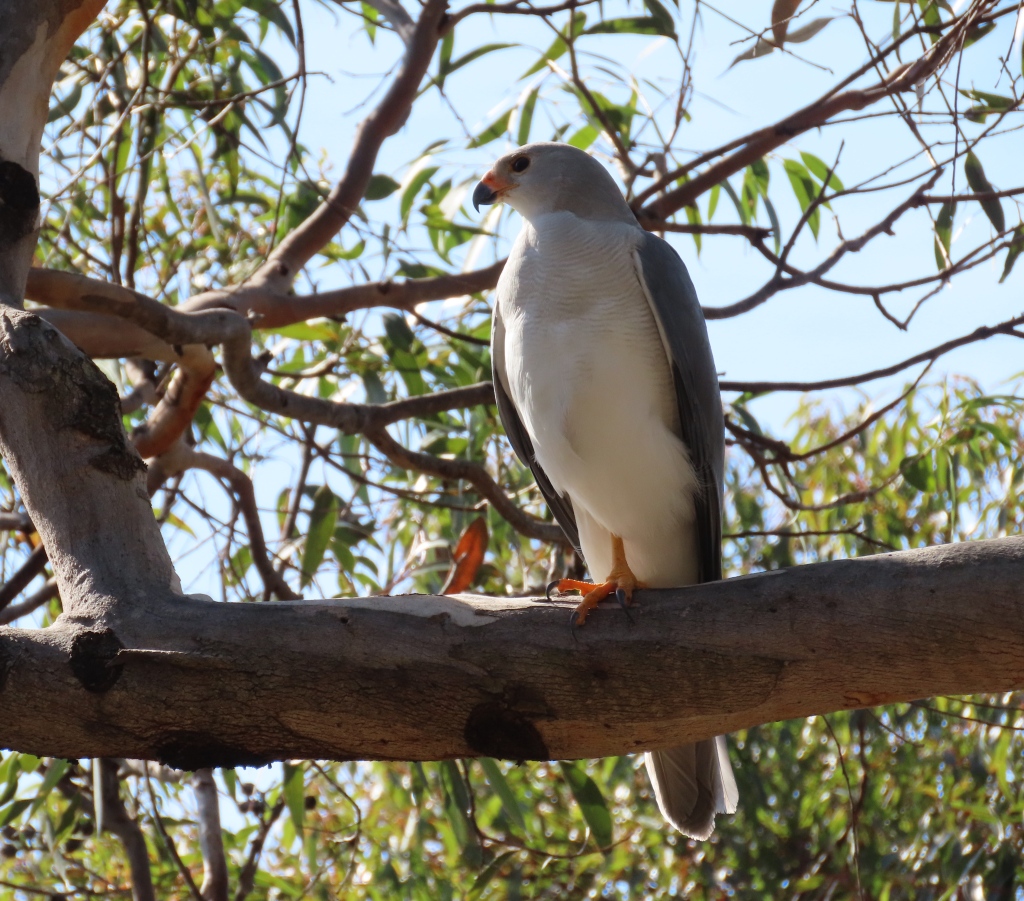
These beautiful birds of prey are quite sturdy, about 55 cm in length from head to tail, and have a wingspan of about one metre. Their chest and belly feathers are white with light grey horizontal bars. The head is grey, with large dark eyes outlined in yellow, and a yellow beak tipped in dark grey. Add the dark grey wings and tail feathers, and you have a very striking bird.
The goshawk was standing on one leg, with the other foot tucked under its belly feathers. The bird turned its head to see whether I posed it any danger, then went back to quiet contemplation of the view.

After five minutes or so, it hopped off the branch and glided away.
This is only the second time I’ve managed to snap some photos of a goshawk, though I’ve seen them a couple more times.
Common name: Grey Goshawk
Scientific name: Accipiter novaehollandiae
Approximate length: 40-55 cm. Wing span: 70-110 cm.
Date spotted: 4 August 2023 (winter)
Location: Manly Dam Reserve, New South Wales, Australia: 33°46’54.8″S 151°15’03.5″E


 Sydney Birder