Monthly Archives: July 2020
Red Wattlebird on Banksia
Red Wattlebirds are large, noisy honeyeaters. They get their name from the red flaps of skin below their eyes. This one was feeding on the nectar of a Heath Banksia flower:

The next picture shows both wattles on the bird’s neck:
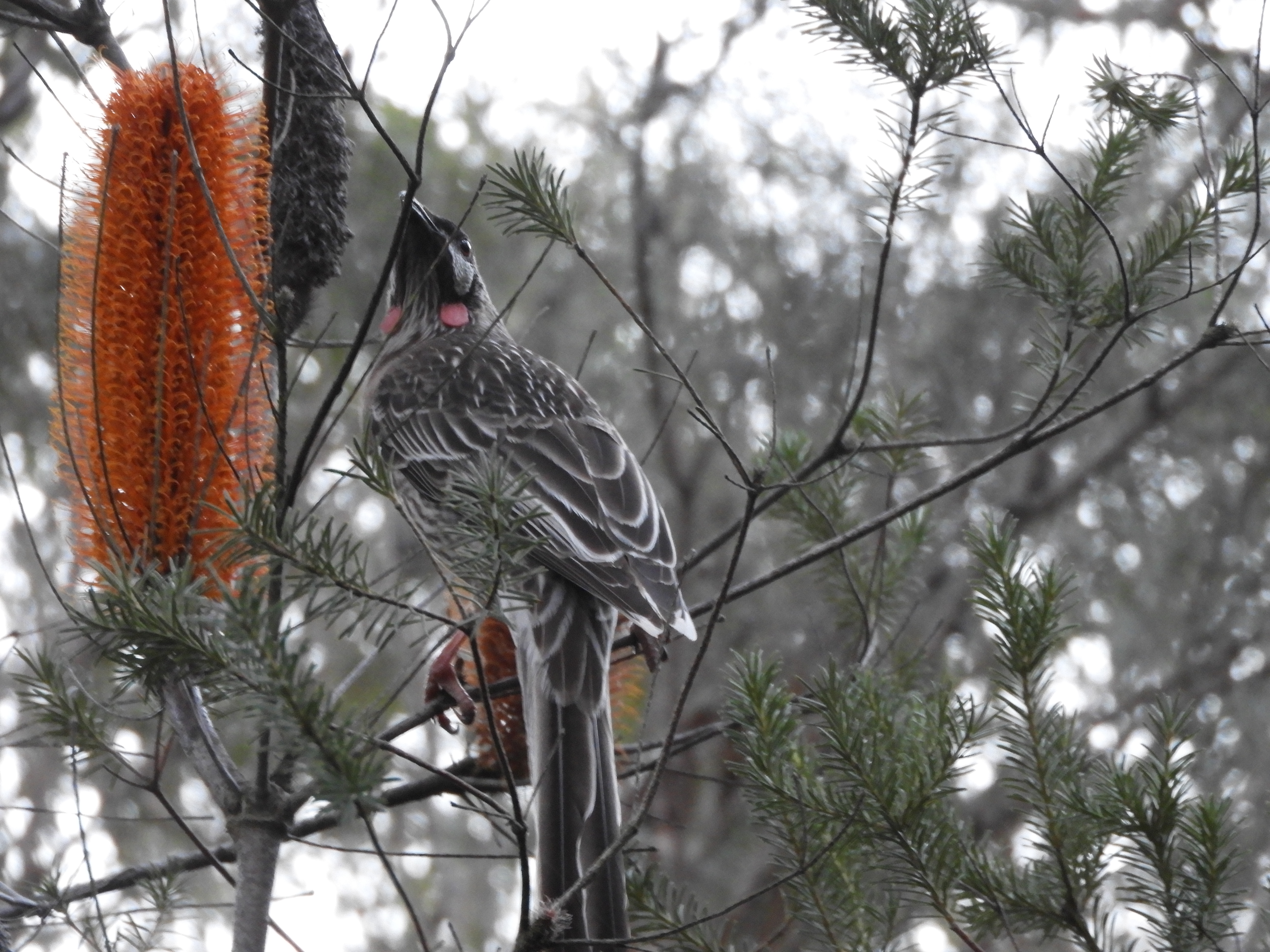
Common name: Red Wattlebird
Scientific name: Anthochaera carunculata
Approximate length: 35 cm
Date spotted: 18 July 2020 (winter)
Location: Manly Dam National Park, New South Wales, Australia. Approximate map reference: 33°46’27.0″S 151°14’57.6″E
Little Wattlebirds are common in the area too. The two birds can be hard to tell apart. Red Wattlebirds are larger (approx 35 cm from head to tail) whereas Little Wattlebirds measure approximately 30 cm. Little Wattlebirds don’t have the large red wattles. Here’s a Little Wattlebird that I photographed a while ago:

The sinuous neck of a Darter
Darters are sometimes called snakebirds, because of their long, sinuous necks. I came across this small darter sheltering on a branch close to the footpath at Manly Dam.

The bird didn’t seem to be worried by my presence. I stood and watched it for a while, enjoying the supply movements of its wings and neck:
At one stage a couple of ravens started cawing. The darter showed some concern, looking skywards to see if there was any threat:
Darters use that long neck to hunt underwater, straightening it suddenly to dash out and catch their prey.
Here’s a close-up shot of the bird’s head, neck, and shoulders, with the neck coiled up in the resting pose:
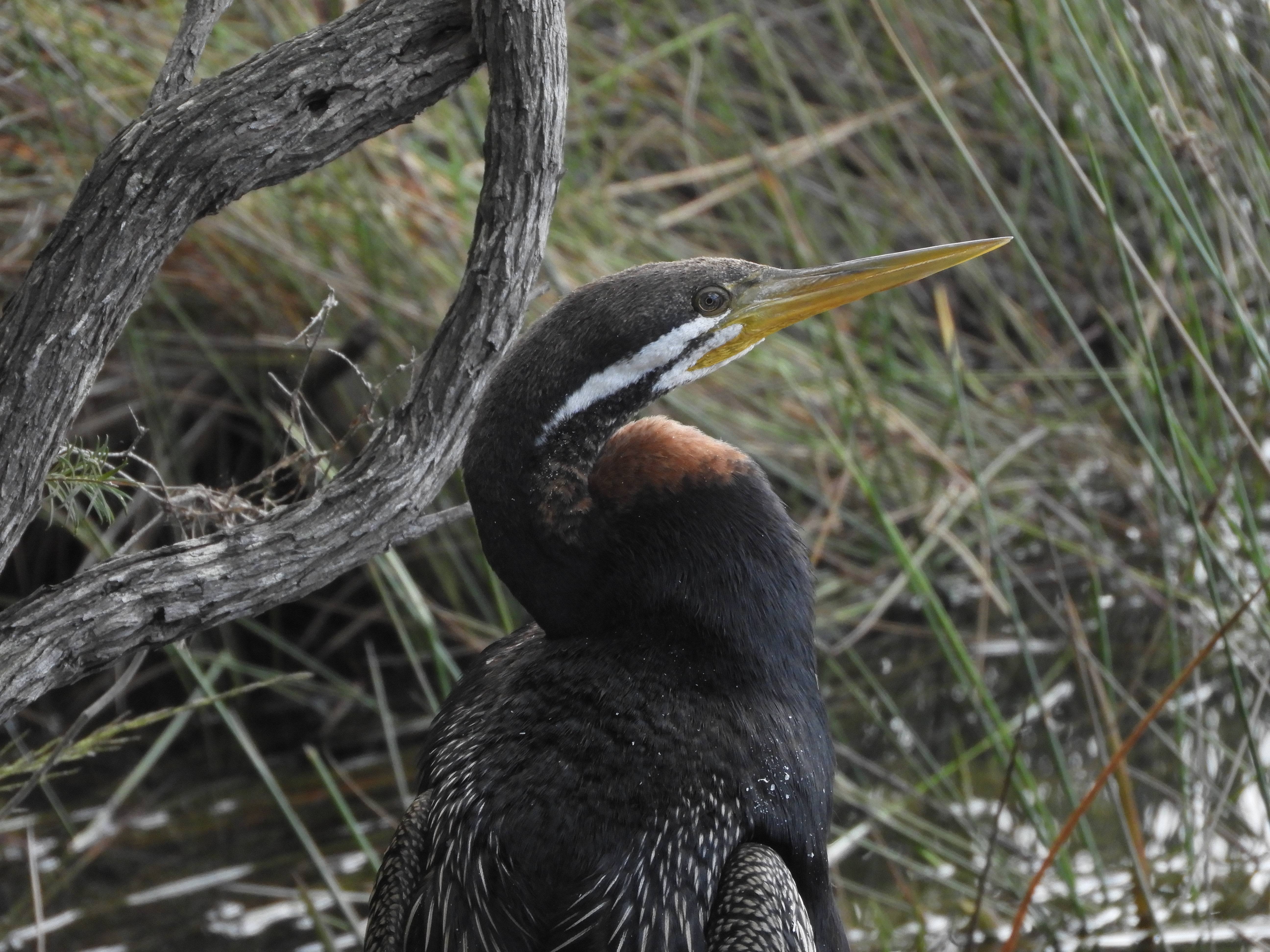
The bird’s feet are webbed, good for swimming and for clasping a branch:
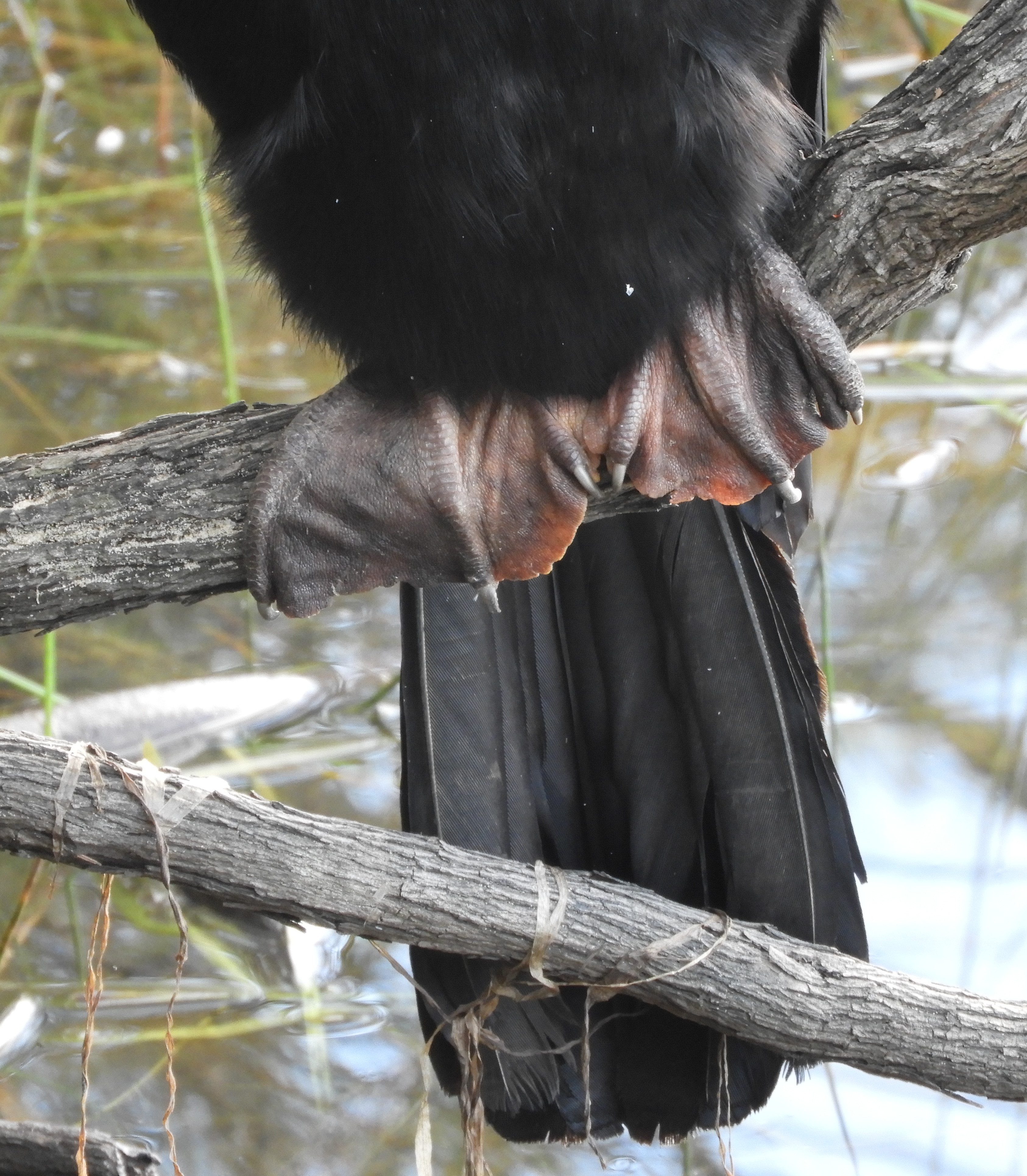
Spreading its feathers prior to a stretch:

Like cormorants, darters need to hold out their wings to dry:
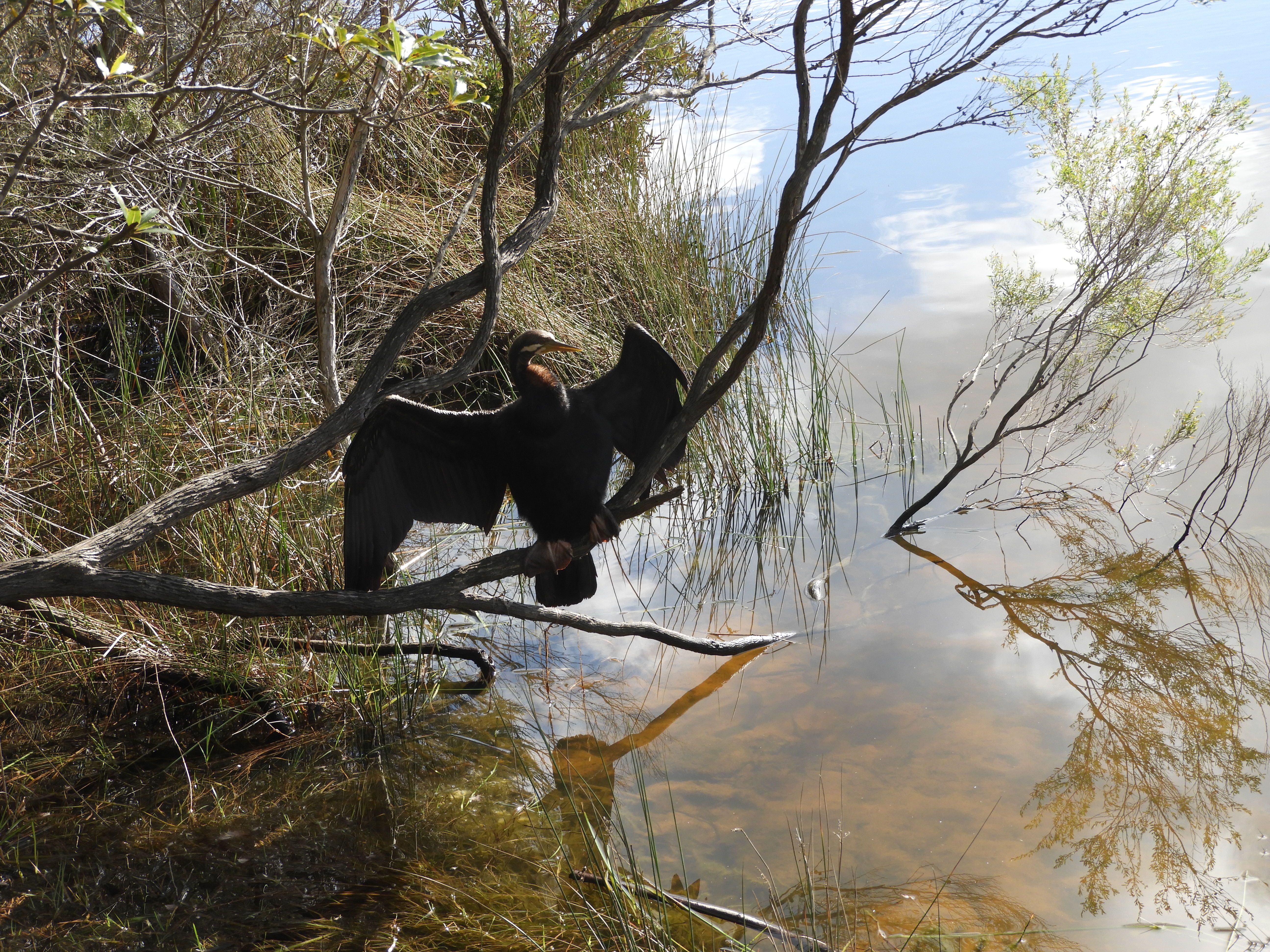
Common name: Darter
Scientific name: Anhinga melanogaster
Approximate length: 90 cm; wing span: 1.2 m
Date spotted: 30 June 2020 (winter)
Location: Manly Dam Reserve, New South Wales, Australia: 33°46’38.5″S 151°14’57.0″E
Superb Lyrebird – excited to see and hear one in the wild
This morning I went for a stroll along the Berkeley Trail in Berowra. I stopped at the Naa Badu lookout point, to admire the view. From just below me, hidden by the rocks and trees, I heard a busy scratching and rustling. After a few minutes, a male Superb Lyrebird hopped up onto a rock and started whistling:
The bird is rather hidden by the bushes, but you can hear the lovely, clear sounds it makes, and you can get an idea of its appearance, including that impressive tail:
Common name: Superb Lyrebird
Scientific name: Menura Novaehollandiae
Approximate length: 80-95 cm
Date spotted: 3 July 2020 (winter)
Location: Naa Badu Lookout, Berowra, New South Wales, Australia: 33°37’04.8″S 151°07’41.4″E
Superb Lyrebirds are known for their ability to mimic other birds and the sounds around them. I plan to return to the Berowra area and film more of these birds!
This is the view that the lyrebird and I shared from the Naa Badu lookout:


 Sydney Birder