Blog Archives

Gang-gang Cockatoos on a river bank
I’ve been in the Victorian High Country for the last few days. This part of the state of Victoria features gorgeous countryside, steep mountain sides, deep valleys, and wide rivers.
In this lovely setting, I spotted my first Gang-gang Cockatoos. It was a great pleasure and privilege to see a group of these quiet birds feeding and chatting in the early morning. Gang-gangs are on the endangered list, considered to be at high risk of extinction in the wild.
In this video, a female Gang-gang Cockatoo stands on a rock at the edge of the Mitta Mitta River, nibbling at the water weeds. It was early morning, and the light was dim. I’d heard the odd creaky noises that this bird and her companions were making, and went to investigate. To make the video, I stood on a footbridge over the river at Taylor’s Crossing Campground.
I love the noises that these birds make. A mix of creaks and growls. It was the sound that led me to investigate, like a cross between the call of a raven and the squawk of a cockatoo. You can hear some of the bird’s soft creaks at the start of the above video.
The name “gang-gang” comes from the Wiradjuri language, and maybe from other Aboriginal Australian languages too. It’s most likely an onomatopoeic word, echoing the noises that the birds make.
It also interesting to see a cockatoo eating a water weed. She chewed through the entire long strand, consuming the whole thing with evident enjoyment.
There were four Gang-gangs at the river: two females, an adult male, and a juvenile male. My photos are a bit fuzzy, due to the early morning dimness.
Here’s the adult male, with his bright red head and crest:

The next photo shows an immature male. The red on his head and crest is just starting to come in. (Ignore the red leaf at the end of the bird’s tail):
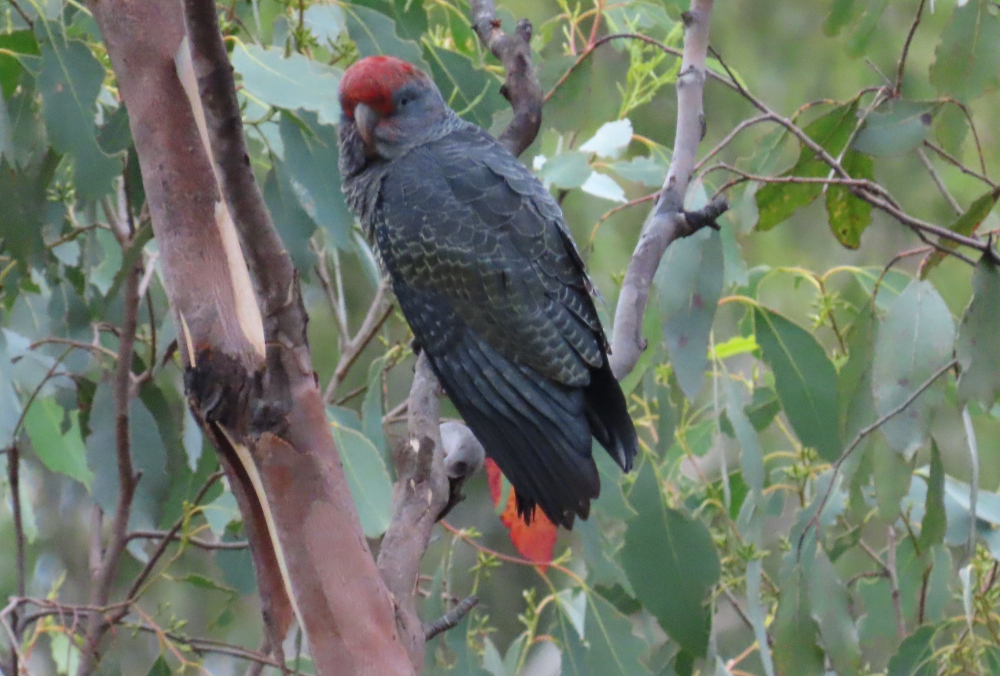
Here’s a photo of the female down on the river bank:
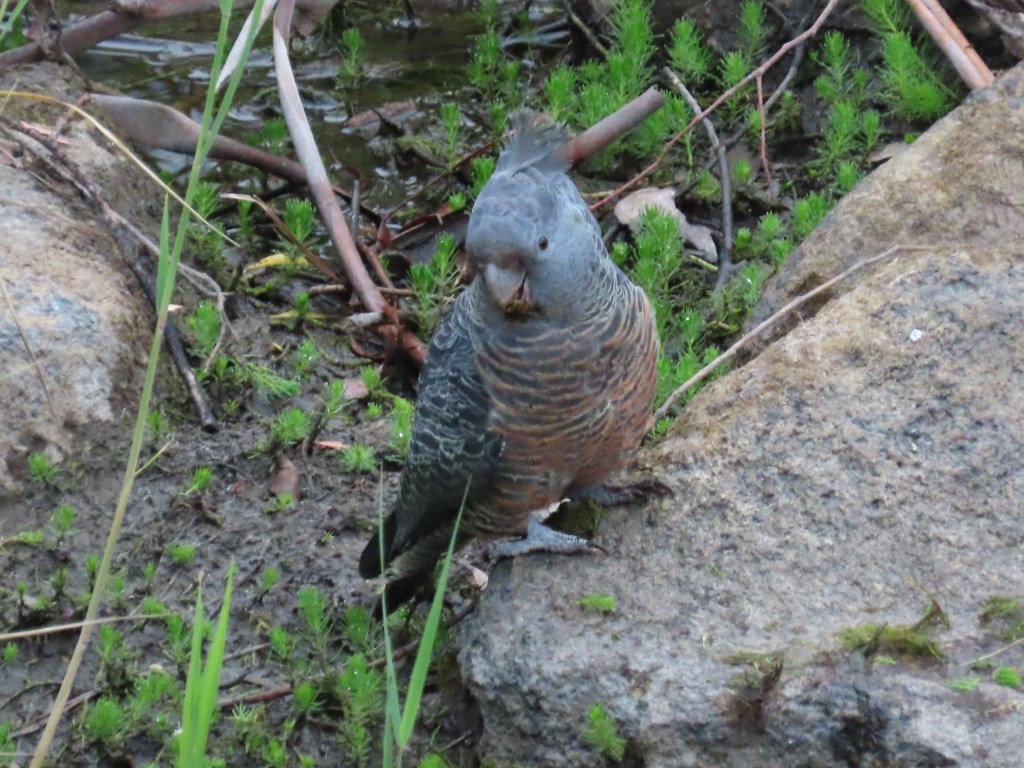
Her wispy crest is a soft grey, a bit like a feather duster:

Common name: Gang-gang Cockatoo
Scientific name: Callocephalon fimbriatum
Approximate length: 33-36 cm
Date spotted: 25 February 2025 (summer)
Location: Taylors Crossing Campground, Mitta Mitta River, Victorian High Country, Australia: 36°49’33.7″S 147°39’40.6″E


 Sydney Birder