Blog Archives

Termites and kookaburras
Termites are very active in our area of the world at the moment: the east coast of Australia just north of Sydney. When walking along a road that passes through a park area, it’s common to see low mud tunnels crossing the road. Termites build these tunnels to shelter in when they’re on their travels. Recently, I’ve also seen long trains of termites venturing out without any cover at all.
Here’s a stream of termites crossing the road. They’ve even built themselves a junction so that they can head off in different directions:
Termites’ mud tunnels often go up the outside of a tree:
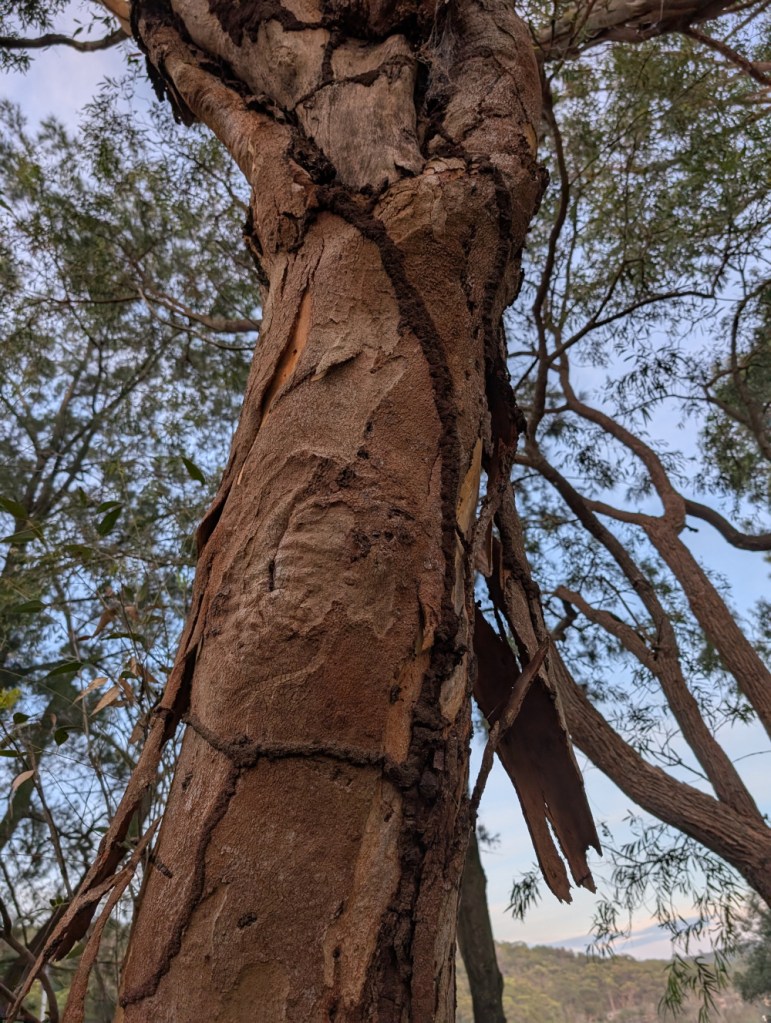
The termites in this part of Australia build their nests as large mud mounds, stuck high up in a tree:

Termite nests make a handy home for monitor lizards, kookaburras, kingfishers, and other creatures. In an earlier post, I showed pictures of a termite nest that had been adopted by kookaburras as a home for their young family: Baby kookaburras out of their nest.
In the next video, two young kookaburras attack the side of a termite nest, slowly digging a hole in the nest. They’re probably thinking ahead to the next breeding season, when such a home will come in useful:
In the video, you can hear the two kookaburras chattering, and other kookaburras giving the full laughing cackle in the background. There are also cicadas singing, and a butcherbird calls at one time too.
Common name: Laughing Kookaburra
Scientific name: Dacelo novaeguineae
Approximate length: 47 cm
Date spotted: 13 January 2025 (summer)
Location: Manly Dam near Sydney, New South Wales, Australia

Baby kookaburras out of nest
For the past month, I’ve been watching a termite nest that housed two Laughing Kookaburra chicks. The kookaburra parents had set up house in an old termite nest in a dead tree. The sound of the chicks crooning drew me to the tree on November 21st. The chicks were still very young, and it wasn’t possible to see them. But after waiting around a while, I did see the parents bringing food to the nest:
A month later, on December 20th, the chicks were right at the opening of the nest, peering out at the world. This photo shows one of the babies — you can see one eye clearly on the right, then the beak and white bib and the other eye on the left:

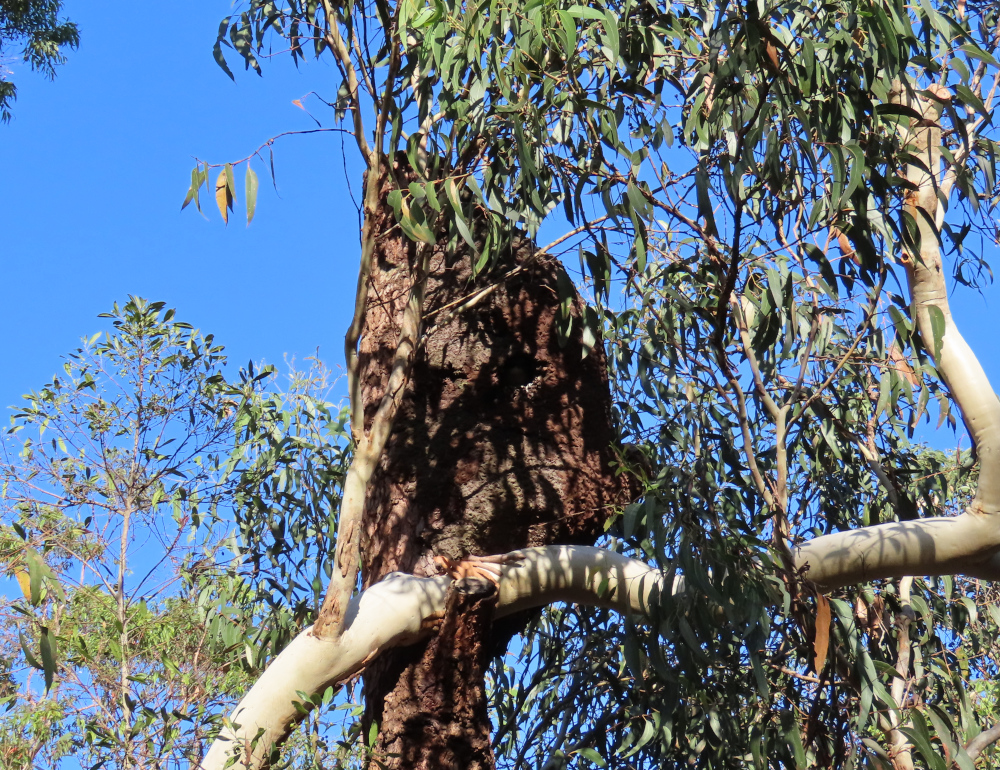
Here’s a view of the termite nest at the top of a dead tree. The nest projects from the top the right of the dead trunk, nicely protected by the branches of a living tree:
Here’s one of the parents with a morsel of food — a winged insect of some kind:

By my next visit, on December 23rd, the nest was empty. Both babies were out and about, calling and being fed by the adult birds.
One of the babies was on the ground when I got there, but soon managed to fly up onto a tree branch. The parents were nearby and attentive:
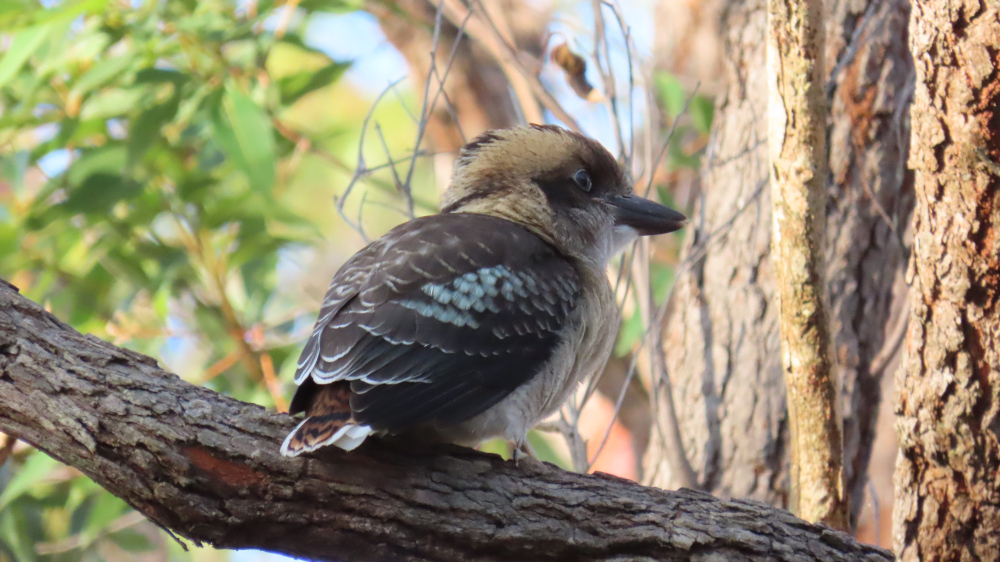
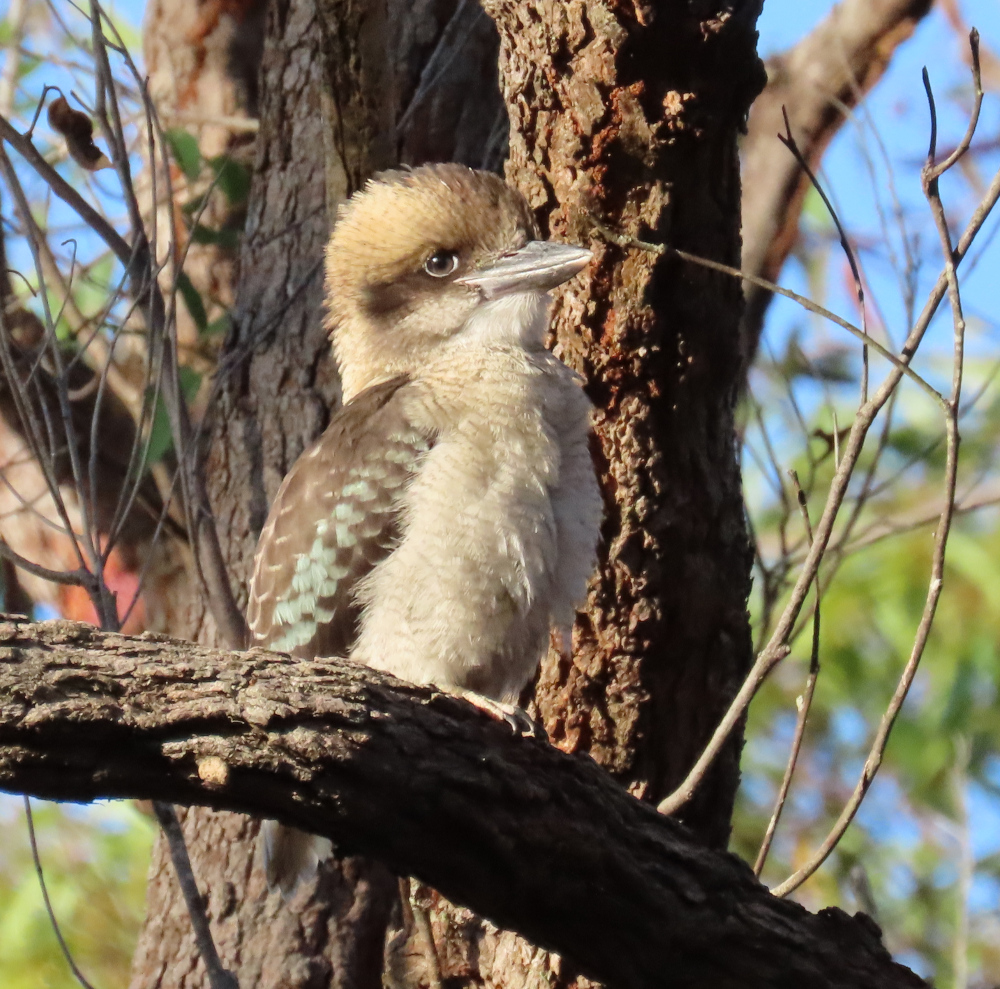
The youngsters are a bit smaller than the adults, and more fluffy. Their feathers aren’t yet fully developed, especially on the head and wings, and the tails are noticeably shorter.
The other youngster was on a nearby branch, also crooning:
This photo shows the youngster’s short tail:
To close off, here’s the same youngster from another angle:
Common name: Laughing Kookaburra
Scientific name: Dacelo novaeguineae
Approximate length (adult): 47 cm
Date spotted: 21 November to 23 December 2024 (summer)
Location: Manly Dam near Sydney, New South Wales, Australia

Sandy termite mound looks like a maze
This sandy mound caught my eye, because it looked like it had some weird dark encrustations growing on it:

A closer look revealed a maze of tunnels, actively being built by termites:
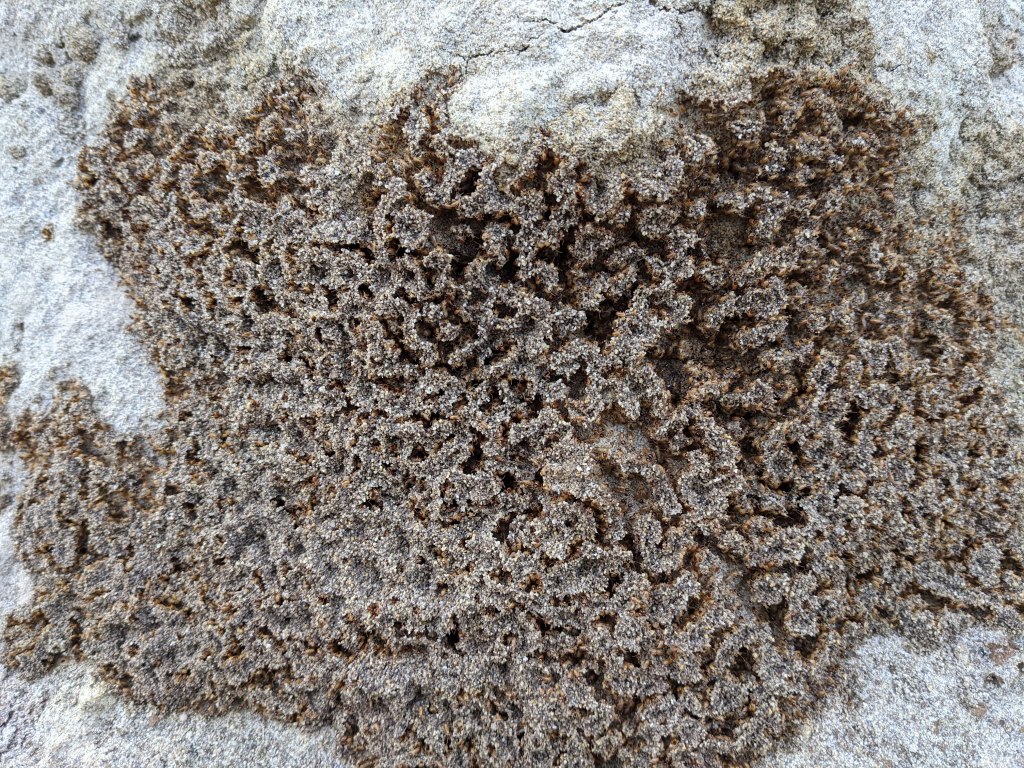
I’d passed this sandy mound many times before, not realizing it was a termite mound. Most of the termite mounds in our area of Australia look quite different from this one. They’re dark in colour, and are usually half way up a tree. I’m also surprised to see the termites building onto the outside of the mound in this way.
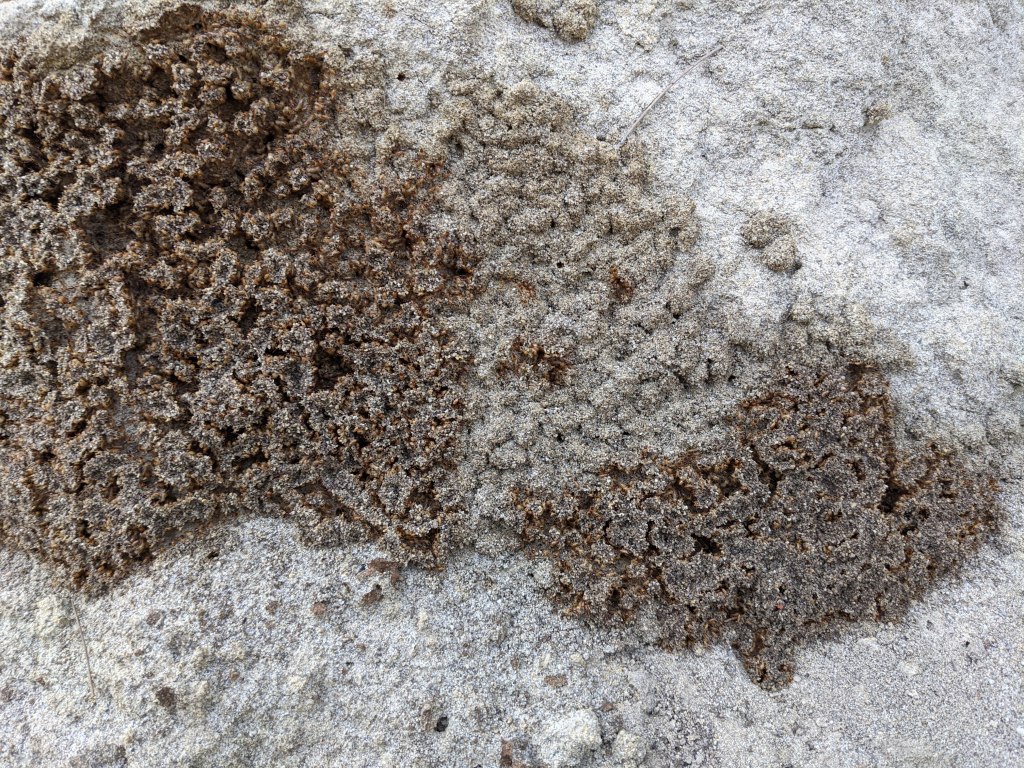
Here you can see that the termites have covered over some of the tunnels, and the roofs in the middle area are already dry and looking more like the rest of the mound:
Kookaburra in a mess after hollowing out termite nest
“Don’t look at me! I’m a mess.
Been hard at work hollowing out a termite nest.”
That’s what this kookaburra seems to be saying:

“What, you don’t think termite gunge is the right look for me?”

“OK then. Here’s what I’ve been doing for the last half hour:”
“That’s a big termite nest, high up in a tall tree.
And soon it’ll be a home for my family and me:”

Common name: Laughing Kookaburra
Scientific name: Dacelo novaeguineae
Approximate length: 47 cm
Date spotted: 28 July 2019 (Winter)
Location: Manly Dam National Park, New South Wales, Australia: 33°46’48.1″S 151°14’52.5″E
Termite nest in tree
There’s no bird in this post, but something that birds encounter often: a termite nest high in a tree. This one is in Manly Dam National Park, near Sydney, Australia:

Termites that build nests in trees are called arboreal termites. They carry mud up the tree and use it to build their nests, which can grow rather large, like this one. I’ve come across tunnels of mud that run across roads and up trees. The termites build the tunnels for protection from the sun and from scavenging creatures. The termites usually also have underground tunnels.
Here’s a closer view of the same nest:

When the nests are old and abandoned, birds like kookaburras will dig holes in them and use them as homes.


 Sydney Birder