Blog Archives
Honeydew crystalised into lerp on Australian bushes
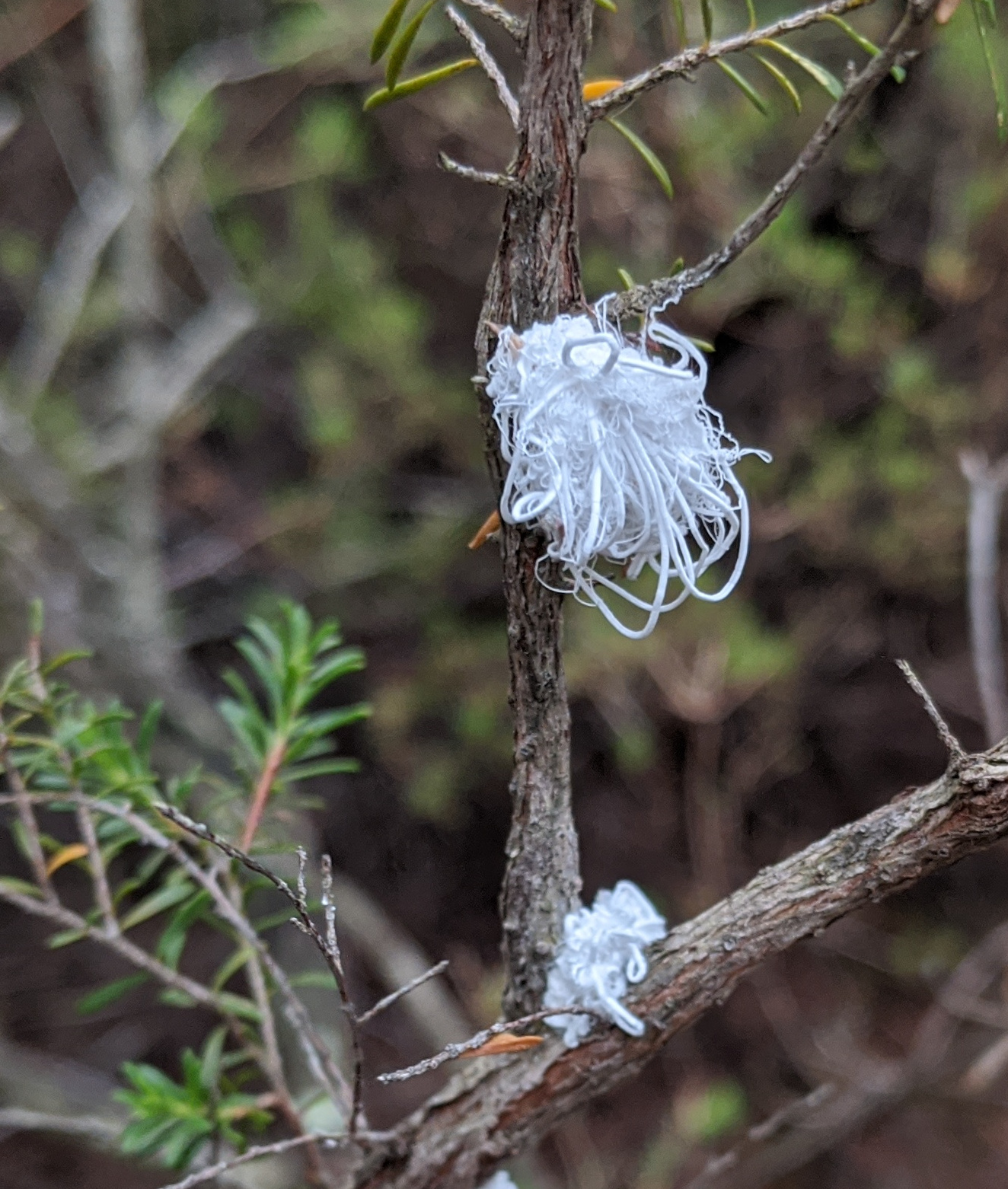
Yesterday I was walking through an area of bush near Sydney, when I noticed that a few of the bushes were encrusted with small white blobs:

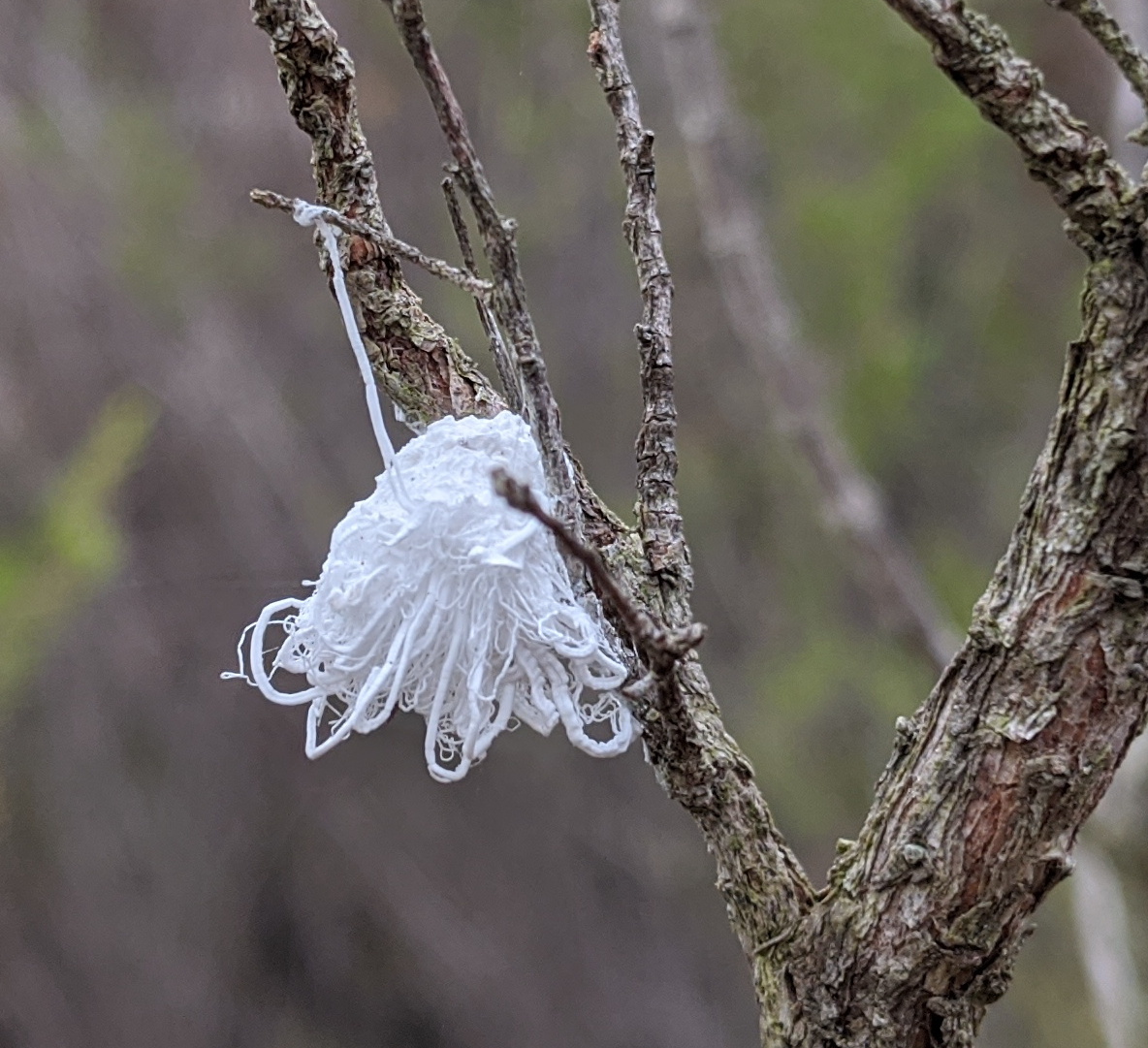
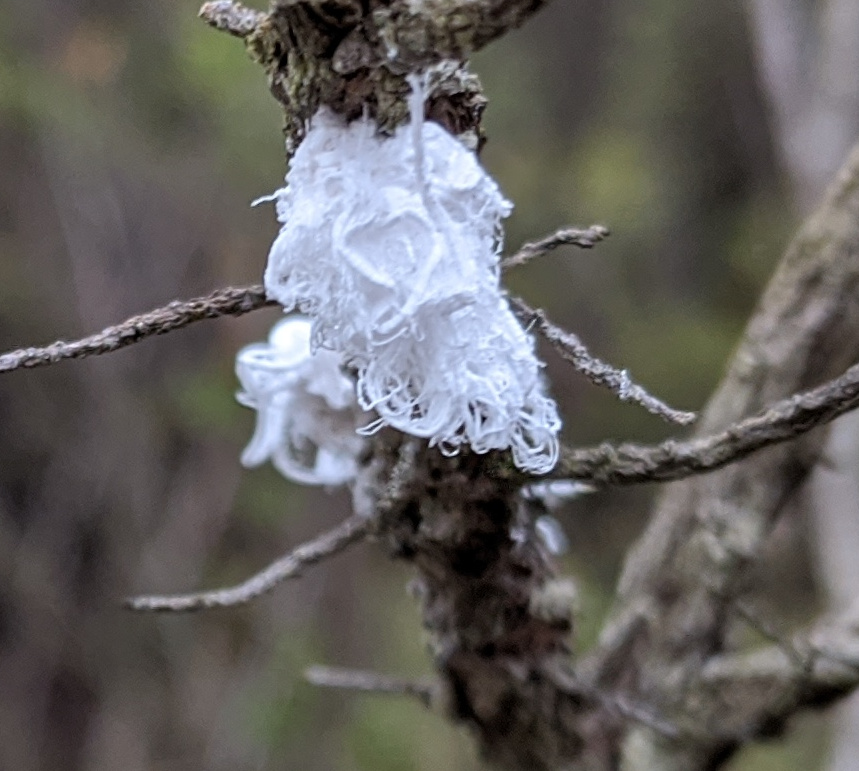
These are lerps, created by tiny psyllid bugs as a protective covering. The psyllids absorb sap from leaves, process the nutrients in the sap, then excrete the excess sugars as honeydew. The honeydew crystalises to form a kind of hut, the lerp, which the bugs can shelter in.
I’ve seen lerps before, but never in such abundance. We’ve had a number of days of hot, dry weather, followed by a cooler night with some rain. Perhaps the bugs needed protection from the hot weather and dry winds? Or perhaps the relief of the cooler night with rain meant that the bugs could absorb more fluid and thus produce more sugary waste.
Whatever the reason, the little sugary blobs are pretty when viewed from close up:
This one looks like a fairy hat:
And another:
The psyllid bug’s strategy of hiding inside the lerp is not entirely fail safe. The sugary substance is deliciously sweet, and birds are very fond of it. I’ve seen a Red Wattlebird with lerp stuck to its beak, and a Spotted Pardalote busily snapping lerp off leaves.
Red Wattlebird eating lerp
Red Wattlebirds are large honeyeaters, often seen diving through the foliage and chasing other birds away from a prized source of sugar. This one was making a lot of noise crashing through the branches. Probably on a sugar high. I think the white fuzzy stuff attached to its beak is lerp – crystalised honeydew exuded by bugs as a protective covering. A sweet treat for a bird. Red Wattlebirds get their name from the red wattles hanging below each cheek.

Common name: Red Wattlebird
Scientific name: Anthochaera carunculata
Approximate length: 35 cm
Date spotted: 11 November 2018 (Spring)
Location: Manly Dam National Park, New South Wales, Australia: 33°46’36.6″S 151°15’17.9″E
Pardalote eating lerp
Pardalotes are very small, compact birds. They move fast, so it’s hard to catch one on film. This one is hanging upside down, snapping up lerp (I think) off a leaf.
Update on Tuesday 11 November: I originally wrote that the bird was snapping up insect eggs. But since then I’ve started reading Where song began by Tim Low. He describes how Pardalotes and other Australian birds scrape lerp off leaves. Lerp is a sweet carbohydrate excreted by tiny insects called psyllids.
I couldn’t get a good angle to see the whole bird all at once, but this short video gives a good idea of what it looks like.
Common name: Spotted Pardalote
Scientific name: Pardalotus punctatus
Approximate length: 10 cm
Date spotted: 2 November 2014
Season: Spring
Location: Manly Dam National Park, New South Wales, Australia
Latitude/longitude: 33°46’36.3″S 151°15’14.9″E


 Sydney Birder