Blog Archives

Koel cuckoo wearing the midnight
The Koel cuckoos are back! They migrate to our region of eastern Australia in spring, and go back up north in autumn. You know they’re there because of their loud call: coo-eee, coo-ee. It’s less often that you manage to see one, as they tend to stay high up in the trees and make use of the foliage to hide from other birds.
This male Koel spent a few minutes in a relatively exposed position on the street where I live:
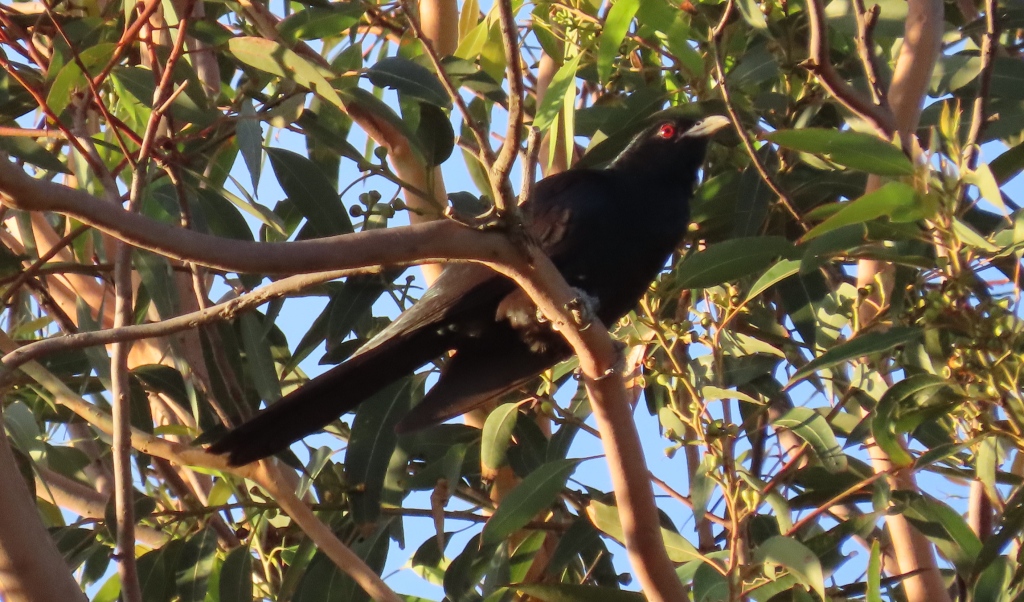
The males are entirely black, with bright red eyes and a pale beak. Like other cuckoos, the females lay their eggs in the nests of other birds (mostly wattle birds and friar birds). The cuckoo then abandons the egg and leaves it up to the foster parents to bring up the chick.
My earlier posts name this bird as a Common Koel (Eudynamys scolopacea). I’ve discovered recently that Koel cuckoos were recently reclassified as Pacific Koels (Eudynamys orientalis).
Common name: Pacific Koel or Eastern Koel
Scientific name: Eudynamys orientalis (was scolopacea)
Approximate length: 45 cm
Date spotted: 19 January 2024 (summer)
Location: Allambie Heights (north of Sydney) New South Wales, Australia

Juvenile Channel-billed Cuckoo and female Koel Cuckoo
Today an unearthly caterwauling called my attention to a juvenile Channel-billed Cuckoo perched on a wire. It was crouched down, flapping its wings, and uttering harsh calls:

Even at this age, it’s a big bird. I’d guess it was already full size, at around 60 centimetres in length. A giant baby indeed. And one that needs a lot of feeding.
The youngster stretched out its neck and called even louder:

It peered up into the air expectantly:

I didn’t catch any pictures of the next stage, alas, because the bird flew to a leafy tree and was mostly hidden from view. I did see the dedicated proxy parent, a Currawong, feeding the youngster, accompanied by a frenzied gabbling noise from the demanding child.
Common name: Channel-billed Cuckoo
Scientific name: Scythrops novaehollandiae
Approximate length: 58-65 cm
Date spotted: 23 January 2021 (summer)
Location: Manly Dam Park, New South Wales, Australia: 33°46’06.4″S 151°14’52.6″E
In a nearby tree, a female Koel Cuckoo sat and watched the commotion:

Common name: Common Koel or Eastern Koel
Scientific name: Eudynamys scolopacea
Approximate length: 45 cm
Date spotted: 23 January 2021 (summer)
Location: Manly Dam Park, New South Wales, Australia: 33°46’06.4″S 151°14’52.6″E
Both Channel-billed and Koel cuckoos are parasitic cuckoos, which means that they lay their eggs in the nests of other birds, and leave it up to those other birds to feed and care for the youngsters. Bot cuckoo types are migratory, coming down to this part of Australia for the warmer summer months, then heading to more northern countries for the winter.
Want to know more? I’ve posted some pictures and stories about previous encounters with cuckoos.
Male Koel Cuckoo in shot at last
Recently I’ve managed to snap a few shots of female Eastern Koels, also called Common Koels or Koel Cuckoos. Now a male has come into my sights:
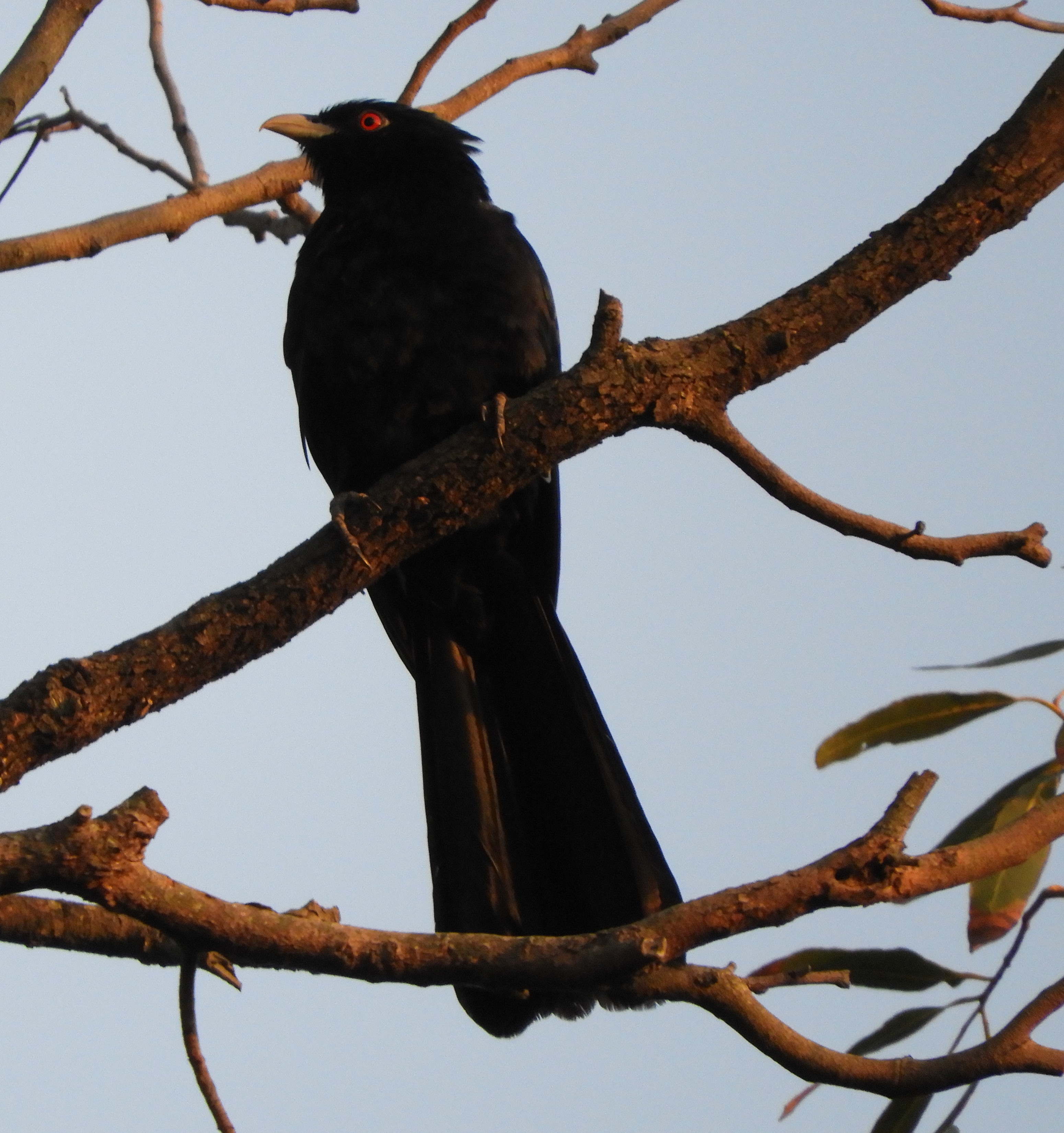
While the female is rather pretty, with shades of cream and brown overlaid with stylish spots, the male is primarily black. In fact, this photo shows more variation in colour than usual, because of the soft morning light.
If you’d like to see some shots of the females, or hear some of the cuckoos’ calls, take a look at this list of posts.
Common name: Common Koel or Eastern Koel
Scientific name: Eudynamys scolopacea
Approximate length: 45 cm
Date spotted: 28 December 2018 (Summer)
Location: Allambie Heights, New South Wales, Australia
Koel cuckoos calling
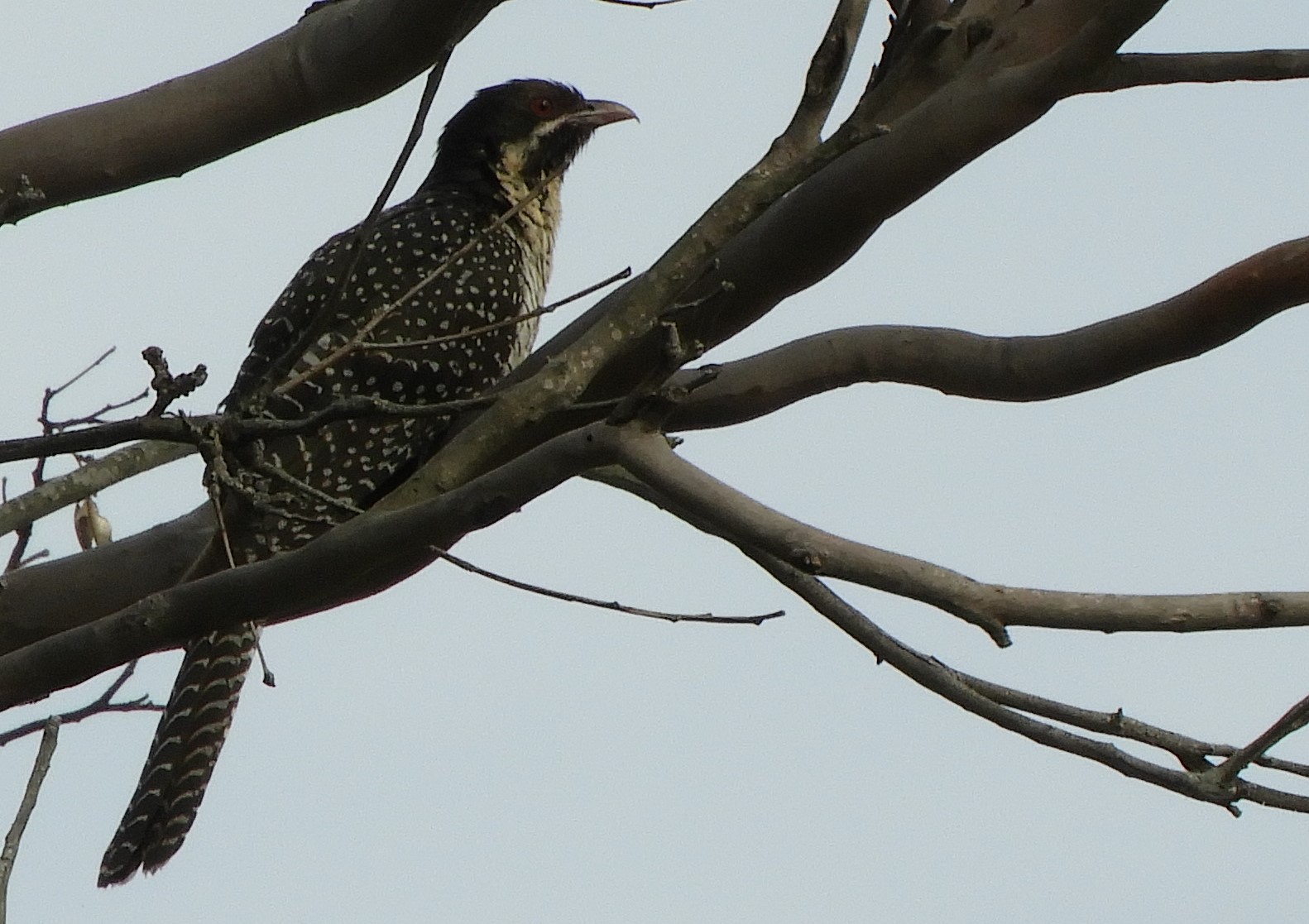
The Koel cuckoos are in town! They were diving through the treetops and calling all round me when I went for a stroll in the bush today. Here’s a picture of one of them – a female:
In the following short video you can hear the cuckoos calling to each other. You can’t actually see any birds:
Common name: Common Koel or Eastern Koel
Scientific name: Eudynamys scolopacea
Approximate length: 45 cm
Date spotted: 25 November 2018 (spring)
Location: Manly Dam National Park, New South Wales, Australia: 33°46’56.2″S 151°15’22.5″E
Female Koel cuckoo
Koel cuckoos have been swooping and calling around our house the last couple of days. They arrive in this neck of the woods in spring and head off again for northern climes in autumn. While here, they lay eggs in another bird’s nest and leave it up to the host family to feed the youngster. Typical cuckoo.
This is a female Koel cuckoo. They’re impressive to look at, and quite decorative in contrast to the completely-black male of the species.
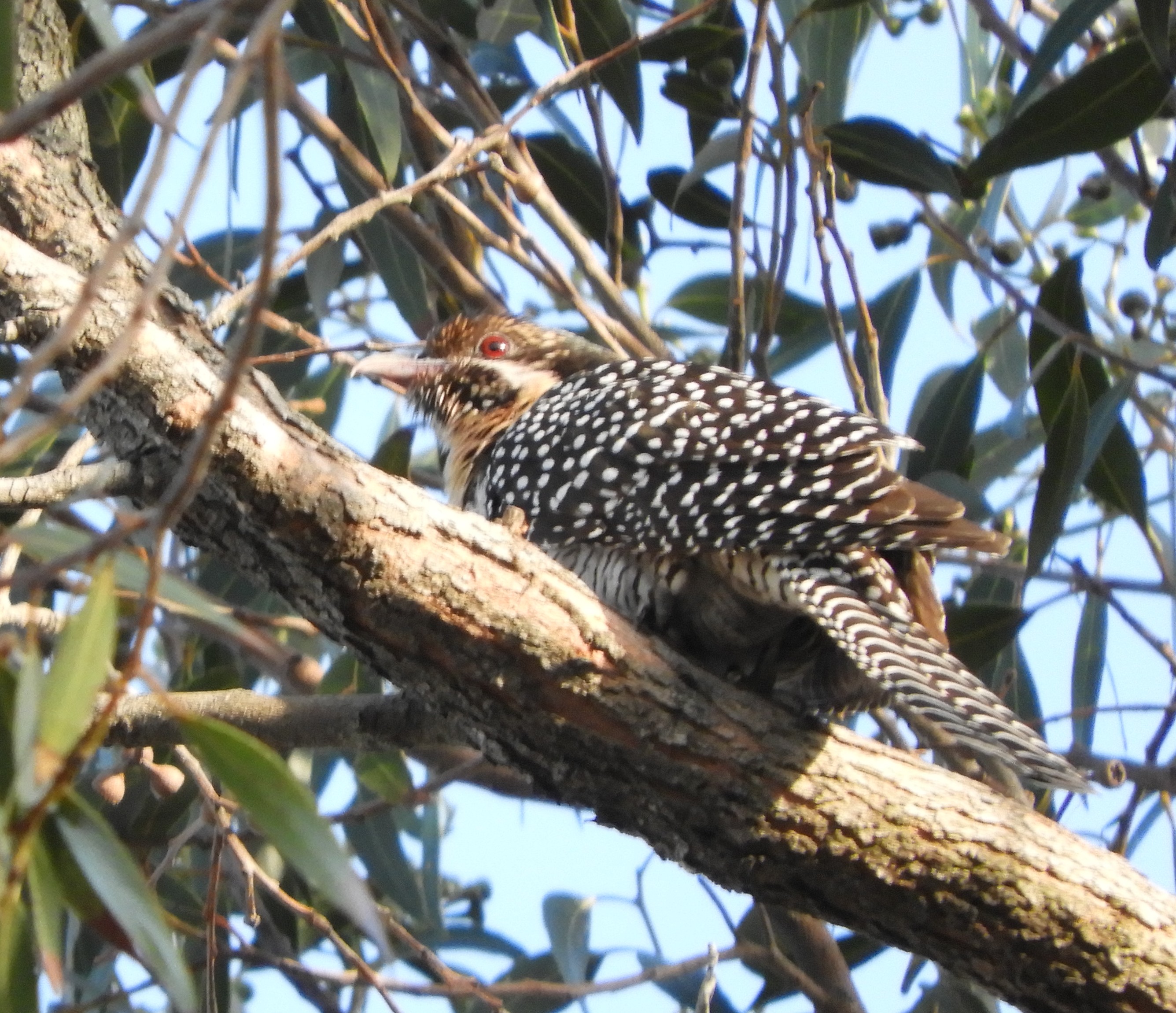
An earlier post shows a male Koel cuckoo, and you can play the video in that post to hear their call.
Common name: Common Koel or Eastern Koel
Scientific name: Eudynamys scolopacea
Approximate length: 45 cm
Date spotted: 10 November 2018 (spring)
Location: Allambie Heights, NSW, Australia
Koel Cuckoo regurgitates food
Today I spotted a young female Koel Cuckoo. The males are so dark in colour that it’s hard to see them in fine detail. Photographs end up being just a black blob. But this female is quite pretty.
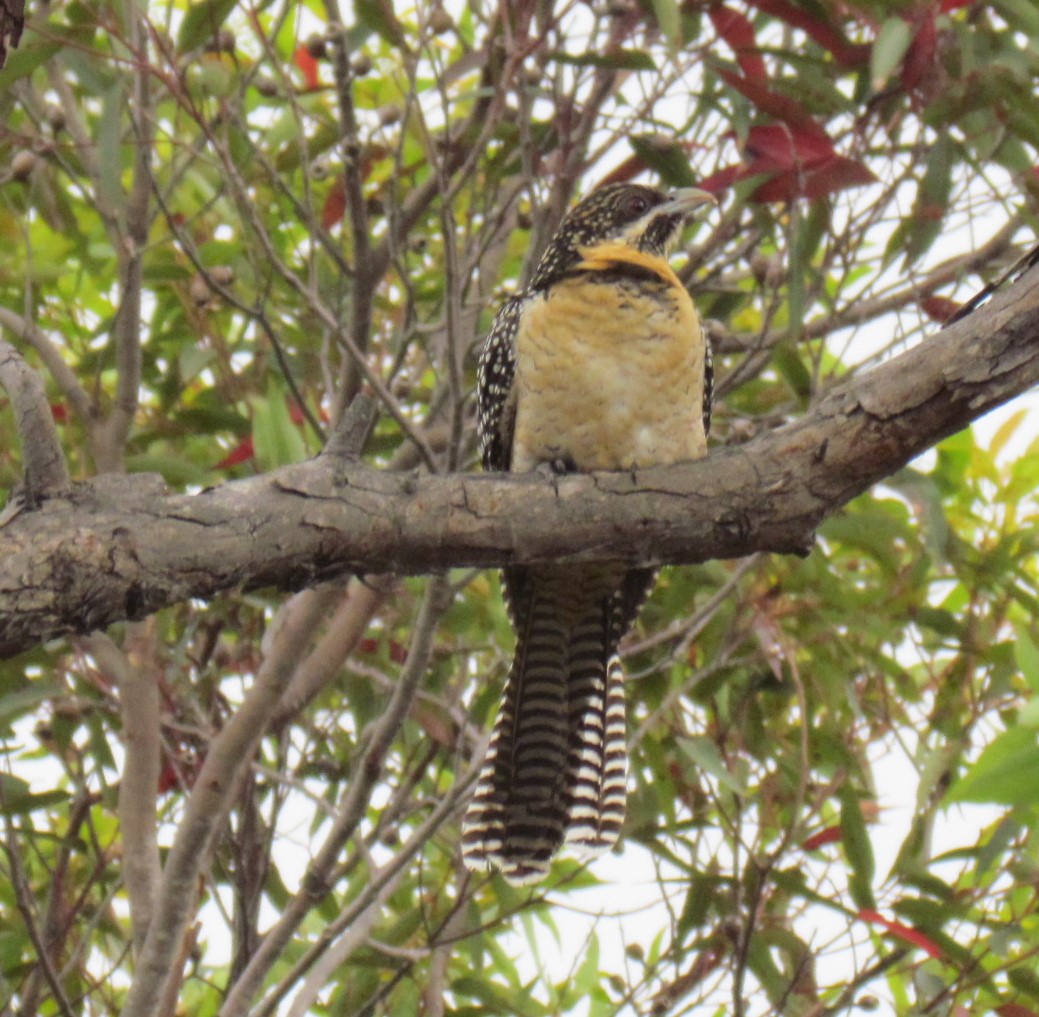
This video shows the bird sitting quietly on the branch, not doing much. At around 20 seconds into the video, she regurgitates some fruit and then swallows it again.
Adult Koel Cuckoos have red eyes, but youngsters can keep the brown colour into their second summer. I thought I glimpsed a glint of red every now and then, but her eyes are still mostly dark brown.
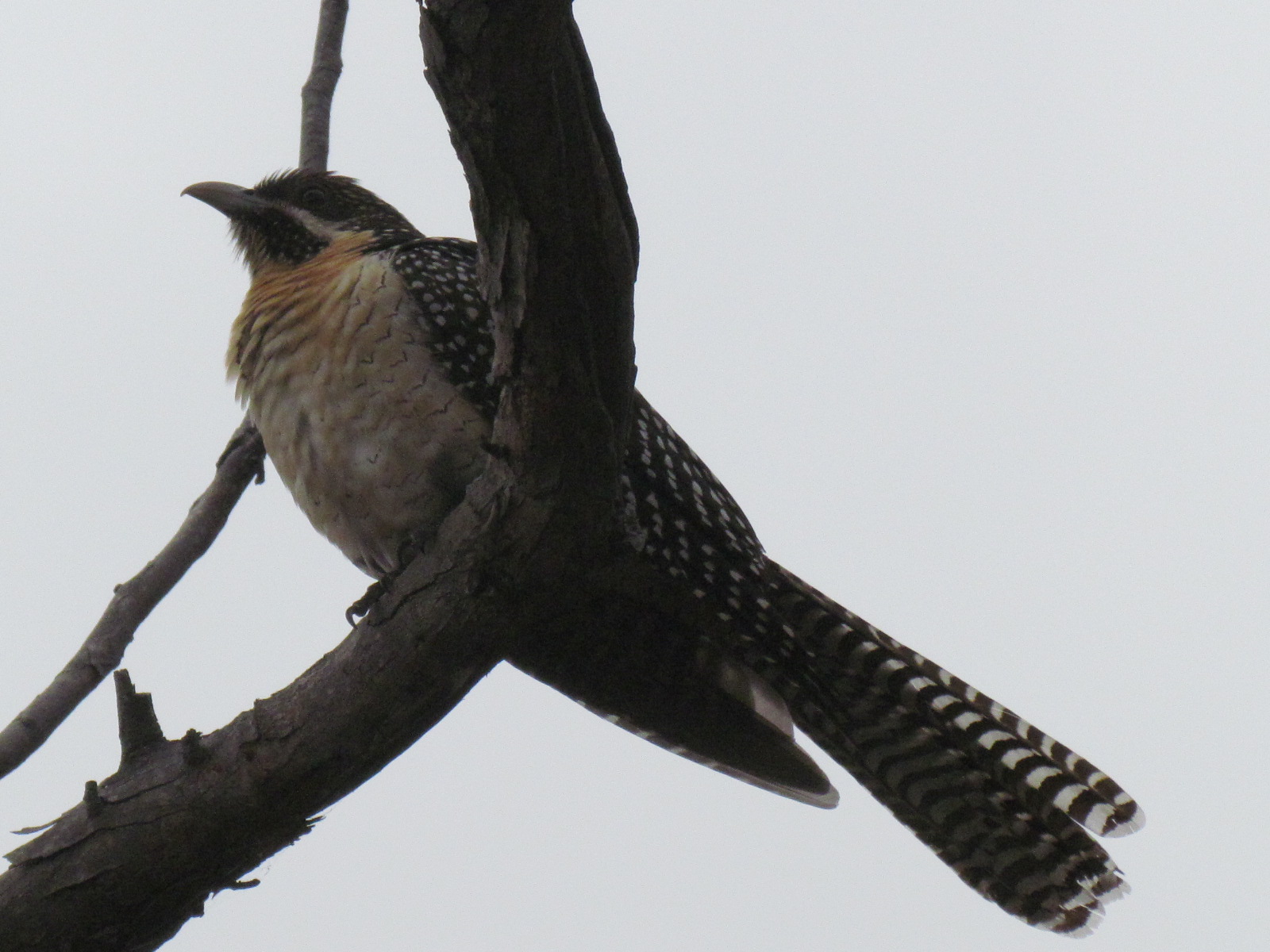
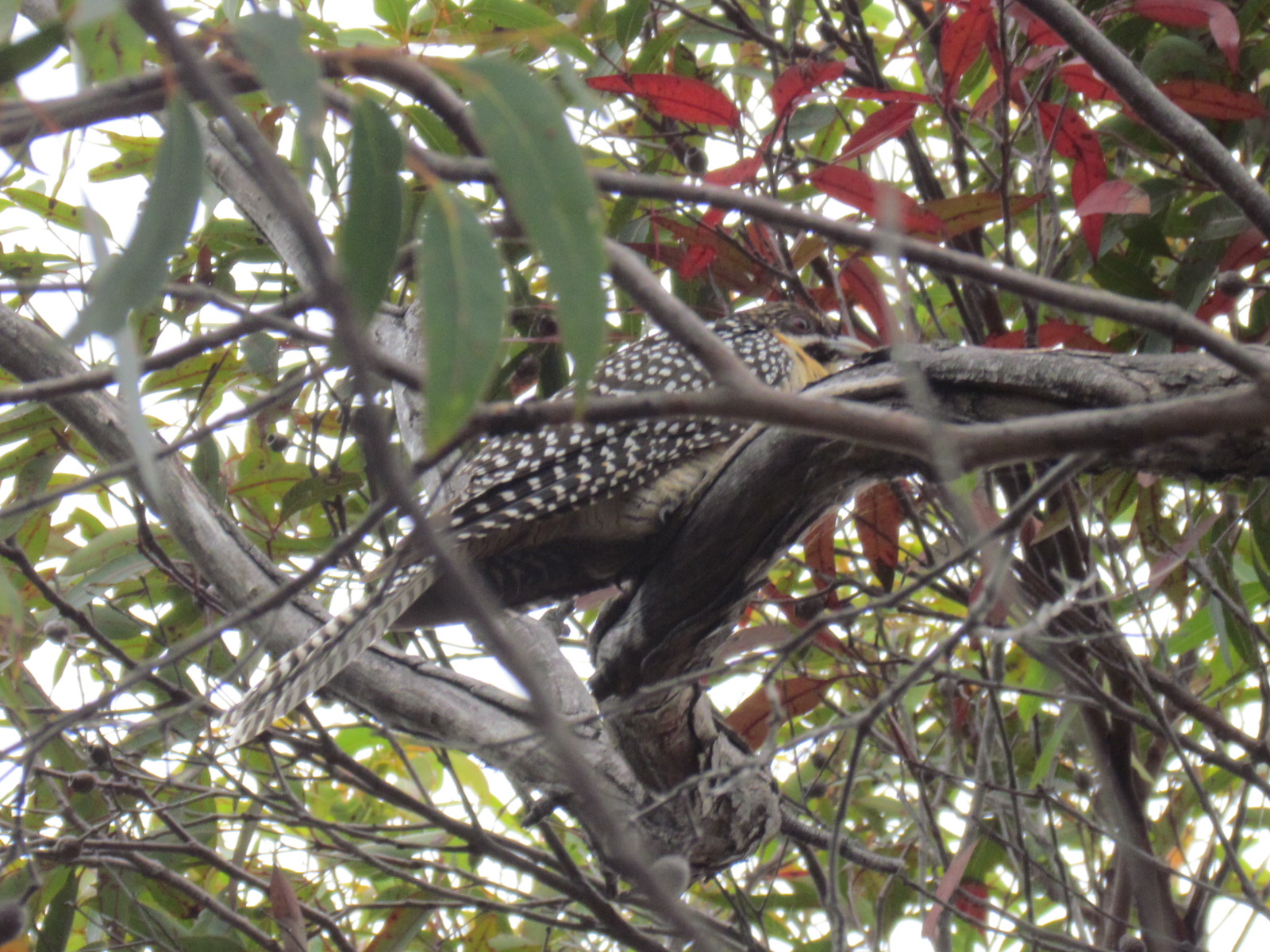
Here’s another side view of her, sheltering behind the foliage:
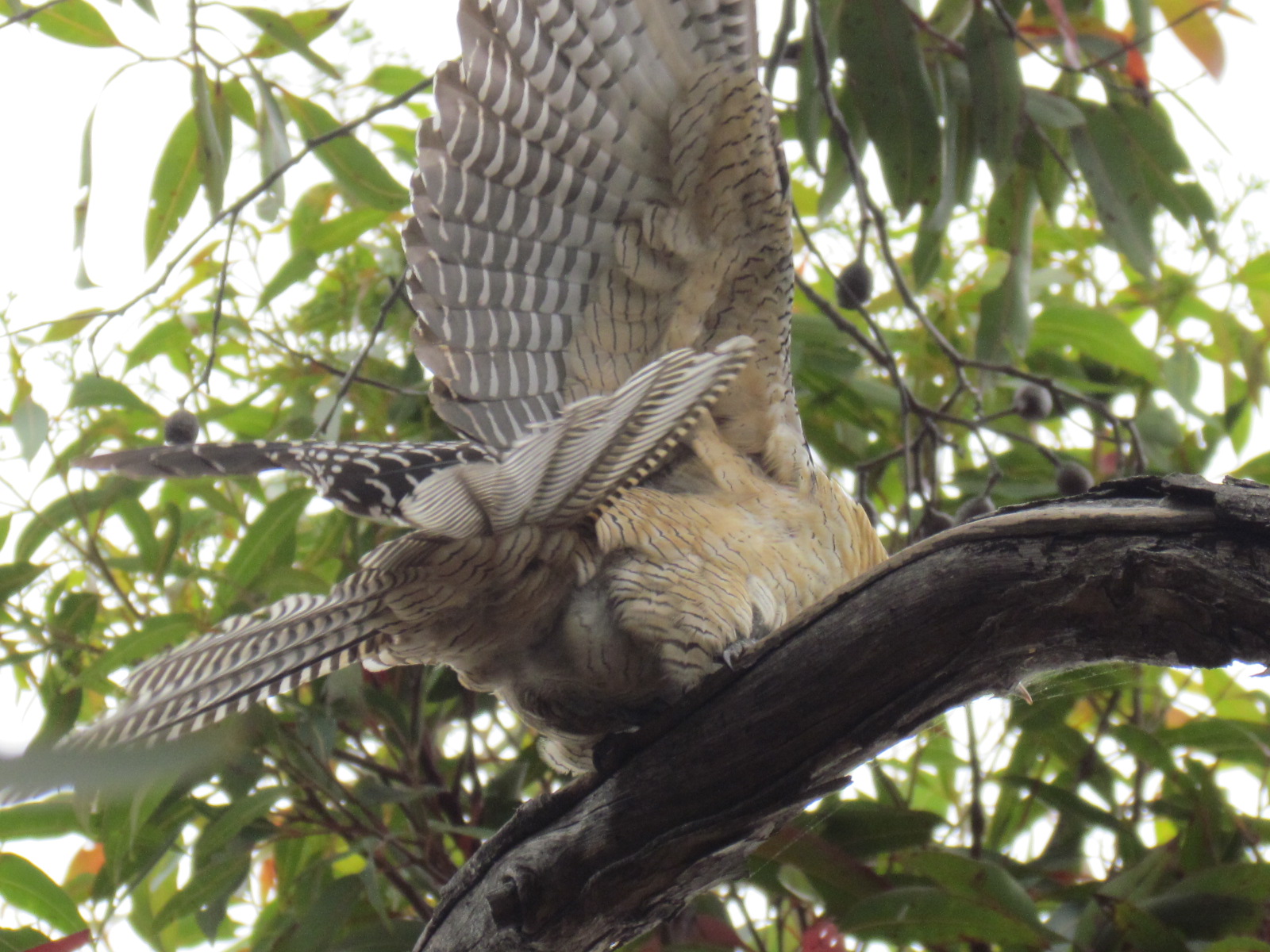
She decided to stretch her wings. I was behind her at the time, so there’s a lovely view of soft down and the underside of her wings:
Common name: Common Koel or Eastern Koel
Scientific name: Eudynamys scolopacea
Approximate length: 45 cm
Date spotted: 27 November 2016
Season: Spring
Location: Manly Dam Reserve, New South Wales, Australia
Latitude/longitude: 33°46’35.6″S 151°15’16.8″E
Cuckoos are back in town
They’re noisy creatures, but I love it when the cuckoos arrive in Sydney. They herald the start of spring. They also send the local birds into a tizzy. Territorial disputes abound. The kookaburras have a rival for their 5am wake-up duties. And the noisy miners have another large bird to terrorise.
The cuckoos are migratory, spending the warmer half the year in Australia and the cooler half in Indonesia, Papua New Guinea and other northern climes. Two types of cuckoos make themselves known in our neighbourhood by their loud calls: the Channel-billed Cuckoos and the Koel Cuckoos.
Channel-billed Cuckoo
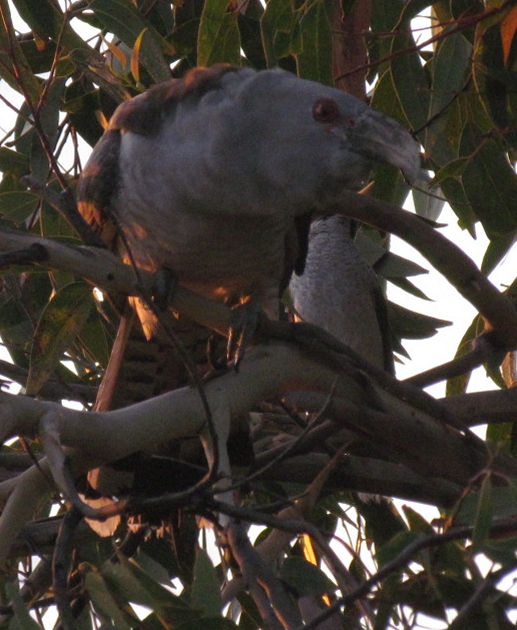
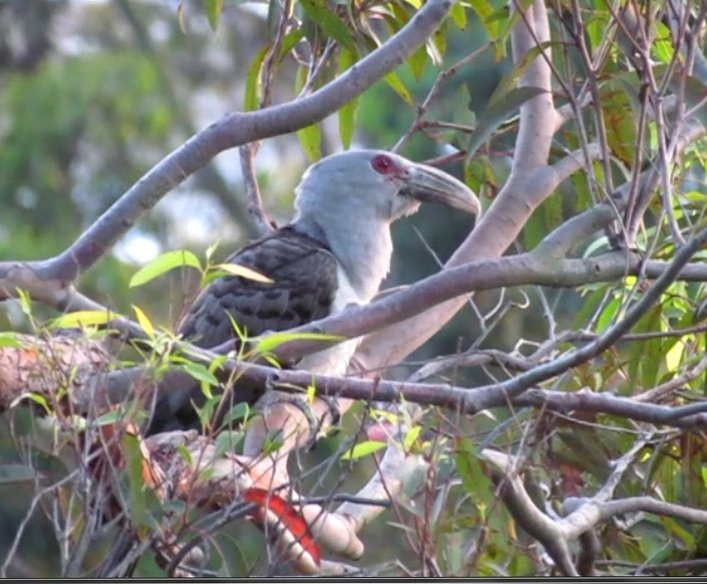
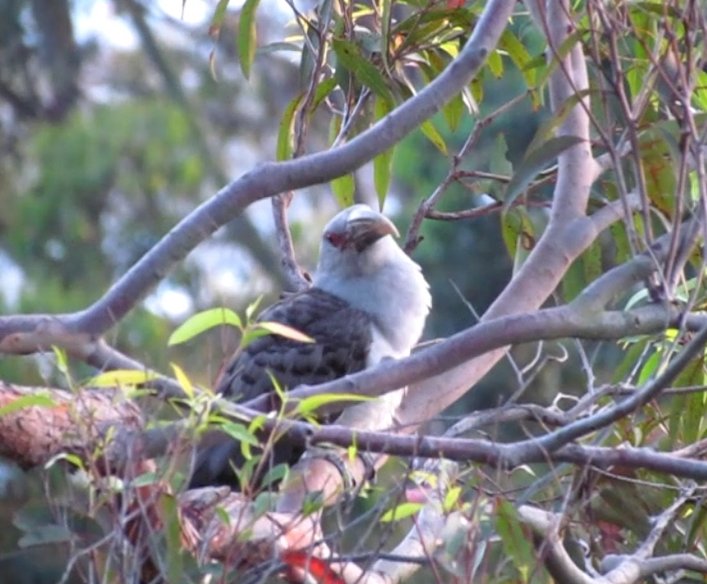
The Channel-billed Cuckoos are the largest cuckoos in the world. With their red eyes and large beaks, they’re an impressive sight. Today I was lucky to see one reasonably close by, and I was amazed by the way it moves. This one was being bothered by a noisy miner. The cuckoo was constantly bending and wriggling its neck to try and spot its tormentor. At the end of the video, you’ll see it looking up in alarm then disappearing with a flash of its tail, as the much smaller miner dive-bombs it.
Here’s a still photo of the same cuckoo peering out from underneath a canopy of leaves:
In this one, the cuckoo is looking reasonable relaxed but on the alert for attack:
And here it’s definitely wary:
Common name: Channel-billed Cuckoo
Scientific name: Scythrops novaehollandiae
Approximate length: 58-65 cm
Date spotted: 1 November 2015
Season: Summer
Location: Allambie Heights, New South Wales, Australia
Latitude/longitude: 33°46’13.9″S 151°15’39.2″E
Koel Cuckoo
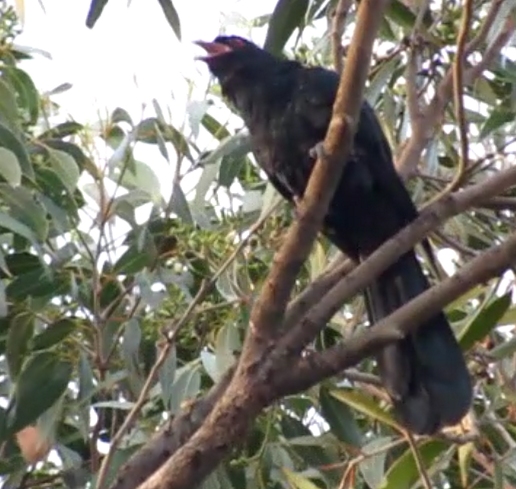
Then there are the Koel Cuckoos, like this one who came calling recently:
Here’s a photo of the Koel Cuckoo in full throat:
Common name: Common Koel or Eastern Koel
Scientific name: Eudynamys scolopacea
Approximate length: 45 cm
Date spotted: 11 October 2015
Season: Summer
Location: Allambie Heights, New South Wales, Australia
Latitude/longitude: 33°46’13.9″S 151°15’39.2″E
The call of a Koel Cuckoo
We often hear Koel Cuckoos at this time of year, but it’s unusual to spot one. This male Common Koel (sometimes called an Eastern Koel) sat in a tree at dawn, calling out to his mates. Some Australian Miner birds swooped in to pester him, as they do.
Koels are migratory, travelling from the east coast of Australia to Indonesia, south-east Asia and India. They arrive in Australia in September, and leave again around March. It’s a lovely sign of spring when we first hear their call each year.
Common name: Common Koel or Eastern Koel
Scientific name: Eudynamys scolopacea
Approximate length: 45 cm
Date spotted: 7 December 2013
Season: Summer
Location: Allambie Heights, New South Wales, Australia


 Sydney Birder