Blog Archives

Two songs of the Fan-tailed Cuckoo
I’ve heard Fan-tailed Cuckoos several times over the years, making their pretty downward trilling call. A few days ago, I heard a different call: a haunting, mournful whistle sighing in the mist.
In this 14-second video, the bird whistles five times:
At first I didn’t know what type of bird was calling. Then I saw a Fan-tailed Cuckoo fly onto a nearby branch:

They’re rather pretty birds, with a russet chest and belly, and a startling orange mouth. On this occasion, I could see only the back of the bird. Here’s a picture of another Fan-tailed Cuckoo, which I saw in June 2020:
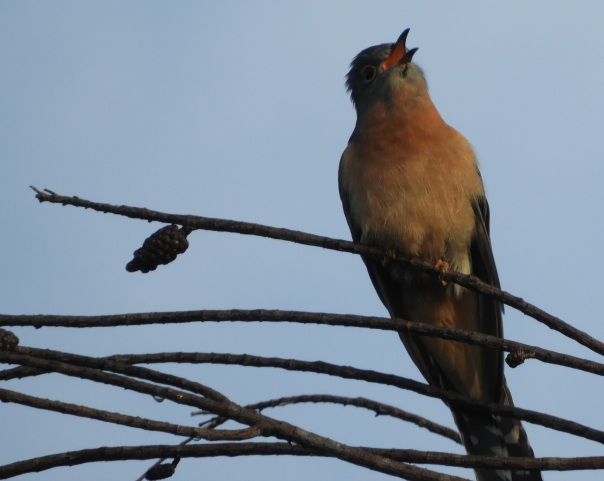
Shortly after I heard the whistles, the same bird or another started making the typical trilling call that I’ve heard more often. In this 17-second video, the bird calls four times:
Common name: Fan-tailed Cuckoo
Scientific name: Cacomantis flabelliformis
Approximate length: 26 cm
Date spotted: 11 May 2025 (autumn)
Location: Manly Creek, New South Wales, Australia: 33°46’21.3″S 151°14’34.8″E
Song of the Fan-tailed Cuckoo
Walking through the Aussie bush, I’m sometimes intrigued by a musical trill coming from the hidden depths of the forest. The sound starts high and drops rapidly down the scale to a lower pitch. Today, for the first time, I managed to spot the bird that makes this lovely noise: a Fan-tailed Cuckoo:
At first I thought it couldn’t be a cuckoo, because don’t all cuckoos leave for warmer climes when winter arrives on the Australian east coast? Evidently not. For the most part, Fan-tailed Cuckoos brave the cold weather, although those in Tasmania do move north into the mainland.
Here’s the cuckoo caught in mid trill:
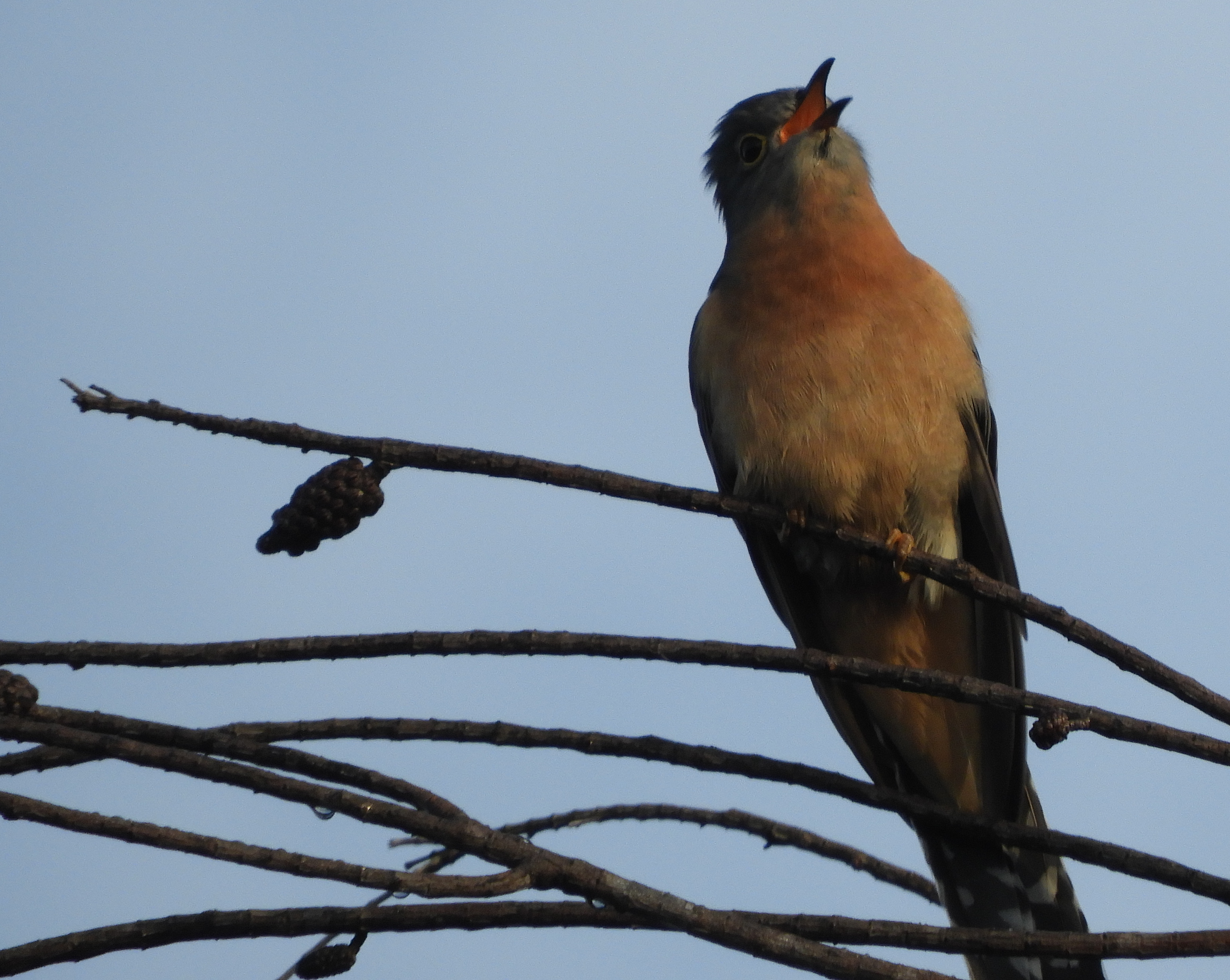
Like other cuckoos, these birds lay their eggs in the nests of other species. Fan-tailed Cuckoos choose fairy-wrens and thornbills as their hosts. Such small little parents to raise a cuckoo!
Here’s another shot of the bird, this time with its beak closed:

This particular bird has a lovely rich coloring. Other photos I’ve seen show less orange in the chest feathers, and a lighter grey on the head and back.
Singing again:
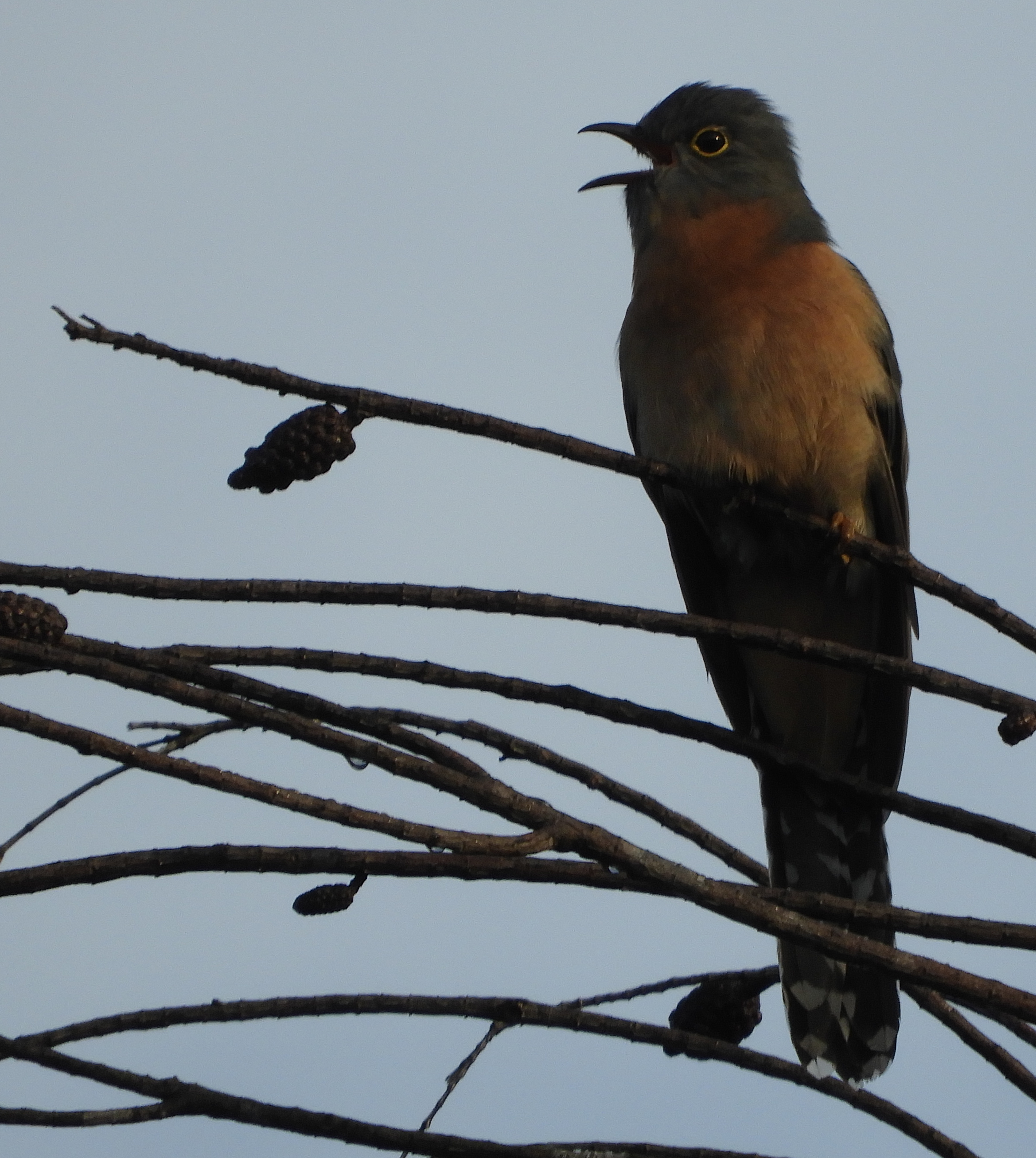
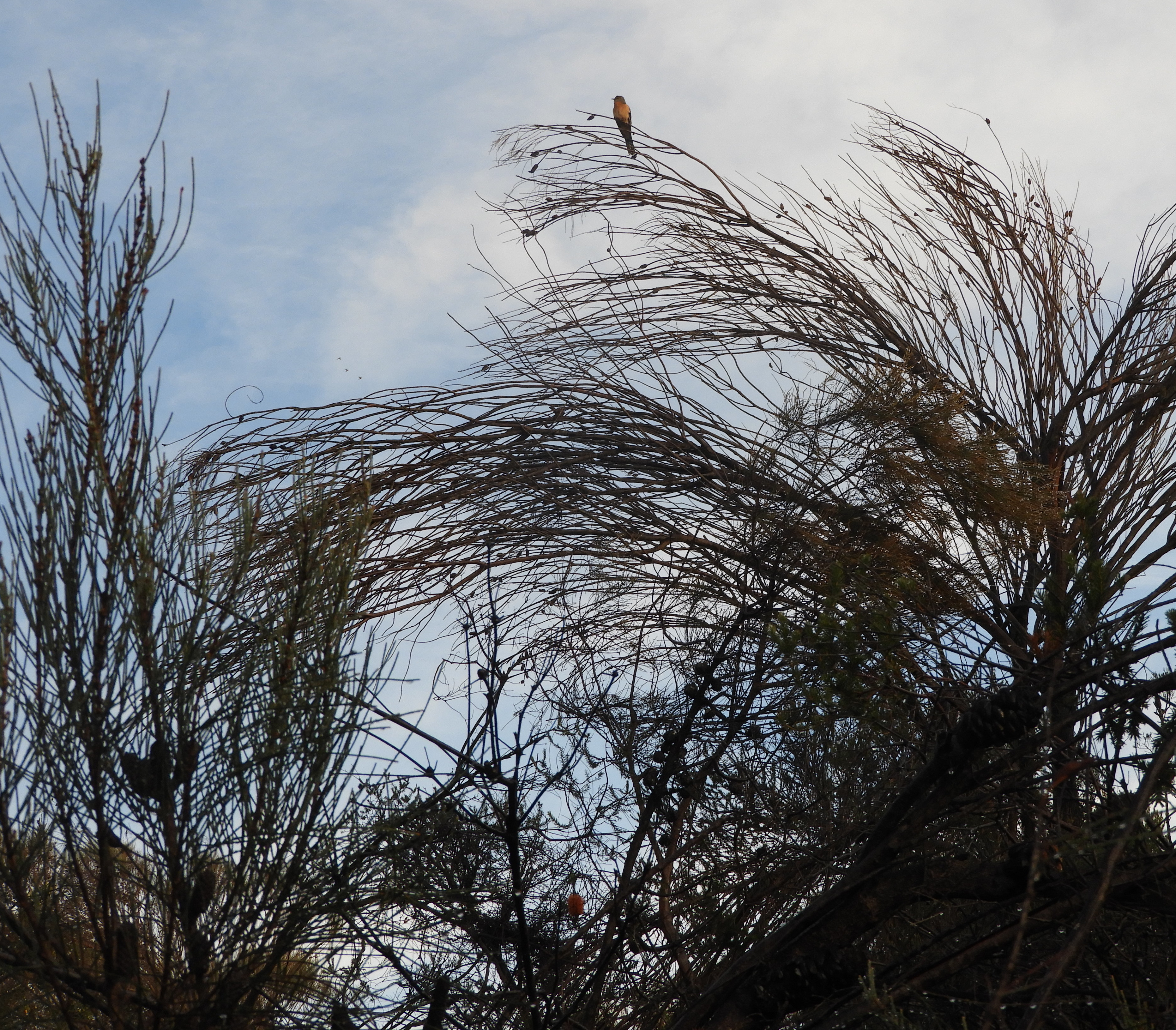
Fan-tailed Cuckoos feed on insects. Typical behaviour is to sit high up on a branch then swoop down when a meal crawls or flutters into view. Here’s a non-zoomed-in view of the bird:
Common name: Fan-tailed Cuckoo
Scientific name: Cacomantis flabelliformis
Approximate length: 26 cm
Date spotted: 13 June 2020 (winter)
Location: Manly Dam National Park, New South Wales, Australia: 33°46’29.5″S 151°14’46.3″E


 Sydney Birder