Blog Archives

Birds in Hoedspruit, South Africa
I recently spent a few days in the little town of Hoedspruit, South Africa. The town is close to several wild-life parks, including the well-known Kruger National Park. There’s a rich diversity of wild life in the area, including birds and other creatures. This post is about just a few of the birds that I saw while in the area.
[If you want to see more of the wildlife, take a look at my bookworm’s post: Hoedspruit predators and pretties.]
A common and fascinating bird is the Southern Red-billed Hornbill. They’re cheeky and curious, and would fit in well as a friendly but slightly dangerous little character in Jurassic Park. This video shows some young Southern Red-billed Hornbills with a Starling (I think it’s a Cape Starling, though the area hosts several varieties of Starlings):
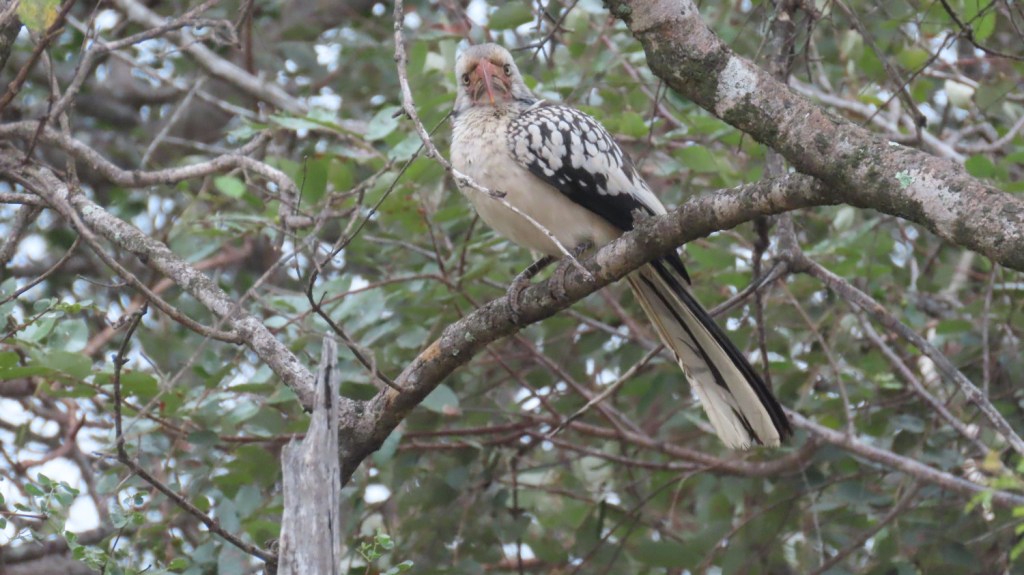
Early one morning, I came across another group of Southern Red-billed Hornbills feeding on the ground. After I’d taken a couple of shots of the birds, this one flew up onto a branch and stared at me. “It’s too early in the morning for this, mate!“
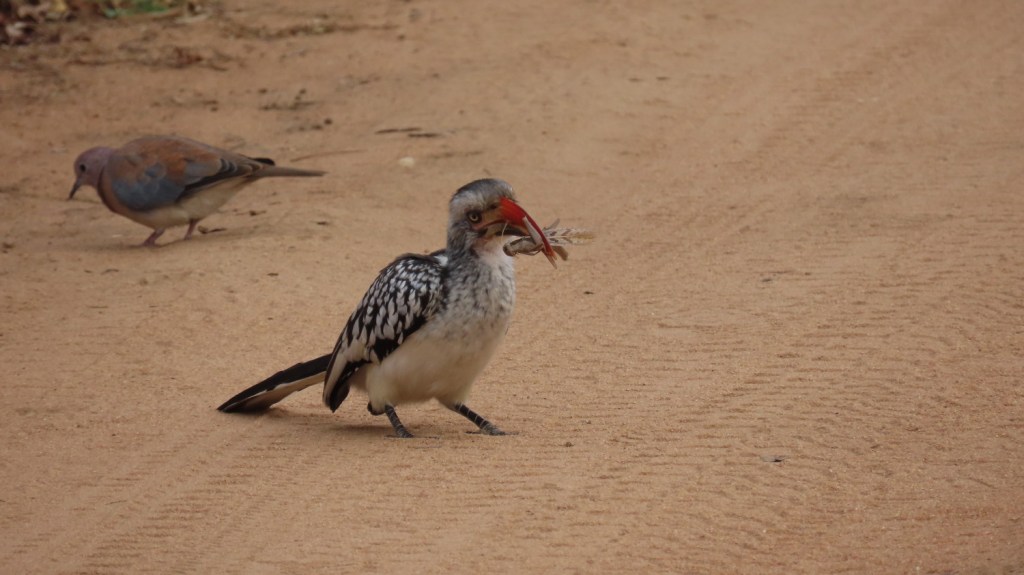
This one had caught a grasshopper or locust:
Mites in your feathers? A dust bath is just the ticket:
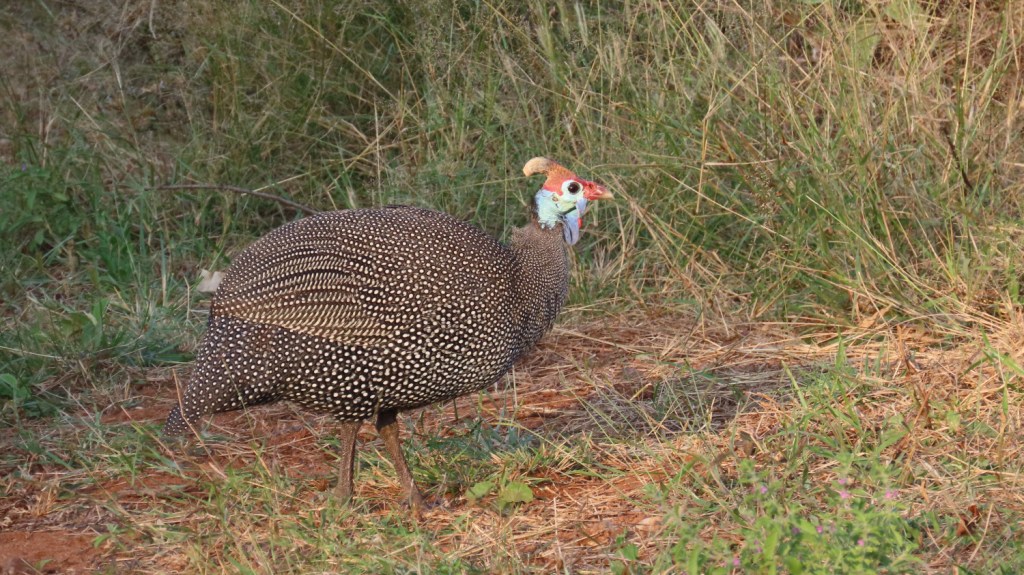
Helmeted Guineafowl patrolled the area in flocks of up to twenty birds. A Helmeted Guineafowl sports a chiffon-like coat of grey with dizzyingly-aligned white spots worthy of haute couture. The effect is somewhat spoiled by the bare-skinned head topped with a bony casque:
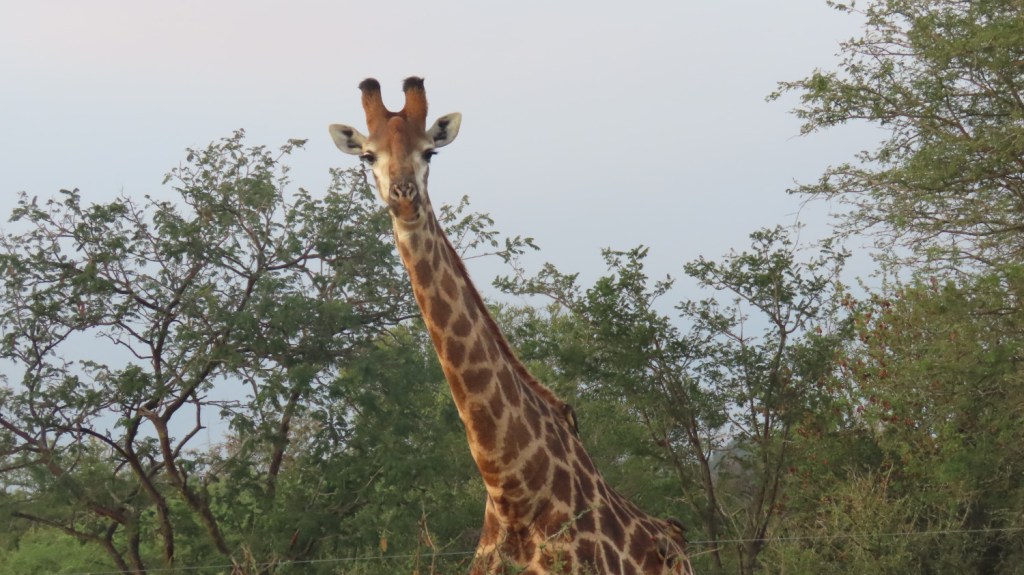
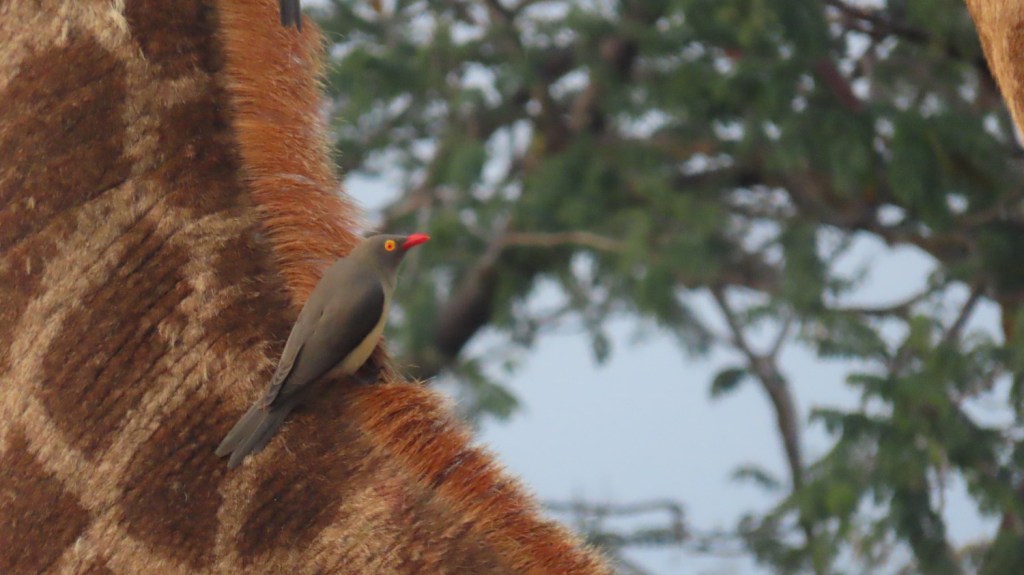
Early one morning, we went on a game drive at Khaya Ndlovu on the Rietspruit Big 5 Game Reserve. That’s a private reserve close to the Kruger National Park. Among the creatures we saw were several giraffes. It was interesting to see the little birds, called Red-billed Oxpeckers, that spend their time perched on the giraffes’ necks and flanks. The birds feed on ticks, mites, and other parasites on the animals’ skin. They even sometimes drink the animals’ blood. The birds are hard to see in this picture — one is above the giraffe’s shoulder and two are near the back of the giraffe, one on its flank and another perched near its tail:
Here’s a closeup of an Oxpecker, showing its red bill and red eye surrounded by a yellow wattle:
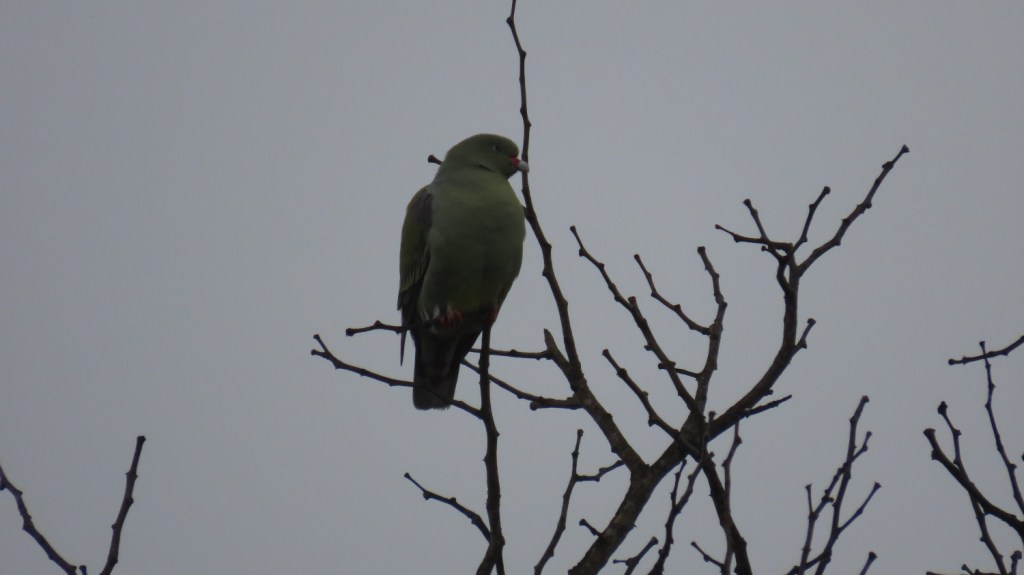
Have you ever seen a green pigeon? Here’s an African Green-Pigeon, looking plump and happy in the morning dimness:
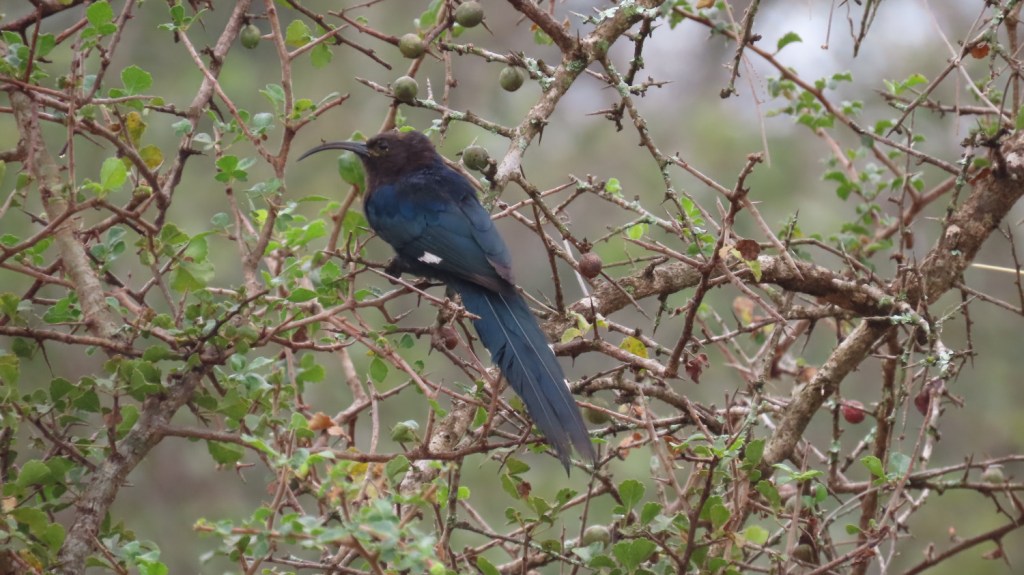
A Common Scimitarbill swooped from tree to tree, difficult to spot and identify despite its relatively large size. The bird has a distinctive thin, curved beak, hence its name. It uses the beak to poke into crevices and cracks in trees, prying out insects and grubs:
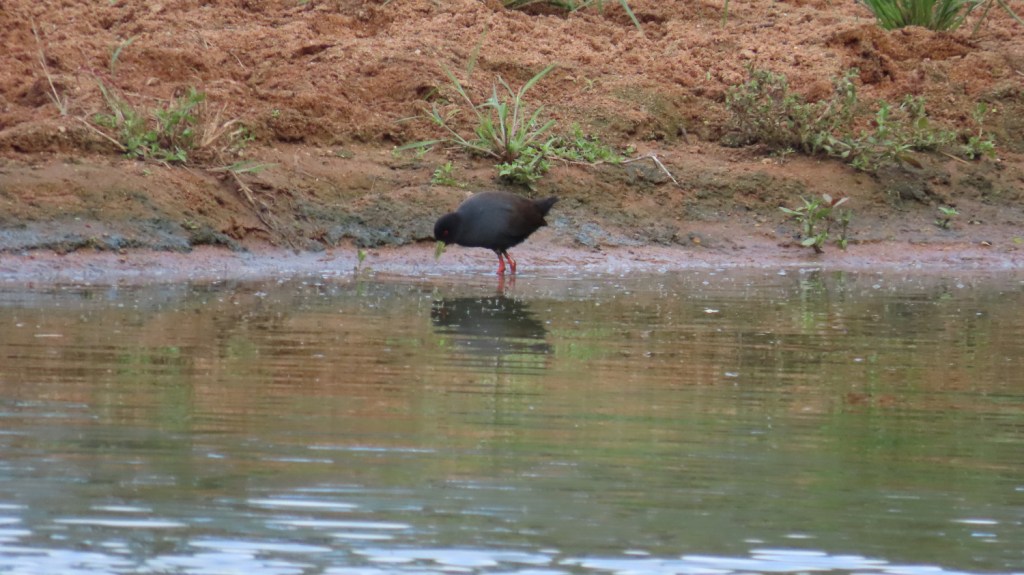
At a small dam, a Black Crake bustled up and down at the water’s edge. According to my Merlin bird app, these birds are listed as uncommon in the area:
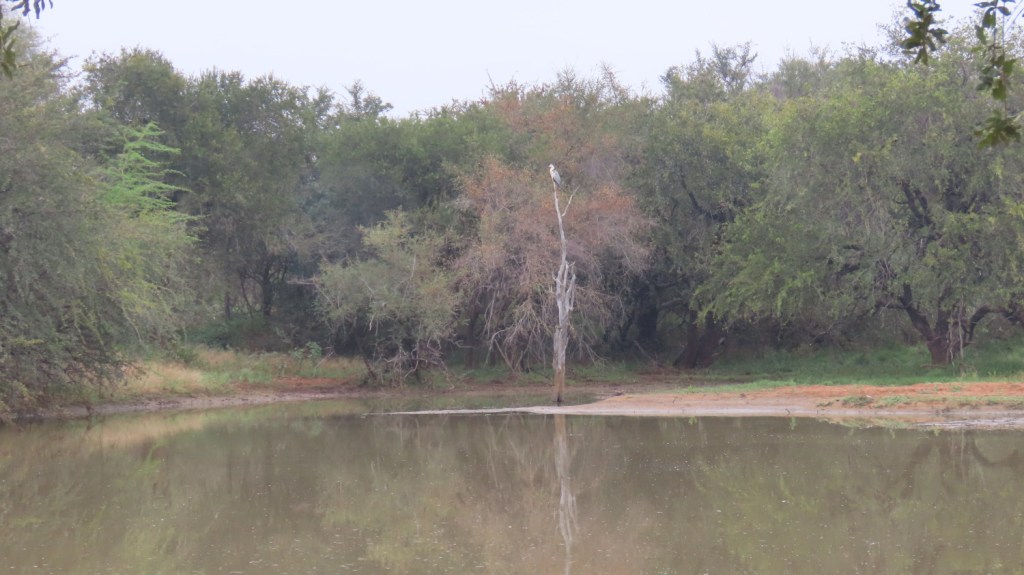
The dam was quiet and restful. I visited it twice and saw a variety of birds there. This photo shows more of the dam, with a Gray Heron visible on a tall dead tree trunk in the distance:
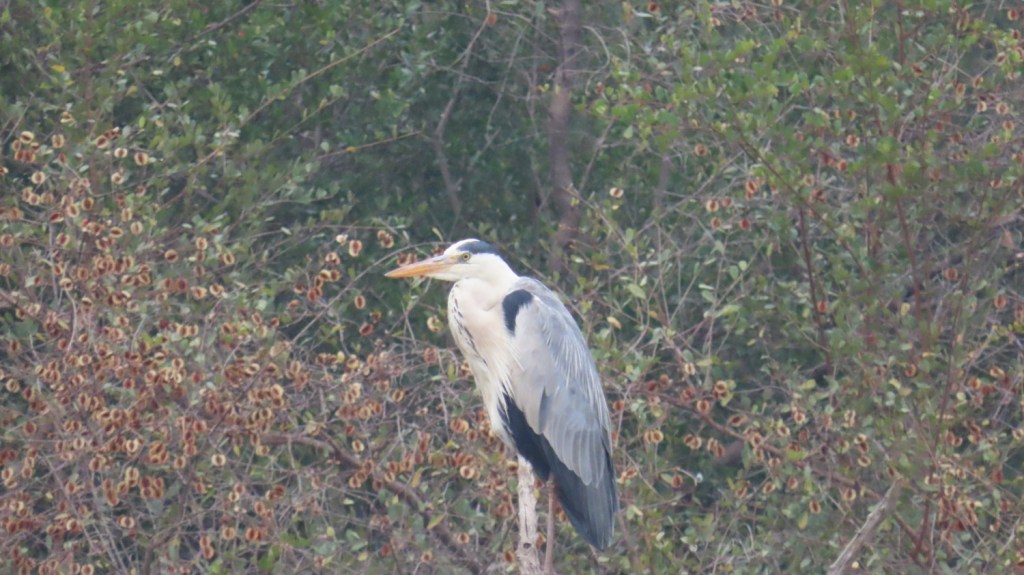
Here’s a closeup of the Gray Heron:
Like the Lapwings in Australia, Blacksmith Lapwings are brave and aggressive guardians of their young. These two, however, were peacefully patrolling their turf:
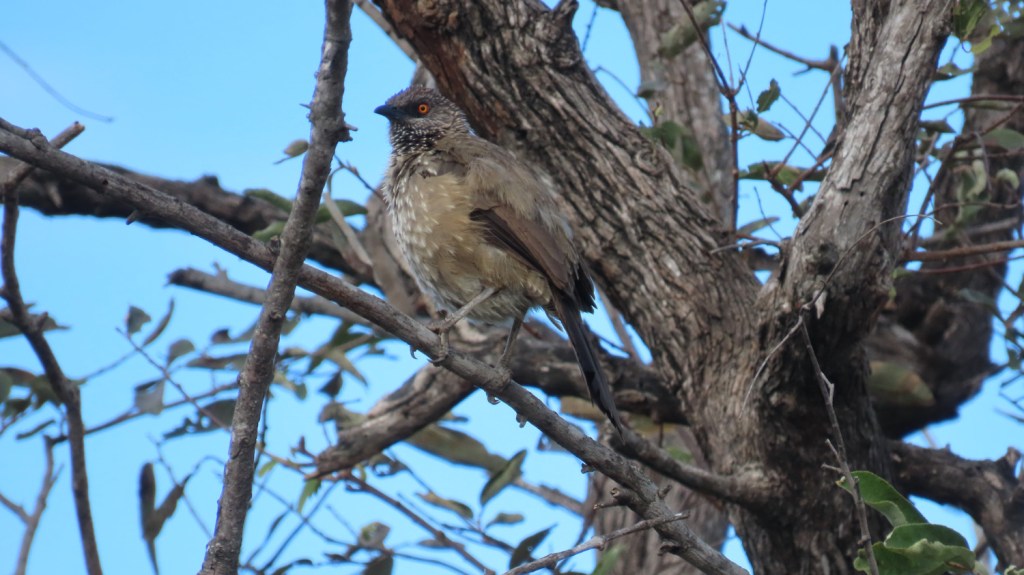
The markings on the next bird reminded me of the Little Wattlebirds that we get in Australia. The South African bird is an Arrow-marked Babbler. Look at that fierce red-rimmed, orange eye:
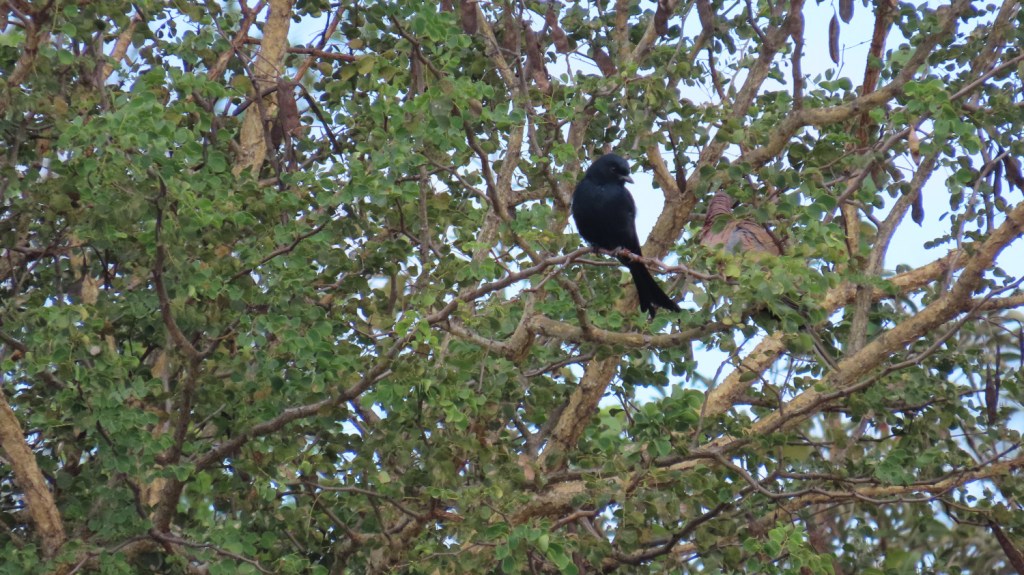
A Fork-tailed Drongo perched high in a tree, chatting to a half-hidden pigeon of some sort:
Sounding like a husky buzzsaw, a Grey Go-away-bird (also known as a Grey Lourie) uttered its call: “Go-waaayyy!” The call is just audible at the beginning of the video, just before another starts a repetitive honking off-camera:
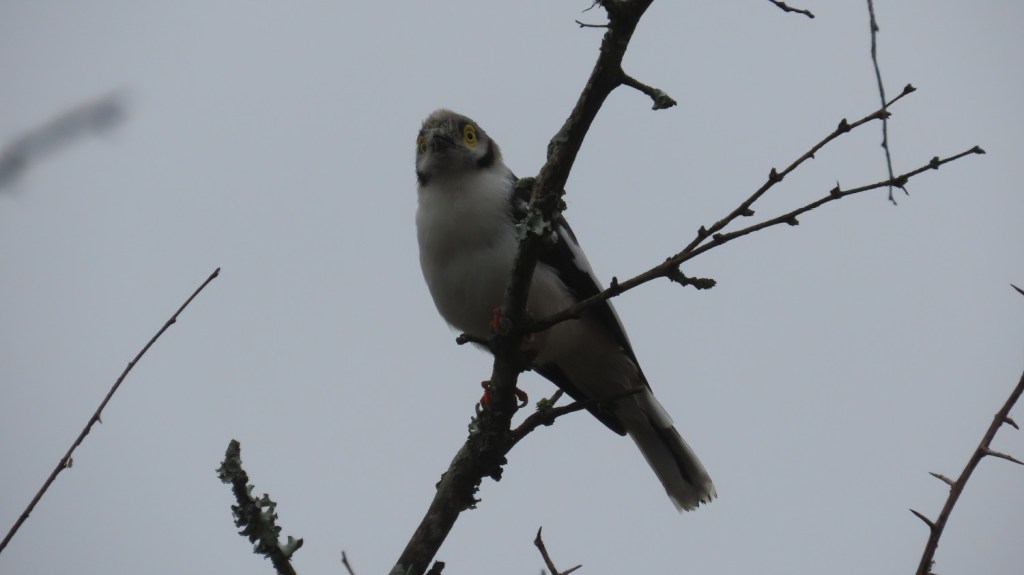
A White-crested Helmetshrike peered down at me from eyes that appear sunken into its face feathers:
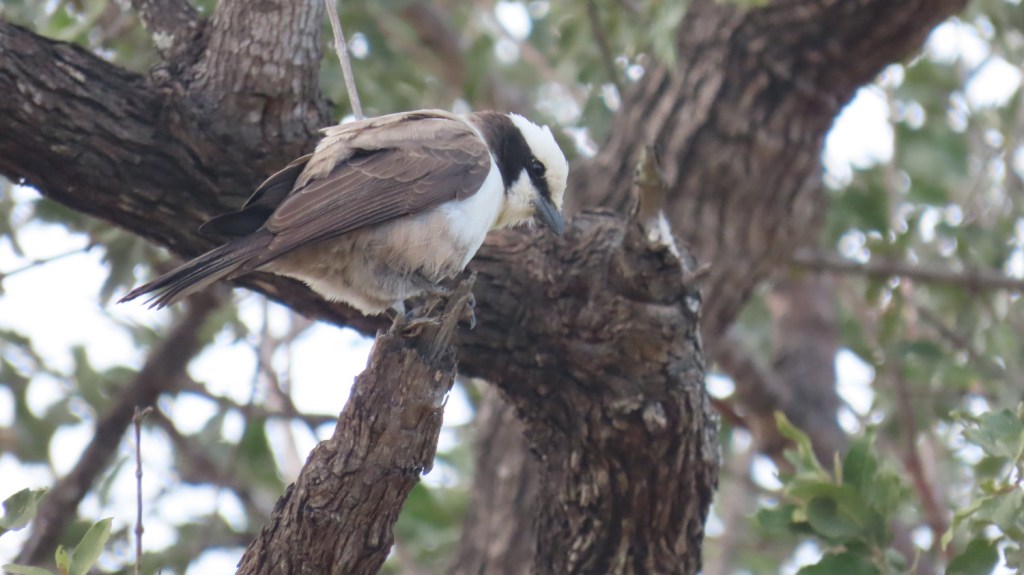
Here’s a White-crowned Shrike:
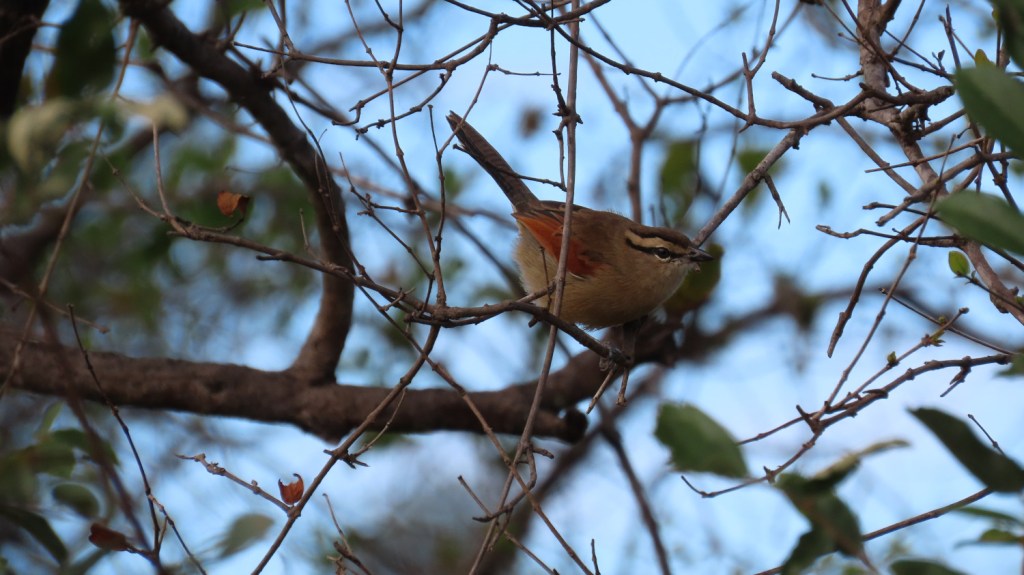
Adding to the list of shrikes is a Brown-crowned Tchagra, a type of bush shrike:
Among the waxbills and finches was a darkly mottled little bird, which I think is a Dusky Indigobird. These birds are nest parasites that lay their eggs in the nests of African Firefinches:
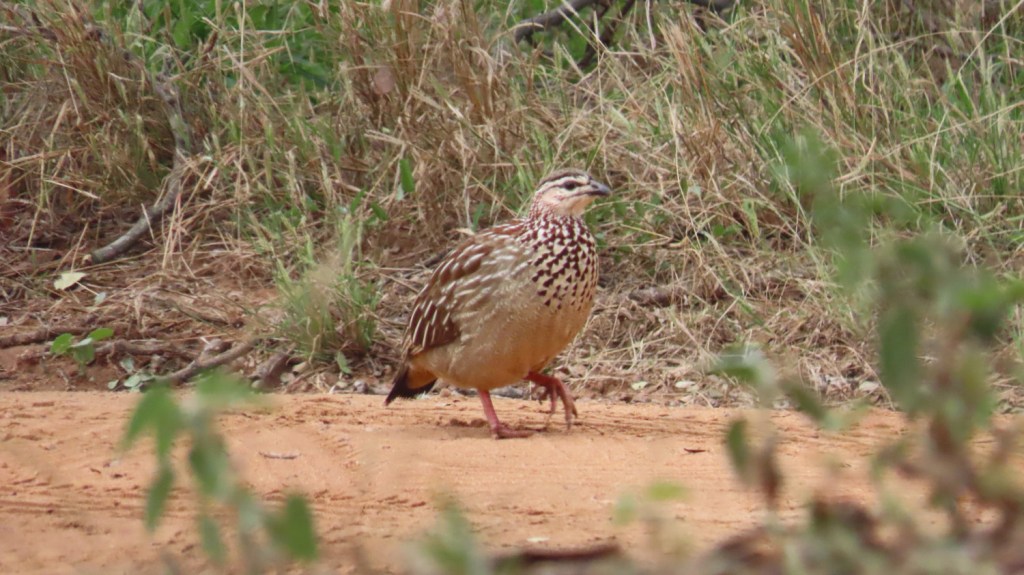
Evidently Crested Francolins have a bushy crest which they raise occasionally. It’s not in evidence in this photo:
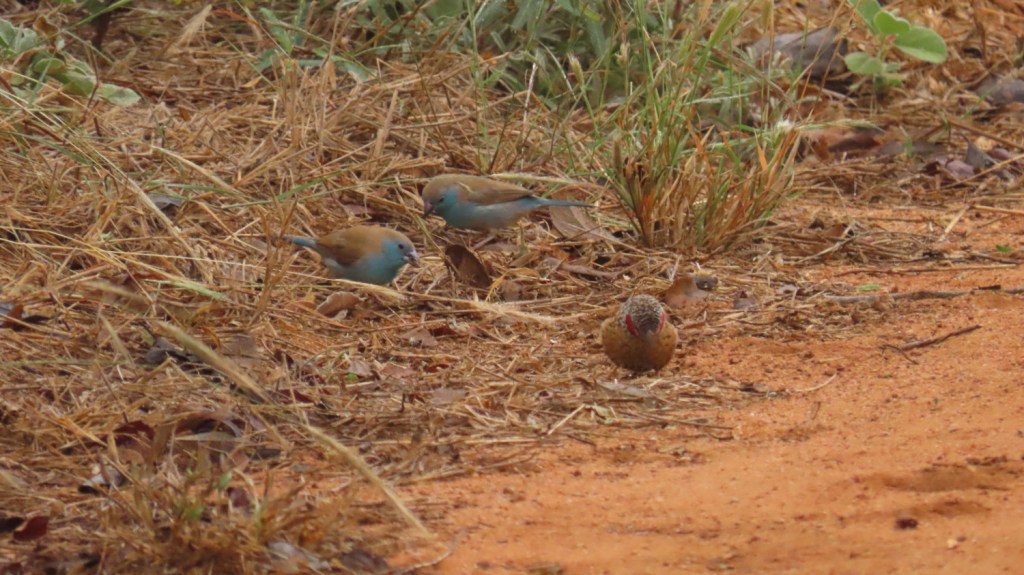
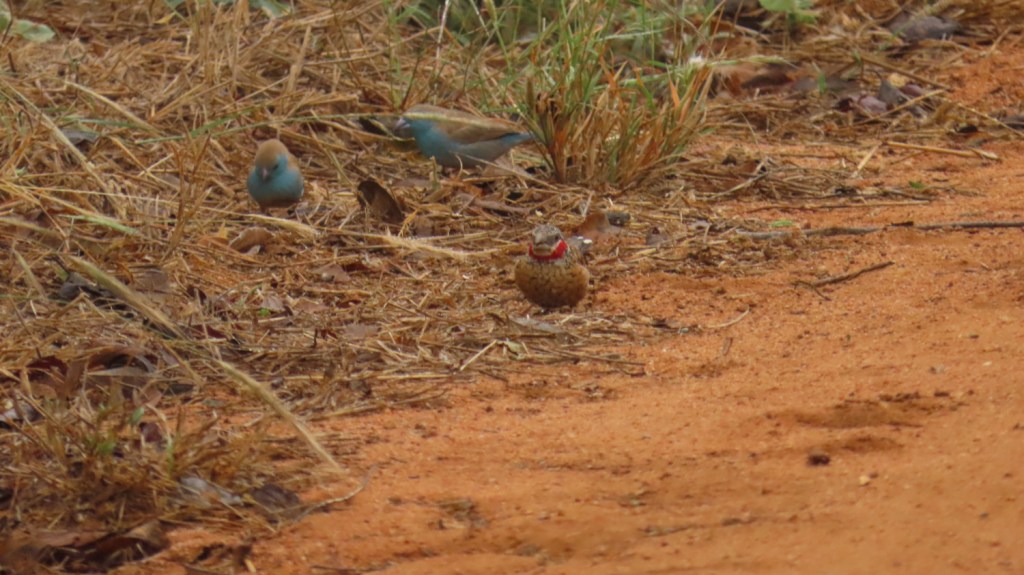
One of the prettiest little birds in the area is the Blue Waxbill. The next photo shows two Blue Waxbills and a Cut-throat:
The next photo shows the same birds, with a clearer view of the Cut-throat:
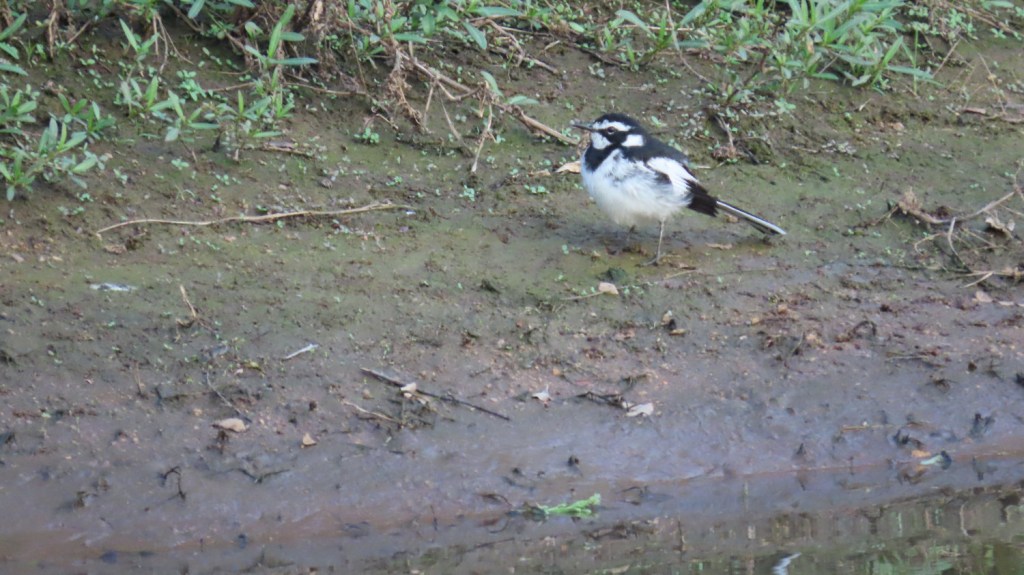
Last is an African Pied Wagtail, the only black and white wagtail in Africa. It made me think of the Willy Wagtails (which are actually fantails) that we get in Australia:
Although I’m based in Sydney, Australia, I love seeing the birds in other areas too. I hope you’ve enjoyed this look at some of the birds in and around Hoedspruit, South Africa.


