Monthly Archives: September 2021

First Channel-billed Cuckoo of the season
It’s spring down under, and the cuckoos are back on the east coast of Australia. Last week I heard the calls of Koel Cuckoos and Channel-billed Cuckoos. Now I’ve seen my first one of the season: A Channel-billed Cuckoo sheltering from the local birds in a gum tree.
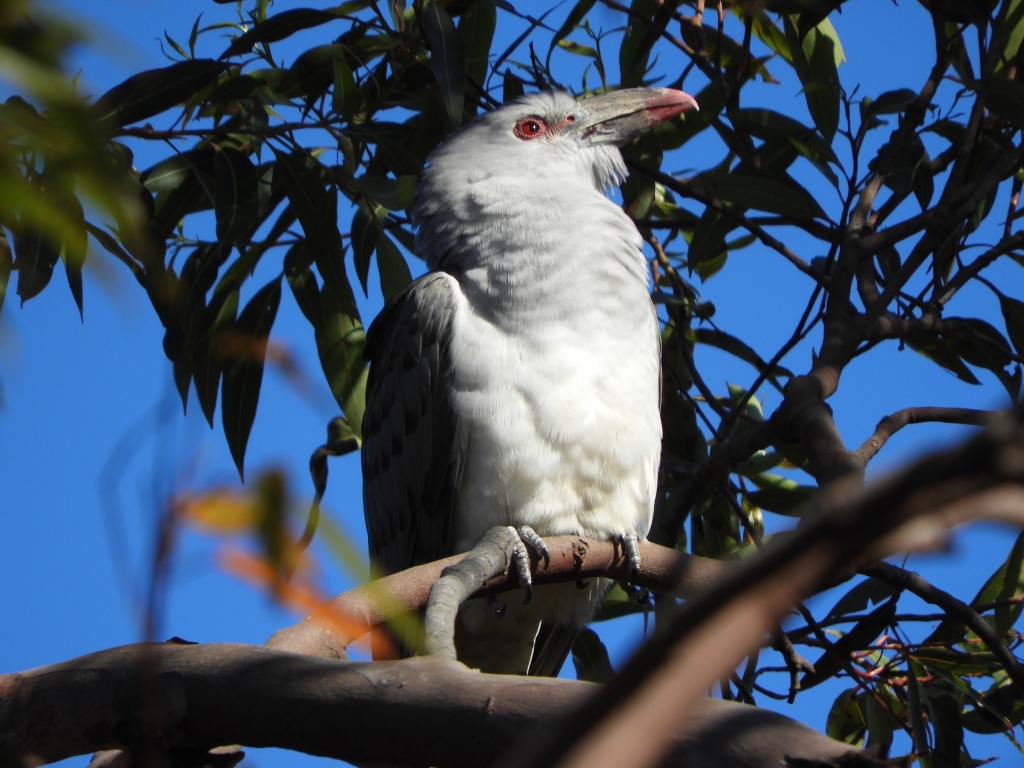
Channel-billed Cuckoos are large birds (approximately 60 cm long) with red eyes and a big beak. They often look a little scruffy, even ghoulish. The other birds seem to think so too, because they spend a lot of time dive-bombing the cuckoos and shouting at them. Usually the Noisy Miners (living up to their name) are the noisiest of the birds that strive to make the cuckoos feel unwelcome, but other birds play their part too.
This video shows the cuckoo enjoying the peace and quiet of a gum tree. At the start of the video, a Currawong swoops past in a threatening flyby. You don’t actually see the Currawong, but you can hear it and see the cuckoo flinch:
Here’s a photo showing the full length of the cuckoo, including its long, barred tail:
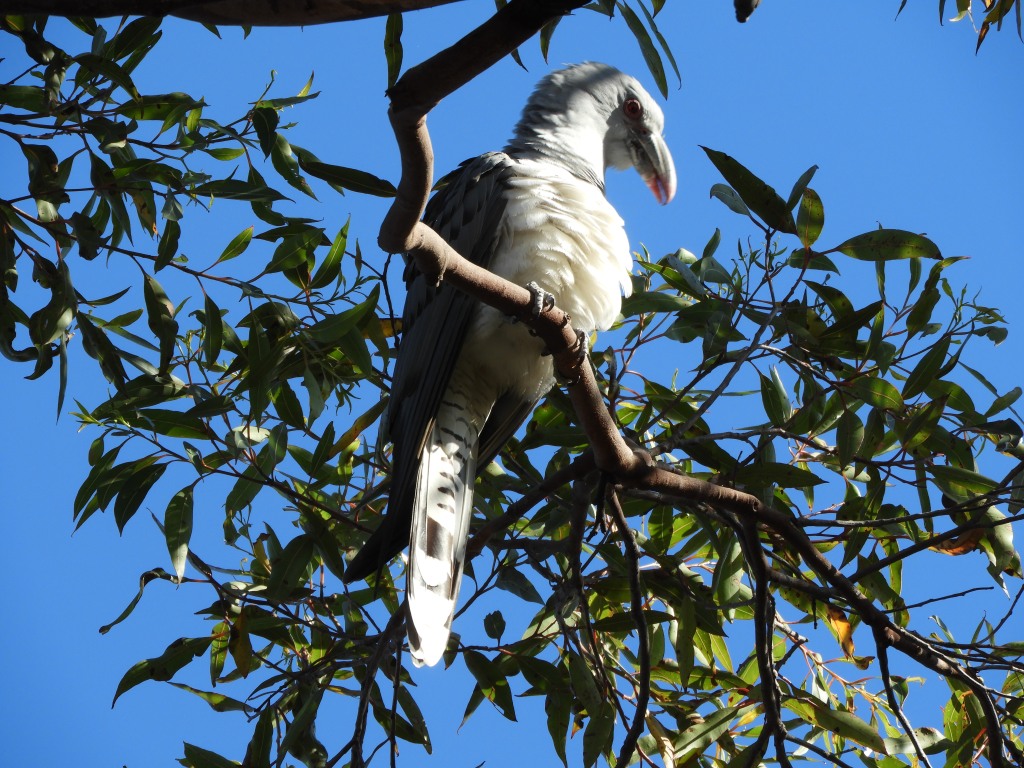
Here’s a view from the back:

Common name: Channel-billed Cuckoo
Scientific name: Scythrops novaehollandiae
Approximate length: 58-65 cm
Date spotted: 19 September 2021 (spring)
Location: Manly Dam Park, New South Wales, Australia: 33°46’33.8″S 151°15’17.8″E
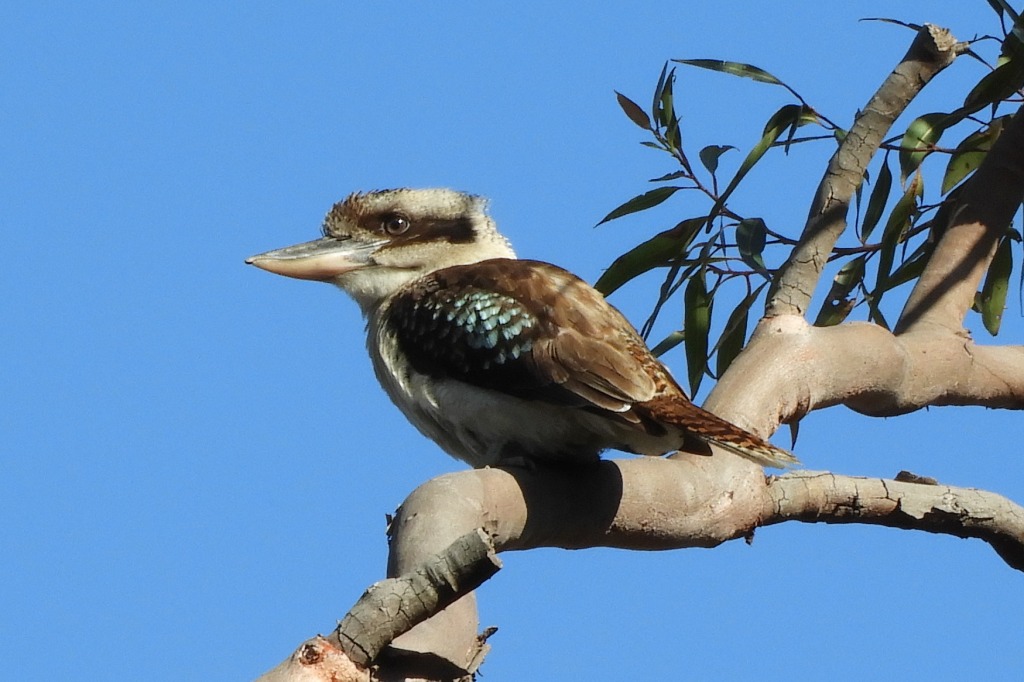
A bonus bird: Just after the Channel-billed Cuckoo flew off, a kookaburra landed on a nearby branch:

Spitfire Sawfly larva – the caterpillar that wasn’t
(Not a bird, but a creature that birds no doubt encounter either on the ground or high up in a gum tree.)
Walking along a bush path the other day, I saw a strange-looking caterpillar. It was large and black with short yellow spikes. Its front end was quite pudgy, but its body tapered off toward the back end.

When moving along, it often lifted up its front end to show its yellow legs:

After doing a bit of research, I realized that this interesting creature is a larva, not a caterpillar. Specifically, it’s the larva of the Spitfire Sawfly. Sawflies are related to wasps, ants, and bees.
Despite the name “Spitfire”, these larvae don’t actually spit anything, but if you touch them you can get a burning sting from the spikes. The larvae also spew out a thick yellow liquid from their mouths when threatened, but the liquid isn’t harmful. They often collect together in big clusters on a gum tree.
Here’s a short video of the larva moving across the forest floor:

Fairy-wrens in full finery
Variegated Fairy-wrens are quite common in my neck of the woods, but they’re very difficult to photograph. They move fast, pause only briefly, and prefer to keep hidden in the shrubbery. I took these shots over a few days, collecting mosquito bites at the same time as usable photos.
It’s spring, and the males are decked out in their breeding finery. They’re like blue fireflies lighting up the bush:
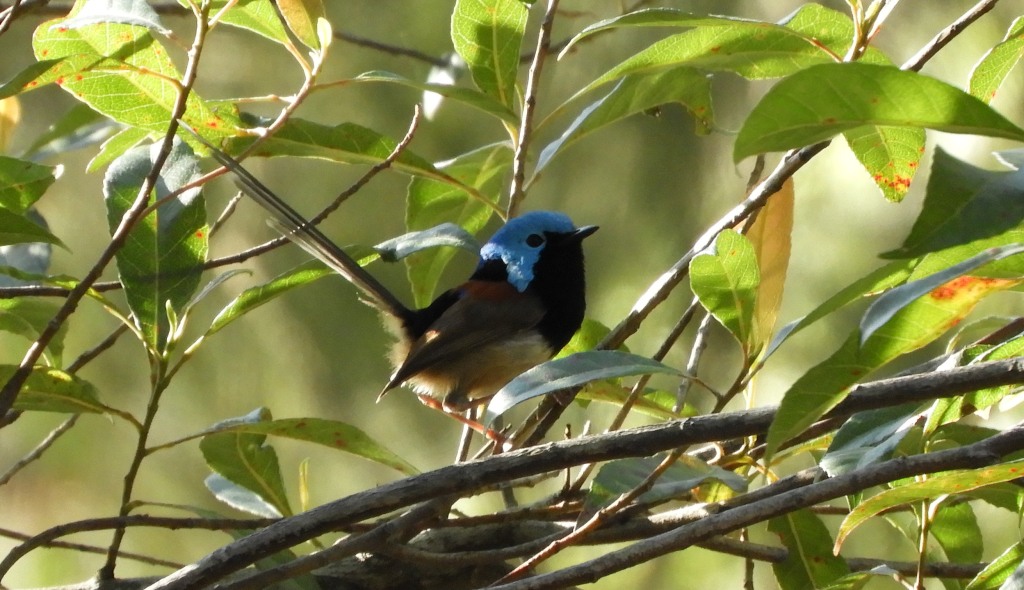
The long tail often sticks straight up. It must present quite a challenge to dashing around the shrubbery:

The females are a soft brown with pale blue hints in the tail. They have a red eye mask which can make them look slightly sardonic:
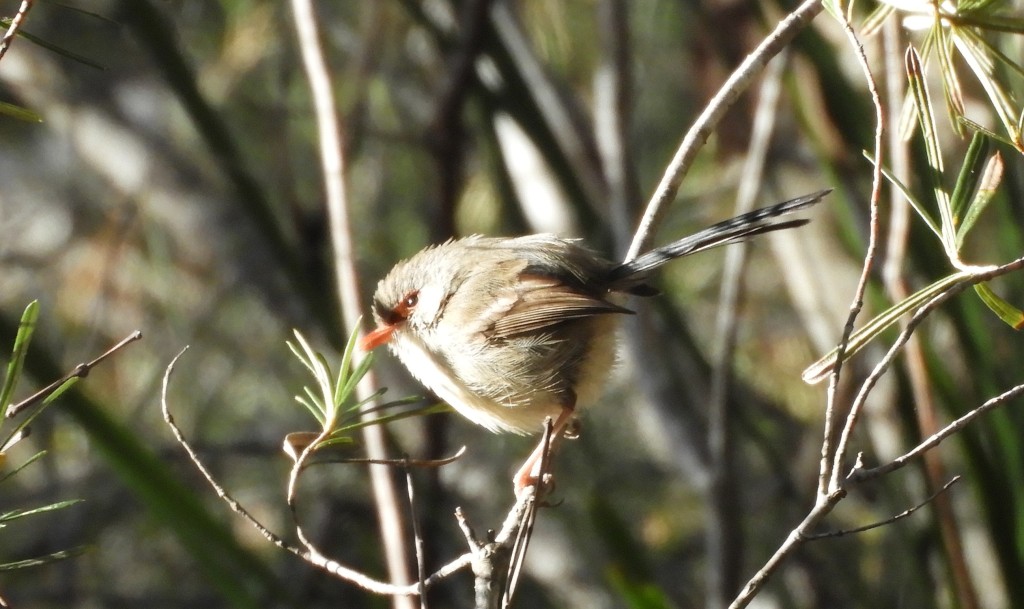
They’re like tiny little puffballs:

Like many bird names in Australia, the name “fairy-wren” is misleading. These birds aren’t actually wrens. They’re related to honeyeaters and pardalotes.
Common name: Variegated Fairy-wren
Scientific name: Malurus lamberti
Approximate length: 13 cm
Date spotted: September 2021 (spring)
Location: Manly Dam Park, New South Wales, Australia: 33°46’49.9″S 151°15’04.2″E (the male) and 33°46’20.8″S 151°14’30.6″E (the female)
More calls of the Grey Shrike-thrush including a sneeze
A few weeks ago, I posted my first video featuring the call of the Grey Shrike-thrush. I’d read that these birds make a variety of calls. Here are two more to add to the collection: A, short, high-pitched shriek and a longer call interrupted by what sounds like a sneeze or a snort!
When I first heard the sneeze-interrupted song, I thought the bird had made a mistake. But it made the same call consistently over quite a few minutes. Maybe the call is this bird’s variation on a theme, or perhaps the bird is a juvenile who’s still perfecting its song!
Common name: Grey Shrike-thrush
Scientific name: Colluricincla harmonica
Approximate length: 23 cm.
Date spotted: 8 September 2021 (spring)
Location: Manly Dam Reserve, New South Wales, Australia: 33°46’15.6″S 151°14’51.5″E


 Sydney Birder