Blog Archives

Spider wasp in my house
Warning: This blog post could be scary and off-putting. Nothing bad happens to me, but by nature the wasp isn’t very nice to the spider.
Not a bird in sight, but a bird would definitely have found this sight interesting. A large, red wasp appeared in the room where I was sitting. It flew around a bit, then disappeared. A minute later, it re-appeared and dumped a paralysed huntsman spider at my feet!
The wasp is called a “spider wasp”. I think this particular variety is a tarantula hawk wasp. It injects venom into a spider, often a huntsman, which paralyses the spider. The wasp then drags the spider into its nest and lays eggs inside the spider. When the wasp eggs hatch, the larvae feed off the spider.
Now, if you’ve ever seen a huntsman, you’ll know that they’re not small as far as spiders go. I’ve seen wasps like this one in the garden, sometimes performing amazing feats with a spider in tow. One wasp crawled a vertical rock face, several metres high, dragging a spider behind it.
Fascinating as these creatures are, I didn’t really want a wasp nest with a paralysed spider as food source in my house. I feel bad for the spider. Plus, tarantula hawk wasps evidently have an extremely painful sting.
While the wasp was still pre-occupied with the spider, I managed to cover both with a large beer glass. This photo shows the wasp with its feet still partly holding the spider:
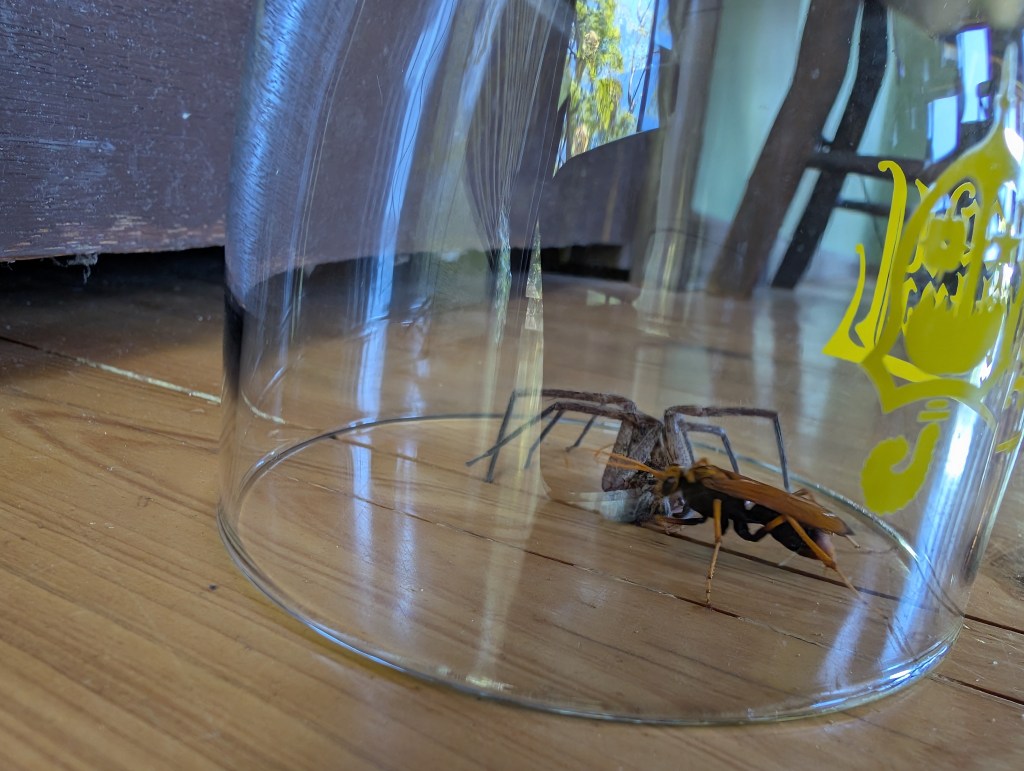
Immediately, the wasp started prowling around the edge of the glass. This photo is clearer than the one above, and has my husband’s finger for scale:
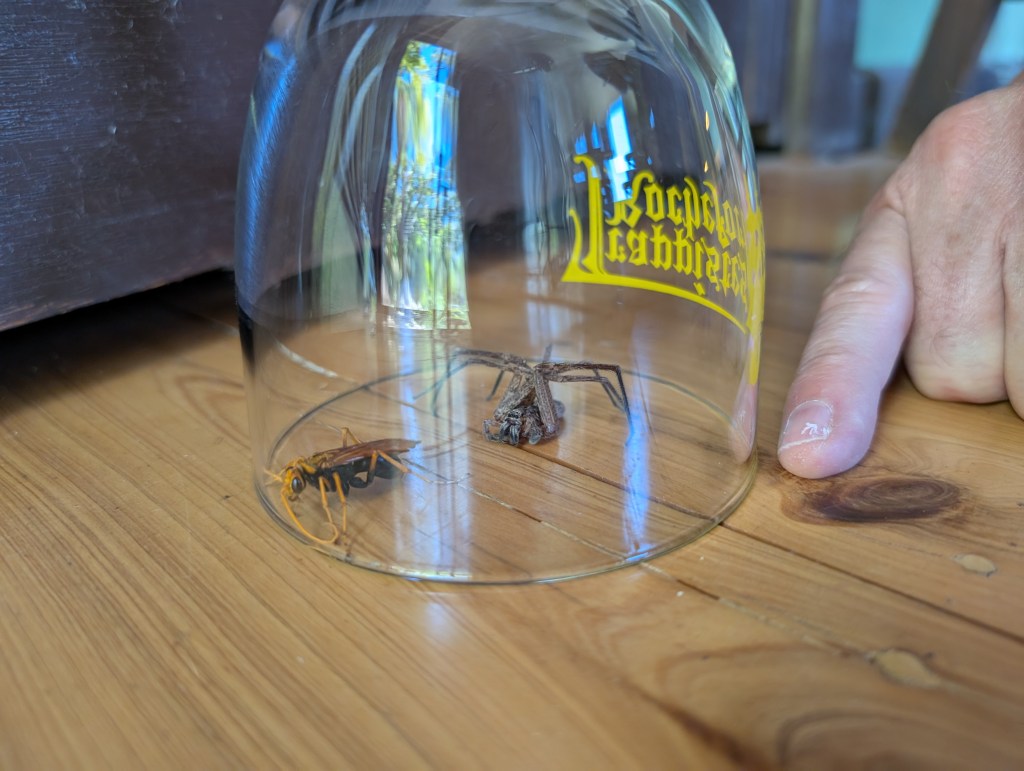
Look at that poor spider’s eyes.
We’ve had other types of wasps in the house. They come in, fly around and inspect the walls, and with any luck fly out again. Sometimes they decide to build a nest. The most common wasps that we see are dark in colour, of medium size, and build cocoons of mud to house their eggs. It’s quite astounding to see how fast they build these constructs. But I do draw the line at tarantula hawk wasps.


 Sydney Birder