Blog Archives

Did the big scary lizard make the Mudlarks abandon their nest?
For a few weeks now, I’ve been watching a pair of Mudlarks building their nest. In fact, they’ve built two nests. The first one looked good and solid from my vantage point, far away and down at ground level. But a couple of days after they’d finished it, they abandoned it and started a new one higher up in the same tree.
Mudlarks, also called Magpie-larks or Peewees, build neat round nests that are basically bowls made of mud. This video shows a male Mudlark collecting mud and reeds at the water’s edge. When he has a good collection, he flies off towards the nest that he and his mate are constructing. As the bird flies, a couple of Kookaburras start cackling, and one of the Mudlarks gives its distinctive call: “pee-wee pee-wee pee-wee”.
Here’s the male Mudlark on mud collection duty:

The next video shows the first nest under construction. The bird prods and pushes mud into the walls of the nest, then sits flat and wiggles its tail end to shape the nest.
As well as building walls, nest construction also involves sitting on the nest and wiggling back and forth to get the shape right:

The nest was looking good, I thought. But several days later, a decision is made. The birds abandon their first attempt and start a new nest, higher up in the same tree:
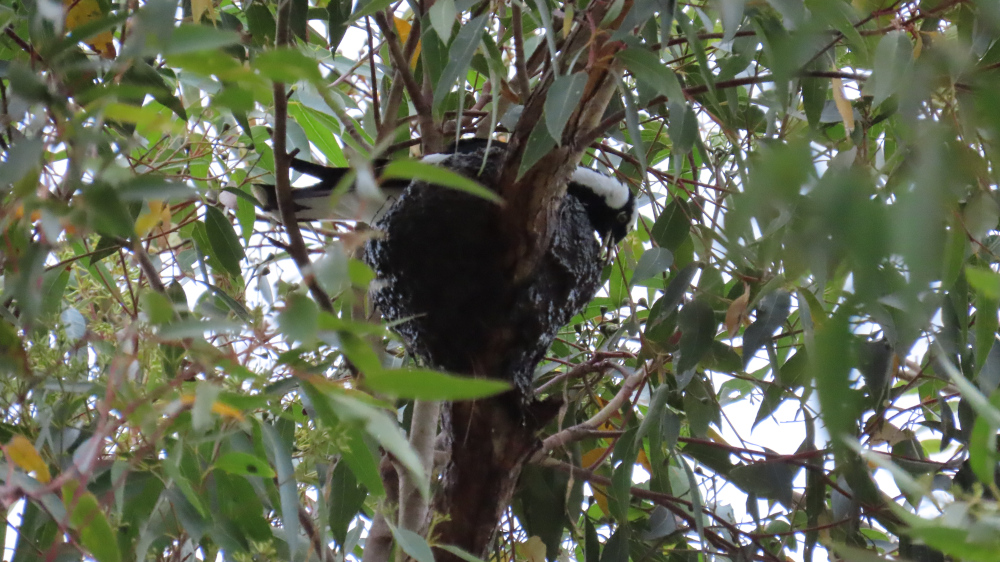
They’ve chosen a lovely spot, at the edge of Manly Dam. The next video shows one of the birds building the second nest. The second bird arrives with a beak-ful of mud, and takes over construction. The video then zooms out and in again to show the first nest on a lower branch, then zooms out further to show the dam and some of the neighbours (a Little Black Cormorant and a Great Egret).
Aside from the occasional noisy cockatoo, the neighbours are quiet for the most part — like this Great Egret:

And a few water dragons:

But the park does get quite busy over the weekend. Families hold picnics nearby, and children paddle in canoes. Perhaps the birds moved higher to avoid the weekend disturbance.
Perhaps the first nest didn’t meet quality assurance checks. Or perhaps the two parents-to-be spotted the large, scary intruder in the neighbourhood: a Lace Monitor lizard. I took this video of the lizard prowling around the tree where both nests are. Lace Monitors eat eggs and baby birds, and are very good at climbing trees. The Mudlarks’ second nest is higher in the tree and on thinner branches, which would make it much more difficult for the lizard to reach.
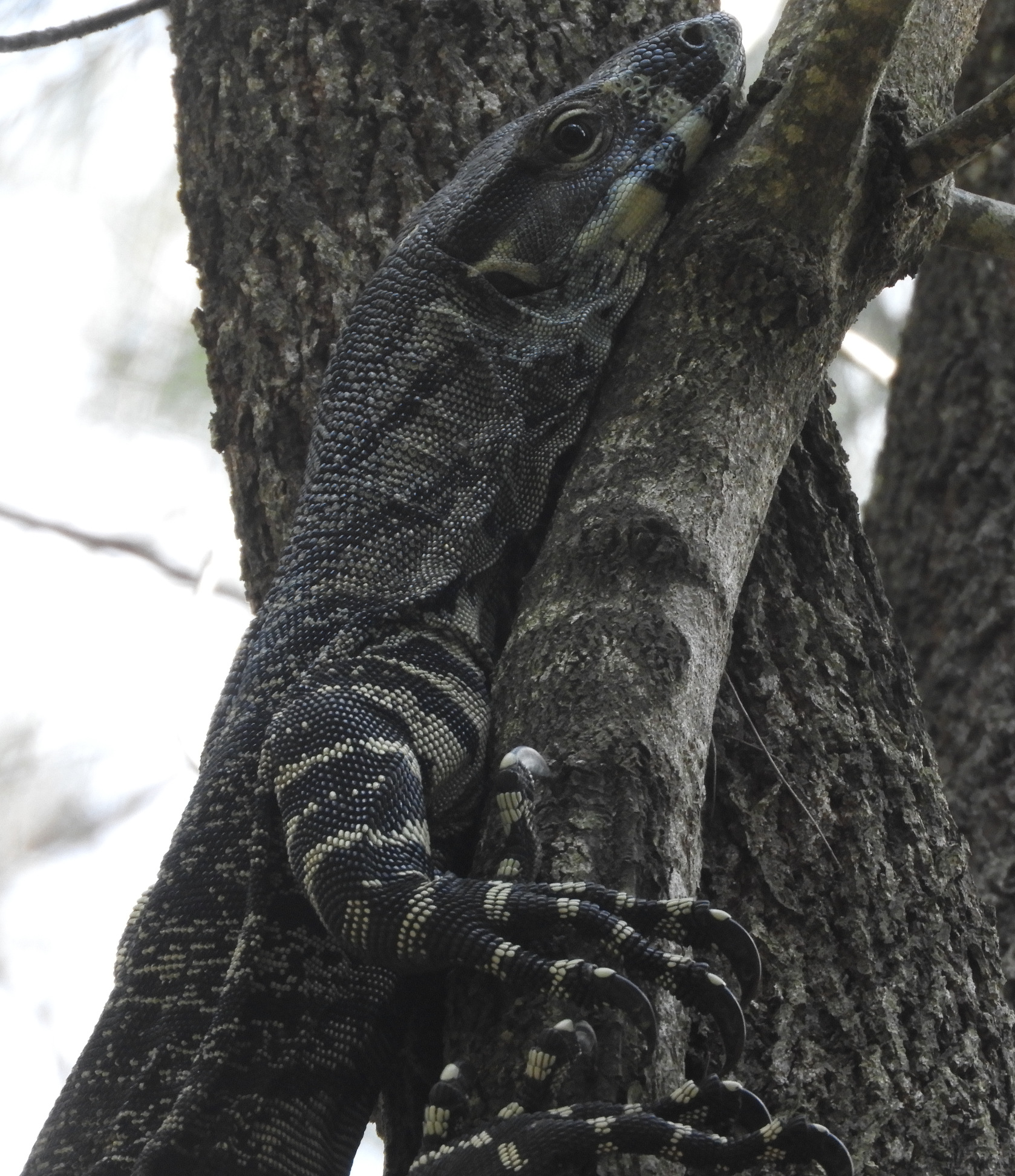
Lace Monitors are the second-largest lizards in Australia. They measure 1.5 to 2 metres long — longer than I am tall, and their hands are as big as mine! Here’s a close-up of the Lace Monitor on the move:
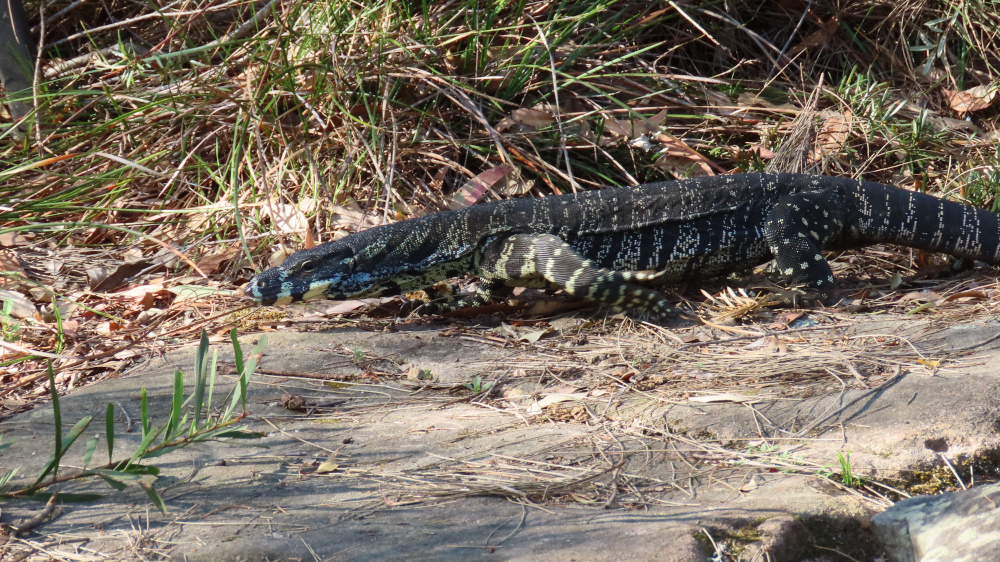
When I got too close with my camera, the lizard crouched down and went into stealth mode:

The Mudlarks are still sitting happily on their new nest. Here’s the male:

And here’s the female:
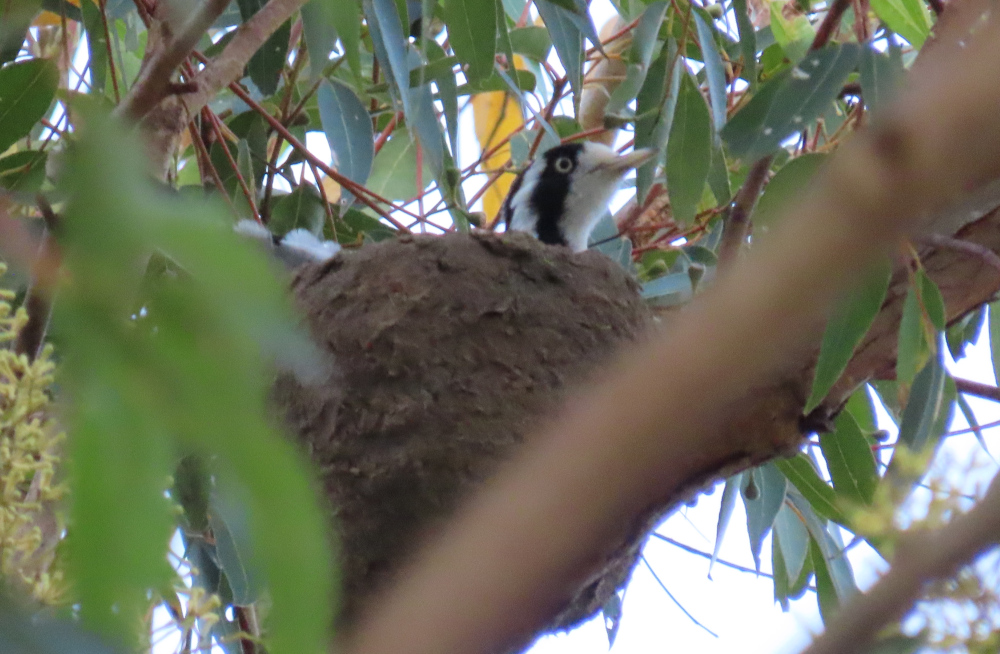
Good luck to them and their new family!
Common name: Magpie-lark, also called a Peewee or a Mudlark
Scientific name: Grallina cyanoleuca
Approximate length: 30 cm
Date spotted: August to September 2024 (summer)
Location: Manly Dam National Park, New South Wales, Australia

Lace Monitor lizard at West Head Lookout
A Lace Monitor lizard was strolling around the West Head Lookout area in Ku-ring-gai Chase National Park when we visited this morning. We stood still as soon as we saw the lizard. It came quite close to us, then veered off when it noticed we were there.
Lace Monitors are the second largest lizard species in Australia, being up to 2 metres long. This one was quite small: about a metre long and quite slender.

Lace Monitors are good at climbing trees. They eat birds’ eggs, small birds in their nests, and other small creatures. They lay their eggs in termite hills, and they live about 20 years.
West Head Lookout gives gorgeous views across the Hawkesbury River and Pittwater waterways. In the distance is the Palm Beach peninsula with the Barrenjoey lighthouse on the headland at the end of the long strip of land. Beyond the peninsula is the South Pacific Ocean.

Lace monitor lizard in a tree
I was walking along, my gaze in the treetops as usual, looking and listening for birds. I heard a frantic scurrying on the path ahead of me, and was just in time to see a lace monitor lizard scramble onto a tree. The lizard hid for a while at the base of the tree, observing me:
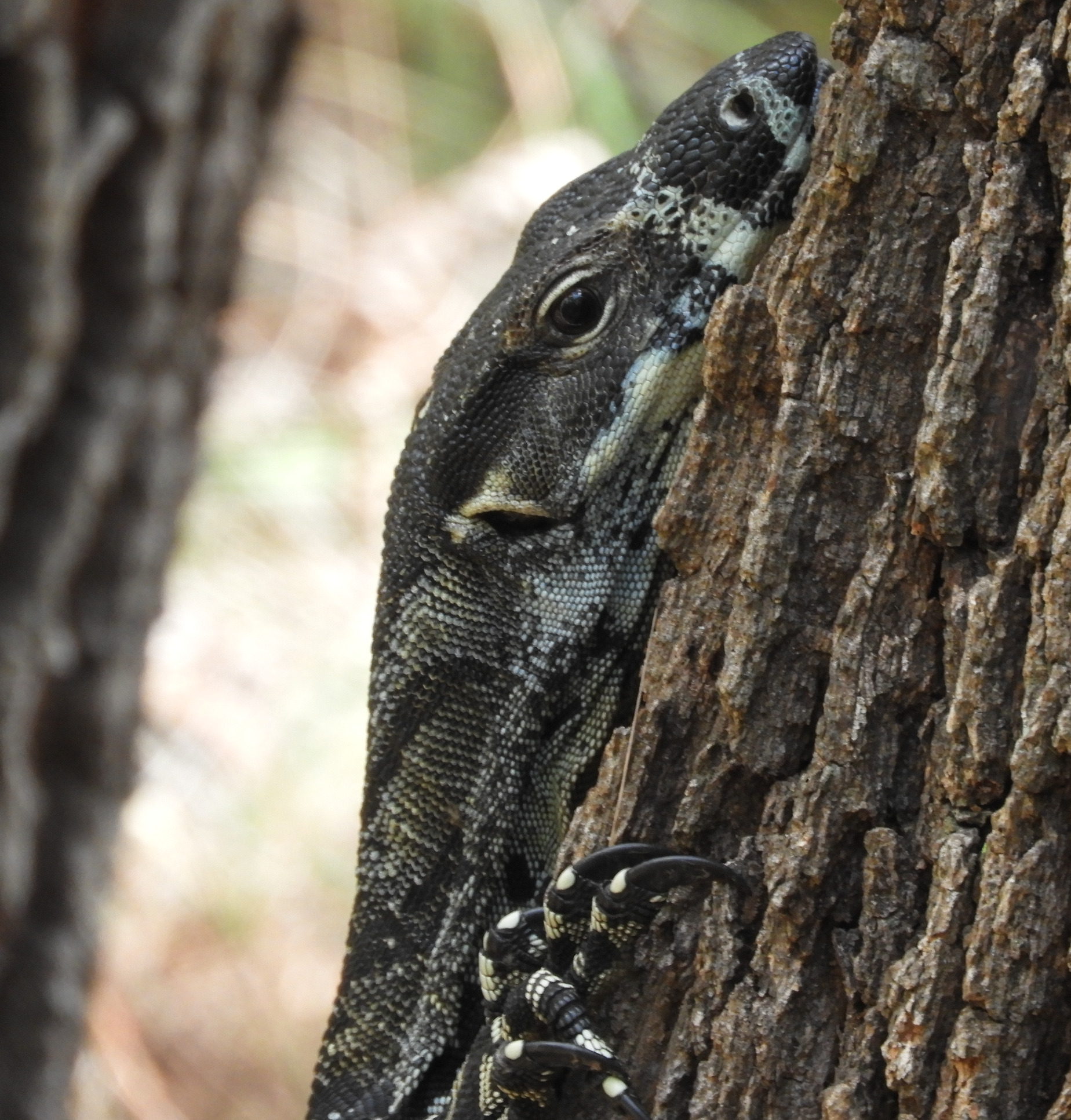
I was intrigued and a little nervous. This was a big lizard, about as long as I am tall. I’m close to 6 foot! Lace monitors are also known as tree goannas (Varanus varius). They can grow to two metres (seven feet) in length and weigh up to 14 kg (30 pounds). They’re predators, living off birds and eggs, other reptiles, and small animals.
I encountered this one a couple of days ago in Manly Dam National Park (map), on the east coast of Australia slightly to the north of Sydney.
The monitor made its way slowly up the tree, flicking its forked tongue in and out, as you can see in this video:
In the following picture, the lizard has reached a safe height and paused to observe me again:
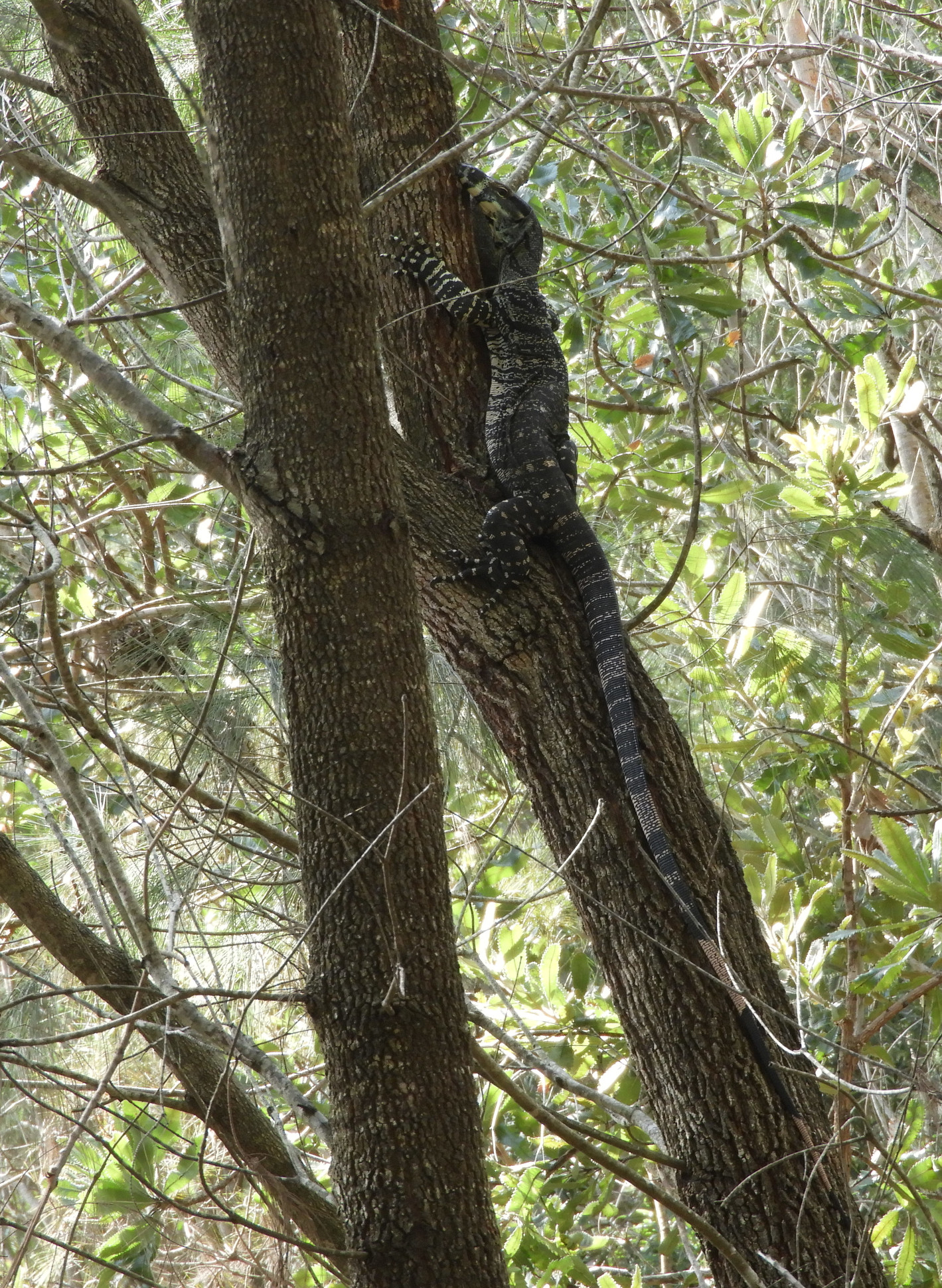
Look at those hands!
Here’s a far-away picture of the lizard on the tree, to show its size and its surrounds:
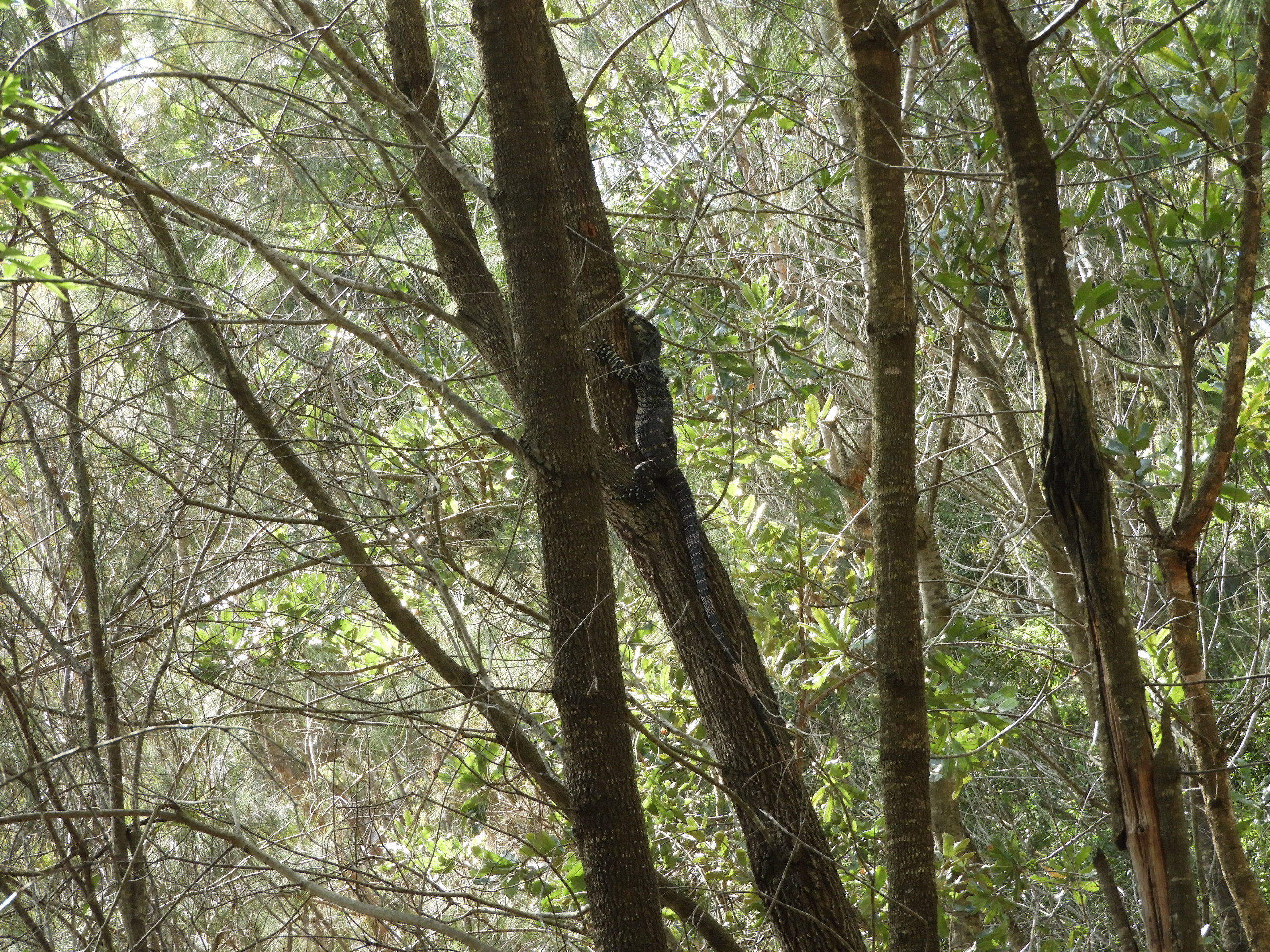
What a gorgeous, wild creature to encounter on a morning walk.


 Sydney Birder