Category Archives: Not a bird
Floury Baker cicada so pretty
The cicadas are still making that dreadful noise all round. The noise is a nuisance, and by the end of summer I’ll be glad to welcome a relative silence back to the bush. And yet… I’ve grown a little fond of them too.
A couple of days ago I spotted this Floury Baker cicada in a Sydney suburb:

Its grey speckles caught my eye. At first I wondered if it was shedding its skin, but I did some research and found that cicadas don’t shed once they’ve emerged from the nymph stage of their life cycle. (I’ve written about the mysterious life of cicadas in other posts.) So I searched for “grey cicada” and found some information about Floury Bakers.
Here’s another view of the same bug, with a clearer view of its eyes (though the ends of the wings are a little blurry):

Did I mention they’re noisy? Yes! I’ve posted recordings of them in a couple of other posts.
Case moth caterpillar or bagworm in Sydney
Occasionally we see strange little caterpillars dragging what looks to be some kind of shell or case around with them. Here’s one moving precariously across a wall:
The clothes peg at start and end of the video is for scale. The caterpillar and its case are just a few millimetres long. The head and thorax of the caterpillar stick out at the top of the case, with the rest of the body inside the case. There’s nothing holding the case against the wall except the caterpillar’s six tiny legs at the top!
After seeing the above caterpillar yesterday, I searched the internet to find out what it was. It looks to be a caterpillar of a case moth (Psychidae), also called a bagworm.
Then I remembered another odd case that I’d seen on the wall of our house a year or so ago. That turns out to be a case moth’s case too. This one is more decorative than the one above:
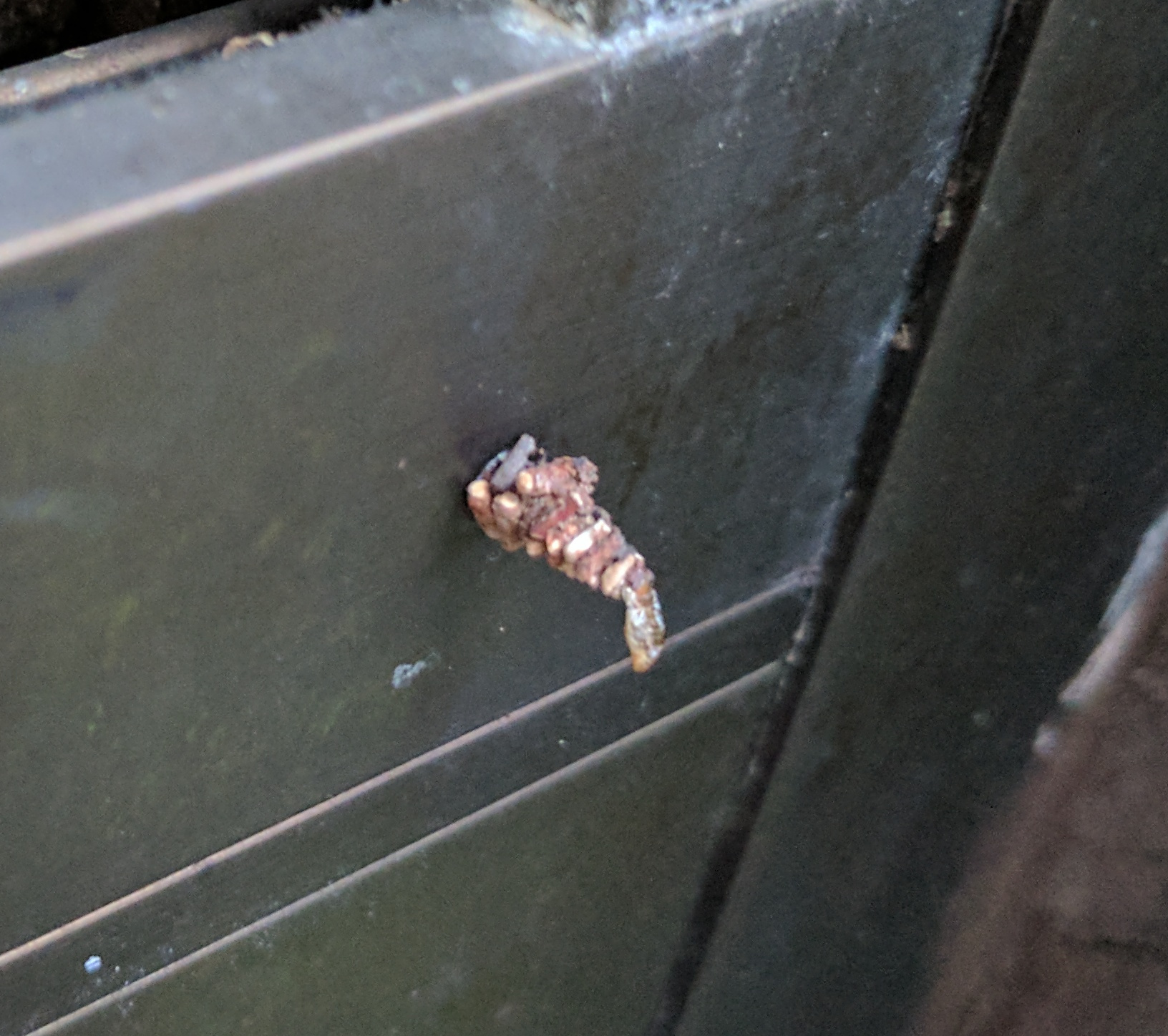
Evidently the caterpillar pupates within the case, and sometimes the female moth even lives her entire live within the case.
The Butterfly House has more pictures of the decorative cases of the case moth.
Leafhopper bugs hatched from egg sack
At the beginning of this month I posted some pictures of a pretty little bug moving around a big white patch of gunk on my outside wall. The bug turned out to be a “true bug” in the Hemiptera order, also called leafhoppers or planthoppers. Specifically, I thought it may be a Eucalypt Planthopper (Eurybrachyidae).
At the time I wrote that post, I wasn’t sure that the big white patch of gunk was related to the bug, though it seemed likely. Now it’s certain. Three weeks after the first sighting, this happened:
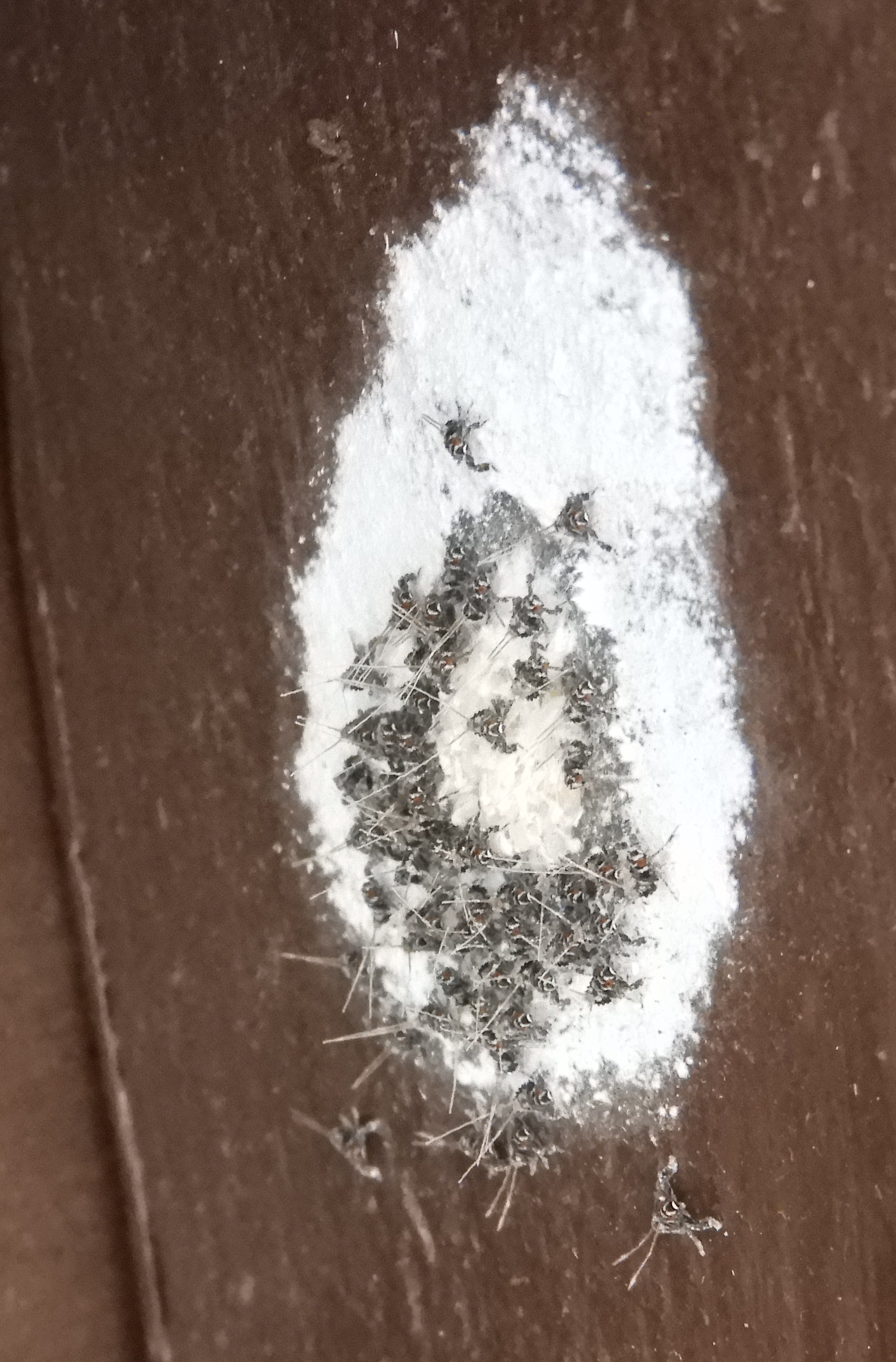
Tens of tiny little bugs hatched from the egg sack. Each bug is minute – just a millimetre or two long. Too small for me to see properly with the naked eye. The above image is zoomed in.
I saw the bug creating the egg sack on 24 November, and the little creatures hatched around three weeks later, on 16 December.
Here’s a sideways view, so that you can see the forest of tiny antennae:
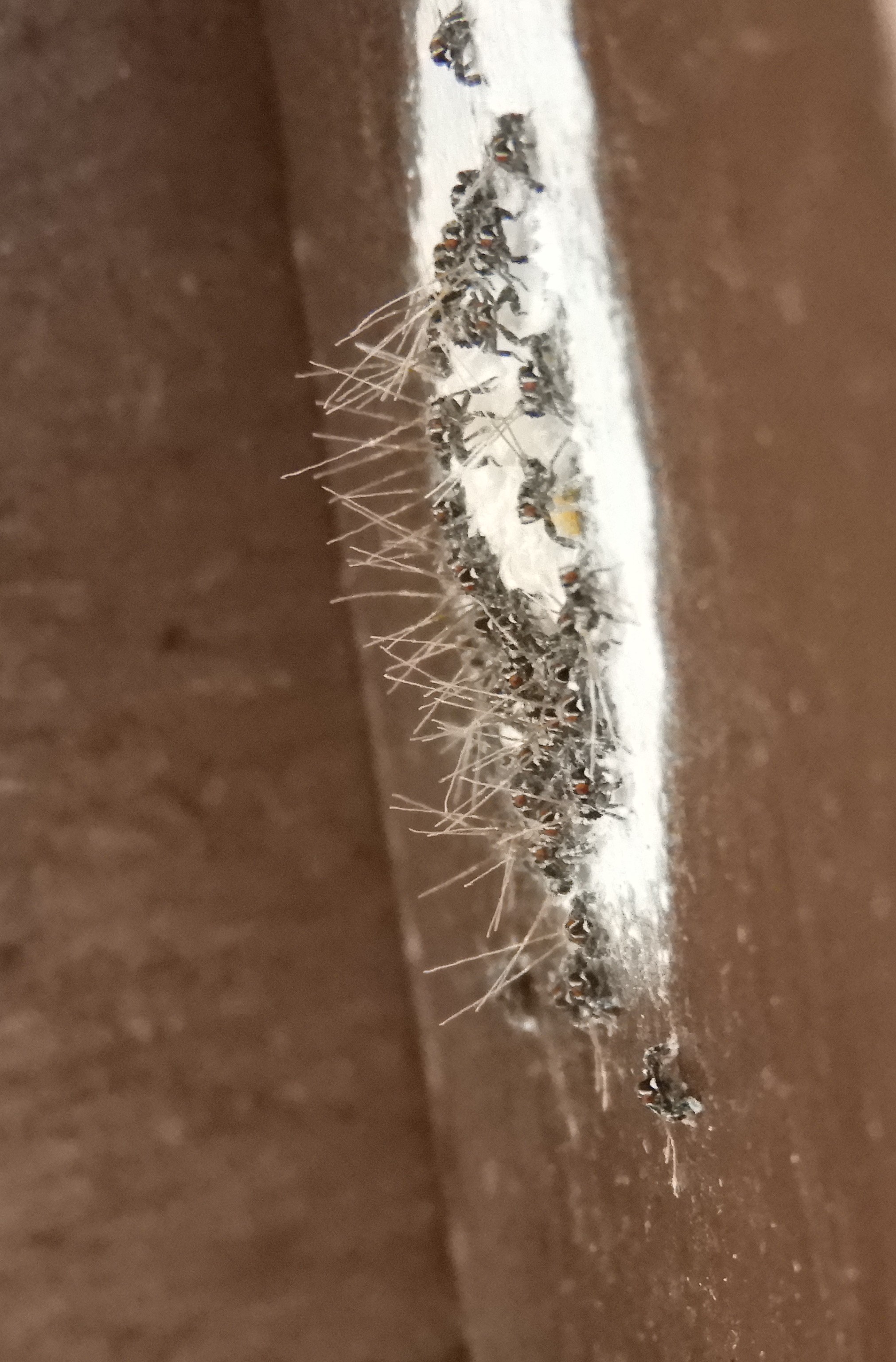
Now they’ve all dispersed, leaving us with just a white patch on the wall. I’ve seen similar patches before, and wondered where they came from. Now I know!
Big lizard climbing tree near Sydney
The things birds in Australia have to put up with! This is a Water Dragon up a tree, probably looking for a nice breakfast of eggs:
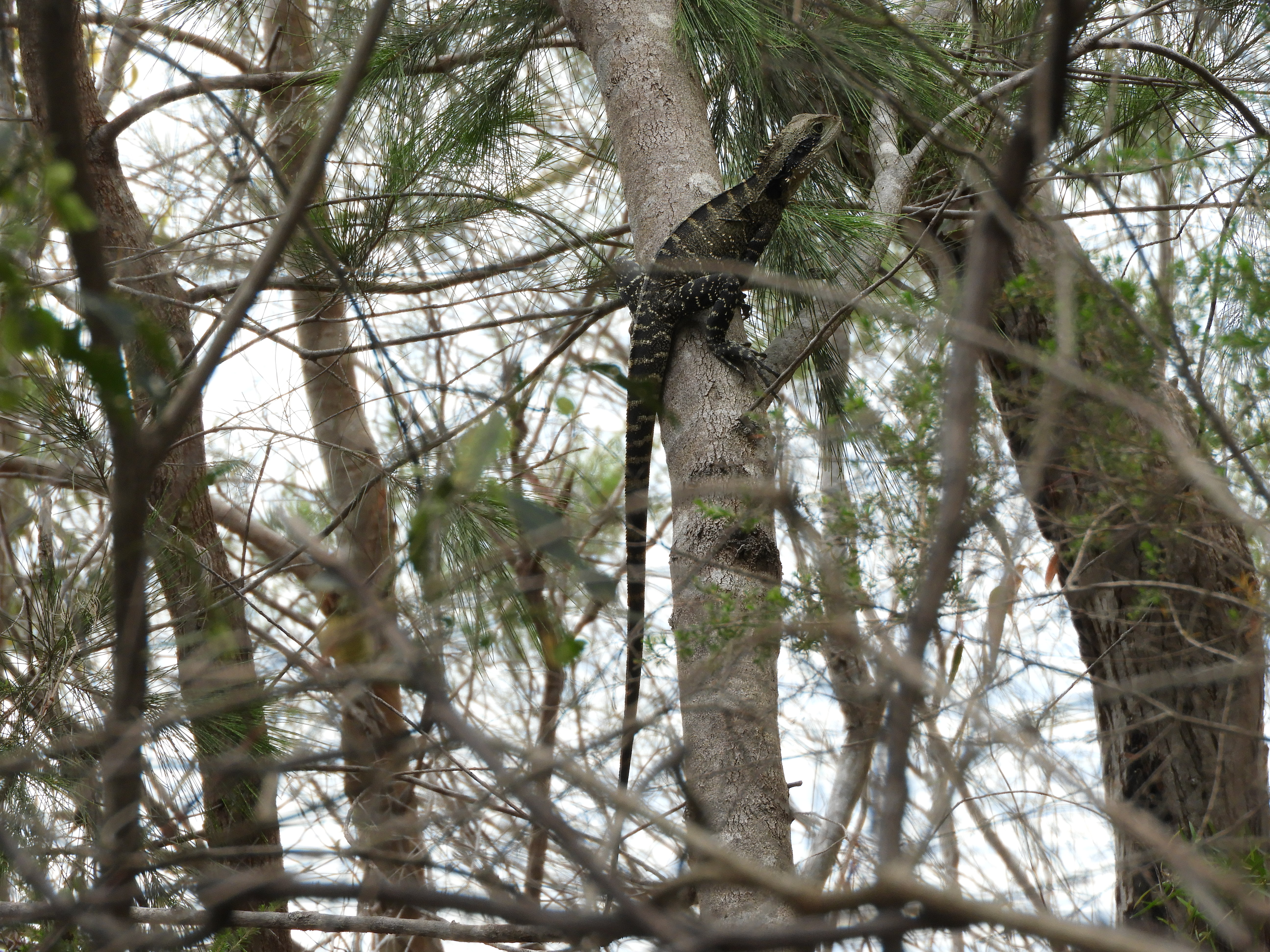
What a lovely long tail it has! Perfect for keeping a grip on a tree branch. Australian Water Dragons reach 90 cm in length. They have large heads which they can lift up quite high above the level of their bodies. Their scientific name isItellagama lesueurii lesueurii.
Tiny bugs – planthoppers or leafhoppers or something Hemipterous
Two odd little bugs have paid a visit to my house, one just recently and the other last year. They’re not birds (well, duh) but every now and then I like this blog to include interesting creatures that birds may come across.
Here’s the first bug. It was a reasonable size, a bit smaller than the fingernail on my little finger:
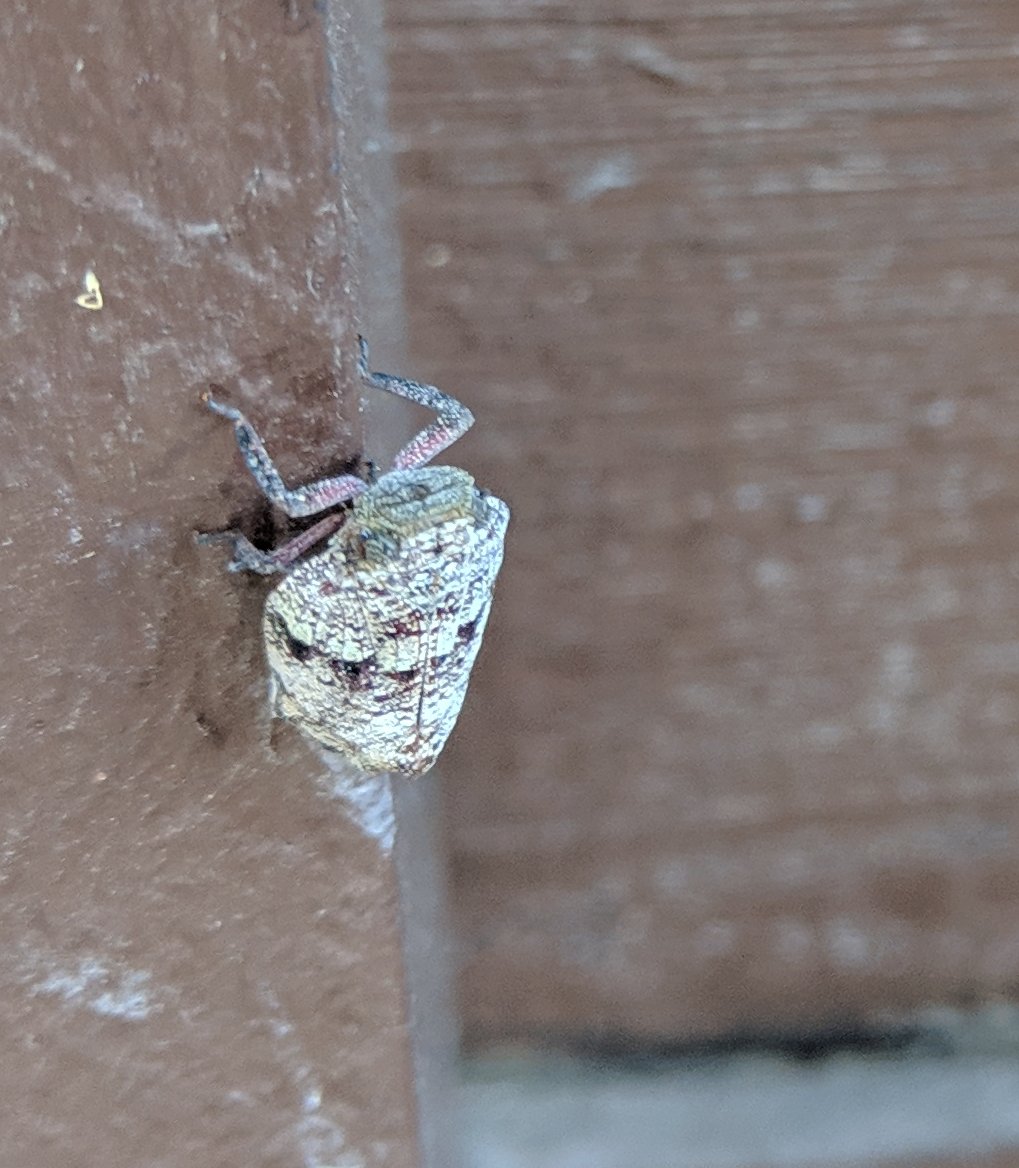
Pretty! A knowledgeable friend told me it’s a “true bug”, which is actually a classification of a set of bugs rather than a character reference. True bugs belong to the huge order of Hemiptera.
The bug was on a wooden wall, and spent quite a bit of time around a patch of white stuff with a hump in the middle of it. Perhaps a clutch of eggs? I didn’t see whether the bug spewed out the white stuff, but it did spend time wiggling its abdomen above it.
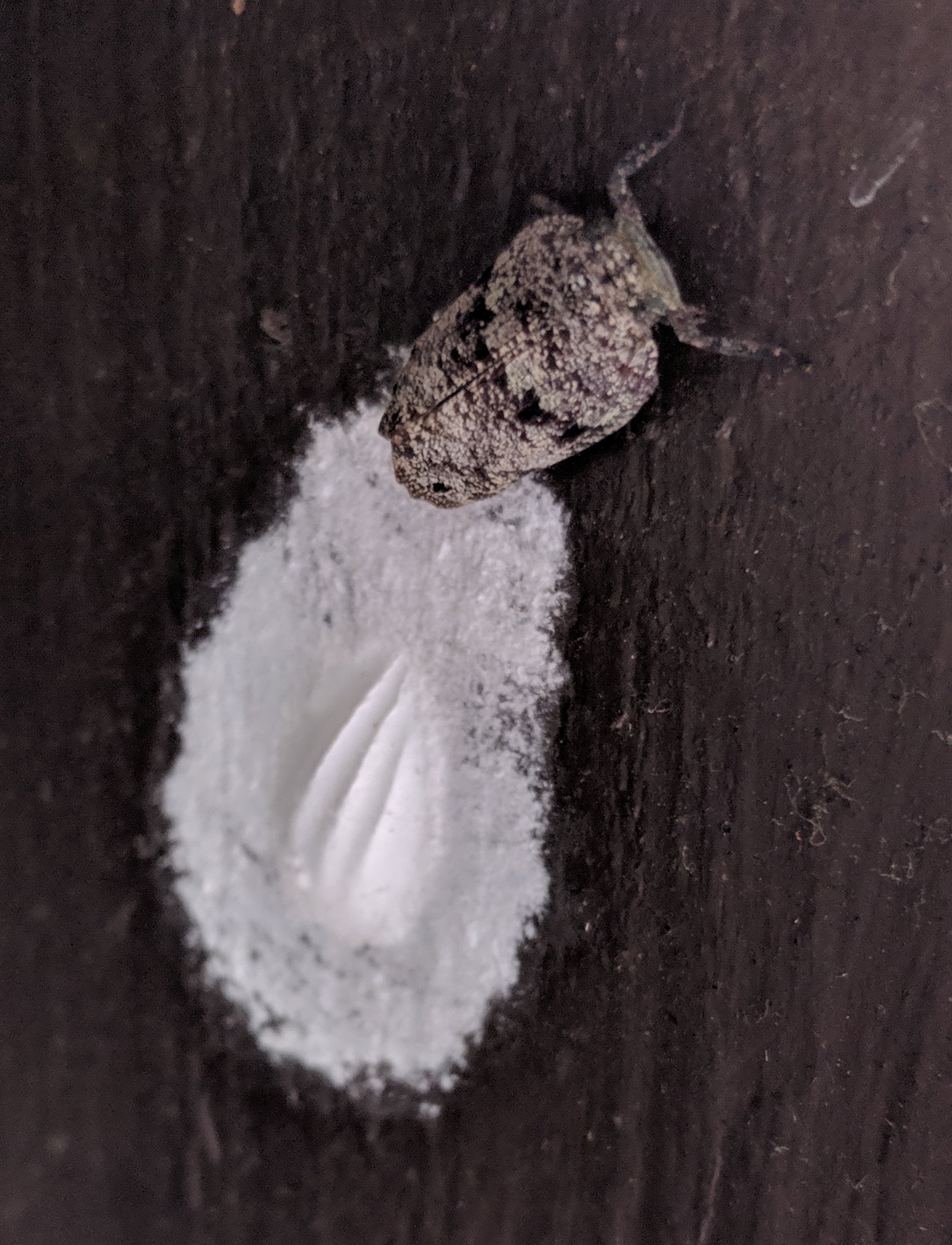
Here’s another picture of the same bug:

Evidently cicadas are Hemiptera too, though the cicadas around here are much bigger that this little critter. I’m thinking it may be a Eucalypt Planthopper (Eurybrachyidae) like these bugs.
Last year, another odd little bug paid a call. This one was very small indeed. It’s on the armrest of a garden chair:
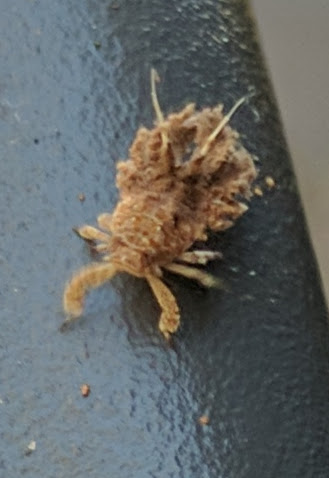
Another view of the same bug:
It’s hard to tell which end is the front of the creature, and which is the back. In fact, it doesn’t seem to make much difference to the creature either. In this video, you’ll see the bug move forwards and backwards with equal comfort:
Cute huh. Let me know if you know more about either of these bugs.
Termite nest in tree
There’s no bird in this post, but something that birds encounter often: a termite nest high in a tree. This one is in Manly Dam National Park, near Sydney, Australia:

Termites that build nests in trees are called arboreal termites. They carry mud up the tree and use it to build their nests, which can grow rather large, like this one. I’ve come across tunnels of mud that run across roads and up trees. The termites build the tunnels for protection from the sun and from scavenging creatures. The termites usually also have underground tunnels.
Here’s a closer view of the same nest:

When the nests are old and abandoned, birds like kookaburras will dig holes in them and use them as homes.
Silver chrysalis on Oleander bush – Common Crow Butterfly
Strolling along, head in the trees as is my wont, I saw something that fair knocked the socks off me. Today’s post is not about a bird, but it is about something that birds encounter.

It’s the chrysalis of the Common Crow Butterfly, hanging from an Oleander leaf. Here it is from a different angle:

At first I thought someone was playing a trick, and had stuck a Christmas bauble on the bush. Then I did some research, and found the Australian Museum’s page about the Common Crow Butterfly. Evidently the pupal stage (chrysalis) lasts about two weeks. I must have discovered this one towards the end of its transformation. I first saw the chrysalis on Thursday. Less than a week later, on Tuesday, the chrysalis had turned black, and I could see the yellow and white markings on the butterfly’s wing. This photo is blurry, because it was early morning twilight, and I had only my phone camera.

Later the same day, the chrysalis was empty:

Oleander bushes are poisonous. Extremely so, to humans. So I wondered, are they poisonous to birds? If so, is the pupa poisonous too, given that the caterpillar had no doubt been feeding on Oleander leaves? It seems the answer to both questions is yes. Oleanders and the pupae of the Common Crow Butterfly are poisonous to most birds.
Ringtail possum in nest
When walking through the Australian bush near Sydney, you see many nests in the trees overhead. They’re not all made by birds. Ringtail possums build and live in nests too. A possum nest is called a drey.
Today I spotted this rather untidy-looking nest in a tree above a path:

When I got closer and zoomed in with my camera, I saw this cute character peering out of the nest:

I continued on my walk. About half an hour later, on my way back, I noticed that the possum was still peering out of the nest but had changed to a more comfortable position:

Possums are sociable creatures, often sharing their nests with other members of the family. If you zoom in on the above picture (open it in a different tab of your browser then zoom in) I think you can see the curled up back of another possum inside the nest.
Here’s another view of the nest, with the possum sticking out of the top left of the nest:

What a cute face!

Tree, moon, wind, and a serendipitous fruit bat
There’s no bird in this post. Just a restful scene of tree branches, a moon, a freshening wind, and a surprise appearance by a fruit bat in the gloom. I think the wind dislodged the bat from its perch in the tree.
Cicada, what a noise!
The cicadas are out in full force this summer. A week ago, while walking in the bush on a hot morning, I was suddenly doused in spray of cool drops from the trees above. It seems cicadas do pee. Copiously. A quick check of the internet assured me the spray is harmless. You can basically view it as sugar water that’s passed through a cicada.
However, the occasional dousing is not the most noticeable characteristic of cicadas. The thing most people notice about them is their singing. Song is not exactly the right word. What a noise! Only the male cicadas sing. This video shows how they pulsate their abdomens to make the noise:
They are large insects, about the thickness of an adult person’s thumb, and interesting to look at. I think they’re quite attractive, in an outdoorsy sort of way:
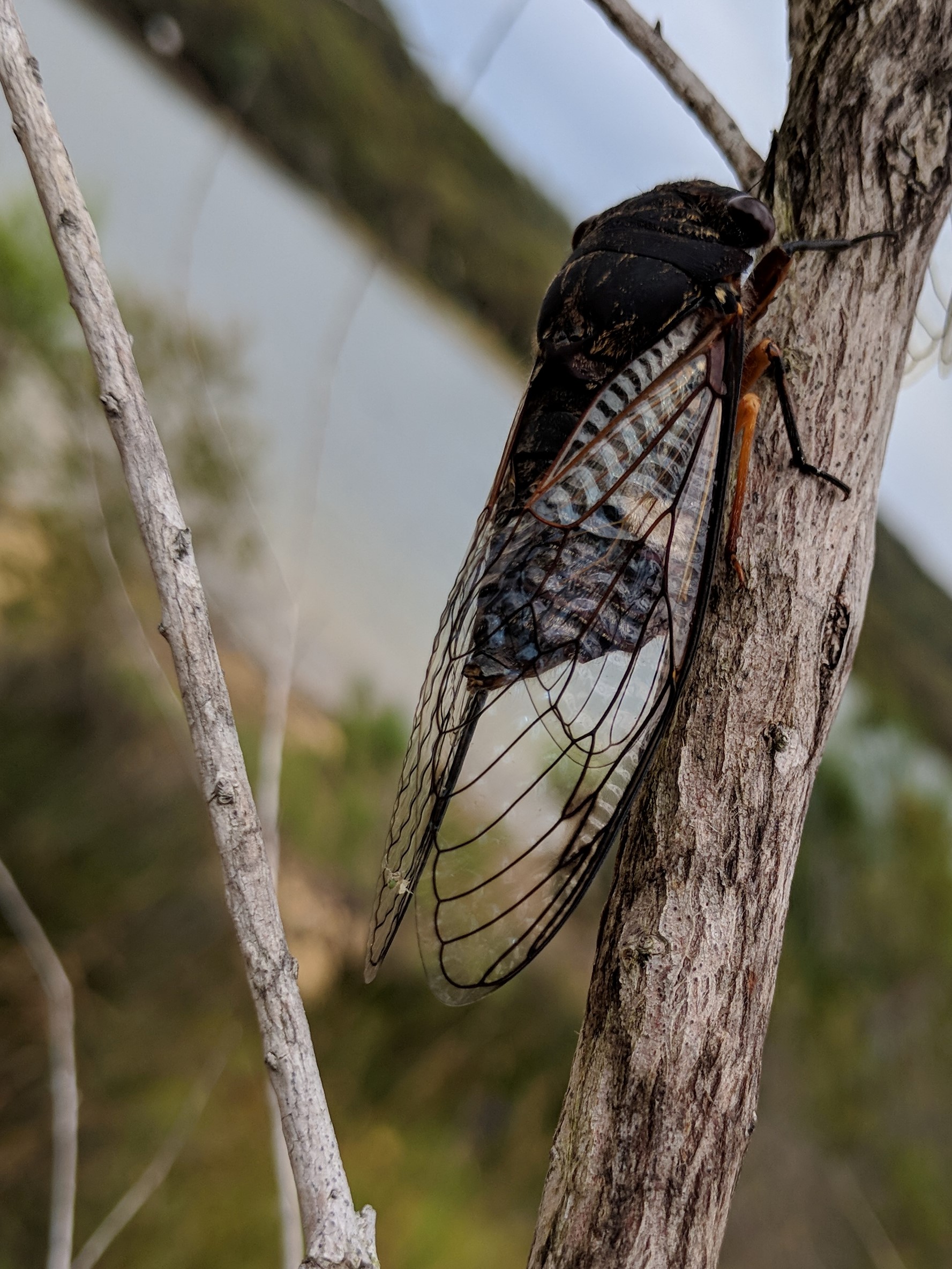
They have an impressive life cycle. The adult cicada is the winged insect we see, and it lives for only a few weeks. But the nymphs, which are the form of the creature that hatch from the eggs, live for around seven years, underground. A previous post of mine has pictures of the empty husks left behind when a nymph transforms into the winged adult.
This picture shows the underside of one cicada as well as the top of another:
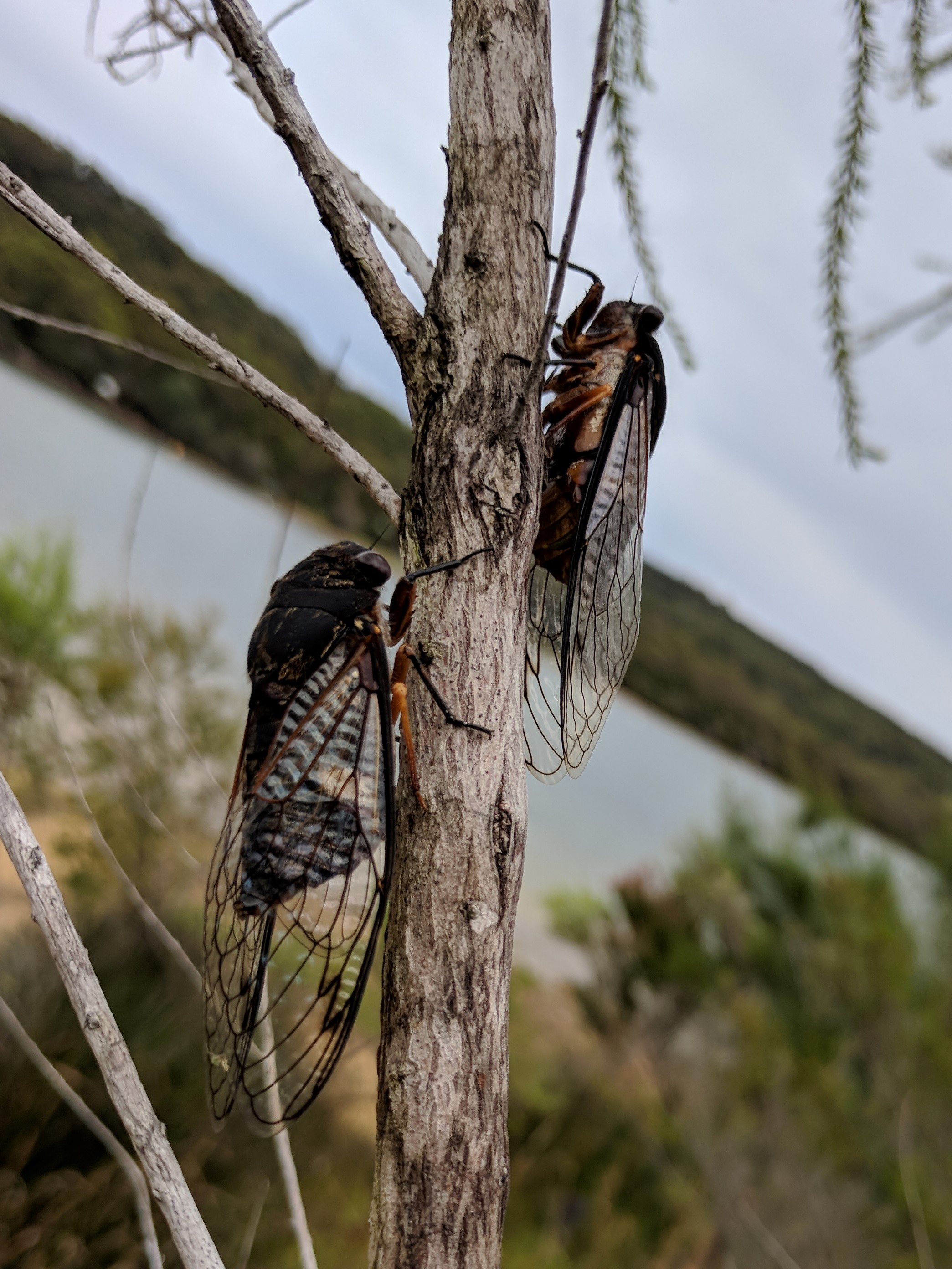
I think these are Black Prince cicadas (Psaltoda plaga). I found them at Manly Dam National Reserve, near Sydney: 33°46’37.6″S 151°15’09.4″E.
The cicadas in my previous post were Floury Bakers (Aleeta curvicosta), noted for singing upside down.
This blog is primarily about birds, and cicadas aren’t birds. But they’re nearly as big as some birds, and they’re part of our local birds’ ecosystem. In fact, the larger birds have a feast during cicada season. One of my first memories of Australia is of coming across half a cicada buzzing aimlessly on a path through a bushy area. The insect was bright green, the first green one I’d ever seen, and the sight filled me with sadness. So I’m happy to see them when they come, even though their call is a little intrusive!


 Sydney Birder